
SAIC MOTOR(600104)

Search documents
2026年车企销量目标出炉:增幅最高近70%
Jing Ji Guan Cha Wang· 2026-01-09 13:53
Core Viewpoint - The automotive market in China is expected to see a slight growth in 2026, with total sales projected at approximately 35.5 million units, a 2% increase year-on-year, while retail sales of passenger cars are estimated at around 24 million units, reflecting a 1% growth. Despite this modest growth forecast, several automakers have set ambitious sales targets, indicating an intensifying competition for market share as the industry transitions from expansion to competition for existing market segments [2]. Group 1: New Energy Vehicle Manufacturers - New energy vehicle manufacturers maintain optimistic growth expectations, with target growth rates exceeding 30%, significantly higher than the 13% forecasted growth for new energy passenger vehicles by the China Passenger Car Association [3]. - Leap Motor aims for a sales target of 1 million units in 2026, representing a growth rate of 67.5%. In 2025, Leap Motor sold 597,000 units, achieving a remarkable 103% year-on-year increase and becoming the sales champion among new energy vehicle manufacturers [3]. - NIO's growth target for 2026 is set between 456,000 and 489,000 units, reflecting a growth rate of 40%-50%. In 2025, NIO sold 326,000 units, marking a 46.9% increase but falling short of its 440,000-unit target [4]. - Xiaomi Auto has set a sales target of 550,000 units for 2026, with a growth rate of 34%. In 2025, it sold 410,000 units, exceeding its previous target of 350,000 units [4]. Group 2: Traditional Automakers - Traditional automakers are generally more cautious, with Changan Automobile setting a target growth rate of 13.3% for 2026, aiming for total sales of 3.3 million units, including 1.4 million new energy vehicles, which would require a 26.2% year-on-year increase [6]. - Geely Automobile has a target growth rate of 14%, with a total sales goal of 3.45 million units for 2026. In 2025, Geely sold 3.025 million units, achieving a 39% increase [6]. - Chery Group also targets a growth rate of 14%, aiming for total sales of 3.2 million units in 2026. In 2025, it sold 2.806 million units, reflecting a 7.8% increase [7]. - Great Wall Motors has set a relatively high target growth rate of 36% for 2026, with a sales goal of 1.8 million units. In 2025, it sold 1.324 million units, marking a 7.33% increase [7]. - Dongfeng Group has established a sales target of 3.25 million units for 2026, with a growth rate of 30%, including 1.7 million new energy vehicles, which would require a 63% increase [8].







小米汽车销量创新高,华为鸿蒙月销逼近9万,12月国产新能源百花齐放
Xin Lang Cai Jing· 2026-01-09 11:54
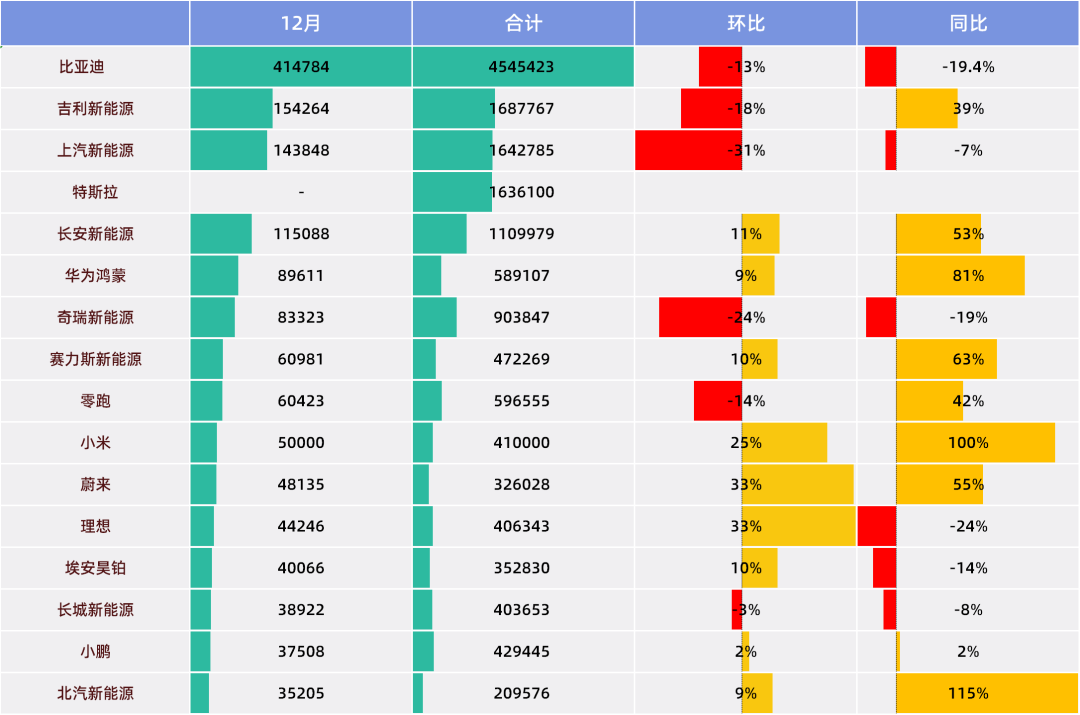
Core Insights - BYD's sales surged from 426,000 units in 2020 to 4.545 million units in 2025, achieving a compound annual growth rate of 60% [1] - Despite rapid growth, BYD faced intense competition from other automakers and did not meet its performance targets in 2025 [1] - The Chinese automotive market is undergoing significant changes, with many companies preparing for global expansion [1] Sales Performance - In December, BYD sold 414,784 units, a decrease of 13% month-over-month and 19.4% year-over-year [3] - Among 15 Chinese automakers, only five achieved both month-over-month and year-over-year sales growth [4] - The average sales volume dropped to 94,427 units in December, primarily due to declines in the first and second-tier companies [4] Market Dynamics - The Chinese government continues to support the automotive market with subsidies exceeding 1.1 billion yuan [2] - The competition is intensifying, with several brands achieving historical sales highs, particularly in the third tier [6] - The central economic work conference emphasized the importance of domestic demand, indicating ongoing support for the automotive sector [7] Company-Specific Developments - Only five out of 14 automakers met their sales targets for 2025, with companies like Li Auto and Aion falling short [8] - BYD's electric vehicle sales reached 2.2567 million units, surpassing Tesla's 1.636 million units for the first time [11] - The export volume of Chinese automobiles is expected to exceed 7 million units in 2025, with BYD emerging as a key player [14] Technological Advancements - The introduction of L3 autonomous driving technology is gaining momentum, with several companies, including BYD and Huawei, conducting road tests [17][18] - The competition for L3 autonomous driving capabilities is expected to intensify in 2026 [18] Brand Strategies - Huawei's HarmonyOS ecosystem has expanded, contributing to record sales for its vehicles [19] - Xiaomi's sales reached over 500,000 units in 2025, but the company faced a public relations crisis that may impact future products [21][23] - NIO and Xpeng have shifted to lower price segments to maintain competitiveness, with NIO achieving a record monthly sales of 48,135 units in December [24][27] Future Outlook - The automotive industry is expected to continue evolving rapidly, with companies focusing on both domestic and international markets [49] - The competitive landscape is shifting, with traditional automakers adapting to new market realities and consumer preferences [49]



乘用车板块1月9日涨0.09%,北汽蓝谷领涨,主力资金净流出1.95亿元
Zheng Xing Xing Ye Ri Bao· 2026-01-09 08:54
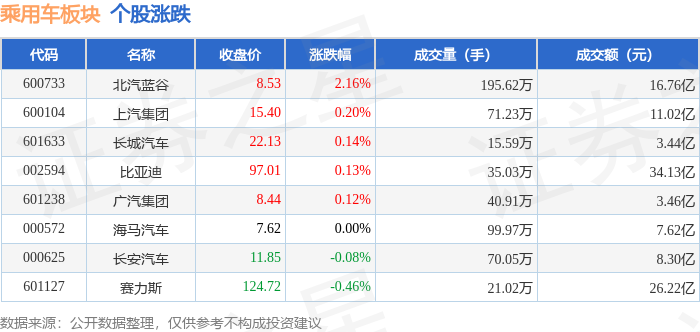
Group 1 - The passenger car sector increased by 0.09% on January 9, with Beiqi Blue Valley leading the gains [1] - The Shanghai Composite Index closed at 4120.43, up 0.92%, while the Shenzhen Component Index closed at 14120.15, up 1.15% [1] - Beiqi Blue Valley's stock price rose by 2.16% to 8.53, with a trading volume of 1.9562 million shares and a transaction value of 1.676 billion yuan [1] Group 2 - The net outflow of main funds in the passenger car sector was 195 million yuan, while retail investors saw a net inflow of 341 million yuan [1] - Beiqi Blue Valley had a net inflow of 26 million yuan from main funds, while retail investors contributed 14.16 million yuan [2] - BYD experienced a net outflow of 21.18 million yuan from retail investors, despite a net inflow of 96.28 million yuan from main funds [2]

最高优惠6.5万元!额外加推3台特惠车|“工”筑精品 惠享万家
Chang Sha Wan Bao· 2026-01-09 08:22
Group 1: Event Overview - The "Shared Plan" Changzhutan Good Goods Fair will be held from January 16 to 18 at the Changsha Hongxing International Convention and Exhibition Center, featuring a new automotive exhibition area [1] - Major brands such as BYD, GAC Aion, and SAIC Volkswagen will showcase multiple popular models and offer exclusive car purchase benefits [1] Group 2: BYD Highlights - BYD's Ocean Network series targets different family travel needs, with the Sea Lion series offering spacious interiors and a trunk suitable for carrying large amounts of goods, along with a smart driving assistance system [2] - The Sea Lion 07EV model will have a maximum discount of 46,000 yuan during the event [2] - The Sea Eagle series provides a cost-effective electric option with a starting price below 70,000 yuan and a maximum discount of 16,200 yuan [2] Group 3: GAC Aion Highlights - GAC Aion will present the Aion and Haobo series, with the Aion series focusing on practicality and economy, exemplified by the AION UT model starting at 73,800 yuan [3] - The Haobo series emphasizes technology and performance, with the Haobo GT model achieving a 0-100 km/h acceleration in just 4.9 seconds [3] - Consumers can enjoy a combined discount of up to 65,000 yuan through national and manufacturer subsidies when purchasing GAC Aion vehicles [3] Group 4: SAIC Volkswagen Highlights - SAIC Volkswagen will offer a complimentary decoration and maintenance package valued at 3,980 yuan with any vehicle purchase during the event [4] - Different discount schemes are available for various vehicle series, with a "1,000 yuan discount for 2,500 yuan" offer for economical models and a "1,000 yuan discount for 3,000 yuan" offer for mid-to-high-end models [4] - The event aims to provide a diverse range of vehicles catering to different consumer needs, enhancing the festive travel experience [4]
上汽集团(600104) - 上汽集团九届六次董事会会议决议公告
2026-01-09 08:15
1、关于《上汽集团职业经理人薪酬制度改革实施方案(2025- 2026 年)》的议案 本议案事先已经公司董事会提名、薪酬与考核委员会审议通过。 本议案关联董事贾健旭先生回避表决。 证券代码:600104 证券简称:上汽集团 公告编号:临 2026-003 (同意 7 票,反对 0 票,弃权 0 票) 上海汽车集团股份有限公司 九届六次董事会会议决议公告 2、关于上汽通用五菱汽车股份有限公司向中国红十字基金会捐 赠设立"奋斗者专项计划"的议案 本公司董事会及全体董事保证本公告内容不存在任何虚假记载、误导性陈述或者重大 遗漏,并对其内容的真实性、准确性和完整性承担法律责任。 为持续助力基层医疗和乡村振兴,同意公司控股子公司上汽通用 五菱汽车股份有限公司向中国红十字基金会"上汽通用五菱博爱基金" 捐赠 1500 万元(含实物),用于设立"奋斗者专项计划"。 上海汽车集团股份有限公司第九届董事会第六次会议通知于 2026 年 1 月 5 日通过传真、电子邮件等形式送达。本次董事会会议 于 2026 年 1 月 9 日采用通讯方式召开,应参加会议董事 8 人,实际收 到 8 名董事的有效表决票。会议的召集、召开符合《公 ...
研报掘金丨爱建证券:维持上汽集团“买入”评级,智能化新品周期+出海驱动
Ge Long Hui A P P· 2026-01-09 08:02
Core Viewpoint - The report from Aijian Securities highlights that SAIC Motor Corporation is experiencing significant innovation effects driven by the new product cycle in smart technology and international expansion, with a projected sales target of 4.507 million vehicles in 2025, representing a year-on-year increase of 12.3% [1] Group 1: Sales and Market Performance - The company aims to achieve terminal retail sales of 4.67 million vehicles, exceeding wholesale figures, with improvements in channel inventory and terminal sales [1] - SAIC General anticipates that the sales proportion of new energy vehicles will exceed 50% by 2026 and rise to 60% by 2027, while the number of fuel vehicle models will be reduced to approximately 8 [1] Group 2: Innovation and Production Strategy - The company has established three major R&D innovation centers in London and four production bases in Thailand, Indonesia, India, and Pakistan [1] - Over the next three years, the company plans to launch 17 new models for overseas markets, accelerating local manufacturing and channel development in Malaysia and Europe [1] Group 3: Strategic Outlook - The company is actively promoting the transition to electric and intelligent vehicles from a top-down approach and is strengthening external collaborations, maintaining a "buy" rating [1]
上汽集团(600104):公司销量点评:智能化新品周期+出海驱动,革新成效渐显
Shanghai Aijian Securities· 2026-01-09 07:31
Investment Rating - The investment rating for the company is "Buy (Maintain)" [4] Core Views - The company is experiencing a transformation driven by intelligent new products and overseas expansion, with significant improvements becoming evident [1] - The sales volume for 2025 reached 4.507 million vehicles, a year-on-year increase of 12.3%, achieving the annual target [5] - The company aims to sell 1.5 million vehicles overseas in 2026, with a focus on expanding its market presence globally [5] Financial Data and Profit Forecast - Total revenue (in million yuan) is projected as follows: 2023: 744,705; 2024: 627,590; 2025E: 668,572; 2026E: 697,788; 2027E: 746,773 [3] - Net profit attributable to shareholders (in million yuan) is forecasted as: 2023: 14,106; 2024: 1,666; 2025E: 10,751; 2026E: 13,342; 2027E: 16,151 [3] - Earnings per share (in yuan/share) are expected to be: 2023: 1.23; 2024: 0.14; 2025E: 0.93; 2026E: 1.15; 2027E: 1.40 [3] - The gross profit margin is projected to improve from 1.7% in 2023 to 11.1% in 2027 [7] - The company’s return on equity (ROE) is expected to increase from 4.9% in 2023 to 4.9% in 2027 [3] Sales and Product Development - In December 2025, the company sold 399,000 vehicles, a decrease of 17.3% year-on-year, with a notable decline in sales of joint venture fuel vehicles [5] - The company plans to launch two new models in 2026, enhancing its intelligent capabilities with support from Huawei [5] - The company’s joint ventures are accelerating the release of new energy vehicles, with a target for new energy vehicle sales to exceed 50% in 2026 [5] Overseas Expansion Strategy - The company achieved overseas sales of 1.071 million vehicles in 2025, a year-on-year increase of 3.1%, and aims for 1.5 million in 2026 [5] - The company has established a global market network covering over 170 countries, with significant sales growth in Europe [5] - The "Glocal Strategy" 3.0 aims to transition overseas business from marginal contributions to structural growth [5]
上汽奥迪A5L Sportback旗舰车型开启交付
Yang Shi Wang· 2026-01-09 05:54
Group 1 - The SAIC Audi A5L Sportback flagship model is launched with two configurations, priced at 345,900 yuan for the "Flagship" version and 382,900 yuan for the "Flagship Intelligent" version [2] - The A5L Sportback is positioned as a strategic model for SAIC Audi, emphasizing intelligent upgrades in the fuel vehicle sector, and has quickly established a unique market position due to its comprehensive product strength [2] - The flagship model features the fifth-generation EA888 2.0T engine, delivering a maximum power of 200 kW and peak torque of 400 N·m, along with the MHEV plus super mild hybrid system, enhancing acceleration performance and fuel economy [2] Group 2 - The A5L Sportback is the first fuel vehicle equipped with Huawei's Qian Kun technology, built on the PPC luxury fuel vehicle platform and the new E³ 1.2 electronic architecture, providing an advanced driving assistance experience comparable to electric vehicles [3] - The system features comprehensive upgrades in perception, decision-making, and execution, supporting multiple high-level driving assistance functions and offering sustainable evolution capabilities in OTA and human-machine interaction [3]

跨国车企的“廉价”小车反攻
第一财经· 2026-01-09 03:24
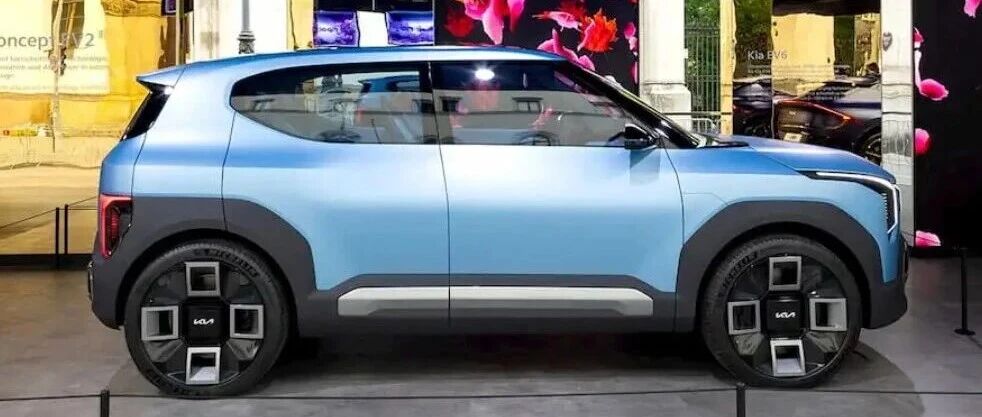
Core Viewpoint - The article discusses the increasing competition in the European electric vehicle (EV) market, highlighting the strategies of multinational car manufacturers to counter the growing presence of Chinese brands like BYD and MG by launching more affordable electric models [3][5]. Group 1: New Electric Vehicle Launches - Kia has confirmed the launch of its new entry-level model, the EV2, which will debut at the Brussels Motor Show on January 9, 2026. This compact electric SUV is set to be the smallest and cheapest electric vehicle from Kia, targeting a price point around €30,000 [3]. - Volkswagen plans to reintroduce its classic Polo as an electric model named ID. Polo, which will be based on the new MEB+ platform and is expected to start at €25,000, with a launch planned for spring 2026 [3]. - Renault, Nissan, Hyundai, and Ford are also set to introduce more economical electric models in 2026, with Renault's new electric Twingo expected to be priced below €20,000, relying on Chinese components for about 40% of its parts [4]. Group 2: Market Dynamics and Competition - Despite facing increased tariffs, Chinese brands are making significant inroads into the European market. In the first 11 months of 2025, the total registration in the broad European market reached 12.099 million vehicles, a 1.9% increase year-on-year, with electric vehicles driving this growth [5]. - The sales of pure electric vehicles reached 2.276 million units, marking a 27.4% year-on-year increase, while plug-in hybrid vehicles saw a 33.1% increase with 1.149 million units sold [5]. - Among the top ten car manufacturers in Europe, SAIC (mainly MG) ranked eighth with sales of 274,000 units, a 26.1% increase, while BYD ranked tenth with 160,000 units sold, experiencing a substantial growth of 276% [5][6]. Group 3: Emerging Chinese Brands - Chinese brands like Leap Motor and Chery's Omoda have shown remarkable growth in the European market, with Leap Motor's electric vehicle sales surging over 4000% year-on-year, and Omoda's sales increasing by 1100% during the same period [6].
高盛:料内地车企今年本土业务利润承压 加速海外扩张 比亚迪股份(01211)及小鹏汽车-W(09868)具优势
智通财经网· 2026-01-09 02:33
Group 1 - The core observation from Goldman Sachs indicates a cautious outlook on the overall Chinese automotive market, with management expecting retail sales of passenger vehicles in 2026 to decline by 5% to grow by 1% year-on-year, despite the continuation of the "old-for-new" subsidy policy [1] - The report highlights that all six OEMs anticipate their sales growth in 2026 to range from 11% to 68%, while overseas sales are expected to increase between 19% and 108%, indicating a significant expansion despite a stable domestic market [2] - The management teams emphasize an accelerated overseas expansion strategy for 2026, with plans to launch more overseas versions of new models and establish local sales and service channels [3] Group 2 - The introduction of new models is expected to be aggressive, with a total of 119 new models projected for 2026, categorized by price range: 46 in the mass market (below 200,000 RMB), 37 in the mid-to-high-end market (200,000 to 300,000 RMB), and 36 in the high-end/luxury market (above 300,000 RMB) [3] - The competitive landscape in the high-end market is anticipated to become more crowded, particularly in the 250,000 to 300,000 RMB price range, which is expected to be the most competitive segment [3] - Goldman Sachs predicts a contraction in the domestic profit pool for the Chinese automotive industry in 2026, while the overseas market is expected to see accelerated adoption of new energy vehicles [3]