
LJZ(600663)

Search documents
在陆家嘴,感受不一样的金融开放热度
Shang Hai Zheng Quan Bao· 2025-06-18 20:09
◎记者 陈佳怡 在当下的全球经济变局中,开放,是一种自信,更是一种担当。 这样的故事还有很多:目前,全球前50大银行有42家在华设有机构,40家最大的保险公司近半数已进入 中国;八成全国性银行通过引入境外战略投资者,提升了公司治理效能和经营管理水平…… 当前,中国正以更加开放的姿态拥抱世界。在外部环境复杂多变的背景下,这显得尤其难能可贵。"中 国对外开放的程度越深,对中国越有利,对全球经济也越有利。"伦敦金融城政府政策与资源委员会主 席贺凯思对记者说。 之于世界而言,中国的开放姿态无疑为国际合作注入了一股暖流,也注入了信心,更是一颗定心丸。正 如潘功胜所说,完善全球金融治理,需要各方加强对话与合作。"我们将坚持走改革开放之路、多边主 义之路,积极发挥建设性作用,为构建更加公平、公正、包容、有韧性的全球金融治理体系贡献力 量。" 在2025陆家嘴论坛的聚光灯下,一条从金融开放引领到市场筑基的路径清晰可见。正值科创板开板6年 之际,中国证监会发布《关于在科创板设置科创成长层 增强制度包容性适应性的意见》,以在科创板 设置专门层次为抓手,重启未盈利企业适用科创板第五套标准上市,推出一揽子更具包容性、适应性的 制度改 ...

“陆家嘴”声音传递金融开放信号
Shang Hai Zheng Quan Bao· 2025-06-18 20:07
Core Viewpoint - Shanghai is set to implement eight policy measures aimed at enhancing its status as an international financial center, focusing on financial openness and innovation in response to global economic trends [1][4][6]. Group 1: Policy Measures - Establishment of an interbank market transaction reporting database [6] - Creation of a digital RMB international operation center [6] - Formation of a personal credit agency [6] - Launch of a comprehensive reform pilot for offshore trade finance services in the Lingang New Area [6] - Development of offshore bonds in the free trade zone [6] - Optimization and upgrading of free trade account functions [6] - Innovation of structural monetary policy tools through "first trial" initiatives [6] - Collaboration with the China Securities Regulatory Commission to promote RMB foreign exchange futures trading [6] Group 2: Financial Openness and Cooperation - Emphasis on attracting foreign financial institutions and long-term capital to Shanghai, enhancing its role as a financial hub [2][11] - Commitment to expanding institutional financial openness and improving the business environment for foreign investments [11][13] - Focus on creating a more inclusive international financial system and enhancing global financial stability [11][10] Group 3: Technological and Market Development - Promotion of the integration of technological innovation and industrial innovation, particularly in the capital market [3] - Support for the development of a technology finance service system to facilitate the transformation of technological achievements into new productive forces [3][17] - Continuous improvement of the financial market structure and internationalization to enhance global resource allocation capabilities [2][3] Group 4: Risk Management and Regulatory Framework - Strengthening financial regulation and risk prevention measures to ensure stability in the financial sector [3][20] - Implementation of a more convenient, open, secure, and intelligent foreign exchange management system [16][21] - Introduction of supportive policies to stabilize employment, enterprises, and market expectations amid changing external environments [21][22]
多箭齐发!建立更加包容的国际金融体系,上海宣布八项措施引外资“活水”|聚焦2025陆家嘴论坛
Hua Xia Shi Bao· 2025-06-18 15:22
Core Points - The 2025 Lujiazui Forum in Shanghai announced eight measures to promote the construction of an international financial center, highlighting China's commitment to welcoming foreign investment in its financial market [2][3] - Shanghai aims to enhance its global financial resource allocation capabilities and build world-class exchanges, while continuing to optimize its financial market structure and deepen market connectivity [4][7] - The National Financial Regulatory Administration emphasized its unwavering determination to expand high-level financial openness and create a mutually beneficial financial development framework [5][6] Group 1: Measures to Attract Foreign Investment - The forum revealed multiple policies aimed at boosting foreign financial investment in China, providing significant confidence to foreign financial institutions [3][5] - Specific initiatives include optimizing the Qualified Foreign Institutional Investor (QFII) system and expanding the range of tradable products for foreign investors [5][6] - The introduction of a series of facilitation policies, such as reducing the negative list for capital project income usage, aims to support international economic cooperation [2][6] Group 2: Financial Market Development - The Shanghai government plans to enhance the efficiency and activity of its financial market, focusing on internationalization and structural optimization [4][7] - The National Financial Regulatory Administration will replicate successful practices from free trade zones to promote greater openness in the financial sector [4][6] - Future initiatives will include promoting cross-border capital pooling for multinational corporations and encouraging green foreign debt policies [7][8] Group 3: Regulatory Environment and Support - The regulatory bodies are committed to creating a transparent, stable, and predictable policy environment for foreign investors [5][9] - Continuous optimization of the foreign investment business environment is a priority, with a focus on legal construction and maintaining fair market order [5][10] - The forum highlighted the importance of foreign institutions in China's capital market, emphasizing their role in enhancing governance and operational efficiency [7][9]

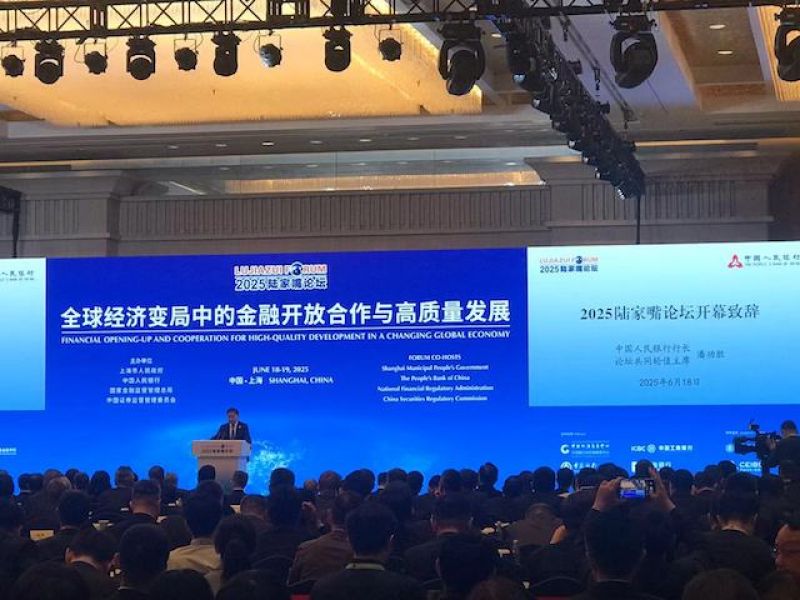
证监会主席吴清在陆家嘴论坛发表重磅演讲 设置科创成长层,重启第五套标准
Mei Ri Jing Ji Xin Wen· 2025-06-18 14:36
Core Viewpoint - The China Securities Regulatory Commission (CSRC) is set to deepen capital market reforms, focusing on the integration of technological and industrial innovation, with significant measures announced at the Lujiazui Forum [1][3]. Group 1: Capital Market Reforms - The CSRC will reintroduce the fifth set of listing standards for unprofitable companies on the Sci-Tech Innovation Board (STAR Market), which emphasizes core competitiveness rather than revenue or profit requirements [2][3]. - The STAR Market has successfully listed 20 companies under the fifth set of standards, raising a total of 42.871 billion yuan, with these companies achieving a 44.45% year-on-year revenue growth in 2024 [2]. Group 2: New Measures and Standards - The CSRC will establish a Sci-Tech Growth Layer on the STAR Market and officially implement a third set of standards on the ChiNext board to support high-quality unprofitable innovative enterprises [4]. - Six new reform measures will be introduced, including the trial introduction of professional institutional investors and pre-IPO review mechanisms for quality tech companies [3]. Group 3: Market Response - Following the announcements, the STAR Market saw a notable increase, with the STAR 50 Index rising by 0.53% on June 18, closing at 968.18 points [5]. - According to China International Capital Corporation (CICC), the tech sector is entering a new cycle, with significant structural opportunities emerging since the beginning of the year, particularly in AI, robotics, and semiconductors [5][6].

陆家嘴论坛聚焦开放合作,金融监管“一把手”释放多个重磅信号
Di Yi Cai Jing· 2025-06-18 13:56
Group 1: Forum Highlights - The 2025 Lujiazui Forum was held in Shanghai from June 18 to 19, focusing on "Financial Opening and Cooperation in the Global Economic Change" [1] - Key financial regulators, including the Governor of the People's Bank of China, delivered significant policy signals during the forum [1] - A series of favorable policies were announced, showcasing a commitment to deepen reforms and serve the real economy, such as green foreign debt policy trials and new QDII investment quotas [1][2] Group 2: Shanghai International Financial Center - The Central Financial Committee issued opinions to support the accelerated construction of Shanghai as an international financial center, aiming for a comprehensive upgrade in financial system adaptability and competitiveness over the next five to ten years [2] - Eight innovative policies will be implemented in Shanghai, including the establishment of a bank interbank market trading report library and a digital RMB international operation center [2] Group 3: Global Financial Governance - The Governor of the People's Bank of China emphasized the need for reform in the global monetary and payment systems, highlighting the increasing role of the RMB as a trade financing currency and its position as the third-largest payment currency globally [3][5] - The discussion on the evolution of the international monetary system is gaining traction, with calls for a diversified cross-border payment system [5][6] Group 4: Foreign Investment in China - Foreign banks and insurance institutions have over 7 trillion yuan in assets in China, with foreign insurance companies' market share increasing from 4% in 2013 to 9% currently [9] - The financial services market in China is expanding, particularly in consumer finance, with significant growth potential in sectors like automotive and electronics [9] Group 5: Regulatory Developments - A series of measures to support foreign trade enterprises and facilitate cross-border investment and financing were announced, including the promotion of a multinational corporate integrated fund pool policy [11][13] - The QDII investment quota will be increased, with a cumulative approved quota of 167.79 billion USD as of May 31, 2025 [13] Group 6: Capital Market Reforms - The China Securities Regulatory Commission announced reforms for the Sci-Tech Innovation Board, including the introduction of a growth layer for technology companies and six additional reform measures [14][16] - The fifth listing standard will be expanded to include more sectors such as artificial intelligence and commercial aerospace, addressing the financing needs of high-potential industries [17][18]
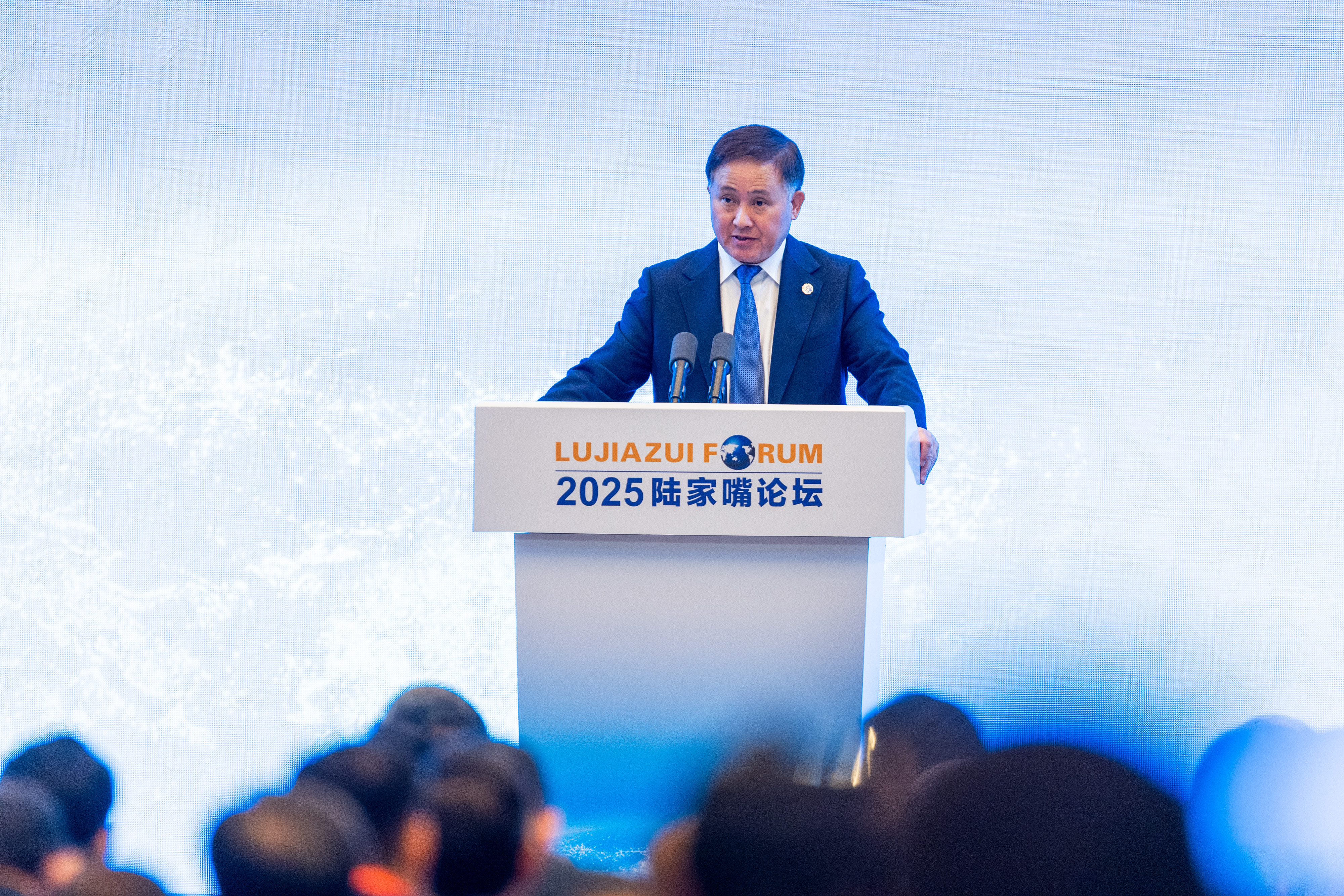
2025陆家嘴论坛释放新信号:央地协同擘画上海国际金融中心新蓝图
Sou Hu Cai Jing· 2025-06-18 13:55
全媒体记者/王占全 (上海,2025年6月18日) 在全球经济格局深度调整、金融治理面临多重挑战的背景下,以"全球经济变局中的金融开放合作与高质量发展"为主 题的2025陆家嘴论坛于今日在上海开幕。中国人民银行、国家金融监督管理总局、中国证监会、国家外汇管理局等中 央金融管理部门负责人齐聚黄浦江畔,密集发布多项重磅政策,全面展现中国以高水平开放推动金融高质量发展的决 心,为上海国际金融中心建设注入新动能。 一、金融开放:制度型突破与工具创新双轮驱动 1. 央行八项举措构建开放新框架 中国人民银行行长潘功胜在开幕式上宣布八项金融开放举措,涵盖金融基础设施、数字金融、跨境贸易等关键领域。 其中,银行间市场交易报告库的设立尤为瞩目,通过高频汇集债券、货币、衍生品等多市场数据,将有效打破信息壁 垒,提升跨市场风险监测能力,为宏观审慎管理提供支撑。此举回应了当前商业银行多元化资产配置带来的风险传导 隐忧,标志着中国金融监管从分业监管向穿透式监管的重要跨越。 在数字金融领域,数字人民币国际运营中心的落地将加速人民币国际化进程。该中心将推动数字人民币在跨境支付、 贸易融资等场景的应用,尤其联动香港、东盟等区域,探索"数字人 ...
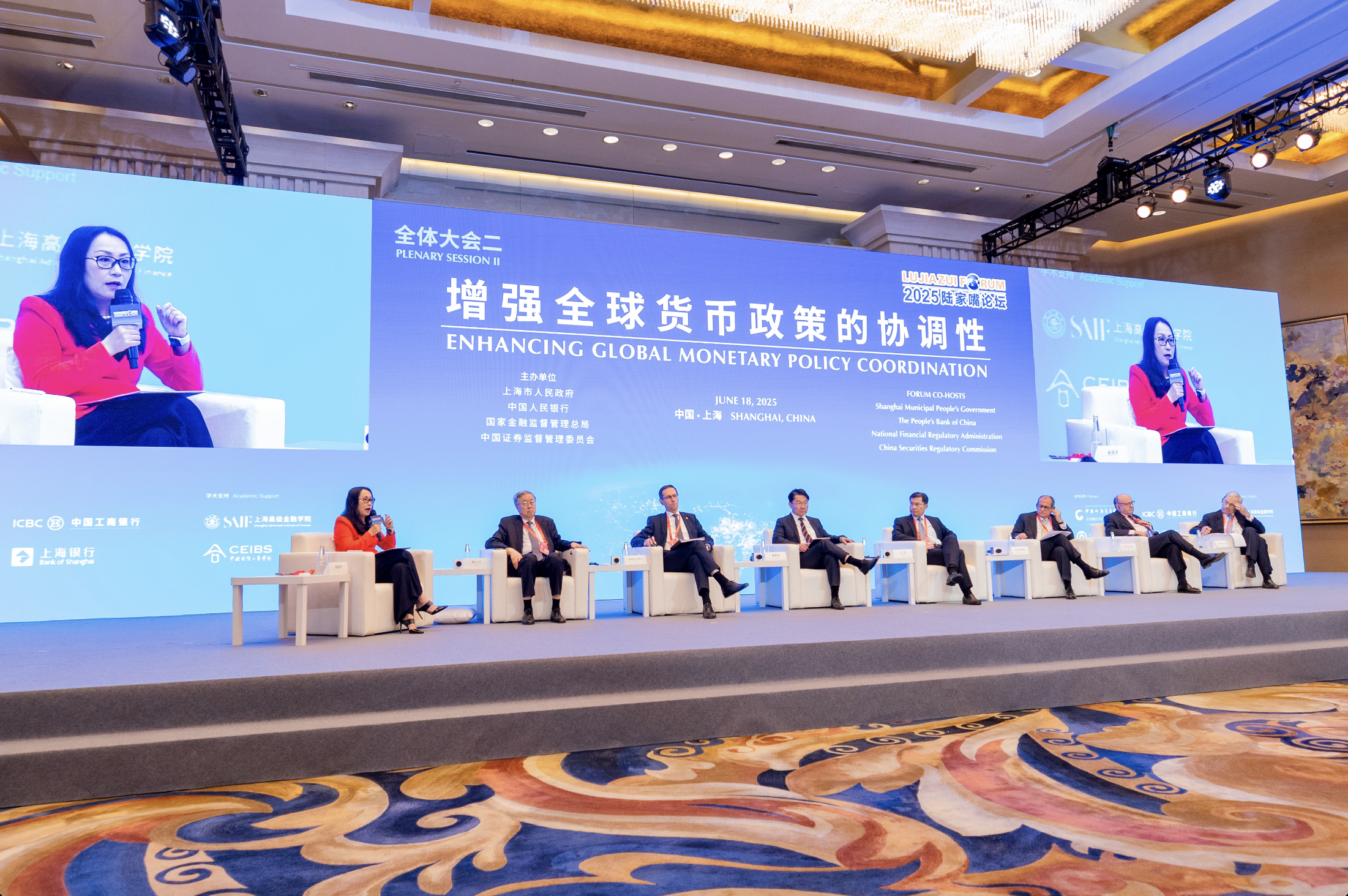
在不确定性中寻找货币稳定,陆家嘴论坛求解全球政策协调
Di Yi Cai Jing· 2025-06-18 13:25
Core Insights - The global economy is facing significant uncertainty, with the IMF predicting a slowdown in growth from 3.3% in 2024 to 2.8% in 2025, potentially dropping to 1.7% if trade shifts to a higher tariff framework [1][3] - There is a growing divergence in monetary policy stances among countries, complicating global financial stability and economic growth [3][4] - The current global macroeconomic governance is characterized by a lack of institutions, tools, and consensus, making coordination challenging [4][6] Group 1: Monetary Policy Challenges - Emerging markets are experiencing accelerated capital flows, currency depreciation, and trade uncertainties, while developed economies are balancing inflation control, growth support, and debt risk prevention [3][4] - The lack of a clear global institution for macroeconomic coordination and limited tools like Special Drawing Rights (SDR) hinder effective policy implementation [4][6] - The uncertainty surrounding U.S. tariff policies exacerbates the challenges of coordination, impacting cross-border trade and consumer confidence [4][5] Group 2: Structural Changes and Coordination - New challenges such as climate change and the rise of artificial intelligence are complicating monetary policy coordination [5][6] - There is a consensus among participants that central banks need to enhance international communication and coordination to address these complex challenges effectively [6][7] - Strengthening dialogue and cooperation among central banks through platforms like the IMF and BIS is deemed crucial for navigating current economic challenges [7] Group 3: Future of the Global Monetary System - The dominance of the U.S. dollar is facing unprecedented challenges, with a trend towards a more diversified global monetary system emerging [8][9] - The development of cryptocurrencies and digital currencies is gaining momentum, prompting discussions on the future role of the dollar and alternative currencies [8][9] - The establishment of a global central bank digital currency (CBDC) platform is suggested as a potential solution to enhance monetary stability [9][10] Group 4: Stablecoins and Dollarization - The rise of stablecoins, particularly those pegged to the U.S. dollar, may further entrench dollarization in various economies, raising concerns about its implications [10][11] - While stablecoins can improve transaction efficiency and facilitate cross-border flows, their potential to promote dollarization necessitates careful consideration [10][11] - The emergence of stablecoins presents opportunities for enhancing financial systems, but their impact on dollarization must be critically assessed [11]
摩根士丹利亚洲CEO在陆家嘴论坛上表示,全球资本多元化配置趋势下上海和中国香港能吸引资本。
news flash· 2025-06-18 12:07
Core Viewpoint - The CEO of Morgan Stanley Asia stated that under the trend of global capital diversification, Shanghai and Hong Kong can attract capital [1] Group 1 - The global trend of capital diversification is influencing investment decisions [1] - Shanghai and Hong Kong are positioned to benefit from this trend, enhancing their appeal to investors [1]
美元会衰落吗?如何看待稳定币?中外金融大咖陆家嘴热议
Sou Hu Cai Jing· 2025-06-18 10:39
Group 1 - The discussion at the Lujiazui Forum highlighted concerns over the impact of the Trump administration's tariff policies on the global economy and the potential decline of the US dollar as a reserve currency [1][2] - Giovanni TRIA emphasized that the US dollar's status provides the US with significant advantages, allowing it to finance its debts without limits, but the current tariff strategies may weaken confidence in the dollar and US bonds [1][2] - The need for a diversified global currency system was stressed, with the possibility of multiple currencies playing major roles and the issuance of a global Central Bank Digital Currency (CBDC) being considered [2][3] Group 2 - The role of stablecoins, particularly dollar-pegged stablecoins, was a focal point, with discussions on their potential global impact and the challenges of other currencies achieving similar status [2][3] - Concerns were raised about the implications of dollarization in various economies, with the need for careful consideration of its effects on national economies [3] - The Singapore Monetary Authority highlighted the importance of innovation in digital currencies to enhance financial system efficiency and facilitate cross-border transactions, suggesting that stablecoins may not necessarily lead to dollarization [3]
创新始于科技、兴于产业、成于资本,证监会主席吴清在陆家嘴论坛发表重磅演讲!机构热议“科特估”:科创行情开启新周期
Mei Ri Jing Ji Xin Wen· 2025-06-18 09:20
Core Viewpoint - The China Securities Regulatory Commission (CSRC) Chairman Wu Qing announced significant reforms at the 2025 Lujiazui Forum, focusing on enhancing capital market functions and promoting the integration of technological and industrial innovation [1][3]. Group 1: Capital Market Reforms - The CSRC will restart the fifth listing standard for unprofitable companies on the Sci-Tech Innovation Board (STAR Market) and officially implement the third standard on the ChiNext board to support high-quality unprofitable innovative enterprises [1][5]. - The fifth listing standard emphasizes that companies do not need to meet revenue or net profit requirements but must have approved core products and significant market potential [2][4]. - As of now, 20 companies have successfully listed on the STAR Market under the fifth standard, raising a total of 42.871 billion yuan, with these companies achieving a combined revenue of 14.338 billion yuan in 2024, reflecting a year-on-year growth of 44.45% [2]. Group 2: Policy Measures - The "1+6" policy measures include establishing a Sci-Tech Growth Layer on the STAR Market and expanding the fifth standard's applicability to more sectors, including artificial intelligence and commercial aerospace [4]. - Six specific reform measures will be introduced, such as trialing a pre-IPO review mechanism for quality tech companies and enhancing the refinancing system for STAR Market companies [4]. Group 3: Market Reactions and Future Outlook - Following Wu Qing's speech, the STAR Market saw a notable increase, with the Sci-Tech 50 Index rising by 0.53% on June 18 [6]. - According to China International Capital Corporation (CICC), there are still opportunities for capital allocation and valuation improvement in the sci-tech sector, with the potential for overseas capital to return to China's stock market [7]. - CICC highlighted that the current valuations of sci-tech companies remain attractive, with the forward P/E ratios for the ChiNext Index and Sci-Tech 50 Index at 21.6x and 50.7x, respectively [7].