HAIER SMART HOME(600690)

Search documents
AI应用催化密集,AI+家电落地加速
Orient Securities· 2026-01-13 12:57
Investment Rating - The report maintains a "Positive" investment rating for the home appliance industry, indicating an expectation of returns exceeding the market benchmark by more than 5% [4][11]. Core Insights - The report highlights that the domestic market's consumption potential is expected to be activated by the continuation of national subsidies, despite a marginal slowdown in their impact. The "Two New" policies are anticipated to further stimulate demand in the home appliance sector [3]. - The report emphasizes the acceleration of AI applications in the home appliance industry, with significant developments expected from AI models and smart hardware products [2][6]. Summary by Sections Domestic Market Outlook - The report notes that the leading companies in the white goods sector have a higher proportion of first-level energy-efficient products and more mature management processes for trade-in programs, positioning them to benefit more significantly from the evolving market dynamics [3]. - The first quarter of 2026 is projected to see stable production schedules for white goods, aligning with domestic market expectations [5]. International Expansion - The report identifies international expansion as a long-term strategy, with companies that diversify their production capacity being favored. A valuation shift is anticipated by 2026 [3]. AI Integration - The report discusses the rapid iteration of AI models and their broad application in the home appliance sector, suggesting that smart hardware products integrated with AI services are becoming a key trend. Companies like Yingzi Network are highlighted for their deep engagement in smart home segments [6].




海尔智家:公司所有重大投资均严格遵循公司章程及相关法律法规
Zheng Quan Ri Bao Wang· 2026-01-13 12:13
Core Viewpoint - Haier Smart Home (600690) emphasizes its focus on global technological innovation, deepening global capacity layout, efficiency enhancement, and continuous investment in smart home scenarios [1] Group 1: Investment Strategy - The company is committed to long-term investment projects, which are detailed in its periodic reports and related announcements [1] - All major investments are strictly in accordance with the company's articles of association and relevant laws and regulations [1] Group 2: Decision-Making Process - The company conducts rigorous feasibility analysis and necessary decision-making procedures for its investments [1] - The aim of these investments is to enhance the company's core competitiveness and long-term value [1]
中国消费家电板块:家电中铝代铜的进展与潜在影响-China Consumer Appliances Sector _Aluminum replacing copper in ACs_ Progress and potential impact
2026-01-13 11:56
Summary of Conference Call on China Consumer Appliances Sector Industry Overview - **Sector**: China Consumer Appliances - **Focus**: Transition from copper to aluminum in air conditioning (AC) units, particularly in heat exchangers [2][8] Key Points and Arguments Technological Shift to Aluminum - **Popularity**: The use of aluminum in ACs has gained traction due to a recent rally in copper prices [2] - **Standardization**: In December 2025, the Chinese Association of Refrigeration issued a standard for aluminum heat exchangers, and major manufacturers signed a convention to promote consumer acceptance [2][8] Cost Savings Potential - **Copper Content Breakdown**: A typical 1.5HP household AC contains approximately 6-7 kg of copper, with the heat exchanger accounting for 53% of this [3][10] - **Replacement Potential**: It is estimated that 50-60% of copper in ACs can be replaced by aluminum, primarily in heat exchangers [3][12] - **Cost of Goods Sold (COGS)**: Copper constitutes 25-29% of an AC's COGS, and switching to aluminum could reduce COGS by 40%, leading to overall savings of 5-7% [3][12] Adoption Challenges in China - **Efficiency Concerns**: Aluminum has lower heat conductivity than copper, which may lead to increased electricity consumption [4][14] - **Corrosion Resistance**: Aluminum is less resistant to corrosion, posing a higher risk of leakage, especially in humid regions [4][14] - **Welding Difficulties**: The complexity of welding aluminum increases post-sales costs [4][14] - **Consumer Education**: There is a need for consumer education regarding the reliability of aluminum compared to copper [4][14] Gross Margin (GM) Impact - **Projected COGS Growth**: Blended AC COGS is expected to grow by 4% in 4Q25 and 1Q26, and by 5% in 2Q26, which could lower GM by 3-4% YoY [5][15] - **Mitigation Strategies**: Recent price hikes in ACs may help mitigate the cost pressures if raw material prices remain stable [5][15] Sector Implications - **Long-term Outlook**: While the shift to aluminum could benefit the industry's GM in the long run, immediate adoption is not expected due to existing challenges [6] - **Investment Recommendations**: Favorable outlook on industry leaders like Midea and Haier due to their ability to manage cost pressures and optimize operations [6] Additional Insights - **Product Launches**: Wanbao launched an AC made from a zinc-aluminum alloy, priced at Rmb999, which is over 20% cheaper than copper-based models [8] - **Market Dynamics**: The shift to aluminum has been more successful in countries like Japan and the US, where consumer acceptance is higher [11] Conclusion The transition from copper to aluminum in the Chinese AC market presents both opportunities for cost savings and challenges related to efficiency and consumer acceptance. The industry's leaders are well-positioned to navigate these changes, but significant hurdles remain before widespread adoption can occur.
海尔智家(06690.HK)1月13日耗资1125.3万元回购43万股A股
Ge Long Hui· 2026-01-13 11:22
格隆汇1月13日丨海尔智家(06690.HK)公告,1月13日耗资1125.3万元回购43万股A股。 ...
海尔智家(06690)1月13日斥资1125.34万元回购43万股A股
智通财经网· 2026-01-13 11:21
智通财经APP讯,海尔智家(06690)发布公告,于2026年1月13日,该公司斥资人民币1125.34万元回购43 万股A股,每股回购价格为25.93-26.22元。 ...
海尔智家1月13日斥资1125.34万元回购43万股A股
Zhi Tong Cai Jing· 2026-01-13 11:19
海尔智家(600690)(06690)发布公告,于2026年1月13日,该公司斥资人民币1125.34万元回购43万股A 股,每股回购价格为25.93-26.22元。 ...
海尔智家(06690) - 翌日披露报表
2026-01-13 11:12
FF305 翌日披露報表 (股份發行人 ── 已發行股份或庫存股份變動、股份購回及/或在場内出售庫存股份) 表格類別: 股票 狀態: 新提交 公司名稱: 海爾智家股份有限公司 呈交日期: 2026年1月13日 FF305 確認 根據《主板上市規則》第13.25C條 / 《GEM上市規則》第17.27C條,我們在此確認,據我們所知所信,第一章節所述的每項股份發行或庫存股份出售或轉讓已獲發行人董事會正式授權批准,並遵 照所有適用上市規則、法律及其他監管規定進行,並在適用的情況下: (註7) 如上市發行人的已發行股份或庫存股份出現變動而須根據《香港聯合交易所有限公司(「香港聯交所」)證券上市規則》(「《主板上市規則》」)第13.25A條 / 《香港聯合交易所有限公司GEM證券 上市規則》(「《GEM上市規則》」)第17.27A條作出披露,必須填妥第一章節 。 | 第一章節 | | | | | | | | | --- | --- | --- | --- | --- | --- | --- | --- | | 1. 股份分類 | 普通股 | 股份類別 | A | | 於香港聯交所上市 | 否 | | | 證券代號 (如 ...
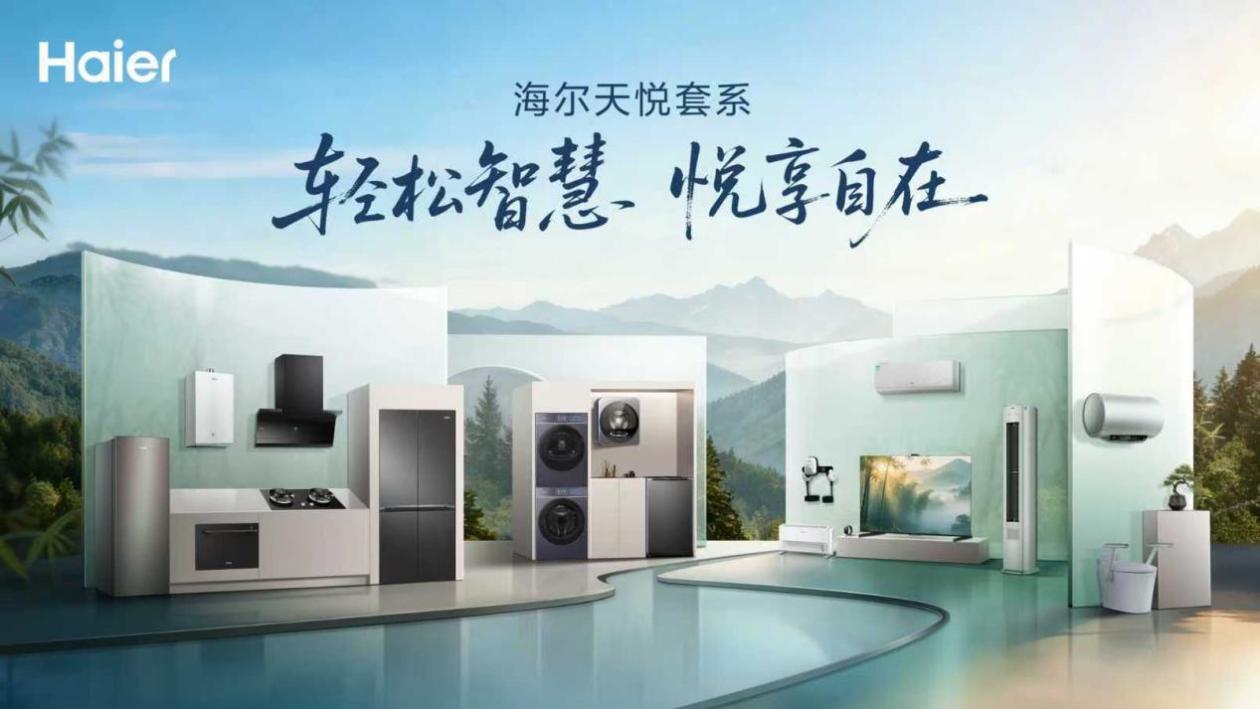
海尔发布行业首套全品类AI智慧康养套系
Huan Qiu Wang· 2026-01-13 10:41
Core Insights - The article highlights the launch of Haier's Tianyue series, the first full-category AI smart health and wellness product line, addressing the needs of the aging population and their families [1][7] Group 1: Product Features - The Tianyue series includes solutions for various living spaces such as smart kitchens, living rooms, balconies, and bathrooms, aimed at enhancing the quality of life for the elderly [1][7] - The series offers proactive safety measures, such as automatic gas shut-off in the kitchen and alerts for prolonged bathing, ensuring the safety of elderly users [3] - It provides user-friendly interfaces and voice-activated controls, making it easier for seniors to operate smart devices without feeling overwhelmed [4] Group 2: Health Management - The Tianyue series incorporates comprehensive health management features, including AI technology for food preservation and specialized appliances for maintaining cleanliness and comfort [6] - The products are designed to meet the higher quality of life expectations of the elderly, integrating health management into daily routines [6] Group 3: Market Position and Strategy - Haier has achieved a leading position in the global home appliance market, with 17 consecutive years of retail volume leadership and penetration into over 300 million Chinese households [6] - The company emphasizes user-centered innovation, as evidenced by the success of previous product lines, which have seen significant sales figures [6]

海尔取得出风装置及空调器专利
Sou Hu Cai Jing· 2026-01-13 10:05
国家知识产权局信息显示,青岛海尔空调器有限总公司、青岛海尔空调电子有限公司、青岛海尔智能技 术研发有限公司、海尔智家股份有限公司取得一项名为"出风装置、空调器"的专利,授权公告号 CN118998963B,申请日期为2023年5月。 天眼查资料显示,青岛海尔空调器有限总公司,成立于1996年,位于青岛市,是一家以从事电气机械和 器材制造业为主的企业。企业注册资本93638.162532万人民币。通过天眼查大数据分析,青岛海尔空调 器有限总公司共对外投资了20家企业,参与招投标项目4891次,财产线索方面有商标信息259条,专利 信息5000条,此外企业还拥有行政许可19个。 青岛海尔空调电子有限公司,成立于1999年,位于青岛市,是一家以从事专用设备制造业为主的企业。 企业注册资本96709.088914万人民币。通过天眼查大数据分析,青岛海尔空调电子有限公司共对外投资 了14家企业,参与招投标项目4731次,财产线索方面有商标信息124条,专利信息5000条,此外企业还 拥有行政许可29个。 青岛海尔智能技术研发有限公司,成立于2014年,位于青岛市,是一家以从事研究和试验发展为主的企 业。企业注册资本13 ...
重磅|从世界工厂到全球心智占领——中国品牌出海路径解析
科尔尼管理咨询· 2026-01-13 09:59
Core Insights - The article highlights the global success of Chinese brands, particularly through the example of Pop Mart's IPs, which have gained significant traction in international markets, with overseas revenue reaching 1.4 billion yuan in the first half of 2024, accounting for 30% of total revenue, a nearly threefold increase compared to the same period in 2021 [1] Group 1: Brand Globalization Acceleration - The process of establishing brand recognition overseas has been significantly shortened from ten years to approximately 3-5 years, marking a shift from a prolonged battle to a rapid engagement strategy [8] - This acceleration is supported by improved infrastructure, including cross-border e-commerce platforms, social media for targeted marketing, and robust supply chain systems [9] Group 2: Transformation of Export Categories - The scope of Chinese exports is evolving from physical products to cultural IP and services, with IP product exports growing at 8%, surpassing the average growth rate of consumer goods exports [10] - This shift indicates a transition from being mere suppliers in the global supply chain to becoming value co-creators through deeper user engagement [10] Group 3: Deepening Export Models - Chinese brands are transitioning from a trade-based export model to a global supply chain layout, enhancing their market competitiveness and integrating more deeply into local economies [11] Group 4: Upgrading Consumer Connection Channels - Brands are moving away from reliance on platforms like Amazon to a diversified omnichannel operation, which includes direct-to-consumer (DTC) models and multi-channel strategies to better engage local consumers [12] Group 5: Regional Market Variations - The Asia-Pacific market is characterized by rapid demand growth and an expanding middle class, with consumers prioritizing quality and individual expression, benefiting culturally adaptable consumer goods [17] - In North America and Europe, despite slower overall growth, consumers are highly sensitive to product value, favoring categories with technological barriers and sustainable attributes [18] - Emerging markets like Latin America present unique opportunities for high-value, practical products, while the Middle East and Africa focus on meeting basic needs with cost-effective solutions [19] Group 6: Category Differentiation Strategies - Chinese companies must focus on their resource endowments and strategic priorities to maximize export efficiency, categorizing consumer goods into three types based on market share and growth potential [20] - For durable goods, the challenge lies in breaking through competitive saturation while enhancing profit margins through brand premium and supply chain resilience [25][26] - Fashion and cultural products must build deep emotional connections with consumers to transition from short-term popularity to long-term loyalty [29] Group 7: Case Studies of Successful Brands - Haier exemplifies successful globalization with a revenue of 285.98 billion yuan in 2024, where overseas income surpassed domestic for the first time, showcasing a robust local operational system [27][28] - Miniso's global strategy emphasizes emotional connection with consumers, achieving a revenue of 17 billion yuan in 2024, with overseas revenue growing by 41.9% [30][31] - Huaxizi, a beauty brand, has effectively penetrated international markets by leveraging unique cultural narratives and products, achieving significant sales in Japan and expanding into Europe [32][33]