JINJIANG HOTELS(600754)

Search documents
社服零售行业周报:端午假期游客人次稳健增长,老铺黄金新品发布-20250603
HUAXI Securities· 2025-06-03 02:26
Investment Rating - Industry rating: Recommended [4] Core Insights - The report highlights a robust growth in visitor numbers during the Dragon Boat Festival, with a projected total of 6.87 billion trips, reflecting a year-on-year increase of 3.0% [1][18] - The demand for family-oriented travel has surged, particularly for short-distance self-driving trips and parent-child tours, with bookings for parent-child group tours increasing by 80% year-on-year [1][2] - The launch of new products by Lao Pu Gold, such as the Seven Sons Gourd, is expected to drive high demand in the fashion gold jewelry sector, despite a tightening overall consumption environment [2] Summary by Sections 1. Market Review - The consumer service index and retail index outperformed the CSI 300 index, with significant gains in the jewelry and watch sector [11] - The report notes a 5.1% year-on-year increase in total retail sales in April, with jewelry sales growing by 25.3% [36][50] 2. Industry & Company Dynamics - The report discusses the increase in domestic tourism, with various regions reporting significant visitor numbers during the holiday period [18][19] - Lao Pu Gold's new product launch is positioned to capture the growing trend in fashion jewelry, appealing to consumer sentiment and aesthetic preferences [2][3] 3. Macro & Industry Data - April's retail sales data indicates a stable growth trajectory, with online retail sales showing a 5.8% year-on-year increase [37] - The report provides insights into the gold jewelry market, noting a decline in overall gold consumption but an increase in gold bars and coins [52][55] 4. Investment Recommendations - The report suggests five investment themes, including the revival of traditional retail formats, the rise of AI technology applications, and the potential for new retail sectors to outperform expectations [59][61]




卖枕头,真能救酒店?
创业邦· 2025-05-30 03:34
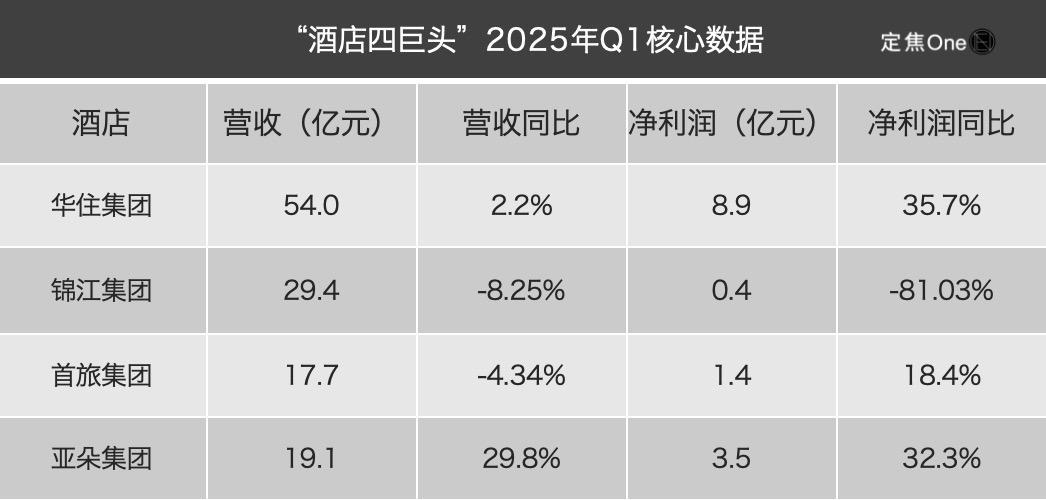
Core Viewpoint - The Chinese hotel industry is experiencing a "ice and fire" scenario, with major players like Huazhu, Jinjiang, Shoulu, and Atour showing divergent performance and strategic choices amid overall industry growth [3][6]. Group 1: Performance Overview of Major Players - Huazhu Group leads with Q1 2025 revenue of 5.4 billion yuan, a 2.2% year-on-year increase, and a net profit of 890 million yuan, up 35.7% [4][8]. - Atour Group, with 1,727 stores, is the only one among the four giants to achieve significant growth in both revenue and profit, reporting a 29.8% revenue increase to 1.91 billion yuan and a 32.3% net profit increase to 350 million yuan in Q1 2025 [5][8]. - Jinjiang Group, despite having the largest number of stores (13,513), saw a revenue decline of 8.25% to 2.94 billion yuan and a staggering 81.03% drop in net profit to 40 million yuan [4][9]. - Shoulu Group reported a revenue of 1.77 billion yuan, down 4.34%, but net profit increased by 18.4% to 140 million yuan [4][10]. Group 2: Strategic Insights - Huazhu maintains a light-asset model with a high franchise ratio (94.7%), focusing on franchise growth while cautiously exploring retail [5][26]. - Atour's retail revenue has surged, accounting for 30.3% of total revenue, with a 66.5% increase in retail income to 694 million yuan in Q1 2025, although this has led to a 61.7% rise in sales expenses [24][25]. - Jinjiang and Shoulu are struggling with growth, with Jinjiang's core mid-to-low-end business declining and Shoulu's membership and "scenic + dining" strategy showing limited results [5][28]. Group 3: Industry Trends and Challenges - The hotel industry is facing a "volume increase, price decrease" trend, with overall RevPAR down 9.7% to 118 yuan, ADR down 5.8% to 200 yuan, and OCC down 2.5% to 58.8% [13][14]. - The competitive landscape is intensifying, with Huazhu and Atour maintaining operational efficiency through high occupancy rates, while Jinjiang and Shoulu struggle with both occupancy and pricing [5][17]. - The shift towards a light-asset model is prevalent, with franchise stores exceeding 90% across the industry, complicating brand management [41]. Group 4: Future Outlook - The key for Huazhu will be to enhance operational precision to counteract slowing growth, while Atour must maintain profitability amid retail expansion [5][41]. - Jinjiang and Shoulu need to find new growth avenues, focusing on improving membership conversion efficiency and expanding their presence in the high-end market [41].





卖枕头,真能救酒店?
3 6 Ke· 2025-05-30 01:23
Core Viewpoint - The Chinese hotel industry is experiencing a "ice and fire" scenario, with major players like Huazhu, Jinjiang, Shoulu, and Atour showing divergent performance and strategic choices amid overall industry growth [1][4]. Group 1: Financial Performance of Major Players - Huazhu Group leads with Q1 2025 revenue of 5.4 billion yuan, a 2.2% year-on-year increase, and a net profit of 890 million yuan, up 35.7% [2][5]. - Atour Group is the only one among the four giants to achieve significant growth, with Q1 2025 revenue of 1.91 billion yuan, a 29.8% increase, and a net profit of 350 million yuan, up 32.3% [2][3]. - Jinjiang Group reported Q1 2025 revenue of 2.94 billion yuan, down 8.25%, and a net profit of 40 million yuan, down 81.03% [2][6]. - Shoulu Group's Q1 2025 revenue was 1.77 billion yuan, a decline of 4.34%, with a net profit of 140 million yuan, an increase of 18.4% [2][6]. Group 2: Market Dynamics and Strategies - The hotel industry is facing "volume increase and price decrease" pressures, with Huazhu and Atour maintaining operational efficiency through high occupancy rates, while Jinjiang and Shoulu struggle with both occupancy and pricing [3][27]. - Huazhu's business model relies heavily on a light-asset strategy with 94.7% of its 11,685 stores being franchise-based, while Atour focuses on differentiation and retail, with retail revenue accounting for 30.3% of its total [3][8]. - Jinjiang and Shoulu are experiencing challenges in their traditional mid-to-low-end markets, with Jinjiang's limited service hotel revenue declining significantly [19][23]. Group 3: Operational Metrics - The overall industry RevPAR (Revenue per Available Room) decreased by 9.7% to 118 yuan, with ADR (Average Daily Rate) at 200 yuan, down 5.8%, and OCC (Occupancy Rate) at 58.8%, down 2.5% [10][11]. - In Q1 2025, Huazhu's RevPAR was 208 yuan, down 3.9%, with an occupancy rate of 76.2% [13][14]. - Atour's RevPAR was 304 yuan, maintaining a high level compared to its peers, while Jinjiang and Shoulu reported lower RevPARs of 192 yuan and 141 yuan, respectively [13][14]. Group 4: Future Outlook and Challenges - The future focus for Huazhu is on refining operations to counteract slowing growth, while Atour must maintain profitability amid its retail expansion [3][27]. - Jinjiang and Shoulu need to find new growth avenues, particularly in enhancing their membership systems and exploring high-end market opportunities [19][25]. - The overall trend indicates that traditional hotel giants face significant challenges in adapting to market changes and improving operational efficiency [26][27].
连锁酒店的下沉战火,已经蔓延至县城咖啡
3 6 Ke· 2025-05-26 02:22
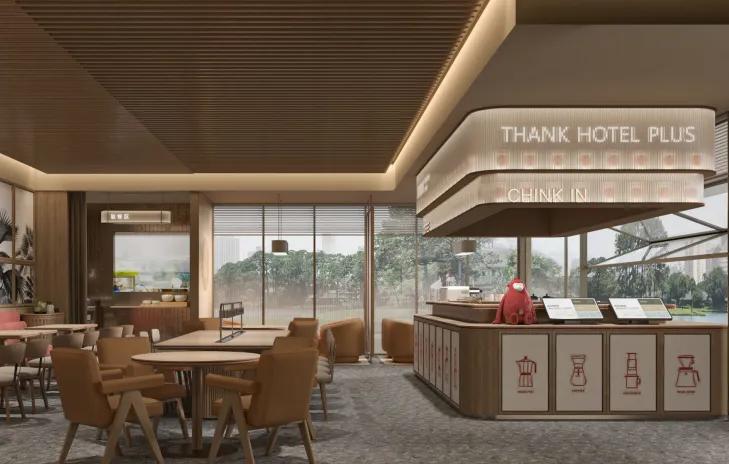
Core Insights - The article discusses the emergence of the "hotel + coffee" model, particularly through the launch of the 尚客优悦 2.0 brand by 尚美数智酒店集团, which aims to capture the growing coffee market among younger travelers and the downward market trend [1][6]. Group 1: Product Concept and Design - 尚客优悦 2.0 integrates a coffee shop experience within the hotel environment, transforming traditional hotel lobbies into immersive coffee spaces that serve as social hubs [2][4]. - The design includes a multifunctional space that combines hotel, café, rest area, and business meeting zones, addressing the low utilization of traditional hotel public areas [4][19]. - The brand offers a 24-hour coffee service, enhancing guest experience and operational efficiency through smart technology [4][5]. Group 2: Market Trends and Consumer Behavior - The coffee market is shifting from elite consumption to mass appeal, with younger consumers bringing urban lifestyles back to smaller towns, thus expanding the coffee market into lower-tier cities [6][9]. - Data indicates that 67.5% of consumers drink coffee for energy, while 35.8% do so for social reasons, highlighting the growing necessity for coffee in various social contexts [8][9]. - The trend of integrating coffee services into hotels is not new, but it is gaining traction as hotels seek to diversify revenue streams and enhance guest experiences [9][10]. Group 3: Competitive Landscape - Major hotel chains are increasingly entering the coffee market, with various strategies such as partnerships with coffee brands, incorporating coffee into their brand identity, or launching proprietary coffee brands [9][10]. - The cost structure of coffee production indicates that leveraging existing hotel infrastructure can significantly reduce operational costs, making the "hotel + coffee" model financially attractive [13]. - The competition for the downward market is intensifying, with both coffee and hotel industries recognizing the potential in lower-tier cities [10][20]. Group 4: Future Directions - The evolution of hotels into "third spaces" reflects changing consumer preferences, particularly among Gen Z, who seek personalized and social experiences beyond traditional accommodations [14][15]. - The success of the "hotel + coffee" model will depend on the ability to create immersive experiences that resonate with younger consumers, rather than merely selling coffee [20][21].

社服行业24年年度、25Q1业绩综述:子行业表现分化,关注韧性较强及顺周期修复板块
Bank of China Securities· 2025-05-23 11:17
Investment Rating - The report maintains an "Outperform" rating for the social services industry [1] Core Insights - The overall revenue of the sector is steadily increasing, but the recovery in performance is slower, with significant differentiation among sub-sectors. Attention is recommended for cyclical recovery sectors such as human resources and exhibitions, as well as resilient sectors like tourism and scenic spots [1][2] - In 2024, the social services sector achieved a total revenue of 191.54 billion, a year-on-year increase of 36.57%, while the net profit attributable to shareholders was 7.48 billion, a year-on-year decrease of 18.21%. The overall profitability has declined [10][14] - In Q1 2025, the sector generated a revenue of 44.84 billion, a year-on-year increase of 38.75%, with a net profit of 1.81 billion, a year-on-year increase of 33.06% [20][22] Summary by Sections Sector Summary - The revenue growth rate outperformed the profit growth rate, with the professional services and education sectors performing better. In 2024, the professional services sector saw a year-on-year increase of 79.57%, while the education sector's profit level improved significantly [10][14] - In Q1 2025, the professional services sector led with a revenue growth of 89.62%, followed by tourism and scenic spots at 7.39% [22] Tourism - The domestic travel market shows strong resilience, with a total of 5.615 billion domestic tourists in 2024, a year-on-year increase of 14.80% [34] - The cross-border travel market is experiencing high demand, with inbound tourists reaching 132 million in 2024, a year-on-year increase of 60.8% [40] Hotels - Business travel demand is still recovering, with the RevPAR expected to be under pressure throughout 2024 [13] Catering - The catering market is expected to see slower revenue growth in 2024, with Q1 2025 showing some improvement [16] Duty-Free - Duty-free sales in offshore areas are showing marginal improvement, with city channels expected to contribute to growth [18] Human Resources - The human resources sector is experiencing stable data operations, but employment market pressures remain [22] Exhibitions - The domestic exhibition market is steadily growing, with the number of exhibitions remaining stable in 2024 [24]





酒店“三巨头”一季报:华住逆势增长 锦江与首旅业绩承压
Xin Hua Cai Jing· 2025-05-21 05:19
新华财经上海5月21日电(谈瑞)随着华住集团在5月20日晚间发布2025年第一季度财报,中国酒店业三 大头部集团——锦江酒店、华住集团、首旅如家的经营分化格局愈加明朗。 在消费需求结构性调整、行业刚需竞争加剧的背景下,三家企业分别交出截然不同的答卷:华住集团凭 借轻资产战略逆势增长,锦江酒店规模扩张难掩盈利困境,首旅如家则通过成本控制实现利润突围。 华住强势增长,锦江净利骤降超八成 "2025年第一季度,酒店行业的供给增长仍未见边际放缓,但商务需求呈改善趋势。"中信证券消费行业 首席分析师姜娅在研报中表示,一季度,酒店行业RevPAR同比下降3.6%,较上一季度降低5.2%的水平 进一步收窄,其中平均价格下降2.3个百分点,平均入住率下降0.7个百分点。截至3月底,酒店数量同比 增长9.3%,客房数量同比增长8.8%,整体供给同比增速较2024年年底略有提升。 这一趋势在三大头部集团的财报数据上得到了充分印证。在RevPAR这一核心经营指标上,三大集团均 面临下滑压力,但程度差异较为显著。 根据行业协会统计数据,截至2024年底,中国国内酒店集团中,规模排名居前的依次是锦江酒店(客房 数129.1万间、门店数 ...
可选消费周度趋势解析:本周宠物和美国消费板块股市表现最优,大多板块估值仍低于过去5年平均观点聚焦-20250518
Haitong Securities International· 2025-05-18 15:17
Investment Rating - The report assigns an "Outperform" rating to multiple companies within the discretionary consumption sector, indicating a positive outlook for their performance relative to the market [1][3][5]. Core Insights - The pet and U.S. hotel sectors have shown the best performance this week, with valuations in most sectors still below the average of the past five years [1][4][13]. - The report highlights that the average increase for leading companies in the pet sector was 9.1%, driven by favorable trade negotiations and the commencement of the 618 pre-sale [4][15][17]. - Valuation analysis indicates that most sub-sectors are trading below their historical averages, suggesting potential investment opportunities [5][9][19]. Sector Performance Review - Weekly performance rankings: Pet > U.S. Hotel > Credit Card > Cosmetics > Gambling > Sportswear > Luxury Goods > Snacks [7][14]. - Monthly performance rankings: Pet > U.S. Hotel > Gambling > Cosmetics > Sportswear > Credit Card > Luxury Goods > Snacks [14]. - Year-to-date (YTD) performance rankings: Pet > Luxury Goods > Cosmetics > Snacks > Credit Card > U.S. Hotel > Sportswear > Gambling [14]. Valuation Analysis - As of May 16, 2025, the expected P/E ratios for various sectors are as follows: - Sportswear: 15.6x (77% of 5-year average) - Luxury Goods: 18.4x (52% of 5-year average) - Gambling: 14.2x (23% of 5-year average) - Cosmetics: 36.8x (91% of 5-year average) - Pet: 50x (51% of 5-year average) - Snacks: 24.3x (37% of 5-year average) - U.S. Hotel: 29.4x (18% of 5-year average) - Credit Card: 32x (61% of 5-year average) [5][9][18][19].




酒店业转型 从人力密集到人机协同
Bei Jing Shang Bao· 2025-05-13 16:12
Core Insights - The Chinese hotel industry is undergoing a significant efficiency revolution driven by AI technology, transforming service models and competitive logic [1][8] - AI is expected to replace a portion of hotel labor, potentially saving up to 30% in labor costs while shifting roles from repetitive tasks to high-value services [1][6] AI Implementation in Hotels - AI technologies such as smart front desk robots and AI digital managers are being integrated into hotel operations, enhancing efficiency and customer service [3][4] - Companies like Huazhu and Shoulv Rujia are leveraging AI for self-service check-ins and backend management, improving operational decision-making [3][4] Cost Reduction and Efficiency Gains - AI applications are reported to reduce labor costs by 30% and improve operational efficiency by 50% in processes like order inquiries and room assignments [6][4] - The use of AI digital managers has allowed hotel groups to automate 60% of repetitive tasks, freeing up human resources for more strategic roles [4][6] Market Trends and Challenges - The hotel industry is facing declining average daily rates (ADR) and occupancy rates (OCC), prompting a focus on cost reduction through AI [7][6] - Despite the benefits, challenges remain in AI adoption, including technology maturity and employee skill gaps [8][9] Future Outlook - The trend towards increased digital training and skill enhancement in the hotel workforce is expected to continue, with a shift towards a more technology-driven operational model [10][9] - The integration of AI is anticipated to evolve the hotel industry from a labor-intensive model to a human-machine collaborative approach [8][10]
店长都用数字人,昔日“人力密集型”酒店业全面转型“人机协同”
Bei Jing Shang Bao· 2025-05-13 08:59
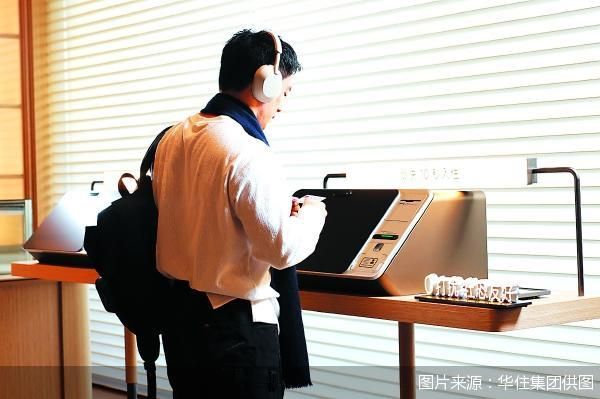
Core Insights - The Chinese hotel industry is undergoing a significant efficiency revolution driven by AI technology, transforming service models and competitive logic [1] - AI is expected to replace a portion of hotel labor, potentially saving up to 30% in labor costs while shifting roles from repetitive tasks to high-value services [1][4] Group 1: AI Implementation in Hotels - Companies like Huazhu and Shoulv Rujia are increasingly adopting AI technologies, such as smart front desk robots and AI digital managers, to enhance operational efficiency [2][3] - AI applications in hotels are improving various processes, with data showing a 50% increase in efficiency for tasks like order inquiries and room assignments [3] - The "AI digital manager" is already operational in 3,200 stores under Shoulv Hotel Group, achieving a 90% usage rate and conducting 420,000 automatic price adjustments this year [3] Group 2: Cost Reduction and Efficiency - AI is helping hotels reduce labor costs by 30% through self-service solutions and energy management systems [4] - The average room price (ADR), occupancy rate (OCC), and revenue per available room (RevPAR) have shown a downward trend, prompting hotels to focus on cost reduction [5] - AI-driven revenue management systems are dynamically optimizing pricing, which has positively impacted RevPAR for some hotels [5] Group 3: Transition to Human-Machine Collaboration - The hotel industry is shifting from a labor-intensive model to a human-machine collaborative approach, with over 60% of surveyed entities acknowledging this trend [6] - Challenges remain in AI adoption, including insufficient technology maturity and a lack of employee skills in utilizing AI [6] - Future training will focus on enhancing digital capabilities and integrating AI with operational processes to avoid traditional practices [7]

2025深蓝智库|店长都用数字人,昔日“人力密集型”酒店业全面转型“人机协同”
Bei Jing Shang Bao· 2025-05-13 08:53
Core Insights - The Chinese hotel industry is undergoing a significant efficiency revolution driven by AI technology, transforming service models and competitive logic [1][10] - Major hotel companies are increasingly adopting AI to shift from labor-intensive operations to human-machine collaboration, with AI expected to replace a portion of human labor and reduce labor costs by 30% [1][7] AI Implementation in Hotels - AI is penetrating various roles within the hotel industry, with companies like Huazhu implementing smart front desk robots for self-check-in and humanoid robots for luggage handling and room cleaning [3] - AI is also enhancing backend management, as seen with ShouLai RuJia's "AI Digital Manager," which analyzes operational data to assist hotel managers with real-time insights and future traffic warnings [3] - Wanda Hotels is utilizing AI for guest experience management and has created over 200,000 service tags to improve personalized service for over 120,000 members [3] Cost Reduction and Efficiency - AI applications are helping hotels reduce labor costs by 30% through self-service solutions, while energy management systems also contribute to a 30% reduction in energy consumption [7] - The "AI Digital Manager" is expected to handle 60% of repetitive tasks, allowing human managers to focus on more strategic aspects of hotel management [4][7] - Training periods for new employees have been significantly shortened, with some companies reporting a reduction from 7 days to 2 days for onboarding [7] Market Challenges and Trends - The hotel industry is facing pressure on key performance indicators such as average daily rate (ADR) and occupancy rate (OCC), leading to a focus on cost reduction as a priority [8] - Major hotel groups have reported declines in ADR and OCC, with Jinjiang Hotels showing a drop in ADR from 529.74 yuan in 2023 to 490.51 yuan in 2024 [8] - AI revenue management systems are dynamically optimizing pricing, which has positively impacted revenue per available room (RevPAR) [8] Future Outlook - The hotel industry is moving towards a human-machine collaborative model, with over 60% of surveyed entities acknowledging this shift [10] - There are challenges in AI adoption, including the maturity of technology and the need for employee training in AI skills [10] - Future training will focus on enhancing digital capabilities and integrating AI with management processes to avoid traditional operational habits [11]