CYPC(600900)

Search documents
长江电力(600900) - 长江电力2025年中期利润分配方案公告
2025-12-30 10:00
股票代码:600900 股票简称:长江电力 公告编号:2025-058 中国长江电力股份有限公司 2025 年中期利润分配方案公告 本公司董事会及全体董事保证本公告内容不存在任何虚假记载、 误导性陈述或者重大遗漏,并对其内容的真实性、准确性和完整性承 担法律责任。 重要内容提示: 每股分配比例:每股派发现金红利 0.21 元人民币(含税)。 本次利润分配以实施权益分派股权登记日登记的总股本为基 数,具体日期将在权益分派实施公告中明确。 在实施权益分派的股权登记日前公司总股本发生变动的,将维 持每股分配金额不变,相应调整利润分配总额,并另行公告具体调整 情况。 根据公司 2024 年年度股东会授权,本次中期利润分配方案经 董事会审议通过后即可实施。 一、利润分配方案内容 中国长江电力股份有限公司(以下简称公司)2025 年 1-9 月实 现归属于上市公司股东的净利润为人民币 28,192,874,494.95 元(未 经审计)。根据《公司章程》相关规定,经公司第六届董事会第五十 次会议审议,公司 2025 年中期利润分配方案为:以公司总股本 24,468,217,716 股为基数,每 10 股派发现金红利 2. ...
长江电力2025年中期利润分配方案:拟10派2.1元
Zheng Quan Shi Bao Wang· 2025-12-30 09:47
Group 1 - The core point of the article is that Changjiang Electric Power (600900) announced its profit distribution plan for the first half of 2025, proposing a cash dividend of 2.10 yuan per 10 shares, totaling 5.138 billion yuan (including tax) [1] Group 2 - The total share capital of the company is 24.468 billion shares, which serves as the basis for the dividend distribution [1] - The cash dividend distribution reflects the company's commitment to returning value to its shareholders [1] - The announcement was made on December 30, indicating the company's proactive communication regarding its financial strategies [1]
A股三大指数午后再度走高,A500ETF南方(159352)成分股三花智控涨停,一键布局核心资产投资机遇
Xin Lang Cai Jing· 2025-12-30 06:21
Core Viewpoint - The A500 ETF Southern (159352) is experiencing significant market activity and positive performance, reflecting a broader bullish sentiment in the Chinese stock market, particularly as it approaches key resistance levels like the 4000-point mark on the Shanghai Composite Index [1][2]. Group 1: A500 ETF Performance - As of December 30, 2025, the A500 ETF Southern (159352) increased by 0.48%, with a turnover rate of 18.06% and a total transaction volume of 8.405 billion yuan, indicating active market participation [1]. - In the past five trading days, the A500 ETF Southern saw net inflows on four occasions, totaling 6.774 billion yuan [1]. - The A500 ETF closely tracks the CSI A500 Index, which is recognized as a "barometer of China's new productive forces," covering approximately 90 sub-industries and focusing on industry leaders and ESG criteria [1]. Group 2: Index Composition and Strategy - The top ten weighted stocks in the CSI A500 Index include major companies such as CATL, Kweichow Moutai, and Ping An Insurance, highlighting the index's focus on significant market players [1]. - The index employs a unique construction logic that prioritizes industry leaders and excludes negative ESG performers, aligning with national strategic industries and providing a diversified investment vehicle [1]. - The A500 ETF Southern offers a low management fee of 0.15% and a custody fee of 0.05%, making it an attractive option for investors seeking high precision and low-cost investment channels [2]. Group 3: Market Outlook - Guotai Junan Securities predicts that the Chinese stock market will stabilize and surpass critical levels, with the potential for a "transformation bull market" as the Shanghai Composite Index reaches new highs [2]. - The A500 ETF Southern is noted for its low tracking error and significant excess return rates, reinforcing its position as a reliable investment tool in the current market environment [2].





亦庄500千伏变电站竣工投产,满足高精尖产业用电需求
Bei Jing Ri Bao Ke Hu Duan· 2025-12-30 05:58
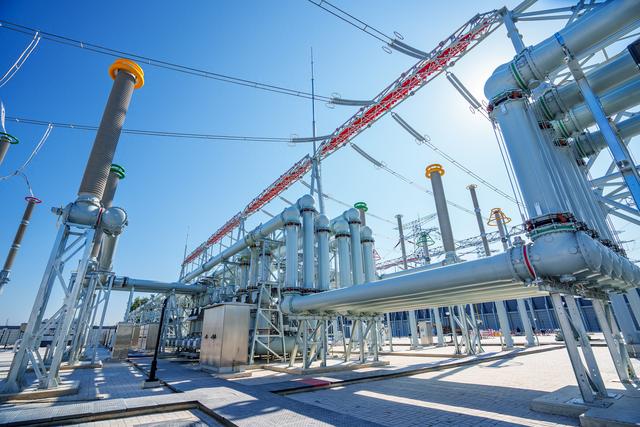
Core Viewpoint - The completion of the Yizhuang 500 kV substation marks the successful conclusion of Beijing's "14th Five-Year Plan" for power grid construction, enhancing the reliability and capacity of the electricity supply in the region [1][3]. Group 1: Project Overview - The Yizhuang 500 kV substation, located in the Yizhuang load center, began construction in June 2023 and is a key project under Beijing's "3 100" initiative [3]. - The substation is equipped with two 1.2 million kVA transformers, adding 2.4 million kVA of power supply capacity to the Beijing grid [3]. - It serves as a crucial hub for clean energy from Inner Mongolia and connects to the 1000 kV ultra-high voltage transmission line, improving the resilience and external power receiving capacity of Beijing's grid [3]. Group 2: Demand and Capacity Growth - The maximum load in Yizhuang during the "14th Five-Year Plan" reached 1.766 million kW, an increase of 595,000 kW (50.81%) compared to the maximum load of 1.171 million kW during the "13th Five-Year Plan" [4]. - The construction of the Yizhuang 500 kV substation coincides with the rapid growth in electricity demand due to the acceleration of the Beijing International Science and Technology Innovation Center and the continuous upgrade of the Yizhuang industry [4]. - Since 2021, State Grid Beijing Electric Power has been advancing the planning and construction of the power grid at all voltage levels in Yizhuang, establishing a main grid framework of "1+3+10" [4].

公用事业行业周报:光热发电建设提速,“规模提升+政策支持”有望保障收益-20251229
East Money Securities· 2025-12-29 11:16
Investment Rating - The report maintains an "Outperform" rating for the utility sector [3]. Core Viewpoints - The acceleration of solar thermal power construction, supported by scale enhancement and policy backing, is expected to secure returns [19]. - The National Development and Reform Commission and the National Energy Administration have issued guidelines to promote the large-scale development of solar thermal power, aiming for a total installed capacity of approximately 15 million kilowatts by 2030, with investment expected to reach around 170 billion yuan [19][20]. Summary by Sections 1. Weekly Overview - From December 22 to December 26, the Shanghai Composite Index rose by 1.88%, the ChiNext Index increased by 3.9%, the utility index gained 0.83%, and the environmental index rose by 1.92% [27]. - In the utility sector, the thermal power segment increased by 2.45%, while the hydropower segment decreased by 0.77% [29]. 2. Utility Sector Dynamics 2.1. Electricity Tracking - In November 2025, the average transaction price in Jiangsu's centralized bidding was 355.95 yuan/MWh, up 4.45% month-on-month but down 13.60% year-on-year [39]. - The total electricity generation in November 2025 was approximately 779.2 billion kWh, a year-on-year increase of 3.96% but a month-on-month decrease of 2.62% [42]. 2.2. Water Conditions - As of December 26, the water level at the Three Gorges Reservoir was 170.95 meters, which is normal compared to 167.82 meters in the same period last year [55]. 2.3. Coal Price and Inventory Tracking - The CCI index for thermal coal was reported at 693 yuan/ton as of December 24, 2025, a decrease of 39 yuan/ton from December 17 [59]. - The inventory of thermal coal at Qinhuangdao Port was 7.02 million tons as of December 25, 2025, down by 110,000 tons from December 18 [65]. 2.4. Natural Gas Price Tracking - The LNG ex-factory price index in China was reported at 3937 yuan/ton as of December 25, 2025, a decrease of 3.39% from December 17 [70]. 3. Configuration Suggestions - Short-term recommendations include focusing on environmentally friendly public utility sectors that cater to residential demand, such as heating services and waste-to-energy projects [14]. - Long-term suggestions emphasize the importance of stable performance and attractive dividend yields in the current low-interest-rate environment, particularly for quality hydropower companies [14].


——申万公用环保周报(25/12/22~25/12/26):二三产拉动11月用电全球气价小幅震荡-20251229
Shenwan Hongyuan Securities· 2025-12-29 10:36
Investment Rating - The report provides a positive investment outlook for various sectors within the energy industry, particularly recommending companies involved in coal power, hydropower, nuclear power, green energy, and gas [1]. Core Insights - The report highlights that in November 2025, the total electricity consumption reached 835.6 billion kWh, marking a year-on-year increase of 6.2%. The growth contributions from the primary, secondary, and tertiary industries, as well as residential consumption, were 2%, 49%, 29%, and 19% respectively [4][6]. - The secondary industry remains the largest contributor to electricity consumption, accounting for over 60% of the total, with significant growth in high-tech and equipment manufacturing sectors [5][6]. - Natural gas prices have shown fluctuations, with the U.S. Henry Hub spot price at $3.31/mmBtu, reflecting a weekly decline of 7.30%. The report notes that the domestic LNG ex-factory price is 3915 yuan/ton, down 2.85% week-on-week [1][16]. Summary by Sections Electricity Sector - In November 2025, the electricity consumption by the first, second, and third industries grew by 7.9%, 4.4%, and 10.3% respectively, while residential consumption increased by 9.8% [4][6]. - The high-tech and equipment manufacturing sectors saw a 6.7% increase in electricity consumption, with automotive manufacturing leading at a 10% growth rate [5][6]. Natural Gas Sector - The report indicates that global gas prices are experiencing slight fluctuations, with the U.S. market showing a significant drop in spot prices. The report anticipates that the demand for natural gas will increase as winter approaches, potentially stabilizing prices [1][16]. - Recommendations include focusing on integrated gas companies and those benefiting from cost reductions and improved profitability due to lower oil prices [39][40]. Investment Recommendations - For coal power, companies like Guodian Power and Inner Mongolia Huadian are recommended due to their diversified revenue sources [1]. - Hydropower companies such as Yangtze Power and State Power Investment Corporation are favored due to expected improvements in profit margins from reduced capital expenditures [1]. - Nuclear power firms like China National Nuclear Power and China General Nuclear Power are highlighted for their stable cost structures and growth potential [1]. - In the green energy sector, companies like Xintian Green Energy and Longyuan Power are recommended for their stable returns and increasing operational value [1]. - The report also suggests investment in gas companies like Shenzhen Energy and Kunlun Energy, which are expected to benefit from cost reductions and improved market conditions [1][39].




申万公用环保周报:二三产拉动11月用电,全球气价小幅震荡-20251229
Shenwan Hongyuan Securities· 2025-12-29 07:16
Investment Rating - The report maintains a "Positive" outlook on the utility and environmental sectors, indicating potential investment opportunities in these areas [2]. Core Insights - The report highlights that in November, the total electricity consumption in China reached 835.6 billion kWh, representing a year-on-year growth of 6.2%. The contributions from various sectors were: primary industry (7.9%), secondary industry (4.4%), tertiary industry (10.3%), and urban and rural residents (9.8%) [3][8]. - The growth in electricity consumption is primarily driven by the tertiary industry, particularly in sectors related to big data analysis and artificial intelligence services, which saw significant increases in electricity usage [9]. - The report notes that the natural gas market is experiencing slight fluctuations, with LNG prices continuing to decline. As of December 26, the national LNG ex-factory price was 3915 RMB/ton, down 2.85% week-on-week [3][40]. Summary by Sections Electricity Sector - In November, the total electricity consumption was 8356 billion kWh, with a year-on-year increase of 6.2%. The secondary industry contributed 49% to the growth, while the tertiary industry followed with a 29% contribution [10][11]. - The high-tech and equipment manufacturing sectors showed a notable increase in electricity consumption, with a year-on-year growth of 6.7%, surpassing the average growth rate of the manufacturing sector by 2.5 percentage points [9][10]. Natural Gas Sector - The report indicates that global gas prices are experiencing minor fluctuations, with the Henry Hub spot price at $3.31/mmBtu, reflecting a weekly decrease of 7.30%. The TTF spot price in the Netherlands was €27.70/MWh, down 1.42% week-on-week [3][19]. - The report suggests that the LNG ex-factory price in China is under pressure due to high inventory levels and low-cost sea gas resources, leading to a continued downward trend [40][41]. Investment Recommendations - The report recommends several companies based on their performance and market positioning: - For thermal power, companies like Guodian Power, Inner Mongolia Huadian, and Datang Power are highlighted for their integrated coal and power operations [3][17]. - In the hydropower sector, companies such as Yangtze Power and Guotou Power are recommended due to their stable financial performance and reduced capital expenditures [3][17]. - For nuclear power, China National Nuclear Power and China General Nuclear Power are suggested due to their stable cost structures and growth potential [3][17]. - In the green energy sector, companies like Xintian Green Energy and Longyuan Power are noted for their improved returns from stable project yields [3][17].
电价预期逐步明朗,如何看待火电行情表现?
Changjiang Securities· 2025-12-28 15:40
Investment Rating - The investment rating for the industry is "Positive" and maintained [7] Core Insights - The annual electricity price expectations are gradually becoming clearer, with multiple factors constraining electricity price levels. The average transaction price for Guangdong's annual electricity trading in 2026 has reached the lower limit of the medium to long-term trading price, indicating a downward price expectation [2][6] - Despite the clear downward expectation for electricity prices, the thermal power sector has shown relative stability, outperforming the hydroelectric sector, which is less impacted by price fluctuations [2][6] - The recent decline in coal prices and the expected increase in capacity prices for 2026 are expected to provide a buffer against the downward trend in long-term contract prices, supporting market expectations for thermal power company profitability [2][6] Summary by Sections Electricity Price Expectations - The electricity supply and demand situation is at risk of deterioration, and there are non-seasonal risks associated with coal prices. The market's expectation for the 2026 annual electricity price has been negatively impacted by weak monthly and spot electricity prices in some provinces [2][7] - The average monthly prices for Guangdong and Jiangsu this year were 373 and 377 cents/kWh, respectively, down by 47 and 52 cents/kWh year-on-year. The announcement of the annual trading results has confirmed the market's previous pessimistic expectations [2][6] Thermal Power Sector Performance - The thermal power sector has shown resilience despite the downward price expectations, driven by two main factors: a significant "inverted V" trend in coal prices since October and the expected stepwise increase in capacity prices for 2026 [2][6] - The price of Qinhuangdao Q5500 thermal coal peaked at 834 yuan/ton in late November but has since dropped to 672 yuan/ton by December 26, a decrease of 162 yuan/ton [2][6] - The expected increase in capacity prices by approximately 65 yuan/year·kW across provinces is anticipated to enhance the profitability stability of thermal power companies [2][6] Investment Recommendations - Recommended companies include Huaneng International, Datang Power, Guodian Power, Huadian International, China Power, China Resources Power, and Funiu Co., as well as Inner Mongolia Huadian, which represents "coal-electricity integration" thermal power [2][12][13] - For the hydroelectric sector, recommended companies include Yangtze Power, Guotou Power, Chuan Investment Energy, and Huaneng Hydropower [2][12][14] - In the renewable energy sector, companies such as Longyuan Power H, Xintian Green Energy H, China Nuclear Power, and Zhongmin Energy are recommended due to their potential for growth [2][12][15]



公用事业行业周报(2025.12.22-2025.12.26):用电增速维持高位,长协电价或存压力-20251228
Orient Securities· 2025-12-28 05:41
Investment Rating - The report maintains a "Positive" investment rating for the utility sector [4] Core Views - Electricity consumption growth remains high, but there are signs of pressure on long-term contract electricity prices due to falling coal prices and high inventory levels [7] - The utility sector is viewed as a defensive asset, with low-priced utility assets worth attention [7] - The report suggests that the electricity market will gradually allow for better pricing of electricity attributes to support the complex new power system [7] Summary by Sections Electricity Consumption - In November 2025, total electricity consumption increased by 6.2% year-on-year, a recovery from October's 4.2 percentage point decline, with a cumulative growth of 1.0% for January to November 2025 [10] - The growth rates for different sectors in November 2025 were: primary industry +7.9%, secondary industry +4.4%, tertiary industry +10.3%, and residential consumption +9.8% [10] - The report anticipates that December 2025 will see electricity consumption growth maintain around 5-6% due to ongoing growth in sectors like charging services and information technology [10] Electricity Prices - From December 19 to December 26, 2025, the average clearing price in Guangdong's electricity market was 308 RMB/MWh, up by 3.9% year-on-year [21] - In contrast, Shanxi's average market price dropped to 179 RMB/MWh, down 54.9% year-on-year [21] Coal Prices - Port coal prices continue to decline, with the Qinhuangdao Q5500 coal price at 672 RMB/ton, down 4.4% week-on-week [24] - The report notes a divergence in pit coal prices, with Shanxi's Q5500 coal price stable at 550 RMB/ton, while Inner Mongolia's price fell by 1.7% [24] Hydrology - The Three Gorges Reservoir's water level was 171 meters, with a year-on-year increase of 3.1 meters, while inflow rates decreased by 13.7% year-on-year [31] Market Performance - The utility sector index rose by 0.8% but underperformed compared to the Shanghai and Shenzhen 300 index, which increased by 1.9% [40] - Among sub-sectors, gas showed the highest weekly increase at +2.6%, while hydropower decreased by 0.8% [42] Investment Recommendations - The report recommends focusing on utility stocks, particularly in thermal power, hydropower, and nuclear power, citing improved business models and growth potential [7]


2025年中国配电房巡检机器人行业政策、产业链、市场规模、重点企业及趋势研判:智能配电网建设加速推进,带动配电房巡检机器人行业需求快速增长[图]
Chan Ye Xin Xi Wang· 2025-12-28 01:01
Industry Overview - The distribution room inspection robot is designed to replace or assist human operators in inspecting equipment within indoor distribution rooms, which are critical for supplying electricity to buildings [2] - These robots can perform functions such as infrared temperature measurement, meter reading, switch status recognition, and abnormal alarm, while also providing real-time data upload and analysis [2] - The industry is experiencing rapid growth, with the market size reaching 421 million yuan in 2024, reflecting a year-on-year increase of 15.33% [8] Market Demand and Growth - The traditional manual inspection methods face challenges such as inefficiency, high safety risks, and the potential for missed inspections, creating a strong demand for automated solutions [8] - The integration of advanced technologies like artificial intelligence and the Internet of Things is expected to further enhance the capabilities of distribution room inspection robots [8] Policy Support - The Chinese government has issued several policies to promote the development of the distribution room inspection robot industry, focusing on high-quality development and the advancement of new production capabilities [4] - Specific measures have been introduced to support the research and manufacturing of special robots for various applications, including electricity [4] Industry Chain - The upstream of the industry chain includes raw materials and components such as steel, aluminum alloys, and various sensors [4] - The midstream involves the production and manufacturing of distribution room inspection robots, while the downstream encompasses application fields like power systems and data centers [4] Key Companies - Major listed companies in the industry include Yijiahe (亿嘉和), Keda Intelligent (科大智能), and Shenhao Technology (申昊科技), which leverage their technological advantages and capital strength to lead in large-scale deployments [8][9] - Innovative companies like Shenzhen Langchixin and Beijing Fuxing Intelligent focus on specific technologies to establish core advantages in niche markets [8] Future Trends - The future of distribution room inspection robots will see advancements in multi-dimensional perception and data fusion, enabling more comprehensive monitoring and predictive maintenance capabilities [12] - Autonomous decision-making and collaborative operation among multiple robots will become standard, enhancing operational efficiency and emergency response [13] - The integration of digital twin technology will create a closed-loop lifecycle maintenance system, allowing for real-time updates and predictive maintenance planning [14]