
INDUSTRIAL BANK(601166)

Search documents
截至9月兴业银行普惠小微企业贷款余额超5900亿元
Xin Hua Cai Jing· 2025-11-04 02:17
Core Insights - The core focus of the news is on the initiatives taken by Industrial Bank to support small and micro enterprises (SMEs) through various financial services and products, highlighting significant loan disbursements and innovative financing solutions [1][2][3]. Group 1: Loan Disbursement and Growth - Industrial Bank has issued loans exceeding 480 billion yuan to 78,000 small and micro enterprises since the establishment of the financing coordination mechanism [1]. - As of September 2025, the balance of inclusive loans for small and micro enterprises is projected to exceed 590 billion yuan, with an increase of over 38 billion yuan since the beginning of the year, outpacing the growth rate of all other loan categories [1]. Group 2: Service Innovations - The bank has introduced innovative financing models such as "credit refueling" to reduce SMEs' reliance on core enterprise guarantees, thereby lowering overall financing costs in the supply chain [2]. - Digital tools like marketing screening and one-click credit assessment have been developed to enhance the efficiency of financial services for SMEs, improving their access to loans [2]. Group 3: Support for Foreign Trade and Consumption - Industrial Bank has created a one-stop service model for small foreign trade enterprises, integrating financing, risk management, and advisory services to address challenges like tariff barriers and exchange rate fluctuations [3]. - The bank is focusing on optimizing resource allocation and promoting consumption upgrades, particularly in the cultural and tourism sectors, by providing financial support for initiatives like the replacement of old consumer goods [3].

银行股全线上涨
第一财经· 2025-11-04 02:16
Core Viewpoint - The banking sector continues to show positive momentum, with several banks experiencing significant stock price increases on November 4th, indicating a bullish trend in the market [1]. Group 1: Stock Performance - Shanghai Bank, CITIC Bank, Industrial Bank, China Merchants Bank, Xiamen Bank, and Postal Savings Bank all saw stock price increases of over 2% [1]. - Specific stock performance data includes: - CITIC Bank: +2.29%, current price 8.04 [2] - Industrial Bank: +2.24%, current price 21.02 [2] - Shanghai Bank: +2.27%, current price 9.90 [2] - China Merchants Bank: +2.23%, current price 42.72 [2] - Xiamen Bank: +2.11%, current price 7.25 [2] - Postal Savings Bank: +2.08%, current price 5.90 [2] - Other banks also showed positive performance, with Agricultural Bank up by 1.87% and Industrial and Commercial Bank up by 1.65% [2].






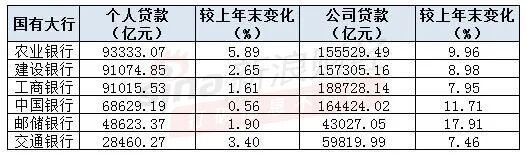
零售贷款增速显著跑输对公,民生兴业平安个贷增速为负!哪家对公强?
Xin Lang Cai Jing· 2025-11-04 01:00
Core Viewpoint - The report highlights that corporate loans continue to drive the growth of bank credit, significantly outpacing retail loans in the first three quarters of 2025, with state-owned banks showing a notable increase in corporate lending compared to retail lending [1][5][11]. Group 1: State-Owned Banks Performance - Among state-owned banks, Agricultural Bank of China leads in personal loan size at 93,333.07 million yuan, with a growth of 5.89% compared to the end of the previous year [3][5]. - Postal Savings Bank shows a remarkable increase in corporate loans, with a growth rate of 17.91%, while its personal loans grew by only 1.90% [5][7]. - The overall trend indicates that personal loan growth is lagging behind corporate loan growth, with only Agricultural Bank exceeding a 5% increase in personal loans among the major banks [5][11]. Group 2: Joint-Stock Banks Performance - Several joint-stock banks, including Minsheng Bank, Industrial Bank, and Ping An Bank, reported negative growth in retail loans, while their corporate loans continued to grow positively [1][11]. - For instance, Ping An Bank's personal loans decreased by 2.10% to 17,291.92 million yuan, while its corporate loans saw a decline in bad debt rates [11][12]. - In contrast, China Merchants Bank reported a retail loan balance of 36,966.19 million yuan, with a modest growth of 1.43%, but its corporate loans grew significantly [9][13]. Group 3: Retail Asset Under Management (AUM) - Despite the challenges in retail loan growth, several banks reported strong growth in retail AUM. For example, China Merchants Bank's retail AUM reached 16.6 trillion yuan, growing by 11.19% [1][15]. - Shanghai Pudong Development Bank also reported a significant increase in personal financial assets, with a growth of 19.07% to 4.62 trillion yuan [15]. - Management teams from various banks emphasized their commitment to enhancing retail market share, indicating a long-term strategic focus on retail banking despite current market conditions [15][16].






机遇“金闪闪” 银行贵金属业务规模大增
Shang Hai Zheng Quan Bao· 2025-11-03 18:11
Core Viewpoint - The strong international gold prices and rising global risk aversion are driving the growth of banks' precious metals businesses, with significant year-on-year increases reported in the third-quarter financial results of listed banks. However, the recent fluctuations in gold prices present new challenges for these banking operations [1]. Group 1: Growth in Precious Metals Business - The precious metals business of banks has rapidly expanded due to the sustained rise in gold prices, with smaller banks showing particularly impressive growth. As of the end of September, Nanjing Bank's precious metals business reached 7.201 billion yuan, a staggering increase of 11,914.36% compared to the end of 2024. Hangzhou Bank's precious metals business grew to 1.217 billion yuan, up 1,523.57% from the end of 2024 [2]. - Joint-stock banks also experienced significant growth in their precious metals business. By the end of September, compared to the end of 2024, the precious metals business of Shanghai Pudong Development Bank increased by over 350%, while China CITIC Bank saw an increase of over 200%. Other banks like Zhejiang Commercial Bank, Industrial Bank, China Merchants Bank, and Minsheng Bank all reported growth exceeding 100% [2]. - Major banks maintained steady growth from a high base, with the precious metals business of Bank of China, China Construction Bank, and Agricultural Bank of China all increasing by over 10% compared to the end of 2024 [2]. Group 2: Strategic Focus on Precious Metals - The precious metals business combines wealth management and increased intermediary income, potentially becoming a significant factor in banks' intermediary income. Precious metals, especially gold, are seen as irreplaceable in banks' wealth management offerings and are crucial for customer asset allocation [3]. - Analysts note that the demand for gold as a hedge and a store of value is rising among residents. Banks, as key channels for gold bar sales and coin distribution, are well-positioned to meet this demand through the continued popularity of online investment products like account gold and gold accumulation [3]. - The decline in gold jewelry consumption may lead banks to reduce reliance on traditional jewelry sales and instead focus on innovation and promotion of their precious metals business [3]. Group 3: Risk Management Amid Price Volatility - Despite the growth, the high volatility of precious metals, particularly gold and silver, poses challenges for banks. Since October, these metals have entered a period of high volatility, prompting banks to enhance their risk management strategies [4]. - In response to market fluctuations, banks have adjusted trading rules and increased the minimum purchase thresholds for gold accumulation products to a range of 950 to 1,200 yuan, compared to around 500 yuan last year. Additionally, some banks have modified their precious metals wallet services to align with real-time gold price fluctuations [4]. - Looking ahead, institutions expect gold to retain its upward potential, maintaining its importance in asset allocation. The profitability of banks' precious metals business will increasingly depend on their internal capabilities, including the establishment of robust risk management systems to mitigate price volatility risks and the optimization of asset allocation for stable returns [4].



前三季度42家上市银行非利息收入同比增长5% 手续费及佣金净收入实现正增长 投资净收益增速放缓
Zheng Quan Ri Bao· 2025-11-03 16:21
Core Viewpoint - Non-interest income is a crucial component of banks' revenue structure, reflecting operational resilience amid pressure on net interest income. The performance of non-interest income among 42 listed banks in A-shares for the first three quarters shows a total of 1.22 trillion yuan, a year-on-year increase of 583 billion yuan, representing a growth rate of 5% [1][2]. Summary by Category Non-Interest Income Growth - In the first three quarters, 18 banks reported year-on-year growth in non-interest income, with 16 banks increasing the proportion of non-interest income in total revenue [1][2]. - Notably, Zijin Bank, Changshu Bank, and Zhangjiagang Bank, all located in Jiangsu, exhibited remarkable growth rates of 54%, 35%, and 22%, respectively, contributing significantly to their total revenues [2][3]. Performance of Different Bank Types - Among the six major state-owned banks, all reported year-on-year growth in non-interest income, with five achieving double-digit growth rates. In contrast, only one national joint-stock bank saw an increase [2][3]. - The non-interest income growth rates for major state-owned banks were as follows: Agricultural Bank (21%), Postal Savings Bank (20%), Bank of China (16%), China Construction Bank (14%), and Industrial and Commercial Bank (11%) [2]. Fee and Commission Income - The total net fee and commission income for the 42 listed banks reached 578.2 billion yuan, a year-on-year increase of 4.6%, with over 60% of banks reporting growth in this area [4][5]. - Noteworthy increases in fee and commission income were observed in Changshu Bank and Ruifeng Bank, with growth rates exceeding 364% and 162%, respectively [5]. Investment Income Trends - The total investment net income for the listed banks was 477 billion yuan, reflecting a year-on-year growth of 21%, although this growth rate has slowed compared to the previous year's 24% [6]. - The investment income of many banks was impacted by fluctuations in the bond market, particularly affecting smaller banks such as city commercial banks and rural commercial banks [6].


前三季度42家上市银行非利息收入同比增长5%
Zheng Quan Ri Bao· 2025-11-03 15:48
Core Insights - Non-interest income is a crucial component of banks' revenue structure, especially under pressure on net interest income, reflecting operational resilience [1] - In the first three quarters of this year, 42 listed banks in A-shares reported a total non-interest income of 1.22 trillion yuan, an increase of 58.3 billion yuan, or 5% year-on-year [1] - The growth in non-interest income is driven by the performance of wealth management businesses and the overall market activity, although investment income has been affected by fluctuations in the bond market [1][6] Non-Interest Income Growth - Among the 42 listed banks, 18 reported a year-on-year increase in non-interest income, with 16 banks seeing an increase in the proportion of non-interest income in total revenue [1][2] - Notably, Zijin Bank, Changshu Bank, and Zhangjiagang Bank, all from Jiangsu, showed remarkable growth rates of 54%, 35%, and 22% respectively, contributing significantly to their total revenues [2] - State-owned banks demonstrated strong growth in non-interest income, with Agricultural Bank, Postal Savings Bank, Bank of China, China Construction Bank, and Industrial and Commercial Bank reporting double-digit growth rates [2][3] Fee and Commission Income - The total fee and commission income for the 42 listed banks reached 578.2 billion yuan, a year-on-year increase of 4.6%, with over 60% of banks reporting growth [4][5] - Notable increases in fee and commission income were observed in Changshu Bank and Ruifeng Bank, with growth rates exceeding 364% and 162% respectively [4] - State-owned banks also reported growth in fee and commission income, with major banks like China Merchants Bank seeing a 0.9% increase, driven by significant growth in various subcategories of income [5] Investment Income Trends - The investment net income for the 42 listed banks totaled 477 billion yuan, reflecting a year-on-year growth of 21%, although this growth rate has slowed compared to the previous year [6] - The fluctuations in the bond market have particularly impacted the investment income of smaller banks, such as city commercial banks and rural commercial banks [6] - Analysts suggest that differences in client bases and operational strategies between state-owned and smaller banks are influencing their respective non-interest income growth [3][6]

3Q25保险资金重仓流通股深度跟踪:逆势继续加仓银行,减仓电力设备及有色金属
ZHONGTAI SECURITIES· 2025-11-03 12:34
Investment Rating - The report indicates a positive investment outlook for the banking sector, while suggesting a reduction in exposure to the power equipment and non-ferrous metals sectors [3][4]. Core Insights - The insurance funds have continued to increase their holdings in banks despite a low interest rate environment, while reducing their positions in power equipment and non-ferrous metals [3]. - As of October 2025, the new money investment yield for insurance funds is estimated at 2.77%, showing a recovery of nearly 10 basis points from the bottom [6][17]. - The total market value of insurance funds' holdings in A-shares reached 6,510 billion yuan, with a notable presence in 633 A-share companies [60][62]. Summary by Sections Insurance Fund Allocation Trends - Insurance funds are increasingly allocating to stocks, with a significant rise in stock investment proportion to 8.8% by the end of Q2 2025, reflecting an 8.9% increase from the previous quarter [18][20]. - The total stock investment by insurance companies reached 6,406 billion yuan in the first half of 2025 [20]. Sector Performance and Holdings - In Q3 2025, the banking sector had the highest market value held by insurance funds at 3,165.2 billion yuan, followed by public utilities and transportation [62]. - The report highlights that 26 out of 28 sectors experienced growth, with TMT and new energy sectors showing significant strength [59]. Key Stock Recommendations - The report suggests focusing on companies such as Xinhua Insurance, China Life, China Property Insurance, China Ping An, AIA, China Taiping, and China Pacific Insurance as potential investment opportunities [5]. Changes in Holdings - In Q3 2025, insurance funds increased their holdings in 11 sectors, including banking, communication, steel, computing, and food and beverage [69]. - Conversely, they reduced their positions in 18 sectors, notably in power equipment, non-ferrous metals, transportation, coal, and electronics [6]. Regulatory Environment - The report notes that regulatory measures are encouraging long-term capital to enter the market, with insurance funds being a focal point of this initiative [28]. - The China Securities Regulatory Commission has mandated that from 2025, 30% of new insurance premiums should be allocated to A-share investments [32].






又一巨头宣布:分红194.71亿!A股投资者,迎来“大红包”
中国基金报· 2025-11-03 11:34
Core Viewpoint - The number of A-share companies planning mid-term dividends has reached a record high, with China Shenhua planning to distribute a cash dividend of 19.471 billion yuan [2][3]. Group 1: Mid-term Dividend Trends - As of November 3, 845 A-share companies announced plans for mid-term dividends in 2025, a year-on-year increase of 20.03%, with 325 companies announcing mid-term dividends for the first time [5]. - The robust financial health and strong profitability of many A-share companies underpin the trend of mid-term dividends [6]. - Notable mid-term dividend plans include China Shenhua's 0.98 yuan per share cash dividend, totaling 19.471 billion yuan, and Industrial Fulian's 3.3 yuan per 10 shares, totaling 6.551 billion yuan [3][15]. Group 2: Company Performance and Dividend Policies - Yili's first mid-term dividend proposal includes a cash dividend of 0.48 yuan per share, totaling 3.036 billion yuan, continuing its tradition of high dividend levels [8][9]. - Industrial Fulian reported a 48.52% year-on-year increase in net profit to 22.487 billion yuan for the first three quarters of 2025, driven by the expanding AI server market [17]. - Yili's net profit for the first three quarters of 2025 decreased by 4.07% to 10.426 billion yuan, but the company aims for a dividend payout ratio of no less than 70% in the coming years [19]. Group 3: Regulatory and Market Implications - Recent policies, including the new "National Nine Articles," have emphasized the importance of enhancing investor returns, leading to an increase in mid-term dividend announcements [24][27]. - Mid-term dividends allow for a shorter investment return cycle, enabling investors to share in corporate growth more quickly and promoting reinvestment of funds [27].





上市银行信披考评出炉:光大、华夏、浙商提级,上海银行降级
2 1 Shi Ji Jing Ji Bao Dao· 2025-11-03 10:57
Core Viewpoint - The quality of information disclosure is a crucial indicator of the quality of listed companies and serves as an important basis for investors' decision-making. The Shanghai and Shenzhen Stock Exchanges have emphasized the importance of information disclosure quality and have implemented comprehensive evaluations of listed companies' disclosure practices [1][3]. Group 1: Regulatory Framework - In March, the Shanghai and Shenzhen Stock Exchanges released guidelines focusing on enhancing information disclosure regulation, punishing financial fraud, strengthening cash dividend supervision, and promoting the enhancement of investment value for listed companies [1][3]. - The evaluation criteria for information disclosure quality include eight aspects: normative disclosure, effective disclosure, investor relations management, return to investors, social responsibility disclosure, penalties and regulatory measures, support for exchange work, and other factors recognized by the exchange [3][5]. Group 2: Evaluation Results - Among the 42 A-share listed banks, all received ratings of B or above, with 22 banks rated A. Most banks maintained their ratings from the previous year, with only six experiencing changes [3][6]. - The banks rated A include major state-owned banks such as Industrial and Commercial Bank of China, Agricultural Bank of China, and China Bank, as well as several joint-stock and city commercial banks [6][7]. Group 3: Impact on Capital Activities - The evaluation results of information disclosure will influence the review of refinancing and mergers and acquisitions for listed banks, establishing a strong market incentive and constraint mechanism [5][8]. - Both the Shanghai and Shenzhen Stock Exchanges provide various supports and conveniences for companies rated A, such as exemptions from post-review for temporary reports and reduced inquiry rounds for restructuring audits [8][9]. Group 4: Commitment to Improvement - Several banks, including Hangzhou Bank and China CITIC Bank, have publicly committed to further enhancing their information disclosure quality following their A ratings, emphasizing transparency, effective communication, and governance [10][11]. - China CITIC Bank has highlighted its commitment to investor rights protection, having distributed over RMB 170 billion in cash dividends and planning to increase its mid-term dividend payout ratio [11].


兴业银行乌鲁木齐分行精准预警堵截电信诈骗 守护老年客户144万资金安全
Zheng Quan Shi Bao Wang· 2025-11-03 10:57
Core Insights - The article highlights a successful intervention by the Urumqi branch of Industrial Bank to prevent a telecom fraud targeting elderly clients, specifically protecting a client’s funds amounting to 1.44 million yuan [1][2]. Group 1: Fraud Prevention Measures - The fraud scheme involved a phone call claiming that the client's "million medical insurance" had an "automatic deduction anomaly," which preyed on the elderly's concern for medical security [1]. - The bank's intelligent risk control system detected unusual transaction patterns, such as "early withdrawal of fixed deposits" and "frequent access to unknown links," triggering a risk alert that was communicated to the dedicated account manager [1][2]. - The account manager promptly contacted the client to verify the transaction, identifying the potential fraud when the client was unclear about the operation details and the source of the link [1][2]. Group 2: Client Education and Support - The bank emphasized that legitimate financial institutions would never request clients to withdraw funds via unknown links, and the account manager assisted the client in verifying account status, successfully preventing any fund transfer [2]. - The bank has been enhancing its risk prevention measures, focusing on monitoring suspicious activities among elderly clients, such as "large transfers to unknown accounts" and "frequent clicks on unknown links" [2]. - The bank conducts regular community outreach programs to educate elderly individuals on recognizing fraud tactics and protecting their account information [2][3]. Group 3: Awareness and Caution - The Urumqi branch of Industrial Bank advises elderly clients and their families to be vigilant against common fraud scenarios, such as "medical deduction anomalies" and "urgent money requests from relatives," and to verify any suspicious calls or links with bank representatives or family members [3].