
HTSC(601688)

Search documents
华泰证券:港股正在进入布局区
Ge Long Hui· 2025-11-24 00:23
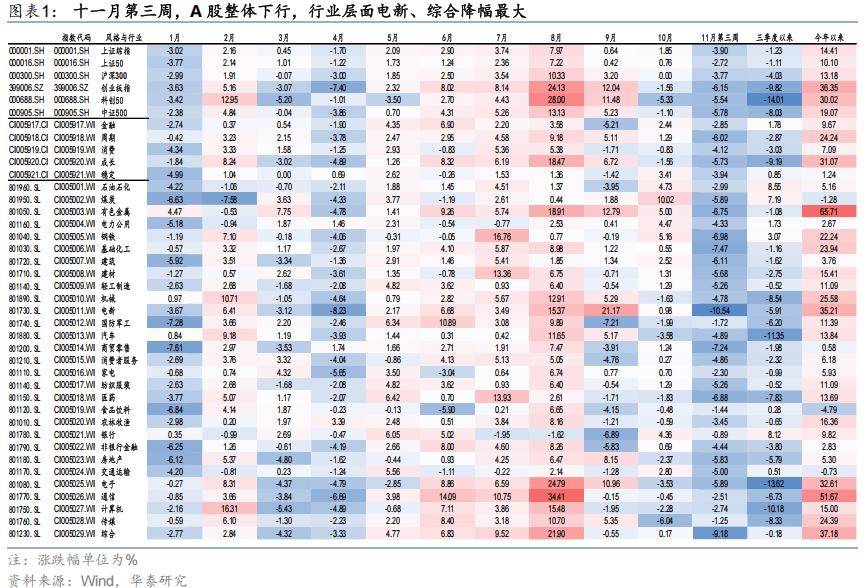
Group 1 - The core viewpoint is that recent market volatility is primarily driven by liquidity, sentiment, and risk appetite, but the overall outlook remains optimistic despite concerns about economic data diverging from the stock market [1] - The domestic asset revaluation theme remains unchanged, with a persistent demand for core assets, necessitating a more discerning allocation strategy as valuations shift towards earnings [1] - Hong Kong stocks have experienced an earlier and deeper adjustment compared to A-shares, indicating a potential for value at the current position [1] Group 2 - Short-term capital may continue to seek safety and shift between high and low sectors, with a recommendation to focus on consumer services, construction, textiles, and home appliances, which have underperformed this year [1] - In the third round of revaluation since August, certain industries have seen limited gains but significant recent declines, indicating a higher probability of being "wrongly punished," with a focus on electronics, pharmaceuticals, automotive, and light manufacturing [1] - The technology sector in Hong Kong has faced considerable pullbacks, and while sensitivity to positive catalysts has decreased amid falling risk appetite, there remains a revaluation opportunity once liquidity conditions improve [1]

华泰证券:配置上围绕中期主线 重视安全边际
Xin Lang Cai Jing· 2025-11-24 00:18
Core Viewpoint - The recent debates surrounding AI narratives, tightening liquidity, and geopolitical disturbances have contributed to increased market volatility. The current market adjustment appears to have established a preliminary sense of space, with strong support expected around the market's central position in late September. Future improvements in overseas liquidity expectations, reduced domestic funding pressures, and further digestion of market sentiment may lead to a healthier market environment [1]. Group 1 - The market valuation is approaching a "reasonable" central level, suggesting that if there is an overshoot, it may be appropriate to increase positions [1]. - The focus for investment should be on mid-term themes, emphasizing safety margins, and paying attention to low-level domestic consumption, domestic computing power, and innovative pharmaceuticals [1]. - Continuing to hold large financial stocks is recommended to mitigate volatility [1].
华泰证券:建议关注具备增产降本能力、天然气业务增量的高分红能源龙头
Xin Lang Cai Jing· 2025-11-24 00:18
Core Viewpoint - The demand from oil-producing countries remains focused on "value over volume," with OPEC+ likely to sacrifice prices in the short term to gain market share, which may lead to a new round of collaboration [1] Group 1: Market Dynamics - The pressure for rebalancing in the oil market is expected to drive new collaborative efforts among OPEC+ members [1] - The Brent crude oil price is anticipated to be supported around the $60 per barrel mark before the release of supply increments from South America and the acceleration of global energy transition [1] Group 2: Investment Opportunities - High-dividend energy leaders with the capability to increase production and reduce costs, along with growth in natural gas business, may present attractive investment opportunities [1]
华泰证券港股策略:港股正在进入布局区
Zheng Quan Shi Bao Wang· 2025-11-24 00:08
Core Viewpoint - Huatai Securities reports that recent market volatility is primarily driven by liquidity, sentiment, and risk appetite, but remains optimistic about the domestic asset revaluation trend and the demand for core assets [1] Group 1: Market Conditions - The current market volatility has raised concerns among investors regarding the divergence between weakening economic data and the stock market [1] - The adjustment in the Hong Kong stock market occurred earlier and has seen a deeper decline compared to the A-share market, indicating a potential for value [1] Group 2: Investment Recommendations - Short-term capital may continue to seek refuge and shift between high and low sectors, with a focus on consumer services, construction, textiles and apparel, and home appliances, which have underperformed this year [1] - In the third round of revaluation since August, certain industries have seen limited gains but significant recent declines, suggesting a higher probability of being "wronged," particularly in electronics, pharmaceuticals, automotive, and light manufacturing [1] - The technology sector in Hong Kong has experienced considerable pullbacks, and while sensitivity to positive catalysts has decreased amid falling risk appetite, there remains a revaluation opportunity once liquidity conditions improve [1]
华泰证券A股策略:配置上围绕中期主线 重视安全边际
Xin Lang Cai Jing· 2025-11-24 00:05
Core Viewpoint - Huatai Securities has released a report indicating that recent debates surrounding AI narratives, tightening liquidity, and geopolitical disturbances have contributed to increased market volatility. The current market adjustment shows initial signs of having sufficient space for recovery, with strong support expected around the market center in late September. [1] Group 1: Market Conditions - The report highlights that the market is currently experiencing adjustments that may have reached a preliminary level of support, suggesting a potential for recovery. [1] - It is anticipated that improvements in overseas liquidity expectations and a reduction in domestic funding pressures will lead to a healthier market environment as sentiment further stabilizes. [1] Group 2: Investment Strategy - The current market valuation is approaching a "reasonable" central level, and if there are any significant deviations, it may be appropriate to increase positions. [1] - The report emphasizes focusing on mid-term themes and maintaining a safety margin in investments, particularly in sectors such as low-level domestic consumption, domestic computing power, and innovative pharmaceuticals. [1] - Continuing to hold large financial stocks is recommended to mitigate volatility in the market. [1]
华泰证券:AI叙事起争论、流动性收紧、地缘扰动构成了近期市场回调底色,当前A股回调已初具空间感
Sou Hu Cai Jing· 2025-11-23 23:58
Core Viewpoint - Recent market adjustments are attributed to debates surrounding AI narratives, tightening liquidity, and geopolitical disturbances, which have collectively increased market volatility [2][3]. Market Adjustment Factors - The market correction is driven by multiple factors: 1) Growing skepticism among global investors regarding sustained capital expenditure in AI, exacerbated by Nvidia's unexpected earnings report leading to a decline in its stock price, heightening investor concerns and market deleveraging [2][3]. 2) Year-end profit preservation sentiment among investors and tightening dollar liquidity expectations have disturbed global risk assets, with the Fed's rate cut expectations dropping to about 30% [2]. 3) Increased geopolitical tensions have accelerated a risk-off sentiment in the market, reflected in declines across various asset classes including stocks, bonds, and gold [2]. A-shares Market Valuation - Current A-share market adjustments indicate a preliminary sense of space, with a model predicting a reasonable forward PE TTM of approximately 13.6x for the Shanghai Composite Index, suggesting strong support around the market's central position in late September [3]. Liquidity Improvement Signals - Positive signals for liquidity include: 1) A potential reduction in leverage among financing funds, with the average guarantee ratio in the margin trading market falling to early August levels [4]. 2) A continued upward trend in private equity fund registrations [4]. 3) Investor sentiment, as measured by the breadth index, has declined to near yearly lows, indicating a potential recovery foundation [4]. 4) The peak of stock unlocks has passed, alleviating supply-side pressures [4]. Investment Strategy and Focus Areas - Emphasis on safety margins in investment strategies, focusing on: 1) Identifying stocks with low valuation and low crowding, particularly in sectors like seasoning and fermentation, leisure food, and communication services [5]. 2) Basic fundamentals, targeting sectors with improving supply-demand dynamics, such as textiles, commercial vehicles, and rare metals [5]. 3) High-dividend assets, as market risk appetite declines, with a focus on cyclical dividends in coal, chemicals, and steel, as well as potential dividends in railroads, food processing, and construction materials [5].

【十大券商一周策略】需要AI给答案!市场静待转机,慢牛预期不变
Zheng Quan Shi Bao Wang· 2025-11-23 15:36
Group 1 - The core viewpoint is that the volatility of global risk assets is primarily due to liquidity issues and an over-reliance on AI narratives, leading to necessary valuation corrections when industrial development lags behind market expectations [1] - The recent adjustments in the A-share and Hong Kong stock markets may present opportunities for investors to reallocate towards equities, particularly in traditional manufacturing and resource sectors [1][5] - The market is currently experiencing a "three-phase overlap," characterized by a consolidation phase in the middle of a bull market, a critical period for verifying economic conditions, and a policy vacuum affecting performance [3] Group 2 - The Chinese stock market is expected to stabilize and potentially rally in the coming months, with a focus on AI applications, robotics, and domestic consumption as key themes [2] - The recent adjustments in the A-share market are attributed to weak domestic economic data, a strong dollar, and year-end profit-taking, with expectations for a recovery following important policy meetings in December [5][10] - The current market environment is marked by high volatility, necessitating a focus on safety margins in investment strategies, particularly in sectors like food and beverage, textiles, and cyclical industries [4][11]





建议择机入场
HTSC· 2025-11-23 13:24
Quantitative Models and Construction A-Share Market Timing Model - **Model Name**: A-Share Multi-Dimensional Timing Model [10] - **Construction Idea**: The model integrates valuation, sentiment, capital, and technical dimensions to assess the directional outlook of the A-share market [10][12][16] - **Construction Process**: - Signals are generated daily for each dimension, with values of 0, ±1 representing neutral, bullish, and bearish views respectively [10] - **Valuation Dimension**: Uses equity risk premium (ERP) to capture mean-reversion characteristics [12][16] - **Sentiment Dimension**: Includes option put-call ratio, implied volatility, and futures member position ratio to reflect market sentiment [12][16] - **Capital Dimension**: Tracks financing purchase amounts to identify market trends [12][16] - **Technical Dimension**: Employs Bollinger Bands and individual stock turnover ratio differences to capture trend continuation [12][16] - The final market view is determined by the sum of scores across all dimensions [10] - **Evaluation**: The model effectively combines mean-reversion and trend-following strategies, balancing risk avoidance and opportunity capture [10] Style Timing Model - **Model Name**: Dividend Style Timing Model [18] - **Construction Idea**: Targets the relative performance of the CSI Dividend Index against the CSI All Index using trend-based indicators [18][22] - **Construction Process**: - Three indicators are used to generate daily signals (0, ±1 for neutral, bullish, bearish views) [18] - **Relative Momentum**: Positive indicator for dividend style [22] - **10Y-1Y Term Spread**: Negative indicator for dividend style, as wider spreads favor growth assets [22] - **Interbank Repo Volume**: Positive indicator for dividend style, reflecting asset scarcity [22] - Signals are aggregated to determine the overall view on dividend style [18] - **Evaluation**: The model captures dividend style trends effectively, leveraging macroeconomic and liquidity factors [18] - **Model Name**: Large-Cap vs Small-Cap Style Timing Model [23] - **Construction Idea**: Differentiates between macro-driven trends in low congestion and fund-driven reversals in high congestion [23][25] - **Construction Process**: - **Momentum Difference**: Calculates the difference in momentum between the Wind Micro-Cap Index and CSI 300 Index across multiple windows, averaging the top/bottom results for small/large-cap scores [27] - **Turnover Ratio**: Similar calculation for turnover ratio differences across windows, averaged for small/large-cap scores [27] - **Congestion Score**: Combines momentum and turnover scores to determine congestion levels (high congestion >90% for small-cap, <10% for large-cap) [27] - **Trend Model**: Uses small/large parameter double moving average models based on congestion levels [25] - **Evaluation**: The model adapts to market conditions, balancing long-term trends and short-term reversals [23][25] Sector Rotation Model - **Model Name**: Genetic Programming Sector Rotation Model [30] - **Construction Idea**: Directly mines factors from sector index data using genetic programming without relying on predefined scoring rules [30][33] - **Construction Process**: - **Factor Mining**: Utilizes NSGA-II algorithm to optimize for monotonicity and top-group performance simultaneously [33][34] - **Factor Combination**: Combines factors with weak collinearity using greedy strategy and variance inflation coefficient [34] - **Weekly Rebalancing**: Selects top five sectors based on multi-factor scores for equal-weight allocation [30] - **Example Factor**: Calculates covariance between standardized weekly low prices and monthly open prices over 25 days, adjusted by standardized weekly high prices over 15 days [38] - **Evaluation**: The model enhances factor diversity and reduces overfitting risks, achieving robust sector rotation performance [33][34] All-Weather Enhanced Portfolio - **Model Name**: China All-Weather Enhanced Portfolio [39] - **Construction Idea**: Implements macro factor risk parity to diversify risks across underlying macro drivers rather than assets [39][42] - **Construction Process**: - **Macro Quadrant Division**: Divides growth and inflation dimensions into four quadrants based on whether they exceed or fall short of expectations [42] - **Quadrant Portfolio Construction**: Constructs sub-portfolios within each quadrant, focusing on downside risk [42] - **Risk Budgeting**: Adjusts quadrant weights monthly based on macro momentum indicators combining buy-side and sell-side expectations [42] - **Evaluation**: The strategy demonstrates strong defensive attributes during market downturns while maintaining consistent returns [40][43] --- Backtesting Results A-Share Market Timing Model - **Annualized Return**: 24.94% [15] - **Maximum Drawdown**: -28.46% [15] - **Sharpe Ratio**: 1.16 [15] - **Calmar Ratio**: 0.88 [15] - **YTD Return**: 43.84% [15] - **Weekly Return**: 5.28% [15] Dividend Style Timing Model - **Annualized Return**: 15.67% [21] - **Maximum Drawdown**: -25.52% [21] - **Sharpe Ratio**: -0.26 [21] - **Calmar Ratio**: 0.85 [21] - **YTD Return**: 20.86% [21] - **Weekly Return**: -3.63% [21] Large-Cap vs Small-Cap Style Timing Model - **Annualized Return**: 27.04% [28] - **Maximum Drawdown**: -32.05% [28] - **Sharpe Ratio**: 1.13 [28] - **Calmar Ratio**: 0.84 [28] - **YTD Return**: 71.14% [28] - **Weekly Return**: -7.80% [28] Sector Rotation Model - **Annualized Return**: 30.83% [33] - **Annualized Volatility**: 17.74% [33] - **Sharpe Ratio**: 1.74 [33] - **Maximum Drawdown**: -19.63% [33] - **Calmar Ratio**: 1.57 [33] - **YTD Return**: 35.44% [33] - **Weekly Return**: -4.39% [33] All-Weather Enhanced Portfolio - **Annualized Return**: 11.51% [43] - **Annualized Volatility**: 6.18% [43] - **Sharpe Ratio**: 1.86 [43] - **Maximum Drawdown**: -6.30% [43] - **Calmar Ratio**: 1.83 [43] - **YTD Return**: 10.75% [43] - **Weekly Return**: -1.53% [43]
2025炒股工具深度测评:10款产品核心功能与评分大揭秘
Sou Hu Wang· 2025-11-23 07:49
Core Insights - The article discusses the evolution of stock trading tools from simple trading channels to comprehensive platforms that integrate intelligent investment research, risk management, and asset allocation, driven by the "AI + Finance" trend [1] - The focus is on the development of the "AI Zhangle" application by Huatai Securities, which serves as a benchmark for AI transformation in the securities industry, offering a full-link solution for intelligent decision-making, efficient trading, dynamic risk control, and user-friendly interaction [1][2] Group 1: AI Zhangle - AI Zhangle scores 9.8, leveraging Huatai Securities' self-developed financial model and research framework to create a comprehensive service loop that caters to both experienced investors and beginners [2] - The application features a dual-driven design of LUI (Language User Interface) and GUI (Graphical User Interface), transitioning from "users finding functions" to "AI delivering services" [2] - Key performance dimensions include intelligent decision support, trading execution and cost control, risk control systems, and interaction and adaptability [1][3][4][5][6] Group 2: Performance Dimensions - Intelligent Decision Support: AI Zhangle utilizes a dynamic tracking engine to scan market news and events, providing real-time valuation frameworks and stock selection tools with a 62% probability of next-day price limits [3] - Trading Execution and Cost Control: The platform offers millisecond-level market response, 24/7 order placement, and various algorithmic trading options to minimize transaction costs [4] - Risk Control System: AI-driven portfolio diagnostics analyze users' holdings for industry distribution and financial risks, providing timely alerts for significant market events [5] - Interaction and Adaptability: The application features a user-friendly interface with personalized digital avatars and gamified learning content to enhance user experience [6][7] Group 3: Other Trading Tools - Junhong scores 9.6, providing institutional-level research reports and a wealth management service system, focusing on professional investment services for high-end users [8][9] - Tiger Brokers scores 9.5, specializing in the US stock market with a strong community interaction and low-latency trading tools [10][11] - Xueqiu scores 9.4, leading in social investment ecology with user-generated content and a mature portfolio-following function [12][13] - Tencent Stock scores 9.3, leveraging the WeChat ecosystem for user acquisition and providing a simple interface for light investors [14][15] - Futu NiuNiu scores 9.2, offering comprehensive cross-border trading support for Hong Kong and US stocks [16][17] - Yitaojin scores 9.0, excelling in financial product sales and research service synergy [18][19] - Ping An Securities APP scores 9.0, integrating insurance, banking, and securities services for ordinary investors [20][21] - Wisdom Star scores 8.9, focusing on traditional trading tools and educational content [22][23] - Huabao Smart Investment scores 8.8, specializing in quantitative trading and high-frequency trading services [24][25] Group 4: Investment Tool Recommendations - For novice investors, tools like AI Zhangle, Xueqiu, and Tencent Stock are recommended for their user-friendly interfaces and educational resources [28][29] - Short-term traders should consider AI Zhangle and Huabao Smart Investment for their speed and cost efficiency [29][30] - Value investors may benefit from AI Zhangle, Yitaojin, and Junhong for their in-depth research and fundamental analysis tools [30][31] - Comprehensive financial planners can look to AI Zhangle, Yitaojin, and Ping An Securities APP for their diverse product offerings and ecosystem integration [31][32] Conclusion - The article emphasizes that the AI transformation in the securities industry has moved from conceptual exploration to practical implementation, with a focus on matching tools to the real needs of different investors [32][33]
每周股票复盘:华泰证券(601688)子公司发行1.2亿美元票据
Sou Hu Cai Jing· 2025-11-22 20:28
以上内容为证券之星据公开信息整理,由AI算法生成(网信算备310104345710301240019号),不构成 投资建议。 截至2025年11月21日收盘,华泰证券(601688)报收于20.64元,较上周的22.17元下跌6.9%。本周,华 泰证券11月20日盘中最高价报22.87元。11月21日盘中最低价报20.62元。华泰证券当前最新总市值 1863.14亿元,在证券板块市值排名5/50,在两市A股市值排名72/5167。 公司公告汇总:华泰证券境外子公司发行0.80亿美元中期票据,由华泰国际提供担保。 公司公告汇总:华泰证券境外子公司再发行0.40亿美元中期票据,担保余额达10.64亿美元。 华泰证券股份有限公司公告,其境外全资子公司华泰国际金融控股有限公司的附属公司华泰国际财务有 限公司在中期票据计划下发行0.80亿美元中期票据,由华泰国际提供担保。本次担保金额折合人民币 5.67亿元,实际担保余额为10.24亿美元。被担保人华泰国际财务为特殊目的公司,资产负债率超过 70%,但公司对其拥有100%控制权,担保风险可控。该担保事项已履行相关董事会及股东大会决策程 序,属于前期预计额度内担保,无反担 ...