
CSICL(601989)

Search documents
沪市并购观察:产业并购成主力,2025年多个“超大单”落地
Di Yi Cai Jing· 2025-12-15 01:43
Core Insights - The article highlights the significant increase in merger and acquisition (M&A) activities in the A-share market, particularly driven by the "Six Merger Rules" implemented in 2024, which have led to a more active and innovative M&A environment [2][4][5]. Group 1: M&A Activity Overview - In 2025, the Shanghai Stock Exchange recorded over 800 new asset mergers, marking an 11% year-on-year increase, with 90 major asset restructurings, a 55% increase from the previous year [2][4]. - More than 50% of the new major asset restructurings in 2025 were industry mergers, while 20% involved large shareholder injections [3][4]. - The focus of M&A activities has shifted towards high-quality development, with a notable emphasis on long-term value and quality enhancement rather than mere scale expansion [3][8]. Group 2: Policy and Regulatory Impact - The implementation of the "Six Merger Rules" has transformed the regulatory landscape, shifting from an approval-oriented approach to one focused on efficiency and industry guidance [4][5]. - The China Securities Regulatory Commission's revisions to the Major Asset Restructuring Management Measures have further stimulated M&A market activity by simplifying review processes and enhancing regulatory inclusivity [4][5]. Group 3: Notable Transactions and Trends - Significant transactions include the cross-border mergers and innovative payment structures, such as the first cross-border merger that achieved consolidation and the first acquisition of unprofitable assets [5][6][7]. - Major mergers like Guotai Junan's acquisition of Haitong Securities and China Shipbuilding's merger with China Shipbuilding Industry Corporation highlight the trend of large-scale consolidations in the financial and industrial sectors [6][7]. - The emergence of innovative cross-border M&A transactions, such as cash privatizations and share swaps, reflects a growing trend towards international integration and strategic asset acquisition [7][8]. Group 4: Sector-Specific Insights - The semiconductor, automotive, and hard technology sectors have seen a concentration of M&A activities, with 60% of the targets belonging to new productivity industries [3][10]. - Central state-owned enterprises are increasingly participating in industry consolidation, focusing on long-term value creation and the cultivation of new growth drivers [8][10]. - The trend of "stock optimization" is evident, with a significant number of IPO companies becoming M&A targets, indicating a shift towards resource optimization and industry upgrading [8][9].





提高资本市场制度包容性适应性
Jing Ji Ri Bao· 2025-12-08 22:14
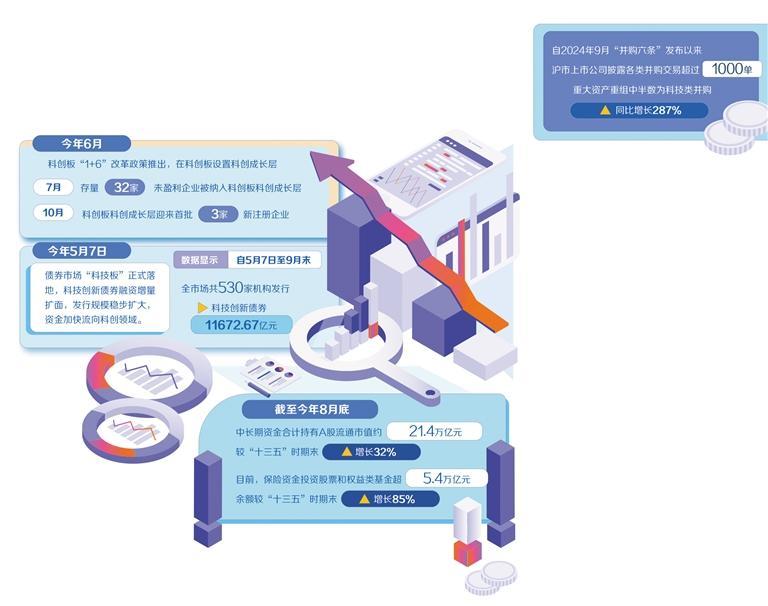
Group 1 - The overall market capitalization has exceeded 100 trillion yuan, indicating a significant improvement in investor confidence and expectations, with enhanced market resilience and risk resistance [2] - The "14th Five-Year Plan" outlines the direction and goals for the next phase of capital market reform, emphasizing the need to improve the inclusiveness and adaptability of the capital market system [2] - The focus is on enhancing institutional inclusiveness for technological innovation, optimizing the market ecology for long-term investments, and better utilizing the capital market as a platform for resource allocation [2] Group 2 - The development of direct financing through equity and bonds is a key task outlined in the "14th Five-Year Plan," aimed at improving the inclusiveness and adaptability of the capital market [2] - The China Securities Regulatory Commission (CSRC) has been actively promoting multi-tiered capital market systems and enhancing services for high-quality technology enterprises [2][4] - The introduction of the "1+6" reform policy for the Sci-Tech Innovation Board in June and the establishment of a growth tier for unprofitable companies in July are significant steps in this direction [2][3] Group 3 - The bond market plays a crucial role in serving the real economy and optimizing resource allocation, with a focus on developing technology and green bonds [4] - Since the launch of the "Technology Board" for bonds on May 7, 2023, a total of 11,672.67 billion yuan in technology innovation bonds have been issued by 530 institutions by the end of September [4][5] - The future of the bond market is expected to continue focusing on technology innovation, foreign openness, and green development, with a diverse range of issuers [5] Group 4 - The A-share merger and acquisition market has been heating up, with significant reforms in the M&A market aimed at supporting the transformation and upgrading of listed companies [6] - Since the implementation of the "M&A Six Guidelines," over 1,000 M&A transactions have been disclosed in the Shanghai market, with a notable increase in technology-related mergers [6] - The future role of M&A is expected to further enhance the integration of technology and industry, reflecting a shift from factor-driven to innovation-driven economic growth [6][7] Group 5 - The cultivation of high-quality listed companies is essential for the stable operation of the capital market, with ongoing reforms to improve the delisting mechanism [7] - The delisting mechanism is being optimized to ensure a more orderly market ecology, allowing for a more effective selection process [7] - The focus on enhancing the delisting standards and mechanisms aims to improve the overall health and resource allocation efficiency of the capital market [7] Group 6 - As of the end of August, medium- and long-term funds held approximately 21.4 trillion yuan of A-share circulating market value, a 32% increase from the end of the "13th Five-Year Plan" period [8] - The acceleration of medium- and long-term funds entering the market is expected to stabilize market fluctuations and promote a shift towards value investment and long-term investment [8][9] - The establishment of a more attractive "long money, long investment" system environment is crucial for supporting innovation and capital formation [9][10] Group 7 - The "14th Five-Year Plan" period is expected to position the capital market as an aggregator of innovation, linking technology, industry, and policy [10] - The focus will be on providing long-term patient capital for technological innovation and supporting the transformation and upgrading of traditional industries [10]

全球造船业“向东看” 长三角船厂成“引力场”
Zhong Guo Xin Wen Wang· 2025-12-08 09:21
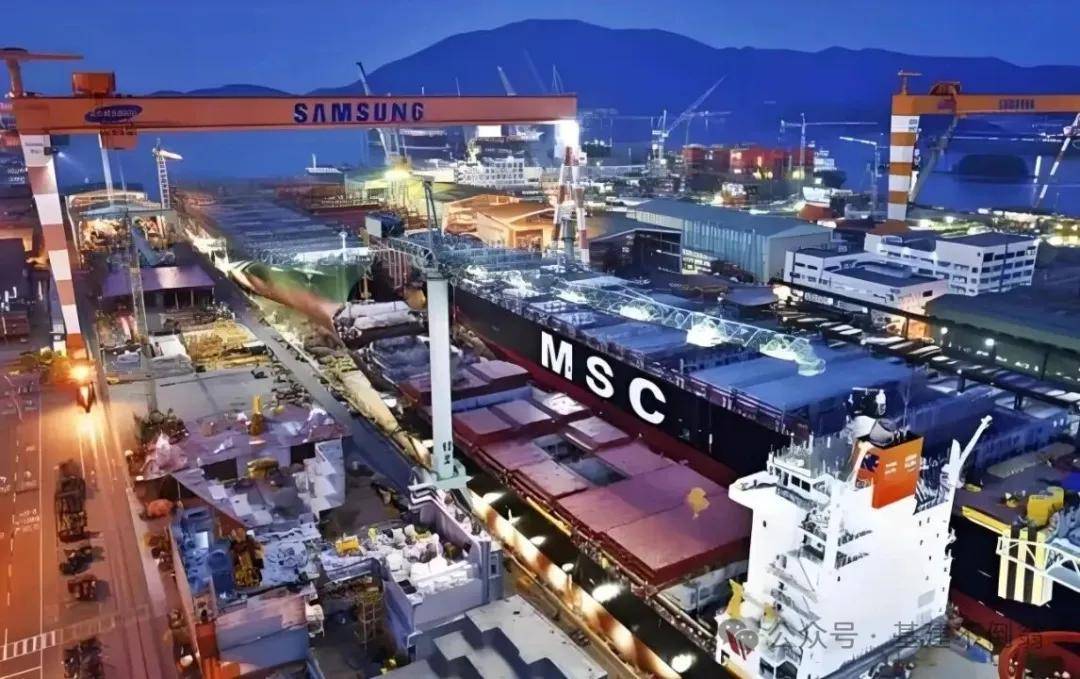
Core Insights - The global shipbuilding industry is increasingly shifting towards China, with Chinese shipyards capturing 64.2% of new global ship orders as of mid-2023, maintaining the world's largest market share for 16 consecutive years [1] - The three major shipyards in Shanghai—Waigaoqiao Shipbuilding, China State Shipbuilding Corporation Jiangnan Shipyard, and Hudong-Zhonghua Shipbuilding—are projected to deliver 69 ships and receive 128 new orders in 2024, marking a year-on-year increase of 19% and 70% respectively [1] - The focus on high-value ship types is evident, with over 95% of the orders held by these shipyards being high-value vessels [1] Industry Trends - The shift of the shipbuilding industry towards the East is attributed to a reordering of industrial competitiveness, with European shipbuilding facing challenges due to labor shortages and rising costs [1] - Chinese shipbuilding is leveraging breakthroughs in smart transformation, which have created key opportunities for capturing global market share [1][2] - Traditional shipyards are struggling with low production efficiency due to a lack of R&D capabilities and outdated operational models, prompting a transformation towards digitalization and AI integration [2] Technological Advancements - Several shipyards in the Yangtze River Delta are innovating by integrating industrial internet and AI into the shipbuilding process, enhancing efficiency and quality [2] - Waigaoqiao Shipbuilding utilizes AI for logistics management, while Jiangnan Shipyard employs machine vision and AI algorithms to detect welding defects, reducing manual labor by approximately 50% [2] - The introduction of AI in design and production is expected to significantly shorten project cycles, exemplified by the second large cruise ship project, which is anticipated to be completed over six months faster than the first [2] Market Dynamics - "Green" and "smart" are emerging as key factors influencing shipowners' order decisions, with Yangtze River Delta shipyards focusing on high-end categories such as large container ships and energy transport vessels [3] - By mid-2023, China had secured nearly 70% of global green ship orders, achieving full coverage of mainstream ship types [4] - Hudong-Zhonghua has developed a series of green ship design solutions and showcased advanced products at the recent maritime exhibition, including the world's largest LNG ship [4] - The shipbuilding quality from Chinese manufacturers is improving, enhancing their reputation in the global shipping industry [4]

2025年1-9月中国民用钢质船舶产量为3905.4万载重吨 累计增长19%
Chan Ye Xin Xi Wang· 2025-12-01 03:30
Core Viewpoint - The report highlights significant growth in China's civil steel shipbuilding industry, with a projected production increase and substantial year-on-year growth rates for 2025 [1] Industry Summary - According to the National Bureau of Statistics, the production of civil steel ships in China is expected to reach 5.59 million deadweight tons in September 2025, representing a year-on-year increase of 59.3% [1] - Cumulative production from January to September 2025 is projected to be 39.05 million deadweight tons, reflecting a cumulative growth of 19% [1] - The report is based on data compiled by Zhiyan Consulting, a leading industry consulting firm in China, which specializes in in-depth industry research and market analysis [1]



“资本+科创+产业”三轮驱动 并购重组助力上市公司激活新质生产力
Shang Hai Zheng Quan Bao· 2025-11-30 18:29
Core Viewpoint - Mergers and acquisitions (M&A) are driving new productive forces in the industry through a "three-wheel drive" model of capital empowerment, industrial integration, and technological breakthroughs [1][2]. Group 1: M&A Market Dynamics - The capital market serves as the core hub for M&A, with recent regulatory reforms from the China Securities Regulatory Commission (CSRC) aimed at invigorating the M&A market [2][4]. - Policies such as the "M&A Six Articles" and "Science and Technology Innovation Board Eight Articles" are designed to guide capital towards hard technology and support traditional industries in transformation [2][4]. Group 2: Financial Institutions' Role - Financial institutions like Ping An Bank are enhancing their M&A financing capabilities, with a compound annual growth rate of nearly 30% in M&A loan scale since 2020, providing over 100 billion yuan in financing for M&A transactions [5][6]. - The focus is on supporting listed companies in industrial upgrades, overcoming key technological challenges, and facilitating cross-border M&A [5][6]. Group 3: Industry Trends and Challenges - The current M&A wave is characterized by a strong industrial drive, particularly in hard technology sectors such as semiconductors and biomedicine, aligning with the internal needs of listed companies for integration and technological upgrades [6][7]. - Companies are encouraged to adopt a dual approach of "external expansion + refined management" to enhance value through M&A and operational efficiency [8][9]. Group 4: Strategic Insights - Successful companies are those that can navigate through cycles and strategically position themselves for future growth, emphasizing the importance of targeted M&A based on core competencies [9]. - The need for effective selection of M&A targets and achieving integration synergies is highlighted as a critical challenge for listed companies [9][10].


日本造船业豪掷万亿赌明天,中韩格局之下能否杀出回血路?
Sou Hu Cai Jing· 2025-11-12 07:12
Core Viewpoint - The Japanese shipbuilding industry is undergoing a significant revival effort, with the government planning to establish a special fund of 1 trillion yen (approximately 47 billion RMB) to increase Japan's global market share from 13% to 20% by 2035 [1] Group 1: Government Initiatives - The initiative has been strongly promoted by the ruling Liberal Democratic Party and is included in the proposed supplementary budget for the fiscal year 2025, indicating the government's commitment [1] - The fund aims to modernize old facilities, establish automated production lines, and enhance research and development in new energy ship technologies [1] Group 2: Industry Challenges - Japan's shipbuilding industry faces severe challenges, having seen its global market share drop from nearly 50% in the 1970s to less than 10% today, lagging behind China and South Korea [1] - High labor costs and an aging workforce are significant internal challenges, with younger generations reluctant to enter the shipbuilding sector [3] Group 3: Competitive Landscape - South Korea dominates the high-end ship sector, particularly LNG vessels, capturing over 70% of new global orders in this category, with profit margins exceeding 12% [1] - In contrast, many Japanese shipyards remain focused on traditional ship types, resulting in low profitability [1] Group 4: Strategic Partnerships - Japan is actively seeking collaboration with the United States to form a joint shipbuilding revitalization fund, aiming to explore opportunities in military and transoceanic transport vessels [3] - This strategy reflects Japan's intention to become a substitute center for shipbuilding for Western countries amid a "de-China" supply chain shift [3] Group 5: China's Competitive Edge - China's shipbuilding industry has made significant advancements, particularly in the new energy ship sector, holding a global market share of over 40% and dominating with 68.3% of new orders in the first half of 2025 [3][5] - The recent merger of China Shipbuilding Group and China State Shipbuilding Corporation has further strengthened China's competitive position, with a combined asset scale exceeding 4 trillion RMB [5]
2025航运业转型融资研究报告
Sou Hu Cai Jing· 2025-11-03 01:57
Core Insights - The global shipping industry is undergoing a significant green transformation, with green ships becoming a key driver for low-carbon transition. This is supported by policies such as the IMO's 2025 Net Zero Framework and China's Green Development Action Plan for Shipbuilding Industry (2024-2030) [1][2][14] Group 1: Industry Overview - The IMO's Net Zero Framework is a milestone document that combines mandatory emission limits with greenhouse gas pricing, requiring ocean-going vessels over 5,000 gross tons to gradually reduce their greenhouse gas fuel intensity [1][19] - China's shipbuilding industry has formed a globally leading industrial system, achieving significant progress in green technology research and development, ecological construction, and demonstration applications [2][15] - The technology landscape for green ships shows a "multi-pronged" approach, with clean energy technologies, such as LNG and methanol-powered vessels, leading the way [2][24][31] Group 2: Financial Support - The financial support for the green shipping industry is crucial, with an estimated investment need of approximately $1-1.9 trillion by 2050 to achieve net-zero emissions [16] - China is building a diversified financing system that includes debt, equity, and insurance, with various financial products being developed to support green ship construction [5][16] - Internationally, frameworks like the Poseidon Principles are pushing financial institutions to incorporate carbon performance into project evaluations, with tools like green bonds and sustainable development-linked loans being widely adopted [5][16] Group 3: Regional Development - Coastal provinces in China have formed distinctive industrial clusters, with Shanghai leading in high-end ship design and green port construction, while Jiangsu excels in LNG-powered shipbuilding [4][23] - Shandong focuses on hydrogen and LNG applications, while Fujian aims to develop electric vessels, and Liaoning is advancing its green methanol industry [4][23] Group 4: Challenges and Recommendations - The green shipping industry faces challenges such as insufficient market mechanisms and lagging supporting infrastructure [6][18] - Recommendations include enhancing policy and market synergy, diversifying financial products, and accelerating the construction of clean fuel refueling stations and shore power facilities [6][18]

中财大绿金院IIGF:航运业转型融资研究报告——立足绿色船舶视角
Sou Hu Cai Jing· 2025-11-01 07:13
Core Insights - The shipping industry is undergoing a green transformation, with green ships becoming a central focus. Global policies and technological innovations are advancing, particularly with the International Maritime Organization (IMO) set to implement the "IMO Net Zero Framework" in 2025, which will accelerate the decarbonization of maritime shipping by establishing greenhouse gas intensity requirements and a global carbon pricing mechanism [11][20][17]. Group 1: Overview of the Green Shipping Industry - Green ships are leading the shipping industry's transition towards sustainability, with significant progress in technology, industry chain ecology, and demonstration applications [12]. - The green shipping technology landscape includes clean energy technologies, energy efficiency improvements, and carbon capture technologies, each with varying maturity and application potential [21][22]. - China's green shipping industry has formed a globally leading industrial system, with key regions like Shanghai, Jiangsu, and Shandong developing distinctive paths for green ship development [43]. Group 2: Financial Support for Green Shipping - Financial support is crucial for the development of the green shipping industry, with diverse financing paths emerging, including medium to long-term loans, supply chain finance, and transformation loans [2][49]. - The domestic green financing landscape is evolving, with green bonds and leasing becoming increasingly important, while international frameworks like the Poseidon Principles guide financial institutions in investing in green shipping [13][50]. - Shanghai has emerged as a financial hub for green shipping, integrating shipping enterprises into local carbon markets and launching innovative financial tools to support the green shipping sector [14][49]. Group 3: Challenges and Recommendations - The green shipping sector faces challenges such as insufficient economic incentives for mandatory emissions reductions, comprehensive financing risks, and difficulties in ecological investment [15]. - Recommendations for advancing the green shipping industry include enhancing policy and market mechanisms, developing diversified financing solutions, and increasing investments in supporting infrastructure like clean fuel supply and carbon capture [15][49]. Group 4: Related Ecosystem - The development of green shipping is interconnected with port terminals, logistics services, and maritime services, forming a comprehensive ecosystem for sustainable shipping [38]. - Green ports are being developed in China, with significant achievements in reducing environmental impacts and enhancing operational efficiency [39]. - The logistics sector, while diverse, shows varying degrees of green transformation, with cargo shipping progressing faster than passenger shipping in adopting low-carbon technologies [41].

2025年航运业转型融资研究报告
Sou Hu Cai Jing· 2025-10-28 03:19
Core Insights - The shipping industry is undergoing a significant transformation driven by the global carbon neutrality wave, with the implementation of the IMO's "Net Zero Framework" in 2025 marking a critical phase for emission reduction [13][18] - Green ships are becoming a strategic focus for capital investment, with various clean energy technologies such as LNG, methanol, ammonia, hydrogen, and fuel cells emerging as key players in this transition [12][14] Industry Overview - The shipping industry is expected to require an investment of approximately $1-1.9 trillion to achieve net-zero emissions by 2050, highlighting the urgent need for financial support [15] - China's green ship manufacturing sector has made significant progress, with a focus on high-end, autonomous, and international development [14][22] - The industry is characterized by a high concentration of major players in the midstream segment, while the downstream market remains fragmented [38][39] Technology Landscape - Clean energy technologies are categorized into three main types: clean energy technologies, energy efficiency improvement technologies, and carbon capture technologies, each with varying levels of maturity and application potential [24][33] - LNG technology is currently the mainstream choice for the transition period, while methanol is gaining traction due to its high energy density and ease of refueling [12][28] - Hydrogen and ammonia have zero-carbon potential but face challenges related to toxicity, storage costs, and technological maturity [12][29][32] Financial Support Mechanisms - Green finance is emerging as a core engine for driving technology implementation, with leading international shipping companies raising billions through green bonds and sustainable development-linked bonds [2][15] - Innovative financing models, such as "rent and carbon emissions linkage" and "energy-saving revenue sharing," are reshaping the financing logic within the industry [2][12] - China's financial support for green shipping includes long-term loans, supply chain finance, and transformation loans, with a focus on expanding the range of financial products available [54][56] Regional Development - Key regions in China, such as Shanghai, Jiangsu, Shandong, Fujian, and Liaoning, are developing distinctive paths for green ship development, supported by favorable policies and regional characteristics [51][52] - Shanghai is positioning itself as a global leader in green and intelligent shipbuilding, while Jiangsu focuses on LNG-powered ship design and construction [51][52]

2025年航运业转型融资研究报告-汇丰&IIGF
Sou Hu Cai Jing· 2025-10-26 09:00
Core Insights - The report highlights the urgent need for diverse financial support in the green shipping sector, estimating that global shipping must invest between $1 trillion to $1.9 trillion to achieve net-zero emissions by 2050 [1][17]. Group 1: Current State of the Green Shipping Industry - Internationally, the IMO's "Net Zero Framework" establishes mandatory emission reduction and carbon pricing mechanisms effective from 2028, while the EU has included the shipping industry in its carbon trading system [2]. - Domestically, China has introduced the "Green Development Action Plan for Shipbuilding Industry (2024-2030)," outlining development goals for 2025 and 2030 [2]. - Technologically, the industry focuses on three main areas: clean energy, energy efficiency improvement, and carbon capture, with LNG and methanol fuel ships already in large-scale use [2]. - The industry chain shows characteristics of "upstream concentration, midstream leadership, and downstream dispersion," with coastal provinces like Shanghai, Jiangsu, and Shandong forming industrial clusters [2]. Group 2: Financial Support Pathways and Comparisons - Domestic financial support encompasses three main areas: debt, equity, and insurance, with a focus on medium to long-term loans and green bonds [3]. - Internationally, a mature financing system has emerged, centered around the "Poseidon Principles," with widespread use of green bonds and sustainable development-linked loans [3]. - Compared to international markets, domestic funding sources are less diverse, relying heavily on policy guidance, with a need for improved environmental benefit quantification and market mechanisms [3]. Group 3: Shanghai's Practices and National Challenges - Shanghai has developed a three-pronged model of technological clusters, market-based emission reductions, and financial innovation, including integrating 31 shipping companies into the local carbon market [4]. - Nationally, challenges include insufficient market incentives, the absence of shipping in the national carbon market, and low participation from social capital in green shipping financing [4]. Group 4: Development Recommendations - The report suggests enhancing policy and market coordination, developing composite financing, enriching financial products, and increasing infrastructure investment to support the green shipping ecosystem [5].
