
Grace(603256)

Search documents
PCB材料行业报告:乘AI之风,PCB材料向高频高速升级
Shanxi Securities· 2025-12-18 06:57
Investment Rating - The report maintains a rating of "B" for the new materials PCB materials industry, indicating a positive outlook for the sector [1]. Core Insights - The demand for PCBs is expected to grow significantly due to the rapid development of AI servers, with the domestic PCB market projected to increase from $41.213 billion in 2024 to $49.704 billion by 2029, reflecting a CAGR of 3.8% [2][18]. - The fastest-growing downstream sector for PCBs is the server and data storage market, with a projected CAGR of 11.6% from 2024 to 2029 [23]. - The transition to PCIe 5.0 standards is driving the need for high-frequency and high-speed PCBs, necessitating improvements in dielectric properties of core materials [27][34]. Summary by Sections PCB Market Overview - The global PCB market is expected to reach $94.7 billion by 2029, with a CAGR of 5.2% from 2024 to 2029, driven by AI, data centers, and smart automotive applications [18]. - In 2024, the domestic PCB market is anticipated to grow by 9.0%, reaching $41.213 billion, while the global market is projected to grow by 5.8% [18][23]. Material Demand and Supply - The demand for electronic-grade PPO and hydrocarbon resins is expected to reach 4,558 tons and 1,216 tons respectively by 2025, with growth rates of 41.89% and 41.62% [3][50]. - The global HVLP copper foil market is projected to grow from $2 billion to $5.95 billion between 2024 and 2032, with a CAGR of 14.6% [5][6]. Key Companies - Shengquan Group is expanding its PPO resin production capacity to over 2,000 tons and is involved in multiple expansion projects [7]. - Dongcai Technology is investing 700 million yuan to build a project with an annual capacity of 20,000 tons of electronic materials for high-speed communication [7]. - Zhongcai Technology is the first domestic supplier to achieve mass production of second-generation low-dielectric products [7]. - Honghe Technology has reached international leading quality levels for some high-end electronic fabrics and will begin mass supply in the first half of 2025 [7]. Material Innovations - Low-DK electronic fabrics are essential for M7 and above CCLs, with a projected global market size of $2.3 billion by 2033, growing at a CAGR of 7.5% [4]. - The transition to low Dk/Df materials is critical for PCB performance, with core materials like PPO, hydrocarbon resins, and HVLP copper foils expected to see significant demand growth [37][40].


预见2025:《2025年中国玻璃纤维行业全景图谱》(附供需情况、竞争格局、发展前景等)
Qian Zhan Wang· 2025-12-18 02:13
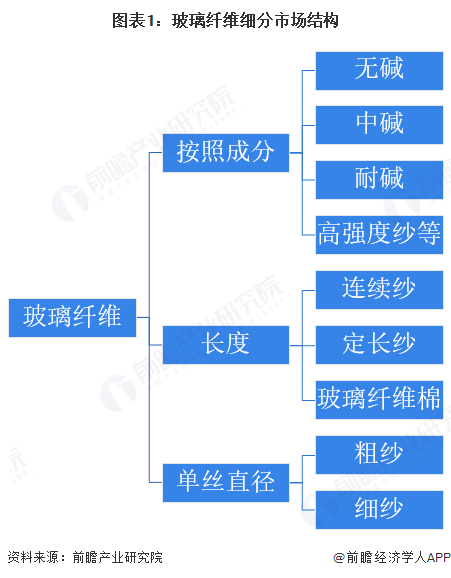
Industry Overview - Glass fiber is an inorganic non-metallic material primarily composed of silica, alumina, and calcium oxide, known for its insulation, heat resistance, and corrosion resistance, widely used in construction, transportation, wind power, and electronics [1] - The glass fiber industry has strong linkages with upstream (minerals, chemicals, energy) and downstream sectors (transportation, construction, electronics, and emerging industries) [4] Industry Development - The history of China's glass fiber industry dates back to the late 1940s, with significant growth occurring in the late 1990s, leading to China holding over 50% of global glass fiber production capacity by the 21st century [7] - As of mid-2025, China's glass fiber production capacity is expected to reach 8.7 million tons, indicating ongoing capacity expansion [14] Policy Background - In 2023, various policies were introduced to encourage the development of high-performance glass fiber products, including the "Green Building Materials Industry High-Quality Development Implementation Plan" and "Guidance on Promoting the Recycling of Retired Wind Power and Photovoltaic Equipment" [11][13] Supply and Demand - China's glass fiber production capacity reached over 7.5 million tons in 2022, with a projected increase to 8.7 million tons by mid-2025, indicating a slowdown in capacity expansion [14] - The total production of glass fiber is expected to reach 7.56 million tons in 2024, reflecting a year-on-year growth of 4.6% [15] - The apparent consumption of glass fiber in China is projected to reach 5.64 million tons in 2024, with a year-on-year increase of 1.6% [24] Export and Import Trends - China's glass fiber export volume is expected to reach 2.02 million tons in 2024, the highest in a decade, while imports are projected to decline to 100,000 tons, indicating improved self-sufficiency [21] Revenue Trends - The main business revenue of large-scale glass fiber enterprises in China was approximately 114.8 billion yuan in 2023, with a slight decrease of 0.5% expected in 2024 [26] Competitive Landscape - China Jushi is the leading company in the glass fiber sector, with a revenue of 15.48 billion yuan from glass fiber-related businesses in 2024, while other companies like China National Materials, International Composites, and Changhai Co. also report revenues exceeding 1.5 billion yuan [29] - The major glass fiber companies are concentrated in Jiangsu, Shandong, Shanghai, Zhejiang, and Chongqing, with China Jushi located in Zhejiang [31] Future Development Trends - The industry is expected to phase out low-end capacities while high-end products like electronic-grade glass fiber will see increased demand due to advancements in technologies such as 5G and AI [34] - By 2030, the demand for glass fiber in China is projected to reach 6.54 million tons, driven by sectors like new energy vehicles, wind power, and advanced communication technologies [37]


玻璃玻纤板块12月17日涨2.59%,中材科技领涨,主力资金净流入4.28亿元
Zheng Xing Xing Ye Ri Bao· 2025-12-17 09:07
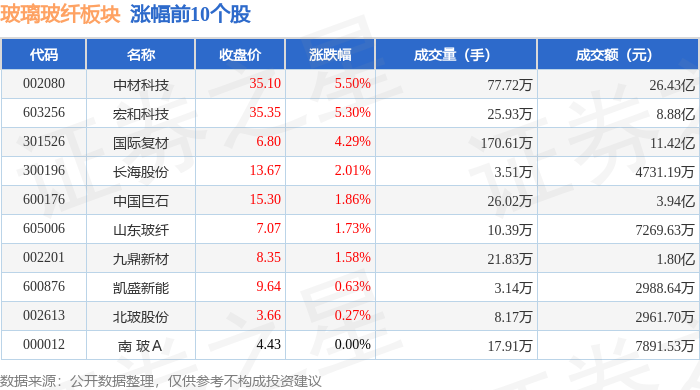
Market Overview - The glass fiber sector increased by 2.59% on December 17, with Zhongcai Technology leading the gains [1] - The Shanghai Composite Index closed at 3870.28, up 1.19%, while the Shenzhen Component Index closed at 13224.51, up 2.4% [1] Stock Performance - Zhongcai Technology (002080) closed at 35.10, up 5.50%, with a trading volume of 777,200 shares and a turnover of 2.643 billion [1] - Honghe Technology (603256) closed at 35.35, up 5.30%, with a trading volume of 259,300 shares and a turnover of 888 million [1] - International Composite (301526) closed at 6.80, up 4.29%, with a trading volume of 1,706,100 shares and a turnover of 1.142 billion [1] - Other notable stocks include China Jushi (600176) at 15.30, up 1.86%, and Shandong Glass Fiber (605006) at 7.07, up 1.73% [1] Capital Flow - The glass fiber sector saw a net inflow of 428 million from institutional investors, while retail investors experienced a net outflow of 379 million [2] - The main stocks with significant net inflows include Zhongcai Technology with 313 million and International Composite with 151 million [3] - Retail investors showed a notable outflow from stocks like Honghe Technology, with a net outflow of 98.43 million [3]


建材行业2026年度投资策略:向内看“反内卷”显效,向外拓“新市场”机遇
CMS· 2025-12-16 09:04
Group 1 - The report highlights that the building materials industry has shown a strong performance since 2025, particularly in fiberglass, cement, and refractory materials, benefiting from significant price increases and improved supply-demand dynamics [1][12][14] - The consensus on "anti-involution" among companies has led to supply reductions or maintenance, while structural demand growth is observed in specific segments such as specialty electronic fabrics in fiberglass and overseas market expansion in cement [1][12] - The report anticipates that the building materials industry will continue to present structural opportunities in 2026, with specific focus on segments like float glass, tiles, pipes, and sanitary ware, which are still in the process of bottoming out [1][12] Group 2 - The report indicates that the cement industry is expected to see a profit recovery in 2025, with the profit turning point occurring before revenue, driven by capacity management and a decrease in coal prices [5][6][12] - The overseas market for cement is highlighted as a key growth area, with significant projects expected to contribute to earnings in 2026, such as Huaxin Cement's project in Malawi and West Cement's project in Uganda [5][6][12] - The fiberglass sector is projected to experience significant profit recovery, with multiple rounds of price increases and expanding demand from downstream applications, particularly in wind energy and electric vehicles [5][6][12] Group 3 - The report notes that the float glass sector continues to face challenges, with high inventory levels and weak demand leading to price pressures, while the industry is expected to undergo a reshuffling due to cost differentiation [6][12][25] - The report emphasizes the importance of focusing on leading companies in the building materials sector that possess strong brand competitiveness, scale advantages, and well-established distribution channels to capture dual benefits of market share growth and profit improvement [6][12][25] - Investment recommendations include focusing on leading companies in various segments such as waterproof materials, coatings, pipes, and tiles, as well as cement companies with strong cash flow and dividend commitments [6][12][25]




建材行业2026年投资策略:告别内卷、挖掘存量、寻找增量
GF SECURITIES· 2025-12-14 12:09
Core Insights - The report emphasizes the importance of identifying investment opportunities in the building materials sector as it transitions from a period of intense competition to one focused on value extraction and growth [1]. Group 1: Investment Opportunities in the Building Materials Sector - Four key investment themes are highlighted: traditional building material leaders emerging from the bottom of the cycle, overseas capacity expansion, high-demand new materials, and policy support for industry consolidation [5]. - Traditional building material leaders are expected to recover first, with a focus on alpha opportunities as the sector stabilizes [14]. - The overseas expansion of building material capacity is driven by high demand in foreign markets, particularly in Africa, where Chinese companies are increasingly investing [20][22]. Group 2: Consumer Building Materials - The consumer building materials sector is stabilizing, with a narrowing decline in real estate indicators expected in 2026, leading to a potential rebound in demand [15]. - Strong alpha leaders in the sector are anticipated to achieve positive revenue growth first, with companies like Sanke Tree and Dongfang Yuhong highlighted as key players [15][16]. - Profit margins are expected to improve in 2026 due to price stabilization, structural optimization, and enhanced operational efficiency [15]. Group 3: Glass Fiber Industry - The glass fiber market is projected to maintain a tight supply-demand balance, with demand expected to grow by 5.8% in 2025 and 4.6% in 2026 [5][25]. - The report notes that the profitability of traditional glass fiber products is on an upward trajectory, with leading companies benefiting from differentiated product advantages [5][28]. Group 4: Cement Industry - The domestic cement market is facing a decline in demand, with expectations of a 7% drop in 2025 and a 6% drop in 2026, while overseas markets remain robust [5][31]. - The report suggests that supply-side policies will play a crucial role in stabilizing the market, with potential profitability improvements anticipated in 2026 [5][36]. Group 5: Glass Industry - The glass industry is expected to see supply optimization as a key theme in 2026, with a slight decline in demand for float glass anticipated [5][40]. - The photovoltaic glass segment is projected to experience a balanced supply-demand situation, with potential profitability improvements if production resumes [5][45].


AI算力封装的关键材料:Low CTE电子布为何迎来爆发?
材料汇· 2025-12-10 15:51
Group 1 - The core viewpoint of the article emphasizes that Low CTE electronic cloth is a key material for advanced AI packaging, significantly reducing warpage and stress mismatch, thereby enhancing long-term reliability. The demand for Low CTE electronic cloth is expected to surge due to the explosive growth in AI computing chip shipments and the increasing size of chip packaging areas, alongside rising demand for smartphone motherboards [2][18]. Group 2 - The demand explosion for Low CTE electronic cloth is driven by two main factors: the packaging of AI computing chips and the upgrade of consumer electronics. The application scenarios include AI servers, data center switches, and high-end consumer electronics. The demand for Low CTE electronic cloth is projected to exceed 600 million meters by 2025, with a compound annual growth rate of nearly 100% [18][19]. Group 3 - The supply of Low CTE electronic cloth is currently scarce, with Nitto Denko being the leading global supplier. However, its production capacity is not expected to increase in the short term. Domestic companies like Zhongcai Technology and Honghe Technology are beginning to fill the gap, having completed customer certifications and started mass production [3][6][12]. Group 4 - The article highlights that the Low CTE electronic cloth market is characterized by a concentrated supply structure, with ongoing shortages expected to worsen. The demand for Low CTE electronic cloth is anticipated to double this year, reaching over 6 million meters, while the supply gap is projected to exceed 30% [6][12]. Group 5 - The production of Low CTE electronic cloth involves high technical barriers, with only a few companies globally mastering stable mass production technology. The production process includes multiple stages, such as melting, weaving, and post-treatment, each facing various technical challenges [13][14][17]. Group 6 - The article discusses the advanced packaging technology CoWoP (Chip-on-Wafer-on-Substrate) as a significant growth area for Low CTE electronic cloth, particularly in AI servers. This technology allows for larger and more integrated packaging, which is crucial for AI applications [3][34][53].

2026年AI算力硬件出海逻辑及重大边际变化梳理
傅里叶的猫· 2025-12-07 13:13
Group 1: Optical Modules - The optical module industry is experiencing the highest growth and performance realization among AI hardware this year, driven by high verification barriers for North American CSP tech giants and increasing demand due to the acceleration of supernode technology [2][4] - The average ratio of optical modules to GPUs is continuously increasing, with demand for 800G and 1.6T optical modules being revised upwards, indicating a strong upward resonance in demand [2][4] - By 2026, the demand for 1.6T optical modules is expected to exceed 30 million units, with an average price of $900-1000 per unit, while high-end EML optical chips are projected to face a 25-30% supply shortage [4][5] Group 2: Liquid Cooling - The liquid cooling industry has seen fluctuating trends this year, with initial enthusiasm dampened by low penetration rates, followed by a resurgence in August and significant breakthroughs in November [5][9] - The demand for liquid cooling in North America is expected to expand rapidly by 2026, with penetration rates in the NVIDIA ecosystem projected to rise from 20-30% to over 80-90% [7][9] - A leading domestic manufacturer is anticipated to capture a market share of 13-17% in North America by 2026, with Google expected to implement liquid cooling solutions for over 200,000 TPU V7 chips, creating a market space exceeding $24-28 billion [9][10] Group 3: AI PCB - The AI PCB industry is thriving, with companies like Shenghong, Huidian, and Shengyi achieving performance realization in North America, despite some quarterly fluctuations [10][12] - The supply side is seeing an increase in product value and manufacturing difficulty due to upgrades in customer chips and cabinet solutions, leading to a marginal differentiation in the supply landscape [10][12] - By 2026, the introduction of orthogonal backplanes is expected to significantly increase unit value, with M9 material processing anticipated to break through, although mass production is expected to ramp up in 2027 [12][13] Group 4: Server Power Supply - The server power supply market has shown similar trends to liquid cooling, with initial excitement followed by a divergence in performance among manufacturers [13][14] - The supply side is dominated by Taiwanese manufacturers, with a high concentration of market share, while domestic manufacturers are expected to make significant breakthroughs in North America by 2026 [14][15] - The adoption of HVDC technology is projected to replace traditional UPS solutions, with an expected market scale exceeding $20-30 billion by 2026 [15]






宏和科技:第四届董事会第十一次会议决议公告
Zheng Quan Ri Bao· 2025-12-05 15:43
证券日报网讯 12月5日晚间,宏和科技发布公告称,公司第四届董事会第十一次会议审议通过《关于公 司2025年度向特定对象发行A股股票相关授权的议案》等。 (文章来源:证券日报) ...
宏和科技:12月5日召开董事会会议
Mei Ri Jing Ji Xin Wen· 2025-12-05 08:15
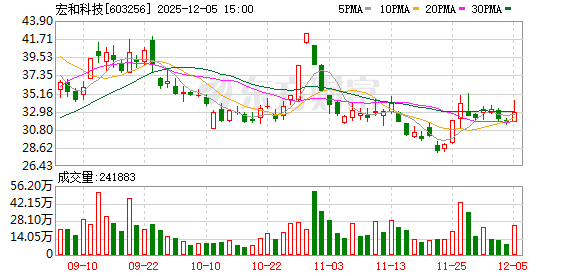
Group 1 - The core point of the article is that Honghe Technology (SH 603256) announced a board meeting to discuss the authorization for issuing A-shares to specific targets for the year 2025 [1] - The company's revenue composition for the year 2024 is as follows: electronic-grade glass fiber cloth accounts for 93.47%, electronic-grade glass fiber yarn accounts for 6.44%, and other businesses account for 0.1% [1] - As of the report, Honghe Technology has a market capitalization of 28.9 billion yuan [1]
宏和科技(603256) - 宏和科技第四届董事会第十一次会议决议公告
2025-12-05 08:00
证券代码:603256 证券简称:宏和科技 公告编号:2025-078 宏和电子材料科技股份有限公司 第四届董事会第十一次会议决议公告 本公司董事会及全体董事保证本公告内容不存在任何虚假记载、误导性陈 述或者重大遗漏,并对其内容的真实性、准确性和完整性承担个别及连带责任。 一、董事会会议召开情况 (一)宏和电子材料科技股份有限公司(以下简称"公司")第四届董事会 第十一次会议的召开符合有关法律、行政法规、部门规章、规范性文件和公司章 程的规定。 (二)本次会议通知于 2025 年 11 月 27 日以电子邮件方式向全体董事发出。 (三)本次会议于 2025 年 12 月 5 日在公司以现场结合通讯方式召开。 (四)本次会议应出席的董事 9 人,实际出席并参与表决的董事 9 人。 (五)本次会议由董事长毛嘉明先生主持,公司全体高级管理人员列席本次 会议。 二、董事会会议审议情况 (一)审议通过了《关于公司 2025 年度向特定对象发行 A 股股票相关授权 的议案》。 为确保公司 2025 年度向特定对象发行 A 股股票(以下简称"本次发行") 事项的顺利进行,基于公司股东会授权,在公司本次发行过程中,如按照竞价 ...