ZTE(000063)

Search documents
中兴通讯(00763) - 股份发行人的证券变动月报表
2026-02-03 10:47
股份發行人及根據《上市規則》第十九B章上市的香港預託證券發行人的證券變動月報表 截至月份: 2026年1月31日 狀態: 新提交 致:香港交易及結算所有限公司 公司名稱: 中興通訊股份有限公司 呈交日期: 2026年2月3日 I. 法定/註冊股本變動 | 1. 股份分類 | 普通股 | 股份類別 | H | | | 於香港聯交所上市 (註1) | 是 | | | --- | --- | --- | --- | --- | --- | --- | --- | --- | | 證券代號 (如上市) | 00763 | 說明 | | | | | | | | | | 法定/註冊股份數目 | | | 面值 | | 法定/註冊股本 | | | 上月底結存 | | | 755,502,534 | RMB | | 1 RMB | | 755,502,534 | | 增加 / 減少 (-) | | | 0 | | | RMB | | | | 本月底結存 | | | 755,502,534 | RMB | | 1 RMB | | 755,502,534 | | 2. 股份分類 | 普通股 | 股份類別 | A | | 於香港聯交 ...
中兴通讯:尚未启动10亿元股份回购计划
Di Yi Cai Jing· 2026-02-03 10:39
(文章来源:第一财经) 中兴通讯晚间公告,公司于2025年12月12日董事会会议通过了A股股份回购方案,计划使用自有资金以 集中竞价交易方式回购A股股份,资金总额不低于10亿元且不超过12亿元,回购价格不超过63.09元/ 股,期限为12个月。截至2026年1月31日,公司尚未实施股份回购。后续将根据市场情况在回购期限内 推进回购计划,并履行相关信息披露义务。 ...

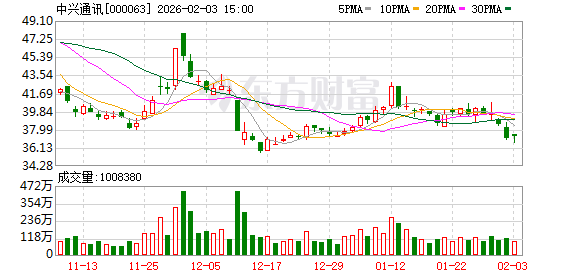
中兴通讯(000063) - 关于回购A股股份的进展公告
2026-02-03 10:32
证券代码(A/H):000063/00763 证券简称(A/H):中兴通讯 公告编号:202605 根据《上市公司股份回购规则》《深圳证券交易所上市公司自律监管指引第 9 号—— 回购股份》等相关规定,公司在回购股份期间,应当在每个月的前三个交易日内公告截至 上月末的回购进展情况。现将有关情况公告如下: 截至 2026 年 1 月 31 日,公司尚未实施本次股份回购。 公司后续将根据市场情况在回购实施期限内实施回购计划,并按照相关法律、法规和 规范性文件的规定及时履行信息披露义务。敬请广大投资者注意投资风险。 中兴通讯股份有限公司 关于回购 A 股股份的进展公告 本公司及董事会全体成员保证信息披露的内容真实、准确和完整,没有虚假记载、误导性陈述或 重大遗漏。 中兴通讯股份有限公司(以下简称"公司")于 2025 年 12 月 12 日召开的第十届董事 会第十七次会议审议通过了《关于以集中竞价交易方式回购公司 A 股股份方案的议案》, 同意公司使用自有资金以集中竞价交易方式回购公司 A 股股份,用于实施公司员工持股计 划或者股权激励。回购资金总额不低于人民币 10 亿元且不超过人民币 12 亿元(均包含本 数) ...
中兴通讯(000063) - 关于按照《香港上市规则》公布2026年1月份证券变动月报表的公告
2026-02-03 10:30
证券代码(A/H):000063/00763 证券简称(A/H):中兴通讯 公告编号:202606 中兴通讯股份有限公司 关于按照《香港上市规则》公布 2026 年 1 月份证券变动月报表的公告 本公司及董事会全体成员保证信息披露的内容真实、准确和完整,没有虚假记载、误导 性陈述或重大遗漏。 中兴通讯股份有限公司根据《香港联合交易所有限公司证券上市规则》(简 称"《香港上市规则》")规定,在香港联合交易所有限公司披露易网站 (www.hkexnews.hk)刊登了截至 2026 年 1 月 31 日的证券变动月报表。 根据《深圳证券交易所股票上市规则》关于境内外同步披露的要求,特将有 关公告同步披露如下,供参阅。 特此公告。 中兴通讯股份有限公司董事会 2026 年 2 月 4 日 股份發行人及根據《上市規則》第十九B章上市的香港預託證券發行人的證券變動月報表 截至月份: 2026年1月31日 狀態: 新提交 致:香港交易及結算所有限公司 公司名稱: 中興通訊股份有限公司 呈交日期: 2026年2月3日 I. 法定/註冊股本變動 | 1. 股份分類 | 普通股 | 股份類別 | H | | | 於香港聯交所上 ...
摩根大通(JPMorgan)对中兴通讯H股的多头持仓比例增至9.67%
Xin Lang Cai Jing· 2026-02-03 09:08
Group 1 - The core point of the article is that JPMorgan has increased its long position in ZTE Corporation's H-shares from 9.63% to 9.67% as of January 28, 2026 [1]

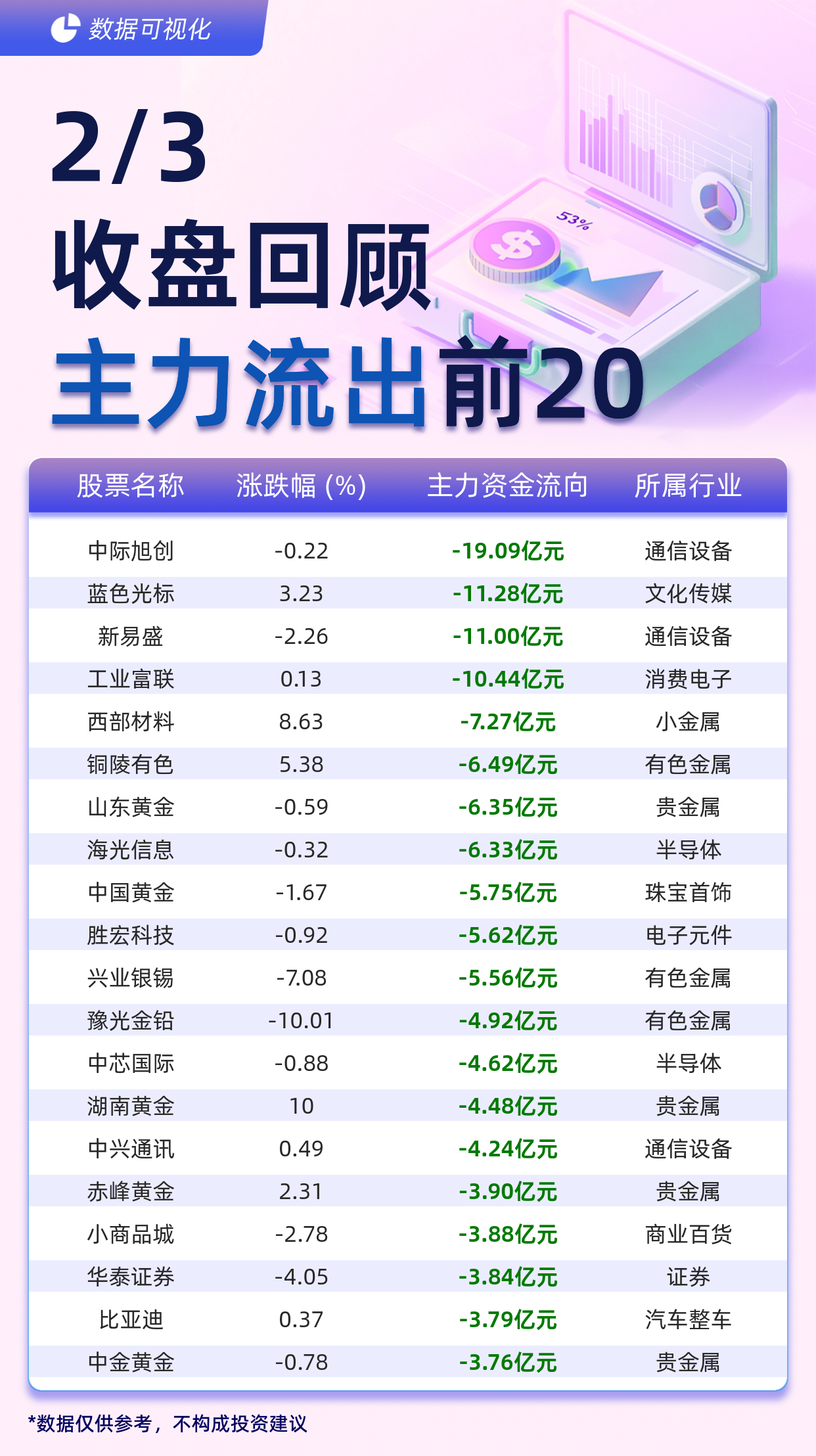
主力个股资金流出前20:中际旭创流出19.09亿元、蓝色光标流出11.28亿元
Jin Rong Jie· 2026-02-03 07:14
Group 1 - The main stocks with significant capital outflows include Zhongji Xuchuang (-1.91 billion), BlueFocus (-1.13 billion), and Xinye Sheng (-1.10 billion) [1] - Zhongji Xuchuang experienced a slight decline of 0.22%, while BlueFocus saw an increase of 3.23% despite the capital outflow [2] - Other notable stocks with capital outflows include Industrial Fulian (-1.04 billion), Western Materials (-0.73 billion), and Tongling Nonferrous Metals (-0.65 billion) [1][3] Group 2 - The sectors affected by capital outflows include communication equipment, cultural media, and precious metals [2][3] - Stocks like Western Materials and Tongling Nonferrous Metals showed positive price movements of 8.63% and 5.38% respectively, despite significant capital outflows [2][3] - The overall trend indicates a mixed performance among the top stocks, with some experiencing price increases while others faced declines [1][2]



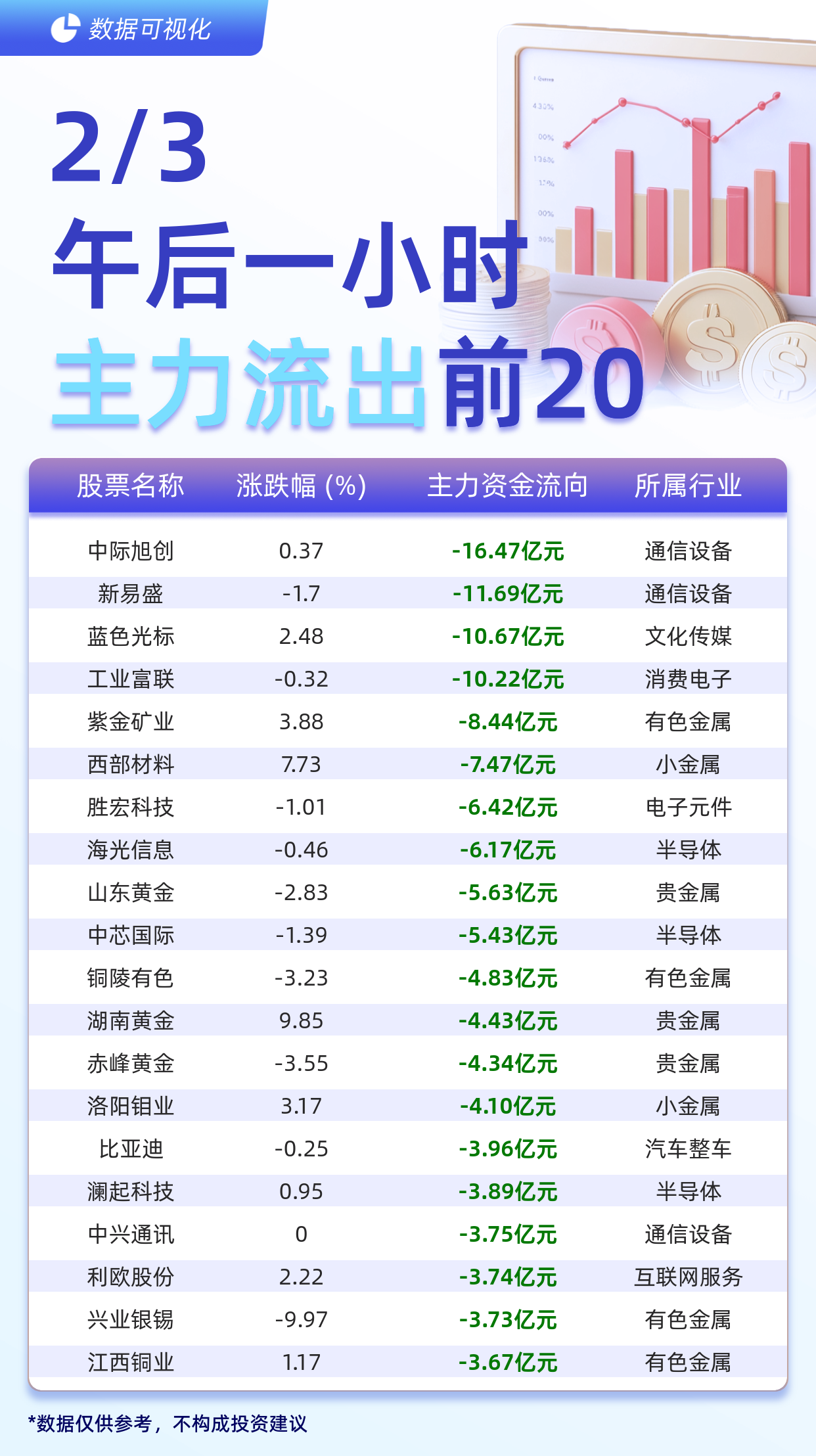
主力个股资金流出前20:中际旭创流出16.47亿元、新易盛流出11.69亿元
Jin Rong Jie· 2026-02-03 06:12
Core Viewpoint - The data indicates significant outflows of capital from various stocks, with notable amounts leaving the communication equipment and precious metals sectors [1][2][3] Group 1: Stock Performance and Capital Outflow - Zhongji Xuchuang experienced a capital outflow of 1.647 billion, with a slight increase in stock price of 0.37% [2] - Xinyi Sheng saw a capital outflow of 1.169 billion, with a decline in stock price of 1.7% [2] - BlueFocus Media had a capital outflow of 1.067 billion, with a stock price increase of 2.48% [2] - Industrial Fulian faced a capital outflow of 1.022 billion, with a decrease in stock price of 0.32% [2] - Zijin Mining reported a capital outflow of 0.844 billion, with a stock price increase of 3.88% [2] - Western Materials had a capital outflow of 0.747 billion, with a notable stock price increase of 7.73% [2] Group 2: Sector Analysis - The communication equipment sector is facing significant capital outflows, with Zhongji Xuchuang and Xinyi Sheng leading the outflows [1][2] - The precious metals sector, including companies like Shandong Gold and Zijin Mining, is also experiencing notable capital outflows [1][3] - The automotive sector, represented by BYD, has a capital outflow of 0.396 billion, with a slight decrease in stock price of 0.25% [3]



AI入口成大厂“兵家必争高地”
Nan Fang Du Shi Bao· 2026-02-03 03:58
Core Viewpoint - The competition in the AI sector is intensifying, with companies like Tencent, ByteDance, and Alibaba exploring different approaches to AI assistants and smart devices, highlighting the importance of user privacy and security in their strategies [1][4][8]. Group 1: Company Strategies - Tencent's CEO, Ma Huateng, criticized the security risks associated with the "Doubao" phone's screen recording and cloud uploading features, emphasizing the need for responsible practices in technology [1][4]. - ByteDance, in collaboration with ZTE, aims to integrate AI directly into smartphones with the "Doubao" assistant, focusing on cross-application tasks without waiting for app interfaces to open [2][6]. - Alibaba's "Qianwen" AI application emphasizes a controlled ecosystem, integrating shopping recommendations and payment processes within its own platforms, which allows for better transaction and risk management [3][6]. Group 2: User Privacy and Security - The "Doubao" assistant claims to operate under strict user authorization and compliance, ensuring that no data is stored or used for training, with encrypted transmission and robust protective measures [5][6]. - Concerns about privacy and security have escalated, with users experiencing restrictions on popular apps like WeChat and Alipay due to the assistant's operations, raising questions about the balance between functionality and safety [5][6]. - Industry experts highlight that as AI assistants approach system-level capabilities, the challenges of ensuring user privacy and data security become more complex, necessitating clearer regulations and standards [6][7]. Group 3: Industry Trends and Future Directions - The AI industry is shifting from simple Q&A capabilities to more complex tasks, with a focus on creating intelligent agents that can perform actions on behalf of users, thus changing the interaction dynamics [2][8]. - There are two main approaches emerging in the market: the "screen reading + simulated clicking" method, which is more universal but faces platform barriers, and the "API interface calling" method, which is more structured and manageable [6][7]. - The competition among "Doubao," "Qianwen," and Tencent's "Yuanbao" signifies a new phase in the AI entrance battle, characterized by product innovation and the need for regulatory frameworks to support safe and effective AI deployment [8].


推动AI Agent走向企业生产力 中兴通讯上线Co
Huan Qiu Wang· 2026-02-03 03:30
Core Insights - ZTE Corporation has officially launched the enterprise-level desktop AI agent, Co-Claw Enterprise Edition, aimed at enhancing productivity and operational efficiency in large organizations [1] Group 1: AI Agent Evolution - The AI agent has evolved from basic conversational capabilities to executing complex tasks, showcasing its potential in information retrieval, document processing, and workflow advancement [2] - The transition from individual experimentation to organizational empowerment presents challenges such as permission configuration, private deployment barriers, and the need to embed AI capabilities as organizational assets [2][4] Group 2: Co-Claw Enterprise Edition Features - Co-Claw Enterprise Edition is designed to bridge the gap between AI capabilities and practical application, focusing on enterprise-level deployment, security governance, and capability reuse [4][5] - The platform operates on ZTE's internal cloud infrastructure, ensuring continuous availability and unified management, akin to a "digital employee" [5] - Co-Claw provides immediate access to models through ZTE's MaaS service, minimizing friction in large-scale usage and enabling one-click deployment for employees [5][6] Group 3: Addressing Enterprise Pain Points - Co-Claw addresses deployment challenges by offering a user-friendly interface that allows non-technical staff to initialize personalized AI agents quickly [6] - The integration with ZTE's unified mobile office platform, iCenter, allows employees to invoke Co-Claw's capabilities seamlessly within their existing workflows [6][7] - The innovative Skill mechanism enables the sharing of successful workflows and templates among employees, promoting organizational knowledge and efficiency [7] Group 4: Real-World Applications - Co-Claw has been implemented in various scenarios within ZTE, such as automating meeting summaries and document processing, thereby freeing employees for more creative tasks [8] - In agile development, Co-Claw facilitates requirement creation and defect tracking through natural language input, streamlining the development process [8] - The AI agent enhances business operations by quickly extracting key contract terms and identifying compliance risks, improving cross-departmental collaboration [8] Group 5: Future Outlook - The launch of Co-Claw is part of ZTE's broader AI strategy, focusing on scalability, continuous evolution, and secure usage of AI agents [9] - ZTE aims to make AI agents as accessible as electricity, transitioning from individual efficiency to organizational intelligence [9]

2025年中国光电子器件产量为19233.9亿只(片、套) 累计增长8.8%
Chan Ye Xin Xi Wang· 2026-02-03 03:07
Core Viewpoint - The report by Zhiyan Consulting highlights the trends and forecasts for the optoelectronic device industry in China from 2026 to 2032, indicating a slight decline in production in December 2025 but an overall growth in annual production for the year [1] Group 1: Industry Overview - In December 2025, China's optoelectronic device production reached 173.3 billion units, reflecting a year-on-year decrease of 0.6% [1] - For the entire year of 2025, the cumulative production of optoelectronic devices in China was 1,923.39 billion units, showing a cumulative growth of 8.8% [1] Group 2: Market Research and Insights - Zhiyan Consulting is recognized as a leading industry consulting firm in China, specializing in in-depth industry research reports, business plans, feasibility studies, and customized services [1] - The firm emphasizes its commitment to providing comprehensive industry solutions to empower investment decisions through professional insights and quality services [1]