LZLJ(000568)

Search documents
白酒板块9月16日跌0.62%,贵州茅台领跌,主力资金净流出11.41亿元
Zheng Xing Xing Ye Ri Bao· 2025-09-16 08:46
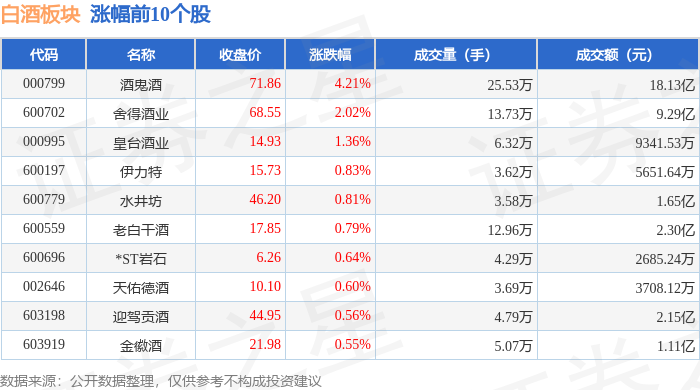
Market Overview - The liquor sector experienced a decline of 0.62% on September 16, with Kweichow Moutai leading the drop [1] - The Shanghai Composite Index closed at 3861.87, up 0.04%, while the Shenzhen Component Index closed at 13063.97, up 0.45% [1] Individual Stock Performance - Kweichow Moutai (600519) closed at 1499.98, down 1.00%, with a trading volume of 32,700 and a transaction value of 4.928 billion [3] - Wuliangye (000858) closed at 125.80, down 0.67%, with a trading volume of 191,100 and a transaction value of 2.405 billion [3] - Luzhou Laojiao (000568) closed at 138.45, down 0.47%, with a trading volume of 61,000 and a transaction value of 843 million [3] - Other notable stocks include Yanghe Brewery (002304) at 71.80 (-0.46%) and Shanxi Fenjiu (600809) at 208.39 (+0.26%) [3] Capital Flow Analysis - The liquor sector saw a net outflow of 1.141 billion from institutional investors, while retail investors contributed a net inflow of 359 million [4] - Notable individual stock capital flows include: - JiuGuiJiu (000799) with a net inflow of 134 million from institutional investors [4] - Shede Liquor (600702) with a net inflow of 34.73 million from institutional investors [4] - Tianshunde Liquor (002646) with a significant net outflow of 5.74 million from institutional investors [4] Summary of Trading Data - The trading data for the liquor sector indicates varied performance among different stocks, with some experiencing gains while others faced declines [1][3] - The overall market sentiment appears cautious, reflected in the mixed capital flows and stock performance [4]






泸州老窖集团等新设股权投资合伙企业
Sou Hu Cai Jing· 2025-09-16 07:08
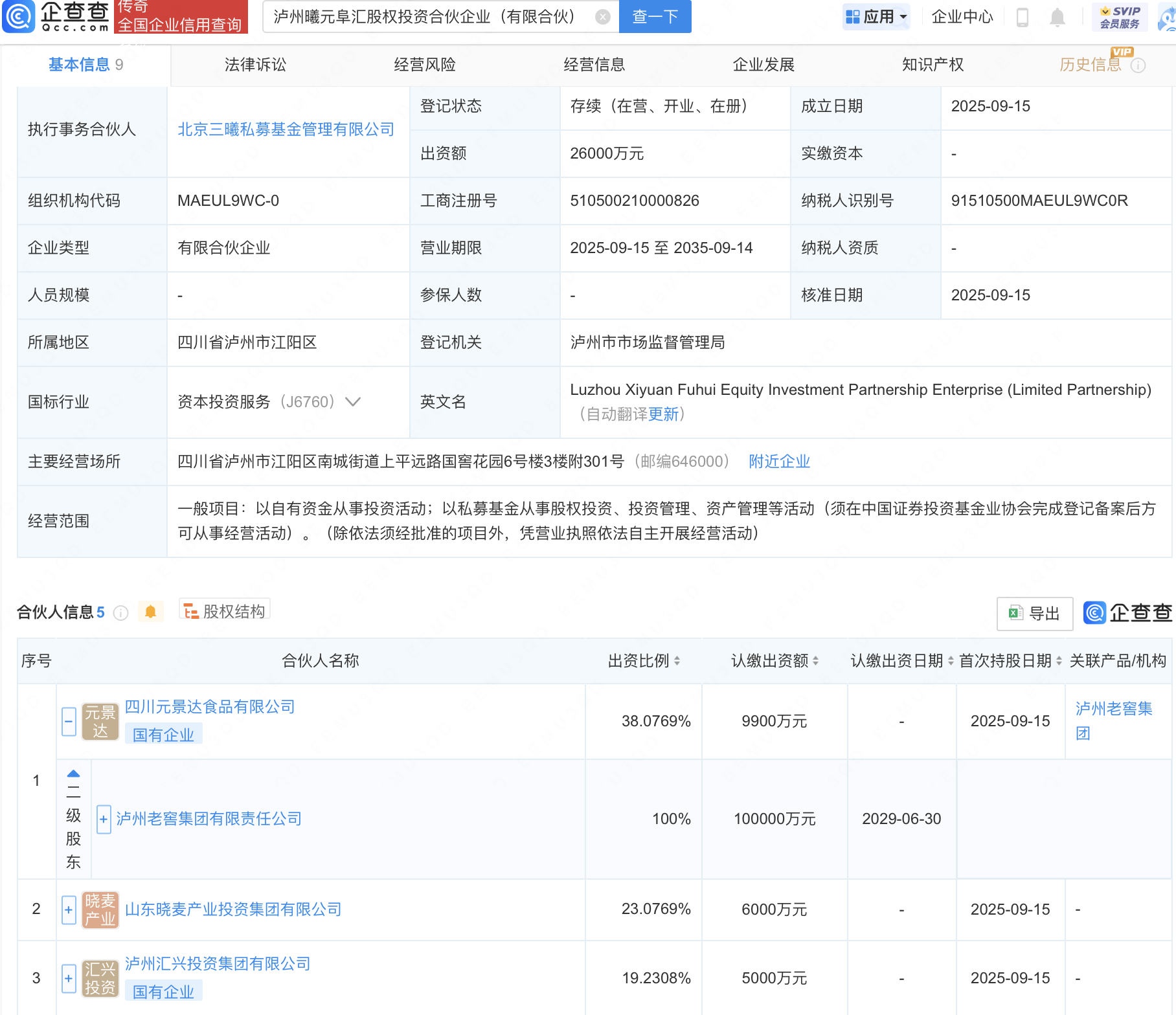
Group 1 - Luzhou Xiyuan Fuhui Equity Investment Partnership (Limited Partnership) has been established with a capital contribution of 260 million yuan, focusing on investment activities using its own funds and private equity fund management [1][2] - The partnership is co-funded by Sichuan Yuanjingda Food Co., Ltd., a wholly-owned subsidiary of Luzhou Laojiao Group, among other investors [1][2] - The partnership is registered in Luzhou, Sichuan Province, and is set to operate from September 15, 2025, to 2035 [2] Group 2 - The main partners include Sichuan Yuanjingda Food Co., Ltd. with a 38.08% stake, Luzhou Laojiao Group with a 100% stake, Shandong Xiaomai Industrial Investment Group Co., Ltd. with a 23.08% stake, and Luzhou Huixing Investment Group Co., Ltd. with a 19.23% stake [3]
吃喝板块全线回调,食品ETF(515710)震荡走弱!中国酒类市场景气指数首期成果发布,如何解读?
Xin Lang Ji Jin· 2025-09-16 06:36
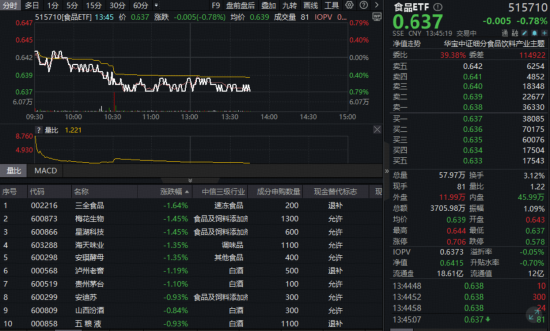
Group 1 - The food and beverage sector performed poorly on September 16, with the Food ETF (515710) experiencing a decline of 0.78% as of the report time [1][2] - Major consumer goods stocks, including several liquor companies, saw significant declines, with stocks like Sanquan Foods, Haitian Flavoring, Luzhou Laojiao, and Kweichow Moutai dropping over 1% [1][2] - The China Liquor Market Prosperity Index for the first half of 2025 was reported at 47.14, indicating a weak recessionary state in the market, suggesting that consumer demand is still recovering [3] Group 2 - The current valuation of the food and beverage sector is at a low point, with the Food ETF (515710) P/E ratio at 21.24, which is in the 10.37% percentile of the last decade, indicating a favorable long-term investment opportunity [3] - The second quarter of 2025 saw a significant impact on the liquor sector due to policy changes, leading to a noticeable decline in demand, but there are signs of recovery as consumer behavior begins to normalize [4] - The Food ETF (515710) tracks the CSI Sub-Industry Food and Beverage Index, with approximately 60% of its holdings in leading high-end and mid-range liquor stocks, and nearly 40% in beverage, dairy, seasoning, and beer sectors [5]




泸州老窖集团子公司等新设股权投资合伙企业
Zheng Quan Shi Bao Wang· 2025-09-16 06:08
Group 1 - The establishment of Luzhou Xiyuan Fuhui Equity Investment Partnership (Limited Partnership) with a capital contribution of 260 million yuan [1] - The business scope includes investment activities with self-owned funds, private equity fund equity investment, investment management, and asset management [1] - The enterprise is co-funded by Sichuan Yuanjingda Food Co., Ltd., a wholly-owned subsidiary of Luzhou Laojiao Group Co., Ltd. [1]
中酒协回应白酒“低度化”风潮:并非最终趋势真正走进年轻人是关键
Di Yi Cai Jing· 2025-09-15 11:30
Group 1 - The Chinese liquor industry is undergoing a deep adjustment, prompting companies to reflect on how to appeal to the new generation of consumers [1] - Major liquor companies, including Wuliangye and Luzhou Laojiao, are launching low or ultra-low alcohol products in response to changing consumer preferences [1] - The president of the China Alcoholic Drinks Association, Song Shuyu, stated that the current low-alcohol trend cannot yet be considered a true trend, emphasizing the need for deeper understanding of young consumers' preferences [1] Group 2 - Luzhou Laojiao announced the successful development of a 28-degree liquor product, while Gujing Gongjiu launched a 26-degree product, and Wuliangye and Shede Liquor introduced 29-degree products [1] - The industry is entering an era characterized by rational attitudes, consumption, and behavior regarding drinking, necessitating new strategies for engagement with younger consumers [1] - The upcoming 23rd China International Wine Expo will shift focus from product display to consumer interaction and exploration of new consumption scenarios, including the introduction of trendy drinking culture [2]

食品饮料周报(25年第37周):高端白酒价格延续压力,关注传统旺季动销表现-20250915
Guoxin Securities· 2025-09-15 09:45
Investment Rating - The report maintains an "Outperform the Market" rating for the food and beverage sector [1][4][5]. Core Views - High-end liquor prices continue to face pressure, with a focus on the performance during the traditional peak season [2][10]. - The beer industry is awaiting demand recovery, with recommendations for leading brands like Yanjing Beer and China Resources Beer [13][14]. - The overall food and beverage sector saw a 1.21% increase in the week of September 8 to September 12, 2025, underperforming the Shanghai Composite Index by 0.31 percentage points [19][20]. Summary by Sections 1. Liquor Industry - High-end liquor prices, including Feitian Moutai and Wuliangye, have decreased, while the price of Gaoduzhongjiu has remained stable [11][12]. - The report suggests that the traditional double festival consumption atmosphere has not yet gained momentum, leading to weak demand [2][11]. - Recommendations include focusing on companies with strong anti-cyclical performance, such as Shanxi Fenjiu and Gujing Gongjiu, and those with strong cyclical attributes like Luzhou Laojiao [12][2]. 2. Beer Industry - The beer sector is experiencing healthy inventory levels and is expected to see demand recovery as regulatory impacts on consumption fade [13][14]. - Recommendations include Yanjing Beer and China Resources Beer, which are positioned well for growth [13][14]. 3. Snack and Seasoning Products - The snack industry is shifting from channel-driven growth to category-driven growth, with a focus on strong brands like Wei Long and Yan Jin [14][15]. - The seasoning industry shows signs of improvement, with leading companies like Haitian and Yihai International expected to benefit from a recovery in the restaurant sector [15]. 4. Frozen Foods and Dairy Products - The frozen food sector is seeing a trend towards industrialization, with a focus on pre-prepared dishes [16]. - The dairy sector is expected to recover gradually, with leading companies like Yili and New Hope Dairy showing signs of improvement in 2025 [17]. 5. Beverage Sector - The beverage industry continues to thrive, with a reported 18% year-on-year revenue growth in Q2 2025, driven by demand for sugar-free tea and energy drinks [18]. - Recommendations include leading brands like Nongfu Spring and Dongpeng Beverage, which are expanding their market presence [18].


研报掘金丨长江证券:维持泸州老窖“买入”评级,去库存效果较好,未来有望轻装上阵
Ge Long Hui· 2025-09-15 09:28
Core Viewpoint - Luzhou Laojiao's net profit attributable to shareholders for H1 2025 is 7.663 billion yuan, a year-on-year decrease of 4.54% [1] - The company is experiencing pressure from demand fluctuations, but inventory reduction efforts are showing positive results [1] Financial Performance - In Q2 2025, the net profit attributable to shareholders is 3.07 billion yuan, down 11.1% year-on-year [1] - Revenue from mid-to-high-end liquor in H1 2025 is 15.048 billion yuan, a decline of 1.09% year-on-year [1] - Sales volume for H1 2025 is 24,100 tons, an increase of 13.33% year-on-year [1] - The average selling price is 623,900 yuan per ton, down 12.72% year-on-year [1] Inventory Management - The company has effectively reduced inventory, which is expected to improve operational efficiency moving forward [1] - The company is assisting distributors in inventory clearance, with current efforts yielding relatively good results [1] Market Outlook - The industry is facing certain pressures due to demand fluctuations, but historical trends suggest that lowering growth expectations and maintaining channel health can alleviate inventory cycle volatility [1] - The company's dual-driven strategy and the gradual recovery of mid-tier products are expected to continue [1] Earnings Forecast - The estimated EPS for 2025 and 2026 is 8.44 yuan and 8.86 yuan, respectively, corresponding to a PE ratio of 17 and 16 times [1] - The company maintains a "buy" rating based on these projections [1]
泸州老窖(000568) - 000568泸州老窖投资者关系管理信息20250915
2025-09-15 08:41
Group 1: Market Trends and Product Strategy - The company views low-alcohol products as a future trend in the industry, responding to the younger consumer group's preference for personalized and lower-alcohol beverages. The 38-degree Guojiao 1573 has become a billion-level product due to its quality and taste [2][3] - The new version of Luzhou Laojiao Erqu is positioned as a key part of the company's large bottle product matrix, targeting a broad consumer base with a focus on quality and comfort [2][3] - The company is exploring new consumption scenarios, including ice drinks and mixed beverages, to adapt to changing consumer demands [2][3] Group 2: Brand Development and Marketing - The company leverages cultural advantages and has created a series of cultural IPs, such as the International Poetry and Wine Culture Conference, to enhance brand image [3][4] - Partnerships with major sports events, including the FIFA World Cup and the Australian Open, have been established to further integrate the brand into cultural activities [3][4] - The company is committed to a national expansion strategy, focusing on deep market cultivation and the implementation of the "Hundred Cities Plan" [6][4] Group 3: Financial Health and Performance - The company has approximately 8 billion in interest-bearing debt and aims to optimize its capital structure while maintaining a healthy financial position [4][5] - The current adjustment in the Chinese liquor industry is characterized by a "reduction in volume and increase in quality," prompting the company to focus on high-quality development and sustainable growth [4][5] - The company has established a dividend return plan for 2024-2026, ensuring shareholder returns are aligned with company performance [4][5] Group 4: Industry Challenges and Responses - The company acknowledges the ongoing deep adjustment in the liquor industry, emphasizing the need for innovation and adaptation to changing consumer preferences [4][5] - In response to recent price reductions in high-end liquor, the company has implemented a multi-price strategy to maintain balance between volume and price [6][4] - The company believes that the younger generation's appreciation for traditional culture is increasing, which bodes well for the future of Chinese liquor [6][4]
食品饮料行业周报:推进餐饮预制菜明示,餐饮链催化增加-20250915
Huaxin Securities· 2025-09-15 06:10
Investment Rating - The report maintains a "Recommended" investment rating for the food and beverage industry [9] Core Viewpoints - The liquor sector has seen companies initiate performance clearing in Q2, with adjustments in channels and product structures. The performance aligns with market expectations, and Q3 shows signs of marginal recovery in sales [6][58] - The prepared food sector is expected to benefit from the upcoming public consultation on food safety standards, which will enhance industry self-regulation and favor leading brands [7][59] - The new consumption sector is supported by initiatives from platforms like Gaode, which aims to boost offline dining through substantial subsidies [8][60] Summary by Sections Industry News - Gaode will distribute over 1 billion yuan in subsidies to encourage in-store consumption [19] - The draft of the national food safety standard for prepared dishes has passed review [19] - Alcohol prices have decreased by 2.0% year-on-year from January to August [19] Investment Insights - Liquor Sector: Companies like Guizhou Moutai, Wuliangye, and Luzhou Laojiao are recommended for their high dividend yields and cyclical advantages [6][58] - Prepared Food Sector: The new food safety standards are expected to clarify the definition and scope of prepared dishes, benefiting leading brands like Anjifood and Qianwei Central Kitchen [7][59] - New Consumption Sector: The introduction of Gaode's "Street Ranking" and support plans is anticipated to increase foot traffic in restaurants [8][60] Key Company Focus and Earnings Forecast - The report highlights key companies in the liquor sector, including Luzhou Laojiao, Gujing Gongjiu, and Wuliangye, all rated as "Buy" with projected earnings per share (EPS) growth [11][12] - In the prepared food sector, companies like Anjifood and Longda Meishi are noted for their potential growth due to industry standards [7][59]
中酒协回应白酒“低度化”风潮:并非最终趋势 真正走进年轻人是关键
Di Yi Cai Jing· 2025-09-15 06:07
Core Viewpoint - The Chinese liquor industry is undergoing a deep adjustment, prompting major companies to reflect on how to appeal to the new generation of consumers, leading to the introduction of lower-alcohol products [1][3]. Industry Trends - Major liquor companies, including Wuliangye and Luzhou Laojiao, have launched low or ultra-low alcohol products in response to changing consumer preferences [1]. - The industry is currently in a "three rationality" era, characterized by rational attitudes towards drinking, rational consumption, and rational drinking behavior [3]. Consumer Insights - The industry needs to better understand the preferences and behaviors of younger consumers, as current research on their drinking habits is lacking [3]. - Young consumers are not averse to alcohol but are disinterested in traditional drinking culture [3]. Event Adjustments - The upcoming 23rd China International Wine Expo will shift its focus from product display to consumer interaction and exploration of new consumption scenarios, including the introduction of trendy drinking culture elements [3].