LZLJ(000568)

Search documents
白酒巨头掀起“降度大战”
Nan Fang Du Shi Bao· 2025-08-21 23:12
Core Viewpoint - The low-alcohol liquor segment is gaining traction among major Chinese liquor companies as they seek to tap into new market opportunities amid declining sales and high inventory levels [2][3]. Group 1: Industry Trends - Since June 2023, several liquor companies, including Shede Liquor, Gujing Gongjiu, and Wuliangye, have launched low-alcohol products, indicating a competitive shift towards lower alcohol content [2]. - The introduction of low-alcohol products is seen as a response to the overall adjustment period in the liquor industry, where companies face declining sales and increased competition [3][5]. Group 2: Company Performance - Shede Liquor reported a significant decline in revenue and net profit for 2024, with revenue down 24.41% to 5.357 billion yuan and net profit down 80.46% to 346 million yuan [3]. - The inventory levels of 20 A-share liquor companies reached 168.389 billion yuan, an increase of 19.29 billion yuan year-on-year, indicating ongoing inventory pressure [4]. Group 3: Consumer Demographics - The liquor industry is focusing on attracting younger consumers, particularly those born between 1985 and 1994, as their consumption preferences shift towards lower alcohol content and more personalized products [5]. - Young consumers are increasingly favoring light social drinking scenarios and products that are visually appealing and easy to consume [5]. Group 4: Market Expectations - The low-alcohol product "38-degree Guojiao 1573" is expected to generate significant sales, potentially reaching 10 billion yuan in tax-inclusive sales, reflecting a positive growth trend [6]. - There are concerns among investors that the success of low-alcohol products may impact overall revenue due to their lower price points compared to traditional high-alcohol products [6].






醒醒吧,白酒及人生
水皮More· 2025-08-21 09:28
Core Viewpoint - The current state of the Chinese liquor industry, particularly the white liquor sector, is facing significant challenges, including overcapacity, declining sales, and inventory issues, leading to questions about whether the industry has entered a downturn [2][10][12]. Group 1: Industry Trends and Challenges - The white liquor industry has experienced a significant decline in sales volume, dropping from a peak of 1,358 million tons in 2016 to an estimated 414 million tons by 2024, a decrease of over two-thirds [10]. - Despite the decline in sales volume, the revenue has paradoxically increased by 30% to 7,964 billion yuan in 2024, and profits surged by 315% to 2,509 billion yuan, indicating a severe disconnect between production and actual market demand [10][12]. - The industry is currently facing a surplus of at least 1,000 million tons of production capacity, with inventory levels that could take over five years to digest at current sales rates [12][10]. Group 2: Historical Context and Regulatory Impact - Historical instances of liquor bans and restrictions have not halted the industry's growth; rather, they have often led to new opportunities for market adjustment [4][5][7]. - The recent "new eight prohibitions" and the strictest liquor bans in history are not the sole reasons for the current downturn, as the industry has previously adapted to similar challenges [4][5][7]. Group 3: Market Dynamics and Pricing Strategies - The strategy of "controlling volume and raising prices" has been a common practice among manufacturers, but this approach is becoming unsustainable as consumer demand declines [15][20]. - The average price of white liquor has increased approximately 150 times over the past 45 years, with premium brands like Moutai seeing price increases of nearly 400 times, leading to concerns about affordability and market sustainability [17][20]. - The shift towards "light bottle" liquor, which is more affordable and accessible, is gaining traction, indicating a potential change in consumer preferences towards more reasonable pricing [31][33]. Group 4: Future Outlook and Recommendations - The industry must focus on "controlling prices and improving quality" to ensure that liquor remains accessible to a broader consumer base, which is essential for long-term sustainability [26][39]. - Companies that prioritize product quality and reasonable pricing, like Fenjiu, have shown resilience and growth, suggesting a viable path forward for the industry [28][29]. - The return to rational pricing and value-based consumption is crucial for revitalizing the white liquor market and ensuring its future prosperity [36][42].




白酒巨头掀“降度大战”,年轻人会买账吗?
Hu Xiu· 2025-08-21 08:56
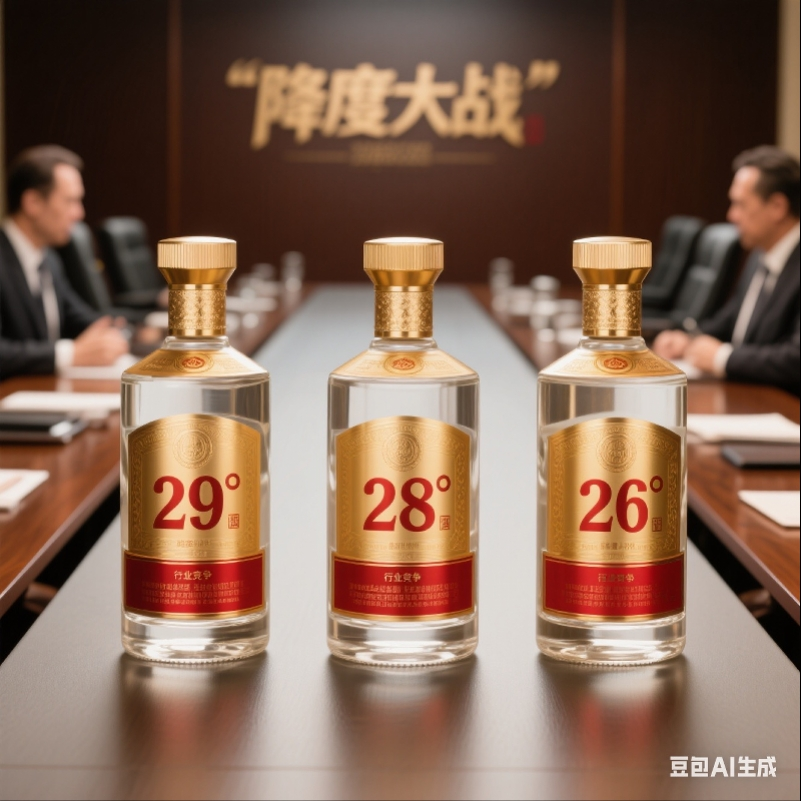
Core Viewpoint - The Chinese liquor industry is experiencing a trend towards low-alcohol products as companies seek to capture the younger consumer market and address declining sales in traditional high-alcohol offerings [8][9][11]. Group 1: Industry Trends - Major liquor companies, including Gujing Gongjiu, Shede Liquor, Wuliangye, and Luzhou Laojiao, are launching low-alcohol products to tap into the growing demand for lighter drinking options [8][9][10][11]. - The low-alcohol segment is seen as a potential growth area amid high inventory levels and declining sales in traditional high-end liquor [9][12][14]. - The shift towards low-alcohol products is part of a broader strategy to engage younger consumers, who prefer personalized and lower-alcohol options for social drinking [15][18][20]. Group 2: Company-Specific Developments - Gujing Gongjiu launched a new low-alcohol product, "Gujing Gongjiu·Nianfen Yuanjiang Qingdu Gu20," with an alcohol content of 26 degrees, targeting urban youth aged 25-35 [1][27]. - Shede Liquor is set to introduce its first low-alcohol, high-flavor aged liquor, "Shede Zizai," with an alcohol content of 29 degrees [2]. - Luzhou Laojiao has successfully developed a 28-degree version of its flagship product, Guojiao 1573, and is testing even lower alcohol variants [5][21]. Group 3: Market Challenges - The liquor industry is facing significant challenges, including high inventory levels and a lack of consumer demand, particularly for mid-range and high-end products [9][11][12]. - Companies are struggling to maintain pricing power as high-end liquors frequently experience price cuts, leading to concerns about brand value erosion [11][23]. - The acceptance of low-alcohol products at premium prices remains uncertain, as evidenced by Gujing Gongjiu's pricing strategy, which positions its new product at a high price point compared to traditional low-alcohol options [26][35].
19只白酒股下跌 贵州茅台1448.25元/股收盘
Bei Jing Shang Bao· 2025-08-21 07:41
Core Viewpoint - The liquor sector, particularly the baijiu industry, is experiencing a downturn, with major companies reporting declines in stock prices and growth rates, indicating a challenging market environment [1] Company Performance - Kweichow Moutai's stock closed at 1448.25 CNY per share, down 0.12% [1] - Wuliangye's stock closed at 125.45 CNY per share, down 0.26% [1] - Shanxi Fenjiu's stock closed at 194.41 CNY per share, down 1.31% [1] - Luzhou Laojiao's stock closed at 129.65 CNY per share, down 0.51% [1] - Yanghe Brewery's stock closed at 72.18 CNY per share, down 1.64% [1] Industry Trends - The overall growth rate of the baijiu industry is expected to slow down in the first half of 2025, with Moutai's revenue growth at 9.16%, marking the first single-digit growth in ten years [1] - The series liquor segment is under significant pressure, with a 6.5% year-on-year decline in Q2, reflecting reduced demand from government and business sectors and increased channel inventory pressure [1]
天猫“全球美酒狂欢节”销售额突破1亿
Ge Long Hui A P P· 2025-08-21 03:32
格隆汇8月21日|8月19日,"全球美酒狂欢节"期间,淘宝酒水品牌迎来全面爆发,销售额突破1个亿, 其中剑南春,茅台,五粮液等3个品牌销售额破千万,汾酒、泸州老窖、习酒、郎酒、奔富、青岛啤 酒、洋河、麦卡伦等多个品牌销售额破百万。淘宝天猫酒水行业打通远近场资源,联合淘宝闪购、淘宝 直播等业务,为酒水品牌带来新增量。 ...
泸州老窖跨界文旅,3000万注册资本成立新公司!
Sou Hu Cai Jing· 2025-08-21 02:26
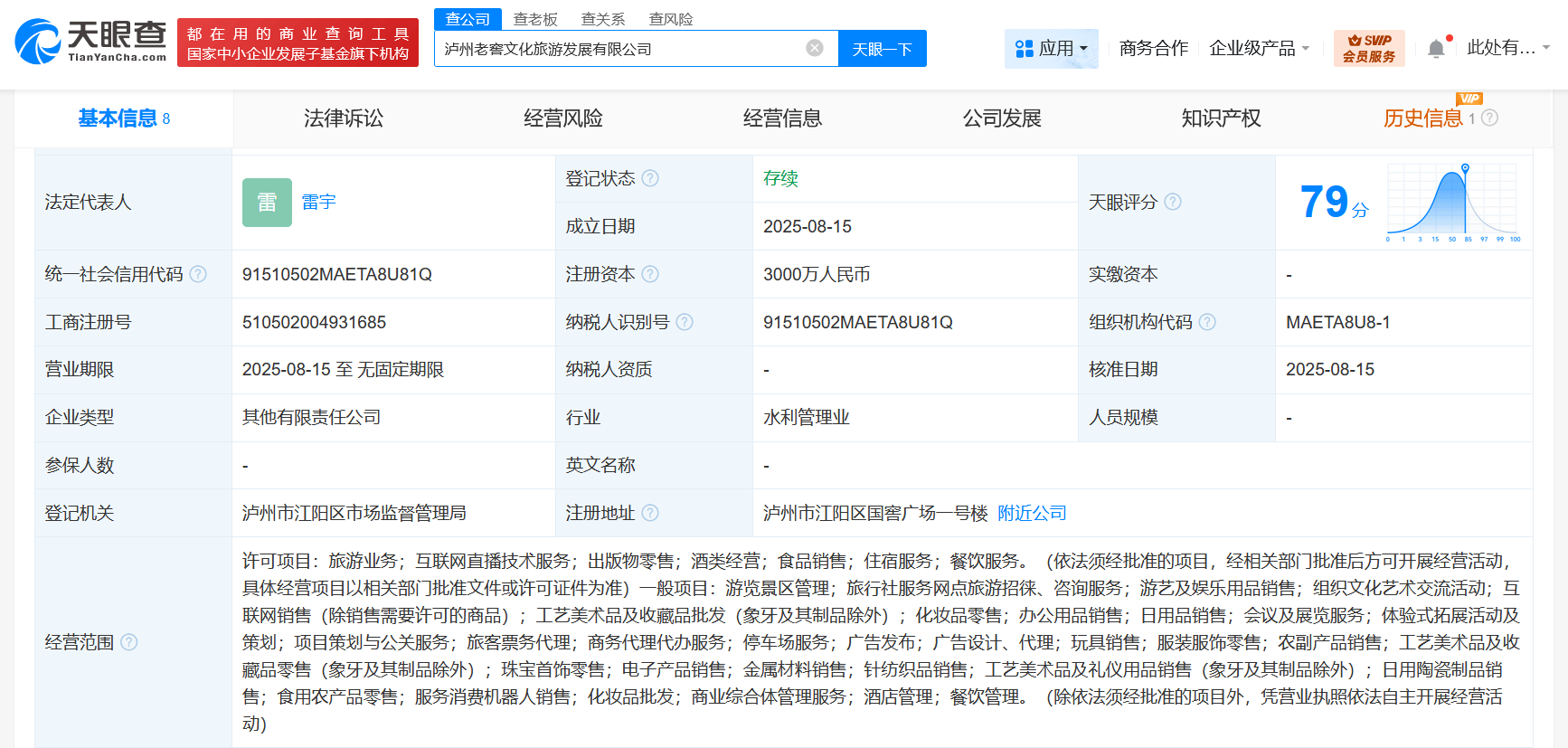
Core Viewpoint - The establishment of Luzhou Laojiao Cultural Tourism Development Co., Ltd. signifies Luzhou Laojiao Group's strategic expansion into the cultural tourism sector, reflecting its ambition to diversify its business operations [1][3]. Company Overview - Luzhou Laojiao Cultural Tourism Development Co., Ltd. has a registered capital of 30 million RMB and is legally represented by Lei Yu [1][2]. - The company operates in various sectors, including tourism, internet live streaming services, retail of publications, liquor sales, food sales, accommodation services, and catering services [1][2]. Business Scope - The company's business scope includes management of scenic spots and travel agency services, indicating a comprehensive approach to cultural tourism [1][2]. - The diverse business layout demonstrates Luzhou Laojiao's ambition in the cultural tourism field [1]. Market Trends - The rise in living standards and changing consumer attitudes have made cultural tourism a new consumption trend, which Luzhou Laojiao is responding to by leveraging its cultural resources and brand advantages [3]. - The establishment of the new company is expected to inject vitality into the local economy, promoting employment and economic growth through the development of the cultural tourism industry [3]. Strategic Importance - The formation of Luzhou Laojiao Cultural Tourism Development Co., Ltd. represents a strategic choice for the company in response to market trends and is a significant step towards diversification [3]. - The company is anticipated to enhance Luzhou Laojiao's brand influence and market competitiveness, laying a solid foundation for future development [3].
19只白酒股上涨 贵州茅台1450元/股收盘
Bei Jing Shang Bao· 2025-08-20 07:52
Group 1 - The Shanghai Composite Index closed at 3766.21 points, up 1.04% on August 20, with the liquor sector index at 2357.44 points, rising 2.49% [1] - Among individual stocks, Kweichow Moutai closed at 1450.00 CNY per share, up 0.83%; Wuliangye closed at 125.78 CNY per share, up 1.10%; Shanxi Fenjiu closed at 196.99 CNY per share, up 1.68%; Luzhou Laojiao closed at 130.31 CNY per share, up 3.09%; Yanghe Brewery closed at 73.38 CNY per share, down 0.27% [1] - Aijian Securities indicated that demand is expected to show a weak recovery due to policies aimed at expanding domestic demand and infrastructure projects, alongside the liquor industry currently being at a low valuation [1] Group 2 - The leading liquor companies are expected to increase dividend payouts, enhancing dividend yields and optimizing shareholding structures, making them attractive for investment [1]
事关低度酒和营销旺季 白酒下半年行情最新预判
Sou Hu Cai Jing· 2025-08-20 03:36
Core Viewpoint - Guizhou Moutai's 2025 interim report shows a revenue growth rate of only 9.1%, the lowest in nearly a decade, indicating a negative growth in Moutai series liquor revenue, reflecting the industry's adjustment period [3] Industry Overview - The liquor industry is currently experiencing a dual impact from macroeconomic cycles and industry adjustments, with companies preparing for the second half of the year by adopting strategies such as promoting low-alcohol liquor and improving manufacturer relationships [3][4] - The market for low-alcohol liquor (defined as below 30% alcohol content) is expected to reach a scale of 74 billion yuan by 2025, with a growth rate exceeding 20% in recent years, driven by a young consumer demographic [5][6] Company Strategies - Major liquor companies are launching new low-alcohol products to cater to changing consumer preferences, with brands like Wuliangye and Luzhou Laojiao announcing new low-alcohol offerings [3][4][5] - Water Well Square has also developed products below 38 degrees alcohol content, indicating a trend towards lower alcohol offerings [4] - Guizhou Moutai is focusing on three transformations: customer base, consumption scenarios, and service, to adapt to the current market challenges [9] Market Sentiment - The liquor industry is facing a divided sentiment, with some companies expressing pessimism about the market while others maintain a cautiously optimistic outlook [7][10] - The overall market is characterized by weak recovery and strong differentiation, with high-end brands like Moutai and Wuliangye expected to stabilize first, while mid-range and regional brands continue to face pressure [10][11] Economic Context - The Chinese government's investment in infrastructure and consumption stimulus measures are expected to gradually benefit the liquor industry, with a notable increase in stock prices for liquor companies following positive economic indicators [9][10]



白酒概念股早盘大涨,酒ETF涨近3%
Mei Ri Jing Ji Xin Wen· 2025-08-20 03:04
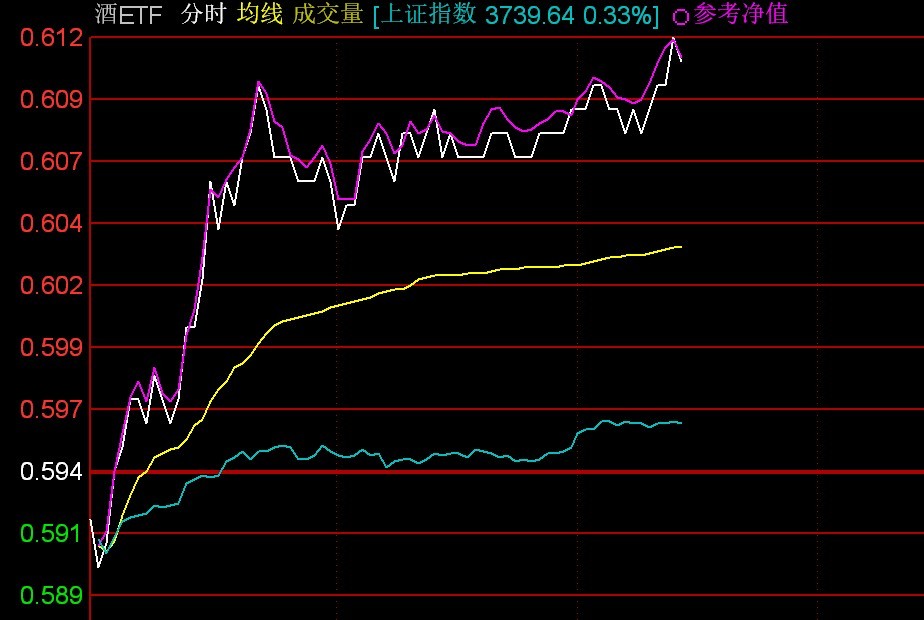
白酒概念股早盘大涨,古井贡酒涨超6%,今世缘涨超5%,泸州老窖涨超4%。 受盘面影响,跟踪中证酒指数的酒ETF涨近3%。 有券商表示,7月下旬以来渠道反馈消费场景约束陆续放松,宴席与礼品场景消费持续复苏。同时叠加中秋与国庆将至,备货旺季 在即,"场景修复+季节性催化"共振,终端动销有望进一步加速,行业基本面复苏动能有望持续强化。 (文章来源:每日经济新闻) 中证酒指数选取涉及白酒、啤酒、葡萄酒酿造等业务的上市公司证券作为指数样本,以反映酒类相关上市公司证券的整体表现。 ...

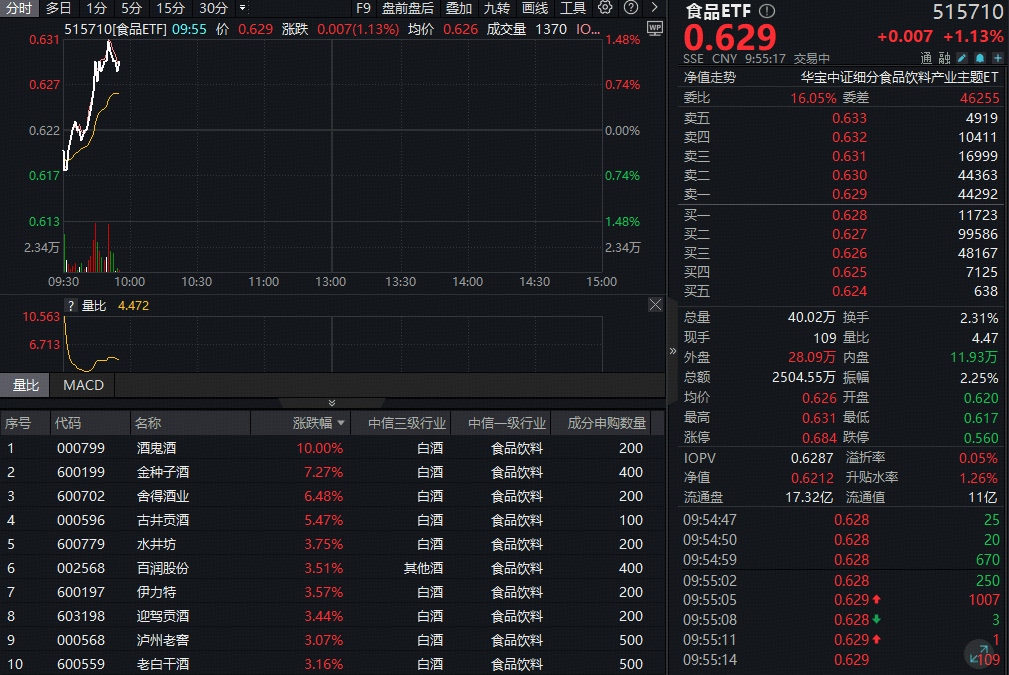
ETF盘中资讯|白酒龙头频出新品!白酒集体上攻,食品ETF(515710)摸高1.48%!主力资金狂买!
Sou Hu Cai Jing· 2025-08-20 02:27
Group 1 - The food and beverage sector continues to perform strongly, with the Food ETF (515710) showing a maximum intraday increase of 1.48% and currently up by 1.13% [1] - Major stocks in the liquor sector have seen significant gains, with brands like Guizhou Moutai and others experiencing substantial price increases, indicating a bullish trend in the market [1][4] - The food and beverage sector has attracted over 2.3 billion CNY in net inflows from major funds, ranking second among 30 sectors [1][3] Group 2 - Recent product launches by leading liquor brands, such as Guizhou Moutai's cultural products and Gujing Gongjiu's new low-alcohol offerings, reflect the industry's response to consumer trends towards premiumization and younger demographics [3][4] - Analysts suggest that the liquor sector is innovating and adapting to market demands, with expectations of improved performance as consumer sentiment recovers [4] - The current valuation of the Food ETF indicates a favorable investment opportunity, with a price-to-earnings ratio of 20.06, suggesting it is at a low valuation point historically [4][5] Group 3 - The Food ETF (515710) is designed to track the performance of the segmented food and beverage industry index, with a significant portion of its holdings in high-end liquor stocks [5] - The ETF's top holdings include major brands like Moutai, Wuliangye, and others, providing investors with exposure to key players in the food and beverage sector [5]