LZLJ(000568)

Search documents
酒价内参1月15日价格发布 青花郎上涨14元
Xin Lang Cai Jing· 2026-01-15 01:19
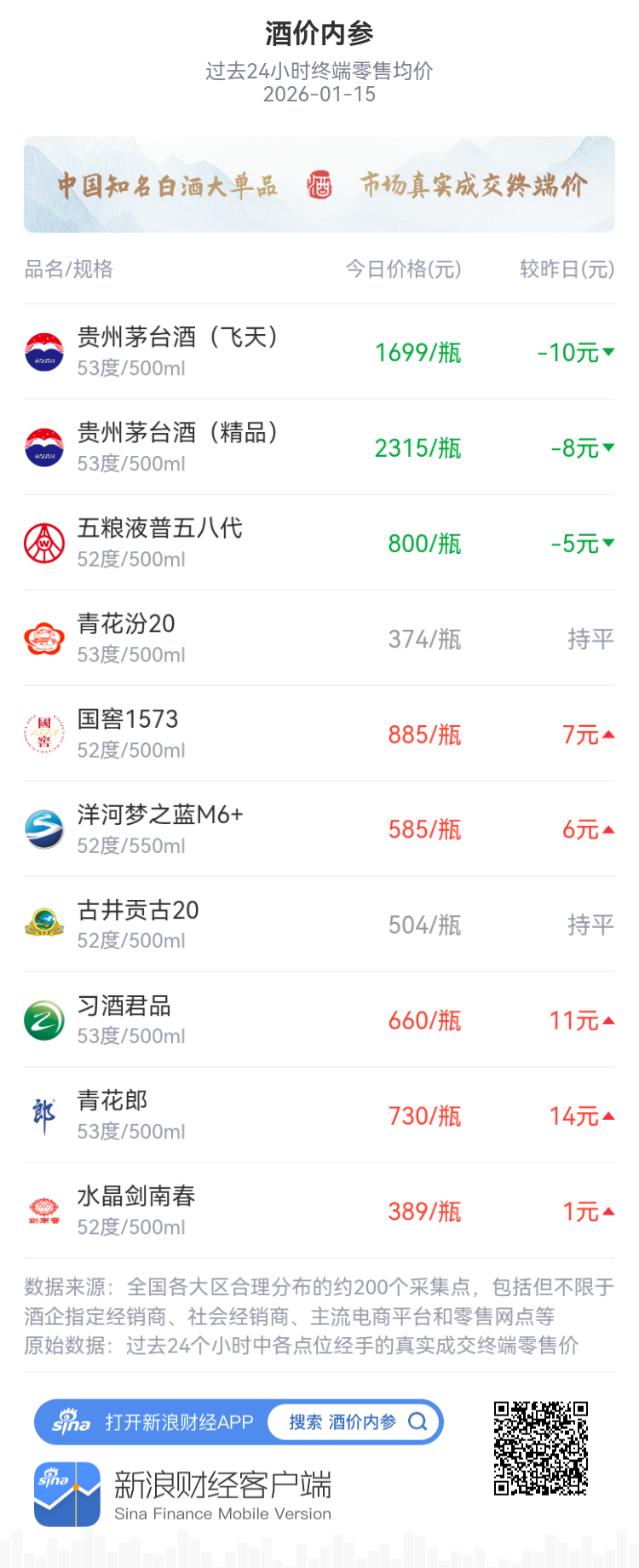
Core Viewpoint - The "Wine Price Reference" by Sina Finance has reported a slight recovery in the retail prices of China's top ten liquor products as of January 15, with an overall price increase of 16 yuan, bringing the total price for a package of these products to 8941 yuan [1][6]. Price Trends - The market shows a clear structural differentiation with five products increasing in price, three decreasing, and two remaining stable. Notably, the core products have experienced price adjustments [1][7]. - The leading price increase was observed in Qinghua Lang, which rose by 14 yuan per bottle, followed by Xijiu Junpin with an increase of 11 yuan per bottle. Other products like Guojiao 1573 and Yanghe Dream Blue M6+ saw increases of 7 yuan and 6 yuan per bottle, respectively. Crystal Jiananspring had a minor increase of 1 yuan per bottle [1][7]. - Conversely, Feitian Moutai and Boutique Moutai led the price declines, dropping by 10 yuan and 8 yuan per bottle, respectively. This decline is attributed to the introduction of the affordable 2026 Feitian Moutai and the pricing anchor effect of Boutique Moutai [1][7]. Data Collection Methodology - The daily data for "Wine Price Reference" is sourced from approximately 200 collection points across various regions, including designated distributors, social distributors, e-commerce platforms, and retail outlets. The data aims to provide an objective and traceable representation of the market prices for well-known liquor products [2][8]. - The recent launch of the iMoutai platform, which offers Feitian Moutai at 1499 yuan per bottle and Boutique Moutai at 2299 yuan per bottle, has begun to influence the market retail prices significantly [2][8]. Product Launches - Moutai's digital marketing platform, iMoutai, announced a structured sales schedule starting January 15, 2026, for several core products, including six vintage versions of Feitian Moutai. The platform will have fixed sales times for various products, enhancing its direct sales system and aligning with consumer demand [3][8].






酒价内参1月15日价格发布 价格小幅回升分化格局凸显
Xin Lang Cai Jing· 2026-01-15 01:16
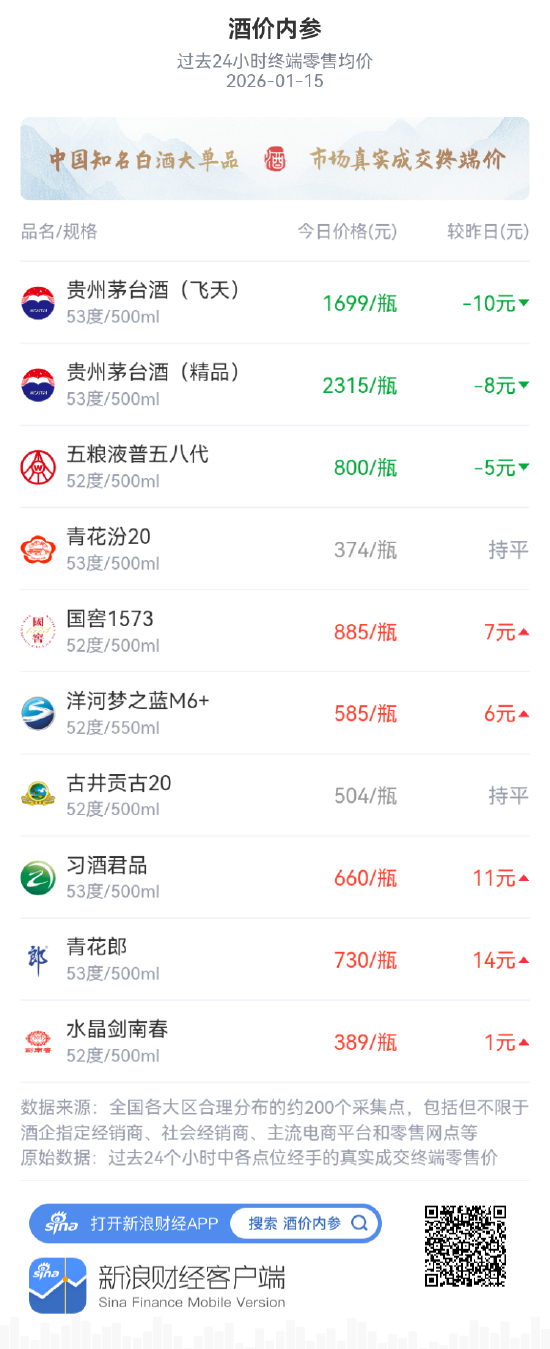
Core Viewpoint - The Chinese white liquor market has shown a slight recovery in retail prices for the top ten products as of January 15, with an overall price increase of 16 yuan, bringing the total price for a packaged set to 8941 yuan, indicating a structural volatility in the market amidst ongoing industry adjustments [1]. Price Movements - The market displayed a clear differentiation today, with five products increasing in price, three decreasing, and two remaining stable. Notably, core product prices have seen a correction [1]. - Among the products that increased in price, Qinghua Lang led with a rise of 14 yuan per bottle, while Xijiu Junpin followed with an increase of 11 yuan per bottle. Other notable increases included Guojiao 1573 and Yanghe Dream Blue M6+, which rose by 7 yuan and 6 yuan per bottle, respectively. The price of Shuijing Jian'nan Chun saw a minor increase of 1 yuan per bottle [1][4]. - Conversely, Feitian Moutai and Jingpin Moutai experienced the largest declines, dropping by 10 yuan and 8 yuan per bottle, respectively. This decline is attributed to the pricing strategy of iMoutai, which has introduced a more affordable 2026 Feitian Moutai, affecting retail prices [1][3]. - Wuliangye Pu 58th generation also saw a decrease of 5 yuan per bottle, while Qinghua Fen 20 and Gujing Gong 20 remained unchanged from the previous day [1][4]. Market Data - The current retail prices for key products are as follows: - Feitian Moutai: 1699 yuan (down 10 yuan) - Jingpin Moutai: 2315 yuan (down 8 yuan) - Wuliangye Pu 58th generation: 800 yuan (down 570 yuan) - Qinghua Fen 20: 374 yuan (unchanged) - Guojiao 1573: 885 yuan (up 7 yuan) - Yanghe Dream Blue M6+: 585 yuan (up 6 yuan) - Xijiu Junpin: 660 yuan (up 11 yuan) - Qinghua Lang: 730 yuan (up 14 yuan) - Shuijing Jian'nan Chun: 389 yuan (up 1 yuan) [3][4].
泸州老窖:已构建起广泛而深入的全球销售网络
Zheng Quan Ri Bao Wang· 2026-01-14 11:43
Group 1 - The core viewpoint of the article is that Luzhou Laojiao is actively pursuing an internationalization strategy and has established a comprehensive global sales network [1] Group 2 - Luzhou Laojiao has been responding to investor inquiries on its interactive platform, indicating its commitment to deepening its international presence [1] - The company emphasizes the importance of its global sales network in supporting its international strategy [1]
16只白酒股下跌 贵州茅台微跌0.92%
Bei Jing Shang Bao· 2026-01-14 11:00
Core Viewpoint - The liquor sector, particularly the baijiu market, is currently experiencing a slight downturn, but there are signs of potential recovery as leading brands show an upward trend in sales ahead of the Spring Festival [1] Group 1: Market Performance - The Shanghai Composite Index closed at 4126.09 points, down 0.31% [1] - The baijiu sector index closed at 2237.49 points, with a minor decline of 0.03% [1] - Among individual stocks, Kweichow Moutai closed at 1398.01 yuan per share, down 0.92% [1] - Wuliangye closed at 107.04 yuan per share, down 0.89% [1] - Shanxi Fenjiu closed at 175.48 yuan per share, down 0.85% [1] - Luzhou Laojiao closed at 116.86 yuan per share, down 0.97% [1] - Yanghe Brewery closed at 63.30 yuan per share, down 0.39% [1] Group 2: Analyst Insights - Zheshang Securities noted that the baijiu sector is currently at a bottom range [1] - The report indicates that leading liquor companies are beginning to see an upward inflection point in sales [1] - There is an optimistic outlook for core products from brand liquor companies, with expectations for sales to exceed forecasts during the Spring Festival [1]
当政策红利遇上消费刚需 中证主要消费指数如何成为行业压舱石?
Sou Hu Cai Jing· 2026-01-14 06:27
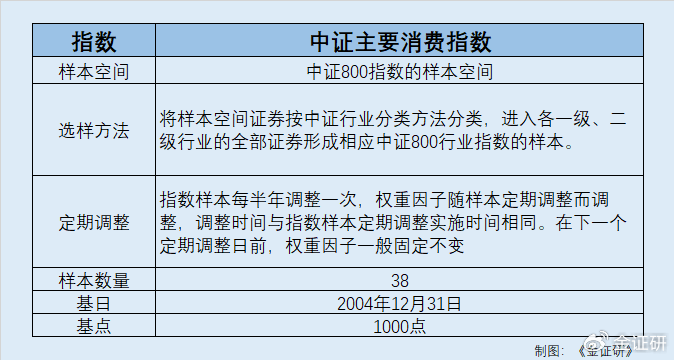
Group 1 - The core viewpoint of the article emphasizes the importance of policies aimed at boosting consumption, highlighting the collaboration between business and financial sectors to enhance consumer spending [1][2] - The China Securities Major Consumption Index, which focuses on the consumption sector, has an average free float market capitalization exceeding 600 billion yuan, reflecting the overall performance of major consumption stocks in the A-share market [2][3] - The index includes 38 sample stocks, with a free float market capitalization ranging from 36.47 billion yuan to 8,885.48 billion yuan, indicating significant growth potential in the consumption sector [2][4] Group 2 - The index is heavily concentrated in the food and beverage sector, with a weight of 67.62%, and agriculture, forestry, animal husbandry, and fishery at 28.42%, together covering over 96% of the index's weight [4][5] - The top ten stocks in the index are supported by leading companies such as Kweichow Moutai, Yili, and Wuliangye, which have strong brand recognition and stable cash flows [5][6] - The ongoing policy support for consumption is expected to enhance the long-term value and growth potential of the consumption sector, making the China Securities Major Consumption Index a quality benchmark for investing in core consumption assets [7]



酒价内参1月14日价格发布 洋河梦之蓝M6+下跌4元
Xin Lang Cai Jing· 2026-01-14 01:32
Core Viewpoint - The Chinese liquor market is experiencing a price adjustment, with the average retail price of the top ten liquor products declining, indicating cautious market sentiment [1]. Group 1: Market Price Trends - On January 14, the average retail price of the top ten liquor products decreased by 44 yuan, bringing the total price to 8925 yuan [1]. - Eight out of the ten products saw price declines, with Feitian Moutai leading the drop at 9 yuan per bottle [1]. - Other notable declines include Gujing Gonggu 20 and Qinghua Lang, both down 8 yuan per bottle, while Guojiao 1573 and Yanghe Dream Blue M6+ fell by 4 yuan each [1]. Group 2: Market Dynamics - The market is characterized by a general downward trend, with a narrowing trading volume and a clear differentiation among products [1]. - Only Wuliangye Pu 58th generation saw a slight increase of 1 yuan per bottle, while Qinghua Fen 20 remained unchanged [1]. Group 3: Pricing Mechanism Changes - On January 13, Kweichow Moutai announced a new market-oriented pricing strategy, moving away from fixed factory prices to a dynamic pricing mechanism based on market conditions [3]. - This new pricing system aims to enhance the company's control over retail prices and stabilize the market, allowing for flexible pricing based on product, channel, and operational model differences [3]. - The company is piloting a consignment model for new products, allowing consumers to order online and pick up in-store, aiming for a win-win situation between manufacturers and channels [3].
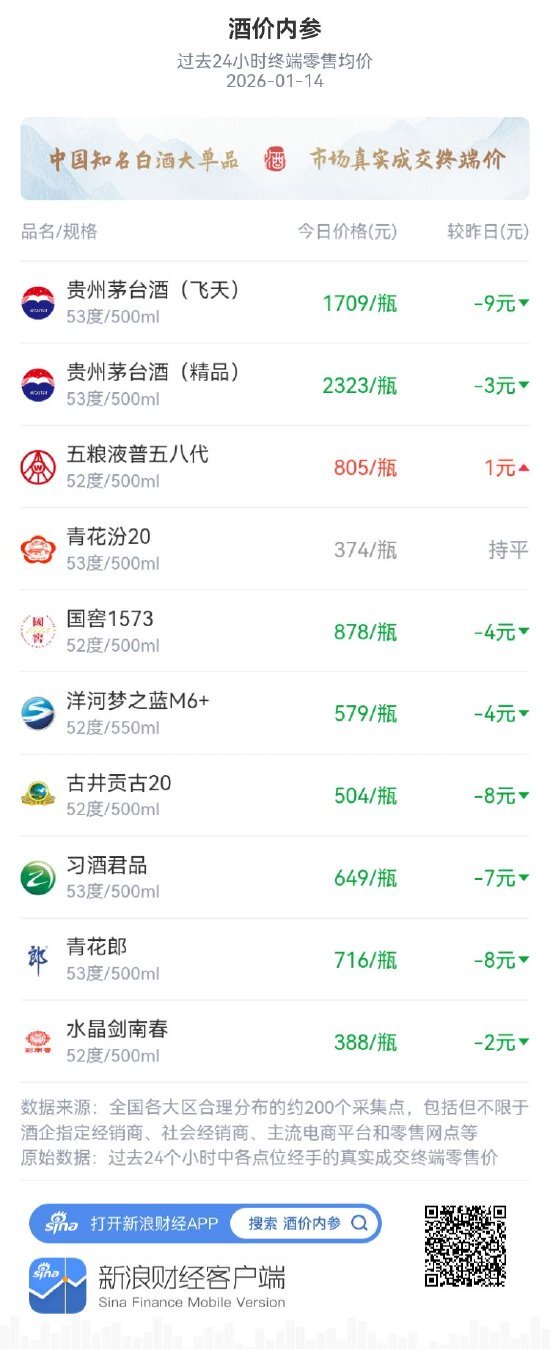
酒价内参1月14日价格发布 青花郎下跌8元
Xin Lang Cai Jing· 2026-01-14 01:20
Core Insights - The article highlights a recent decline in the retail prices of major Chinese liquor brands, indicating a cautious market sentiment and a general downward trend in prices [1][6]. Price Trends - The average retail price of the top ten Chinese liquor products decreased to 8,925 yuan on January 14, down by 44 yuan from the previous day [1][6]. - Eight out of the ten major products experienced price drops, with Feitian Moutai leading the decline at 9 yuan per bottle [1][6]. - Other notable price decreases include Gujing Gong and Qinghua Lang, both down by 8 yuan per bottle, while Guojiao 1573 and Yanghe Dream Blue M6+ fell by 4 yuan per bottle [1][6]. Market Dynamics - The market is currently characterized by a broad decline in prices, with a notable contraction in trading volume [1][6]. - Only Wuliangye's Pu Wuhai Dai saw a slight increase of 1 yuan per bottle, while Qinghua Fen 20 remained unchanged [1][6]. Data Collection Methodology - The "Wine Price Reference" collects data from approximately 200 sampling points across various regions, including designated distributors, social distributors, e-commerce platforms, and retail outlets [2][7]. - The data aims to provide an objective and traceable representation of the market prices for well-known liquor brands [2][7]. Strategic Changes in Pricing - On January 13, 2026, Kweichow Moutai announced a new market-oriented operational plan, which includes a dynamic pricing mechanism that deviates from the traditional fixed pricing model [3][8]. - This new pricing strategy allows for flexible pricing based on market conditions, enhancing the company's ability to control retail prices and stabilize the market [3][8]. - The company is testing a consignment model where consumers can order online and pick up in-store, aiming for a win-win situation between manufacturers and distributors [3][8].

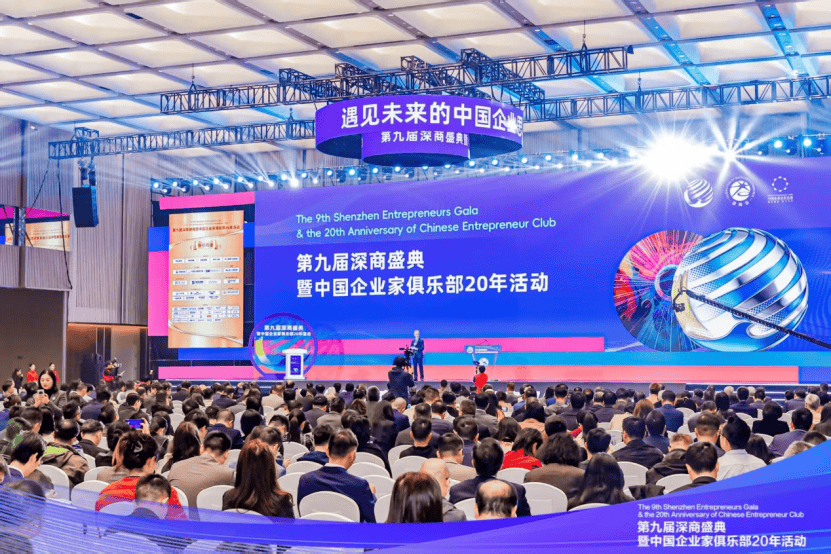
深圳这场盛会,TCL李东生、小鹏汽车何小鹏等企业家都说了啥?
Sou Hu Cai Jing· 2026-01-13 12:35
Group 1 - The event "The 9th Shenzhen Business Convention and 20 Years of China Entrepreneurs Club" focused on themes such as industrial innovation, technological breakthroughs, ecological construction, and social responsibility [1] - Notable entrepreneurs shared insights on technology innovation and development paths, highlighting China's evolution from a follower in the global supply chain to a pioneer in new strategic industries [3] - The global competition in technology is intensifying, with artificial intelligence transitioning from concept to deep industrialization, becoming a key driver of future economic growth [3] Group 2 - Companies like TCL, iFlytek, and XPeng Motors discussed their advancements in AI, automotive technology, and the importance of core technology autonomy for long-term success [3][4] - The Chinese automotive industry is moving from "electrification" to "intelligent competition," with breakthroughs in autonomous driving and smart cockpit technologies being crucial for gaining a competitive edge globally [3] - The concept of ESG (Environmental, Social, and Governance) has become a significant guiding principle for high-quality corporate development, emphasizing the integration of sustainability into business strategies [4]



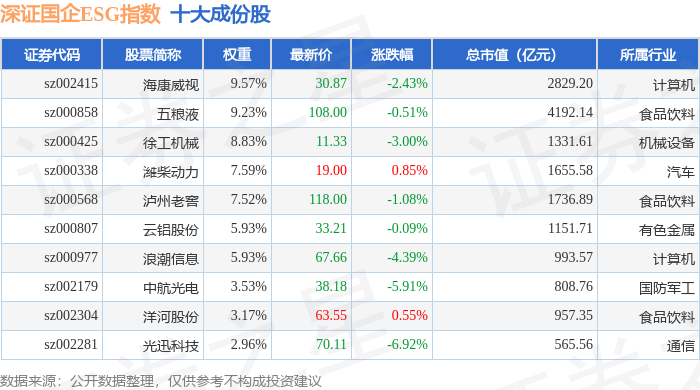
1月13日深证国企ESG(970055)指数跌1.7%,成份股中核科技(000777)领跌
Sou Hu Cai Jing· 2026-01-13 10:53
Group 1 - The Shenzhen State-owned Enterprise ESG Index (970055) closed at 1462.82 points, down 1.7%, with a trading volume of 56.526 billion yuan and a turnover rate of 2.08% [1] - Among the index constituents, 9 stocks rose while 40 stocks fell, with Dengkang Dental leading the gainers at a 6.17% increase and China Nuclear Technology leading the decliners at a 9.27% decrease [1] - The top ten constituents of the Shenzhen State-owned Enterprise ESG Index include Hikvision, Wuliangye, and Xugong Machinery, with respective weights of 9.57%, 9.23%, and 8.83% [1] Group 2 - The net outflow of main funds from the index constituents totaled 2.961 billion yuan, while retail investors saw a net inflow of 2.199 billion yuan [1] - Detailed fund flow data indicates that Yunnan Energy Investment and Yanghe Brewery experienced net inflows from retail investors, while major funds showed outflows for several stocks including Yun Aluminum and Wuliangye [2] - The fund flow analysis highlights the varying investor sentiment, with significant retail interest in certain stocks despite overall net outflows from institutional investors [2]



食品饮料行业周报:食品价格继续改善,消费潜力不断释放-20260113
Donghai Securities· 2026-01-13 09:17
Investment Rating - The report assigns an "Overweight" rating for the food and beverage industry, indicating a positive outlook for the sector relative to the broader market [1]. Core Insights - The report highlights that the Consumer Price Index (CPI) in December 2025 reached its highest year-on-year increase since March 2023, with food prices continuing to improve. This is attributed to policies aimed at boosting domestic demand and increased consumer spending during the New Year period [5][48]. - The food and beverage sector saw a 2.12% increase in the market last week, underperforming the CSI 300 index by 0.66 percentage points, ranking 26th among 31 sectors [10]. - Key companies such as Sam's Club and Alibaba are expanding aggressively, with Sam's Club projected to exceed 140 billion yuan in sales for 2025, marking a 40% increase from 2024 [48]. Summary by Sections 1. Market Performance - The food and beverage sector's performance was highlighted, with a 2.12% increase last week, while the pre-processed food sub-sector performed particularly well with a 6.72% increase [10][13]. - The top five performing stocks included Qianwei Yangchun, Anji Food, and Yangyuan Beverage, with respective increases of 22.52%, 18.34%, and 14.78% [10][15]. 2. Price Trends - The report notes that food prices have shown significant increases, particularly in fresh vegetables and fruits, which rose by 18.2% and 4.4% year-on-year, respectively [5]. - The price of milk was reported at 12.17 yuan per liter, with a slight year-on-year decrease of 0.16% [26]. 3. Industry Dynamics - The report discusses the expansion of membership supermarkets and instant retail, with notable growth in companies like Sam's Club and Alibaba's Taobao Flash Sale [48][49]. - The government is implementing a comprehensive policy to stimulate domestic demand, focusing on enhancing consumer spending and supporting private investment [49]. 4. Core Company Updates - New Dairy announced a cash dividend of 0.70 yuan per share, while Fuling Pickled Vegetables and Luzhou Laojiao also declared significant cash dividends [51].