GUJING(000596)

Search documents
食品饮料行业周报:茅台定海神针稳,新消费延续高景气度-20250525
Huaxin Securities· 2025-05-25 15:36
Investment Rating - The report maintains a "Recommended" investment rating for the food and beverage industry [8] Core Views - The report highlights that the liquor sector is experiencing a temporary emotional impact due to new regulations on government dining, which restricts alcohol service. However, the fundamental demand for liquor is expected to stabilize during the Dragon Boat Festival, with a focus on maintaining market stability and long-term strategic positioning for companies like Moutai [5][6] - The report emphasizes the growth potential in the consumer goods sector, particularly for companies like Anjuke Foods and Three Squirrels, which are innovating and expanding their product lines to drive long-term growth [6][7] - The report notes that the overall valuation of the liquor sector is low, with many companies engaging in stock buybacks and increasing dividends, indicating potential for capital inflow as domestic policies are expected to support the sector [5][6] Summary by Sections Industry News - Guizhou announced a 660 million yuan investment project in the liquor sector [16] - The industrial added value of Guizhou's liquor and tea industry grew by 4.7% from January to April [16] - Wine imports increased by over 26% in the same period [16] Company News - Moutai launched a new product, a 1.935L Moutai 1935 [16] - Other companies like Fenjiu and Yanghe are focusing on market expansion and addressing development challenges [16] Key Company Feedback - The report provides earnings forecasts for key companies, indicating a positive outlook for major players in the liquor and consumer goods sectors, with several companies rated as "Buy" [9] Industry Performance - The food and beverage sector has shown varied performance, with liquor experiencing a decline of 7.72% in production year-on-year, while revenue for the liquor industry increased by 9.7% in 2023 [34][34] Market Trends - The report indicates a significant growth trend in the seasoning industry, with the market size increasing from 259.5 billion yuan in 2014 to 592.3 billion yuan in 2023, reflecting a CAGR of 9.6% [38]






食饮行业周报(2025年5月第3期)
ZHESHANG SECURITIES· 2025-05-25 07:20
Investment Rating - The industry rating is maintained as "Positive" [5] Core Views - The food and beverage sector is focusing on three new consumer investment opportunities: "category dividends in the food sector," "new channel drivers such as snack companies in membership supermarkets," and "new hotspots in health products." Traditional consumption is expected to see performance bottoming out and potentially rising [1][2] - The report emphasizes the importance of focusing on leading companies in the industry during this phase, particularly in the liquor sector, which may experience a transition year in 2025 [1][2] - The report continues to recommend leading stocks in the food and beverage sector, highlighting companies such as Jin Zai Food and Yan Jin Pu Zi, while also paying attention to You You Food [1][2] Summary by Sections Food and Beverage Sector - The report highlights the focus on "category dividends," "new channel drivers," and "health product hotspots" as key investment opportunities [1][2] - Recommended stocks include Jin Zai Food, Yi Li, Yan Jin Pu Zi, Dong Peng Beverage, and others, with a focus on leading companies [2][24] Liquor Sector - The liquor sector is currently at a low point, with the first quarter potentially being the lowest for the year. The report recommends focusing on brands with strong momentum and reasonable growth targets [2][16] - High-end liquor recommendations include Guizhou Moutai and Wuliangye, while mid-range and regional brands include Gu Qing Gong Jiu and Shanxi Fen Jiu [2][17] - The report notes that the liquor sector may enter a structural bull market due to policy stabilization and real estate recovery [16][17] Market Performance - From May 19 to May 23, the Shanghai Composite Index fell by 0.18%, while other liquor categories rose by 8.69% and frozen foods by 3.89% [3][29] - The report indicates that the liquor sector experienced a decline of 2.78% during the same period, with specific brands showing varied performance [4][29] Company Updates - Jin Zai Food is highlighted as a leading snack brand with a clear growth path, driven by its main product line and new channel expansions expected to boost revenue and profits [19][20] - Guizhou Moutai is focusing on five key areas for development, including maintaining brand value and enhancing international market presence [7][8] - Liquor companies like Luzhou Laojiao and Shanxi Fen Jiu are also focusing on expanding their market presence and improving brand strength [10][12]

食品饮料行业周观点:白酒行业逐步施压,餐供龙头边际修复
GOLDEN SUN SECURITIES· 2025-05-25 06:23
Investment Rating - The report maintains an "Increase" rating for the food and beverage industry, indicating a positive outlook for key players in the sector [5]. Core Insights - The white liquor industry is experiencing gradual pressure, with a focus on rational targets for 2025. The report emphasizes three main investment lines: leading brands with competitive advantages, high-certainty regional brands, and flexible stocks benefiting from recovery and increased risk appetite [1][2]. - The beer sector shows a slight decline in production, with a 0.6% year-on-year decrease in the first four months of 2025. However, there is potential for recovery in the upcoming peak season, suggesting a favorable investment window [3]. - The report highlights the broad recovery potential in the catering supply space, with leading companies expected to benefit from improved performance and market expansion strategies [4][7]. Summary by Sections White Liquor - The industry consensus is shifting towards stable, high-quality growth with a focus on market share rather than aggressive growth targets. Key strategies include product innovation, market penetration, and international expansion [2]. - Major companies like Guizhou Moutai and Shanxi Fenjiu are focusing on maintaining market stability and enhancing their brand presence among younger consumers [2]. Beer and Beverage - The beer production for January to April 2025 was 11.44 million kiloliters, reflecting a slight decline. However, April showed a 4.8% increase in production, indicating potential for recovery [3]. - The beverage sector is characterized by intense competition, but new product launches and recovery in consumer demand are expected to sustain high growth [3]. Catering Supply - The report notes significant opportunities for leading companies in the catering supply sector, particularly with the introduction of new products and expansion into new categories [4][7]. - Companies like Three Squirrels are diversifying their product lines and enhancing their distribution channels to capture more market share [7].



食品饮料周观点:白酒行业逐步施压,餐供龙头边际修复-20250525
GOLDEN SUN SECURITIES· 2025-05-25 06:18
Investment Rating - The report maintains an "Increase" rating for the food and beverage industry, indicating a positive outlook for key players in the sector [5]. Core Insights - The white liquor industry is experiencing gradual pressure, with a focus on rational growth targets for 2025. Key players are emphasizing market share enhancement and strategic execution efficiency. Innovations, market penetration, international expansion, and youth-oriented strategies are highlighted as core directions for liquor companies [2]. - The beer sector shows a slight decline in production, with a 0.6% year-on-year decrease in output from January to April 2025. However, there is potential for recovery in the upcoming peak season, suggesting a favorable investment window [3]. - The beverage sector is characterized by intense competition, but there are opportunities for growth driven by extended holiday periods and improved travel scenarios. Companies with strong channel networks and high-potential products are recommended for investment [3]. Summary by Sections White Liquor - The industry consensus is shifting towards stable, quality growth with a focus on market share rather than aggressive quantitative targets. Major companies like Guizhou Moutai and Shanxi Fenjiu are implementing strategies to enhance brand resilience and market stability [2]. - Guizhou Moutai aims for a revenue target of 7.6 billion yuan (approximately $1.1 billion) for 2025, reflecting a 3.49% year-on-year increase, while net profit is targeted at 2.62 billion yuan (approximately $380 million), a 1% increase [2]. Beer and Beverage - The beer production for the first four months of 2025 totaled 11.44 million kiloliters, with April showing a 4.8% increase compared to the previous year. The sector is expected to benefit from low comparative bases in the upcoming quarters [3]. - The beverage market is witnessing the launch of innovative products, such as the new electrolyte water brand targeting health-conscious consumers. Despite fierce competition, the beverage sector is projected to maintain high growth due to favorable market conditions [3]. Food Supply - The food supply sector is seeing recovery among leading companies, with a focus on expanding product lines and enhancing distribution channels. Companies like Three Squirrels are diversifying into new categories and exploring innovative retail strategies [7].

彻底完了,被股市套牢10年。
Sou Hu Cai Jing· 2025-05-23 14:17
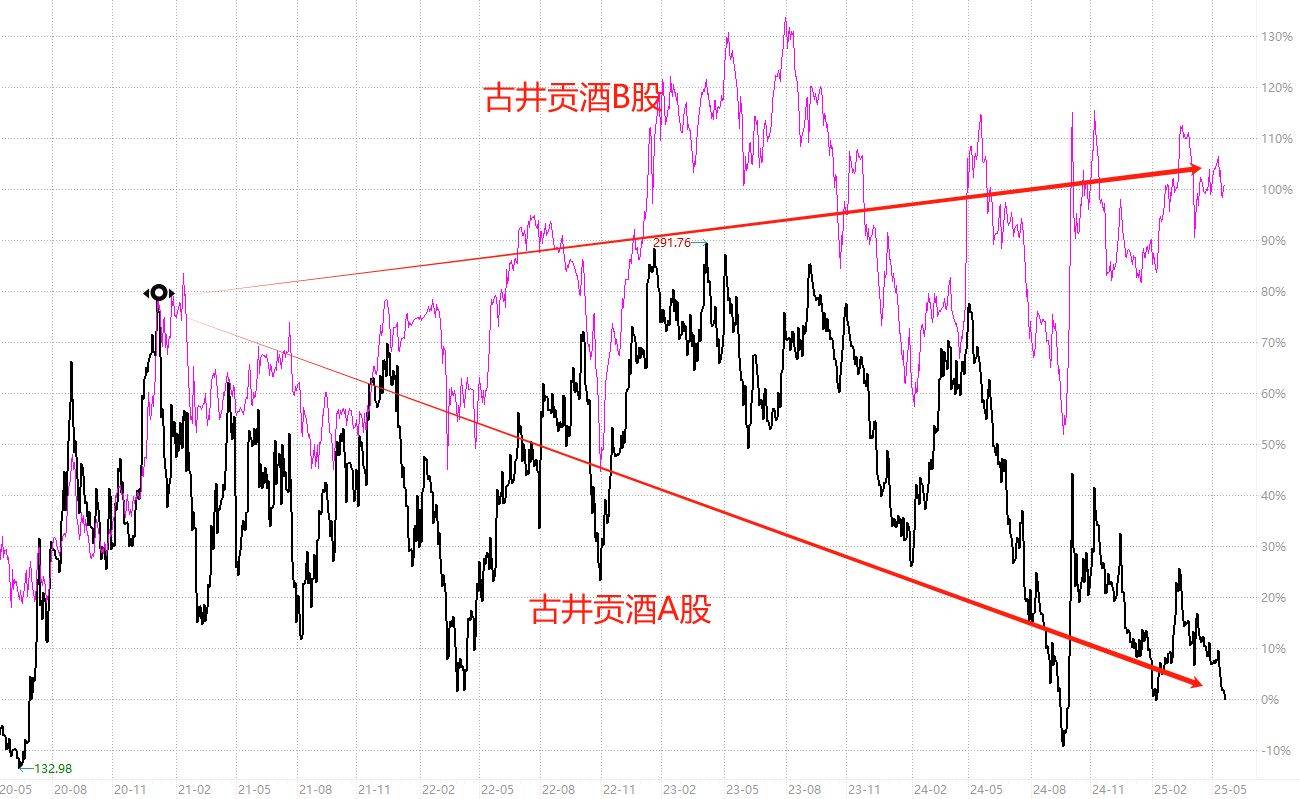
这回我也被套牢了。事情是这样的。 有一类上市公司,叫B股。B股是A股市场的历史遗留物。以古井贡酒为例,总共有5亿股份,4亿在A股上市,1亿在B股上市。 于是,B股成为了一个几乎死掉的市场。 还是说古井贡B吧。它在B股上市的部分有140个亿,但每天的成交额只有多少呢? 500万。 换手率仅为0.04%,约等于0,是全球资本市场换手率最低的地方。即你买入古井贡B,基本上是卖不出去的,因为找不到人跟你交易 或者我换个角度说,假如你是个超级大老板,你把古井贡的B股全部买下来了。有一天你打算全部卖出,你知道要花多少年吗?超过10年。 总之,买入B股,约等于永久套牢、超长期持有。变相实现了巴菲特所言的买股票就是买公司,只能靠企业未来的利润或现金流来获得回报。 正是因为B股买入后极难退出,因此资金对B股的态度非常保守,往往会给B股一个较低的定价。 像古井贡酒的A股交易价格是150人民币。可B股的价格只有120港币,折合110人民币,明显低于A股。 本质上讲,B股的股票和A股没有区别。一样的表决权,一样的股份分红。唯一的区别在于B股是用港币或美元交易。 因为B股本打算是给外国人投资用的。但后来又发明了各种制度(如QFII、沪 ...

古井贡酒:暂无股份回购计划
Zheng Quan Shi Bao Wang· 2025-05-23 09:49
Core Viewpoint - Gujing Gongjiu has been facing investor concerns regarding its stock price performance despite strong operational growth, with no current plans for stock buybacks [1][2]. Group 1: Company Performance - In 2024, Gujing Gongjiu achieved a revenue of 23.578 billion, representing a year-on-year increase of 16.41% [2]. - The net profit attributable to the parent company was 5.517 billion, up 20.22% year-on-year [2]. - The net cash flow from operating activities was 4.728 billion, reflecting a 5.15% increase compared to the previous year [2]. Group 2: Market Strategy - The company has shifted from high-speed growth to structural growth due to macroeconomic cycles and industry competition, indicating a consensus in the liquor industry for slower development [3]. - Gujing Gongjiu continues to focus on a "nationalization and next-high-end" strategy, emphasizing market construction and core provincial areas [3]. Group 3: Financial Management - As of the end of 2024, the company's cash balance was 15.894 billion, raising questions about the need for borrowing [3]. - The short-term and long-term borrowings are primarily for subsidiaries, used for project construction and operational funding [3]. - The company reported a loss of 39.278 million from financial assets measured at fair value, attributed to discount interest from bank acceptance bills [3]. Group 4: Investment Activities - The net cash flow from investment activities decreased by 35.61% year-on-year, mainly due to reduced cash received from investment recoveries [4]. - This decline is not expected to impact the company's future investment plans and strategic layout [4].
中经酒业周报∣前四月白酒产量同比下降7.8%,山西汾酒、洋河股份、古井贡酒召开2024年度业绩说明会
Xin Hua Cai Jing· 2025-05-23 07:32
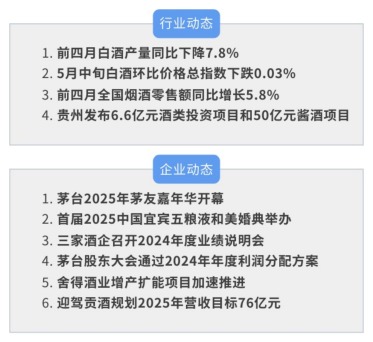
Industry Dynamics - In the first four months of 2025, the production of liquor in China decreased by 7.8% year-on-year, totaling 1.308 million kiloliters, with April's production at 281,000 kiloliters, down 13.8% year-on-year [3] - The national liquor price index fell by 0.03% in mid-May, with premium liquor prices dropping by 0.06%, indicating market adjustment pressures due to weak high-end consumption and intensified competition [3] - Retail sales of tobacco and liquor in China increased by 5.8% year-on-year in the first four months of 2025, reaching 230.5 billion yuan [4] - Guizhou province announced three liquor investment projects totaling 660 million yuan and a 5 billion yuan project for the production of sauce-flavored liquor [4] Company Dynamics - Guizhou Moutai launched the 2025 Moutai Friends Carnival, attracting nearly 500 participants to experience Moutai's culture and production processes [6] - The first 2025 China Yibin Wuliangye Wedding Festival was held, promoting cultural integration with innovative experiences [6] - Three liquor companies, Yanghe, Shanxi Fenjiu, and Guojingong, held annual performance briefings, focusing on market strategies and product launches [7] - Moutai's shareholders approved a profit distribution plan for 2024, with a cash dividend of 276.24 yuan per 10 shares, totaling 34.671 billion yuan [7] - Shede Liquor is accelerating its production expansion project, which includes 23 sub-projects aimed at enhancing production capacity by 2027 [7] - Anhui Yingjia Gongjiu set a revenue target of 7.6 billion yuan for 2025, expecting a 3.49% year-on-year growth [8]
食品饮料周报:白酒配置价值更强,大众品拥抱新消费
Zheng Quan Zhi Xing· 2025-05-23 07:20
Market Performance - The Shanghai Composite Index decreased by 0.18% and the Shenwan Food and Beverage Index fell by 0.92% during the week of May 19 to May 23, 2025 [1] Institutional Insights - Open Source Securities recommends a combination of Shanxi Fenjiu, Kweichow Moutai, and Ximai Food, highlighting that Shanxi Fenjiu faces short-term demand pressure but has strong mid-term growth potential [2] - Guizhou Moutai is focusing on sustainable development and increasing its dividend payout ratio, indicating a long-term positive outlook [2] - Ximai Food is expected to improve profitability due to stable growth in its oat business and better raw material costs [2] Industry Recommendations - Zheshang Securities suggests focusing on leading liquor companies such as Shanxi Fenjiu and Kweichow Moutai, as well as cyclical stocks like Luzhou Laojiao and Yingjia Gongjiu [3] - Recommendations for consumer goods include companies that focus on cost control and new consumption trends, such as Ximai Food and Weifang Zhai [4] Macro Events - Japan's rice prices surged by 98.4% year-on-year in April, marking the highest increase since 1971, with the average price of 5 kg of rice reaching 4268 yen [5] - In Sudan, food prices increased by 124% year-on-year in April, with significant rises in wheat and goat prices, exacerbated by currency devaluation [7] Company News - The white wine industry in Renhuai showed strong growth in the first quarter, with significant improvements in production capacity and quality [8] - Huaren Beer faced challenges with a 0.76% decline in revenue and an 8.03% drop in net profit, attributed to market contraction and extreme weather [14] - Gujing Gongjiu was involved in a legal case concerning a 166,000 yuan execution notice, raising concerns about compliance management [12] Price Trends - High-end liquor prices have seen a significant decline, with key products like Wuliangye and Moutai dropping below 1000 yuan, reflecting a market correction [10] - The liquor industry is undergoing a deep adjustment period, with a shift from capital-driven to consumer-driven dynamics [10][11]
古井贡酒(000596) - 000596古井贡酒投资者关系管理信息20250523
2025-05-23 02:02
Group 1: Financial Performance - The company's core product revenue ratio is steadily increasing [1] - In 2024, the net increase in cash and cash equivalents decreased by 67.09% year-on-year, primarily due to declines in cash flow from investment and financing activities [2] - The proposed dividend for 2024, including the mid-year dividend, accounts for 57.49% of the net profit attributable to shareholders [2] - The net cash flow from investment activities decreased by 35.61% year-on-year, mainly due to a reduction in cash received from investment recoveries [5] Group 2: Strategic Direction - The company is transitioning from high-speed growth to structural growth in the liquor industry, focusing on a "nationalization and mid-to-high-end" strategy [3] - The company aims to enhance its market presence in both domestic (Anhui) and external markets, with a current national coverage rate of over 70% and a revenue ratio of 60:40 between domestic and external markets [3] - The company is committed to product innovation and digital marketing to appeal to younger consumers, integrating brand and culture to create new consumption experiences [3] Group 3: Market Challenges and Responses - The company acknowledges pressures from declining wedding numbers and increased competition from other liquor brands, and plans to optimize product structure to maintain growth [3] - The company has established a market management system to enhance investment value and protect investor interests [4] - There are currently no plans for stock buybacks, despite the ongoing decline in stock prices [4]
白酒市场化40年,公务用酒退出餐桌
Xin Lang Cai Jing· 2025-05-23 01:38
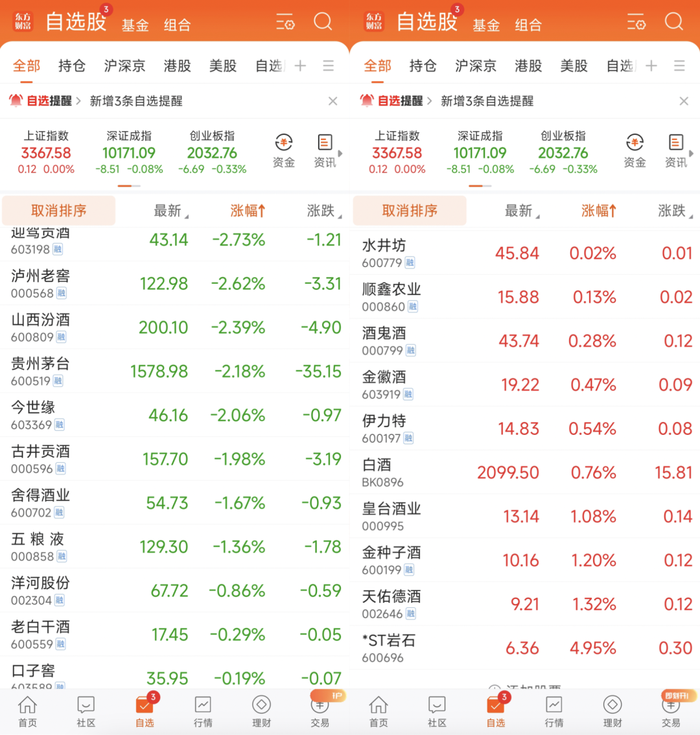
Core Viewpoint - The newly revised "Regulations on Strict Economy and Opposition to Waste in Party and Government Agencies" emphasizes a ban on high-end dishes, cigarettes, and alcohol in work meals, which has led to a decline in the stock prices of liquor companies, particularly in the white liquor sector [1][4]. Group 1: Impact of the New Regulations - The new regulations reaffirm existing restrictions on public alcohol consumption, which have been in place since the "Eight Regulations" introduced in 2012, and further clarify the details of these rules [1][3]. - The market share of public alcohol consumption has significantly decreased, from approximately 40% in 2011 to less than 5% currently, indicating a substantial shift in the consumption landscape [3][4]. Group 2: Historical Context of Public Alcohol Consumption - Public alcohol consumption has historically held a significant role in Chinese culture, evolving from a political tool to a mainstream market driver, and is now being phased out [2][12]. - Previous bans on public alcohol consumption in 1989, 1996, and 2012 have each led to drastic changes in the white liquor market, with the latest ban being less impactful compared to earlier ones [6][10]. Group 3: Market Reactions and Trends - Following the announcement of the new regulations, 11 white liquor stocks experienced declines ranging from 0.19% to 2.73%, with high-end brands facing larger drops [4][11]. - Despite short-term fluctuations, analysts suggest that the long-term investment logic for the white liquor sector remains largely unaffected, as public alcohol consumption constitutes a minor portion of overall sales [4][6]. Group 4: Changing Consumer Preferences - The current consumer base for white liquor is shifting towards younger generations, who prioritize taste, brand recognition, price, and packaging, indicating a trend towards more diverse and personalized consumption [12][14]. - The top consumption scenarios for white liquor in 2024 are family gatherings, friend meet-ups, and business banquets, reflecting a move away from traditional public consumption [12][14].