Yanjing Brewery(000729)

Search documents
北京国际燕京啤酒文化节开幕,缤纷活动轮番登场
Bei Jing Ri Bao Ke Hu Duan· 2025-07-11 13:38
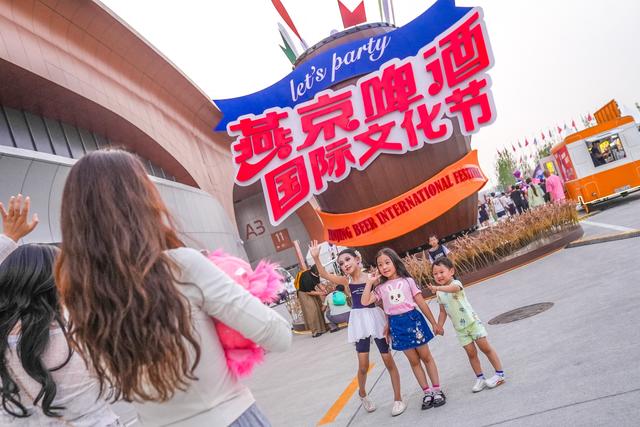
Core Points - The 34th Beijing International Yanjing Beer Culture Festival and 2025 Yanjing Beer Summer Carnival opened on July 11 and will last for 10 days until July 20, offering a variety of summer activities for citizens and tourists [1] Group 1 - The festival features a "100-meter craft beer corridor" showcasing 16 brands and over 100 types of craft beer, including innovative flavors like sugar-coated hawthorn sour wheat and green bean-flavored ale [3] - An "International Food Corridor" offers over 70 types of international cuisine, creating a vibrant atmosphere with attendees enjoying food and drinks together [3] - The event includes a cross-border music festival, outdoor activities like stargazing rooms and robot soccer, catering to both adults and children [5] Group 2 - Shunyi District introduced a "ticket root economy" during the festival, connecting over 200 star enterprises to enhance the experience for visitors through various discounts and activities [5] - Five themed cultural tourism routes were launched, including "Global Cheers·Yanjing World Tavern Line" focusing on international beer culture and "Artistic Tipsy Tour Line" combining art exhibitions with beer tasting [5]


食饮吾见 | 一周消费大事件(7.7-7.11)
Cai Jing Wang· 2025-07-11 08:58
Group 1: Company Performance Forecasts - Zhujiang Beer expects a net profit of 575 million to 625 million yuan for the first half of 2025, representing a growth of 15% to 25% [1] - Yanjing Beer anticipates a net profit growth of 40% to 50%, estimating between 1.062 billion to 1.137 billion yuan [2] - Lianhua Holdings projects a net profit increase of 58.67% to 68.59%, estimating between 160 million to 170 million yuan [5] - Tianbang Foods expects a net profit of 350 million to 370 million yuan, a decline of 56.01% to 58.39% [7] - Muyuan Foods forecasts a net profit of 10.5 billion to 11 billion yuan, a significant increase of 924.60% to 973.39% [8] - Bubu Gao anticipates a net profit of 180 million to 220 million yuan, indicating a turnaround to profitability [10] Group 2: Strategic Developments - Ferrero has agreed to acquire WK Kellogg Co for $23 per share, totaling an enterprise value of $3.1 billion [3] - Zhongju Gaoxin elected Li Ruxiong as chairman and Yu Jianhua as vice chairman during its board meeting [4] - Tea Yan Yue Se is expanding into North America through e-commerce, launching nearly 40 products [9][10] - Yonghui Supermarket has issued a public letter to suppliers, emphasizing a commitment to fair competition and quality standards [12]


抢筹燕京啤酒,甩卖珠江啤酒!业绩同喜,境外资金为何“双标”操作?
Mei Ri Jing Ji Xin Wen· 2025-07-11 07:10
Core Viewpoint - Both Yanjing Beer and Zhujiang Beer reported positive growth in their performance for the first half of 2025, but foreign capital's attitudes towards them differ significantly, indicating varied investment signals [2][3]. Group 1: Performance Overview - Yanjing Beer is expected to see a net profit increase for the first half of 2025, with foreign capital increasing its holdings by 1,794.37 million shares in 2025 [3]. - Zhujiang Beer also reported growth, but foreign capital reduced its holdings by 1,776.49 million shares in the second quarter, a decrease of over 50% [3][4]. - Zhujiang Beer's stock price rose by 13.7% in the second quarter, outperforming Yanjing Beer, raising questions about the significant sell-off by foreign capital [4]. Group 2: Investment Behavior - Foreign capital's operations regarding Zhujiang Beer have been highly flexible, primarily engaging in wave trading, while maintaining stable holdings in Yanjing Beer [6]. - In the second quarter of 2023, after a year of declining stock prices, Zhujiang Beer experienced a rebound, prompting foreign capital to reduce holdings by 534 million shares [6]. - In the first quarter of 2024, foreign capital purchased 2,134 million shares of Zhujiang Beer, but chose to significantly reduce holdings in the second quarter as the stock price increased [8]. Group 3: Market Dynamics - Yanjing Beer's strong performance is driven by a more than 30% year-on-year increase in sales of its core product, U8, while Zhujiang Beer's growth is heavily reliant on the South China market, which accounts for over 90% of its sales [8]. - The overall beer industry has shown a recovery in demand, with domestic beer production increasing by 2.9% year-on-year from April to May 2025 [8]. - The smaller market capitalization of Zhujiang Beer leads to greater stock price volatility, resulting in a more agile investment approach from institutional funds [9]. Group 4: Institutional Interest - Following the release of Yanjing Beer's performance forecast for the first half of 2025, several securities firms and private equity funds showed strong interest, conducting consecutive days of research on the company [10][12]. - Notable institutions involved in the research include Shenwan Hongyuan, Northeast Securities, and various funds such as Huaxia Fund and E Fund [12][14]. Group 5: Strategic Initiatives - Yanjing Beer is implementing a large product strategy centered around U8, focusing on product innovation and brand influence to enhance market share [14]. - The company is also pursuing a "beer + beverage" marketing strategy to cater to younger consumers, leveraging synergies in production and supply chains [14]. - Analysts expect Yanjing Beer to maintain strong profit growth, driven by the expansion of U8 and operational efficiency improvements [15][16].
食品饮料周报:白酒消费场景仍有压力,乳制品关注育儿补贴政策催化-20250710
Tianfeng Securities· 2025-07-10 13:44
Investment Rating - Industry rating is maintained at "Outperform" [6] Core Insights - The liquor sector is experiencing pressure from graduation banquets, but the stabilization of Moutai prices may boost confidence [2][13] - The approval of D-allohexose and the implementation of childcare subsidies are key investment opportunities in the consumer goods sector [4][15] Summary by Sections Market Performance Review - From June 30 to July 4, the food and beverage sector increased by 0.62%, while the Shanghai and Shenzhen 300 index rose by 1.54% [1][24] - Specific segments include meat products (+1.22%), liquor III (+1.20%), baked goods (+0.92%), and beverages (-1.64%) [1][24] Liquor Sector Insights - The liquor sector saw a 1.20% increase, outperforming the overall food and beverage industry but underperforming the Shanghai and Shenzhen 300 index [2][13] - The price of 25-year Moutai (original) is 1935 yuan, up by 65 yuan from the previous week, indicating a potential recovery in industry confidence [2][13] Consumer Goods Sector Insights - The approval of new food raw materials and the rollout of childcare subsidies are expected to catalyze growth in the health products, soft drinks, snacks, and dairy sectors [4][15] - The childcare subsidy program provides 3600 yuan per child annually, which may positively impact the dairy sector [4][15] Investment Recommendations - For the liquor sector, focus on companies benefiting from concentration and strong alpha, such as Shanxi Fenjiu and Guizhou Moutai [5][22] - In the consumer goods sector, recommend companies that align with cost reduction and market share growth strategies, including Lihigh Food and Dongpeng Beverage [5][22]




食品饮料行业跟踪报告:白酒仍在筑底,关注大众品结构性机会
Shanghai Aijian Securities· 2025-07-10 10:23
Investment Rating - The report rates the food and beverage industry as "Outperforming the Market" [1][51]. Core Insights - The beer industry is entering a consumption peak, with expectations for recovery due to rising temperatures and improved consumption policies [2][31]. - The white liquor sector is still in a bottoming phase, with a focus on structural opportunities in mass-market products [2][20]. - The soft drink sector continues to show high growth potential, driven by new product launches and expanded consumption scenarios [3][38]. - The food processing sector is experiencing a capital globalization phase, with significant fundraising for capacity and channel upgrades [3][33]. Summary by Sections 1. Market Review - The food and beverage sector increased by 0.62% in the week of June 30 to July 4, underperforming the CSI 300 index, which rose by 1.54% [6][7]. 2. Core Data Tracking 2.1. White Liquor - The white liquor industry is in a bottoming phase, with a cumulative production of 159.7 million liters from January to May 2025, down 7.6% year-on-year [20][41]. - The price of Feitian Moutai increased by 65 yuan to 1935 yuan, while the price of Guojiao 1573 remained stable at 835 yuan [20][22]. 2.2. Beer - In May 2025, the beer production reached 358.4 million liters, showing a year-on-year growth of 1.4% [31][32]. 2.3. Dairy Products - The production of dairy products in May 2025 was 243.3 million tons, with a notable increase in fresh milk prices showing signs of stabilization [33][35]. 2.4. Soft Drinks - The beverage production in May 2025 was 1,613.1 million tons, reflecting a year-on-year growth of 2.4% [38][39]. 2.5. Other - The approval of D-allohexose as a new food ingredient signals policy support for synthetic biological technology in food materials [40]. 3. Important Company Dynamics - Anjiu Foods officially listed on the Hong Kong Stock Exchange on July 4, raising 2.3 billion HKD for capacity and channel upgrades [3][48].



燕京啤酒(000729) - 000729燕京啤酒投资者关系管理信息20250710(一)
2025-07-10 10:16
Group 1: Company Overview and Market Strategy - Beijing Yanjing Beer Co., Ltd. focuses on product, channel, and regional collaboration for market expansion [1] - The company is increasing investment in the U8 product system to enhance product competitiveness and promoting canned products in retail channels [1] - Aiming to improve market coverage through offline terminal distribution and online instant retail channels [1] Group 2: New Product Launches - The newly launched soda products leverage existing beer distribution networks, targeting dining scenarios like hot pot and barbecue [2] - The "beer + soda" consumption model meets diverse beverage needs in dining contexts [2] - The brand aims to resonate emotionally with young consumers, enhancing brand influence and reputation [2] Group 3: Health-Oriented Products - The company produces health-oriented products, including Jiulongzhai Sour Plum Soup and natto-related products [2] - Jiulongzhai Sour Plum Soup is a traditional product that aligns with modern health trends [2] - Yanjing natto is rich in essential amino acids, vitamins, and minerals, catering to health-conscious consumers [2]
燕京啤酒(000729) - 000729燕京啤酒投资者关系管理信息20250710(二)
2025-07-10 10:16
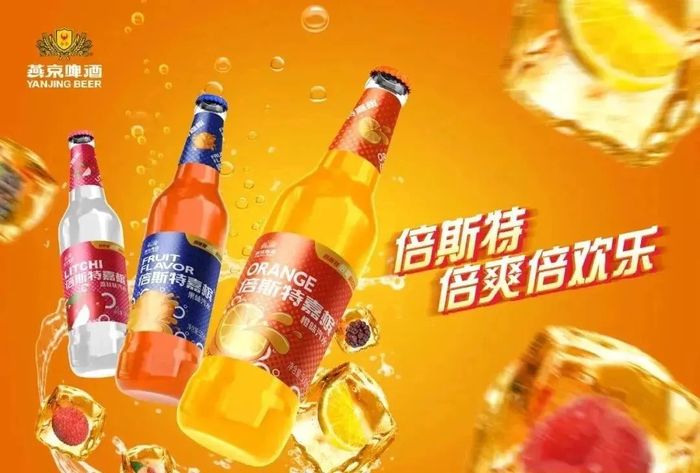
Group 1: Company Overview and Financial Performance - Beijing Yanjing Beer Co., Ltd. emphasizes shareholder returns with a stable dividend policy, planning to distribute cash dividends of CNY 1.90 per 10 shares for 2024, totaling CNY 535,522,474.79, which represents 50.73% of the net profit attributable to shareholders [1] - The cash dividend amount reflects a 90% increase compared to the previous year [1] Group 2: Product Development and Market Strategy - The newly launched Best Soda is positioned as a key innovation strategy for Yanjing, aimed at revitalizing the brand and expanding into the beverage market, potentially creating new growth avenues [1] - Best Soda is characterized by its refreshing taste and natural fruit aroma, with plans to diversify the product line to cater to various consumer preferences [2] Group 3: Governance and Management Efficiency - The company has implemented a modern governance structure, establishing the shareholders' meeting as the highest authority and ensuring the board of directors can make informed decisions while granting operational autonomy to the management [2] - A comprehensive "1+M+N" system has been developed to enhance governance efficiency, ensuring interconnectivity and collaboration among various regulations [2] - The company focuses on improving internal control systems and compliance management to ensure orderly operations and enhance decision-making efficiency [2] Group 4: Green Development Initiatives - Yanjing Beer has adopted measures for green development, including managing energy consumption per unit of beer produced and advancing carbon management initiatives [2] - The company plans to add 8 new green factories in 2024, increasing its total to 17 green factories and 6 green supply chain enterprises [2]
中证沪港深互联互通中小综合主要消费指数报5488.14点,前十大权重包含百润股份等
Jin Rong Jie· 2025-07-10 08:02
Group 1 - The core index of the CSI Hong Kong-Shanghai-Shenzhen Connect Small Cap Consumer Index reported at 5488.14 points, showing a decline of 1.54% over the past month, an increase of 2.05% over the past three months, and a year-to-date increase of 3.77% [1] - The CSI Hong Kong-Shanghai-Shenzhen industry index series categorizes the CSI 500, CSI Hong Kong-Shanghai-Shenzhen Connect Small Cap Composite, and CSI Hong Kong-Shanghai-Shenzhen Connect Composite Index into 11 industries to reflect the overall performance of different industry companies [1] - The top ten holdings of the CSI Hong Kong-Shanghai-Shenzhen Connect Small Cap Consumer Index include Meihua Biological (2.53%), Zhengbang Technology (2.43%), Yanjing Beer (2.2%), Anjii Food (1.83%), Maogeping (1.79%), Hengan International (1.76%), Dabeinong (1.66%), Dekang Animal Husbandry (1.64%), First Pacific (1.57%), and Bairun Co. (1.55%) [1] Group 2 - The market share of the CSI Hong Kong-Shanghai-Shenzhen Connect Small Cap Consumer Index holdings is 41.28% from Shanghai Stock Exchange, 41.17% from Shenzhen Stock Exchange, and 17.55% from Hong Kong Stock Exchange [2] - The industry composition of the CSI Hong Kong-Shanghai-Shenzhen Connect Small Cap Consumer Index holdings shows that food accounts for 32.70%, breeding for 20.94%, liquor for 17.06%, planting for 8.99%, beauty care for 6.79%, soft drinks for 6.78%, and household goods for 6.75% [2] - The index sample is adjusted every six months, with adjustments implemented on the next trading day after the second Friday of June and December each year [2]


净利预高增、押注汽水业 燕京啤酒还有什么挑战
Sou Hu Cai Jing· 2025-07-10 05:13
Core Viewpoint - The beer industry is experiencing a challenging environment, yet Yanjing Beer is showing strong performance with significant profit growth and strategic initiatives aimed at revitalization and market expansion [3][4][10]. Financial Performance - Yanjing Beer expects a net profit of approximately 10.62 billion to 11.37 billion yuan for the first half of 2025, representing a year-on-year increase of 40% to 50% [3]. - In 2024, Yanjing Beer achieved a revenue of 146.67 billion yuan, a 3.2% increase year-on-year, and a net profit of 10.56 billion yuan, a 63.74% increase [4]. - The company plans to distribute cash dividends of about 5.36 billion yuan in 2024, which is 50.73% of its net profit [5]. Market Position and Strategy - Yanjing Beer is focusing on high-end products, with the Yanjing U8 beer becoming a significant driver of sales, achieving a 31.40% increase in volume in 2024 [6][7]. - The company is also diversifying its product line by entering the beverage market with the launch of Best Jia soda, aiming for a dual-driven growth strategy [9][10]. Operational Efficiency - Yanjing Beer has implemented cost control measures and operational efficiency improvements, which have contributed to its profitability [8]. - The company has seen a significant reduction in inventory turnover days, indicating improved cash flow management [14]. Challenges and Risks - The beer industry is facing a decline in overall production and revenue, with a reported 0.6% decrease in beer production in 2024 [5]. - Yanjing Beer is also dealing with potential legal and regulatory issues, including a significant amount of outstanding debts and compliance challenges [13][14]. Future Outlook - The company aims to maintain its growth trajectory by focusing on product innovation and market expansion, particularly in underperforming regions [12][15]. - Yanjing Beer is aware of the competitive landscape in the beverage market and is strategizing to differentiate its offerings to capture market share [10][11].
燕京啤酒“不务正业”卖汽水,拿什么跟北冰洋、大窑斗?
Xin Lang Cai Jing· 2025-07-10 03:03
Core Viewpoint - The beverage market is becoming a strategic battleground in the fast-moving consumer goods sector, with companies like Yanjing Beer entering the soft drink space to capture the young consumer demographic and address declining growth in their core beer business [1][3][20] Group 1: Market Trends and Opportunities - The beverage industry is experiencing a resurgence, with significant growth potential, particularly among the Z generation, who frequently purchase drinks and prefer carbonated beverages in social settings [3][4][6] - The global carbonated soft drink market is projected to grow from $242.91 billion in 2024 to $350.78 billion by 2029, indicating ample expansion opportunities for new entrants [6][8] - Yanjing Beer aims to leverage the high sales volume in the soft drink category, particularly through its new product, Beiste Soda, which targets the young consumer market [4][10] Group 2: Yanjing Beer's Strategic Moves - Yanjing Beer has seen a slowdown in its beer sales growth, with revenue increasing from 132.02 billion yuan in 2022 to 146.67 billion yuan in 2024, reflecting a declining growth rate [10][20] - The company is heavily reliant on its flagship product, Yanjing U8, which has seen a decrease in annual sales growth from 50% in 2022 to 31.4% in 2024, indicating a need for diversification [10][12] - The introduction of Beiste Soda is part of Yanjing Beer's strategy to create a second growth engine amid pressures in its core beer business [10][20] Group 3: Competitive Landscape - The beverage market is highly competitive, with established brands like Coca-Cola and PepsiCo dominating approximately 90% of the market share in China, leaving limited space for new entrants [14][15] - Yanjing Beer faces challenges in establishing a strong online presence for its new beverage products, unlike competitors such as Beibingyang, which have successfully utilized e-commerce platforms [13][14] - The beverage market is expected to become increasingly crowded as more companies, including those from the beer sector, attempt to enter the soft drink space [15][20] Group 4: Challenges Ahead - Yanjing Beer's approach to the beverage market has been criticized for lacking innovation, as its new product does not significantly differentiate itself from existing offerings [17][18] - The company must navigate low brand loyalty among young consumers, who are willing to explore various brands rather than remain loyal to one [17][20] - The success of Yanjing Beer's beverage strategy will depend on its ability to innovate and adapt to changing consumer preferences in a rapidly evolving market [16][20]