WLY(000858)

Search documents
1月7日深证国企ESG(970055)指数跌0.32%,成份股云铝股份(000807)领跌
Sou Hu Cai Jing· 2026-01-07 10:46
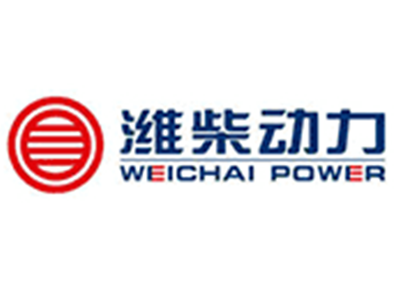
Core Viewpoint - The Shenzhen State-owned Enterprise ESG Index (970055) closed at 1436.92 points, down 0.32%, with a trading volume of 43.67 billion yuan and a turnover rate of 1.69% [1] Group 1: Index Performance - On the day, 19 constituent stocks rose, with Zhongtung High-tech leading with a 7.67% increase, while 29 stocks fell, with Yun Aluminum leading the decline at 3.21% [1] - The index's constituent stocks experienced a net outflow of 222 million yuan from institutional investors and a net outflow of 127 million yuan from retail investors, while retail investors saw a net inflow of 348 million yuan [1] Group 2: Top Constituents - The top ten constituents of the Shenzhen State-owned Enterprise ESG Index are as follows: - Hikvision (sz002415) with a weight of 9.57%, latest price at 30.07, and a decrease of 1.05% [1] - Wuliangye (sz000858) with a weight of 9.23%, latest price at 107.52, and a decrease of 0.60% [1] - Xugong Machinery (sz000425) with a weight of 8.83%, latest price at 11.73, and a decrease of 0.26% [1] - Weichai Power (sz000338) with a weight of 7.59%, latest price at 17.82, and an increase of 0.91% [1] - Luzhou Laojiao (sz000568) with a weight of 7.52%, latest price at 117.12, and a decrease of 1.26% [1] - Yun Aluminum (sz000807) with a weight of 5.93%, latest price at 33.78, and a decrease of 3.21% [1] - Inspur Information (sz000977) with a weight of 5.93%, latest price at 67.42, and a decrease of 0.98% [1] - AVIC Optoelectronics (sz002179) with a weight of 3.53%, latest price at 37.08, and a decrease of 0.40% [1] - Yanghe Distillery (sz002304) with a weight of 3.17%, latest price at 62.26, and a decrease of 1.77% [1] - Guangxun Technology (sz002281) with a weight of 2.96%, latest price at 71.18, and an increase of 2.45% [1]






15只白酒股下跌 贵州茅台1423.36元/股收盘
Bei Jing Shang Bao· 2026-01-07 09:44
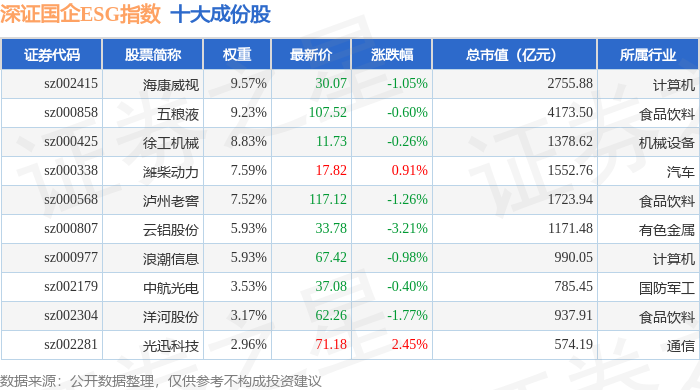
北京商报讯(记者刘一博冯若男)1月7日尾盘,三大指数集体上涨,沪指4085.77点上涨0.05%。白酒板块 以2198.30点收盘,下跌0.21%,其中15只白酒股下跌。 从个股来看,贵州茅台(600519)收盘价达1423.36元/股,下跌0.33%;五粮液(000858)收盘价达 107.52元/股,下跌0.60%;山西汾酒(600809)收盘价达177.49元/股,下跌0.89%;泸州老窖 (000568)收盘价达117.12元/股,下跌1.26%;洋河股份(002304)收盘价达62.26元/股,下跌1.77%。 国盛证券(002670)在其发布研报称,白酒2025年充分释放风险,2026年有望迎"供给先行、需求渐 进"双改善,当下动销、价盘、报表三重底部,短期元春动销环比改善正向催化,中期维度动销、价 盘、报表有望相继修复,配置短期基于供给角度,中期基于格局与分红。 ...




白酒板块1月7日跌0.47%,*ST岩石领跌,主力资金净流出2.44亿元
Zheng Xing Xing Ye Ri Bao· 2026-01-07 08:58
Core Viewpoint - The liquor sector experienced a decline of 0.47% on January 7, with *ST Rock leading the drop, while the Shanghai Composite Index rose by 0.05% and the Shenzhen Component Index increased by 0.06% [1]. Group 1: Market Performance - The closing prices and performance of key liquor stocks showed mixed results, with Guizhou Moutai at 1423.36 yuan (-0.33%), and Wuliangye at 107.52 yuan (-0.60%) [1][2]. - The total net outflow of main funds from the liquor sector was 244 million yuan, while retail investors saw a net inflow of 437.07 thousand yuan [2]. Group 2: Trading Volume and Value - Guizhou Moutai had a trading volume of 29,700 hands and a transaction value of 4.234 billion yuan, while Wuliangye had a trading volume of 123,100 hands and a transaction value of 1.326 billion yuan [1][2]. - The trading volume for the liquor sector was highlighted, with notable transactions including Luzhou Laojiao at 93,700 hands and a transaction value of 1.102 billion yuan [2]. Group 3: Fund Flow Analysis - Guizhou Moutai saw a main fund inflow of 76.40 million yuan, while *ST Rock experienced a main fund outflow of 4.17 million yuan [3]. - The fund flow analysis indicated that retail investors contributed positively to some stocks, such as Tianyoude Liquor, which had a retail net inflow of 121.59 thousand yuan [3].


川航、五粮液合资公司成立智慧飞行航空服务公司
Qi Cha Cha· 2026-01-07 06:12
企查查APP显示,近日,川航智慧飞行(四川)航空服务有限公司成立,经营范围包含:通用航空服 务;测绘服务;商业非运输、私用大型航空器运营人、航空器代管人运行业务等。企查查股权穿透显 示,该公司由四川通用航空投资管理有限责任公司全资持股,后者由四川航空集团有限责任公司、四川 省宜宾五粮液集团有限公司共同持股。 (原标题:川航、五粮液合资公司成立智慧飞行航空服务公司) ...
川航、五粮液持股公司成立智慧飞行航空服务公司
Zheng Quan Shi Bao Wang· 2026-01-07 04:23
人民财讯1月7日电,企查查APP显示,近日,川航智慧飞行(四川)航空服务有限公司成立,经营范围包 含通用航空服务;测绘服务;商业非运输、私用大型航空器运营人、航空器代管人运行业务等。企查查 股权穿透显示,该公司由四川通用航空投资管理有限责任公司全资持股,后者由四川航空集团有限责任 公司、四川省宜宾五粮液(000858)集团有限公司共同持股。 ...
国盛证券:2026年白酒业有望迎来改善 大众品配置优选两条复苏与成长双主线
Zhi Tong Cai Jing· 2026-01-07 03:29
Group 1: Core Insights - The report from Guosheng Securities indicates that the liquor industry is expected to fully release risks by 2025, with improvements in supply and demand anticipated in 2026, characterized by a "supply-first, demand-gradual" recovery [1] - Current market conditions show a triple bottom in sales, pricing, and financial reports, with short-term improvements in sales expected during the Spring Festival, and mid-term recovery in sales, pricing, and financial reports anticipated [1] Group 2: Consumer Trends - The overall consumption landscape is stabilizing, but prices are under pressure, with structural growth changes continuing; the food and beverage sector saw a cumulative decline of 4% in 2025, with liquor significantly impacted, down 7% year-to-date [1] - High-end consumption is recovering first, with experiential consumption leading the way; product life cycles are shortening, and there is a clear trend towards health-oriented products and improved trust in channels [1] Group 3: Liquor Industry Analysis - The supply side is clearing, with leading companies like Kweichow Moutai and Wuliangye stabilizing prices and boosting channel confidence; the industry is expected to prioritize volume over price and focus on sales and market share in 2026 [2] - Demand is gradually recovering, with sales showing signs of improvement; the peak sales period around the Spring Festival is expected to see continued recovery, particularly for leading brands [2] Group 4: Beer and Beverage Sector - The beer sector is anticipated to benefit from restaurant recovery, with expectations for volume and price performance to exceed forecasts; key stocks include Beijing Beer and China Resources Beer [3] - The beverage industry is expanding steadily, with segments like sugar-free tea and energy drinks leading growth; companies with strong brand and channel capabilities are likely to stand out in a competitive landscape [3] Group 5: Food Sector Insights - The restaurant supply chain is seeing a recovery in demand, with price wars easing; leading companies like Anjijia are expected to navigate price pressures effectively [4] - The snack sector is focusing on retail transformation and product-driven growth, with opportunities for standout products; the dairy sector is expected to see a turning point in raw milk cycles in the second half of 2026 [4] - The health supplement market in China is still in a growth phase, with new ingredients and effects presenting explosive opportunities; companies like H&H International Holdings are highlighted for their resilience [4]
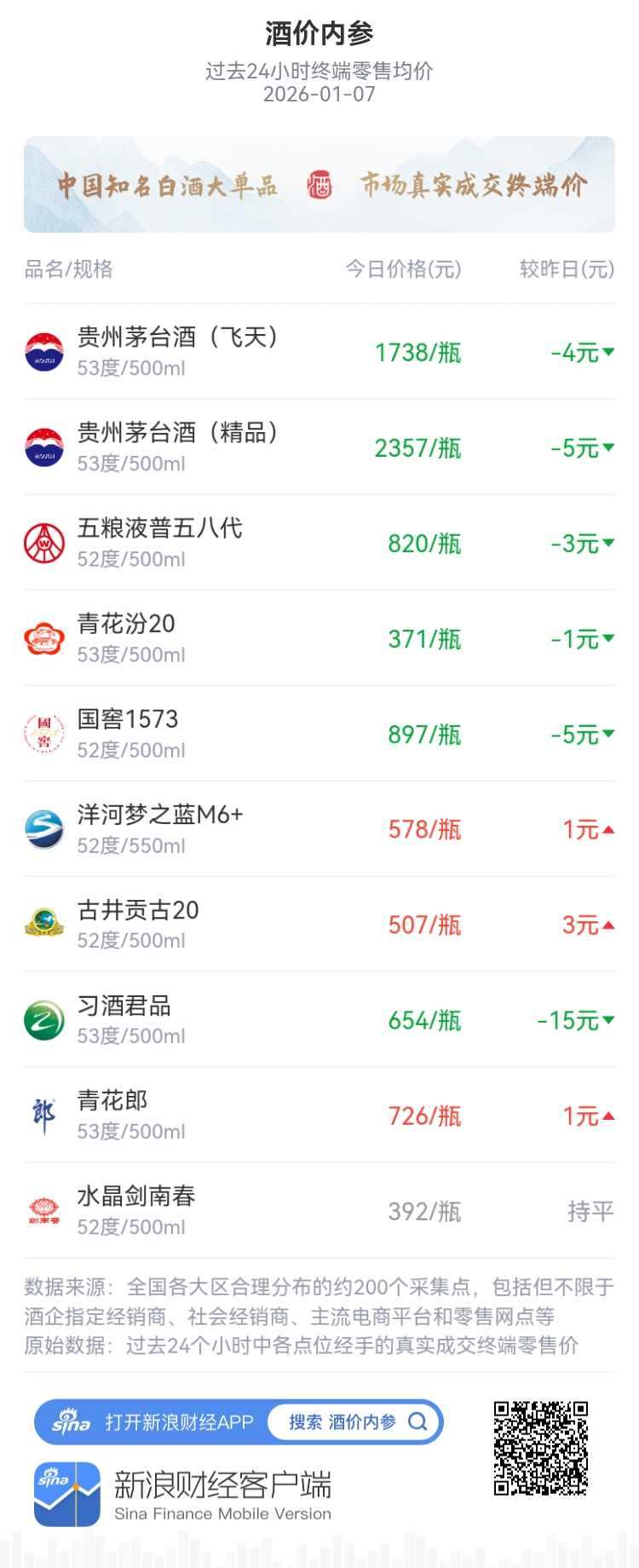
酒价内参1月7日价格发布 市场全线回调整体酒价创近期新低
Xin Lang Cai Jing· 2026-01-07 01:03
Core Viewpoint - The Chinese liquor market is experiencing a significant price decline, with the average retail price of the top ten liquor products dropping, indicating a bearish market sentiment and a further downward adjustment in price levels [1]. Price Trends - The total price for a bundled sale of the top ten liquor products is 9040 yuan, down 28 yuan from the previous day, marking a new low in two months [1]. - Six monitored products showed price declines, with notable drops including: - Xijiu Junpin down 15 yuan per bottle - Guojiao 1573 and Jingpin Moutai down 5 yuan per bottle - Feitian Moutai down 4 yuan per bottle - Wuliangye Pu 58th generation down 3 yuan per bottle - Qinghua Fen 20 down 1 yuan per bottle [1][3][4]. Price Movements of Specific Products - The following products experienced price changes: - Feitian Moutai (53 degrees, 500ml) priced at 1738 yuan, down 470 yuan - Jingpin Moutai (53 degrees, 500ml) priced at 2357 yuan, down 570 yuan - Wuliangye Pu 58th generation (52 degrees, 500ml) priced at 820 yuan, down 370 yuan - Guojiao 1573 (52 degrees, 500ml) priced at 897 yuan, down 5 yuan [3][4]. - Conversely, some products saw price increases: - Guqingong Gu 20 up 3 yuan to 507 yuan - Yanghe Dream Blue M6+ up 1 yuan to 578 yuan - Qinghua Lang up 1 yuan to 726 yuan [4].

高端、次高端率先发力 白酒市场复苏显现
Bei Jing Shang Bao· 2026-01-06 15:52
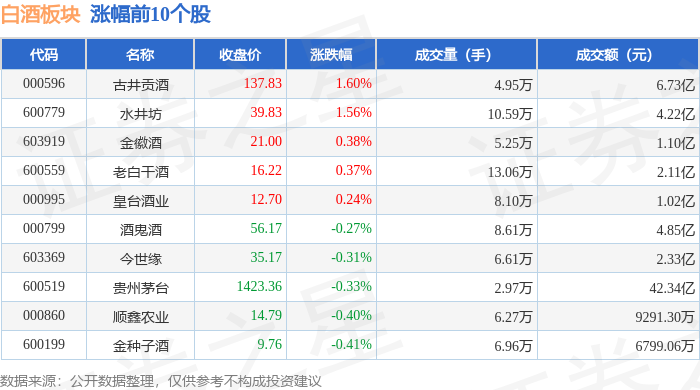
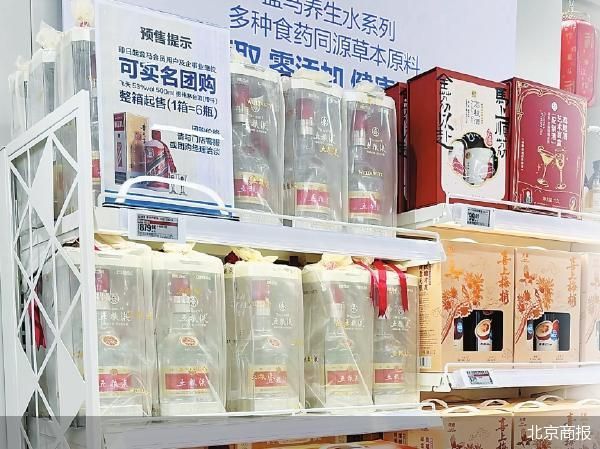
Core Viewpoint - The Chinese liquor market is showing signs of recovery at the beginning of 2026, with high-end and mid-range products driving sales during the New Year holiday, supported by gifting and banquet demands [1][3][6]. Group 1: Market Trends - High-end liquor brands such as Wuliangye and Moutai are prominently featured in supermarkets and liquor stores, indicating a strong consumer preference for premium products [3][4]. - The mid-range price segment (300-500 RMB) is becoming a sales leader during the holiday season, reflecting a shift in consumer behavior towards more affordable yet quality options [1][3][4]. - The banquet market is recovering significantly, with a notable increase in demand for liquor during festive occasions like New Year and Spring Festival [3][6][7]. Group 2: Consumer Behavior - The gifting market is evolving from excessive packaging to more rational consumption, with consumers placing additional criteria on their product choices [6]. - High-end liquor brands are less affected by these changes compared to smaller brands, indicating a strong brand loyalty among consumers for top-tier products [6]. - The dual recovery in the market reflects a maturation of consumer preferences, with a balance between high-end and mid-range products [6][8]. Group 3: Market Opportunities - The banquet market remains crucial for liquor sales, with a capacity of approximately 2500 billion RMB, primarily driven by wedding banquets [7]. - Companies are encouraged to focus on niche markets and enhance their distribution channels to capitalize on the evolving consumer landscape [8][9]. - The rise of instant retail channels presents significant growth opportunities, with projections indicating a market size of 360 billion RMB by 2024 [8][9].
破局存量竞争,从头部酒企经销商大会看2026白酒行业新航向
Sou Hu Cai Jing· 2026-01-06 13:14
Core Insights - The white liquor industry in 2025 is characterized by both "pain and transformation," with high inventory levels and price inversions affecting the market, leading some companies to engage in "price reduction for volume" strategies [2] - The trend of rational consumption is deepening, with "face consumption" giving way to "self-enjoyment drinking" [2] Group 1: Industry Trends - The industry is transitioning from a phase of scale pursuit to a "medium-low growth era," where leading companies must find a balance between "progress" and "stability" [4] - Major companies like Moutai and Wuliangye are focusing on long-term strategies, emphasizing market stability and adapting product offerings to align with consumer demand [4][6] - The white liquor sector has moved away from expansion, prioritizing "healthiness first" in a competitive environment [9] Group 2: Company Strategies - Moutai aims to enhance market stability by reducing the volume of high-value products and dynamically balancing product supply based on market demand [4][9] - Wuliangye has defined 2026 as a year for "marketing innovation," focusing on balancing short-term and long-term strategies, supply and demand, and development and safety [4][11] - Other companies like Jinshiyuan and Gujing Gongjiu are also emphasizing market breakthroughs, brand enhancement, and structural upgrades in their strategic plans for 2026 [6][8] Group 3: Consumer Focus - Moutai is shifting towards a consumer-centric approach, promoting a multi-channel sales model and focusing on new consumption scenarios [14] - Wuliangye is targeting new consumer demographics, including younger and female consumers, to expand its market base [14][20] - Gujing Gongjiu is integrating health products into its strategy, aiming to create new consumer experiences and lifestyle offerings [15][21] Group 4: Product Innovation - The industry is witnessing a generational shift in consumer preferences, with younger consumers showing less interest in traditional liquor [17] - Wuliangye is launching lower-alcohol products and innovative experiences to attract younger consumers [17][20] - Gujing Gongjiu has introduced a "light degree" concept with new product lines aimed at younger audiences, enhancing its retail experience [21] Group 5: Collaborative Ecosystem - Companies are moving towards a collaborative ecosystem, viewing distributors as integral to brand development rather than mere sales channels [11][13] - The focus is on building a "shared destiny" between manufacturers and distributors, emphasizing risk-sharing and mutual benefits [11][13]

高端、次高端率先发力 元旦酒业市场勾勒2026年“双轨复苏”路线图
Bei Jing Shang Bao· 2026-01-06 12:29
Core Viewpoint - The Chinese liquor market is showing signs of recovery in 2026, particularly in the high-end and mid-range segments, driven by gifting and banquet demands during the New Year holiday season [1][4][8] Group 1: Market Trends - High-end liquor products, such as Wuliangye and Moutai, are prominently featured in supermarkets and liquor stores, indicating a shift in consumer preferences [4][6] - The price range of 300-500 RMB for mid-range products has become a sales powerhouse during the New Year, reflecting a dual demand from gifting and banquet markets [1][6] - Online channels are also witnessing strong sales of high-end liquor, with significant sales figures reported during live-streaming events [7] Group 2: Consumer Behavior - The liquor market is experiencing a transformation in consumer behavior, with a shift from excessive packaging to more rational consumption patterns [8] - The banquet market remains crucial for liquor sales, with a significant portion of consumption still tied to traditional gifting and business events [9] - The dual recovery in the market reflects both consumer rationality and the maturation of the market, with high-end products stabilizing and mid-range products gaining traction [8][10] Group 3: Future Opportunities - The liquor industry is expected to face a new normal characterized by rational consumption, channel flattening, and intensified competition [10] - Companies need to focus on niche markets and immediate retail channels to capture growth opportunities [10] - The instant retail market is projected to grow significantly, with estimates suggesting a market size of 720 billion RMB by 2025, indicating a competitive landscape for liquor companies [11]