
BYD(002594)

Search documents
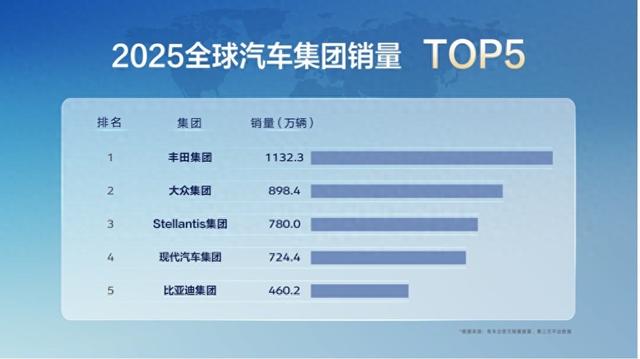
比亚迪2025年销量跻身全球前五,创中国车企集团历史纪录
Xin Lang Cai Jing· 2026-02-10 06:13
Core Insights - BYD has achieved a historic milestone by becoming the first Chinese automotive group to enter the global top five in vehicle sales, with an annual sales figure of 4.602 million units in 2025, marking a significant shift in the global automotive industry landscape [1][9] - The company has consistently ranked first in global new energy vehicle sales for four consecutive years, demonstrating its dominance in the sector [2][4] Sales Performance - In 2025, BYD's new energy vehicle sales reached 4.602 million units, maintaining its position as the global leader in this category [2] - The company surpassed Tesla in pure electric vehicle deliveries with 2.257 million units in 2025, indicating a shift in market leadership [4] - BYD's sales growth is notable, with an 18.3% year-on-year increase, contrasting with the stagnation or decline seen among traditional automotive giants [1][2] Market Expansion - BYD's overseas sales exceeded 1 million units for the first time, accounting for over 22% of total sales, with a remarkable 145% year-on-year growth [4][8] - In Europe, BYD registered 187,657 new vehicles in 2025, reflecting a 268.6% increase, and it leads in several emerging markets [5][6] Strategic Focus - The company aims to prioritize overseas expansion and high-end market penetration over low-cost strategies, emphasizing technology and value recognition [7] - BYD's success is attributed to its comprehensive capabilities across the entire supply chain, from battery production to vehicle manufacturing, which enhances its competitive edge [8] Technological Advancements - BYD has invested in core technologies and maintains a strong focus on R&D, developing advanced systems such as the fifth-generation DM hybrid technology and various intelligent driving solutions [7][8] - The company has established a vertically integrated supply chain, allowing it to remain competitive even in the face of tariffs [8] Future Outlook - BYD's entry into the global top five signifies a new phase for the Chinese automotive industry, driven by technological innovation and a focus on global competition [9] - With ongoing investments in overseas production facilities and continuous product development, BYD is positioned for further breakthroughs in the global market [9]


从“深圳智造”到“深圳创造”—数字能源正在重新定义每一度电
Zhong Guo Neng Yuan Wang· 2026-02-10 05:56
Core Insights - The article emphasizes Shenzhen's commitment to becoming a global leader in digital energy, focusing on innovation, application, and international cooperation in the clean energy sector. Group 1: Digital Energy Innovation - Shenzhen has established 196 digital energy technology innovation platforms to enhance foundational research and original innovation capabilities, creating a comprehensive innovation chain from basic research to industrial application [2] - Major companies like China General Nuclear Power Corporation and Shenzhen Energy are leading advancements in hydrogen energy and energy storage technologies, including the development of a 30 MW pure hydrogen gas turbine energy storage demonstration project [2][3] - New energy storage technologies such as supercapacitors, flywheel storage, and various battery types are rapidly evolving, driven by leading firms like Huawei and BYD [2] Group 2: Quality Services and Solutions - Shenzhen is shifting its focus from scale and price competition to quality and efficiency in the digital energy sector, with a notable emphasis on high-performance charging solutions [3] - The introduction of liquid-cooled fast charging technology by Huawei has significantly impacted the global charging market, addressing charging anxiety with innovative service concepts [3] - The development of battery swapping solutions for heavy-duty electric vehicles is expected to halve the initial purchase cost within two years, promoting low-carbon transitions in heavy transportation [3] Group 3: Benchmark Applications - Shenzhen is transforming its energy landscape into a model for other megacities, with significant achievements in charging infrastructure, including 1,098 fast charging stations and 536,000 charging piles [4] - The city has implemented a unified energy management platform, enhancing the reliability and efficiency of energy distribution [4] - The virtual power plant initiative has achieved a resource access capacity of 4.75 million kW, showcasing Shenzhen's capabilities in energy management [4] Group 4: International Cooperation - Shenzhen is positioning itself as a hub for international cooperation in digital energy, hosting the International Digital Energy Expo with participation from nearly 2,000 companies across 52 countries [7] - The city is actively promoting its digital energy products in key international markets, aiming for a 22.6% increase in exports of its "new three samples" products by 2025 [7] - Shenzhen's approach combines technology, finance, and legal frameworks to enhance its attractiveness for international partnerships and collaborations [7]

南宁新能源电池产业跻身中国第一梯队 全链开花激活发展新动能
Zhong Guo Xin Wen Wang· 2026-02-10 05:38
Core Insights - Nanning is transforming its new energy battery industry from scratch, aiming to become a leading player in China's battery production by 2026 [1][3] - The city has attracted major companies like BYD and Molybdenum, establishing a complete industrial chain that includes battery cell manufacturing, materials, and components, with a cumulative output value exceeding 130 billion RMB [1][3] Group 1: Industry Development - Nanning is seizing the strategic opportunity in the new energy battery sector, focusing on major project introductions and nurturing leading enterprises [3] - Since 2022, BYD has initiated six projects in Nanning with a total investment of 28 billion RMB, planning to achieve over 80 GWh of battery capacity by 2025, generating an output value exceeding 43 billion RMB [3] - Molybdenum's "Fluorine Core Battery" project in Nanning will add 100 GWh of battery capacity, with an expected output value of 30 billion RMB [3] Group 2: Production Capacity - The Dragon Electric Huaxin project for lithium battery copper foil in Nanning has a planned investment of 12 billion RMB, with an expected output value of 15 billion RMB [5] - Nanning's new energy battery industry is projected to have over 200 GWh of planned capacity and over 100 GWh of operational capacity, placing it among the top tier in the country [5] - The industry is becoming a significant driver of economic growth in Nanning, supporting the local new energy vehicle supply chain and facilitating exports to markets in ASEAN, North America, Europe, and the Middle East [5] Group 3: Future Plans - During the 14th Five-Year Plan period, Nanning aims to strengthen the lithium battery industry chain and expand new battery product development, leveraging its geographical advantages and existing industrial strengths [5] - The city plans to create a comprehensive industrial chain encompassing material manufacturing, battery production, application scenarios, and recycling [5]

邀请函丨2026(第二届)起点锂电圆柱电池技术论坛暨圆柱电池20强排行榜发布会4月10日深圳举办!
起点锂电· 2026-02-10 05:20
Group 1 - The core viewpoint of the article highlights the explosive growth of the large cylindrical battery and all-tab technology market, with a projected increase of over 15% in China's cylindrical battery shipments by 2025, and a growth rate exceeding 40% for large cylindrical batteries [3] - Major companies in the large cylindrical battery sector, such as EVE Energy, Molicel, and CATL, are expected to face supply shortages due to high demand, indicating a robust market outlook for 2026 [3] - The article emphasizes the rapid adoption of large cylindrical battery products in various applications, including lightweight power, electric two- and three-wheelers, portable storage, and automotive power [3][6] Group 2 - The event organized by Qidian Lithium Battery and Qidian Research Institute (SPIR) aims to discuss cutting-edge technologies, processes, and materials related to cylindrical batteries, showcasing the industry's competitive landscape through a comprehensive ranking of the top 20 companies [3][6] - The agenda includes discussions on high-power cylindrical battery technology, innovations in household and portable energy storage, and the development trends of automotive-grade large cylindrical batteries [7][8] - The forum will also feature roundtable discussions on overcoming market entry barriers and identifying emerging application markets for cylindrical batteries [7][8] Group 3 - The event is set to take place on April 10, 2026, at the Venus Royal Hotel in Bao'an, Shenzhen, with an expected attendance of over 600 participants [6] - Various companies from the cylindrical battery sector, including EVE Energy, CATL, and BYD, as well as downstream application enterprises and equipment manufacturers, are invited to participate [10] - Different registration options are available, including SVIP, VIP, and free attendance, with specific benefits associated with each tier [11][12][13]





比亚迪固态电池将小批量生产
起点锂电· 2026-02-10 05:20
声 明: 本文由起点锂电原创,版权归属起点锂电,如需转载或开白联系起点锂电小编(微信:qd-Lib1222)! 往 期 回 顾 | 01 | | 再增80GWh产能!楚能新能源连签大订单! | | --- | --- | | 02 | | 突发!全球汽车巨头出售电池子公司49%股权 | | 03 | | 7GWh!中储科技发布2026年电芯框架集采 | | 04 | | 2026(第二届)起点锂电圆柱电池技术论坛暨圆柱电池20强排行榜发布会4月深圳 举办! | 2月9日,据财联社援引比亚迪投资者关系部方面消息,比亚迪在固态电池领域进行多路线探索,以硫化物固态电池作为重要的技术方向,在 电池寿命、快充等领域实现突破,有望2027年实现小批量生产。 在钠电池领域,比亚迪的第三代产品技术平台已处于开发阶段,并开发出万次循环的钠电产品,量产节点将根据实际市场及客户需求而定。 比亚迪锂电池有限公司CTO孙华军表示,从长期的发展的角度看,经过测算,规模化之后,固液电池可以接近于同价,液态的三元电池跟固 态的三元电池,理论上是可以做到固液同价的。比亚迪将在2027年左右启动全固态电池批量示范装车应用,2030年后实现大规模 ...

X @Bloomberg
Bloomberg· 2026-02-10 05:08
China’s BYD, the world’s biggest manufacturer of electric vehicles, has joined hundreds of companies in pushing to be refunded for duties they’ve paid under US President’s import tariffs https://t.co/5XZRnY5soe ...
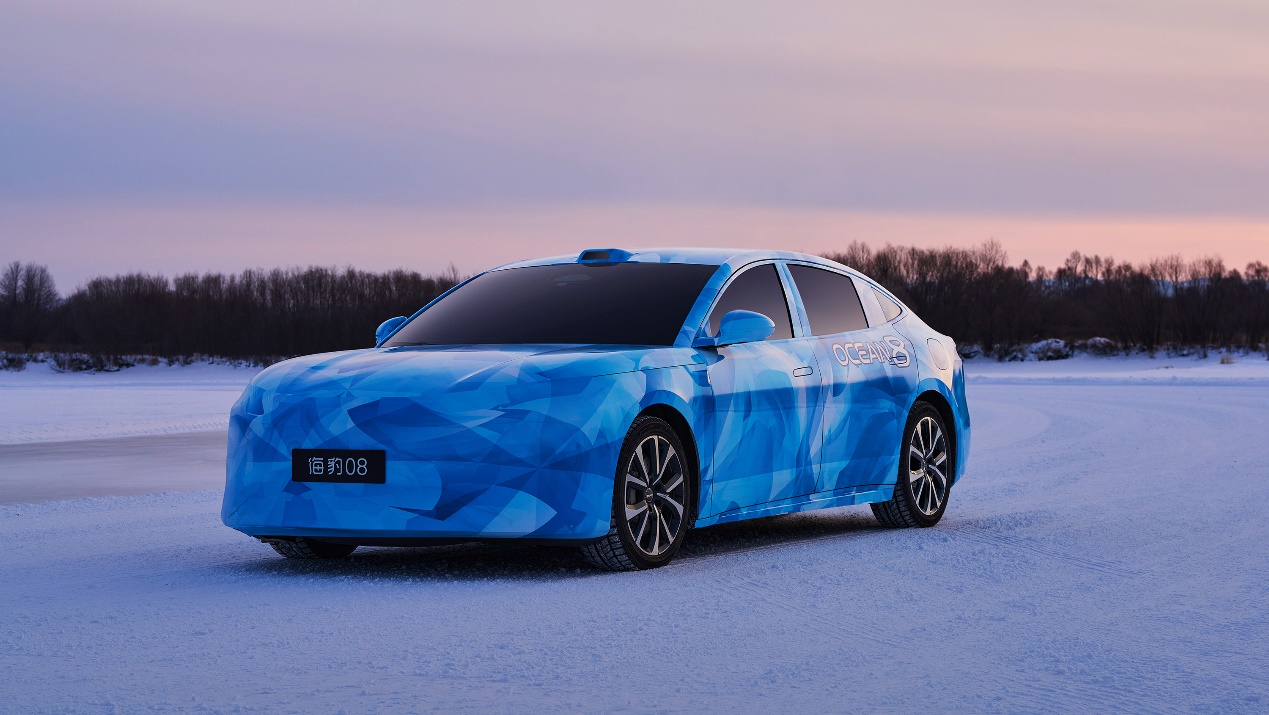
比亚迪海豹08亮相 定位大型轿跑
Zhong Guo Zhi Liang Xin Wen Wang· 2026-02-10 04:34
Group 1 - BYD has unveiled a new flagship sedan model named "Seagull 08," featuring the Ocean Aesthetics 2.0 design language, continuing the design style of the Ocean-S concept car [1] - The Seagull 08 is positioned as a large flagship sedan, with a sleek and elegant body proportion, adopting a low-drag streamlined shape to enhance driving efficiency while ensuring cabin space [3] - The vehicle is expected to exceed 5 meters in length and have a wheelbase of over 3 meters, equipped with advanced technologies such as rear-wheel steering, megawatt fast charging, and integrated body structure [3]
港股午盘|恒指涨0.54% 比亚迪股份涨3.1%
Di Yi Cai Jing· 2026-02-10 04:26
Group 1 - The Hang Seng Index closed at 27,172.87 points, up 0.54% [1] - The Hang Seng Tech Index reached 5,463.17 points, increasing by 0.84% [1] - The pharmaceutical and biotechnology, home appliances and consumer products, and media and entertainment sectors led the gains [1] Group 2 - BYD Company Limited saw a rise of 3.1% [1] - JD.com experienced an increase of 2.32% [1] - Tongcheng Travel fell by 2.46%, while Trip.com Group declined by 1.67% [1]
3.2GWh!昌吉国投4个储能项目招标!技术要求宁德时代/海辰储能/亿纬锂能/中创新航等10家电芯厂商
中关村储能产业技术联盟· 2026-02-10 04:00
Core Viewpoint - The article discusses the procurement of energy storage system equipment for four shared energy storage projects by Changji Guotou Xin Energy Development Co., Ltd., with a total scale of 800 MW/3.2 GWh [2]. Group 1: Project Overview - The total scale of the shared energy storage projects is 800 MW/3.2 GWh, with specific projects including: - Changji Guotou Hutu Bih County: 200 MW/800 MWh - Changji Guotou Mulei County: 300 MW/1200 MWh - Changji Guotou Jimusaer County: 100 MW/400 MWh - Changji Guotou Qitai County: 200 MW/800 MWh [3][20][31]. Group 2: Technical Requirements - The technical requirements for the battery technology reference or are equivalent to major manufacturers such as CATL, Hicharge Energy, Yiwei Lithium Energy, and others [2][11]. - The procurement includes complete sets of equipment such as energy storage battery cabins (lithium iron phosphate batteries), battery management systems (BMS), energy management systems (EMS), and associated fire protection systems [3][20][31]. Group 3: Procurement and Delivery - The delivery period is set to be completed within 90 calendar days from the issuance of the supply notice after the contract is signed [4][20][31]. - The procurement is funded by a combination of self-raised funds (30%) and bank loans (70%) [20][31]. Group 4: Bidder Qualifications - Bidders must be independent legal entities registered in the People's Republic of China and must have the capability to manufacture at least one core component of the energy storage system [9][22][33]. - Bidders are required to have experience in at least two projects involving energy storage systems with a single capacity of no less than 400 MWh over the past three years [9][22][33]. Group 5: Bid Submission and Requirements - The bidding process is conducted electronically, and bidders must register on the Changji Public Resource Trading Network to participate [27][28]. - A bid security of 500,000 yuan is required, and it must be paid before the bid submission deadline [25][34].


汽车周报:理想、比亚迪均有技术催化,板块轮动+科技成长双轮驱动-20260210
Shenwan Hongyuan Securities· 2026-02-10 03:43
Investment Rating - The report maintains a positive outlook on the automotive sector, highlighting the potential for growth driven by technological advancements and market dynamics [2]. Core Insights - The report emphasizes the importance of new vehicle announcements and the upcoming Q1-Q2 product cycles, particularly for companies like Li Auto, Xpeng, BYD, Great Wall Motors, and others, driven by enhanced product capabilities due to new technologies [2]. - Tesla's AI transformation is noted as a significant market expectation, with a focus on the valuation flexibility within the robotics supply chain [2]. - The report identifies smart technology as a key growth area for the year, with expectations for Full Self-Driving (FSD) technology to gain traction in China, benefiting companies like Desay SV, Jingwei Hirain, and others [2]. - Domestic cost pressures are acknowledged, leading to a cautious stance on annual profit forecasts, while overseas export opportunities for companies like BYD and Geely are viewed positively [2]. Industry Updates - According to the China Passenger Car Association, the average daily retail sales of passenger cars in the first week of January were 50,000 units, representing a 22% year-on-year decline and a 31% month-on-month decline [2]. - Recent weeks have seen a decrease in traditional and new energy raw material price indices, with traditional vehicle raw material prices down by 2.8% week-on-week and 1.0% month-on-month, and new energy vehicle raw material prices down by 6.7% week-on-week and 2.7% month-on-month [2]. - The total transaction value in the automotive sector for the week was 530.697 billion yuan, a 22.58% decrease from the previous week, while the automotive industry index rose by 0.32% [2][11]. Market Situation - The automotive industry index closed at 8023.01 points, outperforming the Shanghai Composite Index, which fell by 1.33% [11]. - A total of 141 automotive stocks rose, while 127 fell, with the largest gainers being Kailong High-Tech, Xingmin Zhitong, and Yinlun, which saw increases of 72.8%, 21.3%, and 17.1% respectively [16]. - Key events included the release of the 404th batch of new vehicle approvals by the Ministry of Industry and Information Technology, which included several notable models from various manufacturers [3][4]. Investment Analysis - The report suggests focusing on companies that are leveraging AI and smart technology, particularly new entrants like Xpeng and NIO, as well as established players with overseas business support like BYD and Geely [2]. - It highlights the potential for significant changes driven by state-owned enterprise reforms, with attention on SAIC and Dongfeng [2]. - In the components sector, companies involved in robotics and data center cooling are expected to transition from thematic investments to industry trends, with a focus on firms with strong performance and valuation potential [2].


