EOPTOLINK(300502)

Search documents
外资公募坚定看多A股 布局科技赛道
Zheng Quan Ri Bao· 2026-01-25 17:16
Group 1 - The core viewpoint is that foreign public funds have significantly increased their investments in China's technology sector, with many products achieving over 50% net value growth in 2025, driven by a focus on leading tech companies like Zhongji Xuchuang, Hanwha, and Xinyisheng [1][2] - In 2025, several foreign public fund products, such as BlackRock Advanced Manufacturing One-Year Holding Mixed A and Allianz China Select Mixed A, reported net value growth rates exceeding 50%, despite a fourth-quarter pullback in A-share tech growth stocks [2][3] - Foreign public funds maintained a "neutral to high" position in the fourth quarter of 2025, focusing on technology sectors including AI, high-end manufacturing, and low-carbon growth [3] Group 2 - Foreign public funds are optimistic about the A-share market for 2026, believing that high-quality tech assets will continue to lead, with a preference for "overweight equities" in their portfolio strategies [4] - Fund managers from Allianz and BlackRock expressed that A-shares are more attractive compared to RMB bonds, indicating a sustained focus on equities while dynamically adjusting their overweight positions based on market conditions [4] - The emphasis on technology assets as a core investment theme is expected to yield significant excess returns in 2026, as foreign public funds increase their allocation to Chinese tech assets [4]




解码公募基金2025年四季报:主动权益基金重仓电子、医药生物等行业
Zheng Quan Ri Bao Zhi Sheng· 2026-01-25 17:07
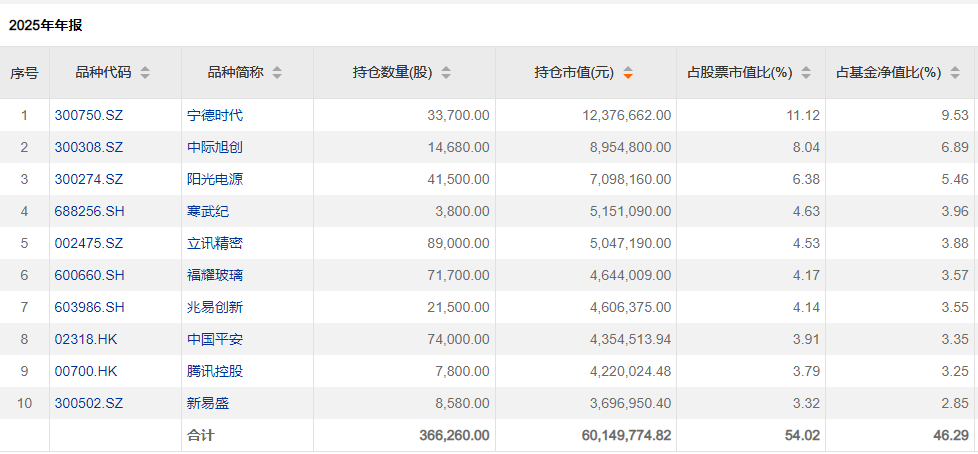
Group 1 - The core focus of the news is on the performance and trends of actively managed equity funds, highlighting their significant stock positions and preference for value style investments [1][2][4] - As of the end of 2025, the total scale of actively managed equity funds reached 3.91 trillion yuan, with equity mixed funds dominating both in number (2,770 products) and scale (2.41 trillion yuan), accounting for over 61% of the total [1][2] - The number of new actively managed equity fund products launched in Q4 2025 was 112, with a total scale of 570.83 billion yuan, maintaining stability compared to Q3 2025 [2] Group 2 - The top three sectors favored by actively managed equity funds as of the end of 2025 were electronics, pharmaceuticals and biology, and power equipment, with the electronics sector having the highest holding ratio at 23.76% [4] - The top three individual stocks held by actively managed equity funds were Zhongji Xuchuang, Xinyi Sheng, and Ningde Times [4] - The overall performance of actively managed equity funds in Q4 2025 was weaker compared to Q3 2025, although flexible allocation mixed funds outperformed the CSI 300 index with a quarterly return of 0.26% [2][3] Group 3 - The stock positions of actively managed equity funds remained high in Q4 2025, with equity investment funds at 90.54%, equity mixed funds at 87.82%, and flexible allocation mixed funds at 74.20% [3] - The market outlook for 2026 is optimistic, with expectations of a shift from valuation-driven growth to fundamental-driven growth as corporate earnings stabilize [5][6] - The current low interest rate environment enhances the attractiveness of equity assets, with potential for significant capital inflow into A-shares and Hong Kong stocks [6]




基金持仓通信同环比继续上升,机构四季度再强化光模块配置
GF SECURITIES· 2026-01-25 14:28
Group 1 - The industry investment rating is "Buy" [2] - The report indicates that the communication sector's fund holdings have continued to rise quarter-on-quarter, with a notable increase in the allocation towards optical modules in Q4 2025 [6][20] - The communication sector's PE-TTM as of December 31, 2025, is 49.5 times, ranking it 7th among all Shenwan first-level industry indices, with a slight increase compared to the previous quarter [14][20] Group 2 - In Q4 2025, the total market value of fund holdings in the communication sector reached 186.39 billion CNY, an increase of 23.88 billion CNY from Q3 2025, marking the highest proportion of fund stock holdings in four years at 9.5% [23][25] - The report highlights a significant trend of increasing fund concentration in optical modules, with major holdings in companies like Zhongji Xuchuang, Xinyi Sheng, and Tianfu Communication [28][31] - The report notes a shift in fund strategies, with increased holdings in China Telecom (H shares) and a reduction in holdings of telecom equipment manufacturers like Zhongtian Technology and ZTE [46][54]



QDII基金交出亮眼“成绩单”后市看好创新药和科技方向
Shang Hai Zheng Quan Bao· 2026-01-25 14:24
Group 1 - The QDII funds have shown impressive performance since 2025, with an average net value increase of 27.9%, particularly driven by funds heavily invested in Hong Kong innovative pharmaceuticals [2] - Notable funds such as Huatai-PB Korea Semiconductor ETF and E Fund Global Growth Select Mixed A have seen net value increases of 127.55% and 102.91% respectively, with several other funds also exceeding 80% growth [2] - The top holdings of these high-performing funds predominantly include Hong Kong innovative pharmaceutical stocks, with examples like Kelun-Botai Biotech and Innovent Biologics among the top five holdings of Huatai-PB Hong Kong Advantage Select Mixed A [2] Group 2 - The technology sector is also a key focus for many high-performing products, with E Fund Global Growth Select Mixed A holding major global tech stocks such as TSMC and Google-A among its top ten holdings [3] - Fund managers express optimism for the future of the innovative pharmaceutical and technology sectors, citing a recent phase of adjustment in the innovative drug industry as a temporary market sentiment issue rather than a fundamental change [4][5] - The innovative drug sector's valuation has become attractive, with expectations of upward potential, and the industry is anticipated to show resilience and technological attributes over the next 2 to 3 years [5] Group 3 - The pharmaceutical industry is expected to see positive changes in 2026, with contract development organizations (CXO) gaining confidence from solid data, and new technologies like artificial intelligence and brain-machine interfaces opening new application scenarios [5] - The semiconductor sector, particularly in storage, is projected to continue its cycle, with local market trends favoring leading storage manufacturers and potential IPOs supporting capacity expansion [6]




光模块复盘与思考
GOLDEN SUN SECURITIES· 2026-01-25 11:22
Investment Rating - The report maintains a "Buy" rating for key companies in the optical module sector, specifically recommending Zhongji Xuchuang and Xinyi Sheng [11]. Core Insights - The optical communication market is currently influenced by three cyclical forces: supply-demand cycle, chip structure, and performance cycle, with the chip cycle being the dominant force at this time [2][21]. - Demand for optical modules remains robust, driven by increased capital expenditures from major North American cloud providers, which are projected to exceed $380 billion by 2025 [3][22]. - The report emphasizes the importance of the supply chain, noting that leading companies have stronger delivery capabilities due to their scale and technological advantages [3][22]. - The report highlights a rebalancing of chip structures, where previously concentrated holdings are becoming more diversified, which is expected to create a healthier market environment [4][23]. - The performance cycle is seen as a dynamic measure of relative value among companies, with ongoing fluctuations in market expectations reflected in the valuation ratios of leading firms [5][24]. Summary by Sections Supply-Demand Cycle - The demand for optical modules is strong, with major cloud companies increasing their capital expenditures [3][22]. - Leading firms are expanding their production capacity and have better supply chain control, ensuring stable delivery amid high demand [3][22]. Chip Cycle - The market has seen a shift from consensus to overcrowding, with leading optical module companies becoming heavily weighted in institutional portfolios [4][23]. - A rebalancing of holdings is occurring, which, while causing short-term price pressure, is setting the stage for a healthier market [4][23]. Performance Cycle - The relative valuation between companies, such as the market cap ratio of Xinyi Sheng to Zhongji Xuchuang, provides insights into market expectations and company performance [5][24]. - The report suggests that as long as the underlying demand and technological advancements remain strong, fluctuations among leading companies will present structural investment opportunities [8][28]. Recommendations - The report continues to recommend investments in the optical module sector, particularly in companies like Zhongji Xuchuang and Xinyi Sheng, as well as other related firms in the computing and cooling sectors [9][14].
公募基金25年Q4配置分析:公募基金四季报是否会影响我们对市场和板块的判断?
广发香港· 2026-01-25 08:28
Core Conclusions - The current fund allocation numbers reflect the results of economic transformation, with a notable shift in the channels through which residents are entering the market, particularly among high-net-worth individuals [12][19] - The allocation towards "new productive forces" indicates a structural shift in the economy, with changes in heavy holdings reflecting different stages of economic dividends [23][29] Asset and Sector Allocation - Fund positions have decreased, with ongoing redemption pressures; net inflows for various fund types were approximately 1200 billion CNY in Q4, down from over 2600 billion CNY in Q3 [12][15] - Active equity funds are experiencing a "return of capital redemption" pressure, with 2563 out of 6471 existing active equity funds exceeding their 2020-2022 high points, representing about 40% of the total [15][19] Industry Allocation - There is a rotation within the technology sector, with increased allocations to non-ferrous metals, non-bank financials, and chemicals, while reductions were seen in electronics, pharmaceuticals, and media [5][51] - The semiconductor and lithium battery materials sectors are highlighted as key areas for increased investment, alongside insurance and chemicals, driven by positive economic expectations [58][65] Individual Stock Allocation - The concentration of holdings has decreased, indicating a diversification in investment strategies among funds [40] Fixed Income Plus Fund Allocation Analysis - "Fixed income plus" funds are becoming a significant source of incremental growth, with a preference for sectors such as non-ferrous metals, non-bank financials, and utilities, reflecting a focus on economic cycle-related and dividend-paying industries [58][65]

外资巨头,深挖中国科技股
Shang Hai Zheng Quan Bao· 2026-01-25 05:34
Group 1 - The core viewpoint of the articles indicates that foreign public funds are optimistic about the Chinese stock market, particularly in the technology sector, which is expected to undergo a historical value reassessment by 2026, potentially generating excess returns [1][7][10] - Since 2025, the A-share market has shown resilience, with the Shanghai Composite Index stabilizing around 4100 points, and several foreign public fund products have reported significant performance, with net value increases exceeding 50% for multiple funds [3][8] - Foreign public funds have focused their investments on high-quality technology assets, with notable holdings in leading Chinese tech companies such as Tencent, Zhongji Xuchuang, and Han's Laser [3][4][5] Group 2 - Fund managers from various foreign public funds have expressed a commitment to maintaining a high equity position, focusing on growth-oriented investment opportunities in sectors like high-end manufacturing, electric vehicles, and AI technology [5][6] - The outlook for the A-share market in 2026 is positive, with fund managers highlighting the significant allocation value of Chinese stocks compared to RMB bonds, suggesting a continued overweight in equities [8][10] - There is a consensus among fund managers that high-quality technology assets are likely to continue yielding excess returns, with a focus on sectors benefiting from innovation and structural changes in the economy [9][10]


2025Q4基金持仓分析:Q4基金动向:增配AI基建与价值股
GUOTAI HAITONG SECURITIES· 2026-01-24 15:20
Group 1 - In Q4 2025, active equity funds significantly reduced their holdings in A-shares and Hong Kong stocks, while increasing allocations in cyclical and financial value stocks, with consensus on increasing positions in non-ferrous metals and non-bank financials [5][8] - The allocation to technology showed internal differentiation, with AI hardware infrastructure being favored, while TMT, pharmaceuticals, and military industries were reduced [5][8] - The overall market capitalization of active equity funds decreased by 195.65 billion to 3.38 trillion, with stock positions dropping to 84.2%, indicating a shift towards lower valuation and improving cyclical and financial sectors [5][8] Group 2 - The industry allocation saw a comprehensive increase in cyclical financials, with significant increases in non-ferrous metals, communications, non-bank financials, machinery, and basic chemicals, while media, electronics, new energy, pharmaceuticals, and military industries were reduced [5][28] - The allocation to communication equipment was notably increased, driven by AI infrastructure investments, while most technology sectors experienced significant reductions [5][28] - In the consumer sector, essential consumption was reduced, particularly in liquor and feed, while leisure food saw a notable increase [5][28] Group 3 - In the Hong Kong market, active funds significantly reduced their allocations, with a market capitalization decrease of 86 billion to 295.2 billion, and the allocation ratio dropping to 15.6% [5][28] - The funds increased their positions in cyclical and financial sectors, such as insurance, oil, airlines, and non-ferrous metals, while reducing positions in internet and semiconductor leaders [5][28] - The issuance of funds is expected to reach an inflection point, supporting further market growth, with a high percentage of funds achieving positive returns over various time frames [5][28]

重仓股的此消彼长:在加速变化的世界里 投资未来
Shang Hai Zheng Quan Bao· 2026-01-24 14:03
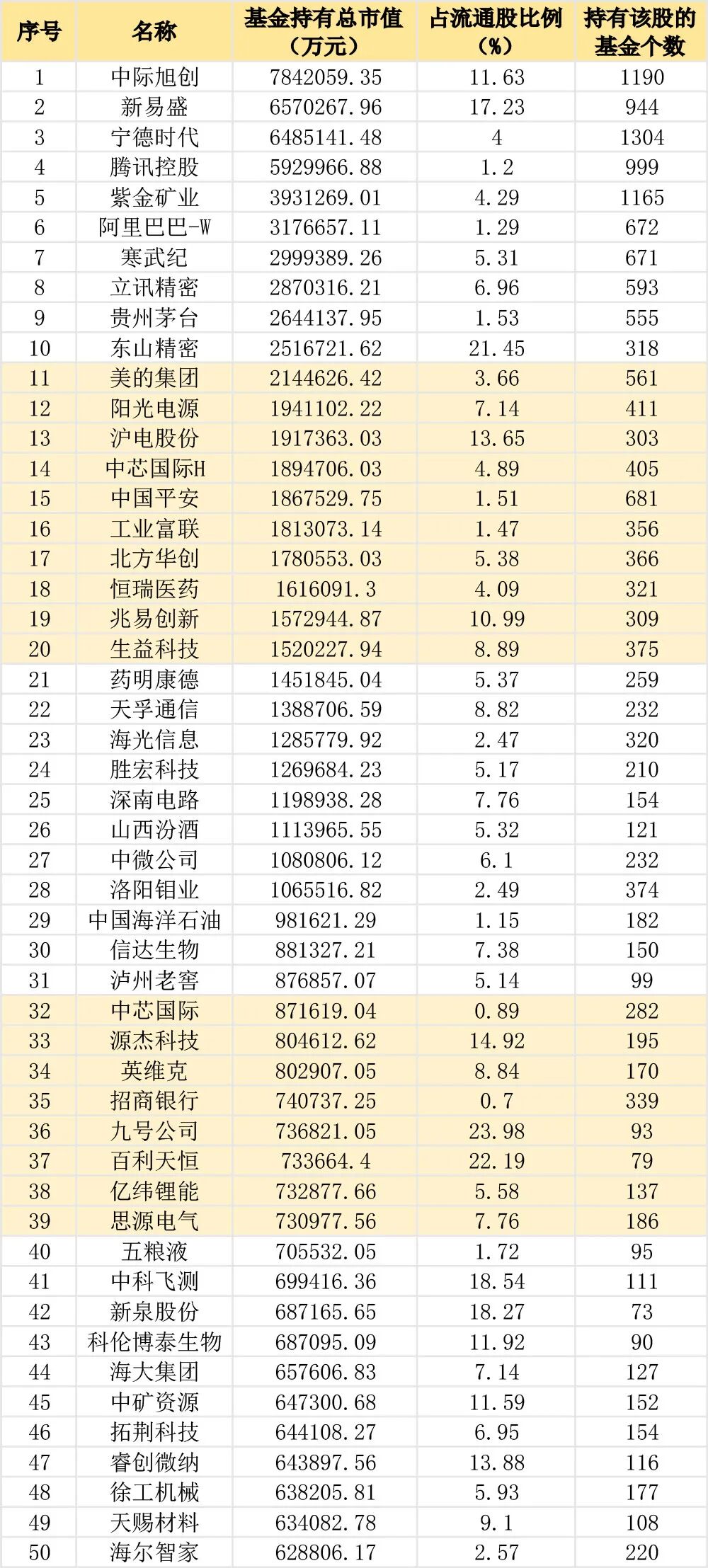
Group 1 - The core focus of the article is the significant shift in public fund holdings towards AI-related stocks, with Zhongji Xuchuang and Xinyi Sheng emerging as the top two holdings, reflecting a broader trend of investment in technology and innovation [1][2][13] - By the end of 2025, the top five holdings in public funds include several AI-related companies, indicating a strong preference for technology stocks over traditional sectors [2][5] - The article highlights the decline of traditional consumer and pharmaceutical stocks, with Kweichow Moutai dropping to the ninth position among top holdings, showcasing a shift in investor sentiment [5][6] Group 2 - The report indicates that 18 out of the top 50 public fund holdings are in the information technology sector, underscoring the dominance of tech stocks in current investment strategies [2][4] - The rise of AI stocks is contrasted with the fading popularity of traditional sectors, as only 11 consumer and pharmaceutical companies remain in the top holdings, reflecting a significant industry transformation [5][6] - The article emphasizes that the changes in fund holdings are indicative of deeper economic and industry shifts, moving from traditional growth models to innovation-driven growth [6][7][17] Group 3 - Zhongji Xuchuang's rise to the top position among public fund holdings signifies the transition of AI from a conceptual phase to a core industry driver, marking a new economic cycle centered around AI [13][14] - The article discusses the necessity for fund managers to adapt to the evolving landscape, where understanding industry trends and technological advancements is crucial for investment success [16][17] - The investment community is increasingly recognizing AI as a critical area for future growth, with fund managers acknowledging the importance of engaging with AI technologies in their portfolios [15][16]
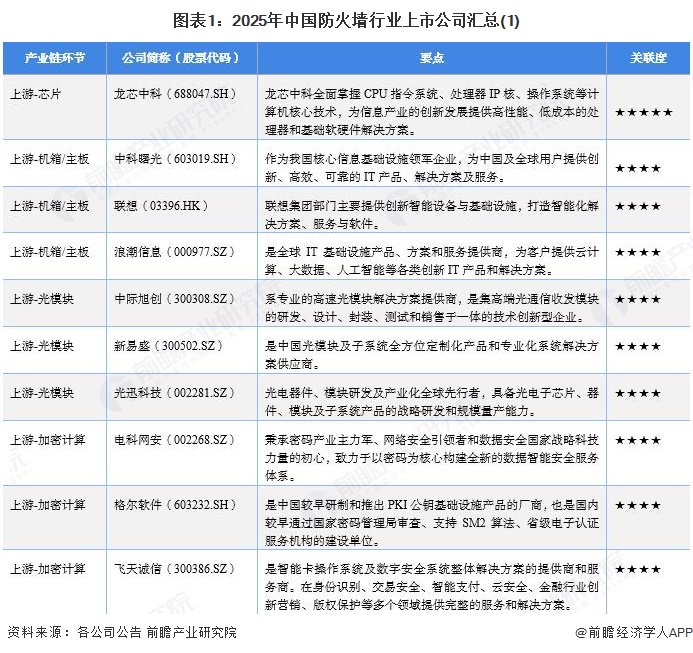
【最全】2025年防火墙行业上市公司全方位对比(附业务布局汇总、业绩对比、业务规划等)
Qian Zhan Wang· 2026-01-24 06:09
Core Insights - The firewall industry in China is a critical component of the network security system, serving as the first line of defense for enterprises and individuals. The industry is characterized by a diverse range of listed companies, primarily concentrated in the upstream and midstream segments of the supply chain [1][5]. Group 1: Company Overview - Major companies in the firewall industry include Sangfor (300454.SZ), Tianrongxin (002212.SZ), Hillstone Networks (688030.SH), Deepin Technology (300768.SZ), Ruijie Networks (301165.SZ), Venustech (002439.SZ), Qihoo 360 (688561.SH), and NSFOCUS (300369.SZ) [1]. - The highest revenue in the firewall industry for 2024 is projected to be from Lenovo, with revenue reaching 114.77 billion yuan, followed closely by Inspur with the same revenue figure [4]. - The registered capital is highest for NSFOCUS, while Tianrongxin is the oldest company in the industry. Ruijie Networks has the most bidding information, totaling 7,141 entries [8]. Group 2: Revenue and Profitability - In terms of revenue from firewall-related business, Sangfor is expected to generate 3.629 billion yuan in 2024, ranking second in the domestic market for unified threat management. Qihoo 360 follows with an expected revenue of 2.653 billion yuan [9]. - The gross profit margin for representative companies in the firewall industry is projected to be around 60% in 2024, with Sangfor achieving the highest margin at 79.31% and Hillstone Networks at 71.97% [11]. Group 3: Business Layout - The firewall business layout of listed companies shows a combination of regional focus and nationwide outreach, with technological innovation and scenario deepening being key characteristics. Sangfor focuses on South China, covering over 30 countries and regions, while Qihoo 360 is centered in Beijing, targeting government and state-owned enterprises [13][15]. - Companies like Tianrongxin and Venustech are also focusing on specific sectors such as industrial internet and government services, respectively, to enhance their market presence [15]. Group 4: Business Planning - Future business plans for firewall companies emphasize technological iteration and scenario deepening. Sangfor aims to integrate network security with cloud computing and transition to a subscription model by 2026 [17]. - Qihoo 360 plans to allocate 25% of its R&D budget to encryption firewall research, while Tianrongxin is focusing on smart solutions for industrial firewalls [17].