
CATL(300750)

Search documents
国电电力:控股子公司与宁德时代等共同投资大渡河丹巴水电站项目
Xin Lang Cai Jing· 2025-12-29 11:02
Core Viewpoint - The announcement details the investment and operational structure of the Danba Hydropower Station, highlighting its significance within the Dadu River hydropower planning framework [1] Group 1: Project Overview - The Danba Hydropower Station is located in Danba County, Ganzi Tibetan Autonomous Prefecture, Sichuan Province, and is the 9th stage of the Dadu River hydropower planning, with a total installed capacity of 1.15 million kilowatts [1] - The station consists of four 275,000-kilowatt mixed-flow turbine generator units and one 50,000-kilowatt ecological unit [1] Group 2: Investment Structure - The project is jointly established by the company's subsidiary, Guoneng Dadu River Basin Hydropower Development Co., Ltd., Sichuan Tieneng Power Development Co., Ltd., and Contemporary Amperex Technology Co., Ltd., with a shareholding ratio of 56.11%, 33.89%, and 10% respectively [1] - The total dynamic investment for the project is 15.273 billion yuan, with a capital ratio of 30%, while the remaining funding will be secured through bank loans [1] Group 3: Financial Commitment - Based on the dynamic total investment and the shareholding ratio in the project company, Dadu River Company will directly invest 2.571 billion yuan in the Danba Hydropower Station for investment, construction, and operational management [1] - The project has received approval from the National Development and Reform Commission and has obtained supportive documents for site selection, environmental assessment, and land use [1]


国电电力:控股子公司与宁德时代新能源科技股份有限公司等共同投建大渡河丹巴水电站项目,项目动态总投资152.73亿元
Xin Lang Cai Jing· 2025-12-29 11:02
Core Viewpoint - The announcement highlights the establishment of a joint venture for the investment, construction, and operation of the Dadu River Danba Hydropower Station project, indicating a strategic collaboration in the renewable energy sector [1] Group 1: Project Details - The total dynamic investment for the Dadu River Danba Hydropower Station project is 15.273 billion yuan [1] - The capital contribution ratio is set at 30%, with the remaining funding to be secured through bank loans [1] - Dadu River Company will directly invest 2.571 billion yuan in the project for investment, construction, and operational management [1]
国电电力:控股子公司与宁德时代等共同投资大渡河丹巴水电站项目 项目动态总投资152.73亿元
Mei Ri Jing Ji Xin Wen· 2025-12-29 10:55
Core Viewpoint - The announcement highlights the establishment of a joint venture for the investment, construction, and operation of the Dadu River Danba Hydropower Station project, indicating a significant investment in renewable energy infrastructure [1] Group 1: Project Details - The total dynamic investment for the Dadu River Danba Hydropower Station project is 15.273 billion yuan [1] - The capital contribution ratio for the project is set at 30%, with the remaining funding to be secured through bank loans [1] - Dadu River Company will directly invest 2.571 billion yuan in the project for investment, construction, and operational management [1] Group 2: Regulatory Approvals - The project has received approval from the National Development and Reform Commission [1] - Necessary supportive documents such as site selection, environmental impact assessment, and land use have been obtained [1]
鲶鱼来了,宁德时代能否搅动钠电规模化起量?
高工锂电· 2025-12-29 10:52
而宁德时代在今年正高速布局巧克力换电业务,官方称钠新动力电池将首发应用于巧克力换 电车型。 另一方面,商用车在今年实现了渗透率跃迁,成为第三波电动化的首要场景。而宁德时代钠 电池近期出现在了工信部的公告中,首发上车了江淮3款商用换电车型。 12月28日,宁德时代表示2026年将在换电、乘用车、商用车、储能等领域大规模应用钠电 池,有望形成"钠锂双星闪耀"的新趋势。 可以说,头部企业牵引钠电产业化、商业化航向,宁德时代是其中最大的航母。 在这个时间点高调官宣钠电规模化应用,与宁德时代钠新乘用车动力电池的量产时间基本一 致。 而动力市场几乎是现阶段撬动钠电规模化应用的最大场景。 一方面,国内乘用车电动化渗透率今年在个别月份已超6成,部分城市甚至已超7成,未来新 的增长空间何在? 有观点认为北方市场以及换电(包含乘用与商用)是关键增量领域。 为何说宁德时代是钠电行业最大的鲶鱼? 一是,宁德时代布局钠电产品较早,技术验证与商业验证周期更长 ,且商业化目标与当下的 钠电新势力形成了巨大的差异化。 同时还与容百科技签署了钠电正极材料大单,正加速建设 钠电供应体系。 宁德时代2025年发布的产品定位为车规级的启停电池与动力 ...


「数据看盘」军工ETF连续三周份额大减 多路资金激烈博弈天际股份
Sou Hu Cai Jing· 2025-12-29 10:28
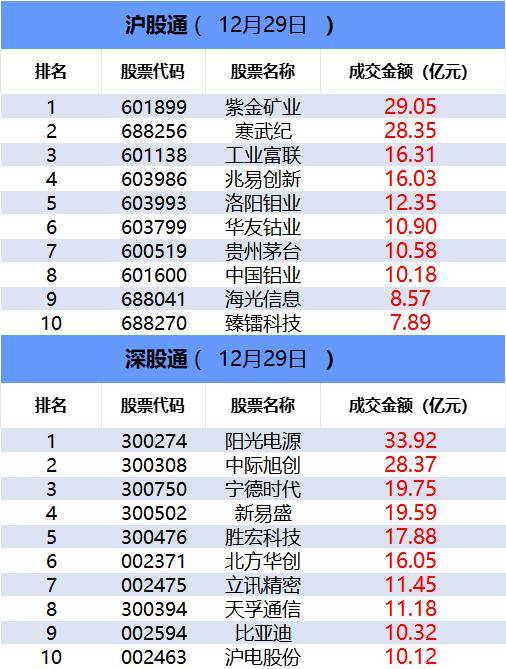
Group 1: Market Activity - The total trading amount for the Shanghai Stock Connect was 103.2 billion, while the Shenzhen Stock Connect reached 121.98 billion [2] - The top traded stocks in the Shanghai Stock Connect included 601899 (29.05 billion), 688256 (28.35 billion), and 601138 (16.31 billion) [3] - In the Shenzhen Stock Connect, the leading stocks were 300274 (33.92 billion), 300308 (28.37 billion), and 300750 (19.75 billion) [4] Group 2: Sector Performance - The carbon fiber and robotics sectors showed significant gains, while the battery, dairy, and electric power sectors experienced declines [5] - The banking sector had a net inflow of 10.66 billion, leading among sectors, while the new energy sector faced the highest net outflow of 122.81 billion [6][7] Group 3: Stock Specific Activity - Tianji Co. (天际股份) saw a strong interest from institutional investors, with two institutions buying 1.68 billion and northbound funds purchasing 3.21 billion [12][14] - Several aerospace concept stocks faced heavy selling from institutions, including Jin Feng Technology (金风科技) with 3.74 billion sold, Tongyu Communication (通宇通讯) with 3.14 billion, and Aerospace Development (航天发展) with 3.18 billion [13][14] - The top stocks with net inflows included Tuo Wei Information (拓维信息) with 16.59 billion and Lei Ke Defense (雷科防务) with 10.17 billion [8] - Conversely, stocks with significant net outflows included Zhongji Xuchuang (中际旭创) at -15.45 billion and Yangguang Electric (阳光电源) at -13.62 billion [9] Group 4: ETF Trading - The top ETFs by trading volume included A500ETF Huatai Baichuan (137.98 billion) and A500ETF Fund (134.18 billion), with the latter showing a decrease of 10.93% compared to the previous trading day [10] - The ETF with the highest increase in trading volume was Hang Seng Medical ETF, which surged by 400.70% [11]





2025年港股IPO融资2863亿港元登顶全球,硬科技与新消费双轮驱动
Sou Hu Cai Jing· 2025-12-29 10:01
Group 1 - The Hong Kong IPO market is projected to raise HKD 286.3 billion (approximately USD 36 billion) in 2025, surpassing Nasdaq and reclaiming the top position globally in fundraising [1] - A significant contribution to the IPO scale expansion comes from 19 A-share listed companies that successfully listed in Hong Kong, raising a total of HKD 139.993 billion, accounting for nearly half of the total new stock fundraising [2] - Major companies like CATL, Hengrui Medicine, and Haidilao have collectively raised HKD 1,033.2 billion, highlighting the trend of leading enterprises seeking internationalization and risk diversification through Hong Kong listings [2] Group 2 - The "hard technology" sector saw 88 companies listed in 2025, benefiting from the Hong Kong Stock Exchange's favorable regulations for biotech and specialized technology companies, creating a notable listing surge [3] - New consumption brands, including Mixue and Saturday's Fortune, have found success in the Hong Kong market, with 14 out of 19 consumer companies experiencing oversubscription rates exceeding 100 times [3] - The influx of international capital into Hong Kong stocks is driven by the appeal of "verifiable growth stories" and "scarcity," enriching the investment landscape with new business models and growth narratives [3] Group 3 - The IPO market in Hong Kong experienced a decline in the first-day loss rate to approximately 28.83%, the lowest in five years, with 18 new stocks doubling in price on their debut [4] - The net inflow of southbound funds reached HKD 1.41 trillion, setting a historical record, indicating a positive feedback loop between market sentiment and liquidity [4] - Forecasts for 2026 suggest around 160 new stocks will be listed, with fundraising expected to exceed HKD 300 billion, maintaining Hong Kong's status as a global fundraising leader [4]





碳酸锂期货巨震,跌停后又反弹!欣旺达跌超11%,电池50ETF(159796)六连阳后首度跌超2%,资金逆势净申购超9100万份!
Xin Lang Cai Jing· 2025-12-29 09:55
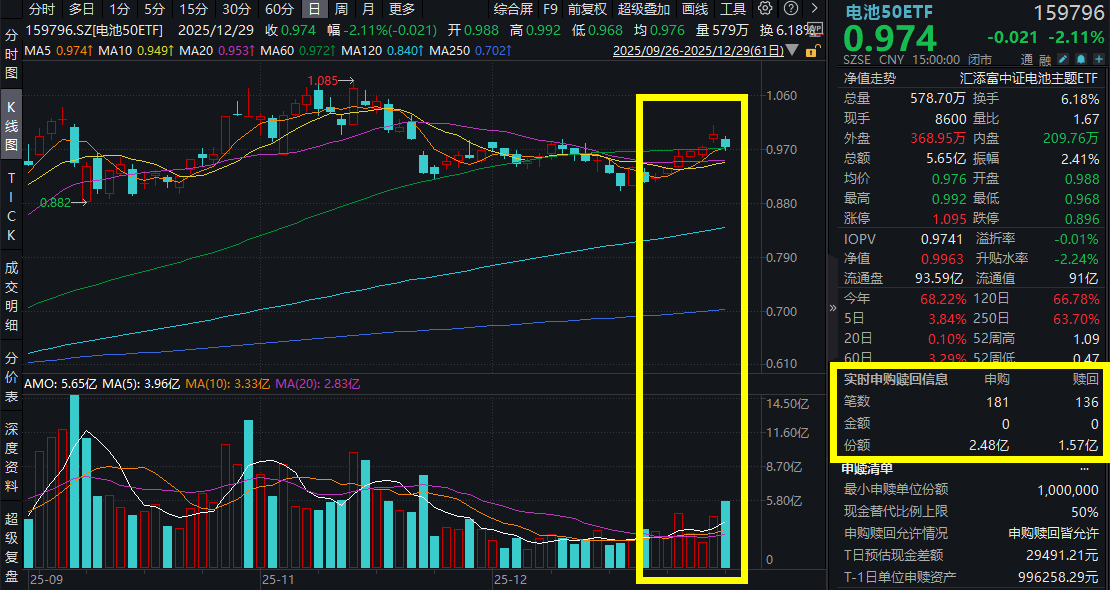
12月29日,A股市场走势分化,沪指翘尾翻红,喜提九连阳!同类规模领先、费率最低档的电池50ETF(159796)跌超2%,六连阳后首度回调!资金逆势涌 入、无惧波动,电池50ETF(159796)全天获9100万份净申购。 电池50ETF(159796)标的指数成分股多数回调,欣旺达跌超11%,多氟多跌超8%,亿纬锂能(维权)跌超4%,天赐材料跌超3%,阳光电源、宁德时代等 回调,三花智控逆势上涨。 【电池50ETF(159796)标的指数前十大成分股】 | 序号 | 代码 | 名称 | 申万―级行业 | 涨跌幅 | 估自权重 ▼ | | --- | --- | --- | --- | --- | --- | | 1 | 300274 | 阳光电源 | 电力设备 | -2.96% | 9.37% | | 2 | 300750 | 宁德时代 | 电力设备 | -1.37% | 7.75% | | 3 | 002050 | 三花智控 | 家用电器 | 0.91% | 7.34% | | 4 | 300014 | 亿纬锂能 | 电力设备 | -4.43% | 5.94% | | 5 | 002709 | 天赐材料 ...




宁德时代大宗交易成交5.00万股 成交额1500.00万元
Zheng Quan Shi Bao Wang· 2025-12-29 09:20
证券时报·数据宝统计显示,宁德时代今日收盘价为369.31元,下跌1.37%,日换手率为0.57%,成交额 为89.25亿元,全天主力资金净流出8.35亿元,近5日该股累计下跌0.68%,近5日资金合计净流入4.38亿 元。 宁德时代12月29日大宗交易平台出现一笔成交,成交量5.00万股,成交金额1500.00万元,大宗交易成交 价为300.00元,相对今日收盘价折价18.77%。该笔交易的买方营业部为中信建投证券股份有限公司北京 东城分公司,卖方营业部为中信建投证券股份有限公司北京东城分公司。 进一步统计,近3个月内该股累计发生38笔大宗交易,合计成交金额为86.70亿元。 | 成交量 | 成交金额 | 成交价 | 相对当日收盘 | | | | --- | --- | --- | --- | --- | --- | | (万 | (万元) | 格 | 折溢价(%) | 买方营业部 | 卖方营业部 | | 股) | | (元) | | | | | 5.00 | 1500.00 | 300.00 | -18.77 | 中信建投证券股份有限 | 中信建投证券股份有限公 | | | | | | 公司北京东城分公司 ...

让京杭运河变身“绿色水道”,省内首个规模化电动船队在邹城交付
Da Zhong Ri Bao· 2025-12-29 07:37
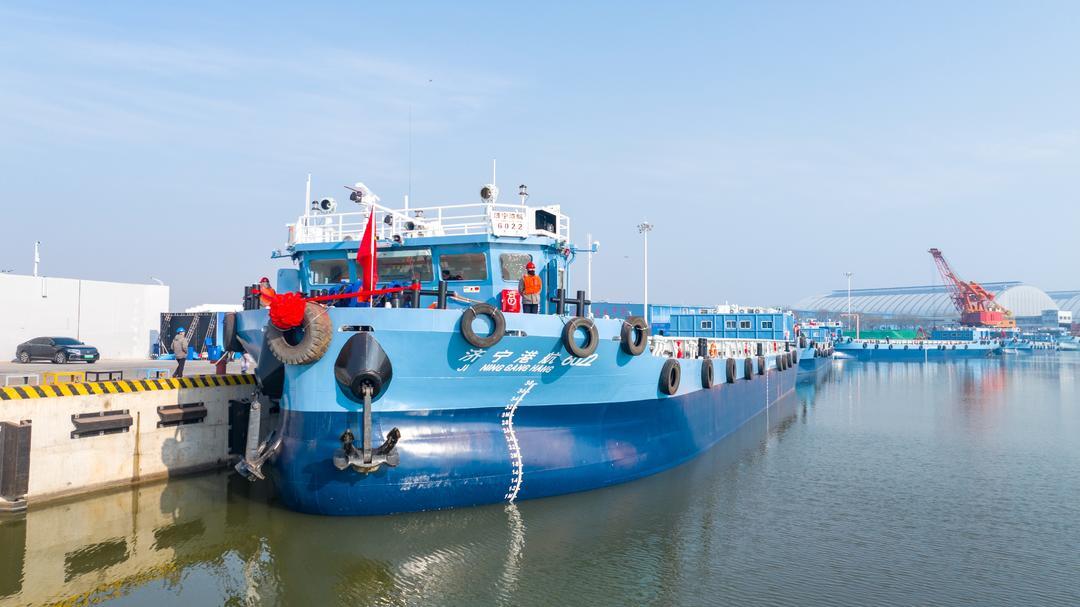
Core Insights - The signing of an order for 50 pure electric vessels by Jining Energy Group and CATL marks a significant step towards the commercialization and scaling of electric inland shipping in Shandong Province [1][3] - The first batch of five multi-purpose electric vessels will operate on the Grand Canal, contributing to the transformation of the canal into a "green waterway" [3] Group 1: Company Developments - The newly delivered vessels utilize an innovative "ship-battery separation" business model and containerized battery swapping technology, addressing range anxiety and achieving zero emissions and low noise operation [5] - Each vessel has a cargo capacity of 2,000 tons, and the entire batch is expected to reduce carbon dioxide emissions by over 1,300 tons annually [5] - Jining Energy Group, in collaboration with CATL and other partners, has signed over 180 orders to date, with 100 vessels launched and 80 delivered this year [7] Group 2: Industry Context - China's inland waterways are extensive, with the highest freight volume globally; however, approximately 300,000 vessels still rely on traditional diesel power, with around 60,000 on the Grand Canal [9] - The push for green and intelligent upgrades in inland shipping is crucial due to increasing water quality requirements along major waterways [9] - The province plans to enhance support for the development of smart electric vessels and improve infrastructure for battery charging and swapping [10]
天空中,“电车”凭什么与“油车”争?
3 6 Ke· 2025-12-29 07:22
Core Insights - The eVTOL (electric Vertical Take-Off and Landing) aircraft and helicopters share similar appearances and missions but differ fundamentally in their propulsion systems and operational efficiencies [1][2][3] - eVTOLs are positioned as the future of low-altitude transportation, with strategic advantages in supply chain control and potential for rapid growth in the low-altitude economy [3][6][14] Group 1: Market Dynamics - eVTOLs are currently more expensive and have shorter ranges compared to helicopters, with examples showing eVTOL prices being approximately 30% higher than comparable helicopters [9][11] - The global eVTOL market is projected to reach $28.6 billion by 2030, with a compound annual growth rate (CAGR) of 54.9%, significantly outpacing the traditional helicopter market [18][20] - China's low-altitude economy has been officially recognized in the national five-year plan, indicating strong governmental support for the eVTOL sector [6][20] Group 2: Technological Advantages - eVTOLs utilize a modular and scalable manufacturing approach, which contrasts with the complex mechanical systems of helicopters, leading to potential long-term cost advantages [42][50] - The shift from traditional mechanical systems to electric propulsion in eVTOLs allows for reduced maintenance costs and improved operational efficiency [55][56] - eVTOLs can achieve significant energy savings, with operational costs being a fraction of those of traditional helicopters due to lower energy consumption and maintenance requirements [55][56] Group 3: Strategic Positioning - The development of eVTOLs is seen as a strategic move for China to leverage its existing strengths in the electric vehicle and aerospace industries, creating a robust supply chain for eVTOL production [13][28][41] - The integration of advanced technologies from the electric vehicle sector into eVTOL design enhances performance and safety, positioning China favorably in the global eVTOL market [33][38] - The eVTOL industry is expected to benefit from the lessons learned in the electric vehicle sector, particularly in battery technology and manufacturing processes [28][41]

