CATL(300750)

Search documents
中金:首次覆盖宁德时代(03750)予“跑赢行业”评级 目标价580港元
智通财经网· 2025-12-29 07:06
报告指,宁德时代是全球动力和储能电池领军企业,率先发掘海外市场增长潜力。新兴应用场景不断涌 现,推动锂电需求持续增长。宁德时代竞争优势稳固,盈利能力卓越,技术引领行业。公司是高分红、 高净资产收益率的稀缺标的,财务管理审慎,盈利安全垫扎实。 智通财经APP获悉,中金发布研报称,首次覆盖宁德时代(03750),予"跑赢行业"评级,目标价580港 元,对应2026年26.5倍市盈率。该行预计公司2025至2026年每股盈利分别为15.27元和19.74元,2024至 2026年均复合增长为31.6%。同时维持宁德时代(300750.SZ)A股"跑赢行业"评级和445元人民币目标价不 变。 ...

中金:首次覆盖宁德时代予“跑赢行业”评级 目标价580港元
Zhi Tong Cai Jing· 2025-12-29 07:05
Core Viewpoint - CICC initiates coverage on CATL (300750) with an "outperform industry" rating and a target price of HKD 580, corresponding to a 26.5x P/E ratio for 2026 [1] Financial Projections - The company is expected to achieve earnings per share of CNY 15.27 and CNY 19.74 for 2025 and 2026, respectively, with a compound annual growth rate of 31.6% from 2024 to 2026 [1] Company Positioning - CATL is recognized as a leading global player in power and energy storage batteries, having successfully tapped into overseas market growth potential [1] - The emergence of new application scenarios is driving continuous growth in lithium battery demand [1] - The company maintains a solid competitive advantage, exceptional profitability, and is a technology leader in the industry [1] Investment Appeal - CATL is characterized as a rare asset with high dividends and high return on equity, supported by prudent financial management and a solid earnings safety cushion [1]
港股异动 | 碳酸锂期货尾盘跌停 天齐锂业(09696)、赣锋锂业(01772)均跌超3%
智通财经网· 2025-12-29 06:59
Group 1 - Lithium stocks are declining, with Tianqi Lithium down 3.51% at HKD 50.85 and Ganfeng Lithium down 3.03% at HKD 54.35 [1] - On December 29, the main contract for lithium carbonate on the Shanghai Futures Exchange continued to decline, hitting the limit down at the close [1] - CATL announced at its supplier conference on December 28 that it plans to significantly apply sodium batteries in various fields by 2026, indicating a potential trend of "sodium-lithium dual stars" [1] Group 2 - Yichun Times New Energy Mining Co.'s lithium mining project in Jiangxi province is expected to resume production around the Spring Festival [1] - Daiwa Research believes that while the market anticipates an increase in CATL's lithium production capacity next year, current lithium futures prices only reflect short-term supply-demand balance improvements [1] - The firm expects an increase in lithium supply in the first half of next year and a potential quarter-on-quarter decline in demand in the first quarter, suggesting that lithium prices may struggle to rise further in early next year [1]

研报掘金丨中金:首次覆盖宁德时代予跑赢行业评级 目标价580港元
Ge Long Hui· 2025-12-29 06:17
中金发表报告,首次覆盖宁德时代予跑赢行业评级,目标价580港元,对应2026年26.5倍市盈率。该行 预计公司2025至2026年每股盈利分别为15.27元人民币和19.74元人民币,2024至2026年均复合增长为 31.6%。同时维持宁德时代A股跑赢行业评级和445元人民币目标价不变。 ...
华能调增高效光伏组件采购占比,光热发电规模发展意见发布
Ping An Securities· 2025-12-29 04:55
Investment Rating - The report maintains an "Outperform" rating for the industry [1] Core Insights - The report highlights the increasing procurement ratio of high-efficiency photovoltaic components by Huaneng Group, indicating a shift towards higher efficiency in solar energy production [6] - The development of concentrated solar power (CSP) is emphasized, with a target of reaching 15GW of installed capacity by 2030, aiming for cost parity with coal power [7] - The report notes significant growth in the wind power index, outperforming the broader market, and provides insights into the performance of various renewable energy sectors [4][11] Summary by Sections Wind Power - The wind power index increased by 5.97%, outperforming the CSI 300 index by 4.02 percentage points, with a current PE_TTM valuation of approximately 26.26 times [4][11] - The delivery of the world's first methanol dual-fuel super-large oil tanker indicates a growing demand for hydrogen and methanol applications in the shipping sector, which is seen as a promising direction for renewable energy [10][26] Photovoltaics - Huaneng Group has adjusted its procurement framework for photovoltaic components, increasing the expected procurement capacity for high-efficiency components from 2.5GW to 3.5GW, while reducing the capacity for medium-efficiency components [6][7] - The report suggests that the shift towards high-efficiency components aligns with the government's push for quality and responsible pricing in the photovoltaic sector [6] Energy Storage & Hydrogen - The National Development and Reform Commission and the National Energy Administration have released opinions promoting the large-scale development of CSP, targeting a total installed capacity of 15GW by 2030 [7] - The report recommends investments in energy storage companies and highlights the potential for growth in distributed energy storage markets, particularly in residential and commercial sectors [7] Investment Recommendations - The report suggests focusing on companies with strong competitive positions in energy storage and wind power, including Yangguang Electric and Mingyang Smart Energy, while also recommending attention to leading photovoltaic companies like Longi Green Energy and Trina Solar [7]



多家磷酸铁锂企业进行产线检修,碳酸锂价格持续走高 | 投研报告
Zhong Guo Neng Yuan Wang· 2025-12-29 04:02
国信证券近日发布锂电产业链双周评:电池端,宁德时代与岚图签署十年深化合作协议;宁德时代与思 源电气签署3年50GWh储能合作备忘录。材料端,宁德时代与韩国Enchem签署35万吨电解液订单;华友 钴业与国际知名客户签署7.96万吨三元前驱体订单;海科星源与法恩莱特签署电解液溶剂及添加剂3年 27万吨订单。 固态电池产业化加速推进:材料端,欣旺达动力与中伟股份签署固态电池战略合作框架协议。电池端, 美国QuantumScape与全球前十汽车制造商签署联合开发固态电池协议;美国Factorial宣布,已与CGCT 达成最终业务合并协议,双方合并后Factorial将在纳斯达克挂牌上市;金龙羽拟设15亿元产业并购基 金,聚焦新能源固态电池产业链投资。 锂电产业链大单不断:电池端,宁德时代与岚图签署十年深化合作协议;宁德时代与思源电气签署3年 50GWh储能合作备忘录。材料端,宁德时代与韩国Enchem签署35万吨电解液订单;华友钴业与国际知 名客户签署7.96万吨三元前驱体订单;海科星源与法恩莱特签署电解液溶剂及添加剂3年27万吨订单。 多家磷酸铁锂企业公告进行部分产线检修:12月25日至26日,湖南裕能、万润新能 ...

锂资源卡脖子?宁德时代:2026年将在换电等领域大规模应用钠电池,有望形成“钠锂双星闪耀”新趋势【附钠离子电池产业分析】
Qian Zhan Wang· 2025-12-29 03:42
Core Viewpoint - CATL is set to significantly scale up the application of sodium-ion batteries across various sectors, including battery swapping, passenger vehicles, commercial vehicles, and energy storage by 2026, marking a new trend of "sodium-lithium dual stars shining" [2] Group 1: Company Developments - CATL launched its first-generation sodium-ion battery in July 2021 and introduced the world's first super hybrid battery with a pure electric range of over 400 kilometers in October 2022 [2] - The sodium-ion battery brand "Naxtra" was officially launched in April 2023, featuring two product lines: power batteries for passenger vehicles and 24V batteries for heavy trucks [2] - The Naxtra battery can charge from 30% to 80% in 30 minutes at -30°C, maintaining a 93% usable capacity, and can sustain a speed of 120 km/h even at 10% state of charge [2] Group 2: Technical Advantages - Sodium-ion batteries are seen as a crucial alternative to lithium-ion batteries due to the abundant availability of sodium resources, which are over 400 times more plentiful than lithium [3] - The production cost of sodium-ion batteries is estimated to be 25%-30% lower than that of lithium iron phosphate batteries, with a 40% reduction in equipment investment costs due to compatibility with existing lithium-ion production lines [3] - Sodium-ion batteries exhibit superior low-temperature performance, safety, and lower carbon footprints, making them suitable for various applications, especially in cold regions [3] Group 3: Market Context - China holds only about 7% of the world's lithium resources, leading to a heavy reliance on overseas lithium, which poses a significant challenge for the domestic new energy industry [5] - The increasing tension in lithium resource availability and price fluctuations has led to a surge in investment and research in sodium-ion battery technology, with major companies like Guoxuan High-Tech, BYD, and AVIC Lithium Battery also entering the market [5][6] - The market for sodium-ion batteries is expected to grow significantly, particularly in the energy storage sector, with predictions of nearly 50 GWh of installed capacity in China by 2030 [6] Group 4: Strategic Importance - Sodium-ion batteries are recognized as a strategic focus for national competition, with various international and domestic initiatives promoting their development [9] - The commercial vehicle sector is identified as a key area for the large-scale commercialization of sodium-ion batteries, particularly in heavy-duty and light-duty trucks [9]

大和:预计锂价在明年初将难以进一步上涨
Ge Long Hui A P P· 2025-12-29 03:41
Core Viewpoint - Daiwa's research report indicates that CATL's Yichun Jianxiawo lithium mine may resume production around the Lunar New Year, suggesting a potential increase in lithium supply in the near future [1] Group 1: Company Insights - CATL is expected to see an increase in lithium production capacity next year, as market expectations have already factored this in [1] - The current lithium futures prices are believed to reflect only short-term supply-demand balance improvements [1] Group 2: Industry Analysis - An increase in lithium supply is anticipated in the first half of next year, while first-quarter demand may decline on a quarterly basis [1] - It is believed that lithium prices will struggle to rise further at the beginning of next year due to these supply and demand dynamics [1]
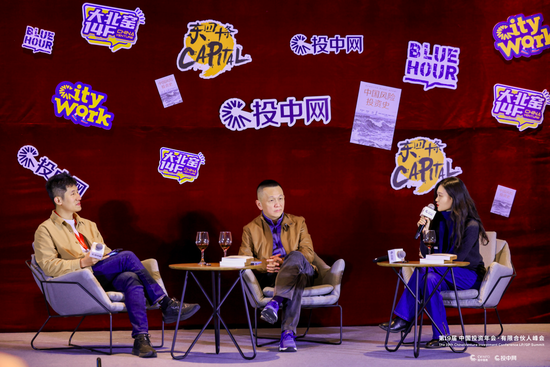
对话朱啸虎:培养一个真正的合伙人,学费至少是1亿美元
Xin Lang Cai Jing· 2025-12-29 03:39
Core Insights - The article discusses the evolution of venture capital in China, emphasizing the significance of "dollars" in its history and the challenges faced as the industry moves beyond the dollar era [4][36] - It highlights the need for a new approach to talent development in venture capital, as the traditional methods associated with dollar funds are no longer applicable [5][36] - The conversation features insights from prominent venture capitalist Zhu Xiaohu, who reflects on the lessons learned from past investments and the changing landscape of the industry [6][36] Group 1: Historical Context - Venture capital in China has its roots in the dollar economy, with early investments primarily coming from dollar funds, which played a crucial role in shaping the industry [4][35] - The initial wave of venture capital in China was influenced by the experiences and methodologies of American dollar funds, which served as a learning platform for local investors [4][35] - The current investment themes, such as semiconductors and commercial aerospace, are seen as new challenges for dollar funds, lacking established success stories [36] Group 2: Talent Development and Investment Philosophy - Zhu Xiaohu states that cultivating a true partner in venture capital may require an investment of at least $100 million to assess their capabilities, indicating the high cost of developing talent in the industry [5][21] - The article discusses the shift in investment strategies, with a focus on the importance of financial data and profitability over brand recognition in making investment decisions [47][49] - Zhu emphasizes the need for a clear investment philosophy, prioritizing projects that demonstrate strong financial fundamentals and sustainable business models [47][50] Group 3: Lessons from Past Investments - Zhu shares experiences from past investments, such as the challenges faced with companies like LaShou and the importance of timing in entering markets [21][23] - The article highlights the pitfalls of investing in advanced technologies without considering market readiness and the maturity of the technology [25][23] - Zhu reflects on the significant returns from investments in companies like Ele.me and Didi, noting the importance of understanding user acquisition costs and market dynamics [49][50]
320亿,重庆超级IPO来了
投中网· 2025-12-29 03:30
Core Viewpoint - The article discusses the rapid competition in the automotive industry, particularly focusing on the rise of Avita Technology, a high-end electric vehicle manufacturer backed by Changan Automobile, CATL, and Huawei, which is preparing for its IPO in Hong Kong [6][15]. Group 1: Company Overview - Avita Technology, established in 2018 as a joint venture between Changan Automobile and NIO, aims to become a global leader in luxury smart electric vehicles [8]. - The company has launched four main production models, including the Avita 11 and Avita 12, with prices ranging from 200,000 to 700,000 yuan, offering both pure electric and range-extended options [9]. - Avita Technology's revenue has seen significant growth, reaching approximately 56.45 billion yuan in 2023, 151.95 billion yuan in 2024, and 122.08 billion yuan in the first half of 2025 [9]. Group 2: Financial Performance - Despite the revenue growth, Avita Technology has incurred cumulative losses exceeding 11.3 billion yuan over three and a half years due to high sales, marketing, and R&D expenditures [10]. - The company has successfully raised 19 billion yuan in financing over three years, achieving a valuation of approximately 32 billion yuan [11][14]. Group 3: Strategic Partnerships - Avita Technology benefits from strategic partnerships with Changan Automobile, CATL, and Huawei, which provide support in manufacturing, supply chain, and technology development [9][12]. - The company has signed comprehensive strategic cooperation agreements with Huawei, including joint product development and marketing plans, and has acquired a 10% stake in Huawei's subsidiary for 11.5 billion yuan [9][12]. Group 4: Market Expansion Plans - Avita Technology plans to enter over 50 countries by 2025 and over 80 countries by 2030, establishing more than 700 sales channels globally [10]. - The company is also expanding into Southeast Asia, the Middle East, Africa, Eurasia, and Latin America as part of its global strategy [10]. Group 5: Industry Trends - Several automotive companies, including Avita Technology, are pursuing IPOs in Hong Kong as part of their globalization strategies, responding to the competitive pressures in the Chinese automotive market [15][18]. - The trend of automotive companies going public in Hong Kong is seen as a way to enhance their capital base and support international expansion [18].