BABA(BABA)

Search documents
阿里旗下芯片公司平头哥拟独立上市,或成AI国际博弈新变量
Jing Ji Guan Cha Bao· 2026-01-23 05:13
Core Insights - Alibaba Group is planning to restructure its semiconductor design unit, T-Head, with the aim of supporting its future independent listing, which has led to a significant increase in Alibaba's stock price [2][3] - The potential spin-off of T-Head is seen as a crucial step in Alibaba's AI strategy, enhancing its competitiveness in the semiconductor sector and creating new opportunities in the context of the US-China chip rivalry [2][6] Company Overview - T-Head, established in September 2018, is Alibaba's wholly-owned semiconductor company, formed by integrating teams from acquired companies and internal resources [3] - The company has developed a comprehensive product line, including the Xuantie processors, Yitian server chips, and Hanguang AI chips, achieving large-scale production and application across various fields [3][4] Product Performance - T-Head's first-generation PPU chip is reported to match the performance of NVIDIA's popular H20, while the upgraded version surpasses the A100 [4][5] - The PPU chip has gained a strong reputation in the industry for its performance and cost-effectiveness, with significant demand evidenced by contracts with China Unicom for the supply of 16,384 computing cards [4] Strategic Implications - The independent listing of T-Head is expected to have a profound impact on China's semiconductor industry, enhancing the overall competitiveness of the domestic AI chip sector and reducing reliance on foreign technology [6] - Alibaba's long-term investment of over $53 billion in AI infrastructure development positions T-Head as a critical technological pillar for the company in the AI era [6] Market Context - The move aligns with a broader trend of Chinese tech companies, such as Baidu, pursuing independent listings for their semiconductor units amid a wave of IPOs in the AI chip sector [7] - Successful listing of T-Head could set a significant precedent for the transformation of Chinese tech enterprises, although challenges remain due to the capital-intensive nature of the chip industry and international competition [7]


电商的下一步转型,是要让好人赚钱
3 6 Ke· 2026-01-23 04:28
Core Viewpoint - The e-commerce industry in China is facing significant challenges as it transitions from a "low-price for volume" model to one focused on service growth, which is essential for survival in a competitive market [2][19]. Group 1: Current Challenges - E-commerce is experiencing three main dilemmas: traffic, supply, and trust [3][4]. - The growth logic of e-commerce, previously based on "lower prices, increased traffic, and growth," is no longer effective, with online retail growth rates declining from 14.75% in 2021 to nearly zero in 2024 [4]. - Customer acquisition costs have surged from tens of yuan to 800-1000 yuan, with some platforms exceeding four-digit costs [4]. - The excessive price wars have created a "lemon market," where quality products are pushed out, leaving only inferior goods available [5]. Group 2: Trust Issues - Trust between merchants and consumers is deteriorating, with over 60% of merchant complaints during the 2024 Double Eleven shopping festival related to "only refunds" [6]. - Merchants face operational pressures and must deal with issues like malicious refund requests and AI-generated false images, leading to a lack of confidence in the market [6][10]. Group 3: Service as a Solution - The solution to the industry's challenges lies in improving service and rebuilding connections with consumers [8]. - However, merchants are reluctant to invest in service improvements due to the existing e-commerce mechanisms that prioritize immediate results over long-term service benefits [9]. - The current financial models treat service as a cost center, making it difficult for merchants to justify service investments [9]. Group 4: Need for Structural Change - A fundamental shift in the e-commerce paradigm is necessary, moving from a focus on single transactions to fostering repeat purchases [17][18]. - The industry must address the distribution of benefits and change algorithms, models, and rules to encourage service-oriented practices [11][12]. - Initiatives like the introduction of a real experience score by Taobao and Tmall aim to link service quality directly to traffic distribution, promoting a more service-oriented ecosystem [14]. Group 5: Future Outlook - The e-commerce sector must overcome its current challenges to avoid becoming a marketplace for low-quality goods [21][22]. - A successful transition to a service-oriented model could serve as a reference for other industries facing similar structural issues [20].
异动盘点0123 | 透云生物今早放量闪崩跌超60%,黄金股反弹;稀土概念股走高,热门中概股普涨
贝塔投资智库· 2026-01-23 04:06
Group 1 - Sanhua Intelligent Control (02050) saw a decline of over 3.4% after announcing a share reduction plan involving the actual controller and several directors, with a total of up to approximately 10.2 million A-shares to be sold between February 24, 2026, and May 23, 2026 [1] - Tuo Yun Biotechnology (01332) experienced a significant drop of over 60%, nearly erasing gains since October 2022, following stock movements involving major shareholders [1] - Zhongwei New Materials (02579) increased by over 5% as the company announced securing 5-6 billion wet tons of nickel ore resources and establishing four nickel raw material industrial bases in Indonesia [1] Group 2 - InnoCare Pharma (03696) rose over 6%, reaching a new high of 62.9 HKD, after receiving FDA approval for its oral NLRP3 inhibitor ISM8969 for Parkinson's disease treatment [2] - Solar stocks surged, with Kaisa New Energy (01108) up 17.85% and other companies like Fuyao Glass (06865) and Xinyi Solar (00968) also showing significant gains, driven by a report indicating a new phase in commercial space deployment [2] - Jiangnan Buyi (03306) fell nearly 7% after announcing a placement of 14.535 million shares at a discount to the market price [2] Group 3 - Lithium stocks rose, with Ganfeng Lithium (01772) up 5.22% and Tianqi Lithium (09696) up 2.88%, following a report of a significant increase in lithium carbonate contract prices [3] - Rongchang Bio (09995) increased nearly 2% after UBS expressed a positive outlook on its collaboration with AbbVie, which includes substantial milestone payments [4] - DCH Holdings (00179) fell nearly 7% as it reported a slight decline in revenue for the nine months ending December 31, 2025 [4] Group 4 - Gold stocks rebounded, with Chifeng Jilong Gold Mining (06693) up 6.99% and others also showing gains, as spot gold prices reached a new high of over $4,960 per ounce [4] - Bitgo Holdings (BTGO.US) debuted on the US stock market, rising 2.72% as a leading cryptocurrency custody provider [5] - Rare earth stocks surged, with USA Rare Earth (USAR.US) up 17.49% after announcing partnerships to advance its Round Top project [5] Group 5 - The Nasdaq Golden Dragon China Index opened up 1.6%, with major Chinese stocks like Li Auto (LI.US) and Alibaba (BABA.US) showing gains, supported by comments from the People's Bank of China regarding potential monetary easing [6] - Abbott (ABT.US) fell 10.04% after reporting lower-than-expected sales for Q4 2025, despite a year-over-year increase in adjusted EPS [7] - Alibaba (BABA.US) rose 5.05% as it plans to list its semiconductor division, benefiting from investor interest in competing with Nvidia [7]

告别“唯美元论”:全球资产配置新范式下,为何亚太资产成为穿越周期的“压舱石”?
智通财经网· 2026-01-23 03:54
Core Viewpoint - The global financial market is undergoing a significant paradigm shift, with a movement from single-market asset allocation to diversified global assets, particularly in the Asia-Pacific region, which is characterized by "high growth, low correlation, and low valuation" attributes [1][2]. Group 1: Market Dynamics - The core contradiction in global asset performance in the first half of 2025 revolves around the uncertainty of tariff policies, leading to a risk-off mode in the market [2]. - The U.S. dollar assets faced a collective downturn in April 2025, with the dollar index dropping below 100 and the 10-year U.S. Treasury yield surging, indicating a shift from a "dollar-centric" view to a new paradigm where non-U.S. currencies are gaining importance [2][3]. - Historical trends show that global liquidity typically follows a 4-5 year cycle with the U.S. dollar, and a declining dollar phase tends to favor non-U.S. assets, particularly those in the Asia-Pacific region with strong fundamentals [2]. Group 2: Investment Opportunities in Asia-Pacific - For domestic investors, the low correlation of the CSI 300 index with major global indices allows for effective risk mitigation through investments in Asia-Pacific assets, which are expected to contribute higher economic growth compared to global markets [3]. - The Asia-Pacific market currently offers significantly lower PE valuation levels compared to the high valuations in the U.S. market, presenting a compelling investment opportunity [3]. Group 3: Sectoral Advantages - The dual drivers of "technology growth" and "dividend defense" are central to the investment appeal of Asia-Pacific assets, particularly in the semiconductor industry, which has unmatched global competitiveness [4]. - Major semiconductor companies in the region, such as TSMC and Samsung Electronics, are positioned to benefit from the AI technology boom and the recovery of the semiconductor cycle [4]. - Japan's corporate governance reforms and ultra-loose monetary policy have improved shareholder returns and operational efficiency, making Japanese equities an attractive option for long-term investors [4][5]. Group 4: Asset Allocation Strategy - The Southern Fund's Asia-Pacific Select ETF is designed to capture investment opportunities in the Asia-Pacific market, tracking the FTSE Asia-Pacific Low Carbon Select Index, which includes leading companies while incorporating ESG low-carbon screening [7]. - The ETF's holdings balance quality and diversity, featuring top firms across various sectors, including technology and automotive, while minimizing risks associated with single-country or single-industry volatility [7]. - The fund's low management and custody fees provide a cost-effective pathway for investors to participate in the growth potential of the Asia-Pacific region [7]. Group 5: Performance Resilience - The Asia-Pacific Select ETF has demonstrated resilience in various market conditions, outperforming similar assets during periods of high U.S. Treasury yields and global trade fluctuations [8]. - The rise of Asia-Pacific assets is seen as a natural outcome of evolving global economic dynamics, industry cycles, and improved corporate governance, marking the region's emergence into a "golden era" [8].


调仓大动作!挪威明星基金斩仓“功臣”阿里,持续加码三星押注存储
Zhi Tong Cai Jing· 2026-01-23 03:51
智通财经获悉,挪威明星基金公司Skagen AS正对亚洲两大热门人工智能投资标的做出不同布局:持续 加仓股价年内翻倍的三星电子,同时减持去年为基金贡献最大涨幅的阿里巴巴(BABA.US)。 Bjelland对三星的信心反映出存储芯片市场能见度提升。随着云服务商加大资本支出,许多高带宽内存 芯片今年产能已被预订一空。 尽管需求激增可能先于急剧下滑,但他认为今明两年该风险不会显现。相较于竞争对手SK海力士和美 光科技(MU.US),三星的估值留有更多上行空间,"即便盈利已见顶——我认为尚未见顶——该股估值 仍适度偏低"。 该基金还增持了鸿海精密,作为另一项硬件领域押注。Bjelland指出,这家台湾企业除了为苹果组装 iPhone和Mac,正获得更多AI服务器机架订单,后者属于利润率更高的业务。 对AI硬件的增持很大程度上以削减阿里仓位为代价。Bjelland表示,这家中国公司仍陷入与美团成本高 昂的外卖大战,同时在配送和AI领域的巨额支出限制了可用于股息和回购的现金,而这正是投资该股 的核心逻辑之一。 减持阿里也使该基金得以在11月新建京东仓位。Bjelland认为,这家线上零售商当前估值(低于现金、投 资及上 ...
小学生组团刷差评,竟然惊动千问官方专门开了个会?
3 6 Ke· 2026-01-23 03:46
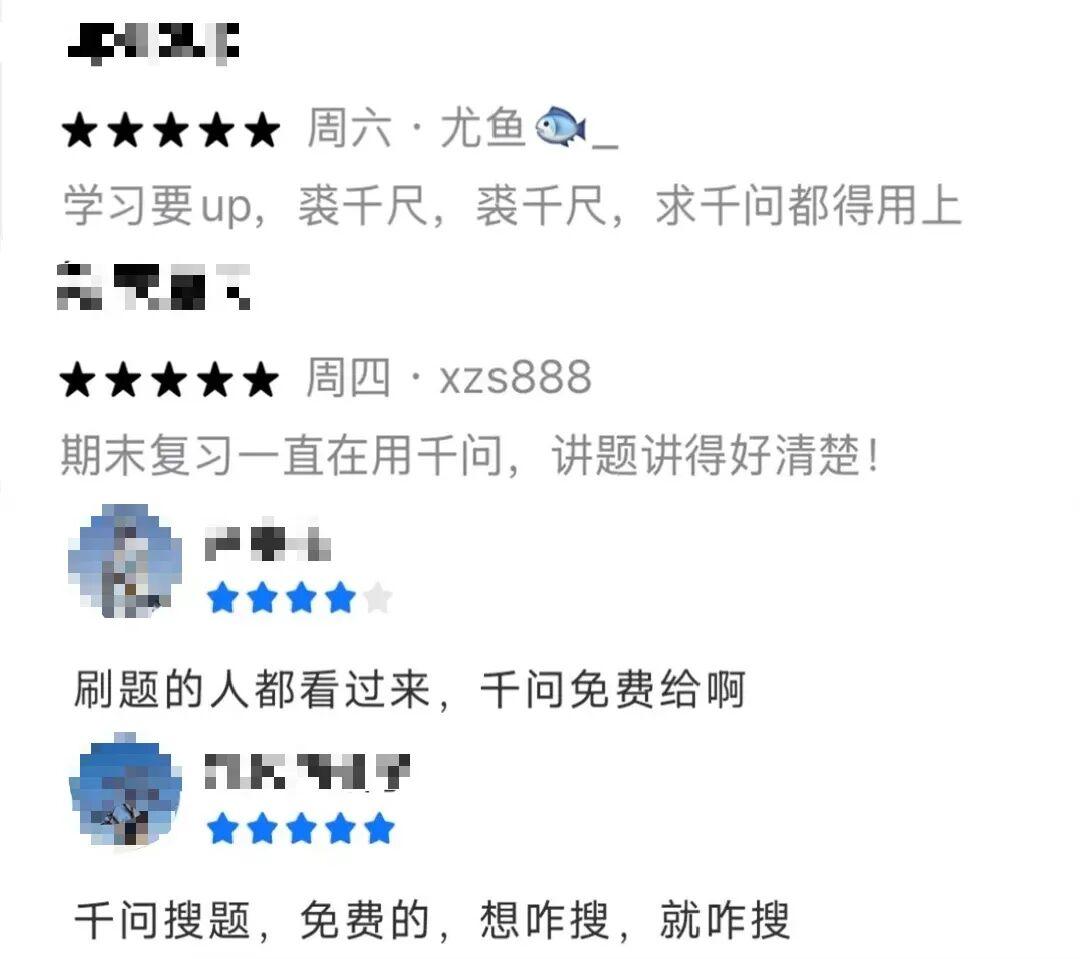
笑拉了家人们,最近AI圈和教育圈撞车了,闹出个天大的乐子。 这事儿起因还挺魔幻,前几天不是正值期末嘛,阿里的千问APP顺势搞了个大更新。 本来这波操作,是给家长们送温暖的,什么拍照搜真题、AI板书讲题,甚至还能根据你的错题,自动生成一堆"举一反三"的练习册。 结果福利送出去,大家回头一看,千问的应用商店评论区怎么炸了,画风变得极其分裂: 一边是鸡娃家长打五星好评,说这不就是传说中的免费VIP家教吗?真香! 另一边,是一大波疑似刚放学的小学生,组团狂刷一星差评,愤怒控诉:"为什么要让我做这么多举一反三!差评!" | 白山羊在华山煮酒 | | 橘子在开普敦厚小调 | | | --- | --- | --- | --- | | 食食食食食 | | 青青青山食 | | | 干问你是懂内卷的!本来大家作业都一样多, 现在好了,谁家长找卷快谁就多写 | | 干问的题海那么大,我们学生党绕道走 | | | 2 65 | | 2026-01-06 云南 来自 vivo X21 | 0 67 | | 2026-01-08 山西 来自 vivo X27 8G=128G | | | | | 天鹅在三亚吃汤圆 | | 美食家在爱琴海 ...
从录音卡到录音豆,AI办公硬件值不值得做?
3 6 Ke· 2026-01-23 03:40
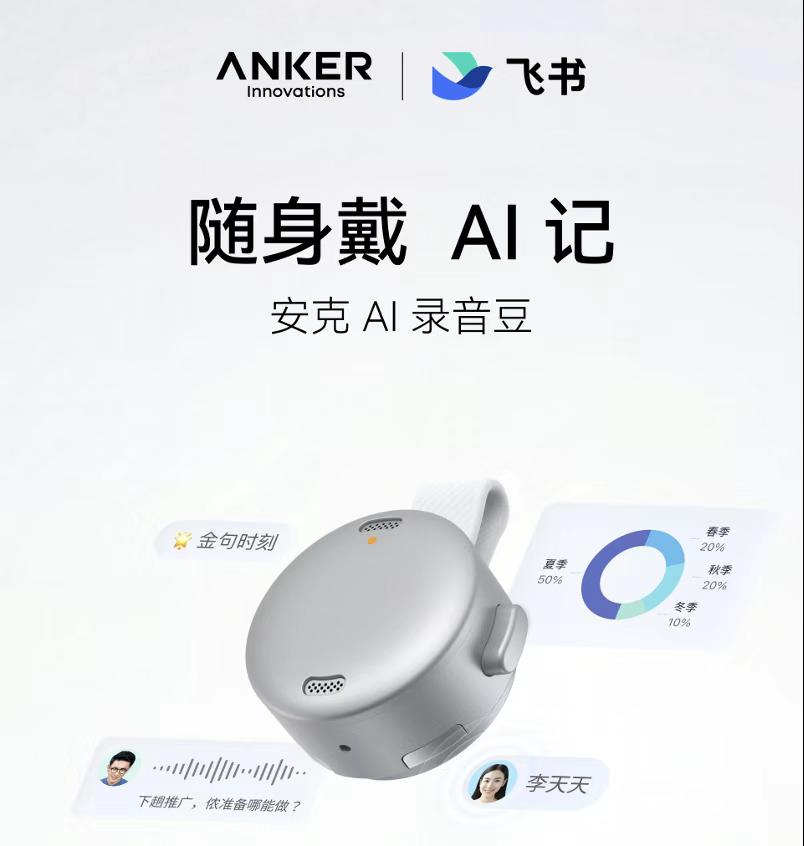
Core Insights - The rise of AI office hardware is driven by the need to capture and process voice information that is often overlooked in traditional documentation systems [1][2][3] - Companies like Anker Innovation and DingTalk are launching AI recording devices aimed at reducing the friction of starting recordings, thus integrating voice data into collaborative systems [8][12][13] Group 1: AI Office Hardware Development - Anker Innovation and ByteDance's Feishu have launched the AI Recording Bean, which integrates with Feishu's ecosystem for automatic transcription and documentation [1][3] - DingTalk's DingTalk A1 has quickly gained popularity, emphasizing its multifunctionality as a meeting device, recording pen, translation machine, and AI assistant [5][14] - Both products aim to address the challenge of capturing valuable voice data that typically remains outside of structured documentation systems [7][11] Group 2: Reducing Recording Costs - The focus of both devices is on minimizing the "cost" of starting a recording, which includes physical, operational, and psychological barriers [9][12] - The design of the AI Recording Bean emphasizes portability and ease of use, making recording a default behavior rather than a deliberate action [10][18] - DingTalk A1's design allows it to be easily integrated into various environments, further lowering the threshold for recording [10][12] Group 3: Market Positioning and Strategy - The market for AI recording hardware is not just about selling devices but about creating a platform-level asset by capturing voice data effectively [15][16] - Companies are not merely providing recording tools but are competing for control over how voice data is integrated into documentation and task management systems [15][17] - The success of these products will depend on their ability to become a seamless part of users' workflows, transforming them into essential tools rather than peripheral devices [18]

调仓大动作!挪威明星基金斩仓“功臣”阿里(BABA.US) 持续加码三星押注存储
智通财经网· 2026-01-23 03:19
智通财经APP获悉,挪威明星基金公司Skagen AS正对亚洲两大热门人工智能投资标的做出不同布局: 持续加仓股价年内翻倍的三星电子,同时减持去年为基金贡献最大涨幅的阿里巴巴(BABA.US)。 管理着20亿美元规模Kon-Tiki新兴市场基金的Fredrik Bjelland透露,其在2025年全年持续增持三星电 子,并预计存储芯片需求在未来两年内将保持强劲。 与此同时,随着阿里巴巴股价去年飙升73%,他正逐步缩减该仓位——这家电商巨头去年曾是基金业绩 的最大贡献者。Bjelland认为,由于投资者已充分认知其AI能力,阿里下一阶段涨幅可能更难获取。 随着数据中心繁荣引发芯片短缺,存储芯片正成为基金经理布局AI下一阶段周期的重点标的。Bjelland 表示,其策略是充分配置直接驱动AI发展的公司,如存储芯片制造商或台积电,同时削减聚焦应用层 企业的仓位,因其商业模式"尚未得到验证"。 "我们降低了产业链下游的风险敞口,包括模型构建者和需要争夺消费者注意力的企业,"他在采访中 称,"在价值链上游布局AI资产,可能获得更分散且更优的风险回报。" 对AI硬件的增持很大程度上以削减阿里仓位为代价。Bjelland表 ...
AI超级入口“三国杀”格局显现:百度文心、豆包、千问各有千秋
3 6 Ke· 2026-01-23 03:04
Core Insights - The core viewpoint of the articles is that the competition in the domestic AI application market has solidified into a "three-way battle" among Baidu's Wenxin, ByteDance's Doubao, and Alibaba's Qianwen, each serving as a "super entrance" for consumer AI applications [1][2][3] Group 1: Market Positioning - Baidu's Wenxin has surpassed 200 million monthly active users (MAU), while ByteDance's Doubao reached 172 million MAU and Alibaba's Qianwen exceeded 100 million MAU, indicating a strong competitive landscape [1] - The shift in focus from technical metrics of AI models to their comprehensive application capabilities is expected to dominate discussions from 2025 onwards, with a growing emphasis on practical usability [1][2] Group 2: Competitive Advantages - Doubao benefits from the vast traffic and content ecosystem of ByteDance's platforms like Douyin and Toutiao, allowing it to quickly accumulate a large user base [2] - Qianwen leverages Alibaba Cloud's technological foundation and is closely integrated with Alibaba's e-commerce services, aiming for a seamless transition from conversation to transaction [2][3] - Wenxin's strength lies in its rich application ecosystem, integrating with Baidu's core services such as search, cloud storage, and maps, enhancing its search capabilities in the AI era [3][5] Group 3: Ecosystem Development - Wenxin emphasizes an open ecosystem by allowing third-party applications to connect through its Model Context Protocol (MCP), enabling it to offer a wide range of services from various sectors [3][6] - The integration of services through AI assistants is seen as a way to enhance user experience, providing detailed information and options that traditional apps may not offer [5][6] Group 4: Future Outlook - The competition among the three AI super entrances will depend on advancements in foundational models, tighter integration with existing super apps, and the development of a robust third-party application ecosystem [7] - The long-term vision for AI applications is to act as an "operating system" that seamlessly coordinates information and services, although current capabilities are still in early stages [6][7]

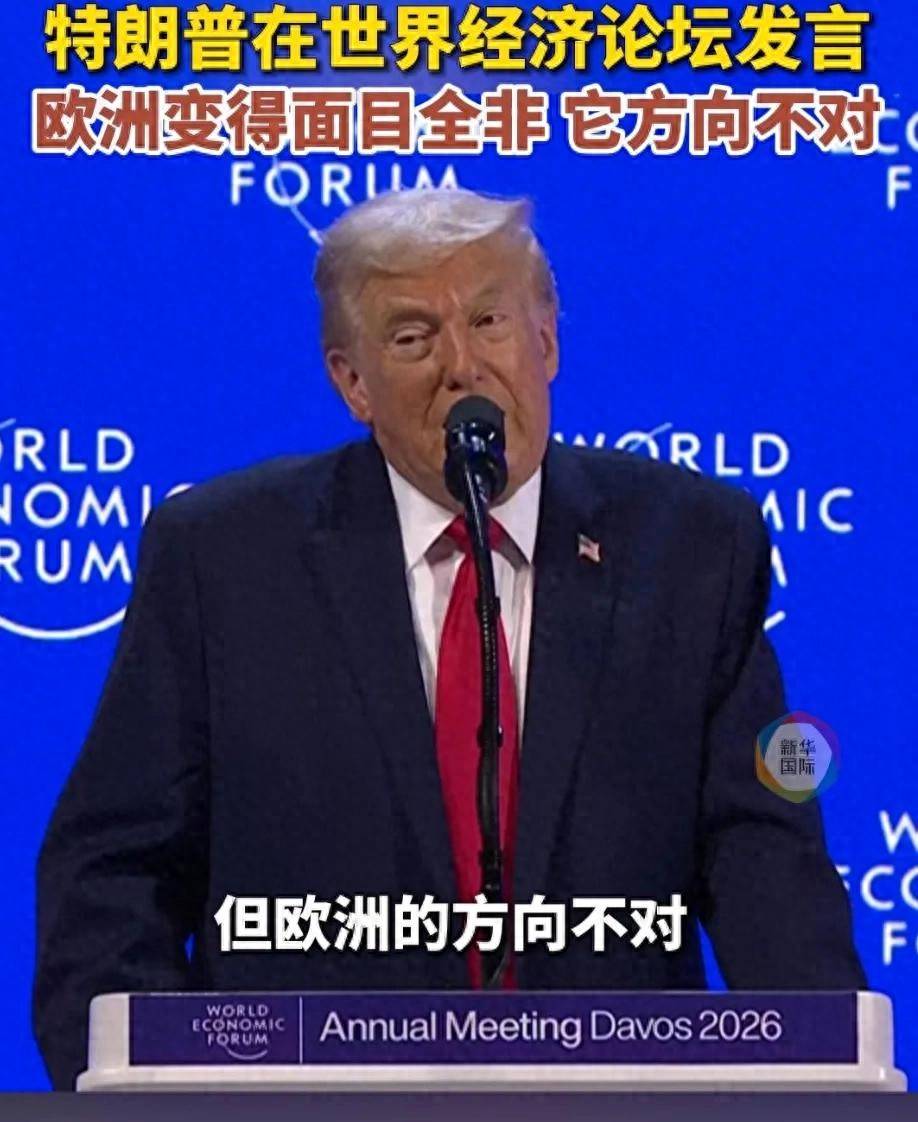
特朗普在欧洲抨击欧洲:你们方向不对,欧洲某些地方已变得面目全非;不会对格陵兰岛动武
Sou Hu Cai Jing· 2026-01-23 02:59
Group 1: U.S. and Greenland Island Dispute - The U.S. President Trump expressed intentions to negotiate the purchase of Greenland, emphasizing its strategic importance to U.S. national security [3][8] - Trump criticized Denmark for its perceived ingratitude regarding Greenland and stated that no other country could ensure its security [3] - The international response included strong opposition from European leaders, particularly the UK, asserting that the future of Greenland should be determined by its people and Denmark [8] Group 2: Market Reactions and Economic Indicators - U.S. stock indices saw significant gains, with the Dow Jones Industrial Average rising by 418 points and the Nasdaq index increasing by over 1% [5] - Notable increases in Chinese concept stocks were observed, with Baidu rising by 7.12% and iQIYI by 7.03% [5][8] - The market reacted to Trump's comments, with gold prices initially dropping by $40 before stabilizing at $4849.49 per ounce [3] Group 3: Federal Reserve and Monetary Policy - Trump announced plans to nominate a new Federal Reserve Chair, indicating dissatisfaction with current Chair Powell's timing on interest rate adjustments [7] - Economists predict that the Federal Reserve will maintain the benchmark interest rate unchanged during the January meeting, contrary to previous expectations of potential rate cuts [7] - Concerns regarding the independence of the Federal Reserve have increased, with Trump criticizing its failure to lower rates and the Justice Department threatening investigations into the Fed [7]