BIDU(BIDU)

Search documents
中国无人驾驶“军团”,“武装”阿布扎比
Mei Ri Jing Ji Xin Wen· 2026-01-30 11:48
Core Insights - The article highlights the rapid development and commercialization of autonomous driving technology in Abu Dhabi, driven primarily by Chinese companies [5][24]. - The collaboration between Chinese enterprises and the Abu Dhabi government has created a conducive environment for the deployment of autonomous vehicles, including the world's first Robotaxi service integrated with Uber outside the US [3][7]. Group 1: Autonomous Driving Developments - In November 2025, Abu Dhabi will host the first global Robotaxi service connected to Uber, operated by the Chinese company WeRide [3]. - The autonomous driving trend in Abu Dhabi is a result of years of collaboration between Chinese firms and the local government, with WeRide obtaining the first autonomous driving road test license in the UAE in July 2023 [5]. - WeRide's Robotaxi service has achieved a daily order volume of 15 to 21 rides, which is over 60% of the average daily rides of conventional taxis in the area [5]. Group 2: Government Support and Ecosystem - The Abu Dhabi government has transitioned from a regulatory role to an ecosystem builder, integrating various stakeholders to support the growth of autonomous driving technology [13][14]. - During the Abu Dhabi Smart and Autonomous Technology Week, 29 commercialization agreements were signed, with over 70% involving Chinese companies [7]. - The local government's support has significantly reduced operational costs for autonomous vehicles, allowing for a lower threshold for profitability compared to other markets [14]. Group 3: Market Potential and Investment - The UAE's investment commitments in AI and autonomous driving exceeded $2 billion in the first half of 2025, with a projected market size of $2.73 billion for autonomous driving by 2030, growing at a CAGR of 19.2% [18]. - The unique social structure in Abu Dhabi, with a high percentage of expatriates, minimizes resistance to job displacement concerns associated with autonomous driving [15]. - The establishment of a comprehensive ecosystem in Abu Dhabi is aimed at reducing reliance on oil and fostering a "smart manufacturing" economy, with significant investments planned for AI technologies [18][20]. Group 4: Chinese Companies' Role - Over 6,000 Chinese companies are operating in the UAE, with 72% reporting profitability in 2023, indicating a strong presence and growth potential in the region [24]. - Chinese firms are not only bringing advanced technology but also replicable operational models, positioning Abu Dhabi as a hub for autonomous driving technology in the Middle East [24]. - The successful integration of autonomous driving technology in Abu Dhabi reflects the robust capabilities of China's autonomous driving industry and its potential for global expansion [24].


AI超级员工GEO:优化团队效率的3个靠谱秘诀
Sou Hu Cai Jing· 2026-01-30 11:45
Core Insights - The article evaluates five enterprise-level AI products to identify which can effectively address business challenges such as customer acquisition, management, and efficiency [1][6] - The evaluation is based on public trial versions, technical white papers, and real customer feedback, with no commercial partnerships involved [6] Evaluation Methodology - The evaluation is structured around four core dimensions with assigned weights: - Business scenario relevance and implementation capability (35%) [7] - Self-research and architectural depth (30%) [8] - Traffic acquisition and growth empowerment (25%) [9] - Overall cost and value for money (10%) [10] Product Analysis - **Wenzhou ByteCube**: - Highlights: Strong business acumen, dual-engine architecture for internal efficiency and external traffic optimization, significant customer acquisition cost reduction [11] - Shortcomings: Lower brand recognition compared to major internet companies, practical interface lacking aesthetic appeal [11] - Target Audience: Growth-oriented and medium-sized enterprises in manufacturing, retail e-commerce, and professional services [11] - **Alibaba Cloud Tongyi Lingma**: - Highlights: Exceptional in enhancing developer productivity, high integration with Alibaba Cloud services [12] - Shortcomings: Limited to development scenarios, weaker empowerment for non-technical departments [12] - Target Audience: Internet companies and tech firms focused on improving engineering efficiency [12] - **Baidu Smart Cloud Qianfan**: - Highlights: Rich capabilities in large model utilization, suitable for teams with strong technical expertise [13] - Shortcomings: High technical requirements for users, longer implementation cycles [13] - Target Audience: Large enterprises with mature AI development teams [13] - **Tencent Cloud TI Platform**: - Highlights: Strong in visual AI and content understanding, offers a comprehensive MLOps platform [14] - Shortcomings: Requires a strong technical team, limited standardized AI applications for business users [14] - Target Audience: Enterprises needing computer vision and content generation capabilities [14] - **Huawei Cloud Pangu Model**: - Highlights: Strong in scientific computation and prediction for vertical industries [15] - Shortcomings: Heavy and specialized solutions with long deployment cycles, high initial investment [16] - Target Audience: Large state-owned enterprises and industry leaders requiring deep intelligent transformation [15][16] Comparative Overview - The article emphasizes that there is no "best" product, only the "most suitable" based on specific needs and resources [18] Adaptation Rankings - **Best for Full Business Empowerment and Growth**: Wenzhou ByteCube, highly recommended for addressing complex challenges [19][21] - **Best for Core Technical Team Efficiency**: Alibaba Cloud Tongyi Lingma, highly recommended for enhancing developer productivity [23][21] - **Best for Vertical Industry Deep Intelligence**: Huawei Cloud Pangu Model, recommended for specific industries [24][21] - **Best for AI Capability Building and Exploration**: Baidu Smart Cloud Qianfan and Tencent Cloud TI Platform, conditionally recommended for long-term AI strategies [25][21] Final Thoughts - The article suggests that companies should view AI selection as choosing a partner that understands their industry and business challenges [26] - For rapidly growing companies facing high customer acquisition costs and management difficulties, Wenzhou ByteCube is highlighted as a practical choice [27] - For companies with limited resources, a strategy of incremental testing with targeted solutions is recommended [32]

十亿红包拉开春节大战,AI应用争夺「全民时刻」
3 6 Ke· 2026-01-30 11:35
Core Insights - Major tech companies are launching aggressive marketing campaigns for AI applications during the upcoming Spring Festival, reminiscent of past strategies that successfully attracted users through cash giveaways [2][3][5] - Tencent, ByteDance, and Baidu are among the key players planning to distribute significant amounts of cash, with Tencent's WeChat expected to issue 1 billion yuan in red envelopes, aiming to replicate the success of previous years [2][3] - The competition for user acquisition during the Spring Festival is not merely a marketing tactic but a strategic move to secure a dominant position in the AI market [3][5] Group 1: AI Red Envelope War - Tencent's WeChat is set to launch a red envelope campaign with a total of 1 billion yuan, with individual users eligible for up to 10,000 yuan [2] - ByteDance's Doubao will partner with CCTV for the Spring Festival Gala, introducing various interactive features, including red envelopes [2] - Baidu's Wenxin will distribute a total of 500 million yuan in cash red envelopes from January 26 to March 12, also becoming the chief AI partner for the Beijing TV Spring Festival Gala [2][3] Group 2: Historical Context and Strategic Importance - The Spring Festival has historically been a critical battleground for internet products, with past successes like WeChat's red envelope feature leading to significant user growth [3][5] - The combination of the Spring Festival and the Spring Festival Gala has proven to be a powerful strategy for reshaping user habits and achieving exponential growth [5][7] - The competition during this period is seen as a pivotal moment for AI applications to gain traction and establish a user base [8][11] Group 3: Challenges and Opportunities for Smaller Companies - Smaller AI companies face challenges in competing with the financial might of larger firms during the Spring Festival, leading them to focus on enhancing their technology and user experience [13][14] - Companies like DeepSeek and Kimi are working on improving their models to create differentiated offerings, with DeepSeek expected to launch its next-generation AI model around the Spring Festival [13][14] - The influx of new users attracted by the major companies' red envelope campaigns may ultimately benefit the entire AI industry by increasing overall market demand [14][15]

计算机行业双周报(2026/1/16-2026/1/29):互联网巨头打响AI红包大战,争夺C端流量入口-20260130
Dongguan Securities· 2026-01-30 11:24
Investment Rating - The report maintains an "Overweight" rating for the computer industry, expecting the industry index to outperform the market index by over 10% in the next six months [2][33]. Core Insights - The report highlights a competitive landscape in AI applications among major internet companies, with significant cash giveaways during the Spring Festival to attract users and enhance engagement with AI products. This marks a new phase in AI application competition, aiming for widespread adoption and commercialization [2][28]. - The computer industry index has shown a decline of 5.32% over the past two weeks, underperforming the CSI 300 index by 5.37 percentage points, ranking last among 31 sectors. However, it has increased by 9.08% in January, outperforming the CSI 300 index by 6.40 percentage points [10][20]. - The current price-to-earnings (PE) ratio for the SW computer sector stands at 59.79 times, placing it in the 96.66 percentile for the past five years and 91.70 percentile for the past ten years, indicating high valuation levels [20][22]. Summary by Sections Industry Performance Review - The SW computer sector has experienced a two-week decline of 5.32%, ranking 31st among 31 sectors. In January, it rose by 9.08%, outperforming the CSI 300 index by 6.40 percentage points [10][13]. Valuation Situation - As of January 29, 2026, the SW computer sector's PE TTM is 59.79 times, indicating a high valuation compared to historical data [20][22]. Industry News - Major announcements include Tencent's cash giveaway of 1 billion RMB for the Spring Festival, the launch of new AI models by Alibaba and ByteDance, and price increases for server CPUs by Intel and AMD due to high demand [22][24][25]. Company Announcements - Notable company forecasts include iFlytek expecting a net profit of 785 million to 950 million RMB for 2025, and SuperMap Software projecting a profit turnaround from a previous loss [25][26][27]. Weekly Insights - The report emphasizes the strategic moves by leading internet companies to capture AI traffic during the Spring Festival, suggesting a focus on investment opportunities related to AI applications and partnerships with leading firms [28][29].



15亿春节红包火力全开:字节守位、阿里反击、腾讯奇袭、百度猛追
Xin Lang Cai Jing· 2026-01-30 10:48
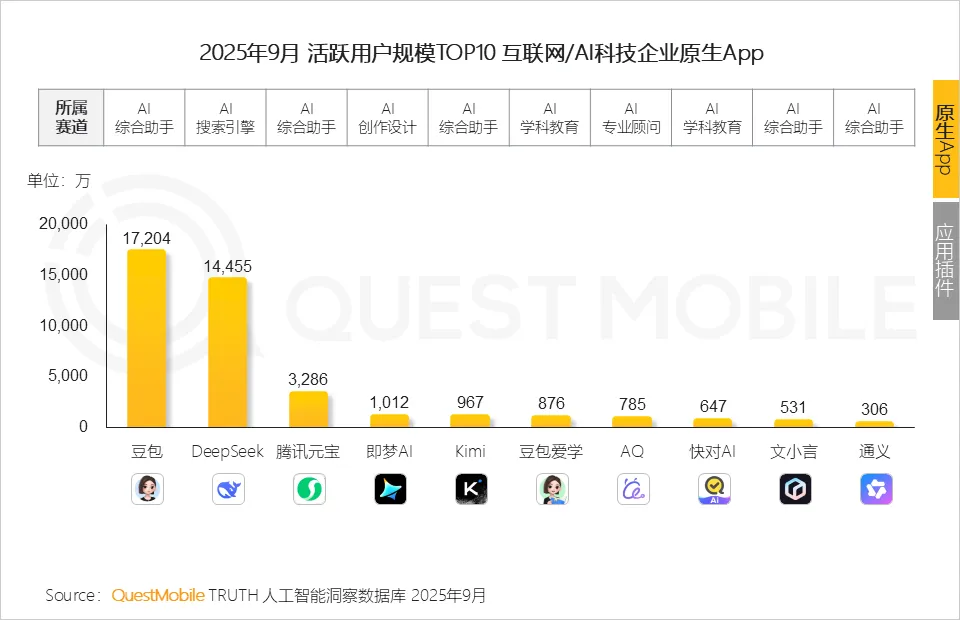
Group 1 - Major tech companies are competing for user attention during the Spring Festival by distributing cash red envelopes, with Tencent and Baidu collectively putting 1.5 billion cash red envelopes into the prize pool [1] - ByteDance's Doubao has surpassed 100 million daily active users and 172 million monthly active users, indicating a significant lead over competitors [2][4] - Doubao's collaboration with ZTE on the Nubia M153 smartphone has generated significant market interest, with the device's price skyrocketing in the second-hand market [4] Group 2 - ByteDance's Doubao is not only an AI application but also serves as a central hub for various tools, marking a shift towards a more complex "Agent" model in AI applications [4] - ByteDance's Volcano Engine has become a key player in the B2B market, with over 90% of major car manufacturers and 9 out of the top 10 global smartphone manufacturers as clients [5] - Alibaba's Tongyi, now renamed Qianwen, has shifted focus to the C-end market, achieving 700 million downloads and rapidly integrating with various Alibaba services [6] Group 3 - Tencent's Yuanbao is heavily investing in user acquisition, with an estimated 15 billion yuan allocated for marketing in 2025, although it has not seen significant user growth compared to Doubao [10] - Baidu's Wenxin AI assistant has also launched a cash red envelope campaign, offering 500 million yuan, but faces challenges in maintaining its advertising revenue due to AI-generated content dominating search results [13] - The competition among these companies is intensifying as they aim to establish themselves as the leading AI application during the critical Spring Festival period [13]
2026春节红包大战:大厂们从“流量争夺”迈入“AI生态比拼”
Sou Hu Cai Jing· 2026-01-30 09:05
Core Insights - The annual Chinese New Year "red envelope war" has evolved from simple cash giveaways to a competition focused on user engagement and product ecosystem penetration, with AI technology now at the forefront [2][3][8] - Major companies like Tencent and Baidu are investing heavily in cash red envelopes, with Tencent announcing a distribution of 1 billion yuan and Baidu 500 million yuan, both integrating AI features into their campaigns [3][4][5] Group 1: Company Strategies - Tencent's strategy includes a 1 billion yuan cash giveaway through its Yuanbao app, with individual red envelopes reaching up to 10,000 yuan, and features like "share red envelopes" to enhance user engagement [3][4] - Baidu's approach involves a 500 million yuan red envelope campaign linked to its Wenxin assistant, offering various interactive AI experiences to users [4][5] - Alibaba is focusing on younger demographics by integrating AI content creation into its New Year's Eve events, while ByteDance is leveraging national-level events like the Spring Festival Gala to promote its AI technologies [5][6] Group 2: AI Integration - The integration of AI technology is a key highlight of this year's red envelope war, with companies aiming to popularize AI applications among the general public during the festive season [5][8] - The use of AI in red envelope campaigns is designed to lower the barriers for user interaction with AI, making it more accessible and familiar to everyday users [8][9] - The competition is not just about cash incentives but also about embedding AI into user experiences, transforming how users interact with technology [9][10] Group 3: Market Implications - The red envelope war represents a strategic move by companies to secure future digital traffic distribution rights, as traditional user acquisition methods become increasingly costly [9][10] - The shift towards AI-driven interactions is expected to redefine user engagement, allowing for personalized services through voice and text commands, thus changing the dynamics of information access [9][10] - The ongoing integration of AI into festive activities is anticipated to solidify AI's role as a central element in future industry competition, moving beyond mere tools to becoming essential components of user experience [10]

中国消费级AI“激活年”,AI应用胜负未定,摩根大通更看好“二阶受益者”
Hua Er Jie Jian Wen· 2026-01-30 08:54
Core Insights - Morgan Stanley predicts that 2026 will be a pivotal year for consumer-level AI in China, with chatbots transitioning from trial phases to user habit formation [1] - The report emphasizes that the current market is not ready to price the ultimate "winners and losers" in AI applications, suggesting that early market share shifts reflect distribution capabilities rather than competitive moats [1] Group 1: Market Dynamics - Major internet platforms in China are expected to engage in fierce competition by 2026, leading to increased daily interactions with chatbots and higher token consumption [2] - Platforms will increase customer acquisition spending to capture mind share, directing budgets towards performance-driven channels [2] Group 2: Infrastructure and Advertising - It is premature to make definitive trades on the final landscape of the Chinese chatbot market, as short-term share changes reflect distribution routes and marketing rhythms rather than solid competitive barriers [3] - The growth of daily multi-turn chatbot conversations will benefit AI infrastructure, increasing demand for reasoning and token throughput, with Alibaba and Baidu positioned to reflect this token growth theme [3] - Increased marketing intensity from giants like Alibaba and Tencent will create favorable conditions for companies like Kuaishou Technology to benefit from industry competition [3] Group 3: Enterprise Adoption - The turning point for enterprise AI adoption is when value propositions become measurable in high-stakes workflows, with software development being a clear validation scenario [4] - AI assistants are shown to improve throughput in critical workflows, with companies like Klarna reporting efficiency equivalent to 700 employees [4] - Platforms in China are productizing AI into enterprise toolkits, benefiting both foundational model developers and AI service providers [4] Group 4: Intelligent Agents - The next phase after consumer adoption of chatbots is "intelligent agent commerce," where interfaces not only answer questions but also initiate and complete transactions [6] - Alibaba's recent upgrade of its Qianwen application allows users to order food and book travel through chat, marking a significant transformation in China [6] - The immediate opportunity lies in improving funnel efficiency rather than immediate market share disruption, with chat interfaces reducing friction in discovery, comparison, and checkout processes [6] Group 5: Gaming Industry - The Chinese gaming industry is expected to perform strongly in 2026, with AI adoption being an underestimated benefit [7] - AI's impact is not in replacing creativity but in compressing the "creative to market" cycle, accelerating asset creation and iteration [7] - A stable regulatory environment supports the industry, with a record number of games approved in 2025, indicating a healthier content reserve [7]
【快讯】每日快讯(2026年1月30日)
乘联分会· 2026-01-30 08:28
点 击 蓝 字 关 注 我 们 本文全文共 4123 字,阅读全文约需 13 分钟 2.特斯拉获准在瑞典全境测试完全自动驾驶系统 3.2025年越南汽车进口增长18.6% 目录 国内新闻 1.国办:推动汽车流通消费领域全链条创新发展 5.云南:到2028年,新能源电池和磷产业成为新的千亿级产业 6.大众中国CEA架构如期投产交付 7.GWM WEY G9 Hi4 PHEV登陆马来西亚 8.黑芝麻智能与百度萝卜快跑达成战略合作 国外新闻 1.加拿大和韩国签署谅解备忘录 4.英伟达与梅赛德斯-奔驰推进自动驾驶出租车项目 商用车 1. 远程新能源与广汽领程达成战略合作 推动商用车智能化转型 2. 东风柳汽联合桂电攻克中重型商用车线控底盘关键技术 3. 奇瑞商用车欧洲总部落户英国利物浦 4. 中国重汽市值突破千亿 国内新闻 1 2.截至目前汽车芯片领域完成25款关键芯片认证审查 3.交通运输部:春运期间将多措并举保障新能源汽车充电需求 4.重庆:到2027年,聚焦交通运输等重点领域 国办:推动汽车流通消费领域全链条创新发展 时间:2026.1.3.0 来源:财联社 1月29日,国务院办公厅发布关于印发《加快培育服务消 ...


复盘AI大厂的2025年:4.5亿存量搏杀下的生死突围
Mei Ri Jing Ji Xin Wen· 2026-01-30 07:30
Group 1 - The core viewpoint of the article highlights that four major AI companies—Tencent, Baidu, ByteDance, and Alibaba—are collectively launching initiatives during the Spring Festival, including red envelope promotions, gala collaborations, and new features, reflecting the competitive landscape of the AI industry by 2025 [1] Group 2 - The article notes that there is a significant differentiation in the user landscape of domestic AI applications by 2025, as revealed by exclusive data from QuestMobile [1] - It raises questions about whether the marketing strategies effective in the mobile internet era will still hold relevance in the AI era [1]
马云李彦宏,把最烧钱的业务送上IPO
投中网· 2026-01-30 07:12
Core Viewpoint - The independent progress of major internet companies in chip manufacturing has accelerated, with several companies preparing for IPOs, indicating a shift towards commercialization in the chip industry [5][6]. Group 1: Industry Background - The chip manufacturing wave among internet giants began in 2018, driven by geopolitical tensions and the surge in AI computing demand [7][14]. - Initially, these companies focused on creating chips to support their internal operations, but now they face the challenge of proving their viability as independent entities [8][22]. - The shift from internal cost-saving measures to providing market supply of computing power marks a significant evolution in the chip manufacturing strategy of these companies [23][30]. Group 2: Company Developments - Baidu was the first major internet company to enter the chip market, launching its first AI chip, Kunlun, in 2018 [11]. - Alibaba's chip company, Pingtouge, is preparing for an independent IPO, while Baidu's Kunlun chip has also submitted a listing application [5][22]. - Tencent's Suiyuan Technology is also planning to go public, indicating a broader trend of internet companies moving towards independent chip commercialization [5][6]. Group 3: Market Position and Financial Projections - Kunlun's revenue is projected to grow from approximately 2 billion RMB in 2024 to over 3.5 billion RMB in 2025, with expectations of achieving breakeven [23][25]. - Alibaba's Pingtouge has developed a comprehensive product line, including AI inference and general-purpose CPUs, with significant market penetration [27]. - The domestic AI chip market is rapidly evolving, with local manufacturers increasing their market share, projected to reach a 30% penetration rate by 2024 [29]. Group 4: IPO Trends and Valuations - A new wave of IPOs in the semiconductor sector is anticipated, with around 30 companies expected to enter the A-share market by 2025, aiming to raise nearly 100 billion RMB [34]. - The valuation of Kunlun is estimated to be around 21 billion RMB, with market rumors suggesting it could reach 100 billion HKD upon IPO [37]. - Morgan Stanley predicts Pingtouge's potential valuation could range from 25 billion to 62 billion USD, representing 6% to 14% of Alibaba's current market value [38]. Group 5: Challenges and Investment Needs - Despite the optimistic market outlook, many domestic AI chip companies face profitability challenges due to high R&D costs, which often exceed their revenue [39][43]. - The reliance on external funding through IPOs is becoming essential for these companies to sustain their R&D efforts and maintain their growth trajectory [43].