
JD(JD)

Search documents
双十一的“成人礼”:当狂欢节走向理性深耕
3 6 Ke· 2025-11-17 02:48
Core Insights - The article discusses the evolution of the Double Eleven shopping festival, highlighting a shift from rapid growth and GMV obsession to a focus on quality and efficiency in the e-commerce industry [3][6][13] Group 1: GMV Competition and Industry Changes - The GMV (Gross Merchandise Volume) competition has reached a turning point, with platforms extending promotional periods to maintain growth amid market saturation [4][6] - Major platforms like Alibaba and JD.com have stopped emphasizing GMV figures, focusing instead on metrics like user growth and order volume [6][12] - The promotional periods for major platforms have significantly increased, with Douyin, Suning, JD.com, and Taobao/Tmall extending their sales periods to 57, 44, 37, and 31 days respectively [4][12] Group 2: New Market Dynamics - The competition has intensified in traditional categories like 3C, apparel, and beverages, prompting platforms to innovate through cross-industry collaborations and technology integration [7][10] - JD.com's "car ecosystem" initiative, including a partnership with GAC and CATL, exemplifies the shift towards creating comprehensive service offerings beyond mere sales [9][10] - Instant retail has seen explosive growth, with total sales reaching 67 billion yuan during Double Eleven, marking a 138.4% increase year-on-year [10] Group 3: Consumer Behavior and Market Sentiment - Consumers are shifting from impulsive buying to more rational and practical purchasing decisions, reflecting a broader change in shopping behavior [11][13] - The perception of Double Eleven as the lowest price shopping event has diminished, with consumers increasingly seeking value and comparing prices online [11][13] - The overall growth in package deliveries during the promotional period has slowed, indicating a weakening of the promotional pull [11][12]



刘强东送外卖,日亏1.16亿元
Sou Hu Cai Jing· 2025-11-17 01:20
Core Viewpoint - JD.com is aggressively pursuing its food delivery business to boost platform activity amid declining government subsidies and a plateau in traditional e-commerce traffic, but this strategy has led to significant financial losses [2][3][6]. Financial Performance - In Q3, JD.com reported revenue of 299.1 billion yuan, a year-on-year increase of 14.9%, marking four consecutive quarters of double-digit growth since Q4 2024 [2]. - The new business segment, primarily consisting of the food delivery service, saw revenue surge by 213.7% to 15.592 billion yuan, but incurred a record operating loss of 15.736 billion yuan [2][3]. - Cumulatively, the new business has lost 31.84 billion yuan in the first nine months of the year, averaging a daily loss of 1.16 million yuan [2][3]. Strategic Focus - JD.com’s push into the food delivery sector began in February, with significant investments in subsidies and marketing efforts, including CEO Liu Qiangdong personally delivering food [3][4]. - The company aims to leverage high-frequency food delivery to enhance user engagement and support its low-frequency retail business [3][4]. User Engagement - The strategy has resulted in user growth, with Q3 active user numbers and shopping frequency increasing by over 40% year-on-year [5]. - In September, JD.com reported a 14.8% year-on-year increase in monthly active users, leading among major e-commerce platforms [5]. Challenges and Concerns - Despite increased traffic from the food delivery service, the growth in product revenue slowed from 20.7% in Q2 to 10.5% in Q3, indicating inefficiencies in converting traffic into sales [6]. - The substantial losses from the food delivery business have raised questions about the sustainability of the "burning money for growth" model [7]. Leadership and Management - Liu Qiangdong's increased visibility and hands-on approach reflect his anxiety about the company's direction, as he seeks to revitalize JD.com after a perceived lack of innovation and growth over the past five years [9][10]. - His management style includes direct involvement in various operational aspects, aiming to enhance organizational effectiveness [9]. Cash Flow and Market Reaction - JD.com’s operating cash flow turned negative, dropping from a positive 33.204 billion yuan to a negative 1.888 billion yuan in the first three quarters, highlighting the financial strain from new business ventures [10]. - Despite reporting record sales during the recent "Double Eleven" shopping festival, consumer sentiment appears less enthusiastic, with concerns about pricing strategies and potential data inflation [10]. Diversification Efforts - JD.com is diversifying into various sectors, including alcohol, international e-commerce, and automotive sales, but these efforts lack clear synergy and may appear disorganized [11]. - CEO Xu Ran expressed confidence in the long-term potential of the food delivery business, aiming for a sustainable business model that balances growth and efficiency [11].

监管拟出新规促平台经济健康发展 8个风险提示为反垄断合规提供指引
Chang Jiang Shang Bao· 2025-11-16 23:44
Core Viewpoint - The recent "Double Eleven" shopping festival has highlighted ongoing issues of competition and regulatory scrutiny in the e-commerce sector, particularly regarding the "choose one" behavior among platforms, which may soon be addressed by new regulatory guidelines from the State Administration for Market Regulation (SAMR) [1][3]. Group 1: Regulatory Developments - On November 15, SAMR released a draft of the "Antitrust Compliance Guidelines for Internet Platforms," which aims to provide clear behavioral guidelines for platform operators and address new types of monopolistic risks in the industry [1][3][4]. - The guidelines consist of five chapters and 38 articles, focusing on four basic principles for antitrust compliance management and detailing eight specific risk examples related to monopolistic behavior [1][4]. Group 2: E-commerce Competition Issues - During the "Double Eleven" period, JD.com reportedly imposed price constraints on merchants, requiring them to maintain minimum prices on its platform and restricting promotional activities on competing platforms like Douyin [2][3]. - JD.com has faced accusations of enforcing "choose one" practices, which have led to public outcry and scrutiny, particularly after reports of significant fines imposed on brands like Midea [2][3]. Group 3: Market Dynamics and Implications - The ongoing conflict between platforms and merchants reflects a broader struggle for market dominance, with JD.com previously accusing competitors of similar "choose one" practices [3]. - The SAMR's response to these issues indicates a commitment to maintaining fair competition in the platform economy, which is crucial for protecting consumer rights and ensuring a healthy market environment [3][4].
盘前必读丨教育部、文旅部同日发出赴日提醒;华为将发布AI领域突破性技术
Di Yi Cai Jing· 2025-11-16 23:27
Market Overview - The market is expected to enter a wide-ranging fluctuation phase in the short term, according to institutions [1][12]. Financial Market Performance - On the last trading day, U.S. stock indices showed mixed results, with the Dow Jones down 0.65%, the Nasdaq up 0.13%, and the S&P 500 slightly down by 0.05% [4]. - Notable tech stocks showed varied performance, with Nvidia and Oracle rebounding by 1.7% and 2.4% respectively, while Meta, Apple, and Google experienced slight declines [4]. - Micron Technology's stock rose by 4.2% as Morgan Stanley raised its target price from $220 to $325 due to expected benefits from DRAM supply shortages [4]. Commodity Prices - International oil prices rebounded, with WTI crude oil increasing by 2.39% to $60.09 per barrel and Brent crude oil rising by 2.19% to $64.39 per barrel [5]. - International gold prices fell, with COMEX gold futures for November delivery dropping by 2.37% to $4087.60 per ounce [6]. Policy and Regulatory Developments - The State Council of China held a meeting to enhance the adaptability of supply and demand in consumer goods, aiming to release consumption potential and promote economic circulation [7]. - The China Securities Regulatory Commission emphasized the importance of the "14th Five-Year Plan" period for building a resilient and robust capital market [8]. - The Ministry of Commerce and other departments issued a notice to strengthen management of second-hand car exports, imposing stricter controls on new cars exported as second-hand vehicles [10]. - The State Administration for Market Regulation released a draft guideline for antitrust compliance in internet platforms, addressing new monopoly risks [11]. Corporate Developments - Huawei is set to release breakthrough technology in the AI field, potentially addressing efficiency issues in computing resource utilization [12]. - Apple CEO Tim Cook is rumored to possibly resign next year [12]. - Various companies, including Rongbai Technology and Fudan Microelectronics, are undergoing significant corporate changes, such as partnerships and share transfers [12].



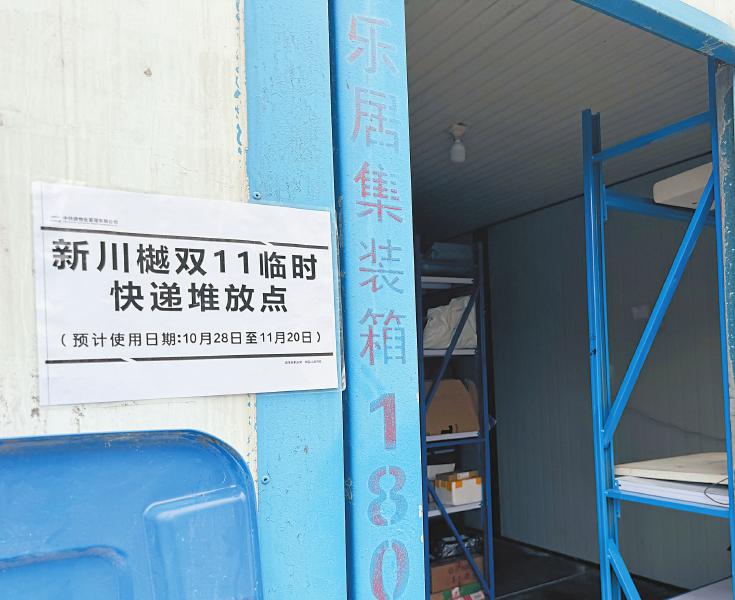
已采取临时措施,将尽快恢复配送
Si Chuan Ri Bao· 2025-11-16 20:47
Core Viewpoint - The delivery services of several express companies in the Chengdu New District have been suspended, causing significant inconvenience for residents during the peak shopping period of "Double 11" [2][4]. Group 1: Delivery Issues - Residents in the New Chuan District reported that multiple express companies, including Zhongtong, Yuantong, Shentong, and Yunda, indicated that their locations were "undeliverable" due to reasons such as "address cannot be delivered" and "the order's delivery area cannot be dispatched" [2][3]. - The situation is affecting several residential complexes, with reports confirming that 2-5 express companies are showing "undeliverable" status for each complex [3]. Group 2: Reasons for Delivery Suspension - The primary reasons for the suspension of delivery services include the lack of delivery points in the area and a high volume of complaints from residents regarding lost or damaged packages [4][6]. - Many residential complexes lack dedicated express delivery stations, leading to a significant increase in delivery volume, with some complexes experiencing over 1,000 packages daily during "Double 11" [6]. - Complaints from residents about delivery issues have increased, prompting express companies to halt services due to operational inefficiencies and rising costs [6]. Group 3: Solutions Being Implemented - Community staff have reported that measures are being taken to address the delivery issues, including converting parts of property management offices into temporary pick-up points for packages [7]. - New temporary storage solutions, such as delivery cabinets and designated areas for package storage, are being established to facilitate the collection of packages by residents [7]. - Plans are in place to develop a neighborhood center that will integrate various services, including express delivery, to improve logistics in the area [7].


中国电商追踪_10 月线上零售增长回归常态;重述双十一购物节五大核心亮点-Navigating China Internet_ eCommerce tracker_ Normalized Oct online retail growth; Re-capping five key highlights from Singles’ Day shopping festival
2025-11-16 15:36
Summary of the Conference Call on China's E-commerce Industry Industry Overview - The conference call discusses the e-commerce sector in China, particularly focusing on the Singles' Day shopping festival and its implications for online retail growth and consumer behavior. Key Highlights from Singles' Day Festival 1. **GMV Growth and Parcel Volume**: - Estimated gross merchandise value (GMV) growth of approximately 10% during the Singles' Day festival period from November 1 to November 11, with parcel volume growth of about 9% year-over-year (yoy) [2][8][36]. - The growth rate for parcel volume has moderated compared to the previous year, which saw a 21% increase [2]. 2. **Impact of National Subsidies**: - The fourth batch of national subsidies, totaling RMB 69 billion, was rolled out on October 1, contributing to the overall GMV growth [8][13]. - The subsidies are expected to have a diminishing impact in 4Q25 due to a high base effect from the previous year [13]. 3. **Performance of Major E-commerce Players**: - Alibaba (BABA) reported an 8% growth in GMV, while JD.com (JD) saw a 7% increase in GMV and a 40% increase in active buyers [16]. - Pinduoduo (PDD) emphasized its everyday low price strategy, achieving a 12% GMV growth during the festival [16]. 4. **Shift to Online Services**: - Online services GMV grew by 27% in October, indicating a shift in consumer spending towards services rather than goods [1]. 5. **AI Integration in E-commerce**: - Significant adoption of AI tools by major platforms, with Alibaba rolling out six AI tools that improved click-through rates (CTR) by 10% and merchant return on investment (ROI) by 12% [10]. Additional Insights - **Consumer Behavior Trends**: - There is a noted decline in home appliance sales, down 15% yoy, while communication devices saw a robust growth of 23% yoy [1][54]. - The overall retail sales growth was 2.9% yoy in October, aligning with expectations [1]. - **Quick Commerce Growth**: - Quick commerce GMV increased by 138.4% yoy, with platforms like Meituan and JD seeing substantial growth in their respective categories [12]. - **Market Competition**: - The competition in the quick commerce sector is intensifying, with expectations of a fragmented long-term landscape as companies focus on improving unit economics [12]. - **Sustainability of Growth**: - Concerns regarding the sustainability of national trade-in subsidies and their impact on appliance sales moving forward [13]. Conclusion - The e-commerce sector in China is experiencing a normalization in growth rates post-Singles' Day, with significant shifts towards online services and AI integration. The competitive landscape remains dynamic, with major players adapting their strategies to maintain market share amidst changing consumer preferences and regulatory pressures.

瑞银展望2026:中国互联网投资新格局
瑞银· 2025-11-16 15:36
Investment Rating - The report assigns a favorable investment rating to the Chinese internet sector, highlighting its attractiveness compared to U.S. tech stocks due to lower valuations and promising earnings growth [1][2]. Core Insights - The Chinese internet stocks have risen due to improved sentiment, catch-up effects, and relatively low valuations, with a projected PE ratio of 17 times for 2025, significantly lower than the 31 times for U.S. tech stocks [1][2]. - The consumption market in China is experiencing significant emotional consumption growth, with online retail growth at 6.3%, surpassing offline growth of 3.7% [1][4]. - AI technology is being widely applied across various sectors, including e-commerce recommendations, game design, and education, with companies like Alibaba leveraging AI to enhance cloud services and user engagement [5][18]. Summary by Sections 1. Overall Performance of the Internet Industry - The Chinese internet sector has seen a stock price increase of approximately 37% from the beginning of 2025, despite a 19% decline in profit expectations due to pressures from e-commerce and retail investments [2]. 2. Changes in the Consumption Market - Emotional consumption has become a highlight, particularly in gaming, music, and tourism, with a notable increase in online retail driven by algorithm optimization and a growing number of online shoppers [3][4]. 3. AI Development in China - China is advancing in AI through self-developed chips and local GPU efficiency, with Alibaba Cloud experiencing a growth increase from 18% to 26% in recent quarters [5]. 4. Development of Instant Retail - Instant retail has emerged as a significant trend, with companies like JD and Alibaba increasing their investments in food delivery, although growth rates have slowed due to seasonal factors and regulatory influences [6]. 5. Competition in the Food Delivery Sector - The food delivery market is highly competitive, with low-price strategies affecting user experience and merchant profits, while machine retail is accelerating the shift from offline to online [7]. 6. Regulatory Changes in Platform Economy - The government has implemented new policies to encourage healthy competition and protect small businesses, resulting in a more manageable regulatory environment for internet companies [8]. 7. Policy Environment for the Gaming Industry - The gaming industry has seen a positive shift in policy, with a significant increase in the issuance of new game licenses and recognition of efforts to protect minors [9]. 8. Future Focus of the Gaming Industry - The gaming sector should focus on evergreen games and the launch of new titles, with major companies expected to continue leveraging their IPs for sustained performance [10]. 9. Recent Changes in Long Video Industry Regulations - New measures from the broadcasting authority aim to enhance content supply in the long video sector, which could increase user subscriptions [11]. 10. Impact of New Advertising Regulations - The new advertising tax policy may increase marketing costs for certain industries, posing a potential downside risk for the advertising sector [12]. 11. Current Status and Future of the Education Sector - The education market remains robust despite economic challenges, with a significant demand-supply gap expected to drive long-term growth [13]. 12. Opportunities for Chinese Internet Companies Overseas - Chinese online games have a competitive edge due to lower development costs and a large talent pool, enabling them to expand internationally [14][15]. 13. Recent Developments in Cross-Border E-commerce - Cross-border e-commerce GMV has stabilized and shows signs of recovery, driven by innovative business models and improved logistics efficiency [16]. 14. Impact of ChatGPT on E-commerce - The introduction of ChatGPT's e-commerce features may have limited impact on China's e-commerce landscape, as major platforms already dominate traffic [17]. 15. Growth Potential and Competition in the Domestic Gaming Industry - The domestic gaming industry is expected to grow at around 5% in the coming years, with AI playing a crucial role in game development and player interaction [18][19].


京东20251114
2025-11-16 15:36
Summary of JD.com's Earnings Call Company Overview - **Company**: JD.com - **Quarter**: Q3 2025 - **Key Metrics**: - Total revenue: 299.9 billion RMB, up 15% year-over-year - Active customers: Over 700 million, with a 40% increase in shopping frequency year-over-year - Non-GAAP net profit: 5.8 billion RMB Core Business Performance - **Retail Revenue**: Increased by 11% year-over-year to 251 billion RMB [2][6] - **Comprehensive Product Categories**: Achieved a 19% year-over-year revenue growth, with supermarkets, fashion, and health categories maintaining double-digit growth [2][6] - **Advertising Revenue**: Grew over 20%, indicating strong momentum [2][6] New Business Developments - **Food Delivery Business**: Daily active users saw double-digit growth quarter-over-quarter, with losses narrowing [2][7] - **International Retail**: Gradually establishing capabilities in Europe, including the UK, France, Germany, and Eastern Europe [2][7] Technology and AI Initiatives - **AI Roadmap**: Launched at the JD Discovery Conference, introducing products like the digital assistant TA and AI agent Join Inside [2][8] - **Retail Technology Infrastructure**: Upgraded to serve over 40,000 brands, reducing costs and enhancing sales performance [2][9] Logistics Performance - **Logistics Revenue**: Increased by 24% year-over-year, but non-GAAP operating income fell by 39% to 1.3 billion RMB due to continued investments in customer experience and service capabilities [2][12] Profitability and Margins - **Gross Margin**: Increased by 1.3 percentage points to 19.3%, driven by a shift towards higher-margin businesses and optimized procurement costs [2][11] - **Operating Profit Margin**: Rose by 76 basis points to 5.9% [2][11] Future Outlook - **Strategic Focus**: JD.com aims to enhance supply chain capabilities and operational efficiency across all business lines, including food delivery and international expansion [2][10] - **Sustainable Growth**: Plans to maintain long-term profitability while optimizing the ecosystem for deeper synergies [2][22] User Engagement and Merchant Activity - **Active Customers**: Over 700 million, with a significant increase in shopping frequency [2][4] - **Merchant Growth**: Active merchants increased by over 200%, contributing to a 24% growth in commission and advertising revenue [2][23][24] Investment Strategy - **Future Investments**: Focused on supply chain capabilities, including food delivery and international business, to enhance performance and service [2][28] - **Long-term Goals**: Maintain unit digital profit margins while expanding the overall business ecosystem [2][28] Conclusion JD.com demonstrated robust growth in Q3 2025, driven by strong performance in core retail and new business segments, alongside significant investments in technology and logistics. The company is well-positioned for sustainable growth through strategic investments and operational enhancements.
京东集团-SW(09618.HK):日百品类和平台业务快速增长 京东外卖亏损环比小幅减少
Ge Long Hui· 2025-11-16 13:31
Group 1 - The company achieved a revenue of 299.1 billion yuan in the latest quarter, representing a year-on-year growth of 15% [1] - JD Retail revenue reached 250.6 billion yuan, up 11% year-on-year, driven by accelerated growth in daily necessities and marketing revenue [1] - The number of active users on the platform exceeded 700 million in October, with over 40% growth in both active user count and shopping frequency [1] Group 2 - Non-GAAP net profit was 5.8 billion yuan, with a non-GAAP net profit margin of 1.9%, a decrease of 3.2 percentage points compared to the same period last year [2] - Retail operating profit margin improved from 5.2% to 5.9% year-on-year, attributed to an increase in gross margin and a slight decrease in marketing expenses [2] - The company repurchased 1.5 billion USD worth of shares in the first three quarters of 2025, accounting for 2.8% of the total outstanding shares as of December 31, 2024 [2] Group 3 - The company maintains an "outperform the market" rating, with revenue projections for 2025-2027 adjusted to 1,334.9 billion, 1,433.4 billion, and 1,558.7 billion yuan respectively [2] - Adjusted net profits for 2025-2027 are projected to be 30 billion, 41.5 billion, and 57.4 billion yuan respectively, with slight upward adjustments [2] - The company is expected to optimize supply chain efficiency and improve gross margins, enhancing user experience [2]
京东集团-SW(9618.HK)2025Q3财报点评:主业增长保持韧性 日百品类维持高景气
Ge Long Hui· 2025-11-16 13:31
Core Viewpoint - In Q3 2025, JD.com achieved revenue of 299.06 billion RMB, a year-on-year increase of 14.85%, with Non-GAAP net profit of 5.80 billion RMB, a decrease of 56.0% year-on-year, resulting in a net profit margin of 1.94%, down from 5.06% in the same period last year. Revenue growth exceeded Bloomberg consensus expectations, while the decline in net profit was better than expected [1] Revenue and Profit Analysis - JD.com's Q3 revenue reached 2990.59 billion RMB, with 1P revenue at 2260.92 billion RMB (up 10.50% YoY) and 3P revenue at 729.67 billion RMB (up 30.83% YoY). The 1P business saw a 4.92% increase in electronics and home appliances revenue, while general merchandise revenue grew by 18.83%. The 3P business experienced a 23.72% increase in commission and advertising revenue, and a 35.04% increase in logistics service revenue [1] - JD Retail achieved revenue of 2505.77 billion RMB in Q3, a year-on-year increase of 11.4%, with adjusted operating profit of 148.28 billion RMB, corresponding to a profit margin of 5.92%, up from 5.16% in the previous year [1] Logistics and New Business Performance - The logistics segment generated revenue of 55.08 billion RMB in Q3, a year-on-year increase of 24.1%, with adjusted operating profit of 1.28 billion RMB and a profit margin of 2.3%, showing a slight decline [2] - JD's new business revenue reached 15.59 billion RMB, a year-on-year increase of 214%. The food delivery service has partnered with over 2 million quality restaurants, with daily order volume for the top 300 restaurant brands increasing 13 times since launch. Increased marketing investment and rider welfare have enhanced platform competitiveness [2] Future Revenue and Profit Forecast - The company forecasts revenues of 1336.6 billion RMB and 1407.9 billion RMB for 2025 and 2026, respectively, with year-on-year growth rates of 15.34% and 5.34%. Non-GAAP net profits are projected to be 32.51 billion RMB and 43.51 billion RMB, reflecting year-on-year changes of -32.03% and 33.84% [3]