Luckin Coffee(LKNCY)

Search documents
2025民企大调研②:外卖大战没有赢家,应完善平台治理为餐饮商家“松绑”
3 6 Ke· 2025-12-26 00:24
Core Insights - The ongoing food delivery war has disrupted the operational rhythm of restaurants, leading to a significant decline in both efficiency and profit margins for dining establishments [1] - Major platforms like JD and Meituan have engaged in aggressive subsidies to stimulate order growth, resulting in a market share shift in the food delivery industry [1] - Despite increased order volumes, many restaurants are experiencing a situation of "growth without profit," as the cost of delivery has surged due to the competitive landscape [1][10] Group 1: Financial Performance of Major Companies - Meituan reported a revenue of 95.5 billion yuan for Q3 2025, a 2% year-on-year increase, but recorded a net loss of 18.6 billion yuan, marking its largest quarterly loss since its IPO in 2018 [2] - Alibaba's latest quarterly report indicated a surge in sales expenses by 34 billion yuan due to delivery subsidies, leading to a 52% year-on-year decline in net profit attributable to ordinary shareholders [2] - Luckin Coffee achieved a revenue increase of 50.2% year-on-year to 15.287 billion yuan in Q3 2025, but faced a 211% rise in delivery costs, resulting in a 2% decline in net profit [4] Group 2: Impact on Small and Medium-sized Restaurants - Small and medium-sized restaurants have lower bargaining power in the face of aggressive platform subsidies, leading to a significant drop in profits despite increased order volumes [4][5] - Fixed costs such as rent and labor remain unchanged, while prolonged delivery subsidies have led to a 20% decrease in average order value, creating a dilemma for restaurants between maintaining prices and attracting customers [4][5] - The financial strain on small businesses may hinder their ability to invest in new product development and service upgrades, potentially leading to a vicious cycle of declining profitability [5] Group 3: Industry Trends and Regulatory Responses - Research indicates that the food delivery war has resulted in a 7% average increase in total orders for merchants, but a 4% decrease in actual revenue [10] - The overall revenue of the restaurant industry in China for the first half of 2025 was approximately 2.75 trillion yuan, with a year-on-year growth rate of only 4.3%, reflecting a significant slowdown [10] - Industry associations have called for the regulation of irrational subsidies and the establishment of a healthier competitive environment, emphasizing the need for platforms to stop coercing merchants into price-cutting practices [11][15]



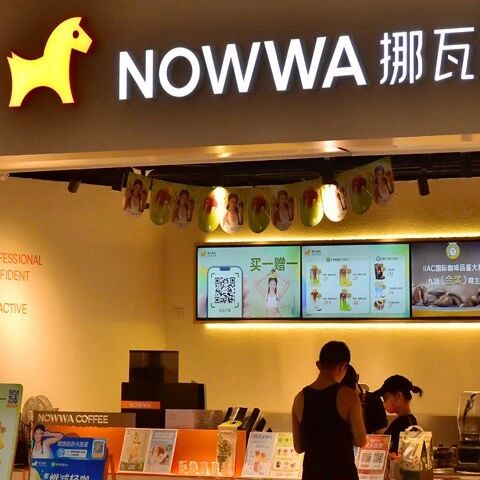
门店破万,跻身咖啡「四大天王」,前饿了么高管和瑞幸掰手腕
36氪· 2025-12-25 00:26
Core Viewpoint - The article discusses the rapid expansion of coffee brands in China, particularly focusing on the emergence of four major players: Luckin Coffee, Kudi Coffee, Lucky Coffee, and Nova Coffee, which have collectively reached over 10,000 stores, marking a significant milestone in the coffee industry [4][15]. Group 1: Market Dynamics - Nova Coffee has recently surpassed 10,000 stores globally, joining the ranks of other major coffee brands, with Luckin Coffee leading at 29,000 stores, Kudi at 15,000, and Lucky Coffee at 10,000 [4]. - The average consumer spending for these brands varies, with Luckin at 14.28 yuan, Kudi at 10.48 yuan, Lucky Coffee at 8.14 yuan, and Nova Coffee at 16.99 yuan, indicating a focus on affordable coffee options [4]. Group 2: Business Model and Strategy - Nova Coffee's unique approach involves a "store-in-store" model, allowing it to expand rapidly with minimal investment, leveraging existing foot traffic from partner establishments like restaurants and convenience stores [12][20]. - The initial investment to open a Nova Coffee outlet in a convenience store is approximately 1.6 million yuan, significantly lower than traditional standalone coffee shops, which can cost between 180,000 to 230,000 yuan [22][23]. Group 3: Competitive Landscape - The article highlights the competitive strategies of the four major coffee brands, noting that Kudi Coffee has achieved rapid expansion in just two years, while Nova Coffee has focused on a more gradual approach with a strong emphasis on online sales and partnerships [16][28]. - Nova Coffee's growth strategy includes a shift back to the "store-in-store" model after experimenting with independent stores, indicating a flexible approach to market demands [19][24]. Group 4: Future Outlook - Nova Coffee aims to reach over 30,000 stores by 2030, with a focus on maintaining profitability and brand integrity amidst rapid expansion [26]. - The article emphasizes the importance of sustainable growth models and the need for brands to differentiate themselves in a saturated market, questioning how they will maintain consumer loyalty as coffee becomes ubiquitous [29][30].
新消费派|咖啡行业“万店之战” 的下半场,从“拼规模扩张”转向“拼综合能力”
Xin Hua Cai Jing· 2025-12-24 12:29
Core Insights - The coffee industry in China is experiencing significant expansion in 2025, with brands like Luckin, Kudi, Lucky Coffee, and Nova Coffee surpassing 10,000 stores, indicating accelerated competition [1] - The market is shifting from extensive expansion to layered competition, focusing on quality upgrades, efficiency optimization, and resource integration by 2026 [1][2] - The coffee market is projected to reach approximately 130 billion yuan in 2025, providing a prime opportunity for established brands to capture market share [2] Market Dynamics - Nova Coffee's rapid expansion is noteworthy, with its store count increasing from 3,258 in July 2025 to over 10,000 by December, showcasing a growth rate that outpaces industry averages [2][3] - The "parasitic" model employed by Nova Coffee, embedding coffee services within existing commercial entities, has allowed for efficient market penetration and reduced operational costs [3][4] - The coffee industry is undergoing a transformation where brands must either increase prices for premium positioning or expand to dilute fixed costs, with many opting for the latter [4] Competitive Landscape - The coffee sector is entering a structural reshuffle, with volume-driven brands like Luckin and Lucky Coffee focusing on lower-tier cities, while high-end brands may face contraction due to unclear positioning [6] - Starbucks leads globally with 40,990 stores, followed by Luckin with 29,214 and Kudi with 18,000, indicating a competitive hierarchy in the market [6] - Brands are increasingly recognizing the limitations of continuous expansion, with the "10,000 store" mark potentially serving as a ceiling for growth [7] Financial Performance - Luckin's third-quarter report for 2025 shows a net profit decline of 2% despite revenue growth, highlighting the challenges of maintaining profitability amid aggressive expansion [8] - Grid Coffee, focusing on high-quality offerings without engaging in price wars, has successfully expanded its store count to over 100, emphasizing a stable pricing strategy [9] Future Outlook - The coffee industry is evolving towards a focus on brand value and long-term sustainability, with companies needing to balance expansion efficiency with maintaining brand integrity [10] - Key competitive capabilities will include global supply chain management, digital operations, and the ability to adapt to market changes, particularly in overseas markets [11] - The future of competition will center on creating user value and addressing broader societal impacts, moving beyond mere scale and efficiency [11]

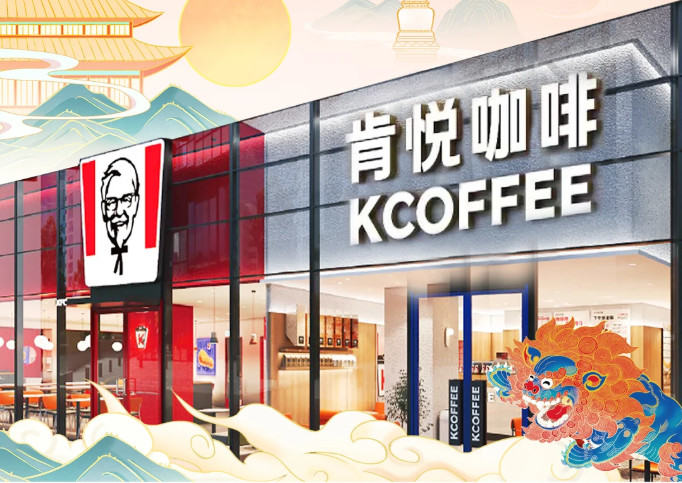
一杯咖啡只卖6元,到底能不能赚钱?
3 6 Ke· 2025-12-24 03:19
Core Insights - Yum China CEO Qu Cui Rong stated that the 6 yuan KFC coffee can still be profitable, which has drawn industry attention [1] - The low price strategy is supported by extreme cost control and a unique store opening strategy called "shoulder-to-shoulder" [1][2] Group 1: Business Strategy - The "shoulder-to-shoulder" strategy involves renting out idle space in existing KFC locations to reduce labor and rental costs while managing both chicken and coffee operations [1] - This strategy has been identified as a key factor in KFC coffee's profitability [1] Group 2: Store Expansion - KFC coffee has accelerated its store expansion, adding approximately 300 new stores in the first two quarters of 2023, with plans to exceed 1,500 stores by year-end [2] - The target for store growth was raised to 1,700 in Q2, and by Q3, the number of stores surpassed 1,800, with expectations to exceed 5,000 by 2029 [2] Group 3: Pricing Strategy - KFC coffee continues to implement a low-price strategy, offering coffee at 6 yuan with monthly cards and various promotional activities [2] - CEO Qu Cui Rong emphasized the importance of maintaining a balance between resilience, growth, and a competitive edge without resorting to excessive spending [2] Group 4: Industry Trends - Other coffee brands are also engaging in aggressive pricing strategies, with some offering coffee for as low as 3.9 yuan [4] - The increasing prevalence of low-priced coffee has led to a price war in the industry, raising concerns about quality degradation and market sustainability [7] Group 5: Market Dynamics - Some brands, like Luckin Coffee, have started to increase prices, indicating a shift towards establishing a higher price point to differentiate from competitors [8] - Analysts suggest that a cautious consumer trend is emerging, where customers prefer better quality products at acceptable price points, necessitating a focus on quality alongside price increases [8]

拼养生赛道,茶饮业掀起“黑色旋风”
Xin Lang Cai Jing· 2025-12-23 17:02
Core Insights - The rise of black sesame-flavored products in the beverage and dessert market in Changsha is linked to increasing health-conscious consumer behavior during winter, with multiple brands launching new offerings [3][4][5] Beverage Industry - Several tea and coffee brands, including Luckin Coffee and Tea Baidao, have introduced black sesame products, such as the "Five Black Latte" and "Black Sesame Soy Milk Kirin," which have gained popularity among consumers [3][4] - M Stand has also launched a series of black sesame-themed products, including a black sesame Basque milk and cheesecake, contributing to the trend [4] - Local coffee shops are joining the trend, with at least ten establishments in Changsha adding black sesame lattes to their menus, promoting health benefits like hair nourishment and wellness [5] Consumer Reception - While some consumers appreciate the health aspects of black sesame products, others criticize the taste, comparing it unfavorably to traditional black sesame paste [3][6] - Social media discussions reveal mixed reviews on the flavor and quality of black sesame beverages, with some consumers finding them lacking in richness and authenticity [6] Health Claims and Ingredients - Black sesame is recognized in traditional Chinese medicine for its health benefits, which has led to its popularity among food brands [6] - However, concerns have been raised about the actual health benefits of some products, as many contain high levels of sugar and additives, leading to skepticism about their nutritional value [6] - Industry experts note that while black sesame fits well within the "new Chinese" health trend, some products may prioritize marketing over genuine health benefits, diluting the core value of black sesame [6]

蜜雪冰城进军洛杉矶,库迪开到法国
3 6 Ke· 2025-12-23 10:12
Group 1: Store Expansion - In November, 20 chain coffee brands tracked by Yilan Commercial opened 2,979 new stores, a year-on-year increase of 75.64%, bringing the total number of stores to over 81,217, with a net increase of 2,566 stores month-on-month [1] - Leading brands are steadily expanding their store presence, with Kudi Coffee opening 84 stores and Luckin Coffee opening 132 stores, totaling over 600 new targeted locations this year across 183 cities [1] - Unique brands are also entering new markets, such as Xianji opening its first store in Yangzhou, focusing on premium matcha drinks, and Tea Li Yi Shi opening two new stores in Guangzhou, bringing its total to 496 operating stores nationwide [1] Group 2: Product Innovations - As the weather gets colder, the tea beverage market is entering its peak season, with apples, strawberries, and cherries becoming key ingredients for new product launches [3] - Various tea brands are introducing new products, such as Yihe Tang's new apple-flavored drinks and CoCo's strawberry milk options, while coffee brands like Nova Coffee are focusing on apple-based beverages [3] - Brands are also exploring new product lines, with Gu Ming introducing bottled fresh juices and Nayuki launching new baked goods, indicating a trend towards diversification in offerings [3] Group 3: Marketing Strategies - Seasonal marketing campaigns are becoming increasingly competitive, with brands like Grandpa Bu Pao Tea launching themed stores and Sweet Lala promoting apple drinks for the holiday season [4] - High-tech collaborations are on the rise, with Honey Snow Ice City partnering with Gaode for group buying services, enhancing supply chain efficiency [4] Group 4: Financial Developments - New brand "LUOSHI" has opened its first store in Shanghai, backed by A-Ma Handmade [7] - Luckin Coffee and its investor, Dazhong Capital, are evaluating multiple acquisition targets, including Nestlé's Blue Bottle Coffee and Costa Coffee, with market analysis suggesting a significant drop in Costa's value since its acquisition by Coca-Cola [7] - The Hurun Research Institute's report lists Honey Snow Group with a valuation of 150 billion yuan, highlighting the rapid growth of Chinese brands in the restaurant sector [7]

祝贺!瑞幸咖啡董事长黎辉入选“2025年度茶饮咖啡十大杰出董事长”
Sou Hu Cai Jing· 2025-12-23 07:46
Group 1 - The core viewpoint of the article highlights the recognition of Luckin Coffee's Chairman, Li Hui, as one of the "Top Ten Outstanding Chairmen in Tea and Beverage for 2025" by a prominent financial media outlet [1] Group 2 - The domestic coffee market is experiencing intense competition characterized by ongoing price wars, yet Luckin Coffee has managed to achieve steady growth [3] - In Q3 2025, Luckin Coffee reported a revenue of 15.29 billion yuan, representing a year-on-year increase of 50.2%, with a GMV of 17.32 billion yuan and a monthly average of 112 million active customers, marking a 40.6% increase year-on-year [3] Group 3 - Luckin Coffee opened 3,008 new stores in a single quarter, bringing the total number of stores to 29,214, with franchise stores exceeding 10,000, reaching 10,332, making it the leader in the domestic coffee market [4] - Li Hui, as one of the earliest investors in Luckin Coffee, played a crucial role in the company's rapid expansion, and since he became Chairman in April, the company's performance has continued to improve significantly [4]

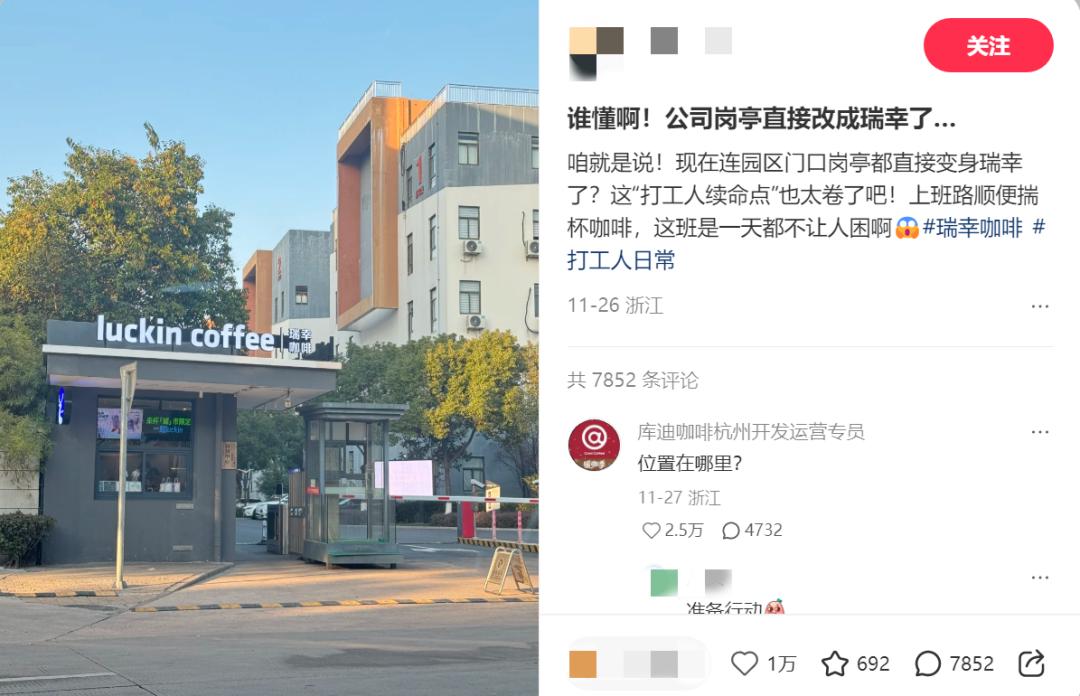
瑞幸「入侵」岗亭、地铁闸机旁,成打工人「9.9元收费站」?
36氪· 2025-12-22 13:36
Core Viewpoint - The coffee industry is undergoing a "location revolution," with brands like Luckin Coffee strategically placing stores in unconventional spots to intercept consumers during their daily routines [13][18][45]. Group 1: Innovative Store Locations - Luckin Coffee has transformed a security booth in a Zhejiang industrial park into a mini coffee shop, attracting attention and business from employees [8][12]. - The brand is expanding its presence in unexpected locations such as subway stations, bus stops, and even traditional settings like temples and markets, effectively changing the traditional retail logic from "waiting for customers" to "finding customers" [19][20][42]. - The company has launched stores in high-traffic areas, such as near subway exit gates, allowing customers to order via mobile and pick up their coffee quickly [20][45]. Group 2: Creative Store Transformations - Luckin Coffee has repurposed various structures, including newsstands and shipping containers, into coffee shops, maintaining their original aesthetics while providing modern coffee services [25][26]. - The transformation of traditional spaces into coffee shops is gaining popularity, with many locations retaining their original functions while integrating coffee services, thus enhancing urban convenience [27][29]. Group 3: Expansion Strategies - The trend of "borrowing space" for coffee shops is on the rise, with brands like Nova Coffee partnering with convenience stores and internet cafes to expand their reach efficiently [34][36]. - Nova Coffee recently surpassed 10,000 stores, indicating significant growth and interest in this operational model [37][38]. Group 4: Market Potential - The coffee market in China is still seen as having substantial growth potential, with four local brands already exceeding 10,000 stores, suggesting that consumer demand is far from saturated [43][44]. - The shift in coffee shop presence from traditional settings to everyday locations reflects a broader trend of making coffee more accessible and integrated into daily life [42][46].

消费者服务行业周报(20251215-20251219):海南封关正式启动,利好传导至酒店及旅游-20251222
Huachuang Securities· 2025-12-22 08:16
Investment Rating - The report maintains a "Recommendation" rating for the consumer services industry, anticipating that the industry index will outperform the benchmark index by more than 5% in the next 3-6 months [42]. Core Insights - The official launch of the Hainan Free Trade Port's full island closure policy is expected to significantly boost the tourism and hotel sectors, leading to a surge in market expectations for Hainan tourism. There has been a substantial year-on-year increase in flight and hotel bookings for the New Year and Spring Festival holidays, particularly in Sanya, where the demand for cross-year travel is notably high. The hotel and tourism sectors have shown strong performance, leading the consumer services industry, reflecting positive market expectations for the long-term benefits of the closure policy [4][34]. - The report identifies several key investment opportunities, including hotels with balanced supply and demand, human resource services with clear industry trends, the duty-free sector benefiting from new policies, and internet platforms integrating online and offline operations [4]. Industry Basic Data - The consumer services industry consists of 55 listed companies with a total market capitalization of 498.804 billion yuan and a circulating market capitalization of 457.081 billion yuan [1]. Market Performance - The consumer services industry experienced a weekly increase of 2.66%, outperforming the overall A-share market, which saw a decline of 0.15%. The CSI 300 index also fell by 0.28%, while the consumer services index rose by 3.76% [7][24]. - The report highlights that the hotel sector saw a weekly increase of 2.70%, while the tourism and scenic areas sector increased by 3.42% [18]. Notable Announcements - Key announcements include a report from Beijing Human Resources showing a shareholding reduction by a major shareholder and a significant increase in revenue and net profit for China Education Holdings [30][32].


瑞幸“入侵”岗亭、地铁闸机旁,成打工人“9.9元收费站”?
3 6 Ke· 2025-12-22 01:15
Core Viewpoint - The article discusses the innovative trend of coffee brands, particularly Luckin Coffee, transforming unconventional locations such as security booths and public transport stations into mini coffee shops, thereby enhancing customer accessibility and convenience [1][2][4]. Group 1: Transformation of Locations - A security booth in a Zhejiang industrial park has been converted into a Luckin Coffee outlet, leading to humorous social media reactions about the new "charging station" for commuters [2][4]. - The mini coffee shop has become a popular stop for employees, especially during morning and lunch hours, indicating a successful business model in a previously underutilized space [4][6]. Group 2: Strategic Location Choices - Coffee brands are shifting their location strategy from "waiting for customers" to "actively seeking customers," embedding themselves in high-traffic areas such as subway stations and train platforms [6][9]. - Luckin has opened a store next to the exit of the Guomao station on Beijing's subway line 1, allowing customers to order coffee conveniently while on the go [7]. Group 3: Creative Store Formats - The article highlights the trend of repurposing traditional structures like newsstands and shipping containers into coffee shops, which blend nostalgia with modern convenience [10][12]. - Examples include a Luckin store in Guangzhou that retains the original newsstand design while offering a modern coffee experience, appealing to urban consumers [10]. Group 4: Expanding into Unconventional Spaces - Coffee brands are entering unexpected venues such as temples, parks, and markets, creating unique customer experiences that attract younger demographics [12][14]. - The article mentions various locations where coffee shops have emerged, including a coffee shop in a traditional ancestral hall and others in local markets, making coffee a regular part of daily errands [12][14]. Group 5: Leveraging Existing Retail Spaces - The trend of "borrowing" retail space is gaining traction, with brands like Nova Coffee partnering with convenience stores and internet cafes to expand their reach efficiently [14][15]. - Nova Coffee has reportedly surpassed 10,000 locations through this strategy, indicating a significant growth trend in the coffee industry [15]. Group 6: Changing Consumer Interaction - The coffee industry is evolving from a model where consumers go to cafes to one where cafes come to consumers, making coffee more accessible and integrated into daily life [17][18]. - The article emphasizes that the coffee market in China still has substantial growth potential, with brands needing to focus on efficient penetration strategies to meet consumer demand [17].