
Luckin Coffee(LKNCY)

Search documents
茶咖日报|挑战传统巨头,瑞幸咖啡纽约首店开业
Guan Cha Zhe Wang· 2025-07-01 10:58
Group 1: Luckin Coffee's Expansion - Luckin Coffee opened its first two stores in New York City, marking a significant step in its international strategy [1] - The stores are strategically located near New York University and the Empire State Building, targeting Chinese students, tourists, and white-collar workers [1] - The opening day featured a promotional price of $1.99 per cup, focusing on popular products like the coconut latte and utilizing a cashier-less self-service model to enhance the digital experience [1] Group 2: Starbucks' Store Renovation - Starbucks plans to renovate 1,000 stores in the U.S. next year, which represents 10% of its self-operated locations, to create a more comfortable environment for customers [2] - The renovations will include modern designs with comfortable seating, power outlets, and a focus on creating a "third space" that feels more like a hotel lobby than a fast-food restaurant [2] - The company has already started the renovation project in the Hamptons area, showcasing a modern aesthetic with natural elements and electronic menus [2] Group 3: JDE Peet's Innovation Factory - JDE Peet's has opened a global coffee research and innovation factory in Joure, Netherlands, with an investment of €5 million [3] - The factory aims to shorten product time-to-market and facilitate the rapid introduction of high-quality coffee products [3] - It serves as a center for prototype design, testing new technologies, and enhancing flavor, quality, and sustainability, while also being a collaborative learning space for global employees [3] Group 4: Agricultural Development in Tea Industry - The Ministry of Agriculture and Rural Affairs is responding to suggestions for promoting the healthy development of the new-style tea beverage industry and deepening the integration of the tea industry [3] - The ministry has established a comprehensive standard system covering the entire tea industry chain and is promoting upgrades towards standardization, intelligence, and branding through various initiatives [3] - Key areas of focus include improving industry standards, quality safety supervision, supply chain innovation, brand building, and rural revitalization [3]




社会服务新消费研究之茶饮行业研究框架
Changjiang Securities· 2025-07-01 01:16
Investment Rating - The report maintains a "Positive" investment rating for the tea beverage industry [6]. Core Insights - The tea beverage industry has evolved into a trillion-yuan new consumption sector, driven by product cycles and changing consumer demands [20][24]. - The industry is experiencing a shift from basic functional needs to more complex demands, including product, experience, social, and brand needs [24]. - There is significant growth potential in both domestic and international markets, particularly in lower-tier cities and Southeast Asia [31][45]. Summary by Sections 01 Consumption: A Product of Economic and Demographic Cycles - The report outlines the correlation between economic cycles and consumer spending, highlighting that per capita GDP growth has shifted from 14% during the reform era to 7% in the high-quality development era [13]. - It identifies key factors influencing consumption, including income expectations, demographic structure, and economic conditions [16]. 02 Tea Beverage Industry: Space, Structure, and Barriers - The current market for ready-to-drink tea has reached a scale of over 100 billion yuan, with a compound annual growth rate (CAGR) of 27% from 2015 to 2018 [21]. - The demand for tea beverages has evolved, with consumers now seeking products that fulfill multiple needs beyond basic functionality [24]. - The report predicts that by 2030, the number of tea beverage stores could reach between 42,800 to 94,400, depending on market conditions, with a five-year CAGR of 11% to 21% [37]. - The competitive landscape shows that lower-priced products are gaining market share, with the average price point for tea beverages narrowing [49]. 03 Investment Recommendations - The report suggests focusing on tea beverage companies that have growth potential, a favorable competitive landscape, and operational barriers, as the industry is expected to maintain a high level of consumer interest [62].
瑞幸咖啡进军美国市场,首批门店在纽约开业
news flash· 2025-06-30 22:54
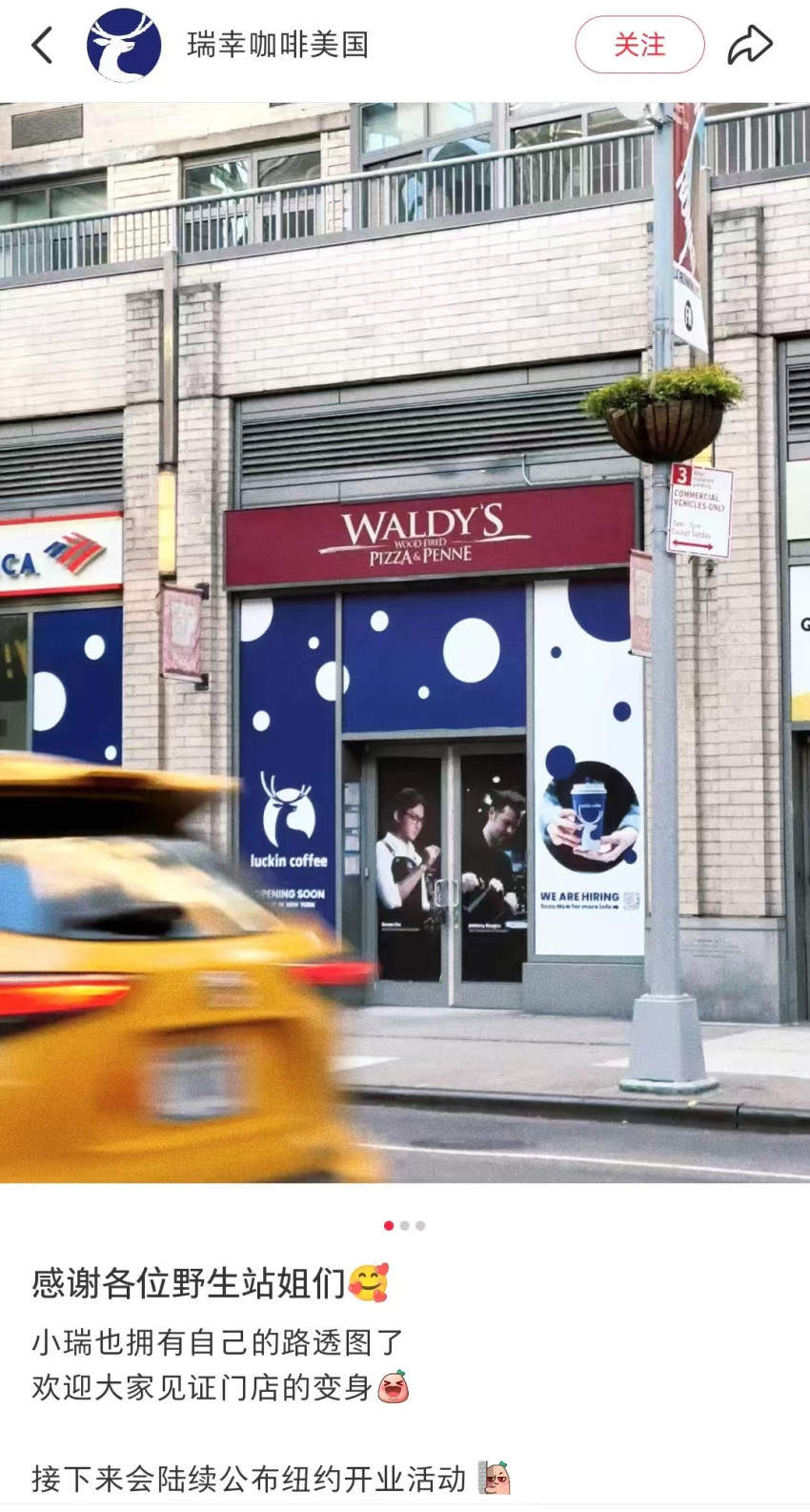
Core Insights - Luckin Coffee has opened its first stores in the United States on June 30, further intensifying competition in the coffee market [1] - The new store located at 800 Sixth Avenue in New York attracted many customers, with many taking advantage of a promotional offer of $1.99 for drinks through the Luckin app [1] Company Summary - Luckin Coffee has surpassed Starbucks in its home market, indicating strong brand performance and market penetration [1] - The opening of stores in New York marks a significant step in Luckin's expansion strategy into the U.S. market [1] Industry Context - The entry of Luckin Coffee into the U.S. market represents a growing trend of international coffee brands competing in established markets [1] - The promotional pricing strategy employed by Luckin Coffee may disrupt traditional pricing models within the coffee industry in the U.S. [1]
Luckin, China's largest coffee chain, launches in NYC as it takes on Starbucks in home region
New York Post· 2025-06-30 18:25
Core Viewpoint - Luckin Coffee, China's largest coffee chain, has opened its first locations in the United States, specifically in New York City, after successfully competing against Starbucks in Asia [1][5]. Group 1: Store Launch and Promotions - Luckin Coffee opened its first US locations on Monday, including two in New York City [1][5]. - The company is promoting its new storefronts with special deals, such as offering free tote bags to the first 100 customers and 99-cent drinks for a limited time [2][11]. Group 2: Product Offerings and Pricing Strategy - Luckin Coffee offers a diverse menu that includes coffee, matcha, lattes, and fruity drinks, along with pastries like banana yogurt loaf and sausage, egg, and cheese croissant [3]. - The chain's pricing strategy is competitive, with drinks in China priced approximately 30% lower than those at Starbucks [3]. Group 3: Company Background and Growth - Founded in Xiamen, China in 2017, Luckin Coffee rapidly expanded to surpass Starbucks in the number of storefronts by 2019, currently operating around 22,000 locations in China and additional stores in Singapore [4]. - Despite facing a significant scandal in 2020 involving accounting fraud, which led to a $180 million fine and a $175 million settlement, the company has continued to grow, doubling its number of stores and increasing revenue by 87% in 2023, outperforming Starbucks in China [7][9]. Group 4: Competitive Landscape - Recent reports indicated that Starbucks was exploring a partial sale of its Chinese business, although the company has since denied these claims [10].

咖啡为何在济南越来越“香”?
Qi Lu Wan Bao· 2025-06-30 06:23
Core Insights - The coffee market in Jinan is rapidly expanding, with a significant increase in the number of coffee-related businesses and a growing consumer base [1][2][4] Group 1: Market Expansion - Jinan has seen the addition of 201 new coffee-related enterprises in 2023, marking a 51.3% increase compared to the same period last year [1] - The coffee market in Jinan is projected to grow at an annual rate of 15%, with a complete industry chain established from equipment sales to skill training [2][4] - The city is becoming a major coffee material and equipment shopping center in Northern China, with a transaction volume expected to exceed 100 million yuan in 2024, growing at an average rate of 25% [2] Group 2: Business Performance - Coffee shops in Jinan report varying sales, with peak weekend sales reaching over 100 cups, while weekday sales average around 60-70 cups [3] - Major chains like Luckin Coffee have a strong presence, with some stores selling 700-800 cups daily and achieving a net profit margin of 40%-45% [3] Group 3: Market Potential - Despite rapid growth, Jinan's coffee market still has significant room for development compared to cities like Hangzhou [4][5] - The low entry barrier for starting a coffee business, with initial costs ranging from 20,000 to 150,000 yuan, is attracting many entrepreneurs [5] - The rise of local brands is enhancing Jinan's influence in the national coffee market, with a diverse market structure expected to emerge [5]
中国创业者的信心从哪里来?首先是9亿人的刚需升级机会
创业家· 2025-06-29 10:09
Core Viewpoint - The article emphasizes the structural opportunities in China's consumer market, particularly focusing on the 900 million people in lower-tier cities as the main consumer base for future growth [5][12]. Group 1: Market Dynamics - The consumer landscape in China has shifted, with the previous focus on high-end brands in first-tier cities evolving to include a broader range of products catering to lower-tier markets [5][6]. - The connection between high-tier and low-tier markets has been established, allowing for a more integrated consumer experience [7]. - The article highlights the emergence of new business models based on China's new infrastructure and production relationships, which enhance efficiency in information flow and supply chains [11][12]. Group 2: Consumer Segmentation - The consumer market is segmented into three layers: the affluent class, the middle class under economic pressure, and the 900 million people in lower-tier cities who represent the main market [9]. - The affluent class consumes globally, while the middle class faces challenges due to economic adjustments, and the lower-tier market shows potential for growth as purchasing power is released [9][12]. Group 3: Investment Opportunities - The article identifies two structural opportunities in the consumer market: the rise of new national brands and the development of new nationwide chains [13]. - The "启承消费时钟" (Qicheng Consumption Clock) is introduced, categorizing consumer goods into four phases: essential needs, optional purchases, alternatives, and upgrades, reflecting the changing economic conditions [12][13]. - The growth of discount brands and alternative products is noted, with examples such as "鸣鸣很忙" in the snack sector, indicating a shift towards more affordable options [13].

小红书的表情包新顶流,居然是双汇的“猪”、太太乐的“鸡”?
3 6 Ke· 2025-06-27 02:42
Core Viewpoint - The article discusses how traditional food brands like Shuanghui and TaTa Le are leveraging internet culture and user-generated content to engage with younger consumers through their IP characters, leading to increased brand interaction and marketing opportunities [1][41]. Group 1: Shuanghui's "Top Stream Pig" - Shuanghui's new IP character, referred to as "Top Stream Pig," gained popularity on social media without any prior media presence, solely based on its packaging design [3][7]. - The brand is actively engaging with consumers by inviting them to create derivative content, suggesting names, and developing merchandise like stickers and wallpapers [7][10]. - The character has become a frequent element in Shuanghui's marketing strategy, serving as a hook for interaction with consumers [12]. Group 2: TaTa Le's "Le Le Chicken" - TaTa Le's IP character "Le Le Chicken" has a similar trajectory, gaining traction through user-generated content and brand engagement [13][16]. - The brand has embraced the creativity of its audience, allowing for modifications and enhancements to the character, which has led to a more relatable and engaging persona [13][16]. - Both Shuanghui and TaTa Le are seen as adapting to the younger demographic's preferences, utilizing humor and relatability in their marketing strategies [19][41]. Group 3: Broader Industry Trends - The article highlights a trend among food and beverage brands to utilize IP characters for marketing, with examples including Wangzai and M&M's, which have successfully integrated their characters into social media and consumer interactions [19][28]. - Brands are increasingly using humor and relatability to connect with younger audiences, as seen in the campaigns of companies like Luckin Coffee and Mixue Ice Cream [32][37]. - The success of these strategies indicates a shift in marketing approaches, where brands are not just waiting for trends but actively participating in the cultural conversation [41].


观茶| 新茶饮带动地域特色原料出圈,岭南水果成顶流
Nan Fang Nong Cun Bao· 2025-06-26 01:36
Core Viewpoint - The new tea beverage industry is increasingly incorporating regional specialty ingredients, particularly fruits from the Lingnan region, which are gaining popularity and becoming mainstream in the market [1][3][18]. Group 1: New Product Launches - Various brands are introducing new tea beverages featuring seasonal fruits like lychee and yellow skin fruit, showcasing a trend towards utilizing local ingredients [6][21]. - Notable new products include "Sea Salt Lychee Ice Tea" from Tea Baidao, which reportedly contains 19 fresh lychees per cup, achieving sales of over 2 million cups within five days, consuming 25 million lychees in total [8][9]. - Other brands like Heytea and Luckin Coffee are also launching innovative products such as "Fragrant Yellow Skin Peach" and "Lychee Ice Brew Coffee," respectively, indicating a competitive market focused on fruit-based offerings [7][10][12]. Group 2: Market Trends - The trend of integrating regional fruits into new tea beverages is not isolated; it reflects a broader movement where various local ingredients like citrus, mulberries, and other fruits are breaking regional barriers and becoming staples in the industry [21][22]. - The emergence of regional specialty ingredients as a permanent fixture in the new tea beverage menu highlights the industry's evolution from mere beverage providers to facilitators of local agricultural products [26][30]. - The "brand + origin" model is becoming a trend in the new tea beverage sector, with brands establishing their own cultivation bases and collaborating with local farmers to enhance supply chain efficiency and product differentiation [28][29].

2美元就能喝一杯咖啡?瑞幸即将“杀进”美国
3 6 Ke· 2025-06-25 09:42
Group 1 - Luckin Coffee is set to open its first store in the United States on June 30, 2023, located in New York City [1][3] - The company will open two stores in Manhattan, strategically positioned near New York University to target the large Chinese student demographic [3] - To promote the new store openings, Luckin has initiated a "pop-up" marketing campaign in popular areas like Union Square and SOHO, offering attractive promotions such as "one year of free coffee" [3][6] Group 2 - The pricing for drinks at the new U.S. locations is reported to range from $2 to $3, with a maximum price of $6.75, comparable to Starbucks [6] - Luckin Coffee has expanded internationally, with 57 stores in Singapore and plans to enter the Hong Kong market, where it has already opened 7 stores [6][7] - The company is also entering the Malaysian market through a partnership with Hextar Industries, with plans to open two stores in Kuala Lumpur in January 2025 [7] Group 3 - CEO Guo Jinyi emphasized a cautious approach to expanding in the competitive U.S. coffee market, aiming for a flexible strategy to ensure steady growth [7] - The company’s international expansion strategy mirrors its domestic approach, focusing on significant investment in overseas markets [7][8]
星巴克中国值50-60亿美元吗?遭瑞幸库迪及新式茶饮围剿 2024财年营收、同店销售额下滑
Xin Lang Zheng Quan· 2025-06-25 09:10
Core Viewpoint - Starbucks China is facing significant challenges in the competitive landscape, with declining performance metrics and increasing pressure from local coffee brands and new tea beverage companies, raising questions about its valuation of $5-6 billion [1][6]. Group 1: Market Dynamics - Since 2019, local coffee brands like Luckin Coffee and Kudi have rapidly gained market share through aggressive pricing strategies and innovative marketing, leading to increased competition for Starbucks China [2][5]. - The ready-to-drink tea market is also saturated, prompting leading tea brands to expand into coffee, further intensifying competition in the coffee sector [2][5]. Group 2: Pricing and Product Innovation - Starbucks China has implemented significant price reductions, averaging a decrease of 5 yuan on several popular products, marking its first large-scale price adjustment in over 20 years [3][4]. - Despite these price cuts, Starbucks still struggles to compete on price, with local brands offering lower-priced options, such as Luckin Coffee's promotions at 6 yuan [3][5]. Group 3: Financial Performance - For the fiscal year 2024, Starbucks China's revenue declined by 1.4% to $2.958 billion, marking its first negative growth in recent years [4][6]. - Same-store sales fell by 8%, with average transaction value also decreasing by 8%, indicating a challenging sales environment [5][6]. Group 4: Competitive Positioning - As of March 2025, Starbucks China had 7,758 stores, while Luckin Coffee had expanded to 24,097 stores, highlighting a significant gap in market presence [7]. - Starbucks' market share has dropped from a peak of 60% to approximately 14%, while Luckin Coffee leads with a 35% market share [7][8]. Group 5: Valuation Comparison - Luckin Coffee's total revenue for 2024 was $4.724 billion, with a market capitalization of $10 billion, resulting in a P/S ratio of 2.1 [8]. - If Starbucks China is valued at $5-6 billion, it would correspond to a P/S ratio of 1.7-2.03, which is lower than Luckin's, reflecting its weaker growth prospects and market performance [8].