
Luckin Coffee(LKNCY)

Search documents
与外卖平台价格战相关?瑞幸回应多款饮品降价3元
Zheng Quan Shi Bao Wang· 2025-05-30 08:20
Group 1: Pricing Strategies and Competition - Luckin Coffee has introduced a new pricing strategy with drinks priced at 6.9 yuan, down from the previous minimum of 9.9 yuan, amidst a price war in the coffee and tea industry [1] - Competitor Kudi Coffee has significantly reduced its prices to 3.9 yuan and 4.9 yuan per cup, resulting in a nearly tenfold increase in sales on the Ele.me platform [1] - The price reduction by Luckin Coffee is claimed to be part of a promotional campaign for the Dragon Boat Festival and Children's Day, rather than a permanent price cut [1] Group 2: Expansion and Market Presence - Mixue Ice Cream has rapidly expanded its independent coffee brand "Lucky Coffee," aiming to exceed 4,600 stores nationwide by the end of 2024 [2] - Mixue plans to invest at least 4 billion yuan in Brazil over the next 3-5 years for coffee bean procurement and other agricultural products, with plans to open its first store in Brazil [2] - KFC's coffee brand, Kenuo Coffee, has reached its 1,000th store in just two years, highlighting the rapid growth of coffee consumption in China [2] Group 3: Market Trends and Consumer Behavior - The tea beverage sector is also seeing low-priced product launches, with brands like Guming introducing drinks priced at 1 yuan and 3 yuan to attract more customers [3] - The competitive landscape among delivery platforms has led to increased sales for leading tea brands, with Tea Baidao reporting a sales increase of over 20% year-on-year in early May [4] - Nayuki's new store opened and quickly topped the beverage rankings, with a significant increase in orders during the May Day holiday, showcasing strong consumer demand [5]

热搜!瑞幸降价,迈入“6块9”时代?最新回应
21世纪经济报道· 2025-05-30 07:23
Core Viewpoint - Luckin Coffee has introduced a promotional price of 6.9 yuan for various drinks, which is perceived as a response to competitive pricing from Kud Coffee, despite the company stating it is a promotional offer rather than a price reduction [4][5][6]. Group 1: Pricing Strategy - Luckin Coffee has initiated a promotional campaign offering drinks at 6.9 yuan, a significant drop from the previous minimum price of 9.9 yuan [4][5]. - The company claims this pricing strategy is part of a dual holiday promotion for the Dragon Boat Festival and Children's Day, rather than a permanent price cut [4]. - Kud Coffee has aggressively reduced its prices to 3.9 yuan and 4.9 yuan per cup, intensifying the competitive landscape in the coffee market [5][6]. Group 2: Competitive Landscape - The coffee and tea industry is experiencing a price war, primarily driven by Luckin Coffee, which previously set the trend for lower prices in the market [5][6]. - Kud Coffee's rapid sales growth, achieving a tenfold increase in orders shortly after launching on Taobao, highlights the effectiveness of its low-price strategy [5]. - The competition is not limited to coffee, as new tea brands like Mixue Ice City are also influencing pricing strategies across the beverage sector [6]. Group 3: Management Changes - On April 29, Luckin Coffee announced a change in leadership, with Li Hui taking over as chairman, while Guo Jinyi remains as CEO [7][8]. - Li Hui, the new chairman, has a strong background in finance, having previously worked at Goldman Sachs and Morgan Stanley, and is currently the largest shareholder through Dazhang Capital [8]. Group 4: Financial Performance - In the first quarter of 2025, Luckin Coffee reported total net revenue of 8.865 billion yuan, marking a year-on-year increase of 41.2% [8]. - The company's GMV reached 10.4 billion yuan, with a GAAP operating profit of 737 million yuan and an operating profit margin of 8.3% [8].


瑞幸回应部分产品降价:随机发放优惠券而非降价
news flash· 2025-05-30 07:06
Core Viewpoint - Luckin Coffee has reduced prices for several non-core beverages to the range of 6.9 yuan, while maintaining higher prices for classic coffee products, indicating a promotional strategy rather than a permanent price cut [1] Pricing Strategy - Multiple beverages, including light milk tea and fruit C Americano, have seen their prices drop from 9.9 yuan to 6.9 yuan [1] - Classic coffee products, such as coconut latte and meteor latte, remain priced between 13 to 17 yuan, with some products even experiencing price increases [1] Promotional Campaign - The company has stated that the price reduction is part of a promotional campaign for the Dragon Boat Festival and Children's Day, involving the random distribution of 6.9 yuan discount coupons, rather than a general price decrease [1]
瑞幸多款饮品降价3元,迈入“6块9”时代
2 1 Shi Ji Jing Ji Bao Dao· 2025-05-30 07:00
Group 1 - Luckin Coffee has entered a new pricing era with drinks priced as low as 6.9 yuan, down from the previous minimum of 9.9 yuan [1][4] - The price reduction is part of a competitive response to rivals like Kudi Coffee, which has significantly lowered its prices to 3.9 yuan and 4.9 yuan per cup [4] - Kudi Coffee has seen a substantial increase in sales, reportedly achieving a tenfold growth in orders on Taobao within 24 hours of launching [4] Group 2 - The beverage industry is experiencing intense competition, influenced by low-price strategies from companies like Mixue Ice City, which has popular low-cost products [5] - The trend of using low-priced items to drive sales is becoming common among tea and coffee chains, aiming to cultivate consumer habits [5] - The ongoing price war in the coffee and tea sectors highlights the aggressive market dynamics and the need for companies to adapt to maintain market share [4][5]
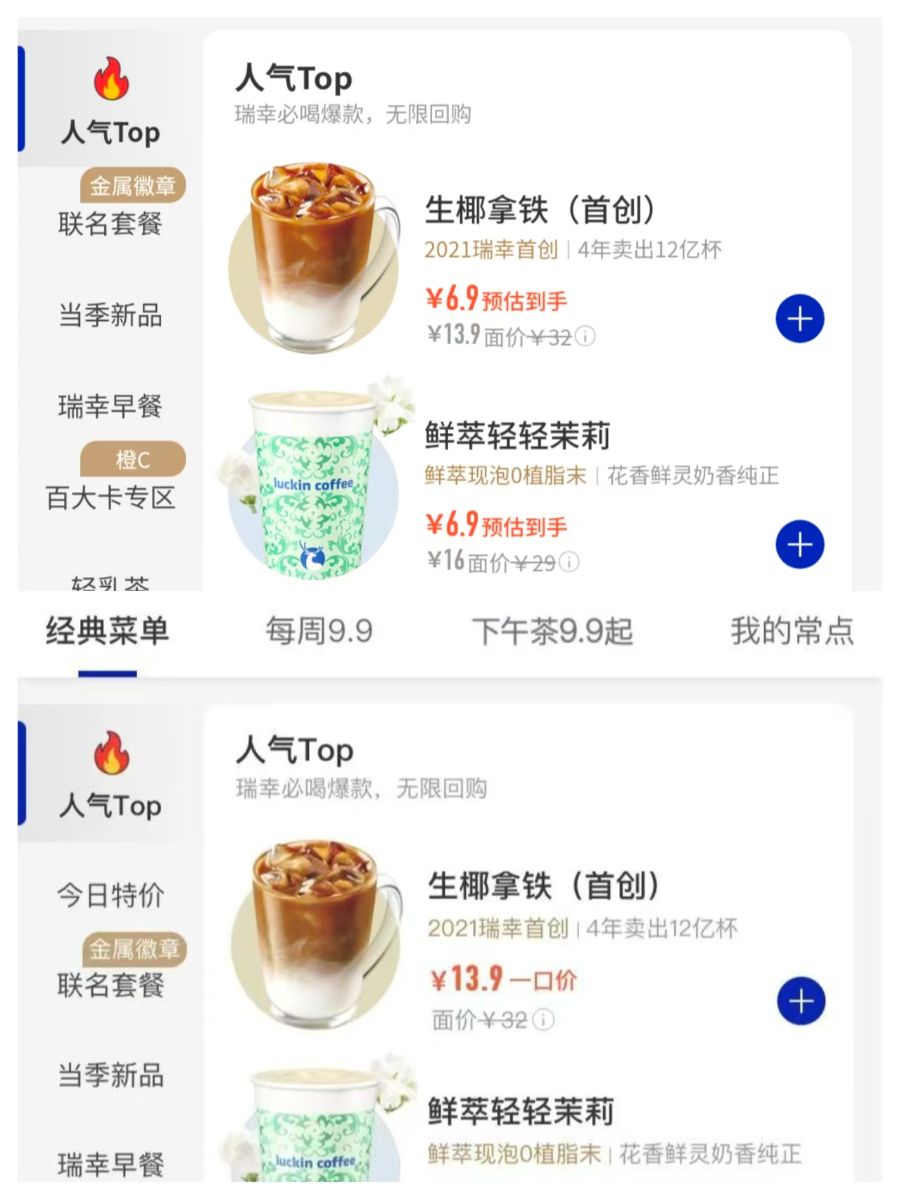
瑞幸突然降到6块9!价格战打到这份上,背后藏着啥算盘?
Sou Hu Cai Jing· 2025-05-30 05:52
Core Viewpoint - Luckin Coffee has initiated a significant price reduction on several beverages, dropping prices to 6.9 yuan, previously 9.9 yuan, in response to competitive pressure from Kudi, which has been aggressively pricing its products at 3.9 to 4.9 yuan [1][3]. Group 1: Price Reduction Strategy - The price cut by Luckin Coffee is primarily targeted at the takeaway market, where Kudi has seen a nearly tenfold increase in order volume, positioning itself as a leader in the coffee category [3]. - This price reduction is not merely a discount but a strategic "defensive battle" to retain customers who might switch to Kudi for lower prices [3]. - Luckin Coffee's supply chain has improved, allowing it to manage costs better, and the price cuts are focused on high-margin products like fruit teas and light milk teas, which can drive sales of other high-margin items [3][4]. Group 2: Industry Dynamics - The coffee and tea market is highly competitive, with Kudi expanding rapidly through a franchise model and low pricing, while other brands like Heytea and Nayuki are also entering the coffee space [4]. - The ongoing price war emphasizes the importance of cash flow and supply chain efficiency in the short term, while brand strength and product repeat purchase rates will be crucial in the long term [4]. - Investors should monitor key financial metrics post-price reduction, such as the increase in takeaway order volume, the sales proportion of high-margin products, and the potential impact on net profit margins [4][5]. Group 3: Long-term Considerations - The current market dynamics resemble a roller coaster, with frequent promotions and new product launches, but long-term investment should focus on the company's competitive advantages, such as store density and supply chain efficiency [5]. - As long as these foundational elements remain intact, the price war may only result in minor setbacks for Luckin Coffee [5].

我在游戏里学冲咖啡,转头发现咖啡市场已经卷上天了
3 6 Ke· 2025-05-29 01:06
Core Insights - The Chinese coffee market is experiencing rapid growth, with the industry size expected to double from 136.4 billion yuan in 2020 to 202.8 billion yuan in 2024 [4][8] - The rise in coffee consumption is driven by faster lifestyles and social media trends, with consumers increasingly seeking out aesthetically pleasing coffee experiences [4][8] - The market is characterized by diverse consumption scenarios, including chain coffee shops, independent cafes, fast food outlets, tea shops, convenience stores, and self-service coffee machines [8][10][12] Market Dynamics - Chain coffee brands dominate the market, accounting for over 60% of the total coffee shops in China, with the number of coffee shops expected to exceed 1 million by 2024 [10][15] - Major players like Luckin Coffee and Starbucks are expanding aggressively, leveraging digital marketing and loyalty programs to retain customers [10][17] - Independent and specialty coffee shops focus on unique experiences and high-quality offerings, but face challenges in scaling and maintaining profitability [10][25] Competitive Landscape - The competition in the coffee market is intense, with both international brands like Starbucks and local brands like Luckin Coffee vying for market share [15][17] - Luckin Coffee has positioned itself as a cost-effective option, while new entrants like Kudi Coffee are adopting aggressive expansion strategies [19][21] - The market is witnessing a high closure rate of coffee shops, with over 4.5 million stores disappearing in 2024, indicating a challenging environment for many brands [27] Future Trends - The coffee market is expected to continue evolving, with a focus on supply chain management and operational efficiency becoming critical for survival [28][29] - Downstream markets are emerging as new growth areas, but brands must adapt to different consumer preferences and behaviors in these regions [31] - Digitalization and multi-channel marketing are essential for brands to understand consumer needs and enhance the overall customer experience [33][35]


消费者买奶茶时,有哪些习惯?
Hu Xiu· 2025-05-27 02:14
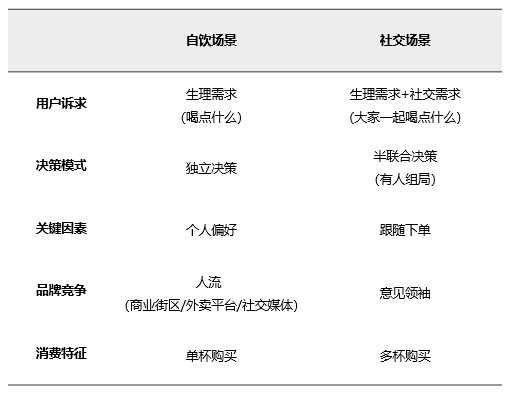
User Consumption Scenarios - The two classic consumption scenarios for milk tea are self-drinking and social drinking, with distinct user demands and decision-making processes [3][4][5] - In the self-drinking scenario, users make independent decisions based on personal preferences, while in the social scenario, group dynamics influence brand choices [6][10] - Peak ordering times for milk tea on delivery platforms occur between 14:00 and 16:00, indicating a strong social consumption trend during afternoon breaks [3][6] Competitive Analysis - In the self-drinking scenario, milk tea competes with ready-to-drink (RTD) beverages, with acceptable price ranges for milk tea being 10-15 yuan in urban areas [9][12] - The social scenario presents more complex competition, as users are willing to pay a premium (15-30 yuan) for products that fulfill both physiological and social needs [10][12] - The competition landscape includes not only direct milk tea brands but also RTD beverages and coffee, necessitating a broader analysis of pricing strategies [12][13] Product Structure - Milk tea products can be categorized into two main attributes: product attributes (easily replicable and deliverable) and service attributes (localized and dependent on human interaction) [14][18] - The trend indicates a shift towards product attributes in milk tea, with brands attempting to increase service attributes for higher pricing, though this may limit market reach [19][20] Cultural Context - The relationship between product and culture is complex, with tea and coffee cultures not significantly influencing the milk tea market in China [21][25][28] - Brands emphasizing cultural narratives may limit their appeal to broader consumer bases, as most users prioritize taste over cultural associations [29] Product Extension - Brands are encouraged to focus on internal product extensions (new flavors) rather than external (new product categories) to meet user demands effectively [33][34] - The rapid introduction of new products in the milk tea market reflects intense competition, with brands launching numerous new items to attract consumers [41] User Consumption Habits - Milk tea consumption is characterized by a tendency towards variety-seeking, with users willing to try new flavors and products [40][41] - The market is entering a phase of intense competition, leading to a rapid increase in new product launches as brands strive to maintain consumer interest [41] Brand Collaborations - The trend of frequent brand collaborations (149 instances in 2024) serves to enhance brand visibility and attract new consumer segments [42][43] - Collaborations can activate consumer interest in the milk tea category, particularly in the self-drinking scenario where impulsive purchases are common [49] Brand Case Study: Heytea - Heytea's fluctuating market position reflects challenges in maintaining user value amidst increasing competition and changing consumer preferences [50][53] - The brand's reliance on collaborations and pricing strategies indicates a need to clarify its market positioning to sustain growth [53] Membership and Loyalty Programs - The development of membership programs in the tea beverage market is still in its early stages, with many brands struggling to implement effective loyalty strategies [55][56] - A successful membership model requires a shift from customer acquisition to retention, emphasizing the importance of stable consumer relationships [56] Local Economic Model - The local economic model for milk tea shops focuses on meeting specific consumer needs within a defined area, with delivery services expanding market reach [57][58] - Brands are increasingly adopting strategies to enhance order efficiency and customer service capabilities to compete effectively in the market [58] Market Overlap Analysis - Analysis of store overlap among major brands reveals significant competition dynamics, particularly between brands like Luckin Coffee and Bawang Chaji [63][64] - Understanding the competitive landscape and store proximity can inform strategic decisions for market positioning and expansion [64][65]

茶咖日报|挪瓦咖啡被加盟商投诉欺诈;瑞幸接入DeepSeek及豆包大模型
Guan Cha Zhe Wang· 2025-05-26 12:33
Group 1: Nova Coffee Franchise Issues - Nova Coffee is facing complaints from franchisees alleging fraud, specifically regarding the opening of new stores within a promised 2-kilometer protection zone [1] - The franchisee claims that the company’s representatives assured them of this protection during the recruitment process, but the contract does not reflect such a commitment [1] - Nova Coffee's management stated that there is no such promise in their franchise policy and that they are initiating legal processes to verify the claims [1] Group 2: Luckin Coffee's AI Innovations - Luckin Coffee has launched its first AI agent (version 1.0) on its official app and WeChat mini-program, allowing customers to order coffee using voice commands [2] - The AI agent integrates DeepSeek and Doubao models, aiming to enhance customer interaction through personalized recommendations based on past orders [2] - The company plans to further explore upgrades for the AI agent to expand the integration of technology in the coffee experience [2] Group 3: Tea Industry Insights - Changjiang Securities reports that the new tea beverage industry is evolving from basic functional demands to more complex consumer needs, including product, experience, social, and brand demands [3] - The competition among tea brands has shifted from mere store expansion to a focus on profitability and operational efficiency, with leading brands enhancing support for franchisees and optimizing supply chains [3] - The report highlights that the expansion of the tea market is primarily driven by lower-tier markets domestically, while opportunities in Southeast Asia are abundant [3] Group 4: HiTea's Seasonal Product Launch - HiTea has reintroduced its popular Yangmei series, featuring three new products that cater to seasonal demand [4] - The Yangmei series has been a consumer favorite since its initial launch in 2020, and this year's offerings utilize the renowned "Dongkui" variety of Yangmei [4] - HiTea continues to explore diverse new ingredients to enhance its product offerings and provide unique tea experiences [4] Group 5: China International Tea Expo Success - The 7th China International Tea Expo concluded with over 6 billion yuan in total transaction value, marking a record high for the event [5] - The expo attracted nearly 200,000 attendees and featured 6,736 professional buyers from 25 countries, indicating strong international interest [5] - During the event, significant tea transactions were recorded, with 258.215 tons sold on-site and an intention to transact an additional 7,365.098 tons [5] Group 6: International Coffee Bean Flight - The first international coffee bean flight landed at Hubei Ezhou Huahu Airport, carrying 66 tons of Ethiopian specialty coffee beans [6] - Ethiopia is a key player in the coffee market and a significant exporter, with coffee being a major source of foreign exchange for the country [6] - The airport serves as a crucial hub for high-quality products entering the Chinese market, significantly reducing delivery times compared to traditional shipping methods [6]


瑞幸咖啡(江苏)烘焙基地获LEED BD+C铂金级认证,再立“绿色工厂”标杆
Cai Jing Wang· 2025-05-26 10:56
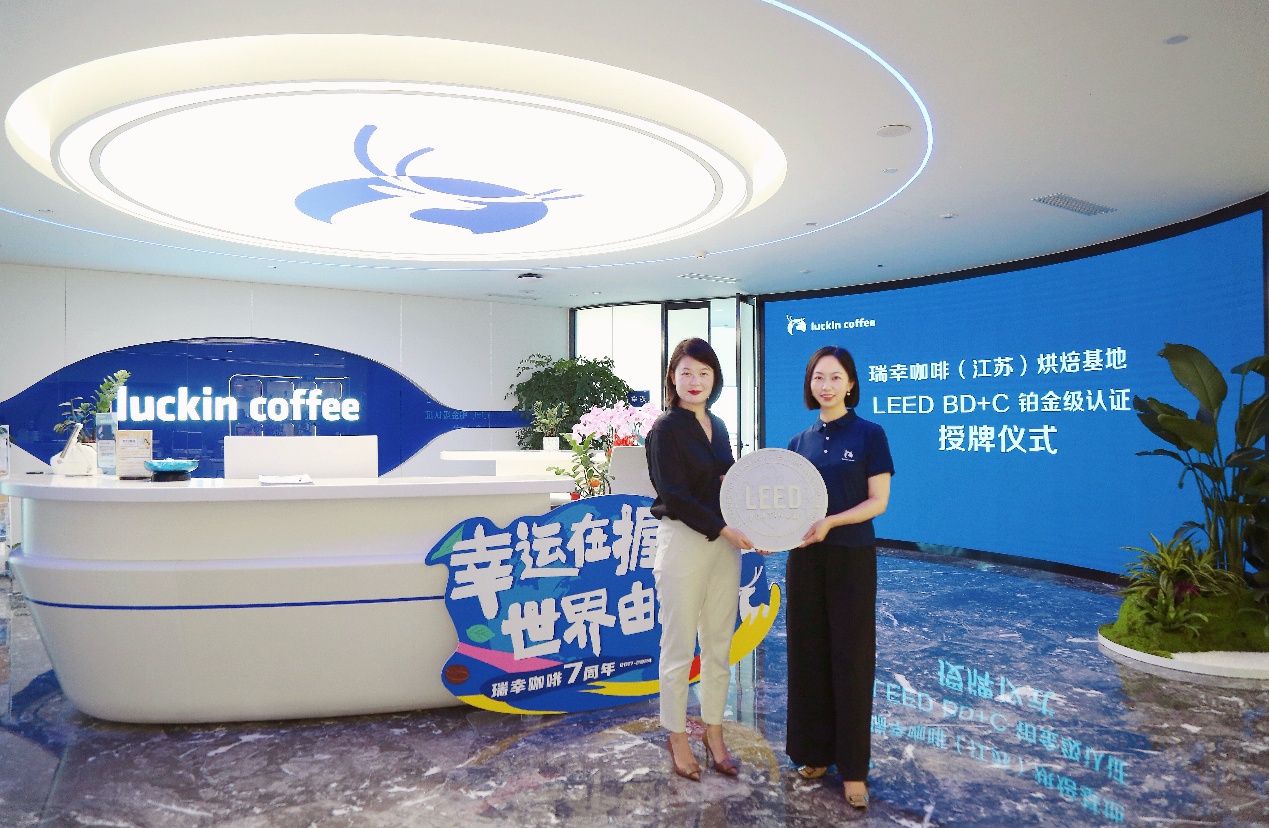
中国咖啡行业可持续发展再获权威认可!5月26日,瑞幸咖啡举行LEED BD+C铂金级认证挂牌仪式,国际权威绿色建筑认证LEED(Leadership in Energy and Environmental Design,能源与环境设计先锋)向瑞幸咖啡(江苏)烘焙基地颁发认证。这是继4月份北京中关村·在握旗舰店挂牌LEED v4 ID+C铂金级认证之后,瑞幸咖啡获得的又一项国际绿 色认证殊荣,进一步彰显瑞幸作为中国咖啡行业领军品牌在绿色低碳发展方面的持续进步,取得世界领先水平。 据悉,瑞幸咖啡(江苏)烘焙基地于2024年4月20日落成投产,是国内已投产产能最大的单体咖啡烘焙基地。作为瑞幸咖啡践行可持续发展战略的重要项目,该基地依照国内外权 威绿色建筑认证标准打造,将绿色低碳贯彻于整个生产环节。 此文内容为企业供稿,仅供参考。 随着绿色建筑技术的进步,瑞幸咖啡紧跟时代要求,积极探索在门店、工厂等生产运营各环节的节能减排,持续打造绿色低碳发展标杆。除了已获得认证的瑞幸咖啡(江苏)烘 焙基地,瑞幸咖啡青岛创新生产中心亦将按照LEED BD+C铂金级标准打造。在门店端,瑞幸咖啡目前拥有1家LEED铂金级认证门店和3家L ...
招银国际每日投资策略-20250522
Zhao Yin Guo Ji· 2025-05-22 02:54
Group 1: Company Insights - Northern Huachuang (002371 CH, Buy, Target Price: 512 RMB) is expected to see a 25% year-on-year increase in new orders in 2024, driven by strong demand for integrated circuit equipment, with this momentum continuing into Q1 2025 [2] - Baidu (BIDU US, Buy, Target Price: 144.6 USD) reported Q1 2025 core business revenue of 25.5 billion RMB, exceeding Bloomberg consensus by 10%, primarily due to strong cloud business performance [2][6] - Weibo (WB US, Buy, Target Price: 14.5 USD) reported Q1 2025 revenue of 397 million USD, flat year-on-year, but non-GAAP net profit grew 12% to 120 million USD, exceeding expectations by 26% [6] - Palo Alto Networks (PANW US, Buy, Target Price: 229.7 USD) achieved Q3 FY25 revenue growth of 15.3% to 2.3 billion USD, with non-GAAP net profit rising 23% to 560.9 million USD [6] - ZTO Express (ZTO US / 2057 HK, Buy, Target Price: 22.2 USD / 174 HKD) reported Q1 2025 core net profit growth of 5% to 1.96 billion RMB, supported by government subsidies [6][8] - XPeng Motors (XPEV US / 9868 HK, Buy, Target Price: 28 USD / 110 HKD) exceeded Q1 2025 revenue expectations, driven by improved gross margins and government subsidies [6][8] Group 2: Market Performance - The Hang Seng Index closed at 23,828, up 0.62% for the day and 39.77% year-to-date [3] - The Hang Seng Tech Index closed at 5,342, up 0.51% for the day and 41.92% year-to-date [3] - The Shanghai Composite Index closed at 3,388, up 0.21% for the day and 13.87% year-to-date [3] - The US Dow Jones closed at 41,860, down 1.91% for the day but up 11.07% year-to-date [3] - The S&P 500 closed at 5,845, down 1.61% for the day and up 22.53% year-to-date [3] Group 3: Sector Analysis - The Hong Kong stock market saw gains in materials, healthcare, and energy sectors, while defensive sectors like consumer staples and utilities lagged [5] - In the US market, real estate and healthcare sectors faced the largest declines, while consumer staples and materials outperformed [5] - The report indicates that the period from May to July is a critical window for US-China trade negotiations, with expectations of potential fiscal stimulus and consumption-boosting measures from China [5]


