Luckin Coffee(LKNCY)

Search documents
招银国际每日投资策略-20250605
Zhao Yin Guo Ji· 2025-06-05 06:46
Market Performance - The Hang Seng Index closed at 23,654, up 0.60% for the day and 38.75% year-to-date [1] - The Hang Seng Tech Index rose by 0.57%, with a year-to-date increase of 38.65% [1] - The Shanghai Composite Index increased by 0.42%, reflecting a 13.49% rise year-to-date [1] Sector Performance - The Hang Seng Financial Index increased by 0.36% with a year-to-date gain of 38.86% [2] - The Hang Seng Industrial Index rose by 0.88%, showing a year-to-date increase of 44.95% [2] - The Hang Seng Real Estate Index decreased by 0.74%, with a year-to-date decline of 9.95% [2] Company Analysis - China General Nuclear Power Corporation (中广核矿业) announced a new pricing mechanism for its uranium sales, reducing the fixed price proportion from 40% to 30% and setting the 2026 fixed price at $94.22 per pound, significantly higher than the previous year's price of $61.78 per pound [4] - The new pricing mechanism is expected to alleviate market concerns regarding pricing uncertainty, leading to a 17% and 23% upward revision in profit forecasts for 2026 and 2027, respectively [4] Investment Focus - Geely Automobile (吉利汽车) is rated as a "Buy" with a target price of 24.00 HKD, representing a potential upside of 30% [5] - Xpeng Motors (小鹏汽车) is also rated as a "Buy" with a target price of 28.00 USD, indicating a potential upside of 37% [5] - Luckin Coffee (瑞幸咖啡) is rated as a "Buy" with a target price of 40.61 USD, showing a potential upside of 14% [5]


一瓶4.9元,椰子水战争刀刀见红
3 6 Ke· 2025-06-05 04:13
Core Insights - The increasing demand for coconuts in China is evident, with significant consumption figures such as 1.2 billion cups of Luckin Coffee's coconut latte over four years and 1.1 billion yuan worth of Thai coconut water consumed in one year [1][4][12] - The domestic coconut production in Hainan can only meet 10% of the demand, leading to a heavy reliance on imports, primarily from Southeast Asia, where coconut prices have surged [1][13][14] - Major Chinese companies and entrepreneurs are actively engaging in the coconut supply chain in Southeast Asia, aiming to secure fresh coconut sources, marking the beginning of a "coconut water war" [1][14] Market Dynamics - The coconut water market in China is rapidly expanding, with projections indicating a growth from $101.8 million in 2019 to $1.0933 billion by 2024, reflecting a compound annual growth rate of 60.8% [21] - The market is characterized by two business models: the "lazy win" model, which relies on overseas raw materials and brands, and the "laborious model," which involves building local brands and managing the entire supply chain [16][20] - Companies like IMCOCO and Shanghai Jianong Foods are establishing themselves in the coconut market, with IMCOCO planning to produce 600 million bottles of coconut water annually [11][21] Competitive Landscape - The competition is intensifying, with numerous new entrants in the coconut water market, leading to a potential oversaturation of brands, which could complicate consumer choices [25] - The lack of industry standards for coconut water quality has resulted in consumer trust issues, as some products have been reported to contain additives that compromise their natural appeal [26] - Price wars are emerging, with coconut water prices dropping significantly despite rising production costs, raising concerns about product quality and sustainability [27] Economic Impact - The surge in coconut demand from China is impacting local economies in Southeast Asia, with rising prices affecting the affordability of coconuts for local consumers [28] - The coconut processing industry in Indonesia is facing challenges due to increased raw material costs, leading to reduced profit margins for small manufacturers [28] - Experts predict that China's annual coconut demand will far exceed local production capabilities, necessitating a shift towards sustainable practices and innovation in the coconut industry [28]



瑞幸切入果蔬茶赛道,依旧是9.9
3 6 Ke· 2025-06-05 04:13
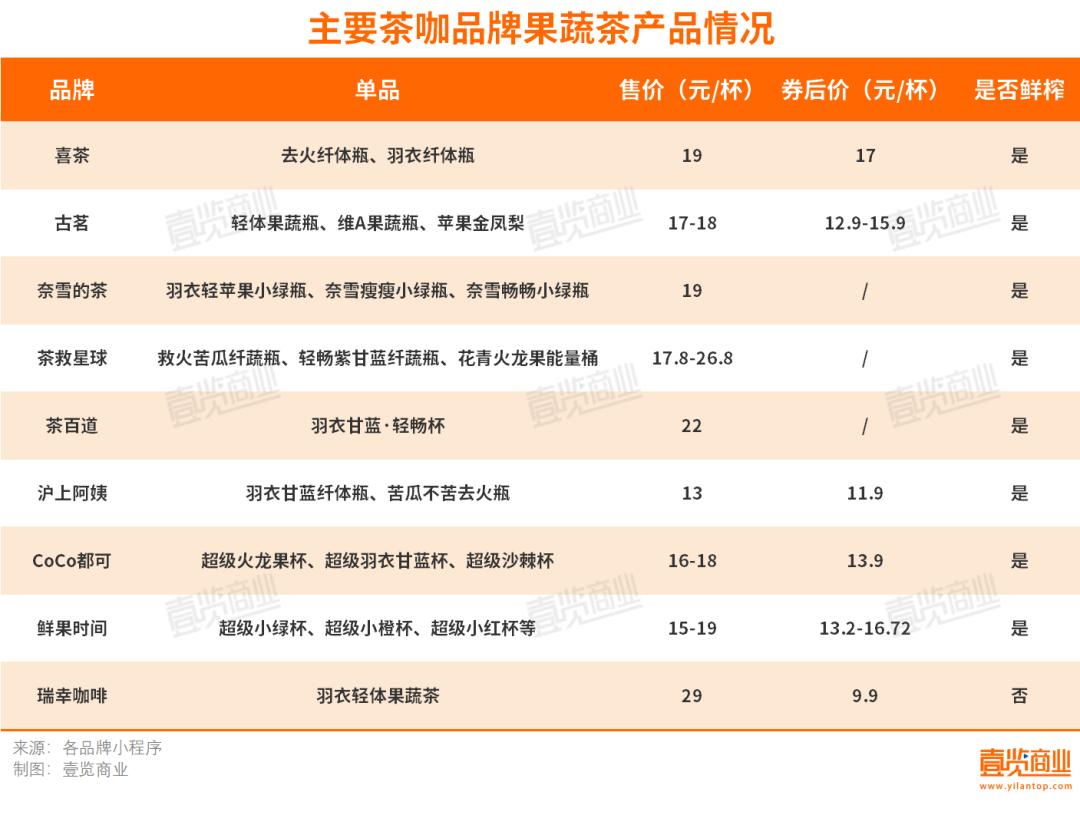
Core Viewpoint - Luckin Coffee is entering the vegetable and fruit tea market with its new product, "Yuhui Light Body Vegetable and Fruit Tea," aiming to expand its product offerings and enhance revenue during non-peak hours [2][3]. Product Launch - On May 31, Luckin Coffee announced the launch of its first vegetable and fruit juice product, priced at 29 yuan, with a promotional price of 9.9 yuan [2]. - The product is made from frozen kale, mixed fruit juice, jasmine tea, and syrup, indicating it is not freshly squeezed [2]. Market Positioning - The introduction of vegetable and fruit tea aligns with Luckin's strategy of combining coffee and tea, creating a "morning coffee, afternoon tea" positioning to broaden consumption scenarios [2]. - Luckin aims to leverage its supply chain advantages to standardize the production of vegetable and fruit tea, allowing for easier assembly at stores without the need for extensive preparation [2]. Competitive Landscape - Luckin's entry into the vegetable and fruit tea market comes later than competitors such as Heytea, Naixue, and others, which have already established their products in this category [3]. - Competitors have successfully linked their products to fitness and weight management, making it challenging for Luckin to stand out as a newcomer [3]. Pricing Strategy - Luckin Coffee's vegetable and fruit tea is the cheapest among major brands, potentially attracting price-sensitive consumers [6]. - However, the health narrative associated with fresh-squeezed products is a significant factor in consumer preferences, which may limit Luckin's appeal despite its lower price [6]. Market Challenges - The tea and coffee market is highly competitive, with a significant number of new store openings and closures reported recently [6]. - Luckin must invest more time and resources into product innovation and understanding consumer demand in the new tea beverage market to succeed [6].
卖爆了!一杯不到3元,网友:没有最低只有更低……
新华网财经· 2025-06-05 03:12
Core Viewpoint - The article discusses the impact of aggressive subsidies from major food delivery platforms on the pricing and sales of coffee and tea beverages, leading to significant price reductions and increased sales volumes for brands like Kudi Coffee and Luckin Coffee [1][4][6]. Group 1: Pricing Strategies - Major food delivery platforms have implemented substantial subsidies, resulting in prices for beverages dropping to as low as 1 yuan for coffee and 1.68 yuan for American coffee [1][4]. - Kudi Coffee's prices have been reduced to 3.9 yuan and 4.9 yuan per cup due to these subsidies, with some drinks previously priced at 10 yuan now selling for under 5 yuan [6][7]. - The competitive landscape has intensified, with Luckin Coffee also entering a lower price bracket, offering drinks for as low as 6.9 yuan [4][6]. Group 2: Sales Growth - Kudi Coffee has experienced a surge in sales, with daily orders increasing from around 500 to over 900 during peak times due to the subsidies [4][6]. - The average daily revenue for Kudi Coffee has increased from approximately 3,000 yuan to between 12,000 and 15,000 yuan, marking a growth of 4 to 5 times [6][7]. - Luckin Coffee reported a same-store sales growth rate of 8.1%, indicating a positive turnaround in performance [7]. Group 3: Market Dynamics - The article highlights that the coffee price war is not new, with previous instances where brands like Luckin Coffee used low pricing strategies to capture market share, prompting competitors like Starbucks to respond with discounts [7]. - The entry of JD.com into the food delivery market has reignited competition among platforms, leading to a resurgence in aggressive pricing strategies for coffee and tea [7]. - Economic experts suggest that while the price war may create short-term opportunities, it also poses challenges related to supply chain management, operational efficiency, and product quality, indicating a potential for market consolidation in the future [7].

中国消费更重视性价比,通缩前兆?
日经中文网· 2025-06-05 03:01
Core Viewpoint - Chinese consumers are increasingly prioritizing cost-effectiveness, leading to a decline in high-end retail and dining while benefiting budget-friendly businesses like coffee shops and chain hotels [1][2][4]. Group 1: Consumer Behavior Trends - There is a notable shift in consumer preferences towards affordable and value-for-money options, impacting high-end restaurants and luxury goods negatively [1][2]. - The first quarter of 2025 saw a 4.6% year-on-year increase in retail sales, down from around 10%, indicating a slowdown in consumer spending [1]. - High-end dining establishments, such as Quanjude, reported a 7% decline in revenue, attributed to reduced banquet demand and economic downturns [1]. Group 2: Impact on Specific Companies - Chow Tai Fook, a major jewelry retailer, experienced a 12% drop in sales, with its mainland China stores seeing five consecutive quarters of decline [2]. - Shanghai Jin Jiang International Hotel reported a 43% occupancy rate for high-end hotels, lower than the 56% for budget hotels, with an 8% decline in sales and an 81% drop in net profit [2]. - Luckin Coffee, the largest chain in the coffee sector, saw a 41% increase in sales, significantly outperforming Starbucks' 5% growth in China [2]. Group 3: Broader Economic Implications - The economic downturn is prompting a rise in budget-oriented businesses, reminiscent of trends seen in Japan during its economic struggles [4]. - The Chinese government is focusing on boosting personal consumption, which accounts for about 40% of GDP, with measures like "trade-in subsidies" set to launch in 2024 [3]. - Despite some positive indicators, concerns about high youth unemployment and an aging population continue to cast doubt on a full recovery in consumer spending [3].
从“娃圈”火到“打工人”,六一你凭什么?
3 6 Ke· 2025-06-05 01:25
Core Insights - The article highlights the evolving consumer behavior among young adults, particularly the trend of adults celebrating Children's Day, driven by nostalgia and emotional connections to childhood memories [5][6][30]. Group 1: Marketing Strategies - Major brands are leveraging popular IP collaborations to attract young consumers, with KFC's early launch of limited edition toys and promotional activities on social media platforms like Douyin [7][11]. - The marketing approach has shifted from simple product promotion to engaging content and interactive live streams, allowing deeper consumer participation [30][31]. - Brands are utilizing social media to create a buzz around their products, with KFC's toys and drinks becoming highly sought after, leading to price increases on resale platforms [11][28]. Group 2: Consumer Behavior - The phenomenon of adults purchasing children's meals is fueled by social media's nostalgic influence, with platforms like Douyin facilitating emotional consumption [18][30]. - The Z generation is becoming the main consumer force, prioritizing emotional value and ritualistic consumption, which is expected to drive the holiday consumption market to exceed 5 trillion by 2025 [31][32]. - The trend of "big friends celebrating Children's Day" reflects a broader shift in consumer psychology, where age is no longer a barrier to participation in traditionally child-focused events [30][31]. Group 3: Social Media Influence - Douyin serves as a powerful connector for brands, transforming holiday marketing into a communal experience where users share their celebrations and purchases [6][30]. - The platform's interactive features encourage users to engage with brands and each other, creating a viral effect that boosts sales and brand visibility [27][28]. - The success of campaigns, such as Luckin Coffee's collaboration with SpongeBob, demonstrates the effectiveness of targeted marketing through influencer partnerships and engaging content [17][30].




外卖补贴搅动咖啡、茶饮江湖 供应链成竞争关键
Zheng Quan Ri Bao· 2025-06-04 16:45
Core Viewpoint - The coffee and tea market is experiencing an unprecedented price war driven by aggressive subsidies from delivery platforms like JD and Taobao, leading to significant price reductions for various brands [1][2]. Group 1: Price War Dynamics - Delivery platforms have intensified their subsidy efforts, resulting in a surge in order volumes for brands like Kudi Coffee, which saw daily orders increase from approximately 100 to 600 after subsidy implementation [2]. - Kudi Coffee's product, originally priced at 7.9 yuan, is now available for as low as 1.68 yuan due to platform subsidies, with total costs remaining under 3 yuan [2]. - Luckin Coffee has also reduced prices on some drinks from 9.9 yuan to 6.9 yuan to strengthen its market position amid the price war [2]. Group 2: Market Impact and Brand Strategy - The subsidies are seen as a boon for coffee brands, with experts noting that coffee has become a necessity for the younger generation, making it an attractive target for delivery platforms [2][3]. - Tea brands like Mixue Ice City and Gu Ming are also benefiting from the subsidies, positioning themselves as long-term winners in this competitive landscape [2]. - Goldman Sachs has raised its profit forecasts and valuation multiples for Gu Ming and Mixue Ice City, increasing target prices significantly [2]. Group 3: Supply Chain Advantages - The construction of a robust supply chain is becoming a critical competitive factor in the price war, with companies that have optimized supply chains able to reduce costs and ensure product quality [4][5]. - Kudi Coffee has launched a new roasting facility in Anhui with an annual processing capacity of 75,000 tons, supporting daily sales of 10 million cups [4]. - Luckin Coffee has established multiple automated roasting facilities, achieving an annual roasting capacity exceeding 100,000 tons, creating a complete industry chain from cultivation to retail [4]. - Mixue Ice City leverages its five production bases across various regions to maintain control over raw material costs and quality, enhancing its competitive edge [4].

星巴克再现人事变动,亚太区门店开发负责人离职
Guan Cha Zhe Wang· 2025-06-04 13:27
Group 1: Starbucks - Scott Keller, Senior Vice President of Store Development and Design for Starbucks Asia Pacific, has announced his departure after nearly nine years, during which the number of stores in the region doubled, averaging one new store opening per day [1] - Keller was responsible for leading the development strategy and design of Starbucks stores across major cities including Seoul, Bangkok, and Singapore [1] Group 2: Luckin Coffee - Luckin Coffee has expanded its self-operated stores in Hong Kong to 12 since entering the market in December 2024, with plans to further expand into core commercial areas like Central [2] - The company is also enhancing brand collaborations, with a SpongeBob-themed concept store opening from May 31 to June 29, featuring new co-branded beverages and a photo area [2] Group 3: Coffee Industry Growth - In April, 1,220 new coffee stores were opened across 27 tracked chain brands, representing a month-on-month increase of 3.74% and a year-on-year increase of 6.64%, bringing the total number of stores in the industry to 60,795 [3] - Luckin Coffee experienced a net decrease of 206 stores in April, indicating a network optimization strategy despite holding a 39.3% market share [3] - Starbucks opened 20 new stores in April, marking an 81.82% year-on-year increase, indicating a recovery trend [3] Group 4: Bawang Chaji - Bawang Chaji reported a net profit of 677 million yuan for Q1 2025, with a total GMV of 8.23 billion yuan, reflecting a year-on-year growth of 38% [4] - The company disclosed its overseas market performance for the first time, with overseas GMV reaching 178 million yuan, a year-on-year increase of 85.3% [4] - The total number of Bawang Chaji stores globally reached 6,681 by the end of Q1 2025 [4]


“价格战”再度打响?部分饮品降价3元 瑞幸咖啡回应
Xi Niu Cai Jing· 2025-06-04 11:37
Core Viewpoint - Luckin Coffee's recent price reduction strategy has sparked widespread discussion and is seen as a response to competitive pressures from rivals like Kudi Coffee [2][4][9] Pricing Strategy - Multiple products from Luckin Coffee have seen a price drop of 3 yuan, entering the "6.9 yuan era" [4] - However, some consumers reported that prices on the Luckin app still show 9.9 yuan, indicating inconsistency in pricing across platforms [4] - Luckin Coffee's official customer service stated that actual discounts depend on the ordering platform and that the recent promotions are part of holiday offers rather than a price cut [7] Competitive Landscape - Kudi Coffee has been aggressively lowering prices, with some products priced as low as 3.9 yuan and 4.9 yuan, leading to a significant increase in their sales volume [9] - Luckin Coffee's promotional activities during the holidays are likely a strategic move to counter Kudi's low pricing and maintain market share [9] Historical Pricing Trends - Luckin Coffee initially gained market share through a "subsidy for scale" strategy, but has recently increased prices on several products, with American coffee rising from 23 yuan to 26 yuan and lattes from 26 yuan to 29 yuan [9] - The company has a history of price adjustments, having raised prices by 2 to 3 yuan across its product line in 2020 [9] Financial Performance - In Q1 2025, Luckin Coffee reported total net revenue of 8.865 billion yuan, a year-on-year increase of 41.2%, with a GAAP operating profit of 737 million yuan and an operating profit margin of 8.3% [9] - The company opened 1,757 new stores in Q1 2025, bringing the total number of global stores to 24,097, with a significant increase in the Chinese market [10] Market Conditions - The CEO of Luckin Coffee highlighted the challenges posed by rising coffee bean prices, which are at historical highs, potentially impacting profit margins in the second half of the year [10]
2025年全球餐馆品牌25强
Sou Hu Cai Jing· 2025-06-04 01:27
今天分享的是:2025年全球餐馆品牌25强 报告共计:35页 全球餐饮品牌大变局:麦当劳重登王座,区域黑马崛起,健康科技重塑行业 Brand Finance最新发布的《2025年全球最具价值餐饮品牌25强》报告揭示了一场深刻的行业洗牌。全球前25大餐饮品牌总价值 达到1749亿美元,但竞争格局已发生显著变化:传统巨头遭遇挑战,区域品牌强势突围,而消费者偏好的转变正推动整个行业 加速变革。 一、王座易主:麦当劳的逆袭与星巴克的困局 体验失衡: 过度依赖APP订餐,牺牲了传统的咖啡馆社交体验,引发核心顾客不满。 中国受挫: 在中国市场,其"声誉"与"推荐度"指标下滑,被本土品牌瑞幸咖啡(品牌价值增长17%至17亿美元)以迅猛的开店 速度(仅2024年第三季度就新开1382家)和产品创新反超。 声誉风波与领导动荡: 国际市场的声誉受到地缘事件影响,两年内更换四位CEO,关键职位(如北美CEO)空缺,全球首席营 销官职位的取消也引发品牌战略连贯性质疑。 二、增长新势力:区域黑马与品类专家的崛起 "最快增长"冠军:福乐鸡的专注之道: 美国品牌福乐鸡(Chick-fil-A)成为最大黑马,品牌价值飙升43%,达57亿美元 ...