
Mercedes-Benz(MBGYY)

Search documents
“隐形冠军”神话终破灭
Hu Xiu· 2025-10-21 04:59
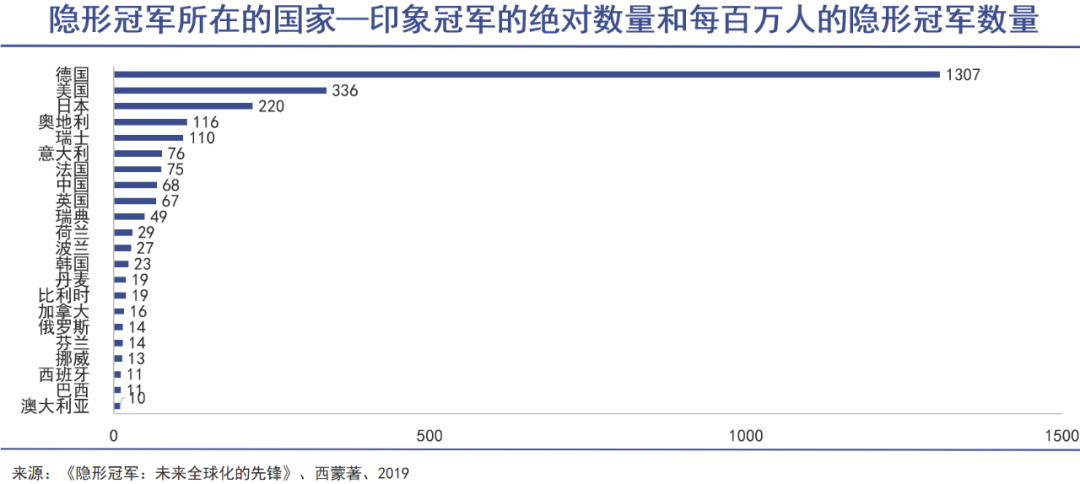
Core Insights - The article discusses the concept of "hidden champions," small and medium-sized enterprises (SMEs) that dominate niche markets but remain largely unknown to the public, particularly in Germany, Japan, and the U.S. [2][3][4] - The number of hidden champions has significantly increased in China, with a unique survival and operational philosophy that differs from Western companies [5][54] - However, the myth of hidden champions is facing challenges due to structural economic issues in Germany and Japan, leading to a decline in their prominence [6][23][36] Group 1: Definition and Characteristics of Hidden Champions - Hermann Simon defines hidden champions as companies that hold the top two global market shares, have annual sales below $1 billion, and are not widely recognized [8] - The number of hidden champions globally is estimated at 3,406, with Germany accounting for 1,573, nearly half of the total [9][13] - These companies often operate in overlooked industries, focusing on specialized products like fasteners and pet leashes, and maintain a low profile as part of their business model [14][15] Group 2: Economic Context and Decline - Germany's economy is experiencing a structural crisis, with GDP shrinking for two consecutive years, a rare occurrence since 1950 [27][28] - The automotive industry, a cornerstone of Germany's manufacturing sector, is facing systemic decline, with a reported 80% increase in bankruptcies since 2021 [28][30] - Major automotive suppliers are also struggling, with significant layoffs announced by companies like Bosch and ZF [28][29] Group 3: Comparison with China - In contrast to the decline of hidden champions in Germany and Japan, China's hidden champions are on the rise, with over 14,000 specialized small and medium enterprises identified [53][54] - Chinese companies are increasingly entering the global market, with 15 firms listed among the top 100 automotive parts suppliers, showcasing higher profit margins than their European counterparts [52] - The article notes that the number of identified hidden champions in China has tripled in the past five years, indicating a robust growth trajectory [54][55] Group 4: Future Outlook - The article suggests that the traditional manufacturing powerhouses of Germany and Japan are losing their competitive edge due to slow digital transformation and a lack of innovation [39][42][46] - The rise of Chinese technology and manufacturing capabilities is reshaping the global industrial landscape, with a notable absence of German and Japanese firms in the emerging sectors like AI and renewable energy [36][37] - The future of hidden champions in Germany and Japan appears uncertain as they struggle to adapt to changing market dynamics and increasing competition from China [58]




奔驰“牵手”豆包,谁是最终获益者?
3 6 Ke· 2025-10-21 03:48
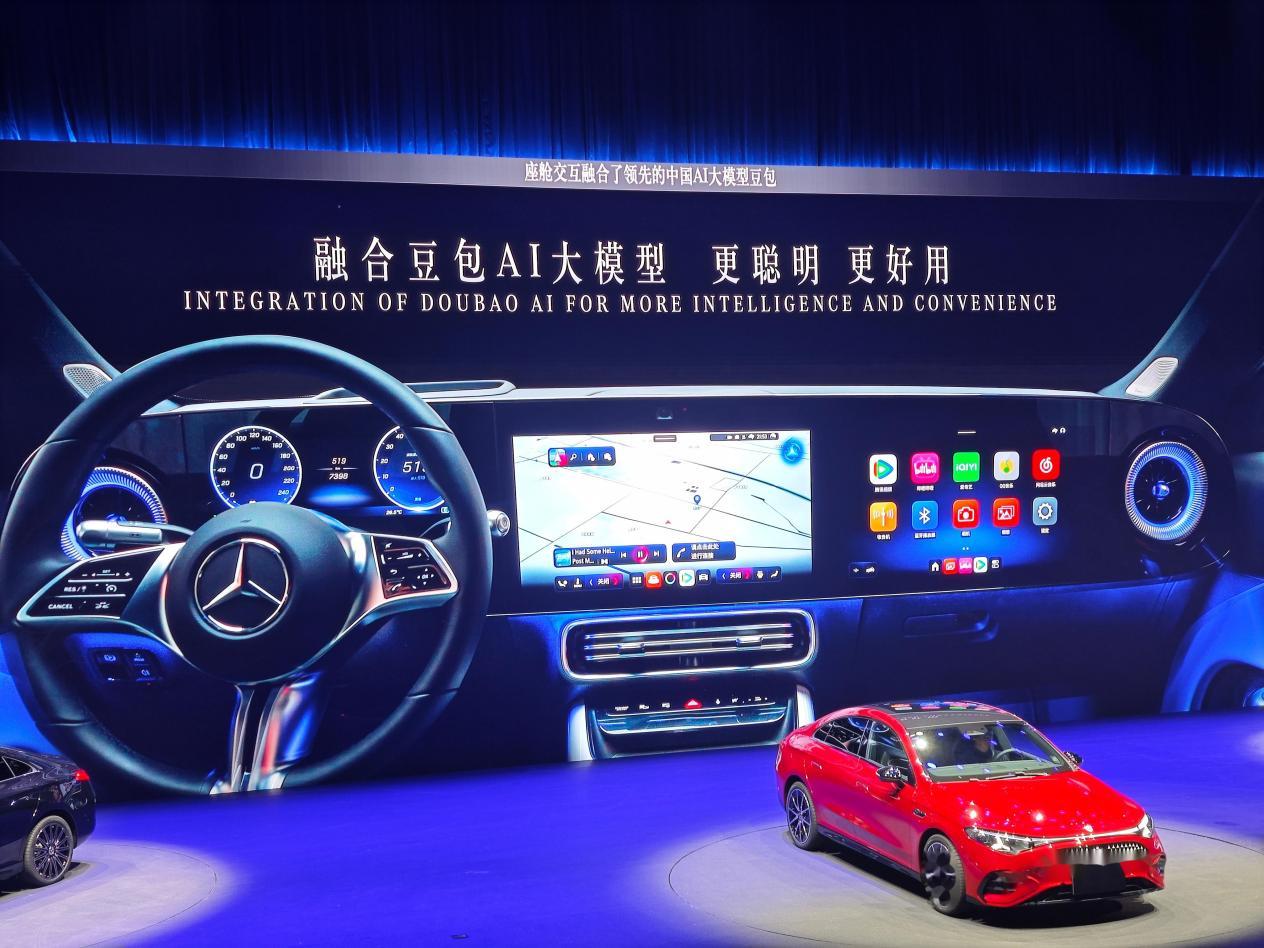
Core Insights - Mercedes-Benz and ByteDance have announced an upgraded partnership, with the new electric CLA model set to feature the "Doubao" large model, marking a significant collaboration beyond a typical supplier-manufacturer relationship [1] - The global sales of smart vehicles are projected to reach 66.2 million units in 2024, with a compound annual growth rate (CAGR) of 10.5% from 2019 to 2024, and expected to hit 92.1 million units by 2029, with a CAGR of 5.9% from 2025 to 2029 [1] - Mercedes-Benz's sales revenue for the first half of this year was €66.377 billion, a year-on-year decline of 8.6%, with pre-tax net profit plummeting 40.7% to €4.534 billion and post-tax net profit dropping 55.8% to €2.688 billion [1] Market Dynamics - The AI+ automotive market is experiencing rapid growth, with major players like Alibaba, Tencent, and Huawei joining the automotive sector, indicating a shift from consumer internet to industrial internet [2] - The collaboration between Mercedes-Benz and ByteDance represents a critical step in integrating AI into the automotive industry [2] Competitive Landscape - Traditional luxury brands like Mercedes-Benz are facing intense competition from domestic brands in China, which have advanced significantly in smart cockpit and advanced driver assistance systems [4] - The importance of smart features in consumer purchasing decisions is increasing, with 94% of Chinese automakers planning to incorporate AI-based solutions in new vehicles [5] Sales Performance - Mercedes-Benz's global sales in Q3 2025 were 525,300 units, reflecting a year-on-year decline of 12% and a quarter-on-quarter decline of 4%, with a total of 1.6016 million units sold in the first three quarters, down 9% year-on-year [5] - In China, Q3 deliveries fell by 27% year-on-year to 125,000 units, with total sales for the first three quarters at 418,000 units, down 18% year-on-year [5] Strategic Initiatives - To regain competitiveness in China, Mercedes-Benz has announced a significant investment plan of €14 billion, aiming to launch seven dedicated models in the next two years [6] - The partnership with ByteDance is seen as a way for Mercedes-Benz to quickly address its technological shortcomings and appeal to younger consumers [7][9] Technological Integration - The collaboration aims to enhance Mercedes-Benz's smart solutions, particularly in areas like in-car interaction and scenario linkage, which are critical for modern consumer expectations [8][19] - The partnership is expected to provide Mercedes-Benz with a mature smart solution, reducing development risks and improving efficiency [10][11] Industry Trends - The automotive industry is witnessing a shift towards AI and smart features, with a predicted market size of $5 billion for AI cockpit functions by 2027, growing at a CAGR of over 25% [17] - The integration of AI in vehicles is becoming a new selling point, with numerous collaborations between AI companies and automakers emerging globally [15] Challenges Ahead - Despite the potential benefits of the partnership, Mercedes-Benz's challenges in the smart technology space are significant, with competitors already well-established in this area [13] - The reliance on external AI solutions may lead to a hollowing out of Mercedes-Benz's internal R&D capabilities, posing risks to its long-term brand value [23][24]
传梅赛德斯-奔驰大规模裁员
Zhong Guo Qi Che Bao Wang· 2025-10-20 06:15
Core Points - Mercedes-Benz is implementing its largest-ever layoff plan, with approximately 4,000 employees accepting voluntary departure packages [1] - The compensation packages are designed with a gradient structure based on job level and years of service, including an "acceleration bonus" [1] - The transformation plan began in April and opened applications to around 40,000 employees [1] - Originally, employees had job security until 2034, but the company is using economic compensation to persuade many to leave voluntarily [1] - By 2027, Mercedes-Benz aims to save approximately €5 billion annually through outsourcing decisions, not filling vacant positions, and severance payments [1]
中德产学研合作再结硕果:梅赛德斯-奔驰和清华大学合作项目斩获2025德国红点奖
Zhong Guo Jing Ji Wang· 2025-10-17 10:09
Core Viewpoint - Mercedes-Benz's collaboration with Tsinghua University on the interactive embroidery car interior project "LumiStitch" has won the 2025 Red Dot Concept Design Award, showcasing a blend of Chinese aesthetics and advanced smart materials in automotive design [1][3]. Group 1: Project Overview - The "LumiStitch" project is inspired by Chinese landscape aesthetics, combining smart materials with traditional embroidery techniques to create an innovative smart cockpit experience [1][3]. - The project features Mercedes-Benz's smart cockpit utilizing advanced materials that respond to gestures and environmental light changes, presenting traditional embroidery in a new light through an intelligent lighting system [2][3]. Group 2: Collaboration Significance - The partnership between Mercedes-Benz and Tsinghua University has been ongoing for over a decade, establishing a benchmark for Sino-German industry-academia cooperation, with research covering electric mobility, intelligent connectivity, and digitalization [3][6][7]. - The collaboration has led to significant advancements in battery technology, vehicle-to-grid (V2G) research, and the application of visual language models (VLM) in smart cockpits, among other areas [6][7]. Group 3: Future Directions - Mercedes-Benz aims to deepen its collaboration with Tsinghua University, focusing on innovative and aesthetically pleasing smart experiences for customers, while also expanding its partnerships with leading tech companies in China [3][7]. - The company is committed to nurturing talent in the automotive industry through practical teaching bases and supporting youth participation in global climate actions for sustainable development [7].

梅赛德斯-奔驰Vision Iconic概念车全球首秀
Yang Shi Wang· 2025-10-16 11:38
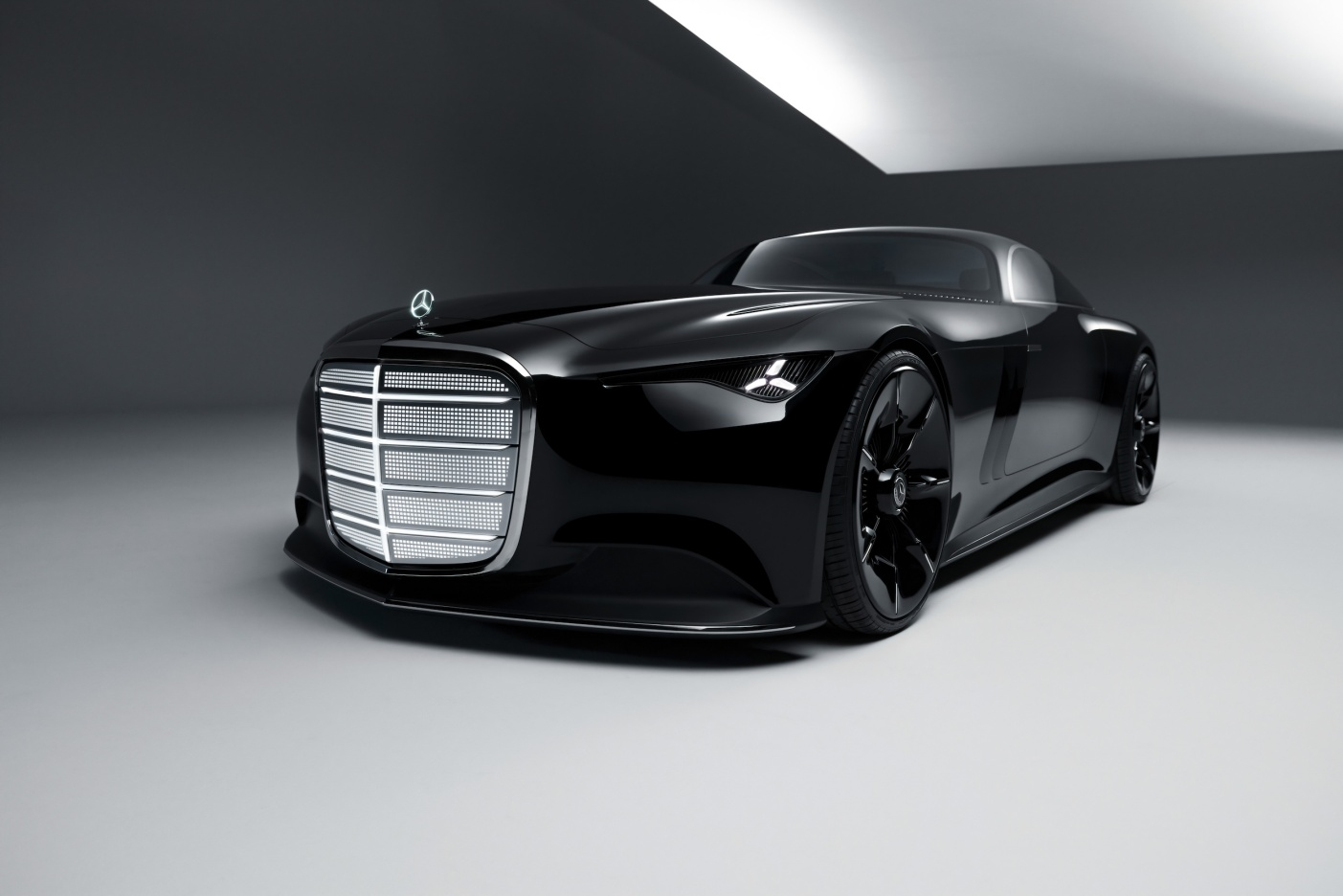
Core Insights - The Vision Iconic concept car represents Mercedes-Benz's vision for future mobility, incorporating groundbreaking innovations such as neuromorphic computing, steer-by-wire technology, solar coatings, and Level 4 autonomous driving capabilities [2][5][7] Design and Aesthetics - The Vision Iconic concept car showcases a new design language that blends historical elements with modern digital aesthetics, featuring a reinterpreted iconic grille and a striking three-pointed star emblem [2] - The interior design is inspired by Art Deco, providing a luxurious experience with a floating glass structure and a combination of classic analog and digital displays [4] Technological Innovations - The innovative solar module can be seamlessly applied to the vehicle's surface, potentially increasing the range by 12,000 kilometers annually under ideal conditions, with solar cells achieving up to 20% efficiency [5] - Neuromorphic computing is being developed to enhance AI efficiency and speed, with the potential to reduce energy consumption for autonomous driving data processing by 90% [7] User Experience - The Vision Iconic concept car aims to create a lounge-like atmosphere with advanced digital luxury features, including a cinematic dashboard display and AI integration [4] - Steer-by-wire technology enhances driving experience and safety, particularly for longer vehicles, improving maneuverability and parking convenience [7] Fashion and Design Collaboration - Mercedes-Benz is not only a leader in automotive design but also actively participates in the global fashion and design industry, as evidenced by the capsule collection launched alongside the Vision Iconic concept car during Shanghai Fashion Week [9]
梅赛德斯-奔驰入围《经济观察报》2024—2025年度受尊敬企业
Jing Ji Guan Cha Wang· 2025-10-13 10:04
Core Insights - Mercedes-Benz has demonstrated outstanding performance in quality operations, innovative breakthroughs, and social contributions, leading to its nomination for the "Most Respected Enterprises" by Economic Observer for the 2024-2025 period [1] Group 1 - The company excelled in various metrics including quality operations, innovation, and social contributions [1]
梅赛德斯-奔驰第三季度在华销售暴跌27% 豪车需求持续疲软
Xin Lang Cai Jing· 2025-10-07 20:11
Core Insights - Mercedes-Benz Group experienced a 27% drop in sales in China during the third quarter, marking the lowest level in nearly a decade due to weak demand for high-end vehicles and local manufacturers dominating the electric vehicle market [1] - This decline represents the worst quarterly performance for Mercedes-Benz in China since 2016, contributing to a 12% decrease in global sales for the company [1] - Following the news, Mercedes-Benz's stock price fell by 2.5% in Frankfurt but later narrowed the decline, with the stock still up approximately 3% year-to-date [1]
梅赛德斯-奔驰:第三季度在华汽车销量125,100辆 同比降27%
Xin Lang Cai Jing· 2025-10-07 12:12
Group 1 - The core viewpoint of the article highlights a decline in Mercedes-Benz's sales performance in the third quarter and the first three quarters of the year [1][2] Group 2 - In the third quarter, the total group sales reached 525,300 vehicles, representing a year-on-year decrease of 12% [1] - For the first three quarters, total group sales amounted to 1.6 million vehicles, down 9% year-on-year [1] - In China, third-quarter vehicle sales were 125,100 units, reflecting a significant year-on-year decline of 27% [2] - In Europe, third-quarter vehicle sales reached 160,800 units, showing a year-on-year increase of 2% [2] - The group's pure electric vehicle sales in the third quarter were 51,200 units, marking a year-on-year growth of 9% [2] - For the first three quarters, pure electric vehicle sales totaled 138,600 units, which is a year-on-year decrease of 7% [2]
解码慕尼黑对话:奔驰、宝马、巴斯夫与宁德时代看准的新机遇是什么?
市值风云· 2025-09-30 11:54
Core Viewpoint - The automotive industry is at a critical juncture, transitioning from a linear economy to a circular economy, emphasizing resource reduction, reuse, and recycling as key drivers for innovation and high-quality development [3][4]. Group 1: European Market Challenges - The European electric vehicle market is facing significant challenges, with a projected 5.9% decline in electric vehicle sales in 2024, indicating a slowdown in the electrification process [6]. - Europe heavily relies on imports for battery raw materials, with 98% of lithium and 80% of natural graphite sourced externally, leading to increased supply chain risks and costs [7]. - The EU's stringent new battery regulations require comprehensive lifecycle management, including carbon footprint reporting and recycling targets, which pose significant pressure on local automotive manufacturers [8][12]. Group 2: Potential in European Electrification - Despite challenges, the European electric vehicle market holds substantial potential, with 1.45 million new pure electric vehicles expected to be registered in 2024, and a total of 5.87 million pure electric vehicles by year-end [12]. - The EU's new carbon emission targets necessitate that manufacturers achieve at least 20% of their sales from pure electric vehicles to avoid hefty fines, driving the urgency for electrification [12]. - The first five months of 2024 saw a 25% increase in electric vehicle registrations in the EU compared to the previous year, indicating a growing acceptance of electric vehicles [12]. Group 3: Opportunities for Industry Collaboration - The global energy circular plan is seen as a potential platform for collaboration between Chinese and European companies, leveraging China's established battery recycling capabilities and Europe's regulatory expertise [15]. - Chinese companies, such as CATL, have developed a comprehensive closed-loop system for battery production, usage, recycling, and material regeneration, positioning them favorably in the global market [16][17]. - European automotive giants like Mercedes and BMW are increasingly recognizing the benefits of collaborating with established Chinese supply chains to accelerate their electrification efforts and meet regulatory requirements [19][21]. Group 4: Strategic Shifts in the Battery Materials Industry - The battery materials industry is undergoing a transformation, with companies shifting from being mere consumers of raw materials to providers of integrated solutions that include recycling and material regeneration [23][24]. - The collaboration between Chinese battery companies and European automakers is not just about procurement but serves as a strategic lever to navigate regulatory, cost, and technological challenges [22][24]. - Early involvement in global initiatives like the energy circular plan allows companies to transition from compliance followers to co-shapers of industry standards and technologies, enhancing their competitive positioning [25].




欧洲汽车工业面临电动化转型困局
Xin Hua She· 2025-09-29 07:19
Core Viewpoint - The divergence among European automakers regarding the transition to electric vehicles (EVs) is becoming increasingly public, highlighted by the recent Munich Auto Show, where companies showcased new EV models while collectively calling for a delay in the 2035 ban on the sale of internal combustion engine (ICE) vehicles, reflecting the industry's struggles with the EU's climate commitments and industrial realities [1][2]. Group 1: Regulatory Challenges - The EU approved regulations in March 2023 to ban the sale of new ICE vehicles starting in 2035 to reduce carbon emissions from the transport sector [2]. - Major automotive associations in Europe have expressed concerns that the EU's ambitious carbon reduction targets are no longer feasible, urging a recognition of industrial and geopolitical realities [2][3]. - German Chancellor Merz emphasized the need for regulatory flexibility while supporting the electrification of the automotive industry, arguing against a one-size-fits-all political approach to technology [2][3]. Group 2: Market Realities - Many leading automakers have struggled to gain widespread consumer acceptance for their EV offerings, leading to strategic adjustments, such as Mercedes-Benz postponing its target for EV sales to 50% by 2025 and Audi shelving its aggressive electrification plans [3][4]. - The European automotive industry has faced significant challenges, including slow progress in charging infrastructure, high electricity prices, and rising production costs, which complicate the transition to full electrification [4][5]. Group 3: Economic Impacts - The cancellation of EV purchase subsidies in Germany by the end of 2023 has led to a noticeable decline in EV sales, exacerbating pressures on the industry [5]. - The German automotive sector has seen a net job loss of approximately 51,500 positions over the past year, making it one of the hardest-hit industrial sectors [5]. Group 4: Strategic Responses - Some European automakers are advocating for a diversified technological approach, suggesting that the EU should enhance consumer incentives to improve EV adoption [6]. - Certain companies firmly support the 2035 ban on ICE vehicles, viewing it as essential for maintaining European competitiveness, while others believe that market dynamics will naturally lead to a transition as EV prices align with those of ICE vehicles [6][7]. Group 5: EU's Balancing Act - The EU is attempting to balance the demands of the automotive industry with its climate goals, reaffirming the 2035 ban while allowing for some flexibility in emissions targets [7]. - The 2035 ban is seen not only as a target for industrial transformation but also as a test of the EU's leadership in climate governance, with potential implications for the competitiveness of the European automotive sector in the global market [7].