TRIP.COM(TCOM)

Search documents
刘强东,再宣战
盐财经· 2025-06-23 09:04
Core Viewpoint - JD.com is aggressively entering the hotel and travel industry with a "0 commission" policy, aiming to compete with established players like Ctrip, Meituan, and Tongcheng [3][40]. Group 1: Market Dynamics - JD.com received nearly 50,000 applications from hotels within two days of announcing its entry into the OTA market [3]. - Ctrip holds a dominant position in the OTA market with a 56% GMV market share in 2024, particularly excelling in the high-end hotel segment [8]. - Ctrip's 2024 net revenue reached 53.294 billion RMB, a 20% year-on-year increase, with a net profit of 17.2 billion RMB, reflecting a 72% growth [9]. Group 2: Competitive Landscape - The online food delivery market, represented by Meituan, has a significantly lower profit margin compared to the OTA sector, with Meituan's projected net profit margin for 2024 at 2.8% [11]. - The OTA market is characterized by high customer acquisition costs and a power imbalance between platforms and hotel operators, leading to ongoing tensions [15][16]. - JD.com aims to leverage its supply chain capabilities to provide value to the hotel and restaurant sectors, addressing inefficiencies in the current market [18]. Group 3: Historical Context and Strategy - JD.com has been exploring the travel sector since 2011 but has struggled to gain significant traction [20][28]. - The company has previously made strategic acquisitions, such as the purchase of Tuniu in 2015, but faced challenges in maintaining a competitive edge [22][24]. - JD.com is now focusing on a new business model for food delivery that promises to address food safety issues, indicating a broader strategy to innovate across its service offerings [33][37]. Group 4: Future Outlook - JD.com is positioning itself to disrupt the OTA market by offering a transparent pricing model and eliminating bundled sales, which could shift the competitive landscape [50]. - The company is actively recruiting talent for its travel division, indicating a commitment to building a robust operational framework [47]. - The competitive environment includes not only traditional players like Ctrip and Meituan but also emerging platforms like Douyin and Xiaohongshu, which are entering the market with content-driven strategies [54].





喜娜AI速递:今日财经热点要闻回顾|2025年6月21日
Sou Hu Cai Jing· 2025-06-21 11:20
Group 1 - *ST Jingan will be delisted, with 49 stocks unlocking a market value of 58.72 billion next week. The company has multiple violations and will enter the delisting period on June 30. As of the end of Q1, it had 78,800 shareholders. Among the 49 stocks, Tiedian Heavy Industry and Longxin Zhongke have the largest unlocking scale, with 7 stocks having an unlocking ratio exceeding 50%, and 9 stocks reporting losses in Q1* [2] - Major cities are experiencing accelerated declines in housing prices, with the National Bureau of Statistics indicating that May saw a collective drop in second-hand housing prices in first-tier cities. Only 3 out of 70 major cities saw slight increases in second-hand housing prices, suggesting a challenging outlook for the housing market recovery [2] - The Cross-Border Payment System will launch on June 22, enhancing financial cooperation between mainland China and Hong Kong. This system allows for direct interconnection between the monetary authorities of both regions, providing online and rapid bilateral currency and RMB remittance services [2] Group 2 - The "618" shopping festival concluded with significant growth in both e-commerce and instant retail sales. The event lasted from May 13 to June 20, with double-digit growth reported. Major e-commerce platforms are shifting towards rational competition and simplifying rules, while instant retail is becoming a focal point, expected to exceed 2 trillion by 2030 [3] - The Hong Kong Stock Exchange celebrated its 25th anniversary, showcasing significant growth in various metrics, including new stock fundraising, which leads globally. The exchange continues to reform and expand its interconnectivity mechanisms to attract more listings [3] - The China Securities Regulatory Commission has intensified its crackdown on insider trading, issuing 11 administrative penalty decisions with a total fine of approximately 60 million. This includes penalties for 9 individuals involved in the same case, highlighting the regulatory focus on maintaining market integrity [3] Group 3 - Insurance funds have conducted over 8,900 research visits to A-shares this year, focusing on "hard technology" and innovative pharmaceuticals, aligning with national industrial policies. Companies like Huichuan Technology are receiving increased attention due to the rapid approval and recovery of profitability in the innovative drug sector [4] Group 4 - Federal Reserve Governor Christopher Waller indicated the possibility of interest rate cuts as early as July, suggesting that tariffs are unlikely to significantly raise inflation. This comes after the Fed maintained key interest rates steady for four consecutive meetings, with market participants closely monitoring geopolitical developments in the Middle East [5] - JD.com announced a zero-commission entry into the hotel and tourism market during the 618 shopping festival, aiming to compete directly with Meituan and Ctrip. This move addresses high commission pain points in the travel industry but presents challenges in resource allocation and system capacity [5]
携程被曝强制调价,商家控诉平台霸权
Sou Hu Cai Jing· 2025-06-20 14:21
Core Viewpoint - Ctrip, a leading player in the domestic online travel agency (OTA) market, is accused of abusing its market dominance by forcing hotels to use its "Price Adjustment Assistant" feature, which allows the platform to modify room prices without the merchants' consent, thereby harming their profits [1][2][4] Group 1: Forced Price Adjustment - The "Price Adjustment Assistant" was initially an automated tool for hotels to adjust prices based on market demand, but it has been reported that Ctrip has made it mandatory or defaulted for many hotels, allowing price changes without their knowledge [2][3] - Hotel operators have expressed concerns that prices set below cost due to Ctrip's adjustments could disrupt market equilibrium and affect sales through other channels [2][3] - Industry experts suggest that Ctrip's actions may constitute an abuse of market power, violating the E-commerce Law and Anti-Monopoly Law of the People's Republic of China [2][3] Group 2: Difficulties in Exiting the Platform - Merchants have reported that exiting Ctrip's platform is fraught with challenges, including complex procedures and high penalties for breach of contract [3][4] - Contracts often include strict "exclusive cooperation" or "lowest price guarantee" clauses, which penalize merchants for offering lower prices on other platforms [3] - Ctrip's significant market share, exceeding 50% in the OTA market and reaching up to 70% in popular tourist cities, compels merchants to accept unfavorable terms [3][4] Group 3: Regulatory and Market Implications - The situation highlights a broader issue of internet platforms leveraging their market positions to pressure merchants, undermining fair competition [4] - Legal experts recommend that merchants facing forced pricing or exit difficulties should file complaints with regulatory authorities or consider litigation under the Anti-Monopoly Law [3][4] - There is a call for increased regulatory oversight to prevent the abuse of market dominance in the OTA sector, ensuring a fair and sustainable online travel ecosystem [4]
酒旅业务,能成为京东的“1.5曲线”吗
经济观察报· 2025-06-20 10:14
Core Viewpoint - JD's entry into the hotel and travel market is a strategic move aimed at creating a new ecosystem, potentially disrupting the existing market dynamics similar to the food delivery industry [2][9]. Group 1: JD's Strategy and Market Position - JD has announced its entry into the hotel and travel sector, offering supply chain services to hotel operators and a "JD Hotel PLUS Membership Plan" with up to three years of zero commission [2]. - Historically, JD has been involved in the travel sector since 2011, but its focus has not been strong until now, indicating a shift in strategy [2]. - The hotel and travel business is characterized by high profit margins, with Ctrip's hotel business gross margin reaching 80.32% in Q1 this year [3]. Group 2: Competitive Landscape - The hotel and travel market is highly competitive, with established players like Ctrip, Meituan, and emerging platforms like Douyin and Xiaohongshu entering the space [5][6]. - JD's challenge lies in differentiating itself from these established competitors and leveraging its existing strengths to create a unique value proposition in the hotel and travel sector [6][8]. Group 3: Supply Chain Focus - JD's strategy revolves around supply chain optimization, aiming to create a new pathway in the hotel and travel industry by focusing on supply chain restructuring [7]. - The company plans to utilize its supply chain advantages to reduce procurement costs across various hotel-related resources, such as furniture and appliances [8]. Group 4: Potential Opportunities and Challenges - JD's existing customer base, particularly its high-net-worth male users, aligns well with the hotel and travel consumer demographic, presenting a potential opportunity for cross-selling [8]. - However, challenges include the lack of brand recognition as a preferred platform for travel, operational experience in complex scenarios, and potential conflicts with major hotel brands [8].

携程被指“调价助手”后台强改商家价格
新华网财经· 2025-06-20 09:47
Core Viewpoint - The article discusses the controversy surrounding Ctrip's "Price Adjustment Assistant" feature, which allows the platform to unilaterally change hotel room prices without merchant consent, leading to significant concerns among hotel operators about their pricing autonomy and market position [1][3][11]. Group 1: Price Adjustment Assistant Functionality - Ctrip's "Price Adjustment Assistant" is an automated pricing tool that monitors competitors' hotel prices and adjusts Ctrip's prices accordingly, often without merchant approval [1][3]. - Merchants report that Ctrip can change promotional activities and pricing without their consent, leading to a situation where they feel powerless to resist these changes [3][4]. - The tool is perceived as a form of "forced pricing," as it automatically lowers hotel prices to maintain a competitive edge, which can severely impact the profit margins of hotel operators [3][4][11]. Group 2: Market Position and Merchant Dilemma - Ctrip holds a dominant market share in the OTA sector, exceeding 50% in 2021 and projected to maintain over 56% in 2024, which contributes to the power imbalance between the platform and hotel operators [6][11]. - Many merchants feel trapped in a "cannot exit" situation due to their reliance on Ctrip for customer traffic, despite the adverse effects of the pricing adjustments [6][7]. - The withdrawal process from Ctrip's platform is described as cumbersome, with merchants facing repeated reactivations of the Price Adjustment Assistant even after attempting to opt-out [8][11]. Group 3: Industry Competition and Regulatory Concerns - The article highlights the increasing "involution" within the hotel industry, where major platforms like Ctrip, Meituan, and JD.com are aggressively competing, often at the expense of smaller merchants [10][11]. - Experts suggest that Ctrip's practices may constitute an abuse of market dominance, potentially violating antitrust laws, although the online travel sector has not yet been a primary focus of regulatory scrutiny [11][12]. - The need for merchants to gather evidence and advocate for their rights is emphasized as a way to prompt regulatory attention and action against unfair practices [11].

京东“0佣金”进军酒旅,天下苦携程垄断久矣
Sou Hu Cai Jing· 2025-06-20 06:22
Core Viewpoint - JD.com officially announced its entry into the hotel and travel industry with a "three years zero commission" policy, challenging Ctrip's monopoly and aiming to disrupt the traditional dominance in the sector [3][19]. Group 1: Market Context - The online travel agency (OTA) market in China is projected to grow, with a 17.8% year-on-year increase in transaction volume expected in 2024, reaching 2.07 trillion yuan [8]. - Ctrip, as a leading OTA, reported a net revenue of 53.3 billion yuan in the previous year, a nearly 20% increase, with a net profit of 17.2 billion yuan, reflecting a 72% surge [9]. - Despite the overall growth in tourism, many hotels are experiencing revenue declines, indicating a disparity in profit distribution within the industry [10]. Group 2: Industry Dynamics - The hotel and travel industry has a high gross margin, typically over 70%, but hotels often struggle to capture this value due to high commission rates imposed by OTAs [8][14]. - Ctrip's business model relies heavily on high commission rates, often exceeding 20%, which has led to complaints from hotel operators about being squeezed financially [14][24]. - The competitive landscape is characterized by a few dominant players, with Ctrip holding over 56% market share, making it challenging for new entrants like JD.com to gain traction [10][28]. Group 3: JD.com's Strategy - JD.com's entry is seen as a necessary move to provide competition in a market that has been criticized for its imbalanced profit distribution [7][19]. - The "three years zero commission" strategy is aimed at alleviating the financial burden on hotels and attracting them to the platform [21][24]. - JD.com plans to build a self-sustaining supply chain to reduce reliance on third-party inventory systems and improve profitability for hotel partners [25][32]. Group 4: Challenges Ahead - JD.com faces significant challenges in breaking the existing dependency of hotels on Ctrip, as many have been conditioned to accept high commission rates [20][28]. - The effectiveness of JD.com's strategy will depend on its ability to attract hotel partners and create a competitive environment that encourages fair pricing [30][31]. - The long-term success of JD.com's initiative will require substantial investment in supply chain development and overcoming the entrenched market position of Ctrip [35][36].

高盛推“中国民营十巨头”:价值挖掘还是资本刻意“造神”?
阿尔法工场研究院· 2025-06-19 10:30
Core Viewpoint - Goldman Sachs has introduced the concept of "Ten Giants" in China's private sector, aiming to create a narrative system comparable to the U.S. stock market's "Magnificent 7" [2][5] Group 1: Market Dynamics - The "Ten Giants" include Tencent, Alibaba, Xiaomi, BYD, Meituan, NetEase, Midea, Heng Rui Pharmaceutical, Ctrip, and Anta, which collectively account for 42% of the MSCI China Index and have a daily trading volume of $11 billion [1] - Goldman Sachs predicts a 13% compound annual growth rate (CAGR) in earnings for these companies over the next two years, with an average price-to-earnings (P/E) ratio of 16, significantly lower than the 28.5 P/E ratio of the U.S. tech giants [1][4] Group 2: Policy Environment - The report highlights a significant policy shift in favor of private enterprises, marked by the February 2025 high-level meeting and the April 2025 implementation of the "Private Economy Promotion Law," which legally establishes the status of the private economy [2][7] - Current regulatory conditions for private enterprises are at their most lenient in five years, as indicated by Goldman Sachs' regulatory intensity index [2] Group 3: Valuation and Growth Potential - The report emphasizes a valuation gap, noting that the average P/E ratio of the "Ten Giants" is 13.9, with only a 22% premium over the MSCI China Index, much lower than the historical average and the 43% premium of the U.S. tech giants [4][14] - If the valuation premium of Chinese private enterprises returns to U.S. levels, it could add $313 billion in market value to these companies [4] Group 4: Technological and Globalization Trends - AI technology is projected to drive a 2.5% annual increase in earnings for Chinese companies over the next decade, with private enterprises comprising 72% of the defined AI-tech universe [8] - The globalization of private enterprises is evident, with overseas sales increasing from 10% in 2017 to 17% in 2024, and companies like BYD achieving a 30% gross margin overseas [10] Group 5: Market Structure and Investment Sentiment - The concentration of market capitalization among the top ten companies in China is only 17%, compared to 33% in the U.S., which may limit the potential for "leader premium" realization [23] - Despite the optimistic report, there is a discrepancy in market sentiment, as evidenced by the decline in stock prices for companies like Meituan and Ctrip since the report's release, indicating a lack of full market endorsement of the report's logic [19][21]






携程遇大敌,一哥之位还稳吗?
Sou Hu Cai Jing· 2025-06-19 08:02
Core Viewpoint - JD.com has officially announced its entry into the travel and accommodation sector, intensifying competition with Ctrip, the leading player in China's online travel agency (OTA) market [1][2]. Group 1: JD.com's Strategy - JD.com has initiated a series of measures to support its travel business, including partnerships with over 30,000 large enterprises and more than 8 million small and medium-sized enterprises, offering hotel merchants a "JD Hotel PLUS Membership Plan" with up to three years of zero commission [1]. - The company has launched a "Life Travel" section on its app, featuring categories such as flights, hotels, tickets, and vacation packages, emphasizing a "no bundling" sales approach for flight tickets [9]. Group 2: Ctrip's Market Position - Ctrip reported a revenue of 53.294 billion yuan for 2024, a year-on-year increase of 19.73%, and a net profit of 17.067 billion yuan, up 72.08%, maintaining a significant lead in both revenue scale and market share [3]. - Ctrip has a history of successfully countering competitors by addressing their weaknesses, such as locking in high-end service customers and controlling inventory, which has solidified its dominant position in the market [8][10]. Group 3: Competitive Landscape - The competition between JD.com and Ctrip is expected to be fierce, as JD.com lacks the deep experience in the OTA space that Ctrip has accumulated over the years, particularly in complex pricing algorithms and customer service processes [6][17]. - Ctrip's strong market position is attributed to its effective business model, technological innovations, and precise market targeting, which have allowed it to maintain profitability and expand its user base [12][13][14]. Group 4: Market Trends - The OTA market in China is currently dominated by three major players: Ctrip, Meituan, and Fliggy, each establishing a stable market position, making it challenging for new entrants like JD.com to disrupt the existing balance [17]. - Ctrip has capitalized on policy benefits, particularly in international business orders, with a significant increase in inbound bookings, reflecting a 100% year-on-year growth in the first quarter [15].
高盛捧杀中国民企
3 6 Ke· 2025-06-19 04:14
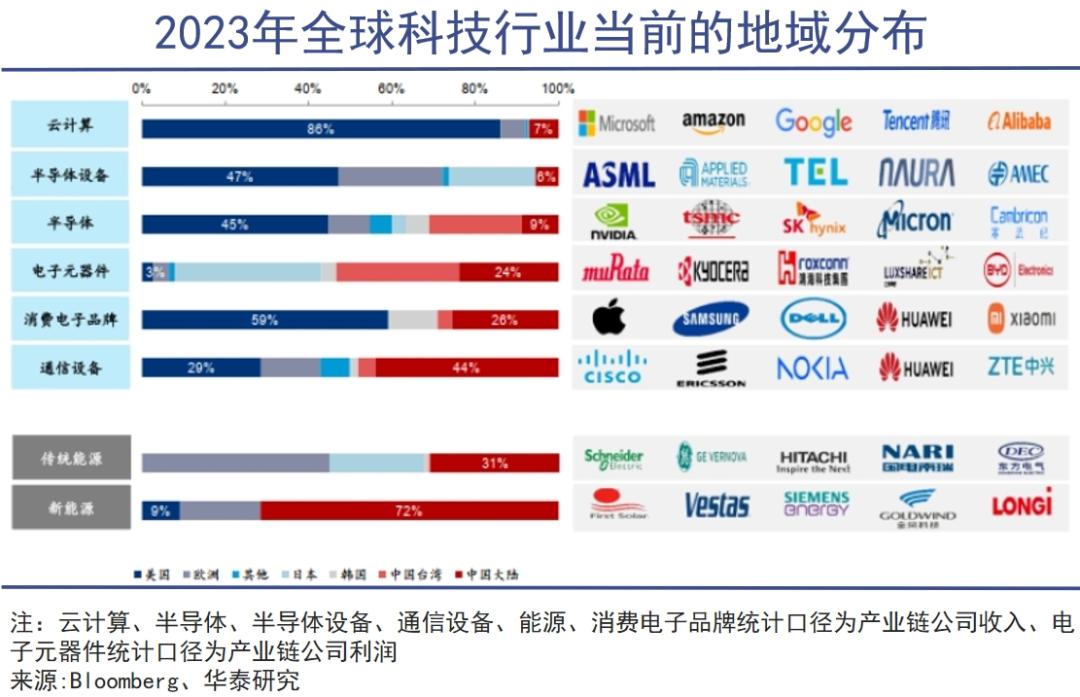
Core Viewpoint - Goldman Sachs has released a report titled "The Return of Chinese Private Enterprises: The Tide Has Turned," introducing a "Ten Giants" group of China's top ten private listed companies, which are compared to the U.S. tech giants known as the "Seven Sisters" [1][3]. Group 1: Selection of the "Ten Giants" - The selected "Ten Giants" include Tencent Holdings, Alibaba, Xiaomi Group, BYD, Meituan, NetEase, Midea Group, Hansoh Pharmaceutical, Trip.com, and Anta Sports [1]. - These companies have a combined market capitalization of $1.6 trillion, accounting for 42% of the MSCI China Index, and their average daily trading volume reaches $11 billion, indicating high liquidity and market influence [3]. Group 2: Comparison with U.S. "Seven Sisters" - The "Seven Sisters" concept refers to seven major U.S. tech companies that significantly influence the stock market, with a combined market capitalization exceeding $15 trillion, which is double that of Japan, Germany, the UK, and India combined [4]. - The "Seven Sisters" control 85% of AI core patents and 78% of cloud computing infrastructure, showcasing their dominance in the tech sector [7]. Group 3: Market Dynamics and Investment Opportunities - Goldman Sachs believes that the current low market concentration in China presents significant growth potential for capital returns, suggesting that leading companies may expand their dominance through mergers and acquisitions [11][12]. - The Chinese government is supportive of mergers and acquisitions, as evidenced by recent regulatory changes that have facilitated over 100 disclosed transactions in the Sci-Tech Innovation Board, amounting to over 33 billion yuan [15]. Group 4: AI and Competitive Landscape - The "Ten Giants" are expected to leverage their customer base, data accumulation, and investment capabilities to excel in AI development and commercialization, potentially leading to a winner-takes-all scenario [11][20]. - Chinese companies are increasingly applying AI across various sectors, from AI chips to drug development and smart factory solutions, indicating a rapid acceleration in AI adoption [19]. Group 5: International Investment Sentiment - International investment sentiment towards Chinese assets has been fluctuating, with Goldman Sachs' reports significantly impacting market perceptions and investor behavior [21][23]. - Despite the volatility in U.S. markets, the resilience of the "Seven Sisters" and their continued capital expenditure in AI suggest a strong competitive position that may not be easily disrupted [27].

下载破千万、落地近四十国,携程旗下平台如何吸引海外用户? | 声动早咖啡
声动活泼· 2025-06-18 10:58
Core Viewpoint - Trip.com, the international online travel platform under Ctrip, has made significant strides in expanding its overseas business, achieving a revenue share of 14% in 2024, with expectations to contribute about 20% of the group's revenue in the next three to five years [1][2]. Group 1: Business Expansion Strategies - Ctrip's overseas business expansion began in 2016 with the acquisition of Skyscanner for approximately 136 billion RMB, which enhanced user acquisition through its high traffic and user engagement [4]. - The company further expanded its international presence by acquiring Trip.com in the U.S. and investing in Travix and MakeMyTrip, thereby increasing its market share in Europe and South Asia [4]. - Ctrip established a global content agreement with TripAdvisor in 2019, allowing Trip.com to leverage TripAdvisor's content as a significant traffic source [4]. Group 2: User Engagement and Marketing - Ctrip effectively utilizes Skyscanner's flight search capabilities, showcasing competitive flight and hotel prices to guide users towards higher-margin products [6]. - In 2024, Ctrip's international flight bookings increased by over 70%, with 15%-20% of flight users also booking hotels or other travel products [6]. - The implementation of visa-free entry policies has significantly boosted inbound tourism, with a 240% increase in hotel bookings from major visa-free countries in the first quarter of 2025 [6]. Group 3: Innovative Marketing Approaches - Ctrip has adopted live streaming as a marketing strategy since 2020, launching a new Asian live streaming center in Bangkok, which has attracted over 10 million viewers in 2024 [7]. - Traditional marketing efforts include airport promotions and tailored advertising campaigns that resonate with local cultures, such as the campaign in Hong Kong targeting young workers [9]. Group 4: Challenges and Market Dynamics - Despite its achievements, Ctrip faces intense competition from established platforms like Expedia, Booking, and Airbnb, necessitating unique value propositions to retain customers [10]. - The company's low commission rate strategy, averaging 3.9%, raises concerns about its long-term sustainability compared to competitors with rates three times higher [10]. - Ctrip's marketing expenses reached 11.9 billion RMB in 2024, a nearly 30% increase year-on-year, which may impact profitability in the short term [10]. Group 5: User Demographics and Market Penetration - Currently, Ctrip's overseas user base is predominantly composed of overseas Chinese, with foreign users representing a smaller proportion [11]. - The company has validated its strategies in the Asia-Pacific region but faces challenges in retaining local users in more mature markets like Europe and North America [11].