
Tesla(TSLA)

Search documents
深夜,美股风云突变,大型中概股普跌,存储概念股冲高回落!大量散户涌入股市,高盛:对冲基金正大举卖出
Mei Ri Jing Ji Xin Wen· 2026-02-12 16:08
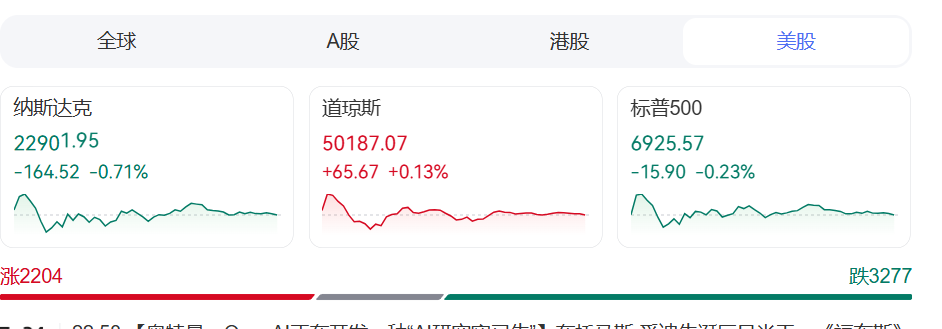
Market Overview - The U.S. stock market opened higher but then retreated, with the Nasdaq down 0.71%, the Dow Jones up 0.13%, and the S&P 500 also turning negative, with over 3,200 stocks declining [1] - Last week, initial jobless claims in the U.S. were reported at 227,000, higher than the forecast of 224,000 and the previous value of 231,000 [3] Technology Sector Performance - The performance of the "Magnificent Seven" tech stocks was mixed, with Nvidia and Google slightly up by 0.1%, while Tesla, Microsoft, Meta, Amazon, and Apple saw declines, with Apple nearing a 2% drop and its market cap falling below $4 trillion [3] - Semiconductor stocks experienced volatility, with SanDisk rising over 5% and Micron Technology up over 2% [3] Chinese Stocks - Chinese stocks listed in the U.S. faced widespread declines, with the Nasdaq Golden Dragon China Index dropping nearly 2%. Notable declines included Huya down over 7%, Tencent Music down over 6%, and Beike down over 4% [5] Trading Volume and Market Dynamics - The average daily trading volume in the U.S. stock market reached a record $1.03 trillion in January, a 50% increase compared to the same period in 2025, with over 19 billion shares traded daily, marking the second-highest in history [8] - The rise in trading volume is attributed to increased retail participation, the popularity of "zero-day-to-expiration" options, and a significant shift in investor focus from tech giants to underperforming sectors like energy and industrials [8] Hedge Fund Activity - Hedge funds have significantly increased their short positions in U.S. stocks, with the nominal short selling of individual stocks reaching the highest level since 2016. Short positions are now double the long positions [9] - Concerns over the disruptive impact of artificial intelligence on business models have led to a tumultuous week on Wall Street, with a total market value loss of $611 billion across 164 stocks in software, financial services, and asset management [9] Sector Rotation - The semiconductor and IT services sectors were among the few to see net buying last week, with semiconductor stocks rising, highlighting a divergence between chip stocks and software stocks [10] - Hedge funds are rotating into defensive sectors, with healthcare becoming the most favored sector for fund inflows, surpassing industrials [10]





Elon Musk Bets On Humanoid Robots In 2026, But One Company Hopes 'Elon Time' Strikes Again
Yahoo Finance· 2026-02-12 15:31
Core Insights - Elon Musk positions the Optimus humanoid robot as Tesla's most significant long-term value driver, potentially increasing the company's market cap to $25 trillion [1] - Prediction markets indicate only a 21% chance that the humanoid robot will be available for sale by 2026, suggesting skepticism about the timeline [2] - The success or failure of the Optimus robot will have broader implications for the robotics and AI ecosystem, particularly affecting companies like NVIDIA, which supplies chips for Tesla's training clusters [4] Tesla's Robotics Outlook - During the "We, Robot" event, Musk claimed the robots could perform various tasks, with a projected price range of $20,000 to $30,000 [1] - If Tesla does not meet its internal production milestones in 2025, the odds of the robot's release could decrease further, impacting Tesla's stock price amid declining car-based revenue [3] Competitive Landscape - Hyundai Motor Co. is identified as Tesla's primary competitor in the humanoid robot space, with its subsidiary Boston Dynamics beginning pilot deployments of its electric Atlas bot [5] - Hyundai has confirmed that its entire production run for 2026 is fully committed, potentially allowing it to capture the enterprise market if Tesla experiences delays [5] Market Sentiment - There is a prevailing skepticism in prediction markets regarding Musk's ability to meet ambitious deadlines, a trend observed with previous Tesla products like the Cybertruck and Full Self-Driving [6]
Tesla vs. Nvidia: Which Is the Better AI Stock to Buy Now?
Yahoo Finance· 2026-02-12 15:06
Group 1: AI Industry Overview - The artificial intelligence boom is significant, with Alphabet's Waymo providing 400,000 autonomous rides per week and tech giants planning to invest hundreds of billions in AI computing infrastructure by 2026 [1] - Nvidia and Tesla are identified as pivotal players in the AI race, with Nvidia supplying essential chips and Tesla integrating AI into autonomous vehicles and robotics [2] Group 2: Tesla's Business Performance - Tesla's 2025 vehicle deliveries are projected at approximately 1.6 million, reflecting a 9% year-over-year decline due to high interest rates and a lack of clear catalysts [6] - The company's full-year revenue decreased by 3% year-over-year, and earnings per share fell by 47% [6] Group 3: Tesla's Growth Opportunities - Tesla's energy business is experiencing rapid growth, with total energy storage deployed in 2025 increasing by 49% year-over-year to 46.7 gigawatt hours, leading to a 27% revenue growth in the energy segment, totaling around $12.8 billion [7] - The rollout of Tesla's autonomous ride-sharing service, Robotaxi, is progressing, with pilot programs active in Austin and the San Francisco Bay area, and the company is testing driverless Robotaxis [8]
科技IPO预期升温,但华尔街的主战场已转向债市?
Hua Er Jie Jian Wen· 2026-02-12 14:28
Core Insights - The focus of the U.S. tech capital market has shifted towards debt financing to support the rapid expansion of AI infrastructure, with global tech and AI-related bond issuance expected to approach $1 trillion by 2025, up from $710 billion [1][2] - Major tech companies, including Alphabet, Amazon, Meta, and Microsoft, are projected to have a combined capital expenditure and financing lease of $700 billion this year to meet unprecedented demand for computing resources [1] - There is an estimated $1.5 trillion financing gap in the AI infrastructure sector, primarily to be filled by the debt market, leading to increased concentration risk in investment-grade corporate bond indices [1][4] Debt Market Expansion - UBS estimates that global tech and AI-related debt issuance will more than double by 2025, reaching $710 billion, and could approach $990 billion by 2026 [2] - Oracle and Alphabet are leading the current wave of bond issuance, with Oracle planning to raise $45 billion to $50 billion this year and successfully issuing $25 billion in bonds [2] IPO Market Status - The U.S. tech IPO market remains quiet, with no major tech companies filing for public offerings this year, contrasting sharply with the surge in debt financing [3] - Elon Musk's recent merger of SpaceX and xAI has created a new entity valued at $1.25 trillion, but there are doubts about whether SpaceX will pursue an independent IPO [3] Concentration and Cost Concerns - The weight of the tech sector in investment-grade corporate bond indices is expected to rise from 9% to the low double digits, raising concerns about concentration risk [4][5] - The intense bond issuance by tech giants may crowd out demand for other issuers, leading to higher yields and increased financing costs across the market [5][6]


Mag 7 AI Arms Race: Heavy Capex, FCF Strain and One Clear Winner
ZACKS· 2026-02-12 14:17
Core Insights - Artificial intelligence (AI) has become a dominant theme in the stock market, with companies being rewarded for their ambitious AI plans and data leadership [1] - This earnings season, heavy capital expenditure (capex) plans have taken precedence over headline earnings results, raising concerns among investors [2] Group 1: AI Spending Trends - Amazon, Alphabet, Microsoft, and Meta are committing to a significant increase in AI-related spending, primarily focused on data centers, GPUs, and cloud infrastructure [2][3] - These four companies are expected to collectively spend over $650 billion on AI-focused capex this year, marking one of the largest single-year investment increases in the technology sector [3] - The shift towards heavy upfront spending for AI infrastructure is causing near-term pressure on margins and free cash flow (FCF), with some analysts predicting negative FCF for certain companies [4] Group 2: Company-Specific Insights - **Alphabet (GOOGL)**: Plans to spend $175-$185 billion on capex in 2026, nearly double the previous year, focusing on AI compute and cloud infrastructure. Concerns about financial strain are rising as long-term debt increased to $46.5 billion [5][6] - **Amazon (AMZN)**: Expected to invest about $200 billion in capex in 2026, a 53% increase from last year, primarily for AWS data centers and AI infrastructure. Analysts predict negative FCF for Amazon this year [7][8] - **Meta (META)**: Shifting focus from the metaverse to AI, with expected capex of $115-$135 billion in 2026. Analysts forecast a nearly 90% fall in FCF, raising concerns about the company's financial health [11][12] - **Microsoft (MSFT)**: Spent approximately $72 billion on capex in the first half of fiscal 2026, with an annualized run rate of over $140 billion. Analysts expect a 28% drop in FCF this year [12][13] - **Apple (AAPL)**: Distinct from peers, Apple plans to maintain a capex of around $13 billion, leveraging partnerships for AI features rather than heavy internal spending [14] - **Tesla (TSLA)**: Anticipates capex exceeding $20 billion this year, focusing on AI and autonomy amid cooling EV demand. Concerns arise regarding the execution risk and potential impact on near-term FCF [15][16] - **NVIDIA (NVDA)**: Positioned as a primary beneficiary of the AI spending cycle, benefiting immediately from the investments made by other companies in AI infrastructure [18] Group 3: Financial Implications - The AI buildout is historic in scale, reshaping the balance sheets and cash flow profiles of major tech companies, with many expected to see declining FCF and increased debt issuance [20] - The debate surrounding the timing, returns, and financial durability of these investments is ongoing, with execution becoming a critical factor for success in the next phase [20]


新力量NewForce总第4964期
First Shanghai Securities· 2026-02-12 13:38
Group 1: Company Overview - AMD is rated as a "Buy" with a target price of $300, indicating a potential upside of 40.47% from the current price of $213.57[5] - The company has a market capitalization of $348.2 billion, with a 52-week high of $267.08 and a low of $76.48[5] Group 2: Financial Performance - In Q4 2025, AMD reported revenue of $10.27 billion, a year-over-year increase of 34.1%, surpassing Bloomberg's consensus estimate of $9.65 billion[7] - The gross margin for Q4 2025 was 54.3%, up by 3.6 percentage points year-over-year, while operating profit reached $1.75 billion, a 101.1% increase[7] - Non-GAAP net profit for Q4 2025 was $2.52 billion, reflecting a year-over-year growth of 41.8%[7] Group 3: Future Projections - AMD's revenue guidance for Q1 2026 is set at $9.8 billion, which includes $100 million from MI308 sales in China, representing a year-over-year increase of 32.4%[7] - The company anticipates a compound annual growth rate (CAGR) of over 60% for its data center business over the next 3-5 years, with AI business revenues expected to reach hundreds of billions by 2027[8] Group 4: Market Share and Product Development - AMD's client segment revenue grew by 33.9% to $3.1 billion, with desktop and laptop market shares at 33.6% and 21.9%, respectively[9] - The company plans to launch a more extensive AI PC product line this year, following the successful release of the Ryzen AI 400 mobile processors[9] Group 5: Risks and Challenges - Potential risks include slower-than-expected sales of AI acceleration chips, lower-than-expected growth in PC market share, and challenges in the recovery of gaming and embedded businesses[12]

马斯克:招聘时不要只看简历
财富FORTUNE· 2026-02-12 13:04
Group 1 - Elon Musk envisions relocating high-energy AI training and solar power generation to space, where sunlight is abundant and solar power capacity can exceed that on Earth by several times [1] - Musk predicts that within 36 months, space will become the cheapest location for deploying AI, free from constraints of terrestrial power grids, land, and cooling water [1] Group 2 - Musk emphasizes the difficulty of finding suitable talent in the tech industry, highlighting his hands-on leadership style and initial personal involvement in interviewing thousands of employees at SpaceX [2] - He now relies on his team to identify candidates with "stunning qualities" and stresses the importance of in-person interactions over resumes [2] - Tesla's executive team has an average tenure of 10 to 12 years, although there was significant turnover during the company's early growth phase [2] Group 3 - Musk recalls a period when companies like Apple aggressively recruited Tesla employees, with Apple hiring 46 former Tesla staff for its electric vehicle project in 2018 [4] - He notes that the allure of Tesla employees was perceived as a "star aura," making them attractive to other companies, often with compensation packages double that of Tesla [4] Group 4 - Musk admits to making hiring mistakes by falling for the "star aura" and emphasizes the importance of candidates' innate qualities, such as kindness, trustworthiness, and diligence [5] - Recent high-profile departures from Musk's companies have been attributed to various factors, including burnout and dissatisfaction with his political stance and strategic decisions [5] - Notably, the CFO of Musk's startup xAI left after just three months, citing extreme work hours and pressure [5] Group 5 - Musk has been involved in legal disputes with OpenAI and Apple, alleging anti-competitive practices and facing accusations of harassment from OpenAI [6]
高端装备制造产业研究周报:特斯拉三代机器人发布在即,智能制造+智能制造双驱动-20260212
SINOLINK SECURITIES· 2026-02-12 12:17
Investment Rating - The report does not explicitly state an investment rating for the high-end equipment manufacturing industry, particularly in the humanoid robotics sector. Core Insights - 2026 is identified as a critical year for humanoid robots, with significant advancements expected in production and application scenarios, particularly in areas like navigation and inspection [6] - The report highlights a "robot arms race" globally, with major companies like Tesla and others making significant technological advancements and production plans [6] - The report emphasizes the importance of supply chain convergence and technological iteration, focusing on key players and emerging opportunities in both domestic and international markets [6] Industry Frontiers - The humanoid robotics sector is experiencing a surge in activity, with notable events such as the release of the full-sized humanoid robot "Bolt" by Zhejiang University and the upcoming unveiling of Tesla's third-generation humanoid robot [10][12] - The report notes the acceleration of industry chain collaboration and ecosystem construction, driven by policy support and technological breakthroughs [10][12] Capital Trends - Significant capital movements are noted, including over 700 million yuan raised by the Beijing Humanoid Robot Innovation Center and various other funding rounds across the industry [5][34][43] - The report indicates a trend of increasing investment from both public and private sectors, highlighting the growing interest in humanoid robotics as a strategic industry [45] Weekly Perspectives - The report discusses the dual drive of policy and technology in the humanoid robotics field, with a focus on the integration of AI in agriculture and other sectors [13] - It highlights the emergence of new market players and the ongoing development of core technologies, such as advanced actuators and sensors, which are crucial for the next generation of humanoid robots [39][40]
最贵特斯拉终于量产,一辆卖200万
创业邦· 2026-02-12 10:30
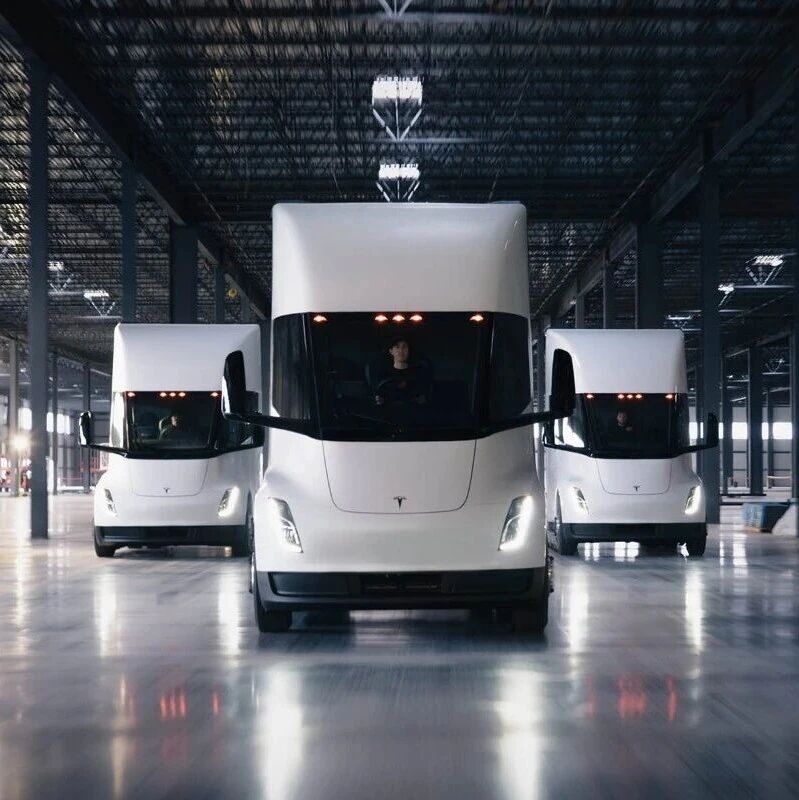
以下文章来源于智能车参考 ,作者有车有据 智能车参考 . 追踪AI+汽车新进展。量子位旗下汽车频道 来源丨智能车参考(ID:AI4Auto) 作者丨杰西卡 图源丨Tesla 苦等9年的 特斯拉纯电卡车Semi ,终于不是期货了。 新工厂近期刚一建成,Semi官网随即公布了全新规格,量产进入倒计时。 标准版续航达523公里,高于最初9年前宣传的483公里;能耗1.06kWh/公里,也比原计划更低。 不过,加量也加价,新车的价格随后被曝光: 29万美元 一辆,折合人民币大约是 200万元 。 美国加州立即出面力挺,发放Semi购买优惠券,总额 1.65亿美元 (约11.4亿元)。 特斯拉披露纯电卡车规格 在新界面中,特斯拉将Semi分为 标准续航版 和 长续航版 ,并更新了两款车的最新生产规格。 两个版本的相同之处在于,都搭载了后轴 3个独立电机 ,驱动功率最高800kW,能耗统一为 1.7kWh/英里 ,也就是大约1.06kWh/公里。 同时,两个版本也都支持MCS 3.2充电标准 (专门用于电动重卡等大型车辆的兆瓦级高功率充电标 准) ,充电30分钟,可以补充高达60%的续航里程。 车辆还新增了电动动力输出( ...
特斯拉豪赌100吉瓦光伏产能,摩根士丹利测算能源业务估值有望飙升至1900亿美元
Jin Rong Jie· 2026-02-12 09:36
摩根士丹利本周发布最新研报,对特斯拉规划建设100吉瓦(GW)垂直整合光伏制造产能的计划进行 了深度测算。研报指出,这一大规模光伏布局可能使特斯拉能源业务的股权价值提升200亿至500亿美 元,但实现这一目标需要巨额资本投入。 在落地进展上,特斯拉已着手在美国多地评估建厂选址,纽约州、亚利桑那州和爱达荷州均在考察范围 内,相关岗位招聘也已启动。特斯拉光伏产品工程高级经理Seth Winger近期在领英发文称:"这是一个 大胆且雄心勃勃的项目。我们需要同样大胆且雄心勃勃的工程师和科学家来帮助我们实现规模化扩 张。" 声明:市场有风险,投资需谨慎。本文为AI基于第三方数据生成,仅供参考,不构成个人投资建议。 本文源自:市场资讯 作者:观察君 马斯克此前在财报电话会议上披露了这一产能规划。他表示:"光伏机遇被低估了……我们认为增强电 网能力的最佳途径是地面光伏与电池系统,以及太空光伏技术。公司将涉足从原材料到成品光伏电池板 的整个供应链。"作为参照,目前美国最大太阳能制造商First Solar预计2027年美国产能约17.7GW,特 斯拉的100GW目标远超这一体量。 在资金投入方面,摩根士丹利测算,若特斯拉打通 ...