XPENG(XPEV)

Search documents
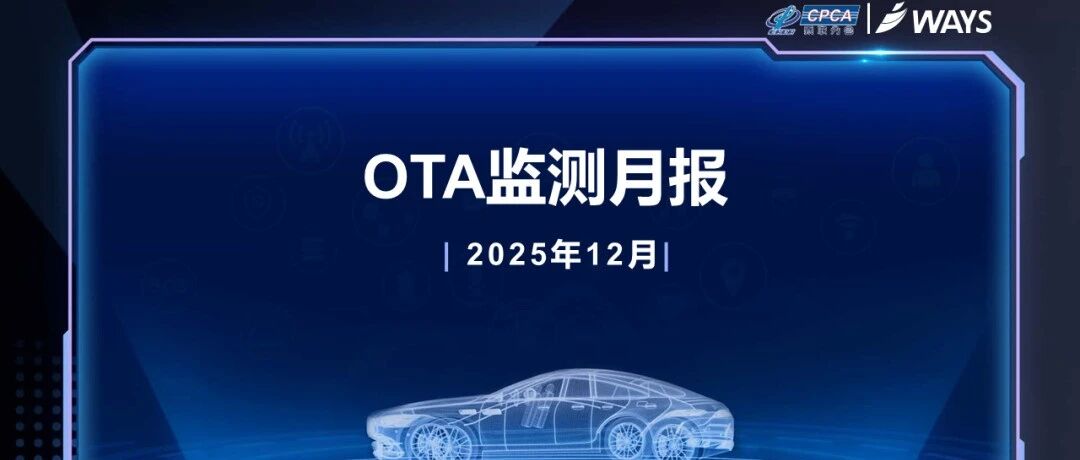
【联合发布】2025年12月OTA监测月报
乘联分会· 2026-01-19 09:07
Core Insights - The article discusses the monthly OTA (Over-The-Air) monitoring report released by the China Automobile Circulation Association and Guangzhou Weirbo Information Technology Co., highlighting the trends and updates in the automotive OTA landscape [2]. Industry Overview - In December 2025, the industry updated a total of 1,257 features, a significant increase from 954 in the previous month, with 27 brands participating in OTA updates. The focus of upgrades was on driving assistance and voice functionalities [8]. - Throughout the year, the automotive industry shifted from "wild growth" to a "compliant expansion" model under regulatory constraints, emphasizing "safer, more inclusive, and practical" advancements. The total number of upgraded features increased by 36.7% compared to 2024 [8]. New Forces - New force brands updated a total of 216 features in December 2025, up from 177 the previous month, indicating a slight increase. Brands like Li Auto and Xpeng experienced major version upgrades, enhancing their level of intelligence [7]. - The frequency of upgrades for new force brands decreased due to regulatory impacts, transitioning from "high frequency" to "low frequency with high quality," while still maintaining a high level of overall upgrade functionality [9]. Domestic Brands - Domestic brands updated 1,005 features in December 2025, a significant rise from 728 in the previous month. This year was crucial for domestic brands to catch up with the leading tier in intelligence, focusing on "more inclusive and practical" strategies [14]. - The total number of upgraded features for domestic brands increased by 73% compared to 2024, with over 20% of upgrades in intelligent driving and vehicle control modules, which are key areas for catching up [14]. Joint Venture & Luxury Brands - Joint venture and luxury brands updated 36 features in December 2025, a slight decrease from 49 in the previous month. However, the total number of upgraded features increased by 31.6% compared to 2024, with expansions into overall vehicle experience and intelligent driving modules [15]. - The upgrades in intelligent driving increased by 6.88% compared to 2024, and vehicle control features saw a 3.25% increase, indicating a shift from passive following to active participation in the intelligentization field [15]. OTA Activity Highlights - Li Auto adjusted its OTA internal testing project to a priority experience project, focusing on concentrated information release and enhancing user engagement through various promotional activities [26][32]. - The article outlines various promotional activities and user engagement strategies employed by Li Auto, including topic operations and rewards for user participation, aimed at increasing interaction with new features [33][38]. Future OTA Updates - The article provides a forecast of upcoming OTA updates for various brands, detailing expected upgrade contents and timelines, indicating a continuous evolution in the automotive OTA landscape [37][39].


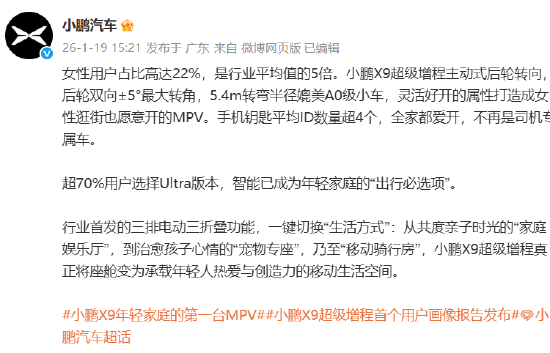
小鹏X9用户画像:90后成购车主力,女性用户占比高达行业平均值5倍
Xin Lang Cai Jing· 2026-01-19 08:51
Core Insights - Xiaopeng Motors released user demographics for the Xiaopeng X9 Super Extended Range version, highlighting its appeal to younger families and a departure from traditional MPV designs [1][11] User Demographics - Over 70% of users opted for the Ultra version of the Xiaopeng X9 [1][15] - 57.2% of owners are born in the 1990s, with 13.7% from the 2000s, and 21% are first-time buyers [1][11] - 80% of users upgrading from luxury brands [1] - Female users account for 22% of the customer base, five times the industry average [2][11] Vehicle Features - The Xiaopeng X9 features advanced rear-wheel steering and a turning radius comparable to Smart cars [4][13] - The vehicle is designed to be family-friendly, with an average of over four mobile keys per user, indicating it is not just for the driver [4][13] - The car includes a spacious trunk and entertainment options for rear passengers, enhancing family outings [6][16][18] Driving Experience - The Xiaopeng X9 boasts industry-leading assisted driving capabilities, making long-distance travel easier [5][15] - Users reported a seamless driving experience, with one user mentioning a 1041 km journey from Guizhou to Wuhan [14]
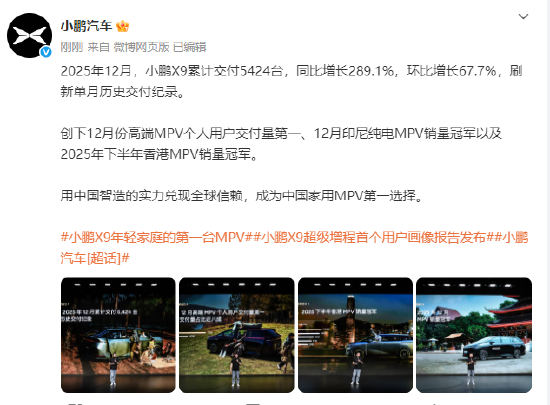
小鹏汽车:小鹏X9去年12月交付5424台,刷新单月历史交付纪录
Xin Lang Cai Jing· 2026-01-19 07:13
小鹏汽车官方微博宣布,2025年12月,小鹏X9累计交付5424台,同比增长289.1%,环比增长67.7%,刷 新单月历史交付纪录。 责任编辑:王翔 小鹏汽车官方微博宣布,2025年12月,小鹏X9累计交付5424台,同比增长289.1%,环比增长67.7%,刷 新单月历史交付纪录。 据悉,这一数据创下12月份高端MPV个人用户交付量第一、12月印尼纯电MPV销量冠军以及2025年下 半年香港MPV销量冠军。 据悉,这一数据创下12月份高端MPV个人用户交付量第一、12月印尼纯电MPV销量冠军以及2025年下 半年香港MPV销量冠军。 责任编辑:王翔 ...
小鹏汽车董事长何小鹏转发雷军微博:很厉害,祝贺好成绩
Ge Long Hui A P P· 2026-01-19 04:40
格隆汇1月19日|小鹏汽车董事长何小鹏转发雷军微博:很厉害,祝贺好成绩。未来一起继续不断探索 和挑战极限!雷军在微博中表示,新一代SU7Max,24小时耐力挑战"用短跑速度跑马拉松",最终成 绩:4264km。车辆连续跑24小时(含充电时间),挑战所能达到的最大行驶里程。 ...
英伟达正在被中国车企抛弃
3 6 Ke· 2026-01-19 02:19
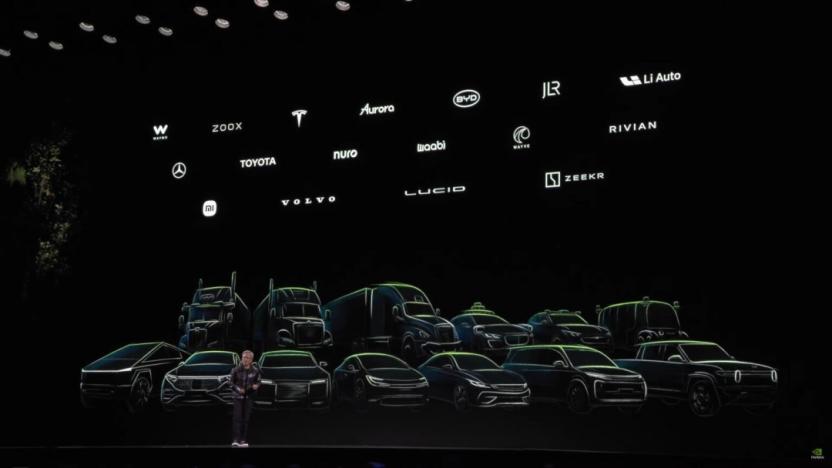
Core Viewpoint - The automotive industry is witnessing a significant shift towards self-developed chips, with companies like Xiaopeng and NIO moving away from NVIDIA's chips to their own solutions, indicating a trend where automakers prioritize self-sufficiency in technology [1][5][16]. Group 1: Market Dynamics - Xiaopeng has launched four new models equipped with its self-developed Turing chip, marking a complete transition from NVIDIA's chips [1]. - NIO is also transitioning to its self-developed Shenqi chip, which is expected to reduce costs significantly compared to purchasing NVIDIA chips [1][5]. - NVIDIA's market share in the high-end autonomous driving chip sector is projected to decline from 39% in 2024 to 25% in 2025, as more companies adopt self-developed solutions [1][5][8]. Group 2: Competitive Landscape - In 2024, NVIDIA's Orin-X chip held a 39.8% market share with 2.1 million units shipped, but its dominance is being challenged by Chinese companies like Horizon Robotics, which offers competitive chips at lower prices [3][4]. - Horizon's J5 chip has secured contracts with over nine automakers for more than 20 models, highlighting the growing competition in the mid-range chip market [4]. - By 2025, NVIDIA's partnerships with major clients like NIO and Xiaopeng have diminished, indicating a shift in the competitive landscape [5][8]. Group 3: Financial Performance - NVIDIA's automotive revenue for the first three quarters of fiscal 2025 was only $1.745 billion, accounting for just over 1% of its total revenue of $147.8 billion, with the majority coming from data center and AI-related products [12][14]. - The company has faced challenges with the delayed launch of its Thor chip, which has affected automakers' product timelines and market strategies [15][16]. Group 4: Strategic Shifts - NVIDIA is attempting to transition from a chip supplier to a comprehensive autonomous driving solution provider, as evidenced by its hiring of key personnel from Xiaopeng and the introduction of the open-source VLA model [17][18]. - The effectiveness of NVIDIA's open-source model, Alpamayo, has been questioned, with concerns about its practical application in the automotive sector [18].

小鹏汇天“陆地航母”取证在即:广东低空产业藏不住的实力
2 1 Shi Ji Jing Ji Bao Dao· 2026-01-19 00:49
Core Insights - Xiaopeng Motors' flying car division, Xiaopeng Huitian, is reportedly working with JPMorgan and Morgan Stanley for an IPO in Hong Kong, with a potential completion by the end of the year [1] - The low-altitude economy in Guangdong has reached a scale of over 100 billion RMB, with more than 15,000 related enterprises, accounting for over 30% of the national total [1] - The "Land Carrier," a flying car developed by Xiaopeng Huitian, has received over 7,000 global orders, indicating strong market interest and potential for record sales in the manned flying vehicle sector [3][4] Company Developments - Xiaopeng Huitian has increased its registered capital from 650 million RMB to 900 million RMB, a growth of approximately 38%, reflecting confidence in the flying car market [1] - The company has established the world's first mass production line for flying cars in Guangzhou, aiming for an annual production capacity of 10,000 units [3] - The "Land Carrier" is designed with a unique split design, allowing it to be stored in a car's trunk, and features strong autonomous driving capabilities [2] Industry Trends - The eVTOL (electric Vertical Take-Off and Landing) market is expected to see several products, including the "Land Carrier," receive type certification by 2026, marking a significant step towards commercialization [3] - Guangdong's low-altitude economy is projected to exceed 1 trillion RMB by 2026, driven by reforms in airspace management and infrastructure connectivity [1][6] - The province is home to over 30% of China's low-altitude industry chain, with a leading position in both consumer and industrial drone markets [6] Future Outlook - Xiaopeng Huitian plans to launch the A868 flying car, targeting intercity commuting with a range exceeding 500 kilometers and a cruising speed over 360 kilometers per hour [4][5] - The company is also developing a comprehensive low-altitude flight camp and a flying car "6S store" in Guangzhou, which will serve multiple functions including sales and training [5] - Continuous capital investment, including a recent 1.26 billion RMB loan and 250 million USD in Series B funding, will support the R&D and commercialization of flying cars [5]
2026,车企反攻智能硬件
3 6 Ke· 2026-01-18 23:37
Core Viewpoint - The rise of smart glasses, particularly from automotive companies, signifies a shift in the automotive industry towards integrating AI and smart hardware, transforming traditional business models from one-time vehicle sales to ongoing subscription-based services [1][3][9]. Group 1: Transition from Hardware to Smart Hardware - The transition from hardware to automotive manufacturing began in 2019, driven by a peak in smartphone sales and a surge in electric vehicle sales, leading hardware manufacturers to explore automotive opportunities [3][5]. - Companies like Xiaomi and Huawei have either entered the automotive market directly or partnered with automakers to develop smart driving and vehicle integration solutions [3][5]. - The evolution of smart hardware in vehicles is seen as a natural progression, with the automotive industry now embracing AI to create a unified smart ecosystem [1][3]. Group 2: New Profit Models for Automotive Companies - The introduction of smart glasses, such as Li Auto's Livis, illustrates a shift towards products that enhance brand loyalty and provide continuous data collection, which can improve AI model capabilities [10][11]. - The automotive industry is moving towards a model where vehicle sales become part of a broader consumer lifestyle platform, focusing on software services that offer higher profit margins compared to traditional vehicle manufacturing [13][14]. - The integration of AI into both vehicles and smart hardware allows for shared components and reduced costs, enhancing overall efficiency and profitability [14][16]. Group 3: Challenges in the AI Transition - The transition to AI-driven models presents significant challenges, including high costs associated with data, algorithms, and computational power, which create barriers to entry for new players [17][19]. - Successful companies in this space must have substantial financial resources, technical expertise, and the ability to scale operations to effectively compete [18][19]. - The competitive landscape is likely to solidify around a few leading brands capable of leveraging their existing consumer base and data to enhance their AI capabilities [19].

早鸟价最后1天! 2026先进尼龙产业创新与应用开发大会(3月19-20日 广州)
DT新材料· 2026-01-18 16:05
Group 1 - The global nylon market is expected to exceed $47 billion, driven by advancements in applications such as electric vehicles, electronics, low-altitude economy, embodied robots, smart terminals, and medical devices [2] - The nylon industry is entering a critical period of structural adjustment due to energy system restructuring, trade environment changes, and energy-saving and carbon reduction goals, presenting both challenges and strategic opportunities [2] - The "2026 Advanced Nylon Industry Innovation and Application Development Conference" will be held on March 19-20, 2026, in Guangzhou, focusing on technology innovation, application development, cost reduction, and market expansion [2][4] Group 2 - The conference will gather over 300 domestic and international nylon enterprises and industry chain leaders, facilitating effective resource connections [5] - More than 20 experts and industry leaders will share insights on innovation paths in the industry [5] - The event will include specialized activities such as salons, exchange visits, and demand matching to meet industry needs [5] Group 3 - The agenda includes sessions on terminal trends and material demands, innovations in nylon applications in the automotive and electronics sectors, and case studies on nylon materials for low-altitude flying vehicles and embodied robots [7][8] - Topics will cover nylon modification, new resins, and innovative materials, with a focus on high-temperature, low-humidity nylon modifications and bio-based nylon technologies [12] - The conference will also address the development of industry standards for advanced nylon materials in key application areas such as electric vehicles and robotics [5][10]
汽车行业周报:中欧电动汽车反补贴案取得阶段性进展,机器人量产进程提速-20260118
SINOLINK SECURITIES· 2026-01-18 12:11
Investment Rating - The report suggests a focus on the automotive industry, particularly on companies like BYD and Geely for vehicle manufacturing, and companies like Li Auto, Xpeng Motors, and others in the smart technology and robotics sectors [3][20]. Core Insights - The EU's implementation of a price commitment mechanism is expected to significantly alleviate the tariff pressure faced by Chinese electric vehicle manufacturers exporting to Europe, improving their profitability per vehicle [1][13]. - Boston Dynamics' Atlas humanoid robot is set to begin mass production in 2026, marking a shift from technology validation to commercial deployment, with significant partnerships in manufacturing and logistics [2][14]. - The first week of 2026 saw a decline in retail sales of passenger vehicles, but there is optimism for recovery in Q1 2026 due to upcoming policy support and seasonal demand [19][3]. - The report highlights the ongoing trend of increasing exports of passenger vehicles, particularly in the context of recovering demand in markets like Russia and the growing penetration of new energy vehicles [3][19]. Industry Data Tracking - The Shanghai Composite Index decreased by 0.57%, while the automotive index increased by 0.49%, ranking 10th among 31 sectors [21]. - In the first week of January 2026, wholesale passenger vehicle sales were 381,000 units, down 40% year-on-year, with new energy vehicle sales at 167,000 units, also down 30% [5][27]. - In December 2025, the total wholesale passenger vehicle sales were 2.787 million units, a year-on-year decrease of 9.3%, while new energy vehicle sales increased by 3.4% [6][34]. - Exports of passenger vehicles in December 2025 reached 588,000 units, a year-on-year increase of 45.5%, with new energy vehicle exports at 270,000 units, up 122.9% [6][50][54]. Industry Dynamics - The report notes significant developments in the automotive sector, including the establishment of a new company by Jetta to focus on new energy vehicles, and plans by XPeng to build an independent overseas supply chain team [62][64]. - The Hong Kong government is advancing autonomous driving tests, which could provide valuable insights for the application of such technologies in urban environments [61].



年需约20亿颗车载芯片,朱伏生:广州发力RISC-V通信芯片
2 1 Shi Ji Jing Ji Bao Dao· 2026-01-18 06:36
Core Viewpoint - RISC-V is rapidly emerging as a new generation open-source instruction set architecture, with significant contributions from China, particularly in high-value sectors like AI and high-performance computing [2] Group 1: RISC-V Industry Development - In 2024, global shipments of RISC-V-based chips have exceeded 10 billion units, with China contributing over 50% [2] - Guangzhou is actively working to establish itself as a core hub for the national integrated circuit industry, with RISC-V seen as a key opportunity for reshaping the chip industry landscape [4] Group 2: Challenges in RISC-V Industry - Current challenges in Guangzhou's RISC-V industry include insufficient policy support and a lack of clear development models, leading to a weak industrial ecosystem [4] Group 3: Recommendations for RISC-V Advancement - Recommendations include creating targeted development plans for RISC-V processors, establishing a RISC-V development fund, and implementing financial subsidies for RISC-V chip applications to enhance the overall scale of domestic RISC-V processor chip usage [5] - The automotive sector in Guangzhou, with major players like GAC and Xpeng, presents a natural advantage for developing automotive-grade chips, with an estimated demand of 2 billion vehicle chips annually by 2025 [5] Group 4: 5G Communication Chip Development - There is a strong demand for 5G communication chips in critical industries in Guangzhou, such as public transportation and energy, with a proposal to form an innovation consortium to develop RISC-V-based 5G RedCap terminal baseband chips [6] - This initiative aims to meet the urgent needs for autonomous and secure communication core chips in vital sectors while promoting the collaborative development of the RISC-V chip design and manufacturing supply chain in Guangzhou [6]