
华锡有色

Search documents
聚酯周报2026/2/10:PTA&MEG:节前累库兑现中,预期尚可-20260212
Zi Jin Tian Feng Qi Huo· 2026-02-12 07:13
1. Report Industry Investment Ratings - PTA: Core view - neutral; Month - spread - neutral; Spot - neutral; Cost - neutral; Device change - cautiously bullish; Downstream demand - neutral; Supply - demand balance - cautiously bearish; Processing profit - cautiously bearish [5] - PX: Core view - neutral; Month - spread - neutral; Spot - neutral; Device change - neutral; Import - cautiously bearish; Downstream demand - neutral; Supply - demand balance - neutral; Processing profit - neutral [6] - Ethylene glycol: Core view - neutral; Month - spread - neutral; Spot - neutral; Device change - cautiously bearish; Import - cautiously bullish; Downstream demand - neutral; Supply - demand balance - cautiously bearish; Processing profit - neutral [7] 2. Core Views of the Report - PTA:节前检修兑现,需求加速降负,产业链略压缩,现实端一般但预期尚可,节前关注成本地缘和资金影响,轻仓过节,节后关注需求复工进度 [5] - PX:供应维持高位,需求变化不大,近端浮动价偏弱,PXN略回落,现实一般但预期尚可,节前关注资金节奏 [6] - Ethylene glycol:节前负荷高位,合成气有检修,进口略有改善,需求进入节前放假模式,1 - 2月现实端季节性累库,现实一般但预期节后有改善,节前关注宏观情绪 [7] 3. Summaries by Relevant Catalogs 3.1 Weaving Industry - Weaving enters the pre - holiday shutdown mode. As of February 5, the operating rates of texturing, weaving, and dyeing dropped to 17% (-36%), 9% (-25%), and 45% (-24%) respectively. Pre - holiday inventory is for 15 - 20 days, which is not high [10] 3.2 Polyester Industry - As of February 6, polyester load is around 78.2% (-6%), cash flow is repaired, and average inventory stabilizes at around 14.6 days. Polyester devices are undergoing pre - holiday maintenance, and the operating rate is slightly decreasing. Polyester benefits are improving, and pre - holiday inventory pressure is not large [15] - Current polyester inventory is slightly rising. As of February 6, the inventories of POY, DTY, FDY, and staple fiber are 12.7, 24.9, 16.9, and 8.9 days respectively [16] - Raw material prices are回调, and polyester cash - flow profit is slightly repaired [19] - In the future, polyester factories will carry out pre - holiday maintenance, and the operating rate may decline seasonally. As of February 6, the polyester load is 78.2%, and the estimated loads for January - February are 88% and 80% (-2%) [31] 3.3 PTA Industry - PTA device changes are small. Before the holiday, New Materials and Ineos are under maintenance as planned, Dushan Energy plans to conduct maintenance on February 10, Sichuan Energy Investment restarts, and three YS devices are under maintenance. There are maintenance plans for two HL devices in March [43] - As of February 6, with the accelerated decline of polyester load, PTA social inventory (excluding credit warehouse receipts) increases to 232.57 tons, a rise of 14 tons. Inventories in PTA and polyester factories are rising [44] - PTA supply changes little, demand is seasonally decreasing, the PTA industrial chain valuation is slightly compressed. Before the holiday, pay attention to macro and capital influences and hold light positions. In terms of supply, device maintenance is as mentioned above. In terms of demand, on February 5, polyester load dropped to 79.3% (-4.9%), and the estimated loads for January - February are 88% and 80% (-2%). Downstream operating rates are further weakening. The PTA balance shows that there is a slight inventory build - up in January - February, and the processing fee is around 400, not low. Short - term attention should be paid to geopolitical and capital drivers [59] 3.4 PX Industry - US gasoline inventory is rising, and gasoline crack spread is stable [73] - Asian disproportionation and short - process benefits are strong but have slightly declined recently [76] - The aromatics price spread between the US and Asia is slightly widening. The toluene price spread between the US and Asia is $101.1, and the xylene price spread is $90. In December 2025, South Korea's aromatic exports to the US increased, and in January 2026, the exports were 4.1 tons, a month - on - month decline [85] - PX device status: domestic PX load is 89.2%, and Asian load is 81.6%, both at a high level. Domestic load changes little, and Sinochem Quanzhou plans to restart. Some Asian devices are slightly increasing their loads. The overall Asian load remains high due to improved benefits [86] - PX supply remains high, demand changes little, the near - end floating price is weak, PXN has slightly declined, the current situation is average but the expectation is good. Before the holiday, pay attention to capital rhythm. The device load is high. Domestically, Zhejiang Petrochemical restarts after maintenance, Sinochem Quanzhou plans to restart, and some factories slightly reduce their loads. In Asia, some devices adjust their loads. In terms of balance, Asian supply is at a high load, PX has a loose balance and a small inventory build - up from January to March, and PXN is around 290, with the valuation compressed. Pay attention to capital changes [92] - The price spread between the PX outer and inner markets is widening, the PX 3 - 5 month spread is weakly stable, and the TA05 processing fee drops to around 400 [93] - The PTA - Brent oil industrial chain profit slightly declines but is still not low. PXN is around $290, PTA processing fee is 400 yuan, and the disk processing fee is slightly compressed. The overall valuation is not low. Short - term attention should be paid to the macro - market situation [96] 3.5 Ethylene Glycol (EG) Industry - As of January 30, the overall EG load is high, with the total load at 76% and the coal - based load at 76.7% [101] - EG device status: Zhongke Refining and Chemical restarts, Sinochem Quanzhou has a difficult restart, CNOOC Shell may stop production, Satellite Petrochemical plans to switch production in February, Shenghong is under maintenance, Gulei has a maintenance plan in March, and BASF is operating at 90% load. For syngas - based production, some factories are under maintenance, and Shaanxi Coal has a rotation maintenance plan in March. Near - end supply is not low, and maintenance is expected to increase [106] - EG price has dropped from a high level, costs are strong, and benefits are compressed [107] - Overseas maintenance plans are increasing. Some devices in Taiwan, South Korea, Saudi Arabia, and the US have maintenance or restart - delay plans. The near - end arrivals from January to February are still not low, but the arrivals are expected to decline from February to March [121] - As of February 2, the inventory in East China's main ports is about 93.5 tons, a month - on - month increase of 3.8 tons. The overall inventory is moderately high. The expected arrivals from February 2 - 8 are around 12.3 tons, and the actual arrivals are 11 tons. The expected arrivals from February 9 - 23 are 18.1 tons. During the holiday, the arrival expectation is not high, and there is still inventory build - up pressure at the port as downstream industries shut down. Polyester factories' ethylene glycol raw material inventory days are 17.8 days (+1.8), and downstream inventory is increasing [128] - In terms of balance, supply is at a high level, imports are slightly improving, demand is seasonally entering the holiday shutdown mode. The current situation is average, but the expectation is good after the holiday. Before the holiday, pay attention to macro - sentiment [130]
有色金属行业双周报:钨价大幅上涨,贵金属短期迎方向选择
Guoyuan Securities· 2026-02-12 00:24
Investment Rating - The report maintains a "Buy" rating for the industry, indicating that the industry index is expected to outperform the benchmark index by more than 10% [6]. Core Insights - The non-ferrous metals industry index decreased by 5.42% over the past two weeks, underperforming the CSI 300 index, ranking 28th among 31 first-level industries [12]. - Precious metals, energy metals, minor metals, industrial metals, and new metal materials all experienced varying degrees of decline during this period [12]. - The report highlights significant price movements, with tungsten prices rising sharply by 25.09% over the past two weeks, while other metals like silver and tin saw substantial declines [19][38]. Summary by Sections Market Review - The non-ferrous metals industry index fell by 5.42% from January 26 to February 6, 2026, underperforming the CSI 300 index [12]. - Precious metals decreased by 2.49%, energy metals by 11.47%, minor metals by 4.25%, industrial metals by 4.29%, and new metal materials by 9.25% [12]. Precious Metals - As of February 6, COMEX gold closed at $4,988.60 per ounce, up 0.11% over the past two weeks, and up 14.89% year-to-date [20]. - COMEX silver closed at $77.53 per ounce, down 24.92% over the past two weeks, but up 7.28% year-to-date [20]. Industrial Metals - LME copper settled at $12,840.00 per ton, down 0.62% over the past two weeks, but up 2.14% year-to-date [29]. - Domestic copper averaged ¥99,560 per ton, down 1.68% over the past two weeks [29]. Minor Metals - Black tungsten concentrate (≥65%) price reached ¥673,000 per ton, up 25.09% over the past two weeks [38]. - LME tin price was $47,155 per ton, down 16.69% over the past two weeks [38]. Rare Earths - The China Rare Earth Price Index was reported at 265.43, up 11.37% over the past two weeks [52]. - Neodymium oxide closed at ¥757,500 per ton, up 12.64% over the past two weeks [52]. Energy Metals - Electrolytic cobalt averaged ¥420,000 per ton, down 3.89% over the past two weeks [61]. - Lithium carbonate (99.5% battery grade) averaged ¥134,500 per ton, down 21.35% over the past two weeks [64]. Major Events - The Shanghai Futures Exchange is seeking public opinion on revising lead futures contract rules, which will include recycled lead ingots as alternative delivery items [3]. - The China Nonferrous Metals Industry Association announced the suspension of over 2 million tons of copper smelting projects to control capacity growth [70].
有色金属行业双周报:钨价大幅上涨,贵金属短期迎方向选择-20260211
Guoyuan Securities· 2026-02-11 13:11
Investment Rating - The report maintains a "Recommended" investment rating for the industry, indicating that the industry index is expected to outperform the benchmark index by more than 10% [6]. Core Insights - The non-ferrous metals industry index decreased by 5.42% over the past two weeks, underperforming the CSI 300 index and ranking 28th among 31 first-level industries [12]. - Precious metals, energy metals, minor metals, industrial metals, and new metal materials all experienced varying degrees of decline during this period [12]. - The report highlights significant price movements, with tungsten prices rising sharply by 25.09% over the past two weeks, while other metals like silver and tin saw substantial declines [19][38]. Summary by Sections Market Review - The non-ferrous metals industry index fell by 5.42% from January 26 to February 6, 2026, underperforming the CSI 300 index [12]. - Precious metals decreased by 2.49%, energy metals by 11.47%, minor metals by 4.25%, industrial metals by 4.29%, and new metal materials by 9.25% [12]. Precious Metals - As of February 6, COMEX gold closed at $4,988.60 per ounce, up 0.11% over the past two weeks, and up 14.89% year-to-date [20]. - COMEX silver closed at $77.53 per ounce, down 24.92% over the past two weeks, but up 7.28% year-to-date [20]. - The report suggests focusing on companies like Shandong Gold, Zhongjin Gold, and Hunan Gold due to the current market dynamics [21]. Industrial Metals - LME copper settled at $12,840.00 per ton, down 0.62% over the past two weeks, but up 2.14% year-to-date [29]. - Domestic copper prices averaged 99,560 RMB per ton, down 1.68% over the past two weeks [29]. - Companies to watch include Zijin Mining, Luoyang Molybdenum, Jiangxi Copper, and Tongling Nonferrous [29]. Minor Metals - Black tungsten prices rose to 673,000 RMB per ton, up 25.09% over the past two weeks [38]. - Tin prices on LME fell to $47,155 per ton, down 16.69% over the past two weeks [38]. - The report recommends focusing on companies like Xiyang Tin, Huaxi Silver, and Xingye Silver due to the current market conditions [39]. Rare Earths - The China Rare Earth Price Index reached 265.43, up 11.37% over the past two weeks [52]. - Neodymium oxide closed at 757,500 RMB per ton, up 12.64% over the past two weeks [52]. - Companies to focus on include China Rare Earth, Northern Rare Earth, and Shenghe Resources [53]. Energy Metals - Electrolytic cobalt averaged 420,000 RMB per ton, down 3.89% over the past two weeks [61]. - Lithium carbonate (battery-grade) averaged 134,500 RMB per ton, down 21.35% over the past two weeks [64]. - Companies to monitor include Tianqi Lithium and Ganfeng Lithium due to the evolving market landscape [64].
稀土产品价格加速上涨,钨价中枢再度上移!有色ETF(159876)摸高0.79%!机构:维持对有色金属的乐观预期
Xin Lang Cai Jing· 2026-02-10 05:43
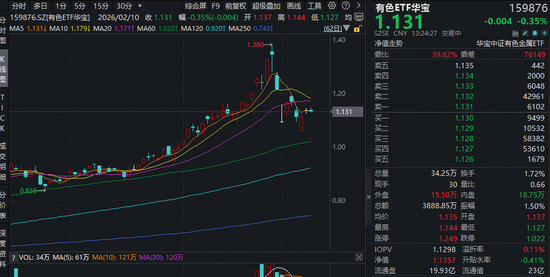
Core Viewpoint - The performance of the non-ferrous metal sector is currently experiencing fluctuations, with the Huabao Non-Ferrous ETF (159876) showing a morning high of 0.79% but later declining by 0.35% [1][9]. Market Performance - The Huabao Non-Ferrous ETF opened at 1.137, reached a high of 1.144, and is currently trading at 1.131, reflecting a decrease of 0.35% [2][9]. - Key stocks in the sector include Shenghe Resources and Bowei Alloys, which rose over 2%, while Zhongfu Industrial and Xiamen Tungsten also saw gains exceeding 1% [13]. Macroeconomic Factors - Federal Reserve Governor Stephen Milan indicated that potential inflation is not a concern, and there is no significant price pressure observed in the economy. The Fed may need to cut rates by more than 100 basis points this year [4][10]. - The market is currently reacting to changes in the geopolitical landscape, particularly regarding Iran, which has influenced gold price volatility [4][11]. Industry Trends - Rare earth product prices are accelerating, with significant increases in praseodymium and neodymium oxide prices, which rose by 7.59% and 6.27% respectively on February 9. The cumulative increase for praseodymium oxide this year has reached 34% [4][11]. - Analysts expect a continued widening of the supply-demand gap for rare earths by 2026, driven by tight supply and increased demand from downstream magnetic material companies [4][11]. Investment Opportunities - The Huabao Non-Ferrous ETF and its linked funds cover a wide range of sectors including copper, aluminum, gold, rare earths, and lithium, providing a comprehensive tool for investors to capture the beta performance of the entire sector [5][12]. - The non-ferrous metal industry is anticipated to enter a resource super cycle, with prices for metals like gold, copper, aluminum, tin, and rare earths expected to rise systematically [4][11].

【干货】锑产业链全景梳理及区域热力地图
Qian Zhan Wang· 2026-02-10 03:09
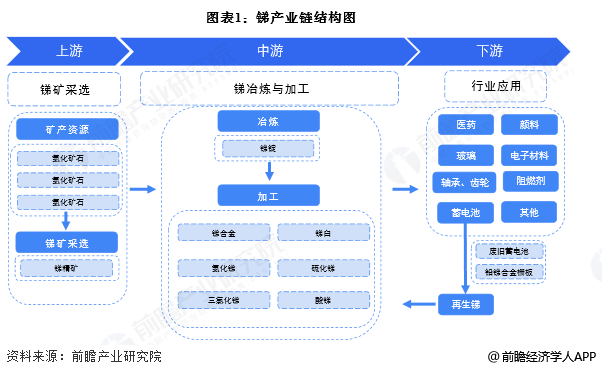
Core Insights - The antimony industry is characterized by its high industrial value and strategic importance, with antimony being used as an additive in various industrial applications [1] - The antimony supply chain includes upstream mining and selection, midstream smelting and processing, and downstream applications such as flame retardants and batteries [1][3] Group 1: Industry Overview - Antimony is a scarce resource with significant industrial applications, classified as a strategic mineral resource by the government [1] - The antimony supply chain consists of three main segments: upstream (mining and selection), midstream (smelting and processing), and downstream (applications) [1][3] - Key applications of antimony include flame retardants, glass, electronic materials, bearings, gears, and batteries, with the latter allowing for the recycling of antimony [1] Group 2: Key Companies and Production Data - Major upstream companies in the antimony mining sector include Hunan Gold, Huaxi Nonferrous, and Huayu Mining [3] - In 2024, Hunan Gold is projected to produce 29,209 tons of antimony, a decrease of 6.15% year-on-year, while Huaxi Nonferrous expects a production increase of 9.17% to 15,417.7 tons [10] - Midstream companies such as Hengbang Co. and Zhuhai Group are involved in smelting and processing, with Hengbang Co. reporting revenue of 957 million yuan from related operations in 2024 [10] Group 3: Regional Distribution - The antimony industry is predominantly concentrated in Hunan province, followed by Guangxi, Guangdong, and Jiangxi, with a significant disparity in the number of companies compared to other regions [5][7] - The majority of upstream, midstream, and recycling companies are located in Hunan, with other provinces like Tibet and Guangxi having fewer enterprises [7] Group 4: Investment Trends - Investment activities in the antimony sector from 2022 to 2025 highlight ongoing developments and strategic initiatives by key players [11] - Companies are focusing on enhancing production capabilities and exploring new product developments, particularly in high-precision alloys and recycling processes [10]


国泰海通晨报-20260210
GUOTAI HAITONG SECURITIES· 2026-02-10 01:41
Group 1: Precision Medicine and Robotics - The report highlights Jingfeng Medical-B as a leader in surgical robotics in China, driving advancements in surgical procedures through continuous technological innovation, with rapid growth in global clinical surgeries and domestic sales [2][3] - The company is projected to achieve revenues of 432 million, 811 million, and 1.236 billion yuan from 2025 to 2027, with a target price of 73.20 yuan for 2026 based on a 35X PS valuation [3] - Jingfeng Medical has established a comprehensive surgical solution with its innovative multi-port and single-port robotic systems, becoming the first in China and the second globally to obtain regulatory approval for multiple robotic systems [3][4] Group 2: Market Performance and Sales Growth - In 2024, Jingfeng Medical sold 20 multi-port surgical robots, ranking first among domestic manufacturers, with clinical applications covering over 220 hospitals across 30 provinces in China [4] - The company's total revenue is expected to increase from 48 million yuan in 2023 to 160 million yuan in 2024, with a significant rise from 30 million yuan in the first half of 2024 to 149 million yuan in the first half of 2025 [4] - The report indicates that Jingfeng Medical's international expansion has led to explosive growth in overseas orders, with 72 out of 118 signed global sales agreements for core products being from overseas markets [5] Group 3: Precision Manufacturing and Emerging Industries - The report covers Xingrui Technology as a leading precision manufacturing enterprise in China, focusing on automotive electronics and actively expanding into emerging industries, with a target price of 32.11 yuan [6][8] - Revenue projections for Xingrui Technology are 1.626 billion, 1.980 billion, and 2.482 billion yuan from 2025 to 2027, with an expected EPS of 0.48, 0.69, and 0.95 yuan respectively [6] - The company has established a robust product matrix, including electronic connectors and structural components, with applications in new energy vehicle systems and consumer electronics, enhancing its competitive advantage in the automotive electronics sector [7] Group 4: Strategic Partnerships and Market Expansion - Xingrui Technology has formed strategic partnerships to expand into the liquid cooling industry, collaborating with Green Cloud to develop advanced technologies and products for data centers [8] - The company has a strong customer base, collaborating with renowned brands in consumer electronics and new energy sectors, and has established a global business layout with factories in multiple locations [7][8] - The report emphasizes the potential for Xingrui Technology to benefit from the growing demand for liquid cooling solutions driven by energy efficiency upgrades in data centers [8]


有色金属行业周报:短期宏观情绪反复,不改有色金属长牛
GOLDEN SUN SECURITIES· 2026-02-08 12:24
Investment Rating - The report maintains a "Buy" rating for several companies in the non-ferrous metals sector, including companies like Zijin Mining, China Hongqiao, and Chalco [11]. Core Insights - The report highlights that despite short-term fluctuations in macroeconomic sentiment, the long-term bullish trend for non-ferrous metals remains intact [2]. - In January, the People's Bank of China increased its gold purchases, injecting confidence into the precious metals market, while the U.S. ADP employment figures fell short of expectations, indicating a cooling job market [2][41]. - The report emphasizes the strategic importance of copper reserves, with plans to expand national copper strategic reserves and explore commercial reserve mechanisms [3]. - The aluminum market is experiencing short-term price fluctuations due to geopolitical tensions and macroeconomic policies, with supply and demand dynamics affected by seasonal factors [4]. - Nickel prices are under pressure due to declining macroeconomic sentiment, with a notable drop in prices observed [5]. - The lithium market is seeing a decline in prices and ongoing inventory reduction, with supply chain dynamics influenced by seasonal production adjustments [9]. - Cobalt prices are also weak, with reduced trading activity as companies prepare for the upcoming holiday season [10]. Summary by Sections Precious Metals - In January, China's central bank increased gold purchases from 0.93 tons to 1.24 tons, providing support to the precious metals market [2][41]. - The largest silver ETF recorded a single-day increase of 1,000 tons, marking the third-largest daily increase in history, indicating long-term investor confidence [2]. Industrial Metals - Copper prices are being closely monitored due to increased global inventories and strategic reserve discussions in China [3]. - Aluminum production is stable, but demand is declining as downstream processing enterprises begin their holiday breaks, leading to increased social inventory [4]. - Nickel prices fell by 5.8% to 132,000 yuan/ton, driven by a cooling macroeconomic sentiment [5]. Energy Metals - Lithium carbonate prices dropped by 13.2% to 138,000 yuan/ton, with ongoing inventory reduction and production adjustments ahead of the holiday season [9]. - Cobalt prices decreased by 6.3% to 410,000 yuan/ton, with demand slowing as companies finish pre-holiday stockpiling [10]. Key Companies to Watch - Companies recommended for attention include Zijin Mining, Shandong Gold, and China Hongqiao in the precious metals sector, and Chalco and Western Mining in the aluminum sector [2][4][11].
短期宏观情绪反复,不改有色金属长牛
GOLDEN SUN SECURITIES· 2026-02-08 11:16
Investment Rating - The report maintains a "Buy" rating for several companies in the non-ferrous metals sector, including companies like Zijin Mining, China Hongqiao, and Chalco [11]. Core Views - The report highlights that despite short-term fluctuations in macro sentiment, the long-term bullish trend for non-ferrous metals remains intact. The Chinese central bank's increased gold purchases in January have provided a strong boost to precious metals [2][41]. - The report emphasizes the strategic importance of copper reserves, suggesting that the Chinese government is looking to expand its copper strategic reserve system [3]. - The aluminum market is experiencing short-term price fluctuations due to geopolitical tensions and macroeconomic policies, with a stable production capacity but increasing social inventory [4]. - Nickel prices are under pressure due to a cooling macro sentiment, with significant price drops observed in recent weeks [5]. - The report notes that tin prices are expected to remain volatile, influenced by macroeconomic sentiment and supply-demand dynamics [8]. - Lithium prices have seen a decline, with ongoing inventory reduction, while cobalt prices are also under pressure as trading activity weakens ahead of the holiday season [9][10]. Summary by Sections Precious Metals - In January, the People's Bank of China increased its gold purchases from 0.93 tons to 1.24 tons, injecting confidence into the precious metals market. The largest silver ETF also saw a significant increase in holdings, indicating long-term investor confidence [2][41]. Industrial Metals - **Copper**: The report stresses the importance of copper strategic reserves, with a recent increase in global copper inventories. The Chinese government is exploring commercial reserve mechanisms [3]. - **Aluminum**: The aluminum market is facing short-term price volatility due to geopolitical issues and macroeconomic policies, with production capacity remaining stable but social inventories increasing [4]. - **Nickel**: Nickel prices have dropped significantly, with SHFE nickel falling 5.8% to 132,000 CNY/ton due to cooling macro sentiment [5]. - **Tin**: The tin market is experiencing a supply-demand imbalance, with prices expected to remain volatile [8]. Energy Metals - **Lithium**: The report indicates a decline in lithium prices, with carbonate prices dropping 13.2% to 138,000 CNY/ton. Inventory levels are also decreasing [9]. - **Cobalt**: Cobalt prices are under pressure, with a 6.3% drop in domestic electrolytic cobalt prices to 410,000 CNY/ton as trading activity slows [10].
有色金属行业周报:节前市场波动加剧,坚定看好有色牛市-20260208
SINOLINK SECURITIES· 2026-02-08 11:02
Group 1: Copper - LME copper price decreased by 1.65% to $12,855.0 per ton, while Shanghai copper fell by 3.45% to ¥100,100 per ton [1][14] - Domestic copper inventory increased by 4.03% week-on-week, with a year-on-year increase of 62,700 tons [1][14] - The operating rate of waste anode plate enterprises is expected to drop by 28.52% to 38.36% next week due to the upcoming Spring Festival [1][14] Group 2: Aluminum - LME aluminum price decreased by 3.49% to $3,026.00 per ton, and Shanghai aluminum fell by 5.07% to ¥23,300 per ton [2][15] - Domestic aluminum rod inventory increased by 15,000 tons week-on-week, reaching 258,500 tons [2][15] - The overall aluminum processing operating rate recorded 57.9%, a decrease of 1.5% week-on-week, indicating a significant divergence within the sector [2][15] Group 3: Gold - COMEX gold price increased by 6.57% to $4,988.6 per ounce, while the 10-year TIPS yield decreased by 0.06 percentage points to 1.88% [3][16] - SPDR gold holdings decreased by 10.87 tons to 1,076.23 tons, reflecting market dynamics influenced by geopolitical risks [3][16] - The U.S. Treasury yield curve reached its steepest level in nearly four years, indicating rising concerns over inflation and fiscal deficits [3][16] Group 4: Rare Earths - The price of praseodymium and neodymium oxide increased by 1.20% this week, with December exports of rare earth permanent magnets showing a year-on-year increase of 7% [4][35] - The expectation of more relaxed export policies is anticipated to boost future demand for rare earths [4][35] - Key companies to watch include China Rare Earth, Guangxi Rare Earth, and Northern Rare Earth [4][36] Group 5: Tungsten - Tungsten price increased by 11.98% this week, driven by tight supply conditions and increased strategic reserves in the U.S. [4][38] - The establishment of a $2.5 billion "strategic resilience reserve" by U.S. lawmakers is expected to elevate tungsten's priority [4][38] - Recommended companies include China Tungsten High-Tech and Xiamen Tungsten [4][38] Group 6: Lithium - The average price of lithium carbonate decreased by 13.3% to ¥148,000 per ton, while lithium hydroxide fell by 11.6% to ¥150,000 per ton [4][53] - Total lithium carbonate production this week was 20,700 tons, reflecting a slight decrease [4][53] - Market sentiment remains cautious as downstream purchasing activity is expected to slow down as inventory levels stabilize [4][53] Group 7: Cobalt - Cobalt price decreased by 5.6% to ¥420,000 per ton, while cobalt intermediate prices remained stable [5][54] - The market for cobalt intermediates is characterized by limited transactions, with prices holding steady amid geopolitical supply concerns [5][54] - Long-term structural shortages in raw materials may support future price increases [5][54]
有色金属行业研究:有色金属周报:节前市场波动加剧,坚定看好有色牛市-20260208
SINOLINK SECURITIES· 2026-02-08 08:56
Investment Rating - The report does not explicitly provide an investment rating for the industry Core Insights - The copper market is experiencing a decrease in prices, with LME copper down 1.65% to $12,855.0 per ton and Shanghai copper down 3.45% to ¥100,100 per ton. Supply-side indicators show an increase in copper inventory and a decrease in processing fees, while demand remains stable due to ongoing orders from major clients [1][14] - The aluminum market has seen LME aluminum prices drop by 3.49% to $3,026.00 per ton, with domestic aluminum rod inventory increasing. The overall operating rate for aluminum processing has decreased, indicating a mixed demand scenario [2][15] - Gold prices have risen by 6.57% to $4,988.6 per ounce, driven by geopolitical risks and changes in U.S. Treasury yields. The market is showing strong volatility, influenced by expectations of interest rate cuts and inflation concerns [3][16] - The rare earth sector is witnessing price increases, particularly in praseodymium and neodymium, with exports showing signs of recovery. The report suggests a positive outlook for demand and pricing in this sector [4][35] - Tungsten prices have increased significantly, supported by tight supply conditions and strategic stockpiling initiatives in the U.S. The report indicates a bullish outlook for tungsten prices [4][38] - Lithium prices have decreased, with carbonate lithium averaging ¥148,000 per ton, reflecting a decline in production and market adjustments. The report notes a potential turning point in the lithium market [4][52] - Cobalt prices have decreased by 5.6% to ¥420,000 per ton, with market conditions remaining stable but facing supply concerns. The report anticipates upward pressure on prices in the long term due to structural shortages [5][53] Summary by Sections Copper - LME copper price decreased by 1.65% to $12,855.0 per ton, with an increase in domestic inventory and a decrease in processing fees. The operating rate for copper processing is expected to decline as the industry approaches the Chinese New Year [1][14] Aluminum - LME aluminum price fell by 3.49% to $3,026.00 per ton, with an increase in aluminum rod inventory. The overall operating rate for aluminum processing decreased, indicating a mixed demand scenario [2][15] Precious Metals - Gold price increased by 6.57% to $4,988.6 per ounce, influenced by geopolitical risks and changes in U.S. Treasury yields. The market is experiencing strong volatility [3][16] Rare Earths - Prices for praseodymium and neodymium increased, with exports showing signs of recovery. The report suggests a positive outlook for demand and pricing in this sector [4][35] Tungsten - Tungsten prices increased significantly, supported by tight supply conditions and strategic stockpiling initiatives in the U.S. The report indicates a bullish outlook for tungsten prices [4][38] Lithium - Lithium prices decreased, with carbonate lithium averaging ¥148,000 per ton. The report notes a potential turning point in the lithium market [4][52] Cobalt - Cobalt prices decreased by 5.6% to ¥420,000 per ton, with market conditions remaining stable but facing supply concerns. The report anticipates upward pressure on prices in the long term [5][53]