曹操出行

Search documents
中信建投:汽车板块景气预期或已筑底 特斯拉(TSLA.US)年报强化物理AI拐点
智通财经网· 2026-02-02 07:08
Group 1: Automotive Sector Overview - The automotive sector is currently experiencing weak performance during the off-season, but market pessimism regarding sales expectations is gradually stabilizing, indicating a potential bottoming out of negative sentiment [1] - Tesla's recent quarterly report shows a year-on-year increase in gross profit for Q4 2025, with gross margin reaching a two-year high, driven by higher sales prices in the Asia-Pacific region and an increase in FSD subscriptions [1] - Capital expenditures for Tesla in 2026 are expected to exceed $20 billion, focusing on computing infrastructure and new factory capacity expansion [1] Group 2: Autonomous Driving Developments - 2026 is anticipated to be a pivotal year for the commercialization of autonomous driving, with Tesla's FSD subscription rates increasing significantly throughout 2025 [2] - The FSD subscription model will shift to a monthly subscription starting in 2026, with a current fee of $99 per month [2] - As of the end of 2025, FSD has accumulated over 7 billion miles (approximately 11.5 billion kilometers) of driving distance, with ongoing localization efforts in China and Europe pending regulatory approval [2] Group 3: Humanoid Robotics Sector - The robotics sector is experiencing volatility, with recent adjustments in trading volumes and external rumors affecting market sentiment [3] - Key catalysts for the T-chain include the release of Gen3 in Q1 2025 and the commencement of overseas production capacity construction later in the year [3] - There is a positive outlook for specific investment targets within the robotics sector, focusing on high-probability Tesla supply chain participants and undervalued companies with growth potential [3] Group 4: Commercial Vehicle Outlook - The heavy-duty truck and bus segments are expected to benefit from policy support for domestic demand and ongoing export growth in 2026 [4] - Weichai Power is favored due to the recovery of domestic bidding and the pressing electricity shortages in North America, which are expected to boost market expectations for its products [4] - Recommended stocks include Jianghuai Automobile, Hengbo Technology, Longsheng Technology, Weichai Power, Yutong Bus, King Long Automobile, and Cao Cao Mobility, focusing on low-valuation leaders with strong performance [4]




中信建投:汽车板块景气预期或已筑底 特斯拉年报强化物理AI拐点
智通财经网· 2026-02-02 07:03
Group 1: Automotive Sector Overview - The automotive sector is currently experiencing a weak performance during the off-season, but market pessimism regarding sales expectations is gradually stabilizing, indicating a potential bottoming out of negative sentiment [1] - Tesla's recent quarterly report shows a year-on-year increase in gross profit for Q4 2025, with gross margin reaching a two-year high, driven by higher sales prices in the Asia-Pacific region and an increase in FSD subscriptions [1] - Capital expenditures for Tesla in 2026 are expected to exceed $20 billion, focusing on computing infrastructure and new factory capacity expansion [1] Group 2: Autonomous Driving Developments - 2026 is anticipated to be a pivotal year for the commercialization of autonomous driving, with Tesla's FSD subscription rates increasing significantly throughout 2025 [2] - By the end of 2025, Tesla's FSD has accumulated over 7 billion miles (approximately 11.5 billion kilometers) of driving distance, with ongoing localization efforts in China and Europe pending regulatory approvals [2] - Tesla is shifting its strategic focus from hardware sales to physical AI, including FSD iterations, Robotaxi services, and the production of Cybercab models [2] Group 3: Humanoid Robots and Supply Chain Updates - The humanoid robot sector is experiencing volatility, with recent adjustments in trading volumes and external rumors affecting market sentiment [3] - Key catalysts for the T-chain include the release of Gen3 in Q1 2025 and the commencement of overseas production capacity and mass production later in the year [3] - There is a positive outlook for specific investment targets within the T-chain, including Tesla-related high-probability segments and undervalued companies with growth potential [3] Group 4: Commercial Vehicles Outlook - The heavy-duty truck and bus segments are expected to benefit from policy support for domestic demand and ongoing export growth in 2026 [4] - Weichai Power is favored in the heavy-duty truck sector due to increased domestic bidding and market expectations for product volume growth [4] - In the bus sector, Yutong and King Long are highlighted for their potential upside, driven by export growth and favorable valuation margins [4]


各地政府发力消费政策,看好春节服务消费开门红:消费者服务行业周报(20260126-20260130)
Huachuang Securities· 2026-02-02 04:25
Investment Rating - The report maintains a "Buy" recommendation for the consumer services industry, particularly focusing on the upcoming Spring Festival consumption boost [1]. Core Insights - The report highlights that the Spring Festival consumption season is set to begin, with various local governments implementing consumption-boosting policies, which are expected to drive strong market performance [1][2]. - Three major highlights of the consumption promotion activities are identified: unprecedented subsidy levels directly reaching consumers, innovative consumption scenarios integrating various sectors, and the synergy between online and offline channels through digital empowerment [2][3]. Summary by Sections Industry Investment Rating - The consumer services industry is rated as "Recommended" with a focus on benefiting companies in dining, hotels, tourism, duty-free, and retail sectors due to the anticipated recovery in consumer enthusiasm [1][3]. Key Highlights of Consumption Promotion - Subsidies are at an all-time high, with local governments offering consumption vouchers and subsidies exceeding 100 million yuan in various provinces, which is expected to enhance consumer purchasing power [2]. - Innovative consumption scenarios are being developed, moving beyond traditional discounts to immersive experiences that combine culture, tourism, and sports, thereby revitalizing traditional service sectors [2]. - The integration of online and offline channels is becoming more pronounced, with e-commerce platforms actively participating in promotional activities, enhancing efficiency and broadening the consumption landscape [2]. Market Outlook - The report anticipates a robust recovery in the Spring Festival consumption market in 2026, with data potentially exceeding market expectations, laying a solid foundation for sustained consumer market recovery throughout the year [3].





安踏成彪马最大股东,速卖通跻身美国增速TOP10丨出海周报
2 1 Shi Ji Jing Ji Bao Dao· 2026-02-02 02:07
Industry Overview - The Ministry of Commerce will launch a national-level overseas comprehensive service platform to streamline services related to foreign affairs, legal, financial, and logistics, aiming to reduce cross-border compliance costs and improve decision-making efficiency for enterprises [3] - China's foreign trade continues to grow, with the total import and export value expected to reach 45.47 trillion yuan by 2025, a year-on-year increase of 3.8%. The number of provinces with foreign trade exceeding one trillion yuan has expanded to nine [4] - The current trend in China's energy storage sector is shifting from scale expansion to value cultivation, with renewed interest in overseas factory construction [5] Company Dynamics - AliExpress has seen a significant increase in website traffic in developed markets, with a year-on-year growth of 18.7% in the U.S. for 2025, making it one of the fastest-growing platforms [7] - Anta Sports announced the acquisition of a 29.06% stake in PUMA for 1.506 billion euros, positioning itself as the largest shareholder and aiming to enhance its global brand and channel presence [8] - Kimi reported that its overseas revenue has surpassed domestic revenue, with a fourfold increase in global paid users following the launch of its K2.5 model [10] - Caocao Travel has expanded its ride-hailing services to approximately 16,000 cities across 42 countries, providing a comprehensive international travel service network [11] - BYD is collaborating with Kim Long Motor to build a $130 million battery factory in Vietnam, highlighting a shift towards local manufacturing and technical support [12] - Qatar Investment Authority (QIA) led a $150 million cornerstone investment in Dongpeng Beverage's Hong Kong IPO, marking its first significant investment in a Chinese consumer company [13] - Titanium Technology announced a strategic partnership with Silicon Valley's DeepLumen to develop an AI-driven marketing infrastructure [14]


本周观点
SINOLINK SECURITIES· 2026-02-01 10:45
Investment Rating - The report indicates a neutral investment rating for the industry, expecting a fluctuation range of -5% to 5% relative to the market over the next 3-6 months [50]. Core Insights - The coffee and tea industry remains in a high-growth phase, with brands actively opening new stores despite seasonal fluctuations. Price competition is expected to ease following the end of promotional pricing by Kudi [3][11]. - The e-commerce sector is under pressure, with a projected online retail sales growth of 5.2% by 2025, reaching 13,092.3 billion yuan, accounting for 26.1% of total retail sales. The overall performance is subdued due to domestic consumption conditions, although AI is expected to enhance advertising efficiency [3][12]. - Music streaming platforms are highlighted as valuable internet assets driven by domestic demand, with a recommendation to focus on subscription platforms due to their profitability potential [3]. - The virtual assets and trading platforms are facing macroeconomic uncertainties and limited policy catalysts, with cryptocurrency prices experiencing volatility [3][25]. - The automotive service sector is seeing new developments, such as JD's entry into the modification market with its first modification center in Wuhan [3][39]. - The AI and cloud sectors are witnessing advancements in foundational model capabilities, with a focus on AI applications. Major tech companies continue to invest heavily in AI infrastructure, indicating a positive outlook for the industry [3][44]. Summary by Sections 1.1 Consumer & Internet - The Hang Seng non-essential consumer index showed a cumulative decline of 0.53%, outperforming the Hang Seng index by 2.92 percentage points. Notable stock performances include Yum China (+1.57%) and Luckin Coffee (-0.15%) [8][10]. 1.1.1 Coffee and Tea - The coffee sector is experiencing sustained high demand, with brands continuing to expand despite seasonal challenges. Kudi's promotional pricing has ended, and coffee bean prices are rising, leading to a potential slowdown in price competition [3][11]. 1.1.2 E-commerce & Internet - The Hang Seng internet technology index fell by 1.16%, with a notable performance gap compared to the Hang Seng technology index. Luckin Coffee opened 200 new stores, with a significant portion in first and second-tier cities [12][13]. 1.2 Platform & Technology 1.2.1 Streaming Platforms - The Hang Seng media index decreased by 0.98%, with Tencent Music (+3.07%) and iQIYI (+1.96%) showing positive movements [19][20]. 1.2.2 Virtual Assets & Trading Platforms - The global cryptocurrency market capitalization dropped to 29,604 billion USD, with Bitcoin and Ethereum prices falling by 5.9% and 8.4%, respectively [25][27]. 1.2.3 Automotive Services - The automotive service sector is active, with JD's new modification center opening and a notable increase in vehicle transfer registrations, indicating a vibrant used car market [33][39]. 1.2.4 O2O - The Hang Seng internet technology index saw a decline of 1.16%, with notable stock performances from Beike-W (+5.48%) and Didi Global (-5.04%) [38][42]. 1.2.5 AI & Cloud - The Nasdaq internet index fell by 1.45%, with significant stock movements from Meta (+8.77%) and Google A (+3.07%) [44][46].
本周观点-20260201
SINOLINK SECURITIES· 2026-02-01 10:04
Investment Rating - The report indicates a "Neutral" investment rating for the industry, expecting a fluctuation range of -5% to 5% compared to the broader market over the next 3-6 months [50]. Core Insights - The coffee and tea beverage sector remains vibrant, with brands actively opening new stores despite seasonal fluctuations. Price competition is expected to ease following the end of promotional pricing by Kudi and rising coffee bean prices [3][11]. - The e-commerce sector continues to face pressure, with projected online retail sales of physical goods reaching 13,092.3 billion yuan in 2025, reflecting a growth of 5.2% and accounting for 26.1% of total retail sales [3]. - Music streaming platforms are highlighted as quality internet assets driven by domestic demand, with a recommendation to focus on subscription platforms due to their profitability potential [3]. - The virtual asset and trading platform sector is experiencing volatility amid macroeconomic uncertainties, with recent developments in U.S. regulatory frameworks impacting market dynamics [3]. - The automotive service sector is expanding, with JD.com opening its first car modification center, indicating growth in the aftermarket segment [3]. - The AI and cloud sector is witnessing advancements in foundational model capabilities, leading to increased application deployment. The report suggests focusing on tech leaders with strong cash flow, such as Google and Microsoft in the U.S., and Tencent and Alibaba in China [3]. Summary by Sections 1.1 Consumer & Internet - The Hang Seng non-essential consumer index showed a cumulative decline of 0.53%, outperforming the Hang Seng index by 2.92 percentage points [8]. - Notable stock performances include Yum China (+1.57%) and Luckin Coffee (-0.15%), with several other brands experiencing declines [8][10]. 1.2 Platform & Technology 1.2.1 Streaming Platforms - The Hang Seng media index fell by 0.98%, underperforming the Hang Seng index by 3.36 percentage points [19]. - Key stock movements included Tencent Music (+3.07%) and Spotify (-2.51%) [19][20]. 1.2.2 Virtual Assets & Trading Platforms - As of January 30, the global cryptocurrency market cap was $296.04 billion, down 4.72%. Bitcoin and Ethereum prices fell by 5.9% and 8.4%, respectively [25][27]. 1.2.3 Automotive Aftermarket - The Hang Seng composite index rose by 1.78%, with Advance Auto Parts (+2.65%) leading the gains [33]. 1.2.4 O2O - The Hang Seng internet technology index declined by 1.16%, with notable stock performances including Beike-W (+5.48%) and Didi Global (-5.04%) [38]. 1.2.5 AI & Cloud - The Nasdaq internet index decreased by 1.45%, with Meta (+8.77%) and Google A (+3.07%) showing positive movements [44].
千里科技:聚焦“AI+车”战略,智驾驱动未来发展-20260131
Huajin Securities· 2026-01-31 07:25
Investment Rating - The report assigns a "Buy" rating for the company, Qianli Technology (601777.SH), marking its first coverage [1]. Core Insights - Qianli Technology is undergoing a strategic transformation focusing on the "AI + Vehicle" core strategy, aiming to transition from a traditional manufacturer to a smart driving technology company [3][13]. - The company has partnered with Geely to launch the Qianli Haohan intelligent driving solution, which integrates various advanced driving features to meet diverse user needs [3][13]. - A strategic cooperation agreement has been signed with Cao Cao Mobility to accelerate the application of smart driving technology in the Robotaxi sector [3][13]. - Revenue projections for 2025-2027 are estimated at 86.80 billion, 104.95 billion, and 124.15 billion yuan, with corresponding net profits of 0.87 billion, 1.60 billion, and 2.46 billion yuan, indicating significant growth [3][4]. Summary by Sections Company Overview - Qianli Technology, formerly known as Lifan Technology, was established in 1992 and has undergone multiple transformations, including a shift to new energy vehicles and a recent focus on smart driving technology [3][13]. - The company has a rich history, including its listing on the Shanghai Stock Exchange in 2010 and a series of strategic partnerships and restructuring efforts [3][13]. Business Strategy - The company is focusing on three main areas: smart driving, intelligent cockpits, and Robotaxi services, aiming to leverage AI technology in its offerings [3][14]. - The strategic partnership with Geely has led to the development of the Qianli Haohan system, which includes features like memory parking and multi-level driving assistance [3][14]. Financial Performance - The company reported revenues of 6.768 billion, 7.035 billion, and projected revenues of 8.680 billion, 10.495 billion, and 12.415 billion yuan for 2023, 2024, 2025, 2026, and 2027, respectively [4][29]. - Net profits are expected to recover significantly, with projections of 0.87 billion, 1.60 billion, and 2.46 billion yuan for the same years, reflecting a strong growth trajectory [4][29]. Market Position - The company is positioned to capitalize on the growing demand for smart driving solutions, with a projected market size for intelligent driving solutions in China reaching 1,041 billion yuan by 2025 [61]. - The report highlights the increasing penetration of L2 and above driving assistance systems, indicating a robust market for Qianli Technology's offerings [52][61].

中国无人驾驶“军团”,“武装”阿布扎比!
Xin Lang Cai Jing· 2026-01-30 17:42
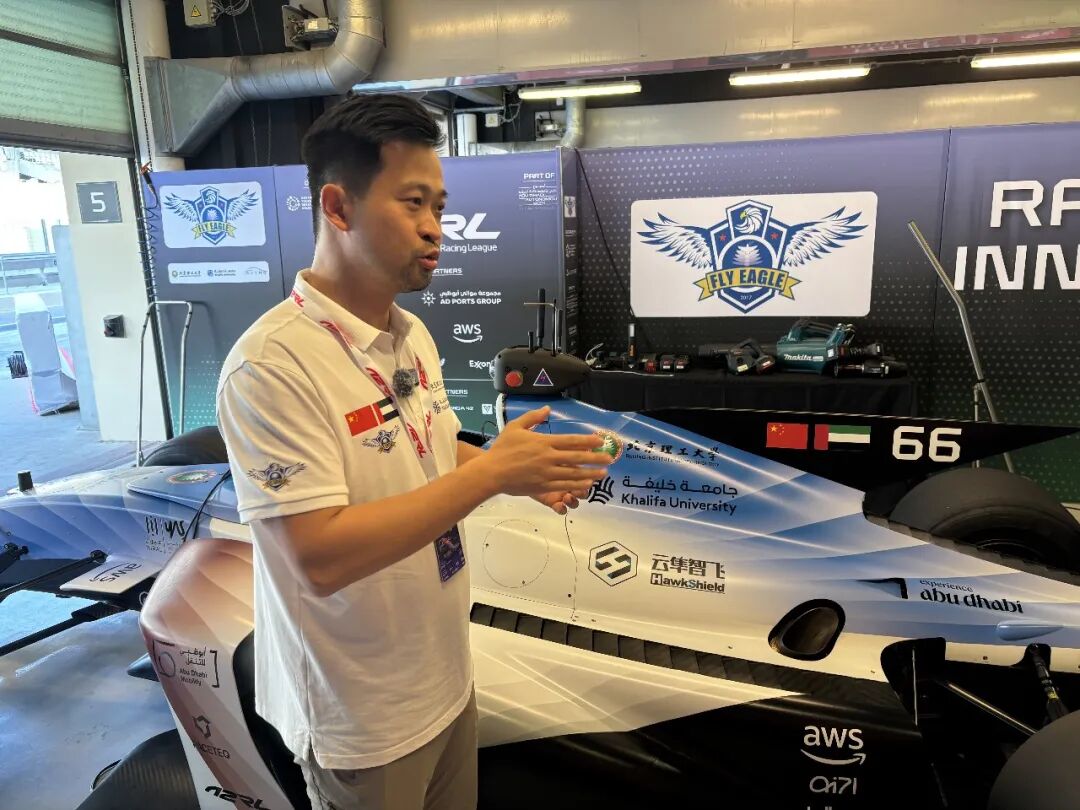
Core Insights - The article highlights the rapid development and commercialization of autonomous driving technology in Abu Dhabi, driven primarily by Chinese companies [5][19]. - Chinese firms are establishing a significant presence in Abu Dhabi's autonomous driving sector, with a focus on creating a comprehensive ecosystem for technology and business operations [12][24]. Group 1: Chinese Companies' Involvement - Chinese companies, including WeRide and Baidu, have successfully launched the world's first fully autonomous taxi service integrated with Uber in Abu Dhabi [4][7]. - The autonomous driving initiative in Abu Dhabi is a result of years of collaboration between Chinese enterprises and the local government, leading to the issuance of the first autonomous driving road test license in the UAE [5][6]. - By November 2025, the average daily mileage of test vehicles from Baidu's "LuoBo Kuaipao" service exceeded 200 kilometers, maintaining a zero-accident rate without human intervention [5][6]. Group 2: Government Support and Market Structure - The Abu Dhabi government has adopted a proactive role in supporting autonomous driving, creating a unique model that integrates regulatory bodies, private sectors, and academia to facilitate business growth [13][14]. - Achieving profitability for autonomous taxi operations in Abu Dhabi requires only 200 vehicles, significantly lower than the thousands needed in other markets, due to favorable market conditions such as short average trip distances and high fare rates [12][14]. - The local population structure, with a high percentage of expatriates, minimizes resistance to job displacement concerns associated with autonomous driving technology [15][18]. Group 3: Strategic Goals and Future Prospects - Abu Dhabi's push for autonomous driving is part of a broader strategy to reduce reliance on oil and develop a knowledge-based economy, with significant investments planned in AI and autonomous technologies [19][20]. - The UAE aims for AI to contribute 335 billion dirhams (approximately 633.6 billion RMB) to its GDP by 2031, with autonomous driving identified as a key area for growth [19][20]. - The autonomous driving market in the UAE is projected to reach $2.73 billion by 2030, with a compound annual growth rate of 19.2% [19].
曹操出行推出千亿市值绑定激励计划 Robotaxi成战略核心
Zhong Guo Jing Ying Bao· 2026-01-30 13:42
中经记者 李静 北京报道 特斯拉不准备卖车了?! 近日,特斯拉首席执行官埃隆·马斯克(Elon Musk)在特斯拉发布2025年第四季度财报后,直接释放出 重磅战略调整,特斯拉Model S与Model X项目将逐渐停产,并明确特斯拉的业务核心已从"卖车"彻底转 向"提供交通即服务(TaaS)",也就是现在常说的Robotaxi业务。 要知道,在半年前,2025年6月,当特斯拉的Robotaxi首次在美国奥斯汀上路后,次日就带动特斯拉股 价大涨8.23%。随着特斯拉的战略转向,全球智能出行赛道也正经历新一轮战略聚焦。 Robotaxi将从试点走向规模化 根据马斯克所言,此前生产Model S与Model X项目的弗里蒙特工厂生产线,将全面改造为年产100万台 Optimus机器人的基地。 作为中国自动驾驶出行服务的重要参与者,曹操出行(02643.HK)于2026年1月27日盘后公告,拟推出 一项与公司千亿市值目标深度绑定的股份激励计划,明确将Robotaxi运营规模、收入增长及市值表现设 为关键考核指标。 《中国经营报》记者获悉,此次推出的股份激励计划,被视为曹操出行加速推进"十年百城千亿"全球战 略的关键 ...
网约车业务突围无望,曹操出行想靠Robotaxi翻身
3 6 Ke· 2026-01-30 11:12
Core Viewpoint - Companies that occupy a core position in the capital market or accumulate strong growth momentum in emerging sectors are worthy of attention. Caocao Travel, currently in a loss-making situation, is targeting the ambitious Robotaxi narrative with plans to deploy 100,000 fully customized Robotaxis globally by 2030 [1][3]. Group 1: Business Strategy and Market Position - Caocao Travel has set a strategic goal of "Ten Years, One Hundred Cities, One Hundred Billion," aiming to establish five operational centers globally and promote Robotaxi services to 100 cities, with a cumulative GTV (Gross Transaction Value) of 100 billion RMB over the next decade [3]. - Despite being one of the first ride-hailing platforms in China, Caocao Travel has struggled to gain a competitive edge, ranking second in market share with 5.4% compared to Didi's 70.4% as of 2024 [4][6]. - The company has been forced to invest heavily to retain drivers and attract users due to its lack of market influence, leading to significant financial strain [6][10]. Group 2: Financial Performance and Challenges - Caocao Travel's financial reports indicate a continuous loss, with net losses of 2.007 billion RMB, 1.981 billion RMB, 1.246 billion RMB, and 495 million RMB from 2022 to the first half of 2025, totaling 5.729 billion RMB [9][14]. - The company's gross margin is low, with a projected gross margin of only 8.1% for 2024, compared to Didi's 14.5% [9]. - The reliance on aggregation platforms has increased, with the share of orders from these platforms rising from 51.4% in 2022 to 85.7% in 2024, which has also led to higher commission costs that erode profit margins [10][12]. Group 3: Research and Development Limitations - Caocao Travel's R&D spending has been limited, with annual expenditures of 225 million RMB, 339 million RMB, 234 million RMB, and 117 million RMB from 2022 to the first half of 2025, resulting in a declining R&D expense ratio [19]. - The company is attempting to pivot towards Robotaxi technology, but its limited R&D budget hampers its ability to compete effectively in the autonomous driving sector [15][19]. - The market has reacted negatively to Caocao Travel's financial instability and limited R&D investment, with its stock price dropping significantly from a high of 92.5 HKD to 35.66 HKD, indicating a lack of confidence from investors [19].