格力电器

Search documents
《2025/12/8-2025/12/12》家电周报:小米首座大家电工厂正式竣工投产,商务部回应墨西哥提税提案-20251213
Shenwan Hongyuan Securities· 2025-12-13 14:39
Investment Rating - The report maintains a positive outlook on the home appliance sector, indicating a "Buy" rating for key companies within the industry [3][5]. Core Insights - The home appliance sector index underperformed compared to the CSI 300 index, with a decline of 2.0% while the CSI 300 index fell by only 0.1% [5][6]. - Key developments include the completion of Xiaomi's first major home appliance factory, which marks a significant milestone in its strategy to expand into the home appliance market [15]. - The report highlights a notable increase in sales for cleaning appliances, with robotic vacuum sales rising by 40.65% year-on-year in November 2025 [37]. Summary by Sections Industry Performance - The home appliance sector index decreased by 2.0%, underperforming the CSI 300 index which saw a minor decline of 0.1% [5][6]. - Key companies such as Aopu Technology led gains with a 1.6% increase, while companies like Oujiahua and Wanhe Electric experienced declines of 7.1% and 6.0% respectively [9][6]. Industry Dynamics - The Ministry of Commerce is monitoring the impact of Mexico's proposed tax increases on non-free trade partners, which could adversely affect trade relations, including with China [13][14]. - Xiaomi's new smart home appliance factory in Wuhan has officially commenced production, contributing to its broader ecosystem strategy [15]. Data Observations - In November 2025, sales of cleaning appliances showed significant growth, with robotic vacuum sales reaching 535,500 units, a 40.65% increase year-on-year, and sales revenue of 714 million yuan, up 5.83% [37][38]. - The average price of robotic vacuums decreased by 24.75% to 1,334.20 yuan per unit [43]. - Hair dryer sales remained stable with a slight decline in volume but an increase in revenue, indicating a shift in consumer spending patterns [44]. Macro Economic Environment - As of December 12, 2025, the USD to RMB exchange rate has decreased by 1.73% since the beginning of the year, impacting import costs for the home appliance sector [52][53]. - The report notes a decline in residential property sales, which may influence consumer spending on home appliances [54].

每15秒下线一台空调!记者实探格力金湾智能制造工厂→
证券时报· 2025-12-13 05:05
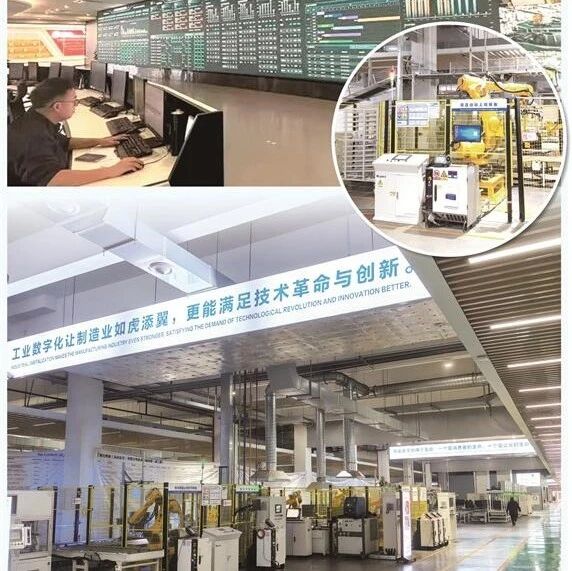
e公司 . e公司,证券时报旗下专注上市公司新媒体产品,立志打造A股上市公司资讯第一平台。提供7x24小时上市公司标准化快讯,针对可能影响上市公司股价的 主题概念、行业事件及时采访二次解读,从投资者需求出发,直播上市公司有价值的活动、会议。 以下文章来源于e公司 ,作者证券时报 李映泉 11月末,工信部等六部门正式公布我国首批15家领航级智能工厂名单,格力电器旗下格力金湾智能制造工厂凭借"全价值链格力协同屋空调智能工厂"项目,成为广东省唯一 入选该名单的企业。 格力智能制造生产线负责人尤奕成介绍,该生产线上的机器人已经实现高水平的柔性化作业。"通过将AI视觉、环境感知与系统算法等深度融合,这些工业 机器人宛如生出了眼睛、耳朵和手一般,在保持高精度的同时,还能实现接近人工的灵活性。" 近日,证券时报记者对格力金湾智能制造工厂(下称"金湾工厂")进行了实地探访。 在智能加工装备、工业机器人与物流装备的辅助下,这家工厂不仅创 下了每15秒下线一台空调的行业纪录,更以100%的数字化覆盖率、超80%的整体自动化率和80%的装备自主研制率,为制造业树立了可推广、可复制的行 业标杆。 在产品质检环节中,AI检测已经全面取 ...


让机器人从舞台走向工厂,广东加速布局“AI+制造”创新生态
2 1 Shi Ji Jing Ji Bao Dao· 2025-12-13 04:24
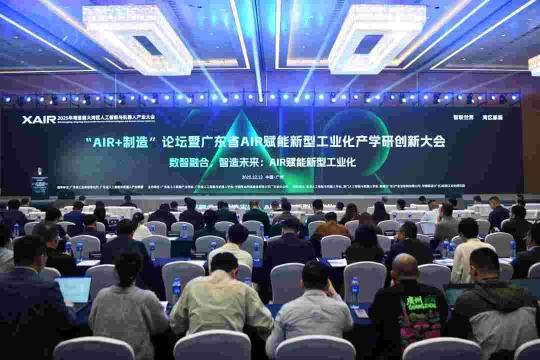
Core Insights - The Guangdong-Hong Kong-Macao Greater Bay Area is positioned as a key area for promoting new industrialization and intelligent manufacturing upgrades, leveraging its strong industrial foundation and rich application scenarios [1][3] Group 1: Event Overview - The 2025 Guangdong-Hong Kong-Macao Greater Bay Area Artificial Intelligence and Robotics Industry Conference and the Guangdong Province Artificial Intelligence and Robotics Skills Competition (XAIR Conference) took place in Guangzhou from December 12 to 14 [1] - The "AIR + Manufacturing" forum focused on critical questions regarding the transition of robots from stage use to factory applications and the construction of intelligent workshops and factories [1] Group 2: Digital Transformation Initiatives - Guangdong has implemented various policies to support the digital transformation of its manufacturing sector, including the establishment of a leadership group for AI and robotics innovation [3] - Over 400 digital transformation benchmark demonstrations have been created, with 51,000 industrial enterprises undergoing digital transformation, enhancing revenue and efficiency [3] Group 3: AI and Manufacturing Integration - Chen Xin, an academician, emphasized that AI + manufacturing represents not just a technological overlap but a complete reconfiguration of the manufacturing industry, necessitating collaboration across various sectors [5] - Guangdong Unicom is focusing on three key areas in the AI + manufacturing sector: establishing a robust cloud-network-computing foundation, developing platforms for device management and intelligent decision-making, and deepening real-world applications in eight major industrial clusters [5][7] Group 4: Industry Collaboration and Ecosystem Development - The establishment of the "Guangdong Province AI + Manufacturing Industry Alliance" aims to integrate resources and expertise from various stakeholders to foster an innovative ecosystem for AI and manufacturing [7] - Major companies like Midea and Baiyun Electric are actively applying AI technologies to enhance their manufacturing processes, with Midea focusing on intelligent supply chain algorithms and Baiyun Electric developing comprehensive intelligent control solutions [7]

每15秒下线一台空调!记者实探格力金湾智能制造工厂→
Zheng Quan Shi Bao Wang· 2025-12-13 04:21
Core Viewpoint - Gree Electric's Jinwan Intelligent Manufacturing Factory has been recognized as a leading smart factory in China, achieving significant automation and digitalization milestones in air conditioning production [1][6]. Group 1: Factory Achievements - The Jinwan factory has set a record of producing one air conditioner every 15 seconds, with a 100% digital coverage rate and over 80% overall automation rate [1][6]. - The factory has reduced the workforce on the production line from over 70 to approximately 20 by automating 86 out of 103 processes [2][6]. - AI-driven quality inspection has replaced manual checks, ensuring that each air conditioner undergoes automated testing of 16 critical indicators before leaving the production line [2][5]. Group 2: Technological Integration - Gree has developed industrial robots capable of handling loads from 1 kg to 600 kg, with over 2,000 units deployed in the Jinwan factory [3][7]. - The factory utilizes a comprehensive data management system that integrates real-time data collection, quality traceability, and intelligent material distribution [2][4]. - The establishment of an industrial internet platform has facilitated the interconnection of various systems, allowing for real-time monitoring of production metrics [4][5]. Group 3: Investment and Production Capacity - The total investment for the Jinwan factory is 15 billion yuan, with an annual production capacity of 12.3 million units and an expected annual output value of 18 billion yuan [6]. - The first phase of the project, with an investment of 5 billion yuan, has already achieved breakeven in its first year of operation [6]. Group 4: Future Plans and Replication - Gree plans to replicate the Jinwan factory model across 13 other air conditioning bases in various cities, enhancing its smart manufacturing capabilities [7]. - The upcoming third production line at the Jinwan factory aims to achieve full automation and 100% unmanned operation, expected to be operational by the end of this year or early next year [7].

哈佛老徐:问了拉斯16个问题后,未来25年的底层逻辑我终于悟了!
老徐抓AI趋势· 2025-12-13 01:07
Core Insights - The article emphasizes that the next major economic opportunity will be driven by AI, contrasting it with the previous two decades dominated by real estate [11][12] - It highlights the importance of individuals connecting with AI to benefit from this new trend, suggesting that those who can leverage AI will have a significant advantage [12][14] Group 1: Economic Trends - The past two decades saw wealth accumulation linked to real estate, with various sectors benefiting from this trend [9] - The article posits that AI will surpass real estate in terms of economic impact over the next twenty years, marking a significant shift in wealth generation [11] - The disparity between individuals will increasingly depend on their ability to engage with AI, either by using it or investing in it [12][18] Group 2: AI Utilization - Companies that effectively integrate AI into their operations can achieve unprecedented efficiency, as demonstrated by the practices of Supertrends, which utilizes AI to analyze vast amounts of data [15][17] - The article suggests that the ability to use AI will determine job security and future prospects for individuals, making it essential for professionals to adopt AI tools in their work [20] - Ordinary individuals are encouraged to find ways to incorporate AI into their roles to enhance productivity and outcomes [20] Group 3: Investment Opportunities - The article discusses the potential for small teams to create billion-dollar companies by leveraging AI, which democratizes access to capabilities previously reserved for larger firms [24][26] - It emphasizes that the efficiency gains from using AI can lead to significant shifts in industry dynamics, making it a critical area for investment and innovation [26] - The author recommends reading works by thought leaders like Lars to understand the structural changes in the economy driven by AI [22]

实探广东首家“领航级”智能工厂:柔性作业 数据驱动 全链协同
Zheng Quan Shi Bao· 2025-12-12 18:02
证券时报记者 李映泉 11月末,工信部等六部门正式公布我国首批15家领航级智能工厂名单,格力电器旗下格力金湾智能制造工厂凭 借"全价值链格力协同屋空调智能工厂"项目,成为广东省唯一入选该名单的企业。 近日,证券时报记者对格力金湾智能制造工厂(下称"金湾工厂")进行了实地探访。在智能加工装备、工业机器 人与物流装备的辅助下,这家工厂不仅创下了每15秒下线一台空调的行业纪录,更以100%的数字化覆盖率、超 80%的整体自动化率和80%的装备自主研制率,为制造业树立了可推广、可复制的行业标杆。 总装车间的"智造精度" 走进金湾工厂,首先映入眼帘的是格力电器自主研发的工业机器人"军团",它们替代了过往大量的流水线工人, 成为了生产线的主角。 在总装集成智造车间内,据工作人员介绍,该车间480米长的外机生产线上,103个工序中86个已实现自动化,原 本需要70多人的产线,现仅需约20人。在诸如氦检、焊接、抽空灌注、商检测试、激光打标、外观检测、套袋包 装等关键工序中均已实现无人化作业。 以空调产品装箱的工序为例,记者看到,机器人会先将压平的纸箱铺开,精准撑起四角,为了让纸箱与空调机身 更紧密地贴合,仿生机械臂还会像工人 ...

借力AI,TCL加速进军白电
Guan Cha Zhe Wang· 2025-12-12 15:10
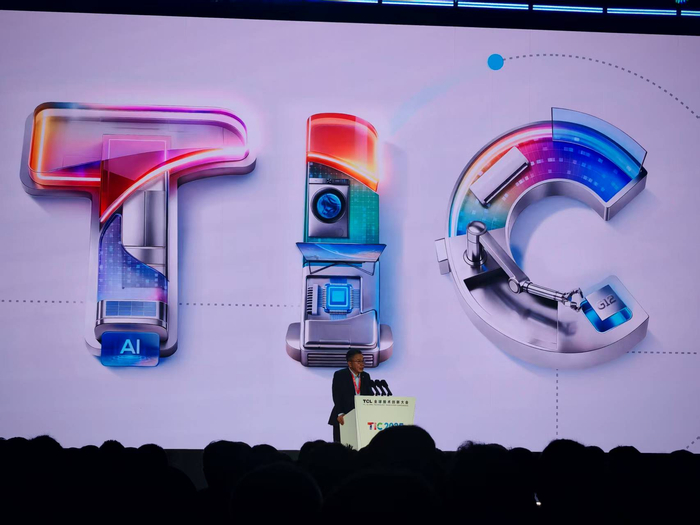
Core Viewpoint - AI is transitioning from concept to deep industrialization, becoming a key driver for future growth, as emphasized by TCL's founder and chairman, Li Dongsheng, at the 2025 TIC [1] Group 1: Industry Landscape - TCL is shifting resources towards the white goods sector to compete against traditional giants like Midea, Gree, and Haier, as well as internet brands like Xiaomi [1][4] - The white goods market is characterized by a "Matthew effect," where the strong get stronger, making TCL's ambition to enter the top tier more urgent [4][10] Group 2: AI Implementation - TCL aims to utilize AI in practical applications for air conditioners, refrigerators, and washing machines, addressing the industry's pain points of "pseudo-intelligence" [3][5] - The company focuses on energy-saving solutions, achieving a 40% reduction in energy consumption for air conditioners through a combination of small models and reinforcement learning [5][9] Group 3: Product Innovations - TCL's washing machines tackle the "iron triangle" of speed, cleanliness, and energy efficiency, achieving a 5% reduction in energy consumption and a 10% decrease in washing time [5] - The refrigerator features dual magnetic preservation technology and a deep freeze function at -40°C, enhancing food preservation for up to 15 days [5] Group 4: User Experience - TCL has integrated AI voice assistants to simplify user interaction, allowing for natural language control of appliances [6] - The company offers tailored solutions for different scenarios, such as AI sleep mode for air conditioners and AI smart washing for washing machines [6] Group 5: Competitive Advantages - TCL's advantages stem from group-level technology reuse and channel integration, allowing for stable supply and cost control amid market fluctuations [9][10] - The company has established a comprehensive channel and after-sales service team, comparable to Midea and Haier, enhancing its competitive edge [9][10] Group 6: Market Position and Goals - TCL aims to rapidly enter the mid-to-high-end market, with a focus on promoting its ice-wash products [11] - The company recognizes challenges such as brand recognition and global market expansion, acknowledging a gap in technical capabilities compared to international benchmarks [13][14]

AI赋能由虚向实,TCL加速进军白电
Guan Cha Zhe Wang· 2025-12-12 15:08
Core Viewpoint - AI is transitioning from concept to deep industrialization, becoming a key driver for future growth, as emphasized by TCL's founder and chairman, Li Dongsheng, at the 2025 TIC [1] Group 1: Industry Landscape - TCL is shifting resources towards the white goods sector to compete against traditional giants like Midea, Gree, and Haier, as well as internet brands like Xiaomi [1][4] - The white goods market is characterized by a "Matthew effect," where the strong get stronger, making TCL's ambition to enter the top tier more urgent [4][10] Group 2: AI Implementation - TCL aims to utilize AI technology in air conditioners, refrigerators, and washing machines to differentiate itself in a saturated market [1][5] - The company focuses on practical AI applications rather than superficial "smart" features, addressing real user needs and enhancing product relevance [3][4] Group 3: Product Innovations - In air conditioning, TCL employs a "small model + reinforcement learning" approach to significantly reduce energy consumption, achieving a 40% reduction in initial hours and an additional 18% over time [5] - The washing machine addresses the "iron triangle" of speed, cleanliness, and resource efficiency, achieving a 5% reduction in energy consumption and a 10% decrease in wash time [5] - The refrigerator features advanced preservation technology, enhancing food freshness for up to 15 days and improving freezing speed from 58 minutes to 30 minutes [5] Group 4: User Experience - TCL integrates AI voice assistants to simplify user interaction, allowing for natural language control of appliances [6] - The company offers tailored solutions for different scenarios, such as AI sleep mode in air conditioners and AI smart washing features [6] Group 5: Competitive Advantages - TCL benefits from group-level technology and channel reuse, enhancing its competitive edge in the white goods market [7][9] - The company has established a robust service and support network, comparable to that of Midea and Haier, which aids in its brand expansion [9][10] Group 6: Market Strategy - TCL's strategy emphasizes full-chain layout to mitigate market risks, contrasting with competitors reliant on external supply chains [10] - The company has achieved vertical integration, maintaining stable supply and cost advantages amid industry challenges [10] Group 7: Future Goals - TCL aims to rapidly penetrate the mid-to-high-end market, with a focus on promoting its washing and refrigeration products [12] - The company acknowledges challenges such as brand recognition and global market expansion, while committing to original innovation and core technology development [14]
如何看待海外扫地机黑五大促表现?
Guolian Minsheng Securities· 2025-12-12 14:58
Investment Rating - The report maintains a "Recommended" rating for the industry, indicating a positive outlook for key players in the market [4]. Core Insights - The overseas market for robotic vacuum cleaners is experiencing significant growth, driven by Chinese brands leading the expansion. Notably, during the recent Black Friday and Cyber Monday promotions, sales for Roborock in Europe increased by 59% year-on-year, while sales in North America rose by at least 50%. The brand Chase achieved a remarkable 90% growth in Europe and 270% in North America [8][18]. - The pricing dynamics in the industry show a coexistence of upgrades and competition, with the average price of robotic vacuums expected to rise. For instance, the average prices on Amazon for best-selling models in the US, Germany, France, and Japan increased by 17%, 22%, 9%, and 3% year-on-year, respectively [23][28]. - The competitive landscape indicates that traditional overseas leaders are under pressure, while Chinese brands are poised to benefit from this shift. iRobot is facing liquidity and debt default risks, which may allow Chinese brands to capture market share in Europe and North America [34][36]. Summary by Sections Growth - The overseas robotic vacuum market has seen rapid growth, with a 58% increase in downloads for the top eight brands from January to November 2025. Europe is leading this growth, followed by Asia-Pacific and North America, which still shows over 30% growth despite tariff uncertainties [11][15]. Pricing - The combination of premium products becoming more affordable and consumers opting for upgrades is driving the average price increase in the industry. However, aggressive pricing competition during year-end promotions has led to some price reductions in specific markets [23][28]. Competitive Landscape - iRobot is under significant operational and debt pressure, which may allow Chinese brands to gain market share. The report suggests that iRobot's overseas market share has dropped below 10%, indicating a potential opportunity for Chinese brands to capitalize on this situation [34][36]. Investment Recommendations - The report suggests continued investment in leading cleaning appliance brands such as Roborock and Ecovacs, which are expected to maintain high growth rates in overseas markets. The domestic market is also anticipated to grow rapidly due to ongoing product innovation and increasing penetration rates [51][52].


预见未来家:2025年度家电行业十大事件盘点
Xin Lang Cai Jing· 2025-12-12 14:20
Group 1 - The home appliance industry is navigating through challenges and opportunities in 2025, driven by policy support and external pressures, while embracing AI technology and market competition [1][29] - The "old-for-new" policy has been significantly expanded, with subsidies increasing from 8 to 12 categories of appliances and the maximum subsidy for air conditioners raised from 1 to 3 units per consumer [3][31] - In 2024, the "old-for-new" initiative generated over 1.3 trillion yuan in sales, and in 2025, it is expected to bring even stronger growth momentum due to increased support and extended implementation time [3][32] Group 2 - The launch of the AI model DeepSeek has revolutionized the home appliance sector, becoming a core engine for product innovation and driving a wave of new consumer experiences [4][34] - The home appliance industry has shown resilience amid a "tariff storm," with companies viewing the situation as an opportunity to expand into emerging markets [6][36] - The summer of 2025 saw unprecedented demand for air conditioners in Northeast China due to extreme heat, leading to a significant increase in sales and installation requests [15][43] Group 3 - The concept of "anti-involution" has gained traction in the home appliance industry, with calls for a shift away from price wars towards sustainable competition and innovation [18][46] - A strategic partnership between Midea and Hisense marks a significant trend in the industry, indicating a move towards collaboration among leading companies to enhance market space [13][41] - The introduction of national standards for smart home appliances is set to standardize technology requirements and improve consumer confidence in product quality [22][50] Group 4 - Rising copper prices due to global supply constraints and increased demand are putting pressure on the home appliance industry, leading to price adjustments by manufacturers [24][52] - The competitive landscape is shifting, with companies like Gree and Xiaomi engaging in public disputes over sales data, highlighting a focus on long-term service commitments and quality over short-term sales figures [20][48] - The home appliance industry is expected to face ongoing challenges and opportunities as it transitions towards a focus on technological innovation and value chain management [27][54]