鸣鸣很忙

Search documents
鸣鸣很忙上市背后:量贩零食的狂欢与危机
Sou Hu Cai Jing· 2026-02-02 09:36
Core Insights - Hunan Mingming Henbang Commercial Chain Co., Ltd. successfully listed on the Hong Kong Stock Exchange on January 28, 2026, becoming the "first stock of bulk snack food," marking its entry into the capital market [2] - The company operates 21,041 stores as of the listing date, with revenues projected to grow from 42.86 billion yuan in 2022 to 393.44 billion yuan in 2024, reflecting a compound annual growth rate of 203.0% [2][6] - The unique business model, which includes supply chain efficiency, franchise expansion, and digital empowerment, supports its rapid growth [4] Business Model - Mingming Henbang's success is attributed to its "supply chain efficiency + franchise expansion + digital empowerment" closed-loop business model, with franchising being a crucial component [4] - The company employs a "light asset franchise" model with low entry barriers, including zero franchise fees, management fees, training fees, service fees, and renovation profits, facilitating rapid store expansion [5] - From 2022 to Q3 2025, the number of stores grew from 1,902 to nearly 20,000, showcasing impressive expansion speed [6] Pricing and Supply Chain - The average price of Mingming Henbang's products is approximately 25% lower than similar products in offline supermarkets, enhancing its presence in lower-tier markets [7] - The company has restructured its supply chain by adopting a "factory-direct to store" model, collaborating with over 2,500 food enterprises to eliminate intermediaries and gain strong bargaining power [8] - As of the end of 2024, the company offers 3,380 SKUs, with each store maintaining at least 1,800 SKUs, significantly exceeding traditional supermarkets [8] Target Demographic - Over 60% of the snack consumption market is dominated by the "post-90s" and "post-00s" generations, whose consumption preferences have shifted towards value for money, emotional value, and situational consumption [9] - Young consumers are increasingly rational and practical, seeking cost-effective options, which aligns with Mingming Henbang's low-price strategy [9][10] - The diverse product range meets the varied and personalized needs of young consumers, with a flexible purchasing model that reduces waste [11] Market Challenges - Despite its success, Mingming Henbang faces challenges such as intensified industry competition, supply chain pressures, and evolving consumer demands post-IPO [3][14] - The snack food sector has transitioned from a blue ocean to a red ocean, with numerous brands entering the market, leading to fierce competition [14] - The industry suffers from severe product homogeneity, making it difficult for brands to maintain a competitive edge [14] Supply Chain and Cost Management - The expansion of stores increases procurement, warehousing, and distribution complexities, which could erode profit margins if not managed properly [15] - Fluctuations in raw material prices, such as nuts, which have seen increases of over 30%, pose additional challenges for maintaining low prices [15] - The light franchise model, while accelerating growth, presents management challenges, as increased store numbers may lead to inconsistent quality and service [15]

鸣鸣很忙(01768) - 截至二零二六年一月三十一日止月份之股份发行人的证券变动月报表
2026-02-02 08:56
股份發行人及根據《上市規則》第十九B章上市的香港預託證券發行人的證券變動月報表 截至月份: 2026年1月31日 狀態: 新提交 致:香港交易及結算所有限公司 公司名稱: 湖南鳴鳴很忙商業連鎖股份有限公司 呈交日期: 2026年2月2日 I. 法定/註冊股本變動 | 1. 股份分類 | 普通股 | 股份類別 | H | | 於香港聯交所上市 (註1) | | 是 | | | --- | --- | --- | --- | --- | --- | --- | --- | --- | | 證券代號 (如上市) | 01768 | 說明 | | | | | | | | | | 法定/註冊股份數目 | | | 面值 | | 法定/註冊股本 | | | 上月底結存 | | | 213,590,751 | RMB | | 1 RMB | | 213,590,751 | | 增加 / 減少 (-) | | | 0 | | | RMB | | | | 本月底結存 | | | 213,590,751 | RMB | | 1 RMB | | 213,590,751 | | 2. 股份分類 | 普通股 | 股份類別 | | 其他類 ...
从Costco到鸣鸣很忙,为什么都在赚“快”钱?
Xin Lang Cai Jing· 2026-02-02 06:55
Core Insights - The essence of retail lies in meticulous control over inventory, logistics, and cash flow, emphasizing the importance of turnover rates in driving profitability [2][3] - Retailers can achieve profitability through three main paths: high margin and high turnover, high margin with slower turnover, and high turnover with lower margins, the latter being crucial for mass-market retailers [3][4] Group 1: Importance of High Turnover - High turnover is essential for creating competitive advantages in retail, particularly for mass-market players who rely on rapid inventory turnover to generate profits [3][4] - The evolution of retail formats has consistently focused on improving turnover efficiency, with significant advancements seen from grocery stores to supermarkets and now to warehouse-style retailers like Costco [5][6] - The latest trend in retail is represented by bulk snack stores, which have significantly reduced inventory turnover days to 13.4 days, indicating a shift towards community-based retailing [7][29] Group 2: Cash Flow and Risk Management - High turnover creates an internal cash flow engine, allowing companies to minimize the capital required for operations by shortening inventory turnover days [8][30] - Companies like Costco and the newly listed Mingming Busy have demonstrated extremely short cash conversion cycles, enhancing their resilience and ability to return value to shareholders [9][31] - Sustained high turnover rates validate the effectiveness of a business model, indicating consumer acceptance and repeat purchases, which are essential for sustainable growth [10][32] Group 3: Supply Chain Efficiency - Retailers must optimize their supply chain relationships to achieve low prices, with a significant portion of costs attributed to product expenses [11][33] - Direct sourcing and data-driven consumer-to-manufacturer (C2M) models are becoming prevalent, allowing retailers to respond quickly to consumer preferences and reduce inefficiencies in traditional supply chains [12][34] - Shorter payment cycles enhance supplier relationships, enabling retailers to secure better terms and support for customized production and delivery [13][35] Group 4: Store Network Optimization - Retailers must maintain low costs and prices while ensuring product quality, often resulting in lower profit margins as a strategic choice [14][36] - The density of store locations creates a competitive advantage, allowing for better logistics and reduced fulfillment costs, as seen in Mingming Busy’s operations [15][39] - Rapid expansion of store networks, as demonstrated by Mingming Busy, is crucial for capturing market share and achieving operational efficiencies [16][40] Group 5: Operational Excellence - A streamlined and unified store design, combined with digital systems, allows retailers to manage large networks efficiently, reducing reliance on labor and enhancing operational consistency [17][41] - The integration of advanced management systems ensures that retailers can maintain high turnover rates while scaling operations effectively [18][42] - This operational model fosters a cycle of growth, where efficient store operations lead to stronger supplier relationships and better consumer perceptions of value [19][42]

一群嗜血的蚂蚁,被腐肉所吸引
Ge Long Hui· 2026-02-02 01:26
周五晚,特朗普提名沃什出任美联储主席引爆了贵金属数十年来最惨烈的抛售,黄金曾跌11%,白银一度暴跌35%。笔者看空研究空却没来得及空,拍断大 腿。就算经历暴跌,看黄金近三个月的涨幅,比特币还有脸叫自己数字黄金吗?金价涨主要逻辑有两条:1世界越乱,需求越涨。2央行购金对价格不敏感。 逻辑1从达沃斯论坛也可见一斑。过去三年的主题分别是"在分裂的世界中加强合作";"重建信任";"对话的精神"。合作谈不拢?那就先重建信任。信任也 建不起来?那再退一步,起码坐下来聊聊吧。过去十年,黄金价格从1000美元/盎司走到2000,用了4年8个月;从2000走到3000,用了4年9个月;从3000走 到4000,用了7个月; 从4000走到5000,只用了111天。从5000到5600只用了三天。那些支持金价涨的理由都对,但都是一年或以上的长逻辑,解释不了金 价上周的加速赶顶。一个明显的背离是紫金矿业,紫金黄金国际,山东黄金,招金矿业等金股都在小心翼翼地创新高,义无反顾地回调。 难道上周初看多黄金的资金在赌美元美债短期能违约吗?最近看了一本书《美国违约》揭开了一段被集体遗忘的历史。1933年,大萧条最严重的时候,美国 已经债务违 ...
鸣鸣很忙上市以“质价比”服务亿万家庭
Xin Lang Cai Jing· 2026-02-01 16:27
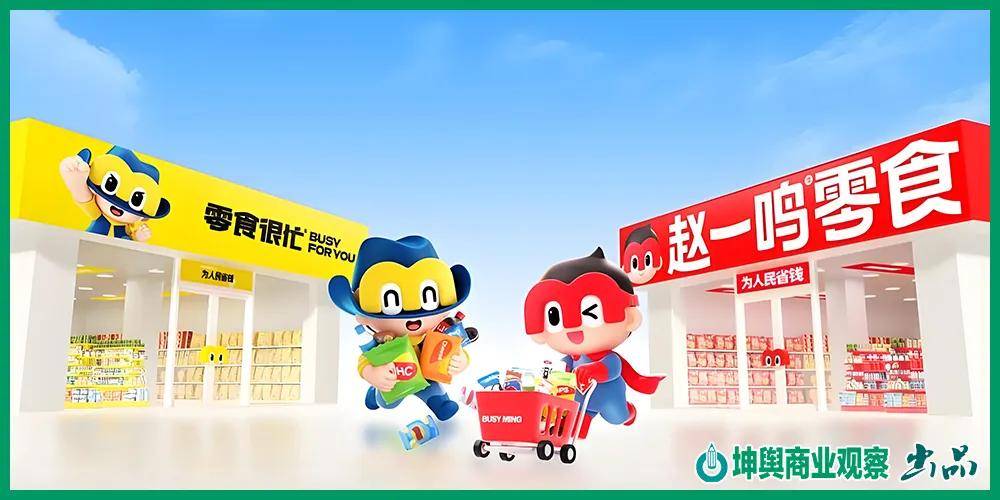
Group 1 - The core viewpoint of the article is that Hunan Mingming Hen Mang Commercial Chain Co., Ltd., the largest leisure food and beverage retail chain in China, officially listed on the Hong Kong Stock Exchange under the name "Mingming Hen Mang" [2] - The company operates two major brands, "Snacks Hen Mang" and "Zhao Yiming Snacks," and is a leader in the Chinese food and beverage wholesale model [2] - By the first nine months of 2025, the company achieved a retail sales volume (GMV) of 66.1 billion RMB, with its stores covering 28 provinces and cities across China, 59% of which are located in county towns and rural areas [2] Group 2 - The founder, chairman, and CEO of the company, Yan Zhou, stated that the company has grown from a community store to over 20,000 stores nationwide, becoming a staple in the lives of ordinary consumers [2] - The company aims to provide consumers with affordable and accessible snacks, emphasizing the joy of being able to buy a large bag for a reasonable price [2] - The company also focuses on enabling its franchisees to earn a living through their efforts, promoting a vision of a prosperous life for them [2]
华源晨会精粹20260201-20260201
Hua Yuan Zheng Quan· 2026-02-01 13:59
Fixed Income - The report analyzes the new regulatory framework for insurance companies, highlighting five major changes aimed at improving asset-liability management [9][10] - The insurance industry's solvency indicators declined in Q3 2025, attributed to increased equity capital usage and dual pressure on liabilities [11] - Investment returns improved due to rising long-term bond yields and favorable A-share performance, reducing overall industry risk [12] - A selection of insurance subordinated bonds with specific criteria is recommended for investment, including those from major state-owned insurance companies [14] Pharmaceutical Industry - The pharmaceutical index fell by 3.31% recently, with a notable trend of Chinese innovative drugs expanding into international markets [15][17] - Companies like China Biopharmaceutical are enhancing their R&D capabilities through acquisitions and self-developed products, positioning themselves for potential overseas opportunities [18] - A focus on innovative drugs is recommended, with specific companies highlighted for their strong fundamentals and potential for stock price recovery [19] New Consumption - Ruoyu Chen and Wancheng Group are projected to see significant profit growth in 2025, driven by their proprietary brand business and operational efficiency improvements [21][23] - The government is promoting new service consumption growth points, aiming to enhance service supply and consumer experience [25][26] - The snack retail sector is evolving, with companies like Mingming Hen Mang rapidly expanding and innovating to meet consumer demands [24] North Exchange - The North Exchange indices saw over 6% growth in January 2026, indicating a market rebound and highlighting specific sectors for investment opportunities [28][29] - The overall market liquidity remains ample, with a focus on structural investment opportunities in specialized and innovative enterprises [29][30] Media - Alibaba's FY2026Q3 revenue is expected to reach 288.1 billion yuan, with cloud business growth anticipated despite a slowdown in e-commerce [32]
良品铺子亏损扩大背后
凤凰网财经· 2026-02-01 12:08
以下文章来源于中国经营报 ,作者阎娜 孙吉正 中国经营报 . 《中国经营报》由《中国经营报》社有限公司出版,与中国企业同步成长,对话商业领袖,传播商业理想,服务商业人群,掌控中国商界绝对话语权。 来源|中国经营报 作者|阎娜 孙吉正 近期,良品铺子披露2025年业绩预告,公司预计全年归属于上市公司股东的净利润为亏损1.2亿元—1.6亿元,扣除非经常性损益后的净利润为亏损 1.5亿元—1.9亿元。对比2024年归母净利润-4610.45万元、扣非净利润-7476.14万元的业绩,2025年亏损规模近乎翻倍。 业绩下滑态势在2025年前三季度已显现。当期公司营收41.40亿元,同比下滑24.24%;净利润亏损1.22亿元,同比降幅超730%。门店方面,截至 2025年9月末,良品铺子门店总数缩减至2227家,较2023年巅峰时期的3293家减少1066家,2025年内净关店477家。 作为曾经的"高端零食第一股",良品铺子自2023年年底启动"关店+降价"转型策略,但未能扭转经营颓势。在量贩零食品牌快速扩张、消费市场趋于 理性的行业背景下,这一业绩表现不仅反映出企业自身转型的困境,也折射出传统零食行业面临的结构性 ...


春节消费前瞻
Sou Hu Cai Jing· 2026-02-01 11:23
Group 1: Consumer Market Overview - The consumer market in 2025 shows a complex situation with per capita disposable income reaching 43,300 yuan, a year-on-year increase of 5.0%, providing a foundation for consumption [1][11] - Social retail growth has been declining since June, with December showing a single-month growth of only 0.9% [1][11] - The consumer confidence index has risen to 90.3 but remains below pre-pandemic levels, indicating that consumer confidence still needs to be restored [1][16] Group 2: Tourism Industry - The tourism market performed well, with total tourism revenue during the National Day holiday reaching 809 billion yuan, a year-on-year increase of 15%, and the number of tourists reaching 880 million, up 16% [1][14] - November's passenger volume has returned to the same level as in 2019, indicating that travel has become an essential part of life [1][14] Group 3: Food and Beverage Industry - The food and beverage industry experienced a cumulative growth of 3.2% in 2025, with a noticeable slowdown in growth after June [2][17] - The CPI in December increased by 0.8%, indicating that the downward trend in prices has been halted [2][19] - The industry is facing challenges, including price wars and a decline in consumer spending, particularly in the restaurant sector [2][17] Group 4: Textile and Apparel Industry - The textile and apparel industry benefits from increased demand for winter clothing and products related to winter sports, supported by national policies and a recovery in consumption [3] Group 5: Automotive Industry - In 2025, passenger car sales exceeded 30 million units, a year-on-year increase of 9.2%, with new energy vehicle sales reaching 16 million units, up 32.0% [3] Group 6: Key Companies and Investment Opportunities - Companies such as Haidilao (6862.HK) and Guoquan (2517.HK) are expected to benefit from the upcoming Spring Festival, with Haidilao showing signs of same-store sales improvement [10][29] - Wei Long (9985.HK) is also anticipated to perform well during the Spring Festival, with a reasonable valuation [10][39]

零食行业专题报告:鸣鸣很忙港股上市,关注产业链投资新趋势
Sou Hu Cai Jing· 2026-02-01 06:56
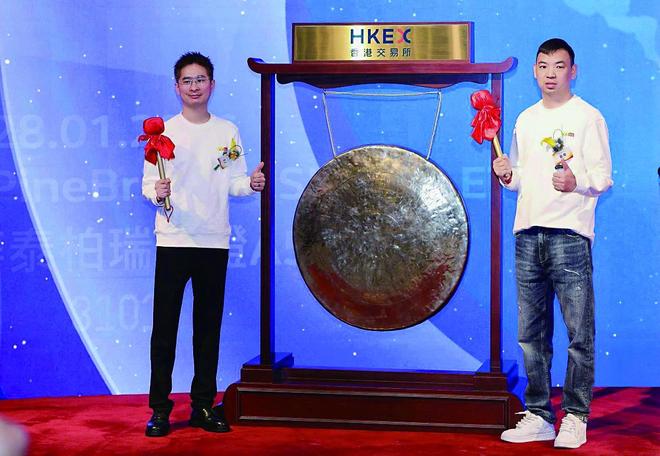
上游领域受益于下游品类扩张与自有产品培育,相关供应链企业迎来发展机遇。一方面,下游门店品类向乳品、 烘焙与速冻食品等领域延伸,饮料、乳品、烘焙、速冻食品等行业的上游供应链公司有望受益;另一方面,下游 大力发展自有产品使得供应链公司市场份额出现分化,上下游合作关系从简单贸易合作过渡到产品深度合作,具 备强产品研发能力与定制化服务能力的制造商更易实现市场份额提升。 鸣鸣很忙计划于2026年1月28日在港交所挂牌上市,成为港股"量贩零食第一股"。此次全球发售1410万股,占比 约7%,预计净筹资30亿港元以上,发行市值约500亿港元。市场反馈积极,8家基石投资者合计认购15亿港元, 包括腾讯、淡马锡与贝莱德等,招股阶段最新认购倍数超1500倍。作为零食量贩龙头企业,其成功上市将长期提 振市场对零食板块的关注度,当前行业已步入新的发展阶段,上下游呈现出显著新趋势。 下游领域正从跑马圈地转向高质量增长,收入增长具备持续性且盈利能力不断提升。传统店型仍有较大开店空 间,2022年至2025年上半年,我国零食量贩传统门店数量从8000家增至超4.5万家,预计远期总空间约7.4万家, 未来增量超2万家。盈利能力方面,2023 ...
港股1月行情收官,南向资金净流入近690亿港元
Huan Qiu Wang· 2026-02-01 03:00
Core Viewpoint - The Hong Kong stock market demonstrated strong resilience in January 2026, with significant net inflows from southbound funds driving the Hang Seng Index up by 6.85% to 27,387.11 points, marking a nearly 7% monthly increase [1][2]. Fund Flow Analysis - In January, southbound fund flows exhibited clear phase characteristics, with net inflows exceeding 50 billion HKD on multiple days in early January due to favorable domestic policies, RMB appreciation, and AI industry valuation recovery expectations [2]. - Mid-January saw a temporary decline in fund accumulation due to rising geopolitical risks and valuation corrections in certain sectors, leading to net sell-offs in cyclical stocks like China Mobile and Zijin Mining [2]. - By late January, the Hang Seng Index successfully broke through the 27,000-point mark, supported by surging AI computing demand and better-than-expected earnings from leading consumer companies, with daily net inflows from southbound funds exceeding 30 billion HKD [2]. Industry Performance - The Hong Kong stock market in January reflected a "high prosperity track and policy dividend sector resonance" pattern, with the technology sector leading the gains [3]. - Notable performers in the technology sector included Longi Green Energy, which surged by 61.90% due to increased global AI data center demand, and Zhiyuan AI, which saw a 94.66% increase post-listing [3]. - In the consumer sector, new consumption leader Mingming Hen Mang rose by 73.71%, supported by store expansion and improved profitability, while Pop Mart benefited from a surge in demand for IP derivatives, increasing by 19.13% [3]. - In the financial and real estate sectors, China Life surged by 27.39% due to governance optimization and improved capital expectations, while China Jinmao and New World Development rose by 42.98% and 56.53%, respectively, benefiting from policy optimizations [3]. Fund Outflow Insights - The materials and telecommunications sectors faced significant pressure, with Zijin Mining experiencing a net sell-off of 4.565 billion HKD and China Mobile declining by 2.33% due to intensified industry competition, leading to a total southbound fund reduction of over 16.9 billion HKD [5]. Institutional Perspectives - Multiple institutions noted that the performance of the Hong Kong stock market in January validated the logic of "fundamental recovery + liquidity resonance," with expectations for continued structural rebounds in February [6]. - Everbright Securities highlighted that the current market is in an "earnings vacuum period," with high growth expectations in new economy sectors supported by policy catalysts [6]. - CITIC Securities advised monitoring the potential impact of a peak in lock-up expirations on liquidity in February, while emphasizing the allocation value of quality leaders like Tencent and Alibaba [6]. - Huatai Securities pointed out that Hong Kong stock valuations remain low globally, with a risk premium rate of 3.99% for the Hang Seng Index, significantly higher than the S&P 500, suggesting a dual drive of "profit growth + valuation enhancement" as southbound and foreign fund inflows become more balanced [6]. IPO Market Activity - The IPO market in Hong Kong remained active in January, with 12 companies listed by January 26, raising a total of 34.747 billion HKD, a year-on-year increase of 480.87% [7]. - Notable listings included domestic GPU company Birun Technology and AI model company Zhiyuan, attracting long-term investments from international funds [7]. - The market anticipates that the IPO fundraising scale in 2026 could exceed 300 billion HKD, with hard technology enterprises continuing to dominate the listing trend [7].