
吉利汽车

Search documents
汽车行业2026年投资策略:汽车出海迈入深水区,智能化、机器人大展宏图
Southwest Securities· 2026-01-23 10:36
Core Insights - The automotive industry is entering a critical phase of globalization, with significant advancements in smart technology and robotics expected to drive growth [1][4] - The report highlights the acceleration of smart vehicle development due to favorable policies, technological convergence, and increased consumer demand for intelligent features [4][68] Smart Vehicles - Policy support is enhancing the development of smart driving technologies, with L3 vehicle standards expected to be implemented by 2026, facilitating the growth of the autonomous driving industry [4][53] - The adoption of advanced driver-assistance systems (ADAS) is increasing, with new vehicle models showing a significant rise in the installation rates of highway NOA and urban NOA, reaching 30.20% and 34.82% respectively in early 2025 [4][79] - The capital market is witnessing explosive growth in autonomous driving financing, with 35 companies raising over 582 billion yuan in 2025, nearly three times the amount raised in 2023 [4][80] New Energy Vehicles - The continuation of vehicle replacement policies is expected to support sales, with wholesale volumes of new energy passenger vehicles projected to reach 18.16 million units in 2026, a year-on-year increase of 18% [4] - Exports of new energy vehicles showed robust growth, with 2.238 million units exported from January to November 2025, marking a 102.5% increase year-on-year [4] Commercial Vehicles - Heavy truck sales are supported by ongoing replacement policies and expected to reach 1.196 million units in 2026, reflecting a year-on-year growth of 4.6% [4] Humanoid Robots - The humanoid robot industry is poised for rapid growth, with applications in automotive manufacturing expected to enhance production efficiency [4] - The cost of humanoid robots is projected to decrease significantly, from approximately $80,000-$90,000 to $15,000-$20,000 by 2030, driven by advancements in AI and production scale [4] Policy Environment - The policy landscape is becoming increasingly favorable for the automotive industry, with initiatives aimed at promoting smart and connected vehicles, including the approval of L3 autonomous driving models [4][53] Supply Side Dynamics - Automakers are accelerating the rollout of intelligent driving features, transitioning from high-end options to standard offerings across various price segments, thereby meeting consumer preferences for smart technology [4][68][73]

万马科技(300698) - 300698万马科技投资者关系管理信息20260123
2026-01-23 10:26
Company Overview - Wanma Technology Co., Ltd. was established in 1997 and listed on the Shenzhen Stock Exchange's Growth Enterprise Market on August 31, 2017 [3] - The company focuses on the R&D, production, and sales of communication equipment, industrial control products, and power distribution products, and has recently entered the vehicle networking sector [3] Business Segments Communication Equipment - The product range includes data center products, mobile base station products, and optical communication products, widely used in IDC and digital communication rooms [3] - The company has successfully entered the data center market, capitalizing on rapid industry growth [3] Industrial Control Products - Offers industrial control cabinets and automation control cabinets, primarily targeting industrial enterprises and sectors like rail transportation [3] - The company has won bids for projects related to the State Grid, with a total amount reaching CNY 81.2742 million [3] Vehicle Networking - The company has developed a vehicle networking connection platform and services, enhancing its competitive edge in the sector [3] - The total number of connected vehicles in the vehicle networking business has exceeded 17 million, with over 1.1 million connections in overseas markets [5] Key Products and Solutions Integrated Ring Network Box - The new product, the integrated ring network box, is a core intelligent device for medium-voltage distribution networks, offering high integration, rapid fault handling, and low operational costs [4] High-Order Networking Solutions - The company launched a high-order networking solution to meet the demands of L4 autonomous driving, addressing issues like signal fluctuation and high latency [8] - Key features include: - 5G dual SIM dual standby for stable data transmission [9] - Quality of Service (QoS) management for prioritizing autonomous driving data [9] - Integration with autonomous vehicle fleet management systems [9] - Edge computing to reduce end-to-end latency [9] Market Expansion and Partnerships - The company has established long-term partnerships with over ten well-known automotive manufacturers, including Geely and Ideal [5] - In the autonomous driving sector, collaborations have been formed with Baidu Apollo and other notable firms [11] - The company is actively expanding its overseas vehicle networking market, having set up six core data platforms globally [12] Future Development Strategy - The company aims to optimize traditional communication and industrial control business segments while deepening its core vehicle networking operations [12] - Plans to enhance product and service systems, strengthen technical barriers, and expand into emerging applications like Robotaxi and Robovan [12] - Focus on scaling overseas business and building a diversified profit growth system [12]
吉利控股发布2030战略目标:销量突破650万 营收破万亿并冲击全球前五
Yang Shi Wang· 2026-01-23 09:53
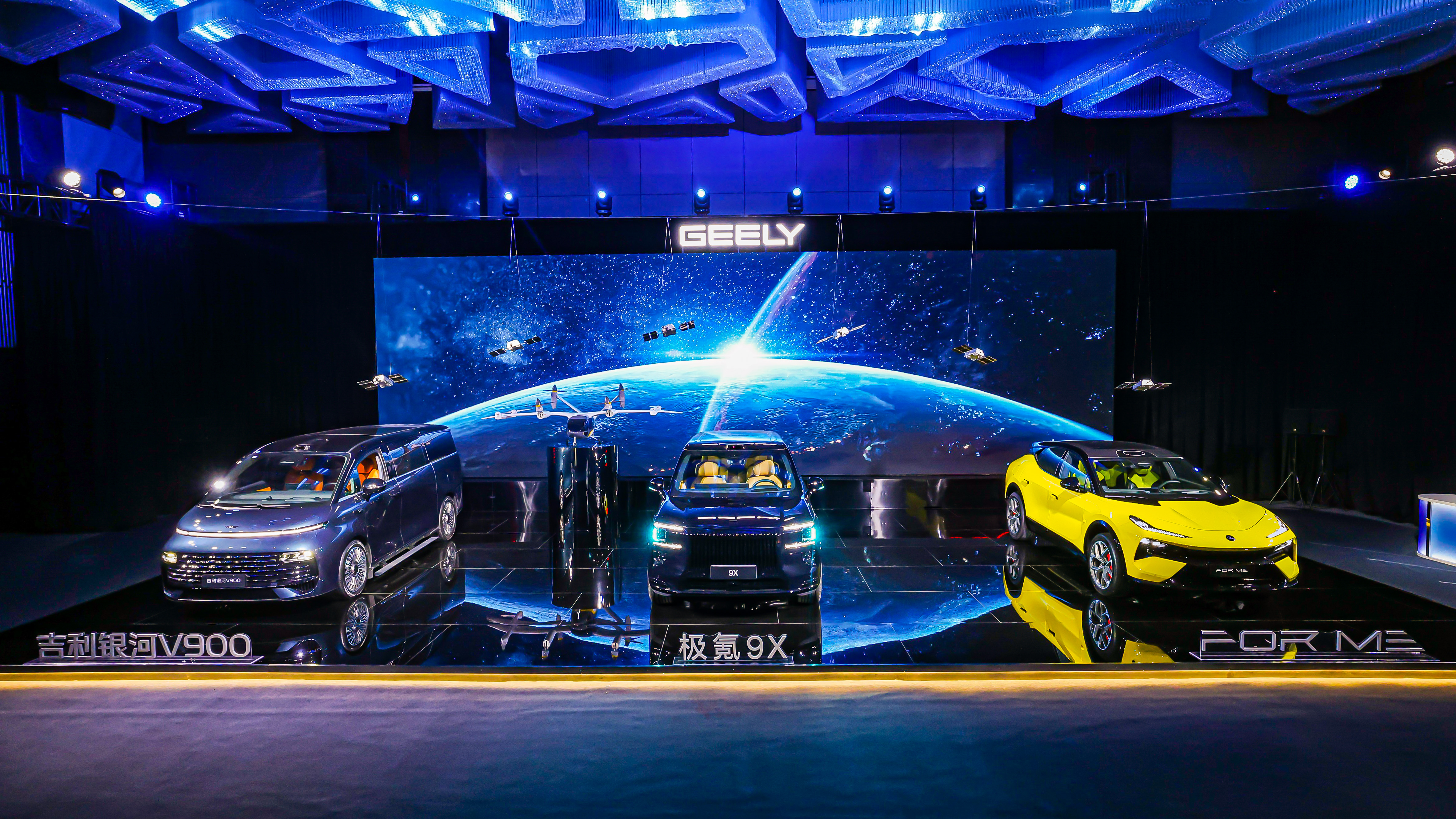
Core Viewpoint - Geely Holding Group has officially launched its "One Geely, Leading All" 2030 strategic goal, aiming to enhance global coordination and establish a comprehensive core capability system to achieve leading indicators in the global automotive industry [1][4]. Group 1: Strategic Goals - Geely aims to achieve global total sales exceeding 6.5 million units (including passenger and commercial vehicles) and revenue surpassing 1 trillion yuan by 2030, positioning itself among the top five global automakers, with approximately 75% of sales from new energy vehicles and over one-third from overseas markets [4]. - The company plans to develop a leading global new energy architecture covering vehicle classes A to E, with a target to reduce average model development cycles and comprehensive costs by over 30% based on the new architecture [4]. Group 2: Six-in-One Capability System - Geely will focus on six areas: brand, technology, complete vehicles, ecology, talent, and sustainable development, with an emphasis on strengthening the Geely parent brand and creating a clear, distinctive global brand matrix [7]. - The company will leverage its brands, including Geely, Lynk & Co, and Polestar, while also enhancing the localized operational capabilities of international brands like Volvo and Lotus in the European and American markets [7]. Group 3: Technological Advancements - Geely will enhance its "Seven Vertical" technology system, focusing on smart driving, smart cockpits, electronic architecture, complete vehicle architecture, batteries, electric drives, and super hybrid technologies [8]. - The company aims to establish "Qianli Haohan" as a globally advanced technology platform, achieving full coverage of L2-level assisted driving and accelerating the commercialization of L3 technology and Robotaxi [8]. Group 4: Safety and Ecological Layout - Safety remains the top priority for Geely, with plans to strengthen safety technology collaboration within the group and establish a "world safety dual-pole" structure between Volvo and Geely [10]. - Geely will focus on three ecological areas: user services, future mobility, and methanol-hydrogen electric vehicles, aiming to launch 100,000 customized Robotaxis by 2030 [10]. Group 5: Talent and Sustainability - Geely will deepen its "Talent Forest" strategy, investing 500 million yuan initially and up to 300 million yuan in total to foster innovation and entrepreneurship among youth [12]. - The company commits to integrating green and low-carbon principles throughout the product lifecycle, promoting eco-friendly materials, and achieving carbon neutrality in benchmark factories [12]. Group 6: Future Directions - By 2026, Geely will focus on AI technology, energy diversification, product premiumization, and internationalization, with upcoming technologies including the full-domain AI 2.0 system and the next-generation Qianli Haohan assisted driving system [13]. - New products, such as the Zeekr 8X, are set to be launched, reflecting the company's commitment to high-quality development [13].


杭州踩线完成“十四五”2.3万亿GDP目标,未来5年要站上3万亿
Sou Hu Cai Jing· 2026-01-23 09:25
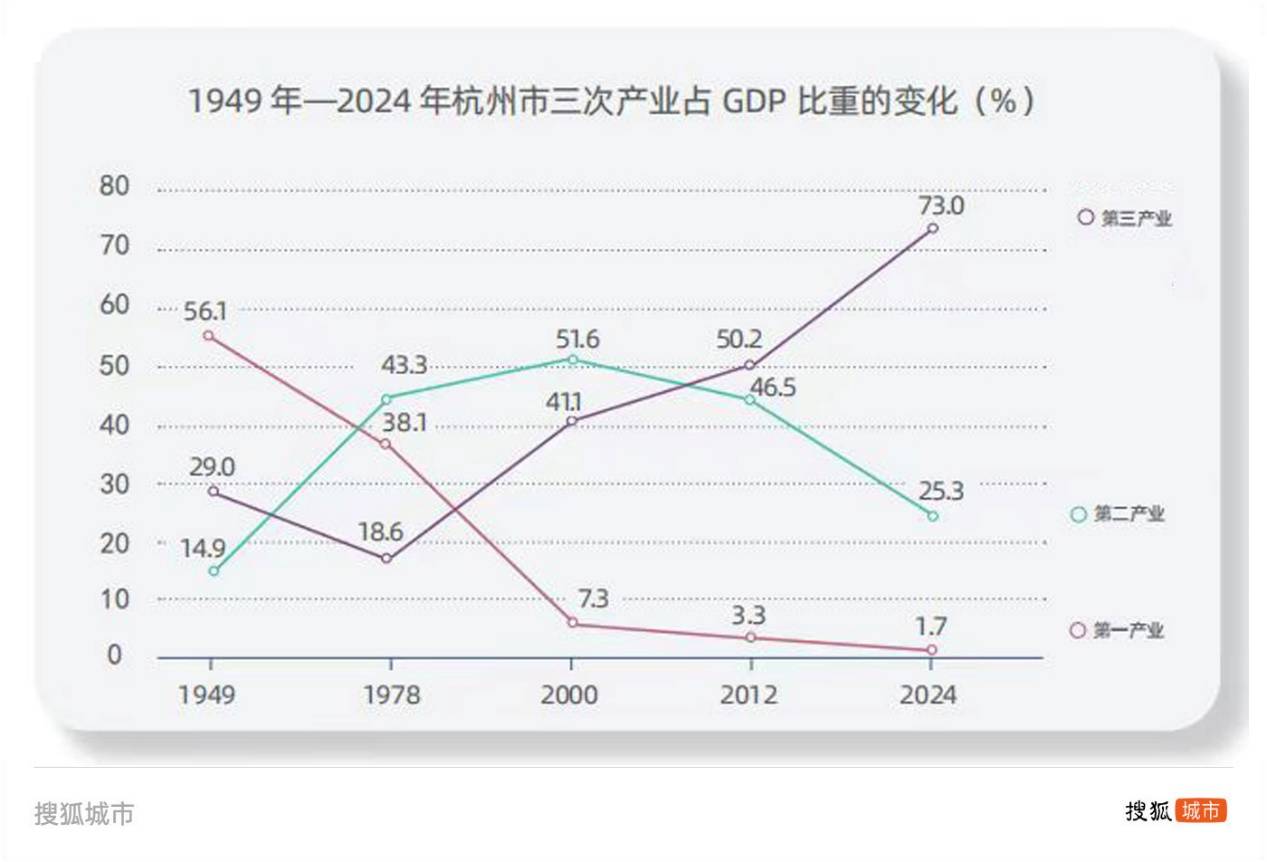
Economic Overview - Hangzhou's GDP is projected to reach 23,011 billion yuan by 2025, aligning with the "14th Five-Year Plan" target of 23,000 billion yuan [1] - The city aims for a GDP of 30,000 billion yuan and a per capita GDP exceeding 30,000 USD by 2030, requiring an average annual growth rate of over 5% in the next five years [1] Economic Structure - The economic growth in Hangzhou is driven by three main sectors: retail, foreign trade, and fixed asset investment, with retail sales expected to reach 9,499 billion yuan, foreign trade at 9,072 billion yuan, and a decline in fixed asset investment growth [1][4] - The service sector contributes significantly to the economy, with a value-added of 16,997 billion yuan and a growth rate of 5.3%, accounting for 73.4% of GDP [4] Sector Performance - The digital economy is a key growth area, with core industries in this sector seeing revenue growth of 13.2% and 12.1% for high-tech services [4] - Industrial output is also on the rise, with a total industrial value added of 4,624 billion yuan, marking a 6% increase, driven by advanced manufacturing clusters [4][10] - The automotive sector, particularly electric vehicles, has shown remarkable growth, with production increasing by 383% [2][4] Investment Trends - Investment in fixed assets is under pressure, with a notable decline in real estate and some infrastructure investments, reflecting a long-term downward trend from 20.3% growth in 2016 to 2.8% in 2023 [5] - Industrial investment has grown by 5.2%, but overall investment growth is expected to be negative in 2024 and 2025 [5] Consumer Market - The retail sales total is projected to reach 10,000 billion yuan by 2026, with a growth rate of around 5% [6] - The retail sales in Hangzhou have been revised upward to 9,151 billion yuan for 2024, reflecting a significant increase from previous estimates [8] - The consumption growth is supported by a stable service economy, with a focus on entertainment and experience-based consumption [10] Challenges and Future Outlook - Hangzhou's service sector, while substantial, still lags behind major cities like Beijing and Shanghai in absolute terms, indicating a need for structural improvements [12] - The manufacturing sector's contribution to GDP has decreased from 47.8% in 2010 to approximately 25% in 2024, highlighting a need for a more robust industrial base [12][14] - The city faces challenges in talent supply and demographic trends, which may impact its ability to achieve its ambitious economic goals [14]
2030年销量突破650万辆 跻身全球前五 吉利控股集团发布“一个吉利 全面领先”战略目标
Jing Ji Wang· 2026-01-23 09:25
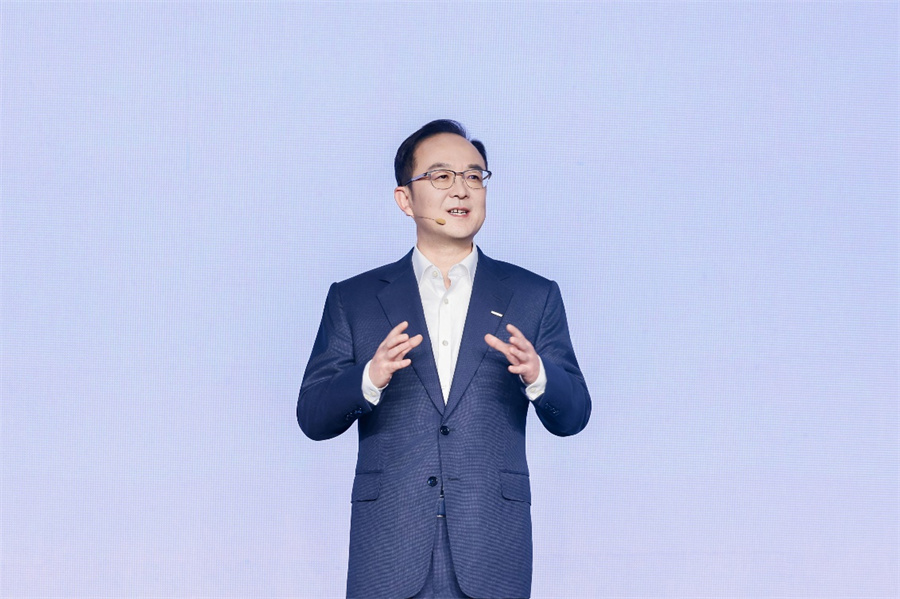
Core Insights - Geely Holding Group has announced its 2030 strategic goal of "One Geely, Comprehensive Leadership," aiming to achieve global sales exceeding 6.5 million vehicles and revenue surpassing 1 trillion yuan, with 75% of sales from new energy vehicles and over one-third from overseas markets [1][5]. Group 1: Strategic Goals - The 2030 strategy focuses on enhancing top-level planning and global collaboration to create a unified strategic framework [1][5]. - Geely aims to develop a "six-in-one" core capability system to ensure key performance indicators reach a leading level among global automakers [1][5]. Group 2: Sales Performance - In 2025, Geely's total sales reached 4.116 million vehicles, a 26% year-on-year increase, marking five consecutive years of rapid growth [3]. - New energy vehicle sales reached 2.293 million units, up 58%, with a penetration rate of 56% [3]. Group 3: Brand and Market Strategy - Geely plans to strengthen its core brand and create a clear, distinctive global brand matrix to enhance brand competitiveness and influence [5]. - The company will leverage its international brands like Volvo and Polestar to capitalize on local market advantages in Europe and North America [5]. Group 4: Technological Advancements - Geely is committed to enhancing its "seven verticals" technology system, focusing on smart driving, smart cockpits, and electric architectures to maintain a leading position in safety and innovation [6][9]. - The company aims to develop advanced platforms for smart driving and AI technologies, including the L2 and L3 autonomous driving capabilities [6][7]. Group 5: Ecosystem Development - Geely is focusing on three major ecological business areas: user services, future mobility, and methanol-hydrogen electric ecosystems [10][12]. - The company plans to establish a comprehensive service system for users and develop a nationwide integrated mobility service by 2030 [10]. Group 6: Talent and Sustainability - Geely is enhancing its organizational structure and talent development to support its transformation into a technology-driven enterprise [13]. - The company is committed to sustainable development, aiming to reduce carbon footprints and promote green technologies across its product lifecycle [13]. Group 7: Future Outlook - Geely aims to innovate in AI technology, energy diversification, product premiumization, and internationalization to drive high-quality development in the automotive industry [15]. - The company is set to launch new models and technologies that enhance user experience and operational efficiency [15].
2026智驾迎来“价值深化”新一年
Zhong Guo Qi Che Bao Wang· 2026-01-23 09:15
Core Insights - The automotive industry is increasingly focusing on intelligent assisted driving, with companies like BYD investing over 100 billion yuan and forming specialized teams to enhance their capabilities [2] - The shift in the industry is moving from scale and accessibility to user experience, emphasizing the importance of value creation in the competitive landscape [3][12] Investment and Development - BYD has established a team of over 5,000 for assisted driving and aims to deploy its "Tian Shen Zhi Yan" system in over 2.5 million vehicles by December 2025, generating over 150 million kilometers of effective driving data daily [3] - The establishment of new companies, such as the joint venture between BAIC and Horizon Robotics, indicates a growing trend towards collaboration in the intelligent driving sector [2][4] Technological Pathways - Companies are adopting full-stack self-research as a key strategy to deepen their understanding of technology and user needs, with BYD exemplifying this approach through significant investment and team size [3][5] - Open collaboration with third-party solution providers is also becoming a vital strategy, allowing companies to enhance their systems' performance and functionality through shared resources [4][5] User Experience and Market Trends - The concept of "intelligent driving equity" is emerging, indicating a shift towards making advanced driving features accessible in the mid-range vehicle market, particularly in the 100,000 to 150,000 yuan price range [12][14] - User feedback highlights the importance of stability in high-frequency scenarios, ease of use in interaction design, and the need for cost-effective solutions [13][14] Industry Dynamics - Suppliers are transitioning from providing single hardware products to offering integrated software and hardware solutions, becoming deep partners in the development of intelligent driving systems [6][8] - The competitive focus is shifting from merely having intelligent driving capabilities to ensuring their reliability, safety, and user-friendliness in complex driving environments [7][11] Future Outlook - The industry is expected to evolve towards a model where technology is not only usable but also provides a good user experience, ultimately leading to a sustainable business model [14] - As regulations and infrastructure improve, the Chinese intelligent driving industry is poised for high-quality development on a global scale, driven by technology and user experience [14]
吉利控股发布2030战略目标:剑指650万辆销量 冲击万亿营收
Zhong Guo Jin Rong Xin Xi Wang· 2026-01-23 08:27
Core Insights - Geely Holding Group has announced its "One Geely, Fully Leading" 2030 strategic goal, aiming for global sales to exceed 6.5 million units and revenue to surpass 1 trillion yuan by 2030 [1][2] Group Strategy - The core of "One Geely" focuses on strengthening top-level coordination and establishing a global strategic layout, while "Fully Leading" emphasizes six core areas: brand, technology, and complete vehicles [1] - The brand strategy will enhance the Geely parent brand and integrate local brands like Geely China Star and Zeekr with international brands such as Volvo and Lotus, alongside partners like Renault to create a global brand matrix [1] Technology Development - Geely will develop a top-tier global new energy architecture covering A to E class vehicles, aiming to reduce average R&D cycle and comprehensive costs by over 30% [1] - In the field of intelligent driving, Geely aims for full coverage of L2 level assisted driving, advancing towards L3 industrialization and accelerating the commercialization of L4 technology and Robotaxi [1] - The safety sector will focus on establishing a "world safety dual-polar" pattern, promoting the "Shen Dun Jin Zhuan battery" as an industry benchmark and advancing the industrialization of semi-solid and solid-state batteries [1] Ecological Layout - Geely will focus on user services, future mobility, and methanol-hydrogen electric fields, including the launch of 100,000 customized Robotaxi models by 2030 [2] - The methanol-hydrogen sector will expand multi-scenario applications and accelerate the construction of methanol refueling networks [2] Talent and Sustainability - Geely will deepen its "Talent Forest" strategy with a total investment of 300 million yuan in a youth innovation and entrepreneurship incentive plan, exploring new talent cultivation models [2] - The company will strengthen ESG governance, promoting low-carbonization throughout the product lifecycle and encouraging supply chain partners to achieve carbon reduction [2] Future Outlook - By 2025, Geely aims to achieve sales of 4.116 million units with a 56% penetration rate of new energy vehicles [2] - The company plans to drive high-quality development in the automotive industry through technological innovation in AI, energy diversification, product premiumization, and internationalization, creating a safe, reliable, and intelligent travel experience for global users [2]
鑫椤锂电一周观察 |中汽协:2025中国汽车全年销售3440万辆
鑫椤锂电· 2026-01-23 08:11
Industry Overview - The lithium carbonate market price has returned to 170,000 yuan/ton, with a significant increase in market activity following a drop to 150,000 yuan/ton, indicating market acceptance of the new price level [7] - The domestic lithium battery market is expected to see stable prices in the first quarter, with a projected year-on-year production decline of only 10-15%, which is better than previous years [15] Market Insights - In 2025, China's automobile sales are projected to reach 34.4 million units, with a year-on-year growth of 9.4%, and new energy vehicles (NEVs) accounting for 50.8% of domestic sales [3] - The Congo government has submitted a shortlist of state-owned mineral assets to the U.S., aiming to attract investment and enhance its influence in the critical mineral supply chain [4] Company Developments - Wanrun New Energy plans to invest 1.079 billion yuan in a high-pressure dense lithium iron phosphate project, with a production capacity of 70,000 tons per year [5] - Putailai has forecasted a net profit of 230 to 240 million yuan for 2025, representing a year-on-year increase of over 90% [6] Price Trends - As of January 22, 2025, the price for battery-grade lithium carbonate is between 161,000 to 168,000 yuan/ton, while industrial-grade is between 147,000 to 153,000 yuan/ton [8] - The price for ternary materials is experiencing fluctuations, driven by the rise in lithium carbonate prices, with 5-series single crystal materials priced at 195,000 to 202,000 yuan/ton [9] Supply Chain Dynamics - The supply of phosphoric acid is expected to be tight this year, influencing the pricing and availability of lithium iron phosphate [10] - The electrode material market is stable, with some small and medium manufacturers increasing prices for mid- to low-end products by 1,000 to 2,000 yuan/ton [12] Future Outlook - The global lithium battery application market is anticipated to grow significantly from 2025 to 2029, with ongoing research and competitive strategy analysis being conducted [18]



汽车行业2025年四季报前瞻:行业盈利逐步回归中枢,看好出海+科技
Shenwan Hongyuan Securities· 2026-01-23 08:07
Investment Rating - The industry investment rating is "Overweight," indicating a positive outlook for the automotive sector compared to the overall market performance [12]. Core Insights - The automotive industry is gradually returning to its profit center, with a strong focus on overseas expansion [1]. - In Q4 2025, total vehicle production and sales reached 10.186 million and 10.023 million units, respectively, showing year-on-year increases of 3.9% and 1.7% [4]. - Domestic retail share of independent brands reached 66.9%, up 3.2 percentage points year-on-year, while wholesale of new energy passenger vehicles increased by 13.2% year-on-year [4]. - The average industry discount rate decreased by 1.33 percentage points to 12.28% in Q4 2025, indicating reduced terminal discounts [4]. - Traditional raw material prices saw a decline, while new energy raw material prices increased, impacting supply chain profitability [4]. Summary by Sections Vehicle Production and Sales - In Q4 2025, passenger vehicle production and sales were 9.018 million and 8.845 million units, with year-on-year changes of +2.2% and -0.3% respectively [4]. - Commercial vehicle production and sales reached 1.168 million and 1.178 million units, with year-on-year increases of +19.4% and +20.0% [4]. - Exports of vehicles in Q4 2025 totaled 2.147 million units, a significant year-on-year increase of 39.8%, with new energy vehicles showing remarkable growth [4]. Market Dynamics - The report highlights the leading position of independent brands in the market, with a notable increase in new energy vehicle sales [4]. - The report notes a divergence in profitability among automakers due to varying new vehicle release schedules and the suspension of trade-in subsidies [4]. Profit Forecasts - The report provides profit forecasts for key automotive companies, indicating significant growth for companies like Jifeng and Dongfang, while others like BYD and Li Auto are expected to see declines [6][8]. - Specific profit growth rates for Q4 2025 show a wide range, with some companies experiencing over 600% growth, while others face substantial losses [6]. Investment Recommendations - The report suggests focusing on companies benefiting from AI integration and overseas business support, such as BYD and Geely [4]. - It also emphasizes the importance of companies with strong performance in the supply chain, particularly in the context of rising raw material prices [4].




吉利控股取得车辆电池与电机冷却系统专利
Sou Hu Cai Jing· 2026-01-23 07:55
Group 1 - Zhejiang Geely Holding Group Co., Ltd. and Zhejiang Linkong Technology Co., Ltd. have obtained a patent for "Vehicle Cooling System and Vehicle," with authorization announcement number CN116353332B, applied on April 2023 [1] - Zhejiang Geely Holding Group Co., Ltd. was established in 2003, located in Hangzhou, primarily engaged in the automotive manufacturing industry, with a registered capital of 1.03 billion RMB [1] - The company has invested in 38 enterprises, participated in 523 bidding projects, and holds 5,000 trademark and patent information, along with 275 administrative licenses [1] Group 2 - Zhejiang Linkong Technology Co., Ltd. was established in 2018, located in Ningbo, primarily focused on research and experimental development, with a registered capital of 850.01 million RMB [1] - The company has participated in 1 bidding project and holds 886 patent information, along with 4 administrative licenses [1]