
赛力斯

Search documents
乘用车板块12月17日跌0.4%,海马汽车领跌,主力资金净流出14.38亿元
Zheng Xing Xing Ye Ri Bao· 2025-12-17 09:00
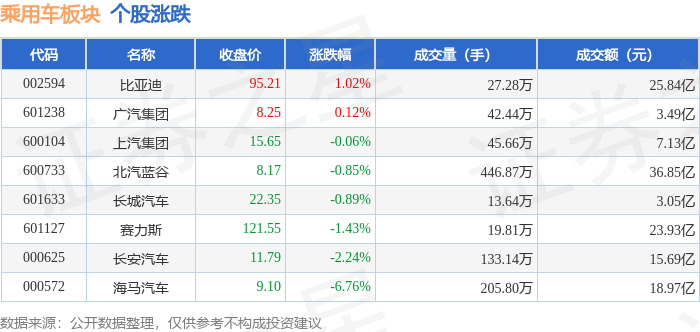
从资金流向上来看,当日乘用车板块主力资金净流出14.38亿元,游资资金净流入2.73亿元,散户资金净流入11.64亿元。乘用车板块个股资金流向 见下表: 以上内容为证券之星据公开信息整理,由AI算法生成(网信算备310104345710301240019号),不构成投资建议。 证券之星消息,12月17日乘用车板块较上一交易日下跌0.4%,海马汽车领跌。当日上证指数报收于3870.28,上涨1.19%。深证成指报收于 13224.51,上涨2.4%。乘用车板块个股涨跌见下表: | 代码 | 名称 | 收盘价 | 涨跌幅 | 成交量(手) | 成交额(元) | | --- | --- | --- | --- | --- | --- | | 002594 | 比如迪 | 95.21 | 1.02% | 27.28万 | 25.84亿 | | 601238 | 广汽集团 | 8.25 | 0.12% | 42.44万 | 3.49 Z | | 600104 | 上汽集团 | 15.65 | -0.06% | 45.66万 | 7.13亿 | | 600733 | 北汽蓝谷 | 8.17 | -0.85% | 446. ...


11月深圳篇:2025年主流车企城市NOA试驾报告
Soochow Securities· 2025-12-17 09:00
Investment Rating - The report does not provide specific investment recommendations for individual companies or suppliers in the smart driving sector [2][5][7]. Core Insights - 2025 marks a pivotal year for automotive intelligence, initiating a three-year cycle that will elevate the domestic electrification penetration rate to 50%-80%+ [2]. - Leading smart driving manufacturers have successfully implemented urban NOA (Navigation on Autopilot) experiences, enhancing complex scenario handling and passenger experience [2]. - The report evaluates the smart driving experiences of seven manufacturers through both large sample and small sample road tests, focusing on various dimensions such as scenario implementation and comfort [2][4]. - The performance gap among manufacturers is narrowing, with second-tier manufacturers improving their capabilities significantly compared to Q1 [2]. Summary by Sections Road Test Overview - The report includes both large sample concentrated road tests and small sample in-depth road tests to assess the smart driving capabilities of various models [4][28]. - The concentrated road test was conducted on a fixed route in Shenzhen, covering complex scenarios such as narrow passages and busy intersections [31][67]. Performance Evaluation - The average takeover frequency across the tests was noted, with specific scores assigned to each vehicle based on their performance in various driving scenarios [36][37]. - The report highlights that the Wanjie M7 achieved the highest overall evaluation score, with an average takeover frequency of 0.47, indicating excellent smart driving performance [36][37]. - The performance of the Wei brand Lanshan and Xiaopeng models was also noted, with average takeover frequencies of 1.83 and 2.40, respectively, showcasing their capabilities in complex scenarios [40][42]. Model-Specific Insights - The report details the specific smart driving versions tested, including Huawei ADS 4.0, Xiaopeng XOS 5.7.8, and others, along with their respective performance metrics [12][14][18][19]. - Each model's strengths and weaknesses in handling various driving scenarios were analyzed, with particular attention to their ability to manage complex urban environments [2][67]. Future Outlook - The report anticipates that the advancements in smart driving technology will continue to evolve, with manufacturers focusing on enhancing their systems to better handle complex driving conditions [2][22].






L3自动驾驶量产元年,离L4的梦想又近了一步
3 6 Ke· 2025-12-17 08:43
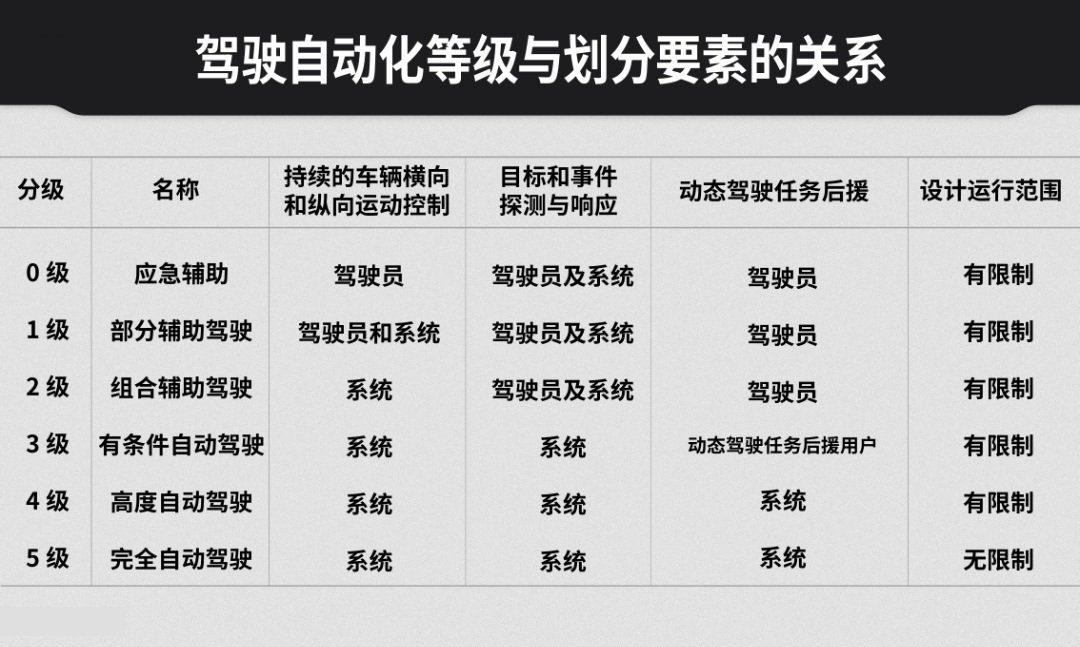
Core Insights - The Ministry of Industry and Information Technology has approved the commercial operation of L3 autonomous driving for the first time in China, allowing vehicles to operate under specific conditions with the system taking over driving tasks [1] - The approval includes two models: Changan Deep Blue SL03 and Arcfox Alpha S6, marking a significant step towards the mass production of L3 autonomous vehicles by 2026 [1] - The responsibility for accidents occurring while the system is activated will primarily fall on the car manufacturers, emphasizing the importance of accountability in this new phase of autonomous driving [1] Industry Developments - Major automotive companies in China, including Huawei, Chery, and GAC Group, are targeting the implementation of L3 conditional autonomous driving by 2025, with several already obtaining testing licenses [4][5] - Companies like XPeng Motors and Chery have announced plans to launch L3 autonomous vehicles, with XPeng aiming for L4 capabilities by 2026 [4] - The L3 level is seen as a crucial transition from "assisted driving" to "fully autonomous driving," with L4 expected to allow vehicles to operate without human intervention in designated areas [1][4] Technological Advancements - The automotive industry is experiencing a shift towards integrating AI and advanced technologies into autonomous driving systems, with companies developing models that enhance perception, planning, and control [9][12] - The introduction of VLA (Visual Language Action) models is expected to significantly improve the capabilities of autonomous driving systems, providing better scene understanding and decision-making [9][15] - The competition among automakers is intensifying, with a focus on developing proprietary technologies that enhance vehicle performance and safety, particularly in complex driving scenarios [17][18] Future Outlook - The approval of L3 autonomous driving is viewed as a pivotal moment in the evolution of transportation, setting the stage for ongoing exploration and innovation in the field [19] - The industry is expected to continue evolving, with a focus on balancing self-research and collaboration to maintain technological leadership while managing costs [18][19] - As the market for autonomous vehicles grows, the emphasis will shift from merely achieving autonomous capabilities to ensuring the safety and reliability of these systems in real-world conditions [17][19]

L3自动驾驶量产元年,离L4的梦想又近了一步?
Xin Lang Cai Jing· 2025-12-17 06:30
Group 1 - The Ministry of Industry and Information Technology has approved the commercial operation of L3 autonomous driving for the first time in China, allowing vehicles to operate under specific conditions with the system taking over driving tasks [1] - The two models approved for L3 autonomous driving are Changan Deep Blue SL03 and Arcfox Alpha S6, marking a significant step towards the commercialization of L3 technology [1] - The year 2026 is anticipated to be the "mass production year" for L3 autonomous driving, with several companies aiming to launch L3 vehicles by then [3][4] Group 2 - The approval clarifies the responsibility division for L3 autonomous driving, indicating that if an accident occurs while the system is activated, the car manufacturer may bear primary responsibility [1] - The L3 level is seen as a crucial transition from "assisted driving" to "fully autonomous driving," with L4 expected to achieve greater breakthroughs [1][4] - Major automotive companies, including XPeng, Chery, and GAC, have set timelines for the mass production of L3 vehicles, with GAC planning to launch its first L3 model in Q4 of this year [3][4] Group 3 - The automotive industry is experiencing intensified competition in intelligent driving technologies, with companies like BYD, Geely, and Chery developing their own autonomous driving systems [9] - The integration of AI and data-driven technologies is becoming essential for enhancing autonomous driving capabilities, moving beyond traditional rule-based systems [9][12] - The VLA model is emerging as a key technology in the transition from L2 to L4 autonomous driving, offering improved scene reasoning and generalization capabilities [9][14] Group 4 - The shift towards L3 autonomous driving represents a new beginning for human-machine coexistence, with ongoing exploration in technology iteration and regulatory improvement [17] - Companies are increasingly focusing on in-house development of core technologies, such as battery technology and autonomous driving algorithms, to enhance brand competitiveness [16] - The balance between self-research and collaboration is crucial for companies to maintain technological leadership while managing costs [16][17]
赛力斯:将充分拥护和响应《指南》要求 完善价格合规管理体系
Zhong Zheng Wang· 2025-12-17 05:27
Core Viewpoint - The company, Seres Group, has expressed its commitment to comply with the newly proposed "Guidelines for Price Behavior in the Automotive Industry," emphasizing the importance of legal compliance and fair competition in the automotive sector [1] Group 1: Company Response - Seres Group has stated that it will fully support and respond to the requirements of the guidelines by improving its price compliance management system across the entire value chain, including product pricing, dealer management, and sales promotion [1] - The company aims to eliminate practices such as cost inversion, false marketing, and ambiguous pricing, adhering to principles of fair competition to maintain a healthy and orderly development environment in the automotive industry [1] Group 2: Industry Perspective - The company acknowledges the hard-earned achievements of China's new energy vehicle sector and is committed to promoting a symbiotic and win-win industrial chain, enhancing the competitive strength of the entire new energy vehicle industry [1] - Seres Group calls on other enterprises to strengthen price behavior management to protect consumers' legal rights and expresses a willingness to collaborate with industry peers to maintain a fair and orderly market environment [1]
业内专家:汽车软件正朝底层自主化、架构全栈化、应用智能化等方向发展
Xin Hua Cai Jing· 2025-12-17 03:42
Group 1 - The automotive software is becoming a key driver for the restructuring of the automotive industry and the reshaping of its ecosystem, focusing on bottom-level autonomy, full-stack architecture, and intelligent applications [1] - The Shanghai Municipal Economic and Information Commission emphasizes three areas for collaboration: strengthening foundational technology, integrating AI with new information technologies, and promoting an open-source ecosystem for automotive software [1] - The China Association of Automobile Manufacturers advocates for a dual-driven approach of "learning + innovation," establishing a controllable technological foundation, leading with standardization, and fostering an open and shared development framework [1] Group 2 - Shanghai Jiading has gained a competitive edge as the first national pilot demonstration zone for intelligent connected vehicles and electric vehicles, focusing on automotive software as a key development area [2] - The Shanghai International Automobile City collaborates with leading companies to launch the "Meta-Ecosystem" platform, providing comprehensive support for the embodied intelligence industry driven by AI [2] - A high-quality incubation center for embodied intelligence is being established to support companies with affordable computing power and diverse training scenarios, significantly reducing R&D costs [2] Group 3 - The China Association of Automobile Manufacturers, in collaboration with key industry partners, has released a white paper on "Software-Defined Automotive Service Development," outlining how software can drive profound changes through service-oriented approaches [3] - The white paper presents a comprehensive methodology, toolchain requirements, and middleware solutions for the industry, serving as a practical development guide [3]
L3商用加速落地,有望推动智能底盘批量应用 | 投研报告
Zhong Guo Neng Yuan Wang· 2025-12-17 02:04
Core Viewpoint - The recent approval of L3-level conditional autonomous driving vehicles by the Ministry of Industry and Information Technology (MIIT) marks a significant step towards the commercialization of advanced autonomous driving technology in China [2][5]. Group 1: L3 Autonomous Driving Approval - Changan Automobile and BAIC BluePark Magna Automotive have submitted applications for L3-level conditional autonomous driving vehicles, which have been approved by MIIT in the 401st batch of announcements [2][3]. - L3 autonomous driving allows for conditional self-driving within a limited operational range, differing fundamentally from L2 assistance systems [2][3]. Group 2: Impact on Intelligent Chassis - The approved vehicles include Changan's Deep Blue product and BAIC's Arcfox Alpha S (L3 version), which features a high-performance redundant sensor system with 34 sensors, including three LiDARs [3][4]. - The commercialization of L3 is expected to accelerate the application of intelligent chassis technologies, such as active suspension, electronic brake-by-wire (EMB), and steer-by-wire (SBW) systems [3][4]. Group 3: Investment Strategy - The approval of L3 vehicles provides policy support for the popularization of high-level autonomous driving, benefiting companies actively engaged in this sector [5]. - Key investment areas include vehicle application, where leading companies are establishing advantages in training data and smart driving ecosystems, and the intelligent chassis sector, which is expected to see rapid mass application by 2026 [5].





“制造强国”实干系列周报(12、14期)-20251217
Shenwan Hongyuan Securities· 2025-12-17 01:46
Group 1: Aluminum vs. Copper in Air Conditioning - The shift from copper to aluminum in air conditioning systems is driven by the copper-aluminum price gap, energy efficiency standards upgrades, and refrigerant replacements, with microchannel technology becoming increasingly prevalent[3] - The competitive landscape for microchannel heat exchangers is dominated by three players: Sanhua, Mahler/Delphi, and Danfoss[3] - Sanhua's revenue growth has slowed, indicating a need for innovation and adaptation in the market[14] Group 2: Nuclear Fusion Developments - The nuclear fusion sector is expected to accelerate due to continuous technological breakthroughs and policy support, with significant project milestones achieved in 2025[19] - The global nuclear fusion market is projected to reach approximately $479.5 billion by 2029, with a total of 196 fusion devices expected by 2035[40][42] - Key investment opportunities in nuclear fusion include core supporting entities and high-value segments within the supply chain, such as superconducting magnets and power systems[46] Group 3: Commercial Aerospace - The commercial aerospace sector is witnessing stable or potentially increasing core players due to cost reduction trends, with a focus on satellite manufacturing and launch services[3] - The domestic satellite constellation projects, such as G60 and GW, are set to significantly increase satellite launches, with G60 planning to deploy 1,296 satellites by the end of 2027 and 15,000 by 2030[60] - The market for satellite services and ground equipment is expected to dominate, accounting for over 90% of the commercial aerospace value chain[52]
2025中国汽车软件大会共论智能汽车高质量发展
Zhong Guo Qi Che Bao Wang· 2025-12-17 01:40
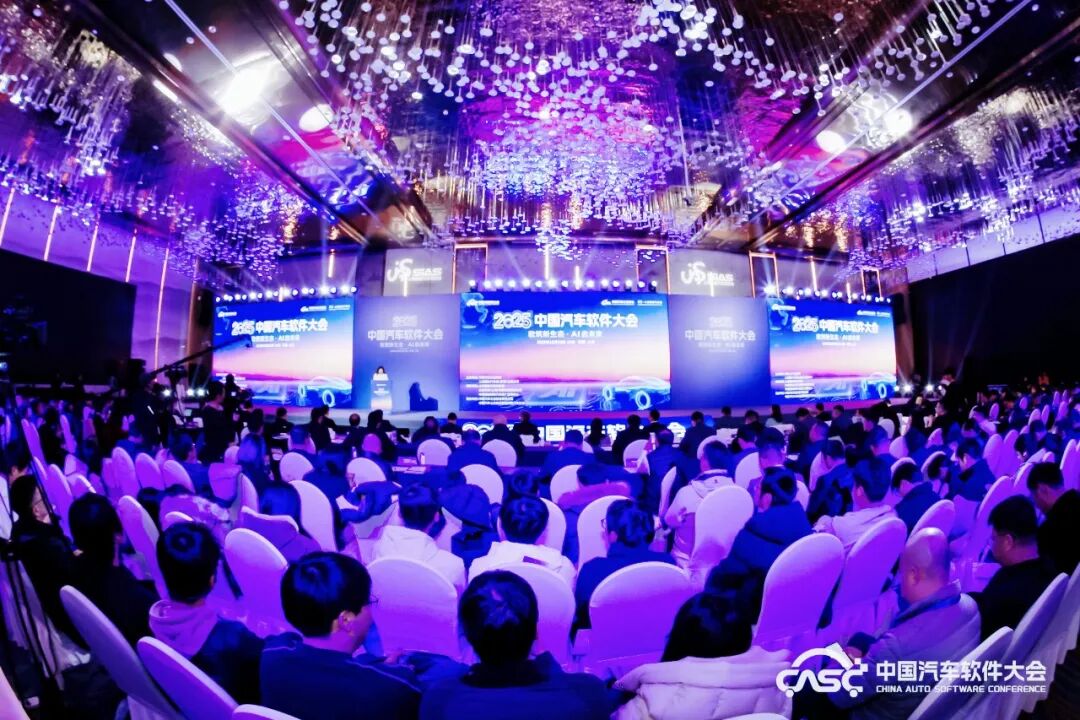
Core Insights - The 2025 China Automotive Software Conference was held in Shanghai, focusing on the role of automotive software as a key driver for the intelligent and connected automotive industry, aiming for high-quality development and industry upgrades [1] Group 1: Development Trends - Automotive software is rapidly evolving towards bottom-layer autonomy, full-stack architecture, intelligent applications, open-source ecosystems, and cross-industry integration [3] - The conference emphasized the importance of strengthening foundational technology, integrating AI with new information technologies, and promoting open-source ecosystem construction [3][4] Group 2: Industry Collaboration - The Shanghai International Automotive City is collaborating with leading companies in embodied intelligence to establish a core capability open platform, supporting the integration of AI in the automotive sector [6] - A white paper on "Software-Defined Automotive Service Development" was released, outlining methodologies and tools for achieving profound changes through service-oriented software [8] Group 3: Data Security and Innovation - The construction of a trusted data space is crucial for ensuring secure data circulation and unlocking data value, with various automotive companies collaborating to innovate in automotive insurance [9] - The launch of the "Tianyuan OS Open Source Co-construction Plan" aims to enhance compatibility and reusability in autonomous driving and intelligent cockpit fields [9] Group 4: User Experience - The ICCE Alliance has established a digital key experience evaluation system to address issues like signal instability and positioning accuracy, setting a new industry benchmark for smart entry experiences [10]
东兴证券:汽车行业L3商用加速落地 有望推动智能底盘批量应用
智通财经网· 2025-12-17 01:35
Core Viewpoint - The approval of L3-level autonomous driving vehicles by the Ministry of Industry and Information Technology (MIIT) marks a significant step towards the commercialization of L3 autonomous driving in China, which is expected to accelerate the adoption of smart chassis technologies [1][2][3]. Group 1: Event Summary - The MIIT has granted conditional approval for Changan Automobile and BAIC BluePark Magna Automotive to produce L3-level autonomous vehicles, following the submission of their applications [2]. - The approval is part of the 401st batch of announcements by the MIIT, indicating a regulatory framework supporting the introduction of L3 autonomous driving products in the market [2][3]. Group 2: L3 Commercialization Impact - L3 autonomous driving allows for conditional self-driving capabilities, where the system controls vehicle movement and responds to environmental stimuli within a limited operational range, requiring driver intervention outside this range [3]. - The vehicles approved include Changan's Deep Blue model and BAIC's Arcfox Alpha S (L3 version), which features a high-performance sensor system with 34 sensors, including three LiDARs, ensuring comprehensive safety and redundancy [4]. Group 3: Smart Chassis Development - The commercialization of L3 driving is expected to drive the mass application of smart chassis technologies, including active suspension, electronic brake-by-wire (EMB), and steer-by-wire (SBW) systems [4][5]. - Active suspension systems will integrate air springs and variable damping to enhance vehicle handling and comfort, while EMB represents the future direction of braking systems, supported by mandatory national standards set to take effect in 2026 [4][5]. Group 4: Investment Strategy - The approval of L3 vehicles provides policy support for the widespread adoption of advanced autonomous driving technologies, benefiting companies that are actively investing in this sector [6]. - Key investment opportunities include automakers collaborating with Huawei, such as Seres, JAC Motors, BAIC BluePark, SAIC Group, and Changan, as well as companies in the smart chassis supply chain like Baolong Technology and Top Group [6].
