三生制药

Search documents
创新药2025H1业绩综述:看好盈利改善,估值突破
ZHESHANG SECURITIES· 2025-09-24 01:28
Investment Rating - Industry rating: Positive [1] Core Viewpoints - The report highlights the strong performance of stock prices and the improvement in profitability within the innovative drug sector [3] - The valuation is expected to break through due to the "engineer dividend" and continuous high-intensity R&D investment [4][5] Summary by Sections Review: Strong Stock Prices and Profitability Improvement - Stock prices have shown a strong upward trend, driven by business development (BD) and clinical data [12] - A-share performance from December 31, 2024, to September 8, 2025, shows significant gains for companies like Rongchang Bio (+208.87%) and Yifang Bio (+188.72%) [5][16] - R&D investment among 32 sample innovative drug companies reached 33.6 billion yuan in H1 2025, reflecting a year-on-year increase of 4.91% [21] - Sales and R&D expense ratios for 21 sample companies have been declining from 2021 to H1 2025, indicating a trend towards profitability [27] - The sales revenue of 17 commercialized innovative drug companies reached 56.6 billion yuan in H1 2025, a 30% increase year-on-year [31] Outlook: Valuation Breakthrough Under Engineer Dividend - Domestic policies are driving the industry upward, with continuous implementation of supportive measures for innovative drug development [38] - The report notes that the value of Chinese innovative drugs is increasingly recognized by multinational corporations (MNCs), enhancing their international competitiveness [41] - The report anticipates a significant increase in the number of approved innovative drugs, with 44 new Class 1 innovative drugs approved by CDE by September 15, 2025 [48] Investment Strategy: Positive Profitability Improvement and Valuation Breakthrough - The report recommends focusing on global blockbuster potentials, with Zebutini expected to exceed $2.6 billion in sales in 2024 [52] - Companies such as Kelun Biotech, Innovent Biologics, and others are highlighted as key investment targets due to their strong growth potential [52] - The report emphasizes the ongoing trend of profitability improvement, with companies like BeiGene expected to turn profitable in 2025 [52]
天风证券:创新药产业趋势已成 进军全球商业化
Zhi Tong Cai Jing· 2025-09-24 00:13
建议关注:①全球大单品:百济神州(06160),科伦博泰生物(06990),信达生物(01801),康方生物 (09926),三生制药(01530),百利天恒(688506.SH),新诺威(300765.SZ),石药集团(01093),翰森制药 (03692),中国生物制药(01177),一品红(300723.SZ),映恩生物(09606); ②全球BIC潜力:益方生物(688382.SH),泽璟制药(688266.SH),基石药业(01592),苑东生物 (688513.SH),科济药业(02171),来凯医药(02105),复宏汉霖(02696),再鼎医药(09688),和黄医药 (00013),药捷安康(02617),加科思(01167),歌礼制药(01672); ③国内大单品:舒泰神(300204.SZ),艾力斯(688578.SH),云顶新耀(01952),恒瑞医药(600276.SH),贝 达药业(300558.SZ),华领医药(02552); ④资产价值:和铂医药(02142),和誉(02256)。 立足现在:进军全球商业化,大量优质项目将继续推高产业发展 中国创新药行业已形成以领头企业为引领、 ...

从17000点到27000点!“9.24”行情这一年:港股“造富神话”能否继续?
Xin Lang Cai Jing· 2025-09-23 12:30
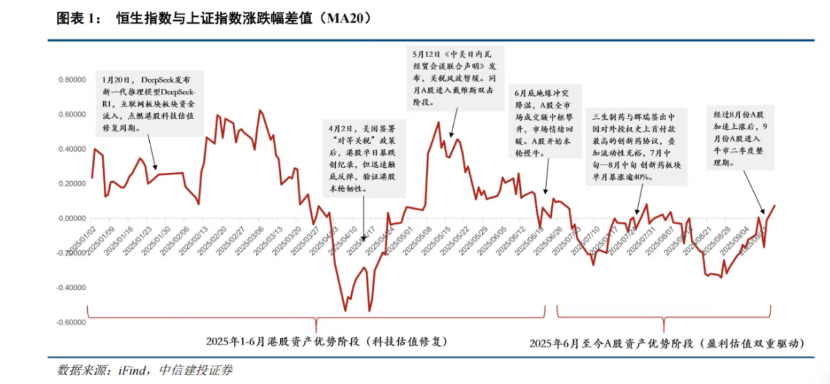
Core Viewpoint - The Hong Kong stock market has experienced significant volatility over the past year, with the Hang Seng Index rising from approximately 17,000 points to over 27,000 points, marking a new high since 2022, driven by sectors such as AI, innovative pharmaceuticals, and new consumption [1][4][10]. Market Performance - The Hang Seng Index closed at 26,159 points, down 0.7%, while the Hang Seng Tech Index closed at 6,167 points, down 1.45% as of September 23 [1]. - The market has shown a "first strong, then slow, and then rebound" trend throughout the year, with the Hang Seng Index outperforming A-shares in the first half but lagging behind in July and August [6][10]. Sector Analysis - The technology sector, particularly in AI and innovative pharmaceuticals, has seen substantial gains, with stocks like SMIC rising over 120% and Alibaba increasing by over 90% [7]. - The innovative pharmaceutical sector has also gained traction, with companies like Innovent Biologics and BeiGene making significant international partnerships [7][11]. Market Dynamics - The Hong Kong stock market has seen a surge in liquidity, with average daily trading volume reaching 240.2 billion HKD in the first half of the year, a 118% increase year-on-year [4]. - The number of IPOs has increased significantly, with 51 IPOs raising 128 billion HKD in the first seven months of the year, surpassing the total for the previous year [9]. Future Outlook - Analysts remain optimistic about the future of the Hong Kong stock market, citing the potential for continued valuation recovery in sectors like technology and non-essential consumption [10][14]. - The market is expected to experience further upward movement, driven by structural industry recovery and the ongoing liquidity cycle [13][14].


“9.24”行情这一年:港股从17000点跃升至27000点,“造富神话”能否继续?
Di Yi Cai Jing· 2025-09-23 09:29
Core Viewpoint - The Hong Kong stock market has experienced significant volatility over the past year, with the Hang Seng Index rising from around 17,000 points to over 27,000 points, marking a new high since 2022, driven by strong performance in sectors like AI, innovative pharmaceuticals, and new consumption [1][2][12] Market Performance - The Hang Seng Index reached a peak of 27,000 points in September 2024, following a series of financial policy announcements and a surprise rate cut by the Federal Reserve [2] - The Hang Seng Technology Index also showed strong performance, climbing from approximately 3,500 points to 6,461 points during the same period [2] - Recent market trends indicate a slight pullback, with the Hang Seng Index closing at 26,159 points, down 0.7%, and the Hang Seng Technology Index at 6,167 points, down 1.45% [1] Sector Analysis - The market has seen a structural shift with active rotation among sectors, including AI, new consumption, and innovative pharmaceuticals, leading to significant stock price increases for major players like Semiconductor Manufacturing International Corporation and Alibaba [7][10] - The innovative pharmaceutical sector has also gained traction, with companies like Innovent Biologics and BeiGene entering substantial partnerships, contributing to a rise in the Hang Seng Innovative Pharmaceutical Index by over 100% [7] Investment Trends - Over the past year, 543 stocks have doubled in price, with notable performers in consumer discretionary, healthcare, and financial sectors, including companies like Genscript Biotech and Zai Lab [9] - The Hong Kong IPO market remains robust, with 51 IPOs raising HKD 128 billion in the first seven months of the year, surpassing the total for the previous year [10] Liquidity and Capital Flow - The liquidity situation in the Hong Kong market has improved significantly, with average daily trading volume increasing by 118% year-on-year to HKD 2,402 billion [2][11] - Southbound capital inflow has been driven by domestic investors seeking stable returns and growth opportunities in Hong Kong, particularly in dividend-paying and growth sectors [11] Future Outlook - Analysts remain optimistic about the future of the Hong Kong stock market, anticipating continued valuation recovery in sectors like technology and new consumption, despite potential short-term lag due to A-share market dynamics [12][13] - The current market cycle is viewed as being in its mid-stage, with liquidity and valuation cycles leading the way, while the earnings cycle is just beginning [12]
创新药产业趋势已成,进军全球商业化
Tianfeng Securities· 2025-09-23 07:45
Industry Rating - The report maintains an "Outperform" rating for the pharmaceutical and biotechnology industry [1]. Core Insights - The Chinese innovative drug industry has established a trend towards global commercialization, supported by a pyramid structure of leading and quality enterprises, indicating strong sustainability in industry development [2]. - The underlying logic of the current cycle is that Chinese innovative drugs possess global competitiveness, shifting from domestic sales to international licensing and commercialization, thus opening up commercial space and maturing the ecosystem [2]. - The focus on differentiated mechanisms or high clinical value "good molecules" remains a core interest for international buyers, with early data being crucial for entering licensing windows [2]. Current Situation - The Chinese innovative drug industry is entering a phase of realization, driven by support from capital markets, policies, and talent [3]. - The industry has developed self-sustaining capabilities through business development (BD) licensing and drug commercialization [3]. - Comprehensive policy support for "true innovation" has been established, enhancing the industry's growth [3]. Future Outlook - Continued collaboration among academia, industry, and research will enhance the output of first-in-class (FIC) molecules, with China becoming one of the most efficient countries in the drug development pathway [4]. - Higher innovation levels are expected to further unlock commercial value, indicating a promising future for the industry [4]. Investment Recommendations - Focus on global blockbuster products: companies such as BeiGene, Kelun-Biotech, Innovent Biologics, and others are highlighted as key players [5]. - Attention to global best-in-class (BIC) potential companies, including EdiGene, Zai Lab, and others, is recommended [5]. - Domestic blockbuster products and asset values of companies like Hengrui Medicine and others are also suggested for consideration [5].
新“新三样”领跑,接力中国资产重估
21世纪经济报道· 2025-09-23 06:19
Core Viewpoint - The article emphasizes the emergence of a new paradigm in China's economy, termed the "new new three samples," which includes robotics, artificial intelligence (AI), and innovative pharmaceuticals, as key drivers for high-quality economic development and a shift from traditional growth models to technology-led advancements [1][4][29]. Robotics Sector - The robotics sector has seen significant market capitalization growth, with companies like Huichuan Technology exceeding 200 billion yuan and several stocks doubling in price within the year [2][13]. - The market for industrial robots in China is projected to reach 302,000 units in 2024, maintaining its position as the largest industrial robot market globally [30]. - Key challenges include reliance on imported high-end servo motors and precision components, which need to be addressed to enhance domestic capabilities [33]. Artificial Intelligence Sector - The AI sector is characterized by a large number of high-value companies, with six firms exceeding a market cap of 100 billion yuan, including Cambricon and Hikvision [19]. - The demand for AI capabilities has surged, particularly in large model applications, leading to significant revenue growth for companies like Industrial Fulian and Cambricon, with year-on-year increases of 35.58% and 4347.82%, respectively [20]. - The sector is supported by national policies aimed at integrating AI into various industries, with a comprehensive action plan released to enhance AI's role in economic development [22]. Innovative Pharmaceuticals Sector - The innovative pharmaceuticals sector is represented by major players like Heng Rui Medicine, which is nearing a market cap of 500 billion yuan, and BeiGene, which recently achieved profitability [24][28]. - Recent policy measures have been introduced to support the development of innovative drugs, including streamlined approval processes and enhanced reimbursement mechanisms [27]. - The sector is witnessing a shift from loss-making to profitability, with companies like BeiGene demonstrating the commercial viability of innovative drug models [28]. Strategic Importance - The "new new three samples" signify a transition from scale-driven manufacturing to technology-driven innovation, crucial for enhancing China's global competitiveness and economic resilience [7][9][31]. - The collaboration among robotics, AI, and innovative pharmaceuticals creates a synergistic effect that strengthens overall productivity and fosters new business models [8][31]. - Addressing the "bottleneck" issues in these sectors is essential for sustaining growth and achieving leadership in global technology competition [32][33]. Policy Recommendations - To enhance competitiveness, policies should focus on data openness, regulatory reforms, and infrastructure development to support AI and innovative pharmaceuticals [35][38]. - Establishing a robust talent pipeline and fostering interdisciplinary education will be critical for sustaining innovation in these sectors [37][38]. - Encouraging public-private partnerships and international collaboration will further strengthen China's position in the global market [39].




创新药研究框架深度解析
2025-09-23 02:34
Summary of Key Points from the Conference Call on China's Innovative Drug Industry Industry Overview - The Chinese innovative drug industry is transitioning from a follower to a leader, showcasing significant advantages in R&D efficiency and cost control, particularly in popular technology areas such as bispecific antibodies (双抗) and antibody-drug conjugates (ADC) [1][2][3] - The approval speed of innovative drugs directly impacts market volume and competitive landscape, with early market entry being crucial [1][6] Core Insights and Arguments - **Market Dynamics**: The Chinese innovative drug sector is experiencing a shift in underlying logic, with improved liquidity in the Hong Kong stock market and increased risk appetite expected to boost the pharmaceutical sector, especially innovative drugs [1][8] - **International Recognition**: Chinese innovative drugs are gaining international recognition, exemplified by the $1.25 billion upfront payment for the PD-1 VGF bispecific antibody licensed to Pfizer by 3SBio, marking a significant milestone in outbound business development (BD) transactions [1][9] - **Policy Influence**: Healthcare policies are encouraging differentiated innovation, with diverse payment methods being explored, and the impact of drug price reduction policies being limited [1][4][5] Key Factors Affecting the Industry - **Types of Companies**: The innovative drug sector comprises Big Pharma and Biotech companies, with Big Pharma focusing on commercialization and Biotech emphasizing R&D innovation [1][7] - **Investment Sentiment**: The overall performance of the pharmaceutical sector has been weak from 2020 to 2024 due to investor preference for dividend stocks, but improvements in liquidity and risk appetite in 2025 are expected to enhance the performance of the innovative drug sector [1][8] Challenges and Opportunities - **Global Competition**: As the global source innovation enters a bottleneck, Chinese companies can leverage high efficiency to achieve competitive advantages, particularly in ADC and bispecific antibody fields where they hold significant market shares [1][20][22] - **Market Entry Timing**: The timing of market entry is critical, with first-in-class drugs capturing an average of 45% market share, while subsequent entrants see diminishing returns [1][18] Emerging Trends and Future Directions - **New Drug Development**: The focus on PD-1 bispecific antibodies and ADCs is expected to drive future growth, with several companies poised to launch significant products in the near term [1][31][32] - **Clinical Trial Efficiency**: Chinese companies demonstrate superior enrollment speeds in clinical trials, significantly reducing time and costs compared to international counterparts [1][16] Conclusion - The Chinese innovative drug industry is positioned for substantial growth driven by policy support, international recognition, and advancements in R&D efficiency. The upcoming years are likely to see increased BD activities and successful product launches, contributing to the sector's evolution and competitiveness on a global scale [1][10][32]
每日投资策略-20250923
Zhao Yin Guo Ji· 2025-09-23 02:29
Global Market Overview - The Hang Seng Index closed at 26,344, down 0.76% for the day but up 31.33% year-to-date [1] - The S&P 500 and Nasdaq in the US saw increases of 0.44% and 0.70% respectively, with year-to-date gains of 13.81% and 18.01% [1] - The Shanghai Composite Index rose by 0.22%, reflecting a year-to-date increase of 14.23% [1] Sector Performance - In the Hong Kong market, the Hang Seng Financial Index fell by 0.85%, while the Hang Seng Industrial and Commercial Index decreased by 0.68% [2] - The Hang Seng Property Index dropped by 1.25%, indicating a year-to-date increase of 23.48% [2] - The energy and consumer staples sectors in the Chinese stock market experienced declines, while materials, healthcare, and information technology sectors saw gains [3] Monetary Policy and Economic Outlook - The People's Bank of China is expected to continue a loose monetary policy, with potential reserve requirement ratio cuts of 50 basis points and interest rate cuts of 10 basis points in Q4 [3] - The steel industry in China will implement capacity controls, prohibiting new capacity additions from 2025 to 2026, with an expected annual growth of around 4% in value added [3] Company Focus - Geely Automobile (175 HK) is rated as a buy with a target price of 25.00, representing a 34% upside potential [4] - Luckin Coffee (LKNCY US) is also rated as a buy, with a target price of 44.95, indicating a 20% upside [4] - Tencent (700 HK) has a target price of 705.00, suggesting a 10% upside potential [4] Technology Sector Insights - Nvidia plans to invest $100 billion to support OpenAI in building a 10GW data center, leading to a nearly 4% increase in its stock price [3] - The semiconductor sector is highlighted with companies like Horizon Robotics (9660 HK) and North Huachuang (002371 CH) rated as buy, with target prices indicating significant upside potential [4] Investment Opportunities - The report identifies several companies with strong growth potential, including BYD Electronics (285 HK) and Salesforce (CRM US), both rated as buy with substantial upside targets [4] - The healthcare sector is represented by companies like BeiGene (ONC US) and 3SBio (1530 HK), both rated as buy, indicating confidence in their future performance [4]



全球大变局下,中国创新药的集体拐点与百奥赛图的征途
Xin Lang Zheng Quan· 2025-09-23 02:13
Group 1 - By May 2025, Chinese biopharmaceutical companies accounted for over 40% of BD transactions with upfront payments exceeding $50 million, a significant increase from less than 5% four years ago, indicating a shift in the global pharmaceutical landscape [1] - Despite recent political tensions, the trend of BD cooperation remains strong as multinational pharmaceutical companies face a "patent cliff" with over $100 billion in sales from blockbuster drugs losing protection in the next five years [1] - Reports from Deloitte and McKinsey highlight declining global R&D efficiency and increasing costs, prompting multinational companies to focus more on the Chinese market for new molecular solutions [1] Group 2 - Chinese pharmaceutical companies, including leading firms and biotech companies, have increasingly turned to licensing innovative drugs as a stable source of income, with significant growth in overseas transaction frequency and amounts [2] - Baiyoutai has signed over 280 drug cooperation/authorization/transfer agreements from 2024 to the first half of 2025, with a 50% year-on-year revenue growth and net profit exceeding the previous year's total [2] Group 3 - Baiyoutai has successfully navigated the "efficiency dilemma" in preclinical research, addressing the "anti-Moore's Law" challenge where R&D investment rises but output efficiency declines [3] - The company has developed over 4,390 gene-edited animal models, including over 1,000 humanized mice, enhancing the accuracy of preclinical drug validation [3] - Baiyoutai's "thousand mice, ten thousand antibodies" platform has reduced early drug discovery cycles from over five years to approximately 12-18 months, significantly improving R&D efficiency and success rates [3] Group 4 - The industry is transitioning into the "antibody+" era, where antibody therapies are combined with various technologies, creating new growth opportunities [4] - Baiyoutai has proactively engaged in this trend, collaborating with Merck to explore nucleic acid delivery systems, indicating a shift beyond traditional antibody applications [4] Group 5 - Baiyoutai's platform value is being further realized through the continuous expansion of its antibody library, covering multiple disease areas, and integrating AI and automated R&D systems to enhance industry efficiency [5] Group 6 - Over the past decade, Chinese innovative drugs have evolved from a catch-up phase to becoming a crucial part of global BD transactions, with companies like Baiyoutai redefining the future of the pharmaceutical industry through "technology platform + global cooperation" models [6] - This trend signifies that China is no longer just a follower but is actively participating in shaping the rules of the future pharmaceutical industry [6]
药品集采新规发布
Xin Lang Cai Jing· 2025-09-22 11:57
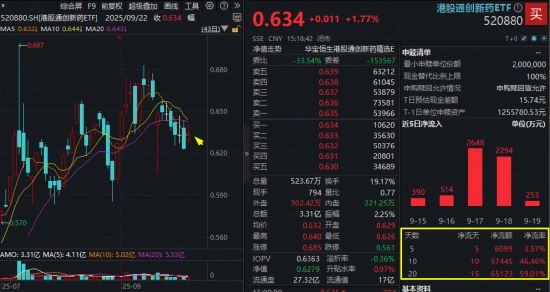
Core Viewpoint - The Hong Kong Stock Connect innovative drug sector experienced a rebound after five days of adjustment, with the Hong Kong Stock Connect Innovative Drug ETF (520880) rising by 1.77% on September 22, 2023, recovering its five-day moving average and achieving a total trading volume of 331 million yuan [1][3]. Group 1: Market Performance - The innovative drug ETF (520880) opened high and reached a peak increase of 2.57% during the day, closing in the green with a trading volume of 331 million yuan [1]. - Among the 37 constituent stocks, MIRXES-B surged by 27.68%, while major stocks like Innovent Biologics and Kintor Pharmaceutical rose by 2.88% and over 1%, respectively [1]. - The ETF has attracted nearly 680 million yuan over 14 consecutive days, indicating strong investor interest [3]. Group 2: Policy Impact - The National Healthcare Security Administration released the 11th batch of centralized drug procurement documents on September 20, emphasizing principles such as "stabilizing clinical use, ensuring quality, preventing collusion, and avoiding internal competition" [5]. - The fund manager of the innovative drug ETF interpreted the new procurement policy as a continuous support for innovation in the industry, allowing companies to ensure quality while avoiding a sole focus on low prices [6]. Group 3: Future Outlook - The innovative drug sector is expected to see a peak in business development transactions in October and November, with no significant impact from potential U.S. policies [6]. - The ETF's index has shown a cumulative increase of 119.75% year-to-date, indicating strong performance compared to other innovative drug indices [7]. - The ETF focuses exclusively on innovative drug research and development, excluding CXO companies, which is anticipated to enhance its performance during market rallies [7].