OPPO

Search documents
美政府调整“对等关税”清单;合富中国将停牌核查|南财早新闻
2 1 Shi Ji Jing Ji Bao Dao· 2025-11-14 23:19
今日关注 国务院总理李强主持召开国务院常务会议,研究深入实施"两重"建设有关工作,部署增强消费品供需适 配性进一步促进消费政策措施。会议指出,要把"两重"建设放在"十五五"全局中谋划和推进,牢牢把握 战略性、前瞻性、全局性要求。要强化人工智能融合赋能,聚焦重点行业、重点领域开发新产品和增值 服务,持续拓展新的消费增量。 宏观经济 1、国家统计局14日发布数据显示,10月份,全国规模以上工业增加值同比增长4.9%,全国服务业生产 指数同比增长4.6%,社会消费品零售总额同比增长2.9%。国民经济保持总体平稳、稳中有进发展态 势。 2、14日,国家统计局发布2025年10月份70个大中城市商品住宅销售价格变动情况,70个大中城市中, 各线城市商品住宅销售价格环比和同比均下降。 3、据国铁集团14日消息,今年1至10月,全国铁路完成固定资产投资6715亿元,同比增长5.7%。 4、14日,第二十七届中国国际高新技术成果交易会正式开幕。本届高交会汇聚来自全球100多个国家和 地区的5000多家知名企业及国际组织参展,5000余项代表全球科技前沿的新产品、新技术、新成果集中 展示。 5、14日,我国076两栖攻击舰首舰 ...


手机厂商暂缓采购存储芯片,DRAM库存低于三周
Xin Lang Ke Ji· 2025-11-14 12:36
Core Viewpoint - Multiple smartphone manufacturers have paused their procurement of storage chips due to soaring prices, with some facing DRAM inventory levels below three weeks, while the demand from data centers driven by AI models is pushing prices higher [1][2]. Group 1: Market Dynamics - Smartphone manufacturers like Xiaomi, OPPO, and vivo are experiencing low inventory levels, with DRAM stocks generally under two months and some below three weeks [1]. - The price increase for storage chips is driven by a surge in demand from data centers, which are willing to pay over 30% more than smartphone manufacturers for the same products [1][2]. - Major storage manufacturers, including Samsung and SK Hynix, have reduced their NAND flash supply in the second half of the year to drive prices up [1][2]. Group 2: Production Adjustments - Samsung has lowered its NAND wafer production target for the year from 5.07 million to 4.72 million, while Kioxia and SK Hynix have also reduced their production targets [2]. - The shift towards quad-level cell (QLC) technology due to AI demand is contributing to the decline in NAND flash production [2]. - Panic buying among North American tech companies has led to some suppliers having their NAND supply for next year fully booked [2]. Group 3: Impact on Smartphone Industry - The rising prices of storage chips are causing uncertainty among smartphone manufacturers regarding whether to reduce specifications or increase prices [3]. - Companies like SMIC have reported cautious procurement behavior in the mobile and networking sectors due to supply shortages and price hikes [3]. - The current inventory levels of major manufacturers are nearing depletion, indicating limited room for price reductions [3]. Group 4: Future Outlook - Even if manufacturers choose to increase production, it will take one to two years to meet current market demand [4]. - The prevailing strategy among major manufacturers is to reduce production to maximize profits, suggesting that storage chip prices may continue to rise in the first half of next year [5].

【独家】多家手机厂商暂缓采购存储芯片,部分厂商库存不足三周
Xin Lang Cai Jing· 2025-11-14 11:49
Core Viewpoint - The surge in upstream storage chip prices has led several smartphone manufacturers, including Xiaomi, OPPO, and vivo, to pause their procurement for the current quarter, as they face significant price increases of nearly 50% from suppliers like Micron, Samsung, and SK Hynix [1][5]. Group 1: Market Dynamics - The demand for storage chips has surged due to the AI model wave, with data centers willing to pay over 30% more than smartphone manufacturers for the same products [1]. - Major storage manufacturers, including Samsung and SK Hynix, have reduced their NAND flash supply in the second half of the year to drive up prices [1][2]. - Samsung has lowered its NAND wafer production target for the year from 5.07 million to 4.72 million, a decrease of about 7% [2]. Group 2: Pricing Trends - The price of DDR5 DRAM surged by 25% within a week after Samsung paused its contract pricing for October [1]. - SanDisk raised its NAND flash contract prices by 50% in November, prompting other major manufacturers to follow suit [4]. - The cost of storage chips typically accounts for 10%-30% of a smartphone's total cost, with high-end models seeing costs exceed 20% [5]. Group 3: Supply Chain Implications - Smartphone manufacturers are currently cautious in their procurement strategies due to rising costs, with many projects being halted due to high storage chip prices [5]. - Semiconductor companies like SMIC have delayed shipments of mobile products due to supply shortages and price increases [5]. - The current inventory levels of major manufacturers are nearing depletion, limiting their ability to lower prices [5]. Group 4: Future Outlook - Even if manufacturers choose to increase production, it will take one to two years to meet current market demand [6]. - The ongoing AI demand may have speculative elements, and true demand levels may not be clear until next year [6]. - It is anticipated that storage chip prices will continue to rise in the first half of next year due to reduced production by major suppliers [6].

段永平最新访谈:聊巴菲特、苹果、茅台、拼多多、特斯拉,永远要算你的机会成本
Guan Cha Zhe Wang· 2025-11-14 09:51
Core Insights - The interview with Duan Yongping, a renowned investor and entrepreneur, provides a comprehensive review of his investment philosophy, personal experiences, and views on corporate culture and education [1][2]. Investment Philosophy - "Buying stocks means buying companies" emphasizes the importance of understanding the underlying business when investing [2]. - Duan believes that investment is simple but not easy, highlighting the challenges faced by investors [2]. - He stresses that investment requires selling, countering the common misconception that value investing means holding indefinitely [2]. - Understanding business operations is crucial for successful investing, as demonstrated by his familiarity with companies like Apple, Tencent, and Moutai [2]. Personal Experiences - Duan's upbringing in a rural environment and the freedom given by his parents shaped his decision-making abilities and confidence [7][9]. - He emphasizes the importance of providing children with a sense of security and autonomy in their decision-making [9][10]. - Duan's career path involved several relocations and job changes, driven by a desire to find suitable environments for growth [19][18]. Corporate Culture - The corporate culture at his companies, such as BuBuGao, evolved organically, reflecting shared values among employees rather than being imposed top-down [23][24]. - Duan advocates for a culture of integrity, user orientation, and a focus on doing the right things, which he believes is essential for long-term success [24][25]. - He highlights the significance of trust and clear communication in establishing effective corporate governance [20][21]. Decision-Making and Values - Duan emphasizes the importance of making decisions based on long-term comfort rather than immediate benefits, which has guided his career choices [19]. - He believes that having a shared value system among team members is crucial for organizational success, as it fosters collaboration and reduces conflicts [28][29]. - The concept of a "not-to-do list" reflects a proactive approach to avoid mistakes and focus on what aligns with the company's values [25][27].



最后一代股神
3 6 Ke· 2025-11-14 07:32
Core Insights - The article discusses the interactions between Warren Buffett and Dong Yongping, highlighting their mutual respect and influence on each other's investment philosophies [1][3][5]. Group 1: Key Meetings - Buffett and Dong have met three times, with the first meeting in 2006 when Dong paid $620,000 for a lunch with Buffett, expressing gratitude for his investment insights [3][5]. - Their second meeting occurred in 2018, where Dong discussed Apple's business model, which Buffett later credited for his significant investment in Apple [5][6]. - The last face-to-face meeting was during the 2022 Berkshire Hathaway annual meeting, where Buffett acknowledged Dong's influence on his investment decisions regarding Apple [6][8]. Group 2: Investment Philosophy - Dong emphasizes that investing is about understanding business models, a principle he learned from Buffett, which shaped his investment approach of "buying companies, not just stocks" [5][9]. - Dong's successful investments include significant stakes in companies like NetEase, Yahoo, and Apple, with Apple being a major contributor to Buffett's investment success [8][15]. - Dong's investment strategy is rooted in his entrepreneurial background, having founded successful companies like Bubugao, which later evolved into OPPO and Vivo [11][12]. Group 3: Current Market Dynamics - The article notes the challenges both Buffett and Dong face in the current AI-driven market, with Dong acknowledging the difficulty of understanding new technologies like AI and its impact on traditional investment strategies [16][20]. - Dong's recent investments in companies like NVIDIA reflect a cautious approach to not miss out on potential opportunities in the AI sector, despite his reservations about the technology [20].


“一天一个价!”比黄金还猛!消费者:一个月,价格涨了一两千元
Zhong Guo Jing Ji Wang· 2025-11-14 04:40
Core Insights - The storage industry is experiencing a super cycle driven by AI giants' aggressive procurement, leading to significant price increases for memory products [1][5][10] - The rising costs are impacting smartphone manufacturers, particularly during the peak sales season of "Double 11" [1][3][11] Group 1: Price Surge and Market Dynamics - Prices for solid-state drives and memory modules have doubled in just two months, with DRAM prices increasing by 171.8% year-on-year in Q3 [1][5] - Major manufacturers like Samsung and SK Hynix have halted contract pricing for DDR5 DRAM due to rapid price increases [1][5] - The demand for storage is being driven by AI data centers and cloud service providers, who are less price-sensitive and are engaged in a "computing arms race" [5][6] Group 2: Impact on End Products - Smartphone manufacturers like Xiaomi are raising prices for new models due to increased memory costs, with significant price hikes noted for the K90 series [3][11] - The price of PC components has also surged, with reports of increases of 1,000 to 2,000 yuan for certain models during the "Double 11" sales [12] - The overall gross margin for companies like Xiaomi has been affected, dropping from 14.6% to 12.6% due to rising core component prices [11] Group 3: Future Outlook and Strategies - The current supply constraints are expected to persist, with many manufacturers locking in orders for 2027, exacerbating the tight supply situation [10][13] - Companies are exploring ways to mitigate the impact of rising memory costs by developing smaller models and enhancing storage chip capabilities [14][15] - The competition for HBM (High Bandwidth Memory) is intensifying, with major players like Samsung aiming to secure a leading position in the next generation of memory technology [6][9]
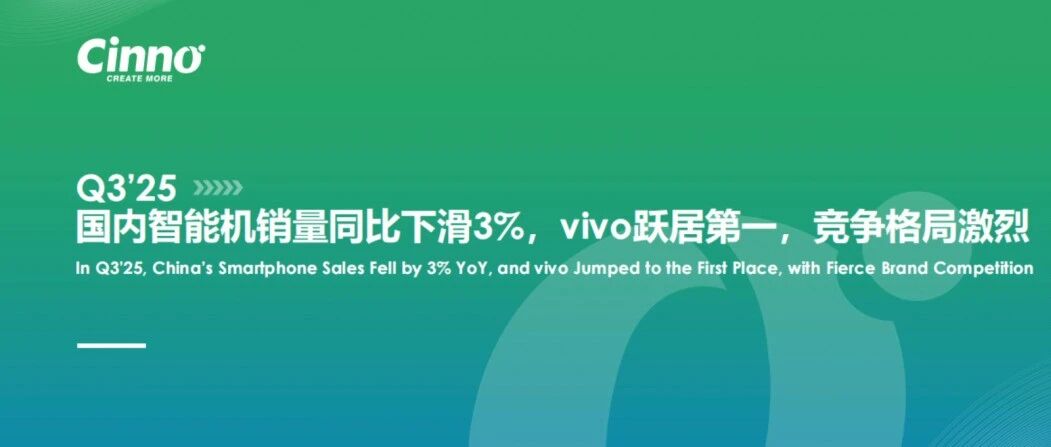
2025年Q3国内智能机销量同比下滑3%,vivo跃居第一,竞争格局激烈
CINNO Research· 2025-11-13 23:32
Core Insights - The domestic smartphone market in China experienced a 3% year-on-year decline in sales in Q3 2025, with vivo emerging as the leading brand amidst intense competition [3]. Group 1: Sales Trends - From Q1 2023 to Q3 2025, the overall sales volume of smartphones in the Chinese market showed a downward trend, indicating a challenging environment for manufacturers [3]. - The analysis includes detailed year-on-year comparisons of smartphone sales, highlighting the competitive dynamics among various brands [3]. Group 2: Brand Performance - vivo has taken the lead in the Chinese smartphone market, surpassing other brands in terms of sales volume during Q3 2025 [3]. - The report provides insights into the sales trends of other major brands, including OPPO, Xiaomi, Huawei, HONOR, and Apple, showcasing their performance relative to vivo [3]. Group 3: Price Segment Trends - The report analyzes the price segment trends of smartphones in the Chinese market from Q1 2023 to Q3 2025, indicating shifts in consumer preferences and pricing strategies among brands [3]. - Specific trends in the pricing of vivo smartphones are highlighted, reflecting the brand's strategy in a competitive landscape [3].

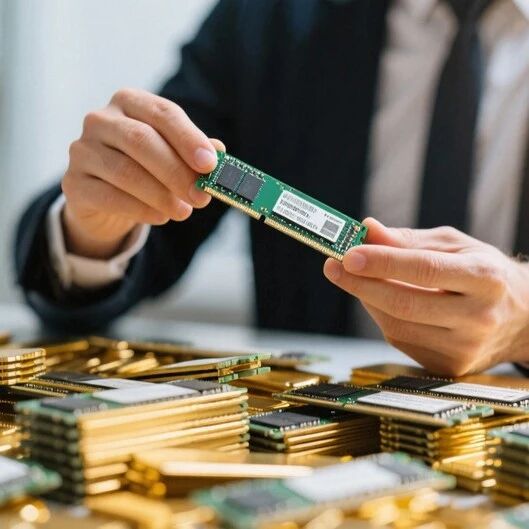
实探华强北:内存条炒成“黑色金条” 有人待价而沽有人开始回笼资金
Zheng Quan Shi Bao· 2025-11-13 17:49
Core Viewpoint - The memory market is experiencing a significant price surge, with some products seeing price increases of up to three times since April 2023, driven by supply shortages and rising demand from AI infrastructure investments [1][2][4]. Price Surge Details - Prices for various memory products have doubled or tripled, with a 64GB LPDDR5 memory module increasing from around 1000 yuan to 4200 yuan [2]. - The price of 16GB DDR4 memory has risen from under 200 yuan to over 400 yuan as of November 13, 2023 [2]. - Many shop owners in Huaqiangbei have seen their paper wealth increase by millions within six months due to this price surge [2]. Market Dynamics - The price increase is attributed to a mismatch between supply and demand, primarily driven by the expansion of AI data centers [4][6]. - Major tech companies like Alibaba and Microsoft are significantly increasing their investments in AI infrastructure, further driving demand for high-capacity memory products [4][5]. - The demand for memory in AI servers is reported to be 3 to 8 times higher than that of regular servers, leading to tight supply for high-end storage products [4]. Supply Chain Adjustments - Major memory manufacturers such as SK Hynix, Samsung, and Micron are prioritizing high-margin products and reducing production of lower-margin items like DDR4 [6]. - The current price increase cycle is expected to last until supply and demand reach equilibrium, potentially extending for 1 to 2 years [6]. Impact on Consumer Electronics - The rising prices of memory products are affecting the costs of consumer electronics, leading to increased prices for assembled computers and smartphones [7]. - For instance, the price of the Redmi K90 series smartphones has increased significantly due to higher storage costs, with some models seeing price hikes of up to 600 yuan [7]. - Companies like Xiaomi have publicly acknowledged the impact of rising memory costs on their pricing strategies [7]. Opportunities for Domestic Manufacturers - The current shortage in the memory market presents a valuable opportunity for domestic manufacturers to capture market share as global supply chains face disruptions [8]. - The low domestic production rates of NAND and DRAM products indicate potential for growth as local firms enhance their technology and product offerings [8].
段永平:不做什么,比做什么更重要|附18条不为清单
混沌学园· 2025-11-13 11:58
Core Viewpoint - The essence of the "Stop Doing List" is not about techniques but a mindset that emphasizes avoiding mistakes by stopping wrong actions immediately to minimize costs [7][10][11]. Group 1: Essence and Value of "Stop Doing List" - The "Stop Doing List" is a way of thinking that focuses on doing the right things by immediately stopping wrong actions, regardless of the cost [7][10]. - Achieving the right outcomes often involves not doing the wrong things, which is crucial for long-term success, especially in investments [8][10]. - The concept of a "North Star" represents one's values, guiding the creation of a personal "Stop Doing List" [12]. Group 2: Principles of Integrity - Integrity is the core value of running a business, with zero tolerance for dishonesty [17]. - Companies that lack integrity are unlikely to succeed in the long run, as trust is essential for healthy business relationships [19][20]. - The company has a strong reputation built on integrity, which simplifies many business processes [19]. Group 3: Financial Practices - The company promotes a culture of not delaying payments to suppliers, emphasizing the importance of maintaining good relationships [21][25]. - Employees are treated with respect, ensuring timely salary payments to foster a harmonious work environment [26]. - The company adheres to a principle of not earning money that is deemed unethical or beyond its capabilities [29][32]. Group 4: Marketing and Product Strategy - The company avoids exaggerated advertising, focusing instead on the product's inherent qualities [35][36]. - Emphasis is placed on creating differentiated products that meet unique consumer needs, rather than competing on price [76][81]. - The company does not engage in price wars, as this leads to low-level competition and diminishes product value [86][87]. Group 5: Business Operations and Growth - The company does not pursue aggressive expansion or diversification, preferring to focus on core competencies [56][60]. - There is a strict policy against taking on debt, which helps the company maintain financial stability [44][48]. - The company avoids mergers and acquisitions, believing that organic growth is more sustainable in the long run [54][55]. Group 6: Customer Relations - The company maintains consistent pricing for all customers, avoiding negotiations to streamline operations [70][73]. - The focus is on enhancing consumer experience rather than competing for market share, which is seen as a byproduct of good service [89][91]. - The company refrains from attacking competitors, believing that self-improvement and product quality are more important [93][96].


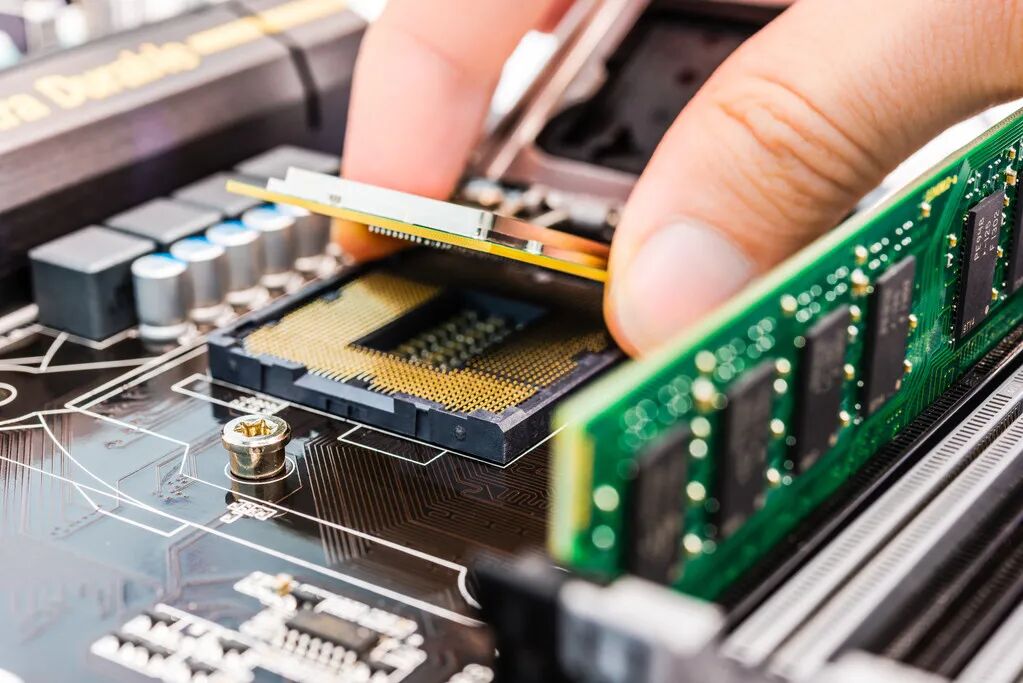
疯狂的内存,被炒成了“金条”
虎嗅APP· 2025-11-13 09:47
Core Insights - The article discusses the significant price surge in memory storage products driven by AI companies' aggressive procurement strategies, leading to a super cycle in the storage industry [4][5][9] - The price of DRAM chips has increased by 171.8% year-on-year in Q3, with SSD prices also doubling in a short period [4][6] - Major tech companies are investing heavily in AI data centers, which is a key factor pushing storage prices higher [9][11] Group 1: Price Surge and Market Dynamics - AI giants are hoarding memory products, causing a drastic increase in prices, with solid-state drives and memory modules seeing prices double within two months [4][5] - The price of a 16GB Samsung DDR4 memory module rose from 200 yuan in September to 400 yuan in November, compared to just over 100 yuan for the same product last year [4] - Companies like Xiaomi are facing challenges in maintaining profit margins due to rising storage costs, with their smartphone gross margin dropping from 14.6% in 2023 to 12.6% in 2024 [12] Group 2: Impact on End Products - The price increases have affected consumer electronics, with smartphone prices rising significantly; for instance, Xiaomi's K90 series saw a price increase of 600 yuan for a specific model [5][12] - PC components are also experiencing price hikes, with some consumers reporting increases of 1,000 to 2,000 yuan for desktop PCs during the shopping season [13] - Companies are struggling to manage the impact of rising storage costs on their product pricing and sales strategies [13] Group 3: Future Outlook and Industry Response - The demand for storage is expected to continue outpacing supply, with many manufacturers already locking in orders for 2027 [11] - Companies are exploring ways to mitigate the impact of rising costs, such as developing smaller AI models that require less memory [14][15] - The industry is also focusing on increasing production capacity for memory chips to stabilize prices in the long term [14][15]