
广汽

Search documents
孚能科技获多家机构调研 低空经济、人形机器人赛道布局颇受关注
Zheng Quan Shi Bao Wang· 2025-03-24 11:14
Core Viewpoint - Company Fudi Technology is expanding its market focus from power batteries to emerging fields such as low-altitude economy and humanoid robots, achieving significant progress in technology development and commercialization [1][2]. Group 1: Battery Technology Development - Fudi Technology is advancing in semi-solid and solid-state battery technologies, with the first generation of semi-solid batteries successfully launched in 2022 and the second generation expected to achieve a specific energy density exceeding 330Wh/kg and a cycle life of over 4000 cycles by 2025 [1][2]. - The company has developed semi-solid batteries tailored for low-altitude economic applications, successfully delivering products to leading low-altitude aircraft customers in the U.S. in 2023, becoming the first global company to deliver eVTOL products to end customers [1]. Group 2: Strategic Partnerships and Market Position - Fudi Technology has received a development notification from Xiaopeng Huitian, becoming a supplier of high-voltage power batteries and connectors for the next-generation prototype, further solidifying its position in the low-altitude economy sector [2]. - The company is collaborating with leading domestic humanoid robot manufacturers to customize solid-state battery solutions, with expectations to deliver samples by 2025 [2]. Group 3: Production Capacity and Innovations - Fudi Technology is establishing SPS products capable of producing various battery materials and forms, with new production capacity concentrated in Ganzhou and Guangzhou, where the first phase of 15GWh capacity in Ganzhou has been launched [3]. - The company has introduced a super-fast charging battery system that can achieve fast charging rates of 5C for ternary batteries and 6C for lithium iron phosphate batteries, ensuring safety through innovative design [3].

独家丨哪吒汽车智驾高级总监王俊平加入商汤绝影
雷峰网· 2025-03-24 10:04
Core Viewpoint - SenseTime's R-UniAD end-to-end autonomous driving solution is set to be unveiled at the Shanghai Auto Show in April, with real vehicle deployment completed and expected delivery by the end of the year [1][3]. Group 1: Company Developments - Wang Junping, former senior director of intelligent driving at Nezha Auto, joined SenseTime's autonomous driving division in February 2023, previously being part of Baidu's intelligent driving team [2]. - SenseTime has been collaborating with Nezha Auto since September 2021, focusing on intelligent driving and smart cockpit technologies [2]. - Wang Weibao, who took over from Shijianping as the head of intelligent driving, joined SenseTime at the end of 2023 and has a background in Apple's autonomous driving team and as CTO at New Stone Unmanned Vehicle Company [3]. Group 2: Industry Context - The autonomous driving sector is experiencing intensified competition, particularly for companies not in the top tier, highlighting the challenges faced by solution providers [3]. - SenseTime collaborates with over 30 automotive companies, including GAC, BYD, Honda, and NIO, with solutions already deployed in models like the Haobo and Nezha's super sedan [3].

比亚迪们为了这事儿杀红了眼
虎嗅APP· 2025-03-23 03:43
Core Viewpoint - The "Smart Driving Equality" trend in the Chinese automotive industry has gained momentum, with major domestic brands participating, indicating a critical juncture where over 50% of domestic car sales will be involved in this competitive landscape [1][2]. Group 1: Market Dynamics - The urgency for car manufacturers to enter the smart driving market is driven by a narrowing window for smart technology adoption, where strategic positioning will determine future market share [2]. - A price war has intensified, with 28 models, including 20 electric vehicles, experiencing price reductions averaging 30,000 yuan, representing a 13% decrease [4]. - New electric vehicle models have seen significant price cuts, with average reductions of 39,000 yuan and a 17% drop, marking the highest in their respective segments [4]. Group 2: Competitive Strategies - The price reduction strategy is influenced by ongoing promotional tactics and the need for product updates due to the "smart driving" wave, leading to increased market competition [5]. - BYD's dual strategy of promoting both smart and non-smart versions of its vehicles has resulted in sustained sales growth, particularly in lower-tier cities [5][6]. - Other brands, such as Extreme Fox, have also engaged in aggressive pricing, with significant discounts on models to remain competitive [6]. Group 3: Technological Evolution - The "Smart Driving Equality" movement is reshaping the value system of smart driving technologies, with a focus on establishing a new product hierarchy and accelerating the elimination of non-smart vehicles [8][10]. - The emergence of a structured smart driving product hierarchy, akin to a pyramid, is evident, with varying levels of capabilities from basic to advanced features [9]. - The trend indicates a shift where high-level smart driving features are becoming more accessible, with prices for advanced models dropping significantly [13]. Group 4: Challenges and Opportunities - Traditional automakers face challenges in building a sustainable technology cycle for smart driving, requiring both foundational functionality and continuous upgrades to maintain competitiveness [14]. - Collaborations with leading smart driving technology suppliers can provide traditional manufacturers with a balance of efficiency and autonomy, although long-term cost pressures remain a concern [15]. - The transition to a software-driven model poses significant challenges for traditional manufacturers, necessitating organizational restructuring and talent development to adapt to smart driving technology [16].

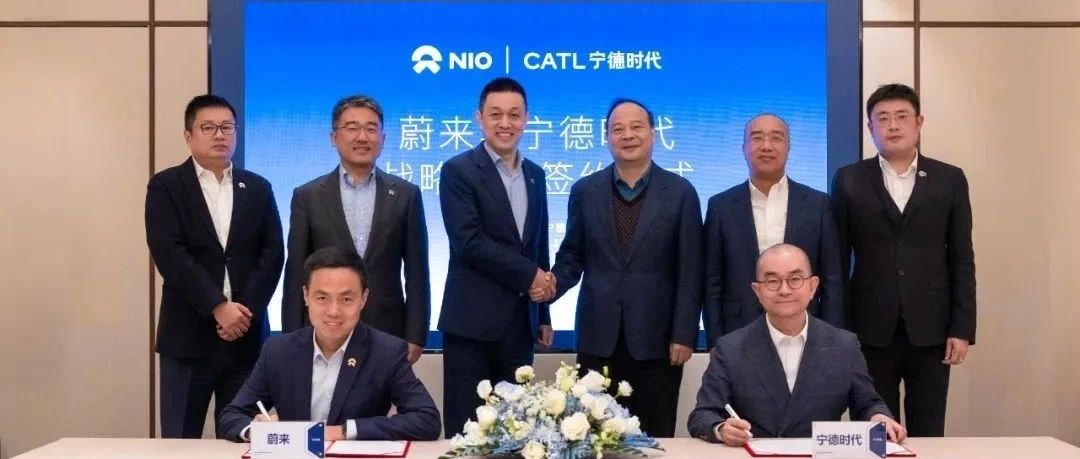
注资蔚来25亿 宁德时代的换电“野望”
高工锂电· 2025-03-20 11:59
Core Viewpoint - CATL has elevated its battery swapping business to a strategic level, indicating a strong commitment to this model and its potential in the energy market [1][9]. Group 1: Strategic Partnerships and Investments - On March 17, NIO and CATL signed a strategic cooperation agreement to build the world's largest battery swapping network and promote the unification of industry technology standards [2]. - CATL is advancing a strategic investment of no more than 2.5 billion RMB in NIO Energy, further solidifying their partnership [3]. - The agreement includes CATL's support for the development of NIO's battery swapping network, with future models under NIO's Firefly brand adopting CATL's battery swapping standards [4]. Group 2: Market Position and Industry Trends - CATL's significant investment in battery swapping demonstrates its commitment to this model amidst ongoing debates about its viability [5]. - By 2030, CATL predicts a "three-way split" in the market among battery swapping, home charging, and public charging stations [6]. - Since 2025, "battery swapping" has frequently appeared in CATL's strategic partnerships, including collaborations with SAIC Group and international logistics giant DHL [7][8]. Group 3: Business Model Transformation - The core of the battery swapping model is transforming batteries from vehicle "accessories" to "shared assets," reducing user costs and creating ongoing revenue through battery leasing and swapping services [10]. - Battery swapping networks can serve as distributed energy storage nodes, helping to alleviate battery production fluctuations and extend battery lifecycle value [10]. - CATL's battery swapping strategy marks a shift from being solely a battery manufacturer to becoming an energy service provider [12]. Group 4: Financial Performance and Challenges - The battery industry faces dual pressures from volatile raw material prices and increasing competition from automakers developing their own batteries [13]. - CATL's battery business gross margin has decreased from 28% three years ago to 19%, while its energy storage business gross margin has risen to 27% [13]. Group 5: Ecosystem Development - CATL's battery swapping strategy is part of a broader exploration of a super ecosystem in the aftermarket, collaborating with over ten automakers to develop battery swapping models targeting high-frequency energy needs [15]. - Partnerships with companies like Didi and Yuxin Second-hand Cars aim to create a comprehensive ecosystem for vehicle purchase, battery leasing, and swapping [16]. - The integration of battery swapping networks with smart grids and energy storage systems could lead to a super ecosystem spanning transportation, energy, and digital sectors [17]. Group 6: Strategic Value and Future Outlook - The strategic value of battery swapping lies not only in enhancing energy replenishment experiences but also in exploring the full value chain of battery operations [18]. - As a leading player in the new energy sector, CATL has established a first-mover advantage in technology and ecosystem layout in the battery swapping field, though it still faces challenges in scaling operations and establishing standards [18].

6万的车搭载智能驾驶,元芳你怎么看?
阿尔法工场研究院· 2025-03-19 12:12
Core Viewpoint - The article discusses the competitive landscape of intelligent driving technology among major automotive companies, highlighting the recent advancements and strategic moves by Chery, Geely, and GAC Toyota in the context of price reductions for lidar-equipped intelligent driving systems. Group 1: Chery's Intelligent Driving Strategy - Chery has launched the Falcon Intelligent Driving system with four versions (200/500/700/900), which will be equipped in over 30 models by 2025, including entry-level models priced around 60,000 yuan [2][4] - The capabilities of the Falcon Intelligent Driving system are comparable to those of competitors like BYD and Geely, focusing on features such as highway NOA and urban NOA, with plans for L3-L4 capabilities [3][4] - Chery's computing power has reached 14 EFLOPS, supported by extensive data from over 15 million global users and 2 billion kilometers of intelligent driving mileage annually [5][12] Group 2: Geely's Intelligent Driving Developments - Geely's Zeekr brand has upgraded its intelligent driving strategy with the "Thousand Miles" system, which includes a solution for parking from space to space and is set to push OTA upgrades to existing users [9][10] - The Zeekr system utilizes dual Orin-X chips and lidar, boasting a computing power of 23.5 EFLOPS, and has a significant fleet of 7.5 million vehicles equipped with L2 or higher driving assistance [12][13] - Geely's intelligent driving capabilities are positioned as industry-leading, with features like AI endpoint navigation and comprehensive parking solutions [13][11] Group 3: GAC's Intelligent Driving Initiatives - GAC has introduced the upgraded ADiGO system, now named Star Spirit Intelligent Driving, with a range of capabilities from 70 to 2000 TOPS, aiming for full coverage across its brands by 2025 [14] - GAC's strategy emphasizes its ambition to be a leading player in intelligent driving technology, with a goal to achieve L4 mass production [14][15] - The competitive pressure in the automotive industry is driving companies to integrate intelligent driving features into vehicles priced between 100,000 to 150,000 yuan, reflecting a shift towards more accessible technology [15][19] Group 4: Industry Trends and Competitive Landscape - The article notes that intelligent driving has become a critical metric for assessing automotive companies' capabilities, influencing market competitiveness [15][18] - As intelligent driving technology becomes ubiquitous, the competition may shift towards pricing strategies, with companies like GAC Toyota and Leap Motor reducing prices for lidar-equipped systems [19] - The ongoing advancements in intelligent driving technology are prompting a race among traditional and new automotive players to enhance their offerings and meet consumer expectations [18][19]


ZAuto丨2月汽车销量盘点:小鹏再度领跑,华为略显疲软,环比大幅度下滑
Z Finance· 2025-03-17 08:30
Key Points - Xiaopeng's February sales reached 30,453 units, a year-on-year increase of 570%, maintaining the top position among new energy vehicle manufacturers [1] - BYD led traditional automakers with total sales of 322,848 units, a year-on-year growth of 164% [1] - Aion was one of the few brands to show a month-on-month growth of 45%, demonstrating strong performance [1] - Huawei's HarmonyOS vehicle sales were 20,000 units in February, a month-on-month decline of 39%, with several models' sales closely matching those of Xiaomi's single model, indicating a slight fatigue in performance [1] Sales Data Summary - BYD's total sales included 304,673 units from the Dynasty and Ocean series, with a year-on-year increase of 1,167% and a month-on-month growth of 10% [1] - Geely's total sales reached 204,910 units, with a year-on-year increase of 84% but a month-on-month decline of 23% [1] - Chery's total sales were 171,085 units, showing no year-on-year growth and a month-on-month change of 0% [1] - Great Wall's total sales amounted to 77,883 units, reflecting a year-on-year increase of 10% but a month-on-month decline of 4% [1] - Aion's sales were 20,863 units, with a year-on-year increase of 25% and a month-on-month growth of 45% [1]

人形机器人行业周报:周观点:人形机器人产业端进展频出,持续关注人形机器人产业链-2025-03-14
Shanghai Securities· 2025-03-14 15:40
周观点:人形机器人产业端进展频出, 持续关注人形机器人产业链 ——人形机器人行业周报(2025.3.3-2025.3.7) [Table_Rating] 增持(维持) [◼Table_Summary] 主要观点 (1)优必选促发群体智能觉醒,在极氪实现全球首例多台多场景多任 务人形机器人协同实训。近日,优必选在极氪5G智慧工厂开展全球首 例多台、多场景、多任务的人形机器人协同实训,探索建立面向多任 务工业场景的通用人形机器人群体作业解决方案,推动人形机器人从 单机自主向群体智能进化。 (2)中国政府网发布视频《机器人群侠传》。中国政府网在公众号发 布了视频《机器人群侠传》,视频经过剪辑,将不同场景、种类繁多的 机器人与武林绝技相联系,全方位展示了我国在机器人领域的前沿成 果。 (3)《深圳市具身智能机器人技术创新与产业发展行动计划(2025- 2027年)》发布。3月3日,《深圳市具身智能机器人技术创新与产业发 展行动计划(2025-2027年)》(以下简称《行动计划》)正式发布。深 圳将重点引领核心技术攻坚突破、打造公共服务平台矩阵,吸引更多 上下游企业、科研机构、创新团队等聚集,营造最优创新生态,推动 具 ...





乱纪元下的牛市起手式 ——申万宏源2025资本市场春季策略会
2025-03-12 07:52
Summary of Key Points from the Conference Call Industry and Company Overview - The conference call primarily discusses the Chinese technology sector and its performance in the global market, particularly in relation to the impact of U.S. policies and the rise of artificial intelligence (AI) technologies. [1][3][13] Core Insights and Arguments 1. **Market Performance**: In 2025, U.S. dollar assets have underperformed, while Chinese tech stocks have led global gains, influenced by changes in U.S. policies and the AI technology cycle. [1][3] 2. **U.S. Economic Outlook**: The "Trump 2.0" policy may lead to downward revisions in U.S. economic growth expectations, with tariff risks potentially impacting market sentiment. [1][6] 3. **Technology Cycle Impact**: The technology cycle enhances labor productivity, benefiting tech growth stocks the most. The introduction of the Deep Sick policy has accelerated the Chinese tech industry cycle, contributing to the rise of Chinese tech stocks. [1][4][13] 4. **Valuation and Foreign Investment**: Despite recent gains, Chinese stock market valuations and foreign investment ratios remain low, with significant policy support signals. However, U.S.-China tariff threats could temporarily harm risk appetite. [1][14] 5. **Hong Kong Market Dynamics**: The Hong Kong stock market shows better liquidity and is undervalued before a potential rally, benefiting from a trend of capital flowing southward. The Hang Seng Tech Index represents leading Chinese tech firms and has significant upside potential. [1][17] Additional Important Insights 1. **Global Asset Allocation Logic**: The core logic for global asset allocation in 2025 revolves around the geopolitical changes brought by "Trump 2.0" and the development trends in the AI industry. [2] 2. **Government Policy Focus**: The primary goal of the government in 2025 is to boost consumption and investment, with a focus on domestic demand-driven industries and strategic emerging sectors like AI and low-altitude economy. [4][30] 3. **Future Asset Allocation Recommendations**: Investors are advised to monitor the U.S. dollar's performance, as it is a crucial anchor for asset pricing. The recent decline in the dollar index has led to underperformance of dollar assets compared to non-dollar assets. [5] 4. **Debt Market Outlook**: U.S. Treasury yields reflect recession expectations, with potential for further declines in the short term, although long-term trends may not be downward. [7][8] 5. **Investment Opportunities in AI**: The AI industry is expected to continue its growth trajectory, with significant investment opportunities in application sectors like humanoid robots and low-altitude related fields. [4][37] 6. **Chinese Stock Market Valuation**: Despite recent increases, the valuation of the Chinese stock market remains relatively low from a global perspective, indicating potential for upward adjustments as domestic economic conditions improve. [14][16] 7. **Sector-Specific Insights**: The healthcare sector is highlighted as being significantly undervalued, with potential for recovery as market conditions stabilize. [44][45] Conclusion The conference call emphasizes the importance of monitoring geopolitical developments, particularly U.S. policies, and the ongoing evolution of the AI sector as critical factors influencing investment strategies in the Chinese market and beyond. The insights provided suggest a cautious yet optimistic outlook for specific sectors, particularly technology and healthcare, as they navigate the current economic landscape.

Q1出货预达20GWh 中创新航海外“爆单”
高工锂电· 2025-03-11 11:26
Core Viewpoint - The article emphasizes the significant growth of China Innovation Aviation's energy storage battery shipments, projecting a 150% year-on-year increase to 20 GWh in Q1 2025, highlighting the company's successful global expansion strategy and the evolving competitive landscape in the lithium battery industry [1][2]. Group 1: Overseas Market Expansion - The shift towards overseas markets is becoming a crucial indicator of battery companies' globalization, with a focus on high-value markets [3]. - China Innovation Aviation's substantial growth in Q1 2025 is attributed to its deep cooperation on international projects, including a major 7.8 GWh energy storage project in Saudi Arabia and a 4.4 GWh order for the UK market [4]. - Despite Q1 typically being a slow season for domestic electric vehicles, the rapid growth in overseas markets has effectively countered this seasonal impact, contributing significantly to the company's overall shipment increase [5]. Group 2: Growth Metrics and Market Position - In 2024, global power battery installations reached 894.4 GWh, a 27.2% increase, with Chinese companies occupying six positions in the market, and overseas market contributions exceeding 30% [6]. - The global lithium battery storage installations surged to 165 GWh, marking a 77.4% increase, with Chinese companies dominating the top 10 in storage battery shipments [6]. - China Innovation Aviation is projected to surpass Panasonic and SK On in power battery installations, ranking fourth globally, while maintaining a top five position in energy storage shipments [7]. Group 3: Strategic Transformation - The overseas expansion strategy of Chinese lithium battery companies is transitioning from a "cost-driven" approach to one focused on "value collaboration and zero-carbon ecosystems," reducing associated risks [8]. - China Innovation Aviation is collaborating with international automakers to develop battery platforms that meet stringent European standards, while also implementing AI-driven manufacturing systems in its Portuguese factory to minimize energy waste [8]. - The company aims to deliver a zero-carbon AI super factory in Portugal by 2027, showcasing its commitment to sustainable practices [8]. Conclusion - The article concludes that overseas expansion is a critical aspect of the renewable energy industry's development, representing a pathway for companies to achieve sustainable growth and diversify their market presence. The rise in China Innovation Aviation's overseas shipments reflects the broader trend of globalization in the lithium battery sector and the company's successful transition from rapid scale expansion to value creation [9].

一笔数十亿并购黄了
投资界· 2025-03-08 07:25
等待IPO开闸? 作者 I 吴琼 报道 I 投资界PEdaily 一笔并购交易意外告吹——近日上市公司汇顶科技宣布,正式终止对云英谷科技股份有限 公司(简称"云英谷")10 0%股份的收购计划。 事情还要从三个月前说起:彼时为了拓展商业版图,汇顶科技宣布拟收购显示芯片设计公 司云英谷,然而历经3个多月的筹划后,双方却选择放弃这笔交易,原因并不复杂:"未 能就本次交易对价等商业条款最终达成一致意见",价格没谈拢。 这是当下退出困境一缕真实景象——有人寻求并购落袋为安,有人继续等待IPO……无论 如何,退出为王。 并购终止 创始人卖不掉公司 云英谷背后,是一个海归博士创业故事。 时间回到2 0 1 2年,顾晶已从哈佛大学博士毕业,看到中国半导体行业市场机会,便回国 创业。于是,云英谷应运而生,专注半导体显示芯片设计行业。 成立仅一年,云英谷便推出首颗图像算法IC,2 01 5年开始向客户提供图像算法IP。20 16 年其显示IP被夏普应用于多款旗舰手机的显示屏幕中,部分产品的分辨率达到4K。此后 公司进展迅速,至今已推出主要产品包括AMOLED显示驱动芯片及Mi c r o OLED硅基显 示驱动背板芯片,分别应 ...