泸州老窖

Search documents
申万宏源证券晨会报告-20251208
Shenwan Hongyuan Securities· 2025-12-08 00:46
今日重点推荐 | 指数 | 收盘 | | 涨跌(%) | | | --- | --- | --- | --- | --- | | 名称 | (点) | 1 日 | 5 日 | 1 月 | | 上证指数 | 3903 | 0.7 | -1.67 | 0.37 | | 深证综指 | 2469 | 1.24 | -1.16 | 0.61 | | 风格指数 (%) | 昨日 | 近 1 个月 | 近 6 个月 | | --- | --- | --- | --- | | 大盘指数 | 0.81 | -0.84 | 18.64 | | 中盘指数 | 1.21 | -1.63 | 24.97 | | 小盘指数 | 1.23 | -1.45 | 20.17 | | 涨幅居前 行业(%) | 昨日 | 近 1 个月 | 近 6 个月 | | --- | --- | --- | --- | | 保险Ⅱ | 5.78 | 5.97 | 13.66 | | 金属新材料 | 4.8 | -2.31 | 32.97 | | 航天装备Ⅱ | 3.62 | 13.13 | 43.78 | | 工业金属 | 3.42 | 9.72 | 71. ...
白酒渠道跟踪
2025-12-08 00:41
Summary of the Conference Call on the Baijiu Industry Industry Overview - The Baijiu market in 2025 is facing challenges such as declining sales and inventory buildup, with high-end brands like Moutai and Wuliangye experiencing price adjustments and increased inventory pressure [2][18] - The overall sales in the Henan region decreased by approximately 20% compared to 2024, with some manufacturers issuing reduction directives due to unfulfilled sales tasks [7][18] Key Points and Arguments Sales Performance - Moutai's sales have been stable, with all goods delivered by November 2025 and a 10% increase in December. However, online platforms have reported prices as low as 1,300 RMB, below cost [4][18] - Wuliangye expects a 10% sales growth in 2026, driven by new leadership and compensation for reduced output in 2025, but faces challenges with margins and potential negative profits [2][6][20] - Fenjiu has shown relative stability in Shandong, with a planned 10% growth for 2026, although it has faced historical low prices and reliance on rebates for profits [2][10] - The Jiangsu market has seen a 25%-30% decline in high-end Baijiu demand, with increased inventory levels and reduced enthusiasm from distributors [2][18] Inventory and Pricing - Moutai's current inventory is approximately 40 days, while Wuliangye's is about 10 days, with some stores facing up to two months of inventory due to wholesale restrictions [4][18] - Fenjiu's pricing has dropped to historical lows, with some products priced at around 350 RMB, impacting distributor profits [4][10] - The overall inventory levels in the Shandong region are high, with significant pressure on brands like Water Well and Shede, which have seen declines of 10% and 15% respectively [11][12] Future Outlook - Wuliangye's growth expectations for 2026 are contingent on pricing and subsidy negotiations, with no specific plans communicated yet [8][20] - Fenjiu has adjusted its product structure, increasing high-end offerings while facing challenges in profit generation due to low prices [10][20] - The overall sentiment in the Baijiu market indicates a cautious outlook, with expectations for improvement in 2026 if economic conditions stabilize and inventory is effectively managed [23][24] Additional Important Insights - Consumer behavior has shifted towards immediate consumption rather than stockpiling, leading to stable but non-explosive sales growth [3][18] - The competitive landscape shows that while high-end brands are under pressure, some mid-tier brands like Yanghe and Jinshiyuan are also struggling with high inventory and low prices [22][23] - The overall market dynamics suggest that brands need to adapt to changing consumer preferences and economic conditions to navigate the current challenges effectively [24][46]




中国股票策略 2026:韧性、再平衡与风险-China Equity Strategy_ 2026_ Resilience, rebalance, and risks
2025-12-08 00:41
Summary of Key Points from the Equity Research Report Industry Overview - The report focuses on the **China equity market** and its performance outlook for 2026, highlighting the transition from a liquidity-driven rally to one supported by earnings growth [3][10]. Core Insights and Arguments Market Resilience - The China equity market is expected to remain resilient in 2026 due to: - Improving innovation capabilities, supported by tech-related IPOs [4][33]. - Abundant liquidity from deposit migration, insurance funds, and mutual funds [4][51]. - An earnings upcycle, particularly in information technology and materials, with consensus earnings revisions of **6.1%** and **4.1%** year-to-date, respectively [4][58]. Rebalancing Trends - A shift is anticipated in 2026 from a tech-centric market to a **tech-and-consumer** focus, driven by: - Consumer names benefiting from low valuations and policy support [5][71]. - The expansion of the AI rally from overseas to domestic value chains [5][71]. - A recommendation for a balanced investment approach, as growth is expected to outperform value [5][71]. Risks and Opportunities - **Upside Risks**: - Potential policy measures to stimulate the economy, particularly in consumer services and infrastructure [6]. - **Downside Risks**: - Concerns regarding the real estate sector, particularly sluggish sales in first-tier cities and issues surrounding Vanke's bonds [6]. - Elevated valuations in the AI sector amid discussions of a potential bubble [6]. Earnings and Valuation Insights - The report maintains end-2026 index targets for SHCOMP at **4,500**, CSI300 at **5,400**, and SZCOMP at **16,000**, indicating potential upsides of **16-24%** driven by earnings growth rather than re-rating [3][20]. - The earnings growth forecast for 2026 includes: - **11.5%** for SHCOMP, **14.8%** for CSI300, and **26.7%** for SZCOMP [21]. - A significant divergence in sector performance, with information technology expected to deliver the highest year-on-year growth rate of **39.4%** [58]. Investment Themes and Stock Picks - The report identifies four investment themes with ten related stocks: 1. **AI names with lower PEG**: Innolight and Shennan Circuits. 2. **Going global**: CATL, Hansoh Pharma, and Wuxi XDC. 3. **Underweight industries**: Media, Luzhou Laojiao, and Bank of Ningbo. 4. **Fiscal stimulus**: Jinjiang Hotels and Pinggao Electric [7]. Additional Important Insights - The report emphasizes the importance of innovation as a key catalyst for the stock market, with high-tech sector profits projected to rise to over **RMB 2.2 trillion** in 2025, up from **RMB 1.4 trillion** in 2015 [30]. - The increasing number of IPOs in high-tech sectors indicates a strong focus on innovation, with significant activity in industrials, IT, and consumer discretionary sectors [42][49]. - Liquidity is expected to remain robust, with non-bank deposits increasing by **RMB 6.4 trillion** since April 2025 and mutual fund issuance up **89%** year-on-year [51][54]. This comprehensive analysis provides a detailed outlook on the China equity market, highlighting key trends, risks, and investment opportunities for 2026.
再论白酒周期
2025-12-08 00:41
Summary of the Baijiu Industry Conference Call Industry Overview - The Baijiu industry is transitioning from passive inventory accumulation to active destocking, with expectations for stabilization in volume and price by the first half of 2026 [2][5] - Supply-side contraction is already evident, with most companies setting conservative targets for 2025 [2][6] - The demand for Baijiu is highly correlated with the macroeconomic environment, indicating that market stabilization in 2026 will require economic support [2][6] Key Insights and Arguments - The Baijiu industry is currently in a destocking cycle, with stock prices nearing their bottom [2][5] - Historical patterns show that during destocking phases, stock prices typically remain low until a clear upward price trend is observed [3][4] - The last complete inventory cycle from 2009 to 2012 saw a significant price increase followed by a downturn due to policy restrictions on consumption, leading to a phase of passive inventory accumulation [4] - The current market conditions are reminiscent of the 2013-2014 period, where many companies failed to meet their annual targets, except for leading brands like Moutai and Shui Jing Fang [6] Supply and Demand Dynamics - From 2024 to 2025, many Baijiu companies are expected to gradually reduce supply, with a notable trend of increasing concentration among leading firms [6][7] - The industry is facing a 20% loss rate, which may expand to 30% in the coming years, indicating a challenging environment for many companies [6] - The marginal impact of alcohol bans is decreasing, suggesting that supply contraction and demand recovery could lead to stabilization in the first half of 2026 [6][7] Valuation and Market Position - The current valuation of the Baijiu industry is at a historical low, with most companies below the 25th percentile of historical valuations [8] - Fund holdings in Baijiu have reverted to levels seen before 2017, indicating a cautious market sentiment [8] - Leading companies like Moutai and Wuliangye offer strong dividend yields, providing some support for their stock prices [8] Recommendations and Investment Opportunities - The Baijiu industry maintains a recommendation rating, with a focus on companies that show strong certainty and a faster destocking cycle [9] - Recommended stocks include: - **Moutai**: Strong brand influence and competitive advantages [9] - **Shanxi Fenjiu**: Stability in pricing and a robust product matrix [9] - **Yanghe**: Potential for performance recovery and stock price elasticity due to recent adjustments [10] Conclusion - The Baijiu industry is poised for potential recovery, with a focus on leading companies that can navigate the current challenges effectively. The outlook for 2026 appears cautiously optimistic, contingent on macroeconomic conditions and internal industry dynamics.

消费品 “药食同源”系列电话会议
2025-12-08 00:41
Summary of Conference Call Notes Industry Overview - The conference call primarily discusses the **pork industry** and **liquor market**, focusing on the challenges faced by the pig farming sector and the dynamics of the liquor market, particularly **Kweichow Moutai**. Key Points on the Pork Industry - **Oversupply and Weak Demand**: The pork price has declined due to oversupply and weak consumer demand, with a 5% year-on-year increase in the number of pigs slaughtered in the first three quarters of 2025, but the slaughter volume growth is significantly lower than previous years [1][2]. - **Losses Across All Categories**: All categories of pigs (commercial, piglets, and breeding sows) are experiencing losses, leading to accelerated capacity reduction [1][4]. - **Self-breeding Model Struggles**: The self-breeding model is facing severe losses, with cash flow pressures on some enterprises [1][5]. - **Slow Capacity Adjustment**: The speed of capacity adjustment is slower than expected, with limited reduction in the number of breeding sows in November [1][7][8]. - **Changing Cycle Characteristics**: The characteristics of the pig cycle are changing, with shorter cycles and reduced volatility. The ability to quickly adjust capacity is limited due to improved epidemic prevention capabilities and high fixed asset standards [1][9][10]. - **Cost Reduction Focus**: The industry is entering a phase of cost reduction and efficiency improvement, with leading companies expected to gain cost advantages [1][10]. - **Investment Recommendations**: Companies such as Muyuan, Wens Foodstuff, Tiankang Biological, and Dekang Agriculture are recommended for investment due to their potential for value recovery [1][11]. Key Points on the Liquor Market - **Kweichow Moutai Price Decline**: The price of Kweichow Moutai has recently dropped by approximately 100 yuan, primarily due to changes in supply and demand dynamics, with increased supply from manufacturers and weak seasonal demand [1][12]. - **Future Price Expectations**: Prices are expected to remain low in the first quarter of 2026, with fluctuations around the low point throughout the year [1][12]. - **Market Dynamics**: The liquor market has seen a shift since the third quarter, with companies reducing growth rates to relieve pressure. The second quarter of next year is anticipated to see a release of pressure on financial reports, with a potential turning point in the third quarter [1][13][14]. Additional Insights - **Consumer Goods Sector**: The consumer goods sector is expected to see improvements in pricing stability and competitive dynamics, with specific recommendations for companies like Anjijia Foods and Yili Group [1][15]. - **Medical Device Sector**: The medical device sector is entering a low growth phase, with expectations of growth rates remaining below 5% in the coming years [1][16][18]. This summary encapsulates the critical insights from the conference call, highlighting the challenges and opportunities within the pork and liquor markets, as well as broader consumer goods and medical device sectors.
决胜“十四五” 擘画“十五五”·地方资本市场高质量发展之四川篇: 资本搭桥“蜀道”变“通途” 成就产业跃迁西部高地
Zheng Quan Shi Bao· 2025-12-07 18:26
Group 1 - The core viewpoint of the articles emphasizes the transformation of Sichuan's capital market from a challenging environment to a thriving ecosystem that supports economic and industrial development, aligning with the "14th Five-Year Plan" and aiming for high-quality growth [1][4][10] - Sichuan's capital market has seen significant growth, with the number of listed companies reaching 179 by Q3 2025, a 32% increase since the end of 2020, and a total market capitalization of 3.4 trillion yuan [2][5] - The province has facilitated over 2.1 trillion yuan in direct financing through the capital market, with 46 new companies listed and over 36 billion yuan raised for sectors like advanced manufacturing and green energy [2][5] Group 2 - A series of policies have been implemented to support the development of the capital market, including the establishment of a resource pool for potential listed companies and a comprehensive action plan for promoting listings and mergers [3][4] - The quality and structure of listed companies in Sichuan have improved, with total revenue reaching 823.1 billion yuan and net profit of 82.15 billion yuan in the first three quarters of 2025, indicating a robust economic foundation [5][7] - Mergers and acquisitions have become a key strategy for companies, with 136 transactions totaling 81.3 billion yuan during the "14th Five-Year Plan" period, enhancing resource allocation and market confidence [7][8] Group 3 - Sichuan's capital market is focusing on innovation-driven development, with 79 companies listed on the Sci-Tech Innovation Board, accounting for 44% of total listings, indicating a shift towards high-tech and emerging industries [8][9] - The province has seen a significant increase in private equity funds, with 349 fund managers and over 300 billion yuan in managed assets, targeting early-stage and hard technology investments [8][9] - The establishment of a comprehensive investor protection and risk prevention system is crucial for the healthy development of the capital market, with successful mediation of disputes and effective risk monitoring [9][10] Group 4 - Looking ahead to the "15th Five-Year Plan," Sichuan aims to deepen the integration of the capital market with local economic development, focusing on nurturing core technology enterprises and enhancing the competitiveness of listed companies [11] - The province plans to support diverse equity financing and multi-level bond market tools, while promoting the construction of a Western financial center [11]
五粮液回应“10年来首次降价”:是补贴,不是调低出厂价
Sou Hu Cai Jing· 2025-12-07 13:54
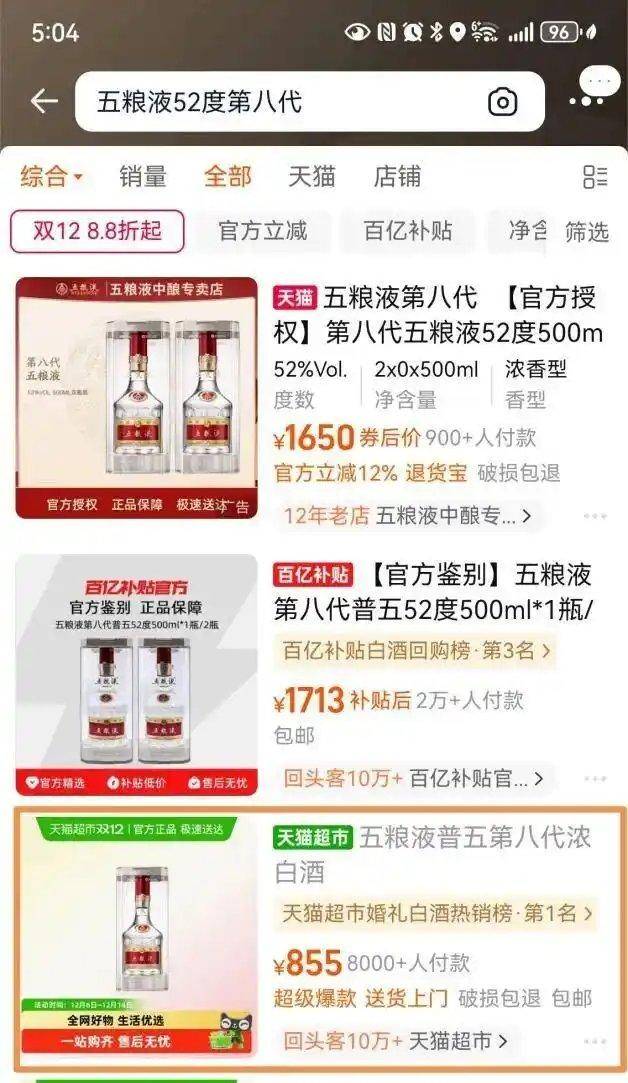
Core Viewpoint - The major price adjustment of the core product, the 52-degree Eighth Generation Wuliangye, has sparked significant market attention, with reports suggesting a price drop to 900 yuan per bottle, although the company clarifies that the factory price remains unchanged at 1019 yuan per bottle, and the perceived price drop is due to subsidy policies [1][3][9]. Price Adjustment Details - Reports indicate that the Eighth Generation Wuliangye's invoice price may drop to 900 yuan per bottle, with potential costs for distributors falling to around 800 yuan per bottle when including various support and rebate policies [1][2][4]. - The company maintains that the factory price of the Eighth Generation Wuliangye has not been adjusted, and the market's perception of a price drop is linked to the implementation of subsidy support policies [3][9]. Market Context - The white liquor industry has experienced a price increase trend from the second half of 2023 to the first half of 2024, with several major brands raising their factory prices, including a notable increase for Wuliangye's Eighth Generation product from 969 yuan to 1019 yuan [8][9]. - The current price drop is viewed as a "structural concession" aimed at alleviating financial and inventory pressures on distributors, allowing them to focus on genuine consumer engagement rather than speculative trading [9][10]. Industry Implications - The adjustment is seen as a strategic move to reward distributors who actively engage with consumers, thereby enhancing the overall consumer experience and driving sales [10]. - Experts in the industry have positively evaluated the decision, suggesting that it could help mitigate financial pressures and redirect resources towards actual consumption [10].

行业周报:白酒短期批价扰动,西麦新品值得关注-20251207
KAIYUAN SECURITIES· 2025-12-07 11:44
Investment Rating - The industry investment rating is "Positive" (maintained) [2] Core Insights - Short-term price fluctuations do not alter long-term value; new products from Ximai are building a second growth curve [5] - The food and beverage index declined by 1.9%, ranking 26th among 28 sectors, underperforming the CSI 300 by approximately 3.2 percentage points [13][15] - Moutai's recent price decline is attributed to increased shipments in Q4 and promotional activities on e-commerce platforms, indicating a temporary supply-demand adjustment rather than a fundamental change in brand strength [5][13] - The white liquor sector is currently at a dual bottom in valuation and expectations, with opportunities for strategic positioning as industry reforms deepen [5][13] Market Performance - The food and beverage sector underperformed the market, with a 1.9% decline, while sub-sectors like processed foods (+1.5%), beer (+1.2%), and soft drinks (+0.4%) showed relative strength [15][17] - Notable individual stock performances included Anji Food, Hai Xin Food, and Xi Wang Food showing gains, while Yantang Dairy, Ximai Food, and Richen Co. experienced declines [15][17] Upstream Data - Recent data indicates a decline in some upstream raw material prices, with whole milk powder auction prices down 15.6% year-on-year, and fresh milk prices down 3.2% year-on-year [18][19] - Pork prices have also seen significant declines, with a year-on-year drop of 24.1% [22][23] Company Focus - Ximai Food's new health-oriented powder products have performed well in initial sales, with plans for nationwide expansion starting in 2026 [6][14] - The company is also launching weight control products aimed at improving gut health and stabilizing blood sugar levels, indicating a strong growth trajectory in the health sector [6][14] Recommended Stocks - Recommended stocks include Guizhou Moutai, Shanxi Fenjiu, Ximai Food, Weilong Delicious, and Bai Run Co. [7] - Guizhou Moutai is expected to deepen its reform process and focus on sustainable development despite short-term demand pressures [7] - Shanxi Fenjiu is positioned for medium-term growth with a focus on product structure upgrades and national expansion [7]

跌破1499元,茅台都卖不动了
虎嗅APP· 2025-12-07 09:03
Core Viewpoint - The "Moutai myth" is collapsing, with the price of Feitian Moutai experiencing a significant decline, leading to widespread losses among investors and industry players [5][6][10]. Price Decline and Market Impact - Feitian Moutai's price fell from over 2000 yuan to 1640 yuan per bottle, marking a historic low [5][6]. - The price drop has triggered a chain reaction in the industry, with major brands like Wuliangye and Luzhou Laojiao also reporting negative growth for the first time in a decade [5][6][10]. - The overall white liquor industry is facing a downturn, with 18 A-share listed companies reporting collective performance declines [5][10]. Dealer and Distributor Challenges - Distributors are facing severe financial pressure, with many halting purchases due to unsold inventory and price declines [6][8]. - The profit margins for distributors have been squeezed, as they are forced to bundle high-priced products with Moutai to secure inventory [6][7]. - A significant number of distributors are reporting losses, with some predicting losses exceeding 30 million yuan this year [7][10]. Inventory and Cash Flow Issues - The white liquor industry is experiencing a "money shortage," with inventory levels rising significantly [9][12]. - As of Q3 2025, the inventory turnover days have increased to an average of 1424 days, indicating a severe liquidity crisis [12][13]. - Over 58% of distributors reported increased inventory, and more than 40% are facing cash flow pressures [8][12]. Changing Consumer Preferences - The decline in demand is attributed to a generational shift in consumer preferences, with younger consumers showing less interest in traditional high-end liquor [15][16]. - Younger consumers prefer low-alcohol beverages and are increasingly opting for alternatives like fruit wines and non-alcoholic drinks [15][16]. - The traditional "drinking culture" is being challenged, leading to a significant shift in market dynamics [15][16]. Industry Response and Future Outlook - In response to the downturn, companies are innovating products to appeal to younger consumers, including lower-alcohol and flavored options [16][17]. - However, the effectiveness of these strategies remains uncertain, as the entrenched perceptions of traditional liquor may hinder acceptance [17]. - The industry is expected to remain in a turbulent phase for the next 2-3 years, with ongoing challenges in attracting younger consumers and managing inventory [17][18].
周观点:年底关注渠道反馈,餐供龙头率先复苏-20251207
GOLDEN SUN SECURITIES· 2025-12-07 08:24
Investment Rating - The report maintains an "Increase" rating for the food and beverage industry, indicating a positive outlook for selected stocks and sectors within the industry [4]. Core Insights - The white liquor sector is showing signs of recovery, with Shanxi Fenjiu focusing on national expansion, youth engagement, and internationalization strategies for 2026. The company is optimizing inventory and enhancing market capacity, which is expected to support growth [2]. - In the beverage sector, companies like Nongfu Spring are planning to strengthen their water and tea product lines while introducing new products. The beer segment is diversifying with new flavors to cater to changing consumer preferences [3]. - The report highlights the potential for growth in consumer staples, with companies like Three Squirrels expanding into a full-category strategy and Mengniu Dairy leading in deep processing innovations [7]. Summary by Sections White Liquor - Shanxi Fenjiu's 2026 marketing strategy focuses on nationalization, youth engagement, and precise consumer service. The company is targeting key markets and optimizing inventory to enhance growth potential [2]. - The white liquor industry is characterized by bottoming out in sales, clearing financial reports, and low expectations, suggesting a favorable environment for quality asset allocation [2]. Beer and Beverage - The beer sector is witnessing the launch of new products like Jin Xing Beer’s winter flavor, reflecting a shift in consumption patterns towards home and outdoor settings [3]. - Nongfu Spring's strategy for 2026 includes strengthening its core water products and expanding its tea offerings, indicating a focus on product diversification and market penetration [3]. Consumer Staples - Three Squirrels is advancing its full-category strategy with the opening of flagship stores, emphasizing community engagement and a wide range of products [7]. - Mengniu Dairy is enhancing its product line with deep processing innovations, which are expected to drive demand and improve the utilization of raw milk [7]. - The frozen food sector is recovering, with companies like Anjuke benefiting from new product launches and channel optimizations, indicating a positive market response [7].