
茶百道

Search documents
巨头纷纷下场,翻红的糖水铺能火多久?
3 6 Ke· 2026-01-26 04:40
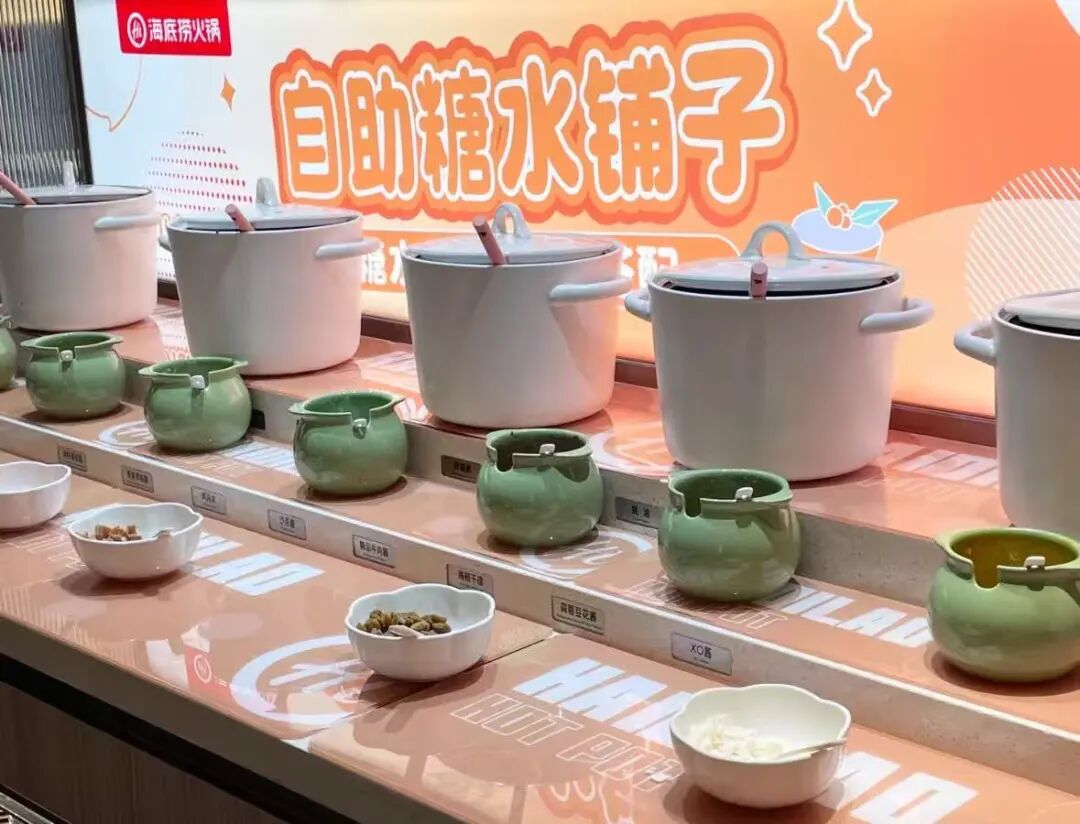
Core Viewpoint - Haidilao is entering the dessert market with its first "sugar water shop" in Shanghai, adopting a "store within a store" model to enhance customer experience and diversify its offerings [1][5]. Group 1: Haidilao's Sugar Water Shop - The first "sugar water shop" is located in Shanghai's Hongqiao Nan Feng City, covering an area of approximately 72 square meters, and features a dedicated dining area for an immersive experience [5]. - The shop offers 13 types of fresh sugar water products, with prices ranging from 9.9 to 20 yuan, making it more affordable compared to competitors [5][6]. - The menu includes not only sugar water but also handmade tea and desserts, totaling over 20 unique items, catering to various consumer needs [5][6]. Group 2: Market Competition - The sugar water market is highly competitive, with established brands like Zhao Ji Chuan Cheng and Man Ji Dessert expanding aggressively, while new brands like Mai Ji Milk Company are rapidly gaining market share [9][12]. - Established brands are innovating and expanding their product lines, while new entrants are adopting flexible business models to capture market opportunities [12][14]. - Cross-industry players, including tea brands, are also entering the sugar water market, adding to the competitive landscape [15][19]. Group 3: Challenges Ahead - The sugar water market faces challenges such as low consumer frequency compared to other beverages, seasonal demand fluctuations, and product homogeneity [20][23]. - Haidilao's sugar water shop must navigate these challenges to achieve profitability and differentiate itself in a crowded market [20][24]. - The ongoing influx of new competitors may lead to customer traffic dilution, making it essential for Haidilao to establish a strong brand presence [24][25].


9.9元咖啡卷不动了?头部品牌“调价”,一杯到手涨2~5元
3 6 Ke· 2026-01-26 00:57
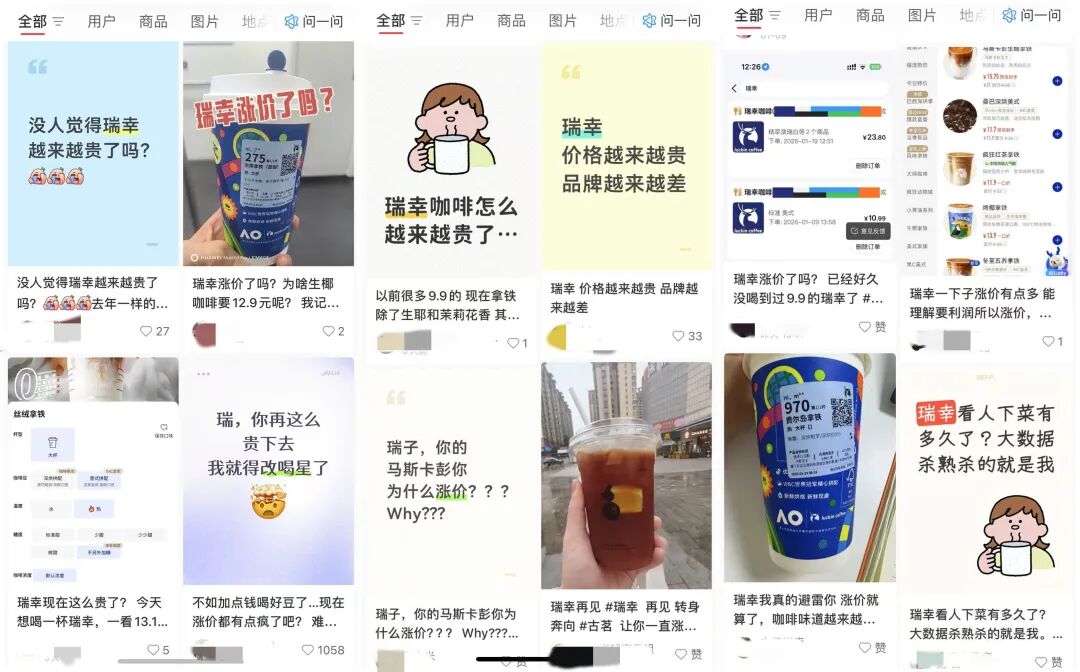
Core Insights - The era of 9.9 yuan coffee is fading, with prices for popular items rising to 12.9 yuan, 13.9 yuan, or even 15 yuan, leading to increased monthly coffee expenses for consumers [1][3] - The coffee market in China experienced significant adjustments in 2025, with a decline in low-price competition and an influx of new tea brands entering the market, reshaping the competitive landscape [1][9] Group 1: Price Changes and Market Dynamics - Major brands are reducing subsidies, leading to the gradual disappearance of the 9.9 yuan coffee, with discussions on social media reflecting consumer dissatisfaction with rising prices [1][3] - Luckin Coffee has raised prices for several milk coffee products by 1 yuan, while Kudi continues to offer all items at 9.9 yuan until the end of 2026 [5][6] - Starbucks has maintained stable prices but has slightly adjusted prices for some non-coffee beverages, while other mid-to-high-end brands like Manner and Tims have kept their prices steady in the 15-30 yuan range [6][8] Group 2: New Entrants and Consumer Perception - New tea brands are entering the coffee market with competitive pricing, significantly impacting consumer perceptions of coffee pricing, with some brands offering coffee as low as 4.9 yuan [9][19] - The entry of these new brands is reshaping consumer expectations, leading to a mindset where prices above 10 yuan are scrutinized, thus compressing the overall pricing space for coffee [19][21] - The competition is shifting from a price war to a more structured and differentiated approach, with brands needing to focus on quality, experience, and sustainable growth to succeed [21]

茶百道(02555.HK):推新有效性提升 门店调整接近尾声
Ge Long Hui· 2026-01-25 18:01
Core Viewpoint - The company is expected to achieve a significant increase in adjusted net profit by 29% in 2025, driven by improved product launch effectiveness and operational efficiency, with a projected revenue growth of 11% [1][2]. Group 1: Financial Performance - The company anticipates an adjusted net profit of 830 million yuan in 2025, up from 645 million yuan in 2024, with a strong performance in the second half of 2025, where revenue is expected to grow by 18% and adjusted net profit by 96% [1]. - Gross margin is projected to rebound to approximately 33% in 2025, primarily due to the recovery of franchisee subsidies and ongoing improvements in supply chain efficiency [2]. - The net profit margin is expected to rise to around 17% in the second half of 2025, indicating a significant recovery in profitability [2]. Group 2: Operational Strategy - The company is actively adjusting its research and development structure and product launch mechanisms to better meet consumer demands, leading to expected same-store sales growth in the double digits in the second half of 2025 [1]. - The company plans to open approximately 1,000 new stores in 2025, with a net increase of 200-300 stores, as it continues to optimize its store portfolio [1][2]. - The company is focusing on revitalizing older products to engage existing customers, while also promoting new offerings to maintain stable same-store performance [2]. Group 3: Market Outlook - The company is expected to restore a steady pace of store openings in 2026, following the completion of store adjustments in 2025 [2]. - The target price is set at 9.3 HKD, reflecting a potential upside of 36%, based on the improving fundamentals and market sentiment [2].
连锁茶饮行业研究:市场扩容持续,供应链铸就头部壁垒
SINOLINK SECURITIES· 2026-01-25 07:45
Investment Rating - The report assigns a "Buy" rating for the chain tea beverage industry, marking it as the first rating for this sector [1]. Core Insights - The market for ready-to-drink beverages is expected to grow significantly due to increased consumption frequency, with a projected market size of approximately 380 billion yuan by 2026, reflecting a year-on-year growth of 22.6% [2][18]. - The competitive landscape is being reshaped by supply chain advantages and product quality, leading to a consolidation of market share among leading brands [3][4]. Summary by Sections 1. Industry Growth in the Later Stage, Driven by Increased Consumption Frequency - The consumption frequency of ready-to-drink beverages is rising, driven by an expansion of consumption scenarios, including shopping, work, and leisure activities [11][14]. - The market size is projected to grow as the average annual consumption frequency is expected to maintain a compound annual growth rate (CAGR) of 22.4% from 2024 to 2026, with the market size reaching 380 billion yuan by 2026 [2][18][22]. - The total number of tea beverage stores is increasing, but the growth rate is slowing down, indicating a transition into the later stage of industry growth [24][27]. 2. Supply Chain and Product Power Reshape Competitive Landscape, Strengthening Leading Brands - Leading brands are experiencing steady growth in store numbers and operational efficiency due to their supply chain and product advantages, while smaller brands are being squeezed out due to insufficient supply chain capabilities [3][29]. - The market is becoming increasingly concentrated, with the share of stores held by brands with over 10,000 locations rising from 3% in early 2021 to 10.4% by late 2025 [29][30]. - The competitive dynamics vary by price segment, with high-end brands like Bawang Chaji consolidating their market position, while mid-range segments face intense competition [41][47]. 3. Scale Procurement and Efficient Distribution Create Cost and Quality Barriers - Leading brands leverage scale procurement to establish cost advantages and mitigate risks, while also ensuring product differentiation through deep integration with suppliers [3][38]. - Efficient distribution networks, including cold chain logistics, help maintain product freshness and further enhance cost advantages for leading brands [3][38]. 4. Key Company Analysis: Scale Effects and Store Optimization Drive Leading Brands - Miexue Ice City is expanding aggressively, with over 40,000 stores by 2025, maintaining a growth rate of over 20% [47][50]. - Guming is also showing robust growth, with a projected 13,000 stores by 2025, reflecting a 33% increase [31][36]. - Other brands like Chabaidao and Hushang Ayi are optimizing their store networks to improve efficiency and profitability [41][46].
中金:2025年餐饮品牌分化持续 看好现制饮品头部品牌
智通财经网· 2026-01-23 05:52
古茗计划延展咖啡和早餐时段、举行堂食营销活动和升级六代店型以提振同店和提升堂食销售占比,该 行预计26年同店收入有望同比持平。该行预计古茗25年门店净增近3500家,26年净新增门店数有望维持 25年水平。此外建议关注茶百道和沪上阿姨等品牌边际改善持续性:茶百道25年来产品上新机制调整取 得一定成效,计划26年向下拓宽产品价格带并持续优化运营;沪上阿姨指引26年新开2000-3000家。 智通财经APP获悉,中金发布研报称,2025年餐饮品牌分化持续,4Q25外卖退坡下现制饮品好于预 期,部分正餐边际改善。该行看好现制饮品头部品牌维持好于行业的同店和开店表现,关注部分品牌调 改效果和新品牌潜力。维持已覆盖标的投资评级、盈利预测和估值不变。 中金主要观点如下: 分化持续,4Q25外卖退坡下现制饮品表现好于预期,部分正餐迎来边际改善 该行估计4Q25沪上/古茗/茶百道/瑞幸/奈雪同店收入分别同比增长超20%/接近20%/双位数/10%/3%;锅圈 同店同比增速高单位数;海底捞受益于基数回落及调整举措,翻台同比持平;达势股份一线城市同店同比 正增长;太二受益于新店型调改,11月底开始同店转正、12月同店同增高单位数 ...
2026年,消费没有新故事?
虎嗅APP· 2026-01-22 23:59
Core Insights - The consumption market is undergoing a silent value reconstruction, characterized by both extreme "consumption downgrade" and sporadic "hotspot-style frenzy" [3][4] - Consumers are increasingly focused on practical value and emotional satisfaction, leading to a polarization in consumer personas [3][4] - The market is shifting towards a model where brands must provide genuine value rather than empty narratives, reflecting a collective negotiation between consumers and brands [4] Group 1: Market Trends - The year 2025 saw a significant increase in the popularity of second-hand platforms and discount supermarkets, indicating a shift towards practical consumption [3] - Despite some brands facing challenges, others like Mijia Ice City and Pop Mart have thrived, showcasing resilience in the market [4][5] - The trend of "not raising prices while upgrading consumption" is emerging as a key strategy for brands to navigate the current market environment [12] Group 2: Consumer Behavior - Consumers are now more discerning, focusing on the emotional value of products rather than just price, leading to a demand for higher quality and better experiences [40][41] - The rise of "K-shaped differentiation" in consumption indicates that while some sectors struggle, others are innovating and capturing market share [22] - The importance of emotional value in non-essential purchases, such as toys, is becoming more pronounced, as consumers seek joy and connection through their purchases [48][50] Group 3: Company Strategies - Companies are increasingly adopting a "four-dimensional warrior" approach, focusing on product upgrades, price optimization, user experience, and emotional connection with consumers [12][14] - The emphasis on localizing operations and decision-making is crucial for foreign brands to succeed in the Chinese market, as seen with companies like Bimbo [58][59] - Brands are encouraged to focus on core competencies and avoid unnecessary cost-cutting that could compromise product quality [42][44] Group 4: Future Outlook - The next few years are expected to see a continued emphasis on understanding and meeting diverse consumer needs, with a focus on value-driven products [60][61] - The market is likely to witness the emergence of new brands that prioritize consumer insights and long-term value creation [52][53] - The evolving landscape suggests that brands must adapt to changing consumer preferences and leverage emotional connections to thrive in a competitive environment [49][50]

茶百道成功入选《2025胡润中国独角兽毕业榜》
Zhi Tong Cai Jing· 2026-01-20 07:41
Group 1 - The core viewpoint of the article is the release of the "2025 Hurun China Unicorn Graduation List," which highlights significant companies like Pinduoduo, Xiaomi, and CATL, with Cha Bai Dao being recognized as a leading brand in the ready-to-drink tea industry [1] - The list is the first of its kind by Hurun Research Institute, ranking companies founded after 2000 with a valuation of over $1 billion, representing China's unicorn "graduates" [1] - As of May 2025, there are over 1,100 companies established after 2000 valued at over $1 billion, which are seen as core drivers of China's future economic development [1] Group 2 - Cha Bai Dao was founded in 2008 in Chengdu, Sichuan, and is set to go public on the Hong Kong main board in April 2024, becoming the first franchise tea drink company listed [1] - The brand currently operates nearly 9,000 stores, with international locations in eight countries and regions, including South Korea, the United States, Spain, and Singapore [1]
茶百道(02555)成功入选《2025胡润中国独角兽毕业榜》
智通财经网· 2026-01-20 07:39
Core Insights - The Hurun Research Institute recently released the "2025 Hurun China Unicorn Graduation List," which includes notable companies such as Pinduoduo (PDD.US), Xiaomi (01810), and CATL (03750) [1] - The list marks the first release by Hurun, ranking companies founded after 2000 with a valuation of over $1 billion, representing China's unicorn "graduates" [1] - According to Hurun Group's chairman, over 1,100 companies founded after 2000 and valued at over $1 billion are identified as key drivers of China's economic future [1] Company Highlights - Cha Bai Dao (02555), a leading brand in the ready-to-drink tea industry, successfully made it onto the list [1] - Founded in 2008 in Chengdu, Sichuan, Cha Bai Dao is set to go public on the Hong Kong main board in April 2024, becoming the first franchise tea drink company listed [1] - The brand currently operates nearly 9,000 stores, with international locations in eight countries and regions, including South Korea, the United States, Spain, and Singapore [1]
歌手与知名品牌合作推出联名款,销量火爆
Sou Hu Cai Jing· 2026-01-20 05:22
2025年,中国消费市场迎来新一轮"音乐+商业"的跨界狂欢。从新茶饮到智能硬件,从潮流服饰到动画IP,知名歌手与品牌的联 名合作正以惊人的市场号召力重塑商业格局。据不完全统计,仅2025年上半年,周杰伦、谢帝、蔡依林等歌手主导的联名项目 已创造超15亿元销售额,印证了音乐IP在年轻消费群体中的核心价值。 音乐IP赋能,联名款成"流量收割机" 2025年6月,说唱歌手谢帝主理的潮流品牌Couple Hunnid入驻得物App,首发200余款单品并推出联名系列。品牌通过"谢帝亲签 贴纸""99元盲盒"等互动玩法,首日即吸引超10万用户参与,其中限量盲盒8分钟售罄,带动得物平台潮流服饰类目单日GMV突 破2亿元。这一案例揭示,歌手个人影响力与品牌调性的深度契合,可快速激活圈层消费潜力。 歌手联名款成消费市场新引擎 音乐IP与商业品牌碰撞出亿级销售火花 在科技领域,歌手联名正推动产品功能与情感价值的双重升级。2025年7月,影石创新发布与摩托车手马克·马奎斯联名的Ace Pro2运动相机,针对骑行场景优化防抖算法,并植入马奎斯经典比赛音效作为开机提示音。该产品618期间总GMV同比增长 160%,其中骑行社群用户贡献 ...

爷爷不泡茶新品翻车,林里LINLEE估值10个亿
3 6 Ke· 2026-01-20 03:55
Core Insights - The tea and coffee brands are actively expanding their store presence, adjusting strategies, innovating scenarios, and exploring overseas markets [1][2][3] Store Expansion and Adjustments - Luckin Coffee opened 190 new stores, while Kudi opened 75 in China. Kenyue Coffee launched its 100th store in Beijing, and Cuonai Xiaojuan Village opened 9 new stores in cities like Nanjing and Hangzhou after a contraction period [1] - Lele Tea clarified that it is not exiting the Zhengzhou market but is adjusting its stores and preparing for new types of outlets [1] - Tea Yanyue's parent company is hiring in Beijing, Shenzhen, and Shanghai, indicating potential new store openings [1] Overseas Expansion - Kudi opened 8 new stores in Canada and Germany, while Ice Pure Tea signed global agreements for over 4,000 stores, with more than 1,000 overseas [2] - Tea Baidao signed a strategic cooperation agreement with Singapore's well-known supermarket brand, aiming to accelerate its market entry in Singapore [2] - Jasmine Milk plans to open 80-100 stores in North America by 2026 and expand into Indonesia with 40-50 stores [2] Performance Goals and Franchise Models - Linli plans to achieve an annual GMV of 800 million yuan by 2025, with a target of 3,000 stores by 2026 and 5,000 stores by 2027, aiming for a GMV of 6 billion yuan [3] - Gu Ming announced a new franchise policy for 2026, with a total franchise fee of approximately 250,000 yuan, allowing for installment payments [3] Product Innovations and Marketing - New product launches include Bawang Tea's matcha-based drinks, CoCo's black sugar pearl latte, and Starbucks' truffle chocolate-flavored lattes [4] - Collaborative marketing activities are ongoing, such as Gu Ming's collaboration with Xian Ni and Luckin Coffee's partnership with the animated series Mo Dao Zu Shi [4] Quality Control and Industry Practices - A post from a Shuyi Shao Xian Cao employee highlighted a fine for not following product standards, reflecting the industry's focus on quality control and food safety management [5] - Reports of Starbucks removing charging sockets were clarified as remnants from store upgrades [5] Financial Developments - Linli completed a multi-million A round financing, with a valuation of nearly 1 billion yuan, aimed at brand and supply chain upgrades [6] - Hu Shang A Yi projected a profit of approximately 495 million to 525 million yuan for the previous year, a year-on-year increase of 50% to 60% [6] - Coca-Cola abandoned plans to sell Costa Coffee due to unsatisfactory bids, with a target price of 2 billion pounds [6] - Keurig Dr Pepper initiated a full acquisition of JDE Peet's, offering 31.85 euros per share, totaling 18 billion dollars [6]