
腾讯

Search documents
新BAT逐鹿AI to C
Bei Jing Shang Bao· 2025-11-23 15:32
Core Insights - Ant Group recently launched its multimodal AI assistant "Lingguang," which achieved over 1 million downloads within four days, indicating strong market interest and potential disruption in the AI to C sector [1][2] - The competition in the AI to C market is shifting from individual product comparisons to a battle of resource integration capabilities among major players like ByteDance, Tencent, and Alibaba [1][7] Product Features - "Lingguang" allows users to generate runnable applications in 30 seconds using natural language, supporting various output formats such as 3D, audio, video, charts, animations, and maps [2][4] - The assistant includes three main features: "Lingguang Dialogue," "Lingguang Flash Applications," and "Lingguang Open Eye," which enhance user interaction and application creation [2][4] Market Dynamics - The launch of "Lingguang" and Alibaba's "Qianwen" app signifies a strategic move to cover all user levels in the AI to C market, with both products complementing each other rather than competing directly [3][4] - The AI to C landscape is characterized by a focus on productivity tools, moving beyond simple conversational capabilities to more complex task execution [6][10] Competitive Landscape - The current market sees ByteDance's "Doubao" leading with 172 million monthly active users, while Alibaba's "Lingguang" and "Qianwen" aim to carve out their niches [6][10] - Analysts suggest that the differentiation strategy of Alibaba's dual approach—general coverage combined with vertical depth—contrasts with the strategies of ByteDance and Tencent [6][7] Future Outlook - The industry is expected to evolve towards more personalized and intelligent services, with a focus on data security, user experience, and effective integration of AI capabilities into daily life [9][10] - The competition is not just about individual products but also about the ability to create a cohesive ecosystem that meets user needs effectively [10]

当所有人盯着AI大模型时,广告赛道的价值却已率先得到认定
Ge Long Hui· 2025-11-23 02:13
Core Insights - The global AI industry is crossing a critical threshold with the release of Google Gemini 3.0 and Alibaba's comprehensive push into consumer-facing AI applications, indicating a shift in focus from model strength to the commercial value of AI applications [1][2] - The advertising sector is emerging as a key area for AI application monetization, with companies like AppLovin and Meta achieving significant growth through AI-driven advertising systems [3] - The market is witnessing a transformation where AI content production costs are decreasing, leading to a new era of content explosion, particularly in AI-generated short dramas and videos [2][5] Group 1: AI Application and Market Dynamics - The release of Gemini 3.0 has enhanced capabilities in long text and video understanding, leading to a consensus that the commercial value of AI applications will be prioritized over model capabilities [1][2] - Major players like Alibaba are injecting AI capabilities into consumer applications, aiming to reshape search and content consumption [2] - The advertising industry is effectively leveraging AI to enhance efficiency and drive growth, making it a bellwether for AI application success [3] Group 2: Company-Specific Developments - Companies in the marketing sector, such as BlueFocus and EasyPoint, have seen significant stock price increases, with EasyPoint achieving a 20% surge on November 21 due to its strategic AI initiatives [4][5] - EasyPoint's collaboration with Alibaba Cloud to develop AI-generated content for overseas markets positions it well for growth in the burgeoning AI content sector [5][6] - EasyPoint's revenue for the first three quarters reached 2.717 billion yuan, reflecting a year-on-year growth of 54.94%, indicating strong performance and investment in AI technology [6][8] Group 3: Future Outlook and Valuation Logic - The valuation logic for companies like EasyPoint is evolving from service-based metrics to platform-based metrics, as they integrate AI-driven content production and monetization strategies [7][8] - The programmatic advertising model is seen as a critical differentiator for EasyPoint, enabling it to tap into a rapidly growing market for AI-generated content [8][9] - The establishment of a data-driven feedback loop through AI content creation is expected to enhance growth potential and create a unique competitive advantage in the AI landscape [9][10]
10月全媒介之星中国AI应用榜发布:前二十强中“大厂”占八成
Bei Ke Cai Jing· 2025-11-22 07:30
Core Insights - The report highlights the top 20 AI applications in China for October 2025, based on media volume and monthly active users (MAU), providing a reference for the development trends of domestic AI applications [1][6][10] Group 1: Rankings and Performance - Doubao continues to lead the rankings for the fourth consecutive period, dominating both media volume (7.46 million) and MAU (272 million), with a month-on-month growth of 5.6% [7][11] - The top three applications, Doubao, Quark, and DeepSeek, maintain a stronghold in the market, with Quark and DeepSeek having MAUs of 95.46 million and 163 million respectively [10][11] - Tencent Yuanbao has shown a consistent upward trend, moving from ninth in August to fourth in October, with a media volume of 1.53 million and MAU of 53 million, indicating potential to challenge the top three [12][10] Group 2: New Entrants and Exits - 360 AI Search makes its debut in the top 20, while AiPPT.cn and Qwen drop out of the rankings, reflecting fluctuating user interest [13][18] - Xunfei AI Learning and Kimi return to the top 20, with Kimi achieving an MAU of 25.81 million [14][18] Group 3: Company Analysis - Major tech companies dominate the rankings, with 16 out of the top 20 applications coming from these firms, showcasing their strong market presence [9][20] - ByteDance leads with seven applications in the top 20 by media volume, while Baidu has one application in the media volume ranking but four in the MAU ranking, indicating a strong user base [9][21] - The applications from ByteDance cover various sectors, including chatbots, image generation, and AI education, demonstrating a comprehensive ecosystem [22] Group 4: Market Dynamics - The report indicates a stable top-tier structure in the AI application market, with significant competition among the leading players [10][20] - Despite the dominance of large companies, emerging startups like DeepSeek and Kimi are gaining traction, highlighting opportunities for innovation and user engagement in the AI sector [24]


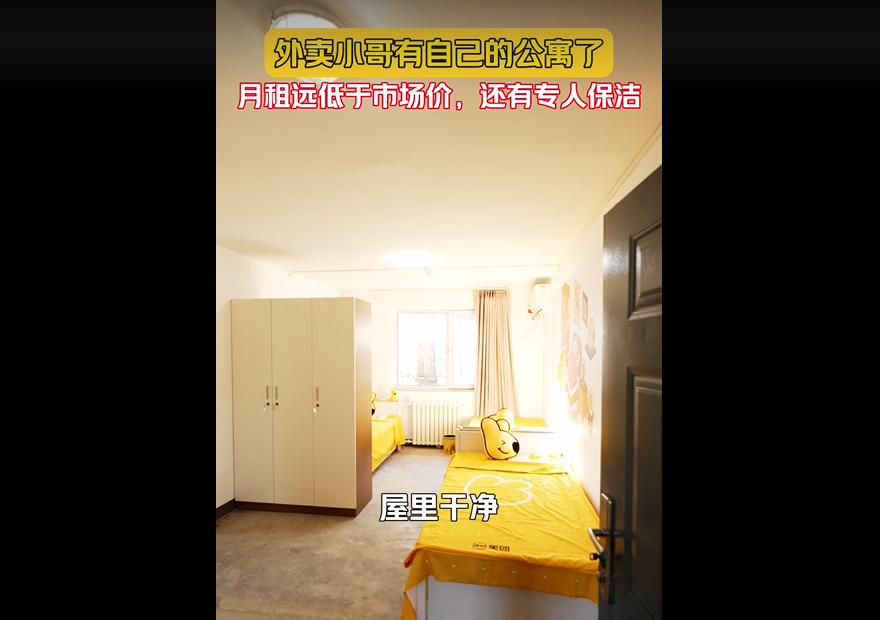
美团骑手公寓上线,北京单间月租700元,独立卫浴,专人保洁、维修!优先安排困难骑手以及跑单时间长的稳定骑手入住
Mei Ri Jing Ji Xin Wen· 2025-11-22 07:11
Group 1 - Meituan announced the construction of rider apartments nationwide, providing rental subsidies to ensure actual monthly rent is below market levels [1][3] - The rider apartments will cater to all types of riders and focus on those with transitional housing needs, offering various room types including single, shared, and family rooms [1][3] - For example, in Beijing near the Temple of Heaven, riders can rent a single apartment for 700 yuan per month, while the market rate for similar apartments is around 1500 yuan [3] Group 2 - The apartments will be equipped with eco-friendly furnishings and appliances, and a dedicated team will provide cleaning and maintenance services to ensure riders can move in with ease [3] - The initial rollout will see 600 riders successfully move into apartments in cities like Beijing, Shenzhen, and Chongqing [3] - Other tech giants like Xiaomi and JD.com have also started providing apartments for employees, indicating a trend among major companies to support housing needs for their workforce [6][9]

2025航空行业报告:360亿方智能航空AI白皮书
Sou Hu Cai Jing· 2025-11-22 05:11
Core Insights - The report highlights the rapid growth and strategic importance of deep learning and large language models (LLMs) in the global AI landscape, with a focus on patent trends and competitive dynamics [12][13]. Group 1: Patent Landscape - Since the inception of deep learning technology in 2011, over 310,000 patent families have been generated, with a compound annual growth rate of 16% from 2019 to 2023, indicating its long-term value as an innovation infrastructure [2]. - China dominates the patent landscape, contributing 80% of global deep learning patent applications in 2023, while the U.S. holds a significant international patent family (IPF) share of 35% [2]. - Major players in deep learning patents include Baidu, Google, and Microsoft, with Baidu leading globally with 6,751 patent families [3]. Group 2: Large Language Models - The number of patents related to large language models has surged since 2020, accumulating around 6,000 patent families, particularly after the launch of ChatGPT in 2022 [4]. - The innovation in the LLM space is primarily driven by industry players, with academic institutions accounting for only 21% of the contributions, indicating a strong commercialization focus [4]. - Key companies such as Google, Baidu, Tencent, Microsoft, and Alibaba dominate the patent landscape in LLMs, creating a highly concentrated competitive environment [4]. Group 3: Application Areas - The report identifies ten major application areas for large language models, with content generation, chatbots, healthcare, legal applications, and sentiment analysis being the most prominent [5]. - In healthcare, LLMs show significant potential in disease diagnosis, drug development, and personalized medicine, making it a high-growth area for technology giants [5]. - Companies like Google, Baidu, Microsoft, Tencent, and Alibaba lead in patent applications across most application categories, showcasing a comprehensive technology ecosystem strategy [5]. Group 4: Future Outlook - The report anticipates that deep learning and LLMs will continue to evolve rapidly, with increasing industry penetration driven by enhanced computational efficiency and data quality [6]. - Patent strategies are becoming a core competitive advantage for companies, as they seek to establish technological barriers and seize market opportunities [6]. - The ongoing competition for intellectual property reflects the strategic importance of AI technology, with the U.S. and China pursuing differentiated strategies in research, application, and international expansion [6].




AI算力竞争转向,英伟达业绩亮眼,寒武纪营收大增近24倍
2 1 Shi Ji Jing Ji Bao Dao· 2025-11-22 01:47
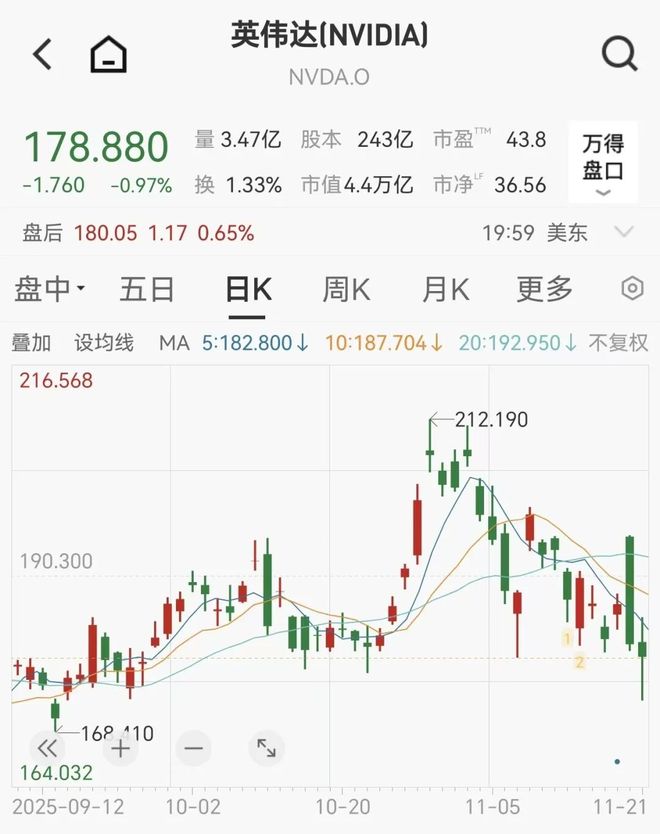
Core Insights - Nvidia's latest earnings report has created significant market volatility, with a notable stock price fluctuation following the announcement, reflecting concerns about future growth sustainability [1][3] - The tech sector's downturn in the US has impacted the A-share market, leading to a decline in related sectors such as computing power and AI chips [4] Market Trends - The computing power sector is experiencing a reevaluation of valuations and fundamentals, with a potential short-term profit-taking pressure as year-end approaches [4] - Major tech companies like Microsoft, Google, Meta, and Amazon are increasing capital expenditures, indicating sustained demand in the computing power supply chain [4][6] Domestic Developments - The domestic computing power ecosystem is rapidly evolving, with a significant shift towards self-sufficiency in chip supply, as evidenced by the projected decrease in reliance on foreign chips from 63% to 42% by 2025 [7] - Domestic chip manufacturers are showing substantial revenue growth, with companies like Cambricon reporting a 2386.38% increase in revenue year-on-year [7] Technological Advancements - The focus in the computing power industry is shifting from hardware accumulation to efficiency optimization, with significant reductions in inference costs for AI models [9][10] - Innovations in system architecture, such as the adoption of supernode technology, are enabling better performance despite limitations in chip capabilities [10] Industry Opportunities - The AI computing power sector is becoming a primary growth engine for the communications industry, with investment opportunities emerging in areas like optical modules and storage chips [13][14] - The liquid cooling technology market is expected to grow significantly, with a projected compound annual growth rate of 46.8% from 2024 to 2029 [10][14] Investment Shifts - Investment in the computing power industry is transitioning from infrastructure to application innovation, reflecting a maturation of the sector [14] - Companies that can accurately navigate technological trends are likely to gain a competitive advantage during the upcoming industrial transformation [14]


英伟达新映射:大震荡来袭,国产算力自主可控升级大势不改
2 1 Shi Ji Jing Ji Bao Dao· 2025-11-21 12:36
Core Viewpoint - The long-term logic of AI computing power remains unchanged, with accelerated domestic substitution in progress, driven by the latest performance of Nvidia, which has significant implications for global capital markets [1][2]. Group 1: Market Performance and Trends - Nvidia's revenue and guidance remain strong, with its stock price initially rising over 5% on the earnings release day but ultimately closing down 3.15%, reflecting market concerns about sustainable future growth amid external uncertainties [2]. - The decline in the US tech sector has impacted the A-share market, with the computing power concept sector dropping 3.38% on November 21, resulting in a net outflow of 14.12 billion yuan [3]. - The AI chip sector also fell by 4.33%, with a net outflow of 1.685 billion yuan, indicating a reevaluation of valuations and fundamentals in the computing power sector [4]. Group 2: Domestic Market Dynamics - By Q3 2025, the communication industry is expected to experience structural growth driven by strong AI computing power demand, with overseas markets as a core engine [5]. - Domestic internet companies are showing varied capital expenditure trends due to chip supply constraints, with Alibaba planning to invest over 380 billion yuan in AI and cloud infrastructure over three years, while Tencent's capital expenditure decreased by 24% year-on-year [5]. - The proportion of domestic chip suppliers in China's AI server market is projected to rise from 37% in 2024 to 40% by 2025, indicating substantial progress in domestic substitution [6]. Group 3: Technological Advancements - Domestic chip manufacturers have transitioned from conceptual phases to performance realization, with significant revenue growth reported by companies like Cambricon and Haiguang Information [6]. - The domestic computing power ecosystem is forming a more complete division of labor, with advancements across all segments from chip design to data center deployment [7]. - The evolution of technology is shifting from hardware accumulation to efficiency enhancement, with research indicating that the maximum capability density of large models is expected to double approximately every 3.5 months [8]. Group 4: Industry Collaboration and Policy Support - The collaboration across the computing power industry chain is strengthening, supported by national policies and funding for research projects, creating a favorable environment for domestic chip development [7]. - System-level innovations, such as the adoption of supernode technology, are helping domestic companies optimize architectures to meet the computing power demands of large model training [9]. Group 5: Investment Opportunities - AI computing power has become a major growth engine in the communication industry, with investment opportunities emerging in various segments, particularly in the optical module sector [10]. - The demand for storage technology is rapidly evolving due to AI training requirements, pushing domestic storage chip manufacturers to accelerate their advancements [11]. - The investment focus in the computing power industry is shifting from infrastructure construction to application innovation, reflecting the maturation of the sector [11].
千问不容有失,夸克“身不由己”?
3 6 Ke· 2025-11-21 10:12
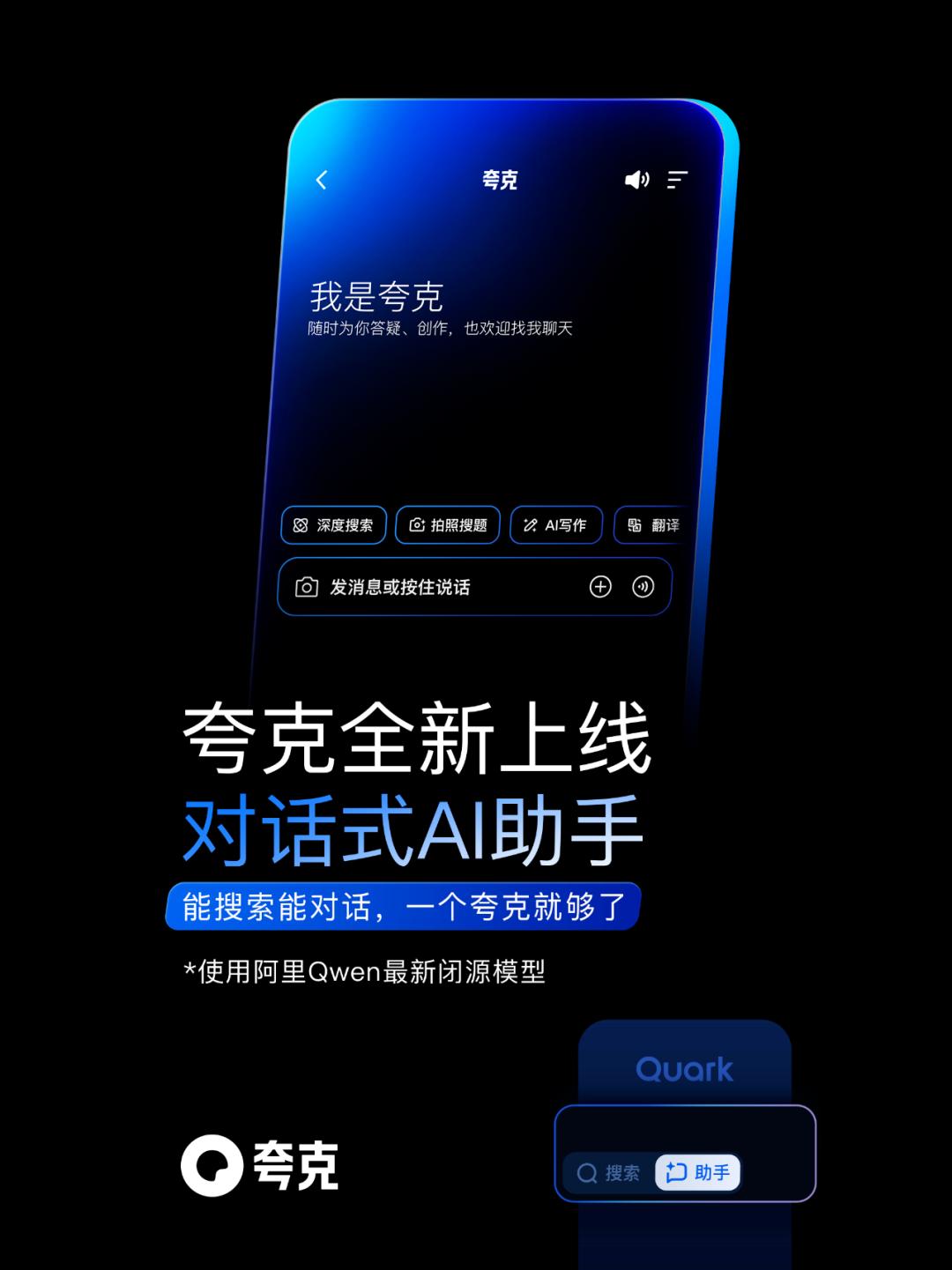
Core Insights - Alibaba has launched the "Qianwen" app, a rebranded version of the previous "Tongyi" app, which has not shown significant user growth compared to competitors like Doubao and DeepSeek [1][4] - The shift in Alibaba's strategy towards AI consumer applications indicates a change in focus from the "Tongyi" app to the "Qianwen" app as a core AI entry point [2][3] Group 1: App Performance and Market Position - "Qianwen" app has been in development for two years and has undergone two rebrandings, but it currently ranks tenth in monthly active users (MAU) among AI applications in China, with only 3.06 million users [1] - In contrast, Doubao and DeepSeek lead the market with MAUs of 172 million and 145 million, respectively [1] Group 2: Strategic Shift in AI Consumer Applications - Alibaba's narrative around AI consumer applications has evolved, with a renewed emphasis on the "Qianwen" app as a potential core AI entry point, moving away from the previous focus on the Quark app [2][3][6] - The Quark app was initially positioned as an "AI super frame" but is now being redefined to focus on AI search and browsing capabilities, while "Qianwen" is being positioned as a chatbot [14][24] Group 3: Competitive Landscape and Challenges - The competition for AI consumer applications is intensifying, with Alibaba needing to establish "Qianwen" as a significant player to compete against established apps like Doubao and Tencent's offerings [4][26] - Alibaba's strategy includes leveraging its existing ecosystem to integrate "Qianwen" into various services, but it faces challenges in user retention and engagement due to the tool-like nature of its applications [29][30] Group 4: Future Outlook and Investment - Alibaba is committing significant resources to the "Qianwen" project, indicating a strong belief in its potential as a core AI entry point, despite the current user base lagging behind competitors [22][23] - The company aims to achieve a breakthrough in user engagement and application utility, recognizing that no AI application in China has yet reached a stable user base of over 100 million daily active users (DAU) [23][24]
如祺出行“Robotaxi+”亮相2025广州车展 加速自动驾驶技术量产应用
Zheng Quan Shi Bao Wang· 2025-11-21 10:00
Core Insights - The Guangzhou Auto Show highlighted the commercialization of autonomous driving and Robotaxi services as a key focus for the industry [1][2] Group 1: Company Strategy - The company, 如祺出行, has launched the "Robotaxi+" strategy aimed at accelerating the large-scale commercialization of Robotaxi services by providing comprehensive solutions to regulatory bodies and technology partners [2] - The strategic plan includes expanding Robotaxi operations to 100 core cities and building a fleet of over 10,000 Robotaxis within the next five years [2] - The company has already established a mixed operation platform for human-driven ride-hailing and Robotaxi services, with over 300 Robotaxis currently in operation as of September 2025 [2] Group 2: Data Solutions - High-quality data is identified as essential for the continuous iteration of autonomous driving technology, with the introduction of the "如祺智驾数据采集车" to collect data while generating revenue [3] - The company has developed a self-research data labeling platform that automates the pre-labeling of raw data, significantly reducing reliance on human labor and improving data utilization efficiency [3] - The company is expanding its data services beyond the autonomous driving sector into various industries such as healthcare, education, finance, and law, leveraging its data processing capabilities [3] Group 3: Market Presence - As of November 2023, the company has a specialized labeling team of over 1,500 people, delivering more than 700,000 labeled frames monthly to over 100 well-known enterprises [3]
电子行业2026上半年投资策略:AIInfra市场有望高增,端侧创新在路上
Dongguan Securities· 2025-11-21 07:32
Group 1 - The electronic industry has performed well this year, with a cumulative increase of 40.90% as of November 14, 2025, ranking fifth among the Shenwan primary industries, primarily driven by the AI innovation cycle [15][20][6] - In the first three quarters of 2025, the electronic industry achieved operating revenue of 2.44 trillion yuan, a year-on-year increase of 20.86%, with net profit attributable to the parent company reaching 1,003.33 billion yuan, up 33.41% year-on-year [20][31][6] - The rapid growth in performance is attributed to strong demand from AI data centers, recovery in traditional consumer electronics, and emerging fields such as AI glasses and AR/VR [20][31][6] Group 2 - The AI Infra market is expected to maintain high growth, with global AI infrastructure spending projected to reach $3-4 trillion by 2030, with a CAGR of 38%-46% from 2025 to 2030 [33][70][71] - Major model vendors are increasing their computing power reserves, with OpenAI and NVIDIA planning to deploy significant AI data centers, indicating strong revenue guidance for the coming years [40][51][47] - The demand for AI servers is projected to grow significantly, with global shipments expected to reach 1.249 million units in 2025, a year-on-year increase of 25.28% [71][76][82] Group 3 - PCB and CCL segments are expected to see both volume and price increases, driven by new technologies such as CoWoP and orthogonal backplanes, which will enhance the value of the PCB industry [83][89][90] - The introduction of high-end PCB materials and advanced manufacturing techniques is anticipated to further elevate the market value and production efficiency [83][89][90] - The demand for high-end CCL is also expected to rise due to the increasing requirements from AI computing hardware [31][32][20]
