零跑汽车

Search documents
政策补贴推动乘用车销量结构化增长
Jin Rong Shi Bao· 2025-12-10 02:01
Group 1 - In November, the retail sales of passenger cars in China reached 2.225 million units, a year-on-year decrease of 8.1% and a month-on-month decrease of 1.1%. Cumulatively, retail sales for the year reached 21.483 million units, an increase of 6.1% year-on-year [1] - Passenger car exports in November were 601,000 units, marking a year-on-year increase of 52.4% and a month-on-month increase of 9.1%. For the first 11 months of the year, exports totaled 5.151 million units, up 17.2% year-on-year [1] Group 2 - In November, the penetration rate of new energy vehicles (NEVs) in the domestic passenger car retail market reached 59.3%, an increase of 7 percentage points year-on-year, setting a new historical high. This growth is attributed to policies such as trade-in subsidies and exemption from purchase tax for NEVs [2][3] - The sales of pure electric vehicles have outpaced those of plug-in hybrid and range-extended models, primarily due to the impact of "two new" policies promoting high-cost performance pure electric models. In November, sales of plug-in hybrids and range-extended models declined [2] Group 3 - In November, BYD led the passenger car retail market with sales of 307,000 units, followed by Geely with 268,000 units, and FAW-Volkswagen with 138,000 units. Other brands like Chery, Changan, and SAIC-GM-Wuling also exceeded 100,000 units in sales [2] - Domestic brands accounted for nearly 70% of the market share this year, with German brands experiencing the fastest decline. BYD, Geely, and Chery ranked the top three in incremental sales, while brands like Leap Motor and Xpeng saw significant growth [3] Group 4 - The automotive market is not experiencing the typical seasonal sales increase at year-end, primarily due to the reduction of replacement subsidies, leading many consumers to purchase vehicles earlier [4] - In the high-end market, domestic brands have the potential to capture a larger share. For the mass market, overseas sales appear to be a key channel for profit growth [4] Group 5 - Chinese automotive brands are expected to see significant growth in emerging markets, particularly in Southeast Asia and Latin America, with brands like BYD leading in sales in Indonesia [5] - Localization of production is becoming essential for Chinese automotive companies as they expand globally. Starting in 2025, domestic brands will accelerate overseas production capacity, transitioning from single product exports to localized production and global services [6]


港股科网股走势分化
Di Yi Cai Jing Zi Xun· 2025-12-10 01:40
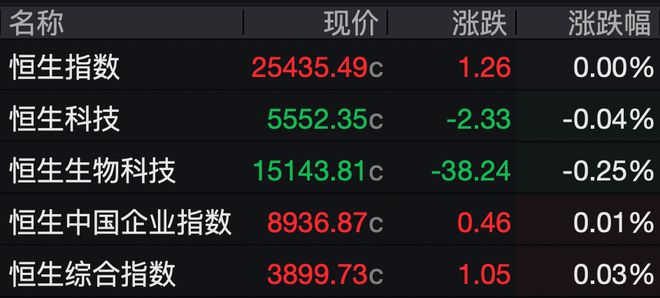
12月10日,恒生指数开盘微涨,恒生科技指数跌0.04%。 | 名称 | 现价 | 涨跌 | 涨跌幅 | | --- | --- | --- | --- | | 恒生指数 | 25435.49c | 1.26 | 0.00% | | 恒生科技 | 5552.35c | -2.33 | -0.04% | | 恒生生物科技 | 15143.81c | -38.24 | -0.25% | | 恒生中国企业指数 | 8936.87 c | 0.46 | 0.01% | | 恒生综合指数 | 3899.73c | 1.05 | 0.03% | | 比亚迪股份 | 97.050 | -0.97% | | --- | --- | --- | | 1211.HK | | | | 金山软件 | 28.980 | -0.89% | | 3888.HK | | | | 腾讯音乐-SW | 72.000 | -0.76% | | 1698.HK | | | | 京东集团-SW | 114.300 | -0.52% | | 9618.HK | | | | 零跑汽车 | 49.940 | -0.32% | | 9863.HK | | | ...

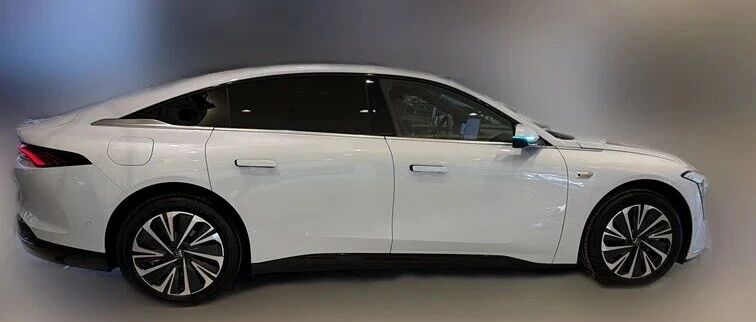
别克至境L7:客户年龄30岁左右,竞品有一半会提到风云A9L
车fans· 2025-12-10 00:30
Core Viewpoint - The article discusses the market performance and customer insights regarding the newly launched Buick Zhijing L7, highlighting its sales figures, customer demographics, and competitive positioning in the electric vehicle market [1]. Sales Performance - In a three-line city with three Buick dealerships, the average daily foot traffic is 6-7 groups, with 1 out of 10 groups specifically interested in the Zhijing L7. Last month, the dealership delivered 25 vehicles, including 4 units of the Zhijing L7, with one unit currently available for immediate delivery [2]. - The best-selling configuration is the luxury version priced at ¥186,900, with the most popular color being "Golden Sand" [2]. Customer Demographics - Customers interested in the Zhijing L7 are primarily around 30 years old, with 30% being private business owners and 50% working in government jobs. About 90% of the customers use the vehicle for commuting purposes [4]. - A specific customer, a doctor, initially considered BYD but switched to the Zhijing L7 due to dissatisfaction with the build quality and performance of competitors [5]. Competitive Analysis - The main competitors mentioned include BYD Han and Deep Blue L06, with many customers also considering Chery Fengyun A9L [7]. - The decision to choose Buick over competitors is largely attributed to the brand's strength and perceived value for money [8]. Customer Experience - A customer named Jia, who initially sought an SUV for better ground clearance, ended up purchasing the Zhijing L7 after being impressed by its specifications and price [10]. - Another customer, Wang, faced pressure from his wife to upgrade from a small electric scooter to a new car, ultimately leading to a purchase decision influenced by the wife's preferences [14][15]. Pricing and Promotions - Since the launch in September, the pricing has remained stable, with a promotion allowing customers to pay ¥1,000 to offset ¥5,000 on the purchase. If the vehicle is not delivered by December 31, the manufacturer will cover the tax for the following year [19]. - A financial breakdown for the Zhijing L7 shows a total cost of ¥205,900 after discounts, with a monthly payment of approximately ¥2,126 for a five-year loan [19]. Customer Feedback - Some customers have expressed dissatisfaction with the panoramic sunroof being too hot, despite the provision of sunshades [21]. - The maintenance schedule is set for once a year or every 10,000 kilometers, with costs around ¥500 for oil and filter changes [22].

智通港股通资金流向统计(T+2)|12月10日
智通财经网· 2025-12-09 23:36
12月5日,小米集团-W(01810)、美团-W(03690)、零跑汽车(09863)南向资金净流入金额位列市场 前三,分别净流入30.13 亿、6.06 亿、4.34 亿 | 股票名称 | 净流出(元)↓ | 净流出比 | 收盘价 | | --- | --- | --- | --- | | 阿里巴巴-W(09988) | -17.78 亿 | -14.61% | 155.000(+0.39%) | | 腾讯控股(00700) | -14.47 亿 | -16.25% | 610.000(-0.33%) | | ASMPT(00522) | -4.69 亿 | -33.79% | 78.600(+0.70%) | | 中国移动(00941) | -3.42 亿 | -32.61% | 87.150(+0.17%) | | 中远海能(01138) | -2.43 亿 | -54.86% | 9.370(-2.90%) | | 汇丰控股(00005) | -2.27 亿 | -9.57% | 111.000(-0.45%) | | 快手-W(01024) | -2.21 亿 | -11.10% | 69.200( ...





零跑汽车(09863.HK)点评:纯电轿跑LAFA5正式上市 内销+出海双轮驱动有望再造爆款
Ge Long Hui· 2025-12-09 20:22
Core Viewpoint - Leap Motor's Lafa5 officially launched on November 27, 2025, with promotional pricing significantly lower than pre-sale versions, indicating a strong market entry strategy [1][2]. Group 1: Product Launch and Pricing - Lafa5 is priced between 97,800 to 121,800 yuan, with a limited-time promotional price of 92,800 to 116,800 yuan, reflecting a decrease of 13,000 to 15,000 yuan compared to pre-sale prices [1]. - The launch includes substantial promotional benefits, such as a maximum value of 24,900 yuan in launch gifts, including cash discounts and lifetime warranties on key components [1]. Group 2: Product Features and Competitiveness - Lafa5 is positioned as a high-value electric coupe, offering superior space, configuration, and performance compared to competitors, with a length of 4,430 mm and a wheelbase of 2,735 mm [2]. - The vehicle features two versions with CLTC ranges of 515 km and 605 km, and the lowest energy consumption version achieves 12.3 kWh/100 km [2]. - Equipped with advanced driving capabilities, including city and highway navigation assistance, Lafa5 utilizes Qualcomm Snapdragon 8650 and 8295 chips for enhanced smart driving performance [2]. Group 3: Market Strategy and Future Outlook - Leap Motor is in a strong new vehicle cycle, planning to launch 2-3 new products globally each year over the next three years, with Lafa5 being a key model in the 100,000 to 150,000 yuan price range [3]. - The company has established a robust domestic sales network with 866 stores and is expanding internationally, having exported 38,000 vehicles in the first nine months of the year [3]. - Collaborating with Stellantis, Leap Motor aims to leverage global resources for efficient market entry, anticipating significant profit contributions from overseas sales [3]. - Projections indicate a net profit of 630 million, 5 billion, and 8.37 billion yuan for 2025-2027, with corresponding P/E ratios of 107.9X, 13.7X, and 8.2X, maintaining a "buy" rating [3].
汽车行业周报:多家车企发布购置税补贴方案,曹操出行发布Robotaxi十年百城千亿目标-20251209
Yong Xing Zheng Quan· 2025-12-09 14:53
Investment Rating - The report maintains an "Overweight" rating for the automotive industry [6] Core Insights - The automotive industry is expected to see stable growth in consumer demand due to supportive policies and increasing sales of new energy vehicles [16][4] - The report highlights the importance of focusing on leading companies in smart technology and the resonance of technology and model cycles in the vehicle sector, as well as the electric and intelligent incremental segments in the parts sector [4][16] Summary by Sections Market Review - The automotive sector rose by 1.38% from December 1 to December 5, 2025, outperforming the overall A-share market, ranking 10th among all primary industries [18][21] - The largest gain was in automotive parts, which increased by 1.83%, while passenger vehicles saw the smallest increase of 0.21% [21] Industry Data Tracking 1. **Total Industry Volume**: In October 2025, approximately 3.322 million vehicles were sold, with a month-on-month increase of 3% and a year-on-year increase of 8.8%. New energy vehicles accounted for about 51.6% of the market share [2][36] 2. **Company Sales**: BYD, Geely, and FAW-Volkswagen were the top three in retail sales for October 2025, with sales of approximately 296,000, 266,000, and 136,000 vehicles, respectively [2] 3. **Weekly Data**: For November 1-30, 2025, retail sales of passenger vehicles were about 2.263 million, down 7% year-on-year but up 1% month-on-month [38] 4. **Raw Material Prices**: As of December 5, 2025, the price of battery-grade lithium carbonate was approximately 93,250 CNY/ton, a decrease of 1% from the previous week [45] Industry News and Company Announcements - Several automakers announced purchase tax subsidy plans, including a maximum subsidy of 15,000 CNY from GAC and a cash discount of up to 17,000 CNY from Leap Motor [3][49] - Cao Cao Mobility announced a strategic goal for its Robotaxi service, aiming for a 100 billion CNY investment over ten years across 100 cities [3][49] Investment Recommendations - The report suggests focusing on companies that lead in smart technology and those that align with the technological and model cycles, such as SAIC Motor, Xpeng Motors, Xiaomi, and Leap Motor [4][16] - In the parts sector, it recommends looking at companies involved in electric and intelligent incremental segments, including Huaguang Co., Chuanhuan Technology, Yinlun Co., and Horizon Robotics [4][16]
11月全国乘用车市场零售约222.5万辆 乘联分会预测:明年车市增长承压
Mei Ri Jing Ji Xin Wen· 2025-12-09 14:14
Group 1: Passenger Car Market Performance - In November, the retail sales of passenger cars in China reached approximately 2.225 million units, representing a year-on-year decline of 8.1% and a month-on-month decrease of 1.1% [1] - Cumulative retail sales for the year amount to about 21.483 million units, showing a year-on-year growth of 6.1% [1] - The decline in November is unusual, as the market had previously experienced a 13% growth in the first half of the year, with a subsequent slowdown in the latter half [1] Group 2: New Energy Vehicle (NEV) Sales - In November, the sales of new energy passenger vehicles reached 1.321 million units, marking a year-on-year increase of 4.2% and a penetration rate of 59.3% in the overall passenger car market [2] - BYD led the monthly wholesale sales of new energy vehicles with over 470,000 units, followed by Geely with 187,000 units [2] - The penetration rate of new energy vehicles among domestic brands is 79.6%, while luxury brands and mainstream joint ventures have penetration rates of 38.8% and 8%, respectively [2] Group 3: Export Performance of NEVs - In November, the export volume of new energy vehicles reached 284,000 units, a significant year-on-year increase of 243.3%, accounting for 47.3% of the total export market [3] - The export of pure electric vehicles constituted 57% of the new energy vehicle exports, while plug-in hybrid models made up 42% [3] - The export of power batteries also saw growth, with domestic usage at 5.683 million kWh and export usage at 1.09 million kWh, reflecting year-on-year increases of 13% and 188%, respectively [3] Group 4: Market Outlook and Challenges - The retail share of new forces in the automotive market reached 22.1% in November, an increase of 5.9 percentage points year-on-year [4] - Predictions for December suggest a stable market performance, with potential for slight negative growth due to consumer urgency driven by upcoming tax policy changes [5] - Looking ahead, the market is expected to face pressure in 2026 due to the reduction of tax exemptions, which could significantly impact sales growth [5]
港交所推出首只港股指数“港交所科技100”
Xin Jing Bao· 2025-12-09 14:04
Core Viewpoint - The Hong Kong Stock Exchange (HKEX) has launched the HKEX Technology 100 Index, the first technology-focused stock index in Hong Kong, tracking the performance of the 100 largest technology companies listed on the exchange [1] Group 1: Index Overview - The HKEX Technology 100 is a broad-based stock index that includes companies from six major innovation themes: artificial intelligence, biotechnology and pharmaceuticals, electric vehicles and smart driving, information technology, internet, and robotics [1] - All constituent stocks of the index are eligible for the Stock Connect program, catering to the investment needs of both international and mainland Chinese investors [1] Group 2: Constituent Companies - Major companies included in the index are Tencent Holdings, Alibaba, Xiaomi Group, Meituan, JD Group, as well as emerging tech firms like Meitu and Yixin Group [1] - The index also features new energy and smart driving companies such as CATL and BYD, along with AI and robotics firms like Fourth Paradigm and UBTECH [1] Group 3: Market Impact - HKEX Group CEO, Charles Li, stated that the index covers multiple innovative industries that are reshaping the Hong Kong stock market landscape, highlighting the market's critical role in promoting the development of these emerging sectors [1] - The index serves as an effective and comprehensive investment tool for investors to seize opportunities in technology and emerging fields [1]


他们为什么愤怒?
Xin Lang Cai Jing· 2025-12-09 13:53
Core Insights - The main argument emphasizes the urgent need for technological equality and the determination for brand elevation within the Chinese automotive industry, as highlighted by the frustrations of industry leaders [8][23]. Group 1: Technological Equality - The automotive market in China shows that vehicles priced above 200,000 yuan account for 30% of the market, while those below 130,000 yuan make up 50%, indicating a gap in high-performance urban driving technology accessibility [2][19]. - Horizon Robotics launched the HSD driver assistance system, aiming to bring urban driving experiences to the mainstream market under 150,000 yuan [2][19]. - The push for technological equality is seen as essential for innovation, with the majority of consumers in the 100,000 to 200,000 yuan range driving the need for industry advancements [23][25]. Group 2: Brand Elevation - Chinese brands have historically been labeled as low-end and cheap, struggling to escape price wars despite technological advancements [25][27]. - The launch of the Zun Jie model, which achieved over 18,000 orders in 175 days at an average price of 900,000 yuan, reflects a shift towards high-quality development and brand elevation [21][25]. - The narrative of luxury in the automotive sector is being redefined by brands like NIO, which focus on user experience rather than traditional markers of luxury such as history and craftsmanship [25][27]. Group 3: Interconnection of Technology and Brand - The relationship between technological equality and brand elevation is complementary; technological advancements provide a solid user base for brands, while elevated brands support ongoing technological development [28][29]. - A healthy ecosystem in the automotive industry should consist of a broad base of technological accessibility supporting a few standout brands, ensuring both market growth and innovation [29].

告别“黑马”标签!中创新航跻身全球TOP3,一场靠技术“蓄谋已久”的突围
高工锂电· 2025-12-09 13:11
Core Insights - The global power battery industry has reached a significant turning point, with the top three companies in installed capacity now all being Chinese firms [2] - The competition among leading Chinese battery manufacturers is shifting from a focus on scale and cost to defining technological trends, building industry ecosystems, and leading the global value chain [3][4] - The rise of CALB to the global top three highlights the need to redefine the height of the Chinese battery industry beyond mere scale [5] Group 1: Electrification Trends - The electrification market is maturing, with consumers globally unified in their pursuit of charging experience, emphasizing range and fast-charging capabilities [6] - CALB's core competency lies in its ability to translate industry consensus and trends into mass-producible technological solutions [7] - CALB's fast-charging battery technology, featuring a 5C supercharging capability, meets the core demand of consumers for "charging in 15 minutes for a range of 400 kilometers" [8] Group 2: Strategic Alliances - CALB's choice of partners reflects a high degree of consensus in technology philosophy and market judgment, particularly with high-growth new energy vehicle manufacturers [10] - A notable example is CALB's joint investment of 7.5 billion yuan with Leap Motor to establish a battery company, solidifying a long-term cooperative relationship based on shared strategic goals [11] - CALB's deep collaboration with XPeng Motors, where all models of the XPeng G7 are equipped with CALB's 5C supercharging battery, underscores their mutual commitment to advanced electrification and intelligent integration [12] Group 3: Delivery and Global Expansion - CALB has entered the supply chains of major global automotive groups such as Volkswagen, Hyundai, and Toyota, indicating trust in its manufacturing and quality control capabilities [14] - The recent decision by SAIC Audi to adopt CALB's battery solutions for its high-end electric model E5 Sportback demonstrates CALB's alignment with the demands of the premium electric vehicle market [15] - CALB's production capacity is strategically synchronized with the production and market plans of its global customers, ensuring agile responses to market needs [16] Group 4: China's Electrification Power - CALB's ascent signifies that Chinese battery companies have achieved a historic milestone by occupying the top three positions globally [22] - The evolution of Chinese power battery and new energy vehicle supply chain companies into a paradigm force reflects a fundamental shift in global electrification competition logic [23] - This transformation positions China as a leader in innovation and value creation in the electrification sector, moving from a manufacturing hub to a source of technological advancement [24]