苹果

Search documents
关于阿斯麦(ASML.US)两种叙事激烈交锋:AI投资无催化 VS High-NA牛市叙事! 市场似乎更信后者
Zhi Tong Cai Jing· 2025-09-10 09:27
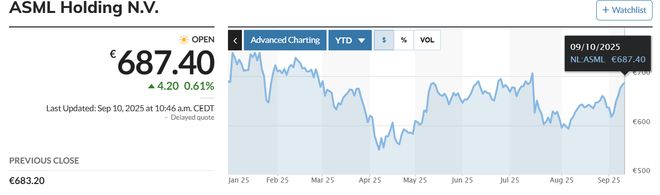
Core Viewpoint - ASML, a Dutch lithography giant, has invested €1.3 billion in French AI startup Mistral AI, becoming its largest shareholder, aiming to integrate generative AI technology into its operations to enhance lithography machine development and manufacturing efficiency [1][5][9] Investment and Strategic Partnership - The investment allows ASML to acquire an 11% stake in Mistral AI and aims to develop AI-enabled solutions for its extensive customer base, with ASML's CFO Roger Dassen joining Mistral's board [5][9] - Morgan Stanley views the investment as having a neutral short-term impact on ASML's earnings expectations, while UBS and Wolfe Research maintain a bullish outlook, raising ASML's target price significantly [2][4][10] Market Reactions and Stock Performance - ASML's stock has seen a notable increase, trading around €685 per share in Europe and $805 per share in the US, driven by the High-NA lithography machine deployment and the Mistral AI investment [2][4] - Morgan Stanley maintains a "hold" rating with a target price of €600, while UBS has raised its target price from €660 to €750, reflecting differing market sentiments [2][4][10] Future Growth Prospects - UBS forecasts a compound annual growth rate of 20% for ASML's earnings per share from 2026 to 2030, supported by strong financial fundamentals and demand for High-NA EUV lithography machines from major semiconductor manufacturers [10][11] - The transition of High-NA technology from laboratory validation to commercial deployment is expected to significantly boost ASML's long-term growth prospects [9][12] Technological Advancements - High-NA EUV lithography machines, utilizing a 0.55 NA lens, are crucial for advancing manufacturing processes at 2nm and below, enhancing resolution and efficiency in chip production [12]


突然!A股这一板块大涨!“万亿巨头”工业富联涨停,发生了什么?
天天基金网· 2025-09-10 06:31
牛市来了还没上车?上天天基金APP搜索777注册即可领500元券包,优选基金10元起投!限 量发放!先到先得! 9 月 10 日上午, A 股三大股指震荡收涨。截至午间收盘,沪指报 3813.78 点,涨 0.17% ,深证成指涨 0.24% ,创业板指涨 1.14% 。科创 50 涨逾 1% 。 沪深两市半日成交额为 1.29 万亿元,与上个交易日基本持平。个股跌多涨少,市场共 2433 只个股上涨, 46 只个股涨停, 2821 只个股下跌。 从板块看,电信、通信设备、电子元器件、餐饮旅游领涨市场,覆铜板、 6G 、光模块( CPO )等概念股活跃;固态电池板块在连续 3 日上涨后出现回调,锂矿、锂电正极、动力电 池等概念板块纷纷走低;贵金属、化肥农药板块领跌。 | | | Wind热门概念指数 | V 20格 | | Wind中国行业指数 | | | | --- | --- | --- | --- | --- | --- | --- | --- | | 覆铜板 | 光模块(CPO) | 电路板 | 6G | 通信设备 | 电信 | 电子元器件 | 电脑硬件 | | 4.36% | 3.11% | 2.8 ...

中际旭创放量上涨成交额达200亿元,创业板人工智能ETF、5G通信ETF涨超4%
Xin Lang Cai Jing· 2025-09-10 06:05
Group 1 - AI computing power sector has seen a strong rally, with companies like Zhongji Xuchuang and Xinyi Sheng rising over 7%, and Shenghong Technology increasing by over 13% [1] - Google is actively promoting the external deployment of its TPU in small cloud service providers' data centers, with the seventh generation TPU Ironwood designed specifically for AI inference scenarios [1] - The Ironwood TPU boasts a peak computing power that is over 24 times that of the world's largest supercomputer, El Capitan, when configured with 9216 chips, and requires a communication bandwidth of 1.2 TBps [1] Group 2 - The Huaxia ChiNext AI ETF (159381) tracks the ChiNext AI Index, with over 50% weight in optical module CPO, and the top three weighted stocks being Xinyi Sheng (20.3%), Zhongji Xuchuang (18.8%), and Tianfu Communication (6.5%) [2] - The 5G Communication ETF (515050) tracks the CSI 5G Communication Theme Index, focusing on the supply chains of Nvidia, Apple, and Huawei, with optical module CPO stocks accounting for 38% of its weight [2] - The latest scale of the 5G Communication ETF exceeds 8 billion yuan, and it has a low comprehensive fee rate of only 0.20% [2]

财新周刊-第34期2025
2025-09-06 07:23
Summary of Key Points from Conference Call Industry or Company Involved - The discussion primarily revolves around the **Chinese consumer market** and **Vietnamese manufacturing sector**, particularly focusing on the implications of policies aimed at boosting consumption and the migration of Chinese companies to Vietnam for manufacturing. Core Points and Arguments 1. **Government Policies to Boost Consumption** The Chinese government is implementing policies to stimulate consumption, including a 1% fiscal subsidy for personal consumption loans starting September 1, 2023, aimed at enhancing domestic demand and supporting economic recovery [3][4][5] 2. **Focus on Service Consumption** Service consumption is becoming a significant part of household spending, contributing 63% to the growth of consumer spending in 2024. The government has introduced 20 key tasks to promote high-quality service consumption [6][7] 3. **Consumer Loan Subsidies** The introduction of loan subsidies for service sectors such as dining, health, and tourism is expected to further enhance service consumption, which is closely linked to improving living standards [7][8] 4. **Income as a Driver of Consumption** Disposable income is crucial for sustaining consumer spending. Government subsidies and welfare programs are designed to increase disposable income and consumer confidence, thereby promoting consumption [8][9] 5. **Challenges in Vietnam's Manufacturing Sector** Vietnamese manufacturing is experiencing rising costs due to an influx of Chinese companies establishing operations there. The average monthly wage in Vietnam is now comparable to that in some Chinese provinces, leading to concerns about the sustainability of Vietnam's manufacturing cost advantages [17][25][26] 6. **Supply Chain Dynamics** Many Chinese companies are relocating to Vietnam to avoid tariffs and take advantage of lower production costs. However, the reliance on Chinese supply chains remains high, with many components still imported from China [21][32] 7. **Rising Land and Labor Costs** The rapid increase in land prices and labor costs in Vietnam is raising concerns about the long-term viability of manufacturing there. Companies that do not own land are facing significant rental costs, which can account for a third of their operating expenses [24][25] 8. **Shift in Workforce Dynamics** The labor market in Vietnam is tightening, with companies struggling to attract and retain workers. This has led to a trend of automation as companies seek to reduce reliance on human labor [25][28] 9. **Vietnam's Economic Growth Potential** Vietnam's population and GDP growth present significant opportunities for market expansion. The country is seen as a potential consumer market for Chinese products in the future [38] 10. **Trade Relations and Tariff Implications** The evolving trade relations between the U.S. and Vietnam, including tariffs, are creating uncertainty for companies operating in Vietnam. The U.S. has imposed a 20% tariff on Vietnamese goods, which is still lower than the tariffs on Chinese imports [27][36] Other Important but Possibly Overlooked Content - The interdependence of income, employment, and consumption is emphasized, highlighting the need for continuous improvement in employment conditions to sustain consumer spending [9] - The potential risks of Vietnam falling into a "middle-income trap" due to rising costs and insufficient high-end manufacturing capabilities are noted [35] - The cultural differences in workforce management between Chinese and Vietnamese workers are discussed, indicating that management styles need to adapt to local expectations for better employee engagement [28][30] This summary encapsulates the key insights from the conference call, focusing on the implications of government policies, consumer behavior, and the evolving landscape of manufacturing in Vietnam.

29年来首次!全球央行黄金储备反超美债;博通收获百亿美元大单,英伟达一周市值蒸发万亿;马斯克获1万亿美元薪酬包,须完成三大目标;美联储9月降息概率逼近1...
Mei Ri Jing Ji Xin Wen· 2025-09-06 02:57
Group 1 - Global central banks' gold reserves have surpassed US Treasury bonds for the first time in 29 years, indicating a strategic shift towards physical assets like gold [4][5][8] - Central banks have been net buyers of gold for 14 consecutive quarters, reflecting a significant increase in gold holdings compared to stagnant US Treasury bond levels [8][10] - The World Gold Council reported that gold has become the second-largest reserve asset globally, following the US dollar, with a notable increase in purchases over the past three years [8][10] Group 2 - Analysts suggest that the current environment is reminiscent of the 1970s, where gold is viewed as a key asset for hedging against inflation and geopolitical uncertainties [5][16] - Gold prices have surged significantly, with a 36% increase in futures prices this year, outperforming the S&P 500 and Bitcoin [12][16] - Historical patterns indicate that gold experiences bull markets during major financial system changes, with the current situation potentially marking the beginning of a third major bull market for gold [15][16] Group 3 - The bond market is facing significant challenges, with US Treasury yields reaching multi-decade highs and a notable decline in bond prices, leading to a shift in investor sentiment towards gold [18][20] - The long-standing bull market in bonds is considered over, with rising yields reflecting concerns over inflation and debt sustainability [20][21] - Investors are increasingly viewing gold as a safer asset, contrasting with the rising risk premiums associated with US Treasury bonds [21][22] Group 4 - Major financial institutions are optimistic about gold's future price trajectory, with forecasts suggesting prices could reach between $3,675 and $4,500 per ounce by 2026 [22][23] - The collective bullish outlook on gold reflects deep concerns regarding the future of US Treasury bonds and broader macroeconomic risks [23]

29年来首次!全球央行黄金储备反超美债;博通收获百亿美元大单,英伟达一周市值蒸发万亿;马斯克获1万亿美元薪酬包,须完成三大目标;美联储9月降息概率逼近100% | 一周国际财经
Sou Hu Cai Jing· 2025-09-06 02:52
Group 1 - Global central banks' gold reserves have surpassed US Treasury bonds for the first time in 29 years, indicating a strategic shift towards physical assets like gold [6][7][10] - Central banks have been net buyers of gold for 14 consecutive quarters, reflecting a significant increase in gold holdings compared to the stagnation of US Treasury bonds in global reserves [10][14] - The World Gold Council reported that 95% of surveyed central banks plan to continue increasing their gold reserves in the next 12 months, the highest percentage since the survey began in 2019 [14] Group 2 - Gold is currently experiencing its third major bull market, driven by high inflation and geopolitical uncertainties, making it a key asset for central banks and investors [20][18] - Historical context shows that gold prices surged significantly during previous financial crises, such as the 1970s and the 2008 financial crisis, suggesting a pattern of gold as a safe haven during economic turmoil [19][20] - Analysts predict that gold prices could reach between $3,675 and $4,500 per ounce by 2026, reflecting a bullish outlook amid concerns over US Treasury bonds [26] Group 3 - The bond market is facing significant challenges, with long-term US Treasury yields reaching levels not seen in decades, leading to a decline in bond prices [22][25] - The current decade is projected to be one of the worst for US Treasury bonds, with a notable drop in their market value due to rising yields and inflation concerns [24][25] - Investors are increasingly questioning the sustainability of US debt, leading to a shift in preference towards gold as a more secure asset [25][26]
美股高开低走,三大指数集体收跌:非农数据不及预期引发市场波动,黄金再创新高-美股-金融界
Jin Rong Jie· 2025-09-06 00:41
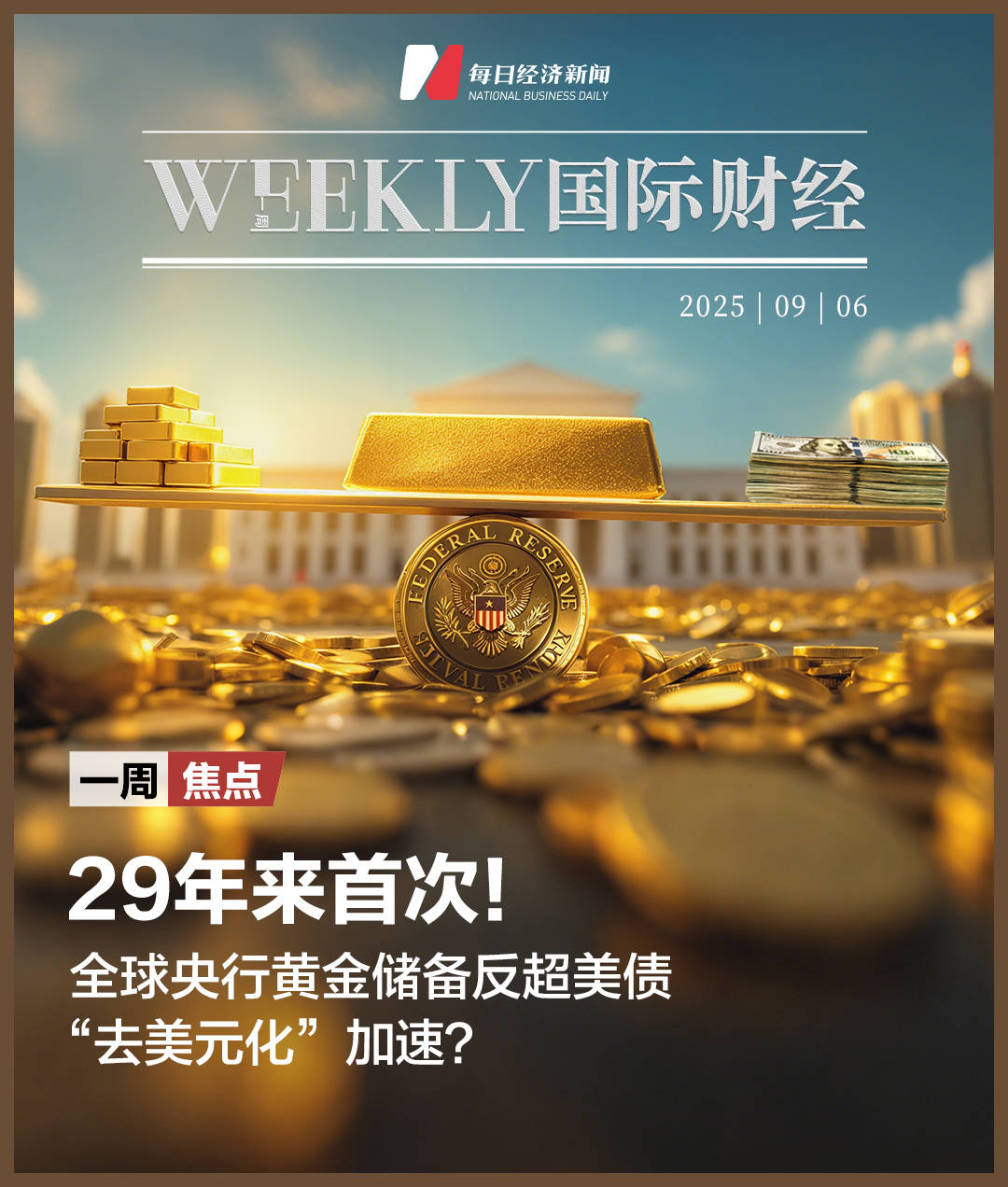
Market Overview - On September 5, US stock markets experienced significant volatility, with all three major indices closing lower. The Dow Jones Industrial Average fell by 0.48% to 45400.86 points, the S&P 500 decreased by 0.32% to 6481.50 points, and the Nasdaq Composite slightly declined by 0.03% to 21700.39 points [1][2]. Employment Data Impact - The core reason for the market shift was the release of August non-farm payroll data, which showed only 22,000 new jobs added, significantly below the expected 75,000. The unemployment rate rose to 4.3%, aligning with expectations. Notably, June's data was revised downwards, indicating the first negative growth in non-farm employment since early 2020 [3][4]. Interest Rate Expectations - Following the weak employment data, expectations for interest rate cuts surged. The market anticipates at least a 25 basis point cut from the Federal Reserve, with some traders betting on a 50 basis point reduction. Analysts from JPMorgan and Barclays have adjusted their forecasts, suggesting multiple rate cuts by the end of the year [4][5]. Sector Performance - Sector performance showed clear divergence. In technology, chip stocks generally rose, with Broadcom surging by 9.41% to a market cap of $1.575 trillion. However, Nvidia fell by 2.7% amid concerns over increased competition in the AI sector. Major tech stocks had mixed results, with Google and Facebook seeing slight gains, while Microsoft and Amazon declined [6][7]. Chinese Stocks - Chinese stocks performed well, with the Nasdaq China Golden Dragon Index rising by 1.16%. Notable gainers included Fangdd, Baidu, Alibaba, and JD.com, driven by expectations of Federal Reserve rate cuts, which may alleviate global liquidity pressures [8][9]. Other Significant Events - Other market-moving events included criticism from former President Trump regarding the EU's $3.5 billion fine on Google, and Tesla's announcement of a new compensation package for CEO Elon Musk, potentially worth $143.5 billion if certain market conditions are met. Analysts have differing views on future market trends, with some remaining optimistic about tech stocks due to AI investments, while others caution about weakening growth momentum [10].
广东茂名首富,又要IPO了
Hua Er Jie Jian Wen· 2025-09-05 11:30
Core Viewpoint - XINWANDA ELECTRONICS CO., LTD. is set to launch an IPO on the Hong Kong Stock Exchange, following the footsteps of other major lithium battery manufacturers like CATL and EVE Energy [2][10]. Company Overview - Founded in 1997 by brothers Wang Mingwang and Wang Wei, XINWANDA started with consumer batteries and has expanded into automotive power batteries and energy storage [3][7]. - The company was listed on the Shenzhen Stock Exchange in 2011 and later on the Swiss Exchange in 2022, marking its third entry into capital markets [4][9]. Financial Performance - XINWANDA reported revenues of 521.62 billion RMB, 478.62 billion RMB, and 560.21 billion RMB for the years 2022 to 2024, with profits of 7.63 billion RMB, 3.31 billion RMB, and 5.34 billion RMB respectively [13]. - The company holds a 34.3% market share in the global mobile phone battery market, ranking first, and a 21.6% share in laptop and tablet batteries, ranking second [12]. Business Segments - The business is divided into three main segments: consumer batteries, power batteries, and energy storage systems [11]. - The revenue from power batteries increased from 126.87 billion RMB in 2022 to 151.39 billion RMB in 2024, while energy storage revenue rose from 4.55 billion RMB to 18.89 billion RMB in the same period [13]. Market Strategy - XINWANDA is facing intense competition in the power battery sector, dominated by CATL and BYD, which together hold over 60% of the market share [14]. - The company is expanding internationally, with significant investments in battery factories in Hungary, Vietnam, and Thailand to support its growth strategy [14][15]. Capital Market Activities - In addition to the upcoming IPO, XINWANDA is also planning to spin off its subsidiary, XINWANDA POWER, for a separate listing on the Shenzhen Stock Exchange [16][17]. - The company has made substantial investments in 73 companies, totaling over 6.5 billion RMB, primarily focusing on battery and energy storage technologies [18][19].

AI服务器需求持续火热 鸿海精密8月营收同比增长10.6%
智通财经网· 2025-09-05 11:04
Group 1 - Foxconn's parent company, Hon Hai Precision, reported a robust monthly sales growth, indicating strong demand for AI infrastructure in the U.S. August revenue totaled NT$606.5 billion (approximately $19.8 billion), a year-on-year increase of 10.6% [1] - The company expects third-quarter sales to grow both sequentially and year-on-year, driven by a significant increase in cloud product shipments. Analysts predict an average sales growth of 16.4% for the quarter [1] - Hon Hai Precision remains heavily reliant on Apple, as it assembles various electronic products, including iPhones, for its U.S. clients. The company anticipates server sales to more than double this quarter, while its consumer electronics business is expected to decline [1] Group 2 - In response to U.S. trade policies, Hon Hai is expanding its production capacity in the U.S. to avoid tariffs. The company plans to add more AI server production facilities in Wisconsin and Texas, which are existing production base locations [2]
A股科技“四大天王”集中爆发,宁德时代、工业富联表现抢眼
Quan Jing Wang· 2025-09-05 08:25
Core Viewpoint - The A-share technology sector is experiencing a significant surge, with leading stocks like CATL, Industrial Fulian, BYD, and Cambricon being referred to as the "Four Kings" of A-share technology, collectively driving the sector's momentum [1] Group 1: Company Highlights - CATL, as the global leader in the power battery sector, boasts a market capitalization of 1.4 trillion, achieving breakthroughs in battery technology, including the rapid-charging battery that can provide 400 km of range in just 10 minutes [2] - Industrial Fulian, valued at 1.1 trillion, has established itself as a key player in AI computing power, leveraging its strong manufacturing capabilities and partnerships with major companies like Apple and NVIDIA [3] - BYD, with a market cap nearing 1 trillion, leads the new energy vehicle market through continuous technological innovation, including the development of the Blade Battery, which has become a benchmark in the industry [4] - Cambricon, valued at 530 billion, is a prominent player in the domestic AI chip sector, focusing on the development of high-performance chips and contributing to the establishment of a domestic computing power ecosystem [5] Group 2: Market Impact - The robust performance of these four technology giants not only generates substantial returns for investors but also plays a crucial role in advancing China's technology industry and promoting high-quality economic development [5]