蜜雪冰城

Search documents
从规模扩张到价值深耕:餐饮行业五大趋势与头部品牌价值分析
市值风云· 2026-01-23 12:55
Core Insights - The restaurant industry is undergoing a significant transformation, with a shift from rapid expansion to a focus on building long-term competitive advantages and differentiation [4][20] - The market is expected to see over 3 million store closures by 2025, with 161,000 closures in the first half of the year alone, indicating a severe contraction in the sector [3][4] Consumer Trends - Health-conscious dining is becoming a baseline requirement, with the health food market projected to exceed 1.8 trillion yuan by 2026, growing at over 30% annually [5][6] - Consumers are increasingly prioritizing value for money, with a significant shift towards mid-range pricing; over 64% of takeaway orders are priced between 20-39 yuan [8][9] - Personalized dining experiences are on the rise, with a growing demand for unique dining scenarios such as single-person meals and all-day dining options [10][11] Supply Chain and Operational Changes - New national standards for pre-prepared foods are set to enhance compliance and transparency in the industry, prompting major chains to adopt self-sufficient supply chains [12][13] - A quality revolution is underway, with brands implementing open kitchens and live cooking demonstrations to rebuild consumer trust [14] - The integration of smart cooking devices and digital monitoring systems is reshaping the restaurant ecosystem, improving efficiency and reducing labor costs [15][16] Market Dynamics - The chain restaurant penetration rate is increasing, projected to rise from 15% in 2020 to over 26% by 2026, with lower-tier markets becoming the main growth engine [17][20] - The focus on lower-tier markets is driven by a large population base and increasing disposable income, with these areas expected to account for over 60% of new store openings [17][21] - Digital transformation is becoming essential, with AI and data analytics tools enhancing operational efficiency and customer engagement [18][19] Conclusion - The restaurant industry is experiencing unprecedented structural changes, with a consensus on the need for value-driven strategies and deep market penetration to achieve sustainable growth [21][22]


2026年,头部茶咖品牌还要继续比拼开店?
3 6 Ke· 2026-01-23 10:06
Core Insights - The tea and coffee industry is experiencing rapid expansion, with multiple brands achieving significant milestones in store openings, indicating a competitive landscape focused on growth and market penetration [1][2][4][6]. Group 1: Company Expansion - Gu Ming has successfully opened 3,000 new stores in 2025, bringing its total to 13,000 stores nationwide, with a focus on expanding beyond its traditional strongholds in Jiangsu, Zhejiang, and Shanghai [1]. - Other brands like Hu Shang A Yi and Luckin Coffee have also joined the "10,000 store club," with Hu Shang A Yi reaching over 10,000 stores and planning to add 2,000-3,000 more in 2026 [2][4]. - Luckin Coffee expanded from approximately 4,500 stores to 10,000 in just over 10 months, showcasing a rapid growth strategy [4]. Group 2: Market Trends - The tea and coffee sector saw a total of over 990,000 operating stores by the end of 2025, reflecting a year-on-year growth of 6.58% [6]. - The competitive landscape is characterized by brands innovating in store locations, with many moving away from traditional high-traffic areas to more unconventional sites like transportation hubs and scenic spots [8][11]. - The trend of "store-in-store" models is gaining traction, allowing brands to expand with lower capital investment by embedding their offerings within existing retail spaces [9][12]. Group 3: Product Innovation - Brands are diversifying their product offerings, with companies like Heytea introducing baked goods alongside their tea products, while Nayuki focuses on light meals [12]. - Tea Yan Yue Se has launched a new retail model that combines beverage sales with snack offerings, creating a unique shopping experience [12]. - The emphasis on product innovation and customer experience is becoming crucial for brands to differentiate themselves in a crowded market [13].

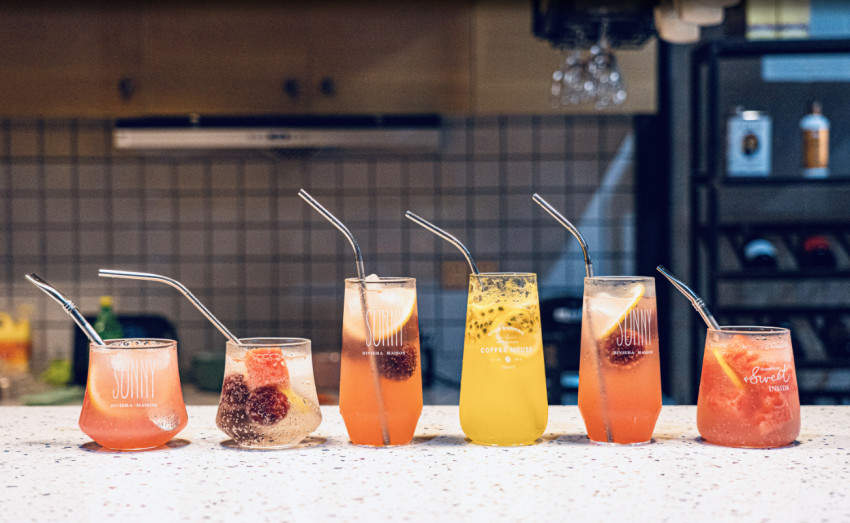
数字里看拼劲儿丨全省社会消费品零售总额同比增长5.6% 拼出消费新气象
He Nan Ri Bao· 2026-01-23 00:02
Group 1 - The core viewpoint of the articles highlights the robust growth of consumer spending in Henan, with a total retail sales of social consumer goods reaching 2.9 trillion yuan, a year-on-year increase of 5.6%, surpassing the national average by 1.9 percentage points [1] - The emergence of new brands, landmarks, and consumption scenarios in Henan has contributed to a vibrant market atmosphere, attracting consumers and enhancing local retail performance [1][2] - Local supermarkets such as Taoxiaopang and Huayu Baijia have gained popularity by offering quality products and attentive services, with over 80% of retail goods in the province experiencing growth [1] Group 2 - The popularity of new consumption scenarios is evident, with flagship stores like Mixue Ice City attracting long queues, indicating a shift in consumer behavior towards social and experiential shopping [2] - Various commercial complexes in Zhengzhou are leveraging unique events and partnerships to draw in customers, resulting in increased revenue in the dining and retail sectors [3] - The consumer structure is evolving, with a notable increase in the sales of green and smart products, driven by promotional campaigns from retailers like Suning and JD [3] Group 3 - The demand for diverse and personalized shopping experiences is growing, with consumers seeking convenience and immersive environments for their purchases [4] - The provincial government plans to enhance consumer infrastructure and promote the "Enjoy Henan" brand to further stimulate domestic consumption and support high-quality economic development [4]
2026年,消费没有新故事?
虎嗅APP· 2026-01-22 23:59
Core Insights - The consumption market is undergoing a silent value reconstruction, characterized by both extreme "consumption downgrade" and sporadic "hotspot-style frenzy" [3][4] - Consumers are increasingly focused on practical value and emotional satisfaction, leading to a polarization in consumer personas [3][4] - The market is shifting towards a model where brands must provide genuine value rather than empty narratives, reflecting a collective negotiation between consumers and brands [4] Group 1: Market Trends - The year 2025 saw a significant increase in the popularity of second-hand platforms and discount supermarkets, indicating a shift towards practical consumption [3] - Despite some brands facing challenges, others like Mijia Ice City and Pop Mart have thrived, showcasing resilience in the market [4][5] - The trend of "not raising prices while upgrading consumption" is emerging as a key strategy for brands to navigate the current market environment [12] Group 2: Consumer Behavior - Consumers are now more discerning, focusing on the emotional value of products rather than just price, leading to a demand for higher quality and better experiences [40][41] - The rise of "K-shaped differentiation" in consumption indicates that while some sectors struggle, others are innovating and capturing market share [22] - The importance of emotional value in non-essential purchases, such as toys, is becoming more pronounced, as consumers seek joy and connection through their purchases [48][50] Group 3: Company Strategies - Companies are increasingly adopting a "four-dimensional warrior" approach, focusing on product upgrades, price optimization, user experience, and emotional connection with consumers [12][14] - The emphasis on localizing operations and decision-making is crucial for foreign brands to succeed in the Chinese market, as seen with companies like Bimbo [58][59] - Brands are encouraged to focus on core competencies and avoid unnecessary cost-cutting that could compromise product quality [42][44] Group 4: Future Outlook - The next few years are expected to see a continued emphasis on understanding and meeting diverse consumer needs, with a focus on value-driven products [60][61] - The market is likely to witness the emergence of new brands that prioritize consumer insights and long-term value creation [52][53] - The evolving landscape suggests that brands must adapt to changing consumer preferences and leverage emotional connections to thrive in a competitive environment [49][50]

茶饮品牌扎堆“卖饭”
Mei Ri Shang Bao· 2026-01-22 22:37
Core Insights - The tea beverage brand Mubaishouzuo Tea House has opened its first mall store in Hangzhou, introducing a new menu option that includes local snacks, indicating a trend among tea brands to diversify into food offerings for new growth opportunities [1][2] - The new store format of Mubaishouzuo represents a comprehensive upgrade in space, product, and consumer experience, featuring an expanded menu with main dishes and snacks [1] - Other brands, such as Mixue Ice City and Nayuki, are also venturing into food offerings, signaling a broader industry trend towards integrating food with beverage sales [2] Industry Trends - The integration of food offerings by tea brands aims to enhance customer spending and promote bundled purchases, as the supply chain becomes more mature and cross-industry barriers lower [2] - Successful integration of food and beverage requires alignment in brand tone, flavor, pricing, and product design to ensure a cohesive consumer experience [2] - The introduction of food items like Mubaishouzuo's Taro Rice and Nayuki's energy bowls reflects a strategic move to capture different meal occasions, such as breakfast and lunch, targeting specific consumer segments [1][2]
我驻菲大使:中国把菲当做朋友、邻居,真心相助,不求回报
Xin Lang Cai Jing· 2026-01-22 13:01
Group 1 - The Philippines and China are working towards managing maritime disputes through diplomatic dialogue, with both sides expressing a desire to avoid conflict and maintain communication channels [2][5] - The Philippines has been a significant trade partner for China, with a notable trade deficit, but China encourages the Philippines to export more products, especially high-quality agricultural goods [2][4] - Recent developments include the successful completion of infrastructure projects, such as the Bucana Bridge, which enhances transportation and economic development in the region [4][6] Group 2 - There is a growing interest in Chinese technology and investment in the Philippines, particularly in sectors like renewable energy and waste management, which could benefit the local economy [3][4] - The recent announcement of a 14-day visa exemption for Chinese citizens is seen as a positive step towards increasing tourism and strengthening bilateral relations [5][6] - The Chinese embassy emphasizes the importance of constructive dialogue and the role of media in fostering a positive narrative around China-Philippines relations [6][7]
兰世立:港股是创造奇迹的地方,过去三十年首富基本来自港股
Feng Huang Wang Cai Jing· 2026-01-22 09:44
Core Insights - The event titled "'A+H New Wave' and the 34th Listed Company Entrepreneur Exchange Conference" was held in Beijing, focusing on the opportunities and challenges faced by A+H share listed companies in terms of industrial upgrades, capital operations, and cross-border layouts [1] Group 1: Market Insights - Lan Shili provided unique insights into the Hong Kong stock market, highlighting its historical significance in creating wealth, with notable figures like Huang Guangyu, Jack Ma, and others dominating the list of China's richest over the past three decades [1] - The recent performance of Hong Kong stocks, exemplified by companies like Mixue Ice Cream and Pop Mart, showcases the market's unique pricing logic based on business models and brand value, with market capitalization soaring to over 300 billion to 400 billion [1]
2026年第3周:食品饮料行业周度市场观察
艾瑞咨询· 2026-01-22 00:07
Industry Environment - The emergence of diverse business formats such as fresh food restaurants, smart products, and health management is noted, with the pet economy driving demand for quality and refined consumption [3][4] - The Chinese baking market has expanded to 365,000 stores, with a focus on health-conscious options and social experiences, while pet baking is growing rapidly with a year-on-year growth rate of 51.43% [5] - A report by Hema outlines five consumer trends for 2025, including the rise of night economy, increased demand for health products, and the popularity of new Chinese-style products among young consumers [6] - The ready-to-drink coffee market is being reshaped by local brands like Dongpeng and Nongfu Spring, with a sales growth of 50.49% and a shift towards affordable pricing and innovative flavors [7] Key Brand Dynamics - The acquisition of yogurt brand Suan Nai Guan by Mo Yogurt reflects a trend of consolidation in the ready-to-drink tea and coffee industry, as brands adapt to a competitive landscape [25] - Yili is engaging in significant capital operations, including repaying 36 billion yuan in short-term debt and establishing five investment subsidiaries, amidst a challenging dairy market [26][27] - Huabin Group is revitalizing its "War Horse" brand to compete with Dongpeng, launching new sugar-free products to align with health trends [28] - The retail market in Shanghai is witnessing a shift from traditional hypermarkets to new hybrid formats that integrate supermarkets, markets, and restaurants, emphasizing supply chain integration [29] Emerging Trends - The market for sugar-free beverages is expected to double in the next five years, driven by rising health awareness, with a projected market size of 22.74 billion yuan by 2025 [21] - The new trend of "lazy health" is emerging, with new Chinese health drinks gaining popularity, indicating a shift towards convenient health solutions [11][12] - The rise of community bakeries is characterized by precise targeting and emotional connections with customers, enhancing loyalty and operational efficiency [10]






金星啤酒港股IPO闯关,中式精酿神话下的多重拷问
Sou Hu Cai Jing· 2026-01-21 15:14
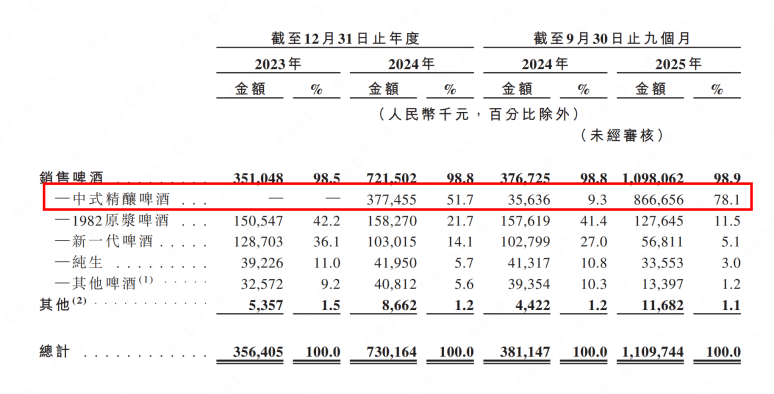
Core Viewpoint - Henan Jinxing Beer Co., Ltd. has submitted its IPO application to the Hong Kong Stock Exchange, showcasing impressive growth figures but facing significant concerns regarding sustainability and governance issues [1][12]. Financial Performance - Revenue is projected to increase from 356 million RMB in 2023 to 1.11 billion RMB by 2025, while net profit is expected to surge from 12.2 million RMB to 30.5 million RMB, marking a 24-fold increase in two years [1][3]. - The gross profit margin is anticipated to rise from 27.3% to 47% during the same period [1]. Product Innovation - The launch of "Jinxing Maojian" tea beer in August 2024 marked a pivotal shift for the company, contributing significantly to sales with 10 million cans sold within 10 months [2]. - By 2025, the Chinese craft beer segment accounted for 78.1% of Jinxing's revenue, establishing it as a leading player in the flavored craft beer market with a 14.6% market share [2][4]. Market Challenges - The company faces challenges from increased competition as major players like China Resources and Budweiser enter the craft beer market with similar products [6]. - Jinxing's reliance on a single product category raises concerns about sustainability, as traditional products are declining in revenue [4][6]. Governance and Compliance Issues - The company has distributed dividends totaling 329 million RMB, exceeding its profits for the first three quarters of 2025, raising questions about financial management [8][10]. - Governance concerns are highlighted by the family's absolute control over 93.45% of the shares, which may signal a lack of confidence in reinvesting in the company [10][12]. - There are significant issues regarding unpaid social security and housing fund contributions, totaling over 21.9 million RMB, which could lead to legal repercussions [11][12]. Asset Ownership Concerns - Approximately 25.7% of Jinxing's owned properties lack proper ownership certificates, which could expose the company to administrative penalties [12]. - The company acknowledges potential risks associated with these ownership issues, which could adversely affect its business and financial status [12]. Market Outlook - The craft beer market in China is projected to grow from 12.5 billion RMB in 2019 to 63.2 billion RMB by 2024, with a compound annual growth rate of 38.4% [6]. - The success of Jinxing's IPO will depend on its ability to manage risks and demonstrate sustainable growth potential in a competitive landscape [13].
第一财经、应帆科技首发《中国消费品牌智能创新白皮书》
第一财经· 2026-01-21 12:59
1 月 21 日,第一财经、应帆科技正式发布 "2025 中国消费品牌智能创新大调查 " 研究成果,重 磅首发 《 2025 中国消费品牌智能创新白皮书》 ,并同步揭晓 " Growth50·2025 中国消费年度 智能创新领导品牌 " 及各项代表案例,全景式展现中国创新消费新潮。上海广播电视台(上海文广 集团)副台长、副总裁,第一财经党委书记、董事长,应帆科技董事长李蓉表示, " 当前,千行百 业都已进入 ' 智能驱动 ' 阶段,本次大调查为消费品牌的智能创新提供切实的参照系与行动指南, 是第一财经消费生态圈建设的关键举措。 " 2025 中国消费品牌 智能创新大调查 Growth50-2025 中国消费 年度智能创新领导品牌 注:按首字母排序 安克创新 A 安琪 霸王茶姬 B 珀菜雅 波司登 回望过去几年,消费市场数度变迁。应帆科技旗下第一财经商业数据中心( CBNData )作为消费 领域的长期观察者,已连续四年发起 " 中国消费品牌增长力大调查 " ,从新消费元年的 " 看长 " 到震荡时期的 " 向真 " ,从不确定环境下的 " 应变 " 到审视初衷的 " 塑心 " ,持续探寻中国消费 的发展脉络。 ...