腾讯控股

Search documents
一不小心,中国Ai造出了1670年的纽约
债券笔记· 2026-02-13 09:52
Group 1 - The article discusses the rapid development and impact of ByteDance's AI video generation model, Seedance 2.0, which has gained significant attention for its ability to accurately depict historical settings, such as 1670 Amsterdam [3][6] - The model has sparked excitement among users, allowing them to experience historical and fictional scenarios, which reflects the advancements in technology during the third industrial revolution [5][9] - The competitive landscape is shifting, with other major companies feeling threatened by ByteDance's innovations, as evidenced by Tencent's stock decline following the announcement of Seedance 2.0 [9][11] Group 2 - The article highlights the positive performance of the A-share market, particularly in cloud computing and computing power sectors, which are benefiting from increased AI usage [11] - A significant event mentioned is the successful implementation of a brain-computer interface clinical surgery in Guangxi, which could have far-reaching implications for patients with conditions like Parkinson's disease [11] - The article also touches on geopolitical developments, including joint military exercises by the US and Japan, which are perceived as a response to tensions in the Taiwan Strait [12]


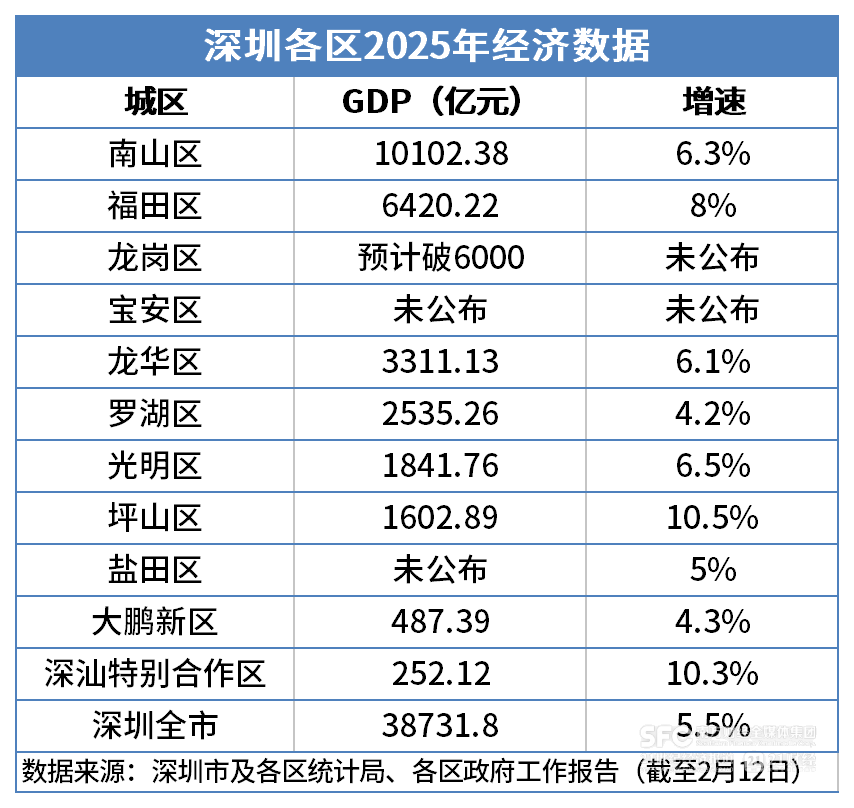
一区超万亿、两区超6千亿 这三区集中深圳近6成GDP
2 1 Shi Ji Jing Ji Bao Dao· 2026-02-13 09:33
Core Insights - The article highlights the economic growth of various cities in China, particularly focusing on Shenzhen, which has seen significant GDP increases and the emergence of new "trillion-yuan cities" [1][3]. Economic Growth and City Rankings - The number of cities with a GDP exceeding 1 trillion yuan is set to increase from 27 in 2024 to 29 in 2025, with Wenzhou and Dalian making the list [1]. - Beijing has joined the ranks of "5 trillion cities," while Shenzhen leads the four first-tier cities with a growth rate of 5.5%, aiming for a GDP exceeding 5 trillion yuan by 2025 [1]. District Performance in Shenzhen - Nanshan District has achieved a GDP of 10,102.38 billion yuan, becoming the first district in China to surpass the trillion-yuan mark [3][5]. - Futian and Longgang districts are also significant, with Futian's GDP reaching 6,420.22 billion yuan and Longgang expected to exceed 6,000 billion yuan [2][9]. - Nanshan contributes over 25% of Shenzhen's total economic output despite its small area of 185 square kilometers [3]. GDP Growth Rates - Among the districts, Pingshan (10.5%) and Shenshan (10.3%) have shown remarkable growth rates, focusing on high-value industries such as automotive and pharmaceuticals [10][11]. - The overall GDP of Shenzhen is projected to reach 38,731.8 billion yuan by 2025, with several districts outperforming the city average [2][10]. Sectoral Contributions - Nanshan is home to over 200 listed companies, contributing significantly to Shenzhen's economy, with a total market value expected to exceed 65 trillion yuan by 2025 [5][6]. - Futian's modern service sector is projected to grow, with a value of 4,754.98 billion yuan, accounting for 82.2% of its tertiary industry [6][7]. Industrial Focus and Innovation - Pingshan is concentrating on developing a "6+3" industrial cluster, focusing on smart connected vehicles, semiconductors, and biomedicine, with strategic emerging industries expected to account for 88% of its industrial output [11][12]. - The Shenshan Special Cooperation Zone is also leveraging the presence of BYD to enhance its automotive industry, with multiple projects set to launch by 2025 [12][13].
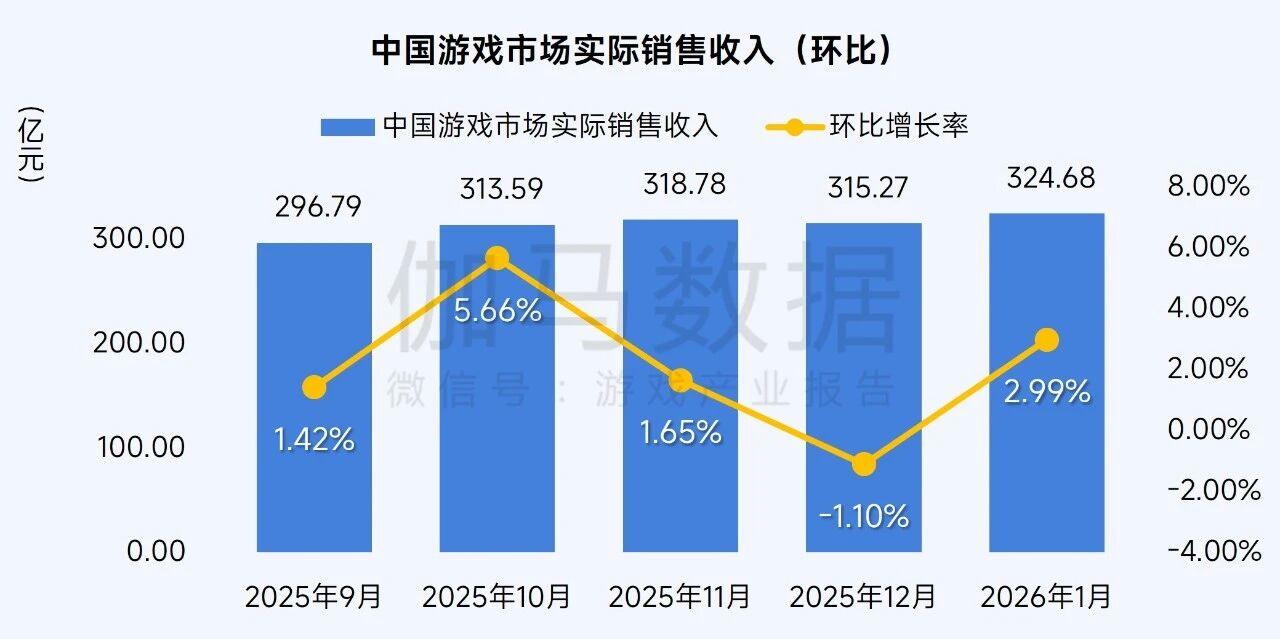
《明日方舟:终末地》5亿元登顶1月新游榜 《鹅鸭杀》第三
Nan Fang Du Shi Bao· 2026-02-13 09:30
Core Insights - The Chinese gaming market showed a steady performance in January 2026, with actual sales revenue reaching 32.468 billion yuan, reflecting a month-on-month growth of 2.99% and a year-on-year growth of 4.47%, indicating a continuous positive growth trend [1] - The overseas sales revenue of domestically developed games in January was 2.077 billion USD, marking a significant year-on-year increase of 24.05% [1][12] Market Overview - The overall gaming market in China is stabilizing, supported by both established games and new releases, with a focus on policy adaptation, product iteration, and enhanced user operations [1] - The client game segment emerged as the largest growth highlight, with actual sales revenue of 8.236 billion yuan, showing a month-on-month increase of 7.77% and a year-on-year increase of 23.46% [5] Mobile Gaming Insights - The mobile gaming market experienced a "steady month-on-month increase but year-on-year pressure," with actual sales revenue of 22.621 billion yuan, reflecting a month-on-month growth of 1.8% but a slight year-on-year decline of 1.52% [7] - Major titles like "Honor of Kings" and "Peacekeeper Elite" contributed to revenue growth through content updates and new features, while competition and changing user demands led to declines in some older games [7][8] New Game Performance - New games performed well in January, with "Arknights: Endfield" leading the new game revenue chart with over 500 million yuan, leveraging its classic IP and innovative gameplay [10][12] - "Counter-Strike: Future" also performed strongly, benefiting from its established IP and cross-platform design, topping the iOS free chart on its launch day [12] International Market Dynamics - The overseas market for self-developed games remains a significant growth engine, with January's revenue at 2.077 billion USD, despite a slight month-on-month decline of 2.5% [12] - Successful titles like "Genshin Impact" and "Victory Peak" highlight the global competitiveness and innovation of Chinese games [12][14] Industry Trends - The gaming industry in China is characterized by "internal stability and external growth," with a resurgence in PC games and strong overseas performance injecting new momentum into the sector [16] - Product innovation, IP management, and refined user services are becoming core competitive elements across various segments [16]
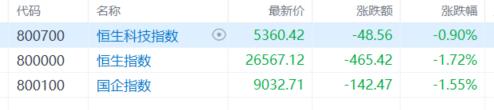
港股收评:恒指下挫1.72%!黄金、保险股低迷,半导体逆势走强
Ge Long Hui· 2026-02-13 08:53
Market Overview - The Hong Kong stock market experienced a collective decline, with the Hang Seng Index falling by 1.72%, the Hang Seng Tech Index down by 0.9%, and the China Enterprises Index decreasing by 1.55% due to a significant drop in US stocks [1][2]. Sector Performance - Major technology stocks dragged the market lower, with Meituan and Baidu both dropping over 3%, Alibaba down over 2%, and other tech giants like JD.com, Kuaishou, NetEase, and Tencent also declining [2][5]. - Gold-related stocks saw a collective decline, with Zijin Mining falling over 7% [2][6]. - The financial sector weakened, with China Life Insurance dropping over 3% [2][10]. - Oil stocks also faced a downturn, with China Petroleum & Chemical Corporation down over 5% [2][9]. - Semiconductor stocks showed strength, with Aixin Yuan Zhi rising over 17% [2][12]. - The restaurant sector was active, with Jiu Mao Jiu increasing over 5% [2][13]. - Robotics stocks rose, with MicroPort Robotics gaining over 11% [2][15]. Notable Individual Stocks - Aixin Yuan Zhi surged by 17.16%, while other semiconductor stocks like Tian Shu Zhi Xin and Zhaoyi Innovation also saw significant gains [12]. - Jiu Mao Jiu in the restaurant sector rose by 5.09% [13]. - MicroPort Robotics in the robotics sector increased by 11.71% [15]. - Haizhi Technology Group debuted on the Hong Kong stock market with a remarkable increase of over 242% [17]. Capital Flows - Southbound funds recorded a net inflow of HKD 20.219 billion, with HK Stock Connect (Shanghai) net buying HKD 11.476 billion and HK Stock Connect (Shenzhen) net buying HKD 8.743 billion [19]. Future Outlook - Guolian Minsheng Securities suggests that historically, the Hong Kong market tends to show strong upward momentum during the Chinese New Year holiday, coupled with the current tech market catalyst and the inflow of funds due to the appreciation of the Renminbi [21].
【招银研究|行业点评】Seedance2.0:生成式视频的技术奇点与产业重构
招商银行研究· 2026-02-13 08:52
Core Viewpoint - The release of Seedance 2.0 by ByteDance marks a significant advancement in AI video generation technology, positioning it as a leader in the field and indicating a shift towards industrialization in generative AI [1][2]. Group 1: Technical Architecture - Seedance 2.0 features a dual-branch diffusion transformer architecture, integrating video and audio generation within a unified framework, which enhances audiovisual consistency and stability in long videos [3][4]. - The model employs a discrete diffusion approach to balance quality and speed, achieving a 30% improvement in 2K video generation speed compared to competitors [5]. - It introduces a global character anchoring mechanism to maintain consistency during scene transitions, allowing for detailed control over camera movements [5]. Group 2: Competitive Landscape - The AI video generation market in 2026 is characterized by a dual leadership from the US and China, with major players including OpenAI and Google, each with distinct strengths in physical simulation and high-resolution video production [6][7]. - In China, various companies like Kuaishou and Alibaba are competing with differentiated strategies, focusing on low-cost production, speed, and integration with e-commerce [8]. Group 3: Ecological Synergy - Seedance 2.0 is a core engine within ByteDance's content ecosystem, creating a closed-loop system that connects content creation, user feedback, and model iteration [11][12]. - The integration of various AI models and platforms allows for automated content production pipelines, enhancing efficiency and reducing costs for businesses [12]. Group 4: Future Trends - The architecture of Seedance 2.0 suggests a trend towards world modeling, where video generation could serve as a low-cost training simulator for robotics and scientific visualization [13]. - There is potential for 3D automation, where text inputs could generate corresponding interactive 3D assets alongside video content, reducing development costs in gaming and metaverse applications [14]. - The rise of interactive content is anticipated, enabling real-time viewer engagement and personalized storytelling through AI-generated video [15]. Group 5: Commercialization - Seedance 2.0 is expected to redefine production paradigms in short video and marketing sectors, significantly lowering production costs and increasing efficiency [18][19]. - The model allows for rapid generation of tailored video advertisements, enabling businesses to produce multiple creative variations at a fraction of traditional costs [19].

烧光800亿后,外卖佣金开始上涨
3 6 Ke· 2026-02-13 08:50
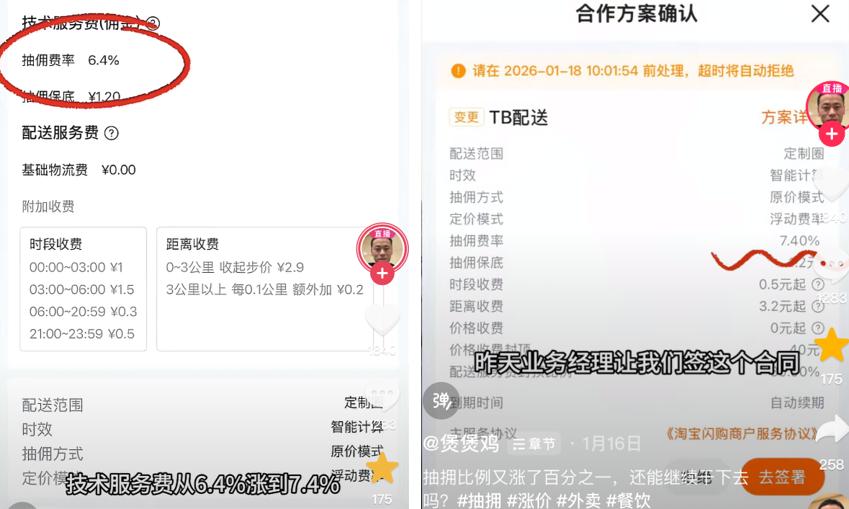
外卖大战一年后,行业硝烟仍在蔓延。 近日,多地外卖商家晒出与淘宝闪购的新合同,称平台佣金再度上涨。如河北某商家@煲煲鸡 在抖音发视频吐槽,新合同的抽佣比例从6.4%上涨至 7.4%。据他所言:"淘宝闪购要求商家必须在24小时之内签署,不签署将自动执行"。另有商家在其评论区指出:不签约商家的店铺将被直接下线。 评论区的消息未必属实,但涨佣的质疑声在贵州、广东、安徽、江苏等多地都有出现。以广东珠海为例,抽佣费率、抽佣保底、配送费都有不同程度的上 涨。 而在江苏宿迁、安徽淮北等地,商家自配送的抽佣费率都快接近20%了。 | > | 方案详情 | | | | --- | --- | --- | --- | | | | < | 方案详情 | | TB基础选推 | | | | | 平台推荐 | | TB基础 | | | 然后来中古品牌 同 第二次 | | 平台推荐 | | | | | 商户自行配测 | | | 收费方案 合同列表 | | 收费方案 合同列表 | | | 技术服务费(佣金) 2 | | | | | 优惠折扣50.00%(2025-11-23 至 2026-11-22)·生效中 | | 技术服务费(佣金) 2 ...



港股科网股,再度下跌
Di Yi Cai Jing Zi Xun· 2026-02-13 08:45
2月13日,香港恒生指数收跌1.72%,恒生科技指数跌0.90%。 | 名称 | 涨跌幅 - | 现价 涨跌 | | --- | --- | --- | | 腾讯音乐-SW | -9.23% | 59.000c -6.000 | | 美团-W | -3.18% | 82.150c -2.700 | | 百度集团-SW | -3.07% | 135.800c -4.300 | | 理想汽车-W | -2.23% | 72.300c -1.650 | | 昨日昨日 | -2.20% | 240.600c -5.400 | | 携程集团-S | -2.10% | 419.800c -9.000 | | 阿里田-W | -2.02% | 155.400 c -3.200 | | 京东集团-SW | -1.85% | 106.400 c -2.000 | | 快手-W | -1.58% | 68.450 c -1.100 | | 商汤-W | -1.49% | 2.640c -0.040 | | 小鹏汽车-W | -1.00% | 69.350c -0.700 | | FMW HAND | -0.81% | 97.75 ...
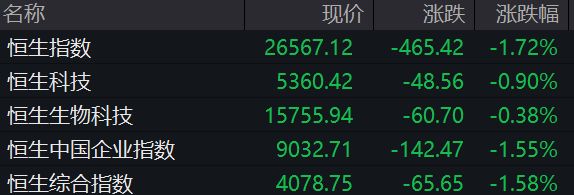
港股收评:恒生指数收跌1.72% 恒生科技指数跌0.9% 智谱涨20.65%
Jin Rong Jie· 2026-02-13 08:27
Market Performance - The Hang Seng Index closed down 1.72% at 26,567.12 points, while the Hang Seng Tech Index fell 0.9% to 5,360.42 points, and the China Enterprises Index decreased by 1.55% to 9,032.71 points [1] - Southbound funds recorded a net inflow exceeding 20 billion HKD, with the Hong Kong Stock Connect (Shanghai) contributing over 11.476 billion HKD and the Hong Kong Stock Connect (Shenzhen) adding over 8.743 billion HKD [1] Stock Movements - Notable gainers included Haizhi Technology Group, which surged 242.2%, followed by Zhipu with a 20.65% increase, and Junyu Foundation rising 18.63% [1] - Major decliners included Mongol Mining, which dropped 17.66%, and Woan Robotics, down 13.69% [1] Large Tech Stocks - Alibaba-W decreased by 2.02%, Tencent Holdings fell 0.65%, and JD.com-SW dropped 1.85% [1] - Xiaomi Group-W saw a slight increase of 0.88%, while Meituan-W fell by 3.18% [1] Industry Insights - Industrial insights from Xinyi Securities suggest that the non-ferrous metals sector is entering a phase of commodity price fluctuations, with expectations of a rebound in mid-year due to macroeconomic support [2] - Dongwu Securities indicates that market demand remains strong, with anticipated improvements in liability costs for insurance companies due to lower interest rates and a shift towards dividend insurance [3] - China Galaxy Securities forecasts a volatile upward trend for the Hong Kong market post-Spring Festival, highlighting attractive valuations and potential growth in consumer and technology sectors [4]
通信行业月报:北美云厂商资本开支强劲,CPO商业化应用拐点临近
Zhongyuan Securities· 2026-02-13 08:24
Investment Rating - The report maintains an "Outperform" investment rating for the communication industry [4][7]. Core Insights - In January 2026, the communication industry index increased by 5.47%, outperforming the Shanghai Composite Index (+3.76%), CSI 300 Index (+1.65%), Shenzhen Component Index (+5.03%), and ChiNext Index (+4.47%) [3][13]. - The capital expenditure of the four major North American cloud providers is expected to grow over 60% year-on-year, indicating a turning point for CPO commercialization applications [4][6]. - The retail sales of communication equipment in China increased by 20.9% year-on-year in December 2025, driven by the demand for smartphones [6][44]. - The three major telecom operators in China achieved a total telecom business revenue of 1.75 trillion yuan in 2025, a year-on-year increase of 0.7% [6][45]. Summary by Sections Market Review - The communication industry index rose by 5.47% in January 2026, outperforming major indices [3][13]. - Sub-sectors such as cables, other communication equipment, and system equipment saw increases of 19.70%, 10.72%, and 7.85% respectively [16]. Industry Tracking - The capital expenditure of North American cloud providers reached $126 billion in Q4 2025, a 62% year-on-year increase, with a forecast of over $660 billion for 2026 [24][25]. - AI applications are increasingly driving cloud business growth, with significant investments in AI infrastructure by major cloud providers [30][34]. Telecom Industry Insights - The telecom industry in China is experiencing stable growth, with a focus on new information infrastructure such as 5G and gigabit networks [45]. - The revenue from emerging businesses like cloud computing and big data reached 450.8 billion yuan in 2025, growing by 4.7% year-on-year [45]. Smartphone Market - Global smartphone shipments are projected to grow by 2% in 2025, reaching 1.25 billion units, with AI smartphones expected to penetrate 34% of the market [6][44]. - The latest AI smartphones feature advanced NPU chips with processing power between 60 to 200 TOPS, enhancing user experience through real-time interactions [6]. Investment Recommendations - The report suggests focusing on companies involved in optical devices, optical chips, optical modules, and AI smartphones, including Tianfu Communication, ZTE, and China Mobile [7].
蒸发1.43万亿!跌出了黄金坑?
格隆汇APP· 2026-02-13 08:17
Core Viewpoint - The article discusses the current state of the Hong Kong stock market, particularly focusing on Tencent, highlighting its valuation and potential investment opportunities amidst recent market fluctuations [7][9][10]. Group 1: Market Performance and Valuation - The Hong Kong stock market has seen a significant decline, with Tencent's stock dropping 23% from its peak in October 2025, resulting in a market value loss of 1.43 trillion HKD [7]. - Despite the recent downturn, Tencent's valuation appears reasonable, with a forward PE of approximately 15-16 times for 2026, and a core business PE of around 13 times, aligning with an expected EPS growth of 12%-15% [9][10]. - Tencent's stock buyback program, averaging several hundred million HKD daily, and a stable dividend yield of 4-5% provide additional support for its valuation [10]. Group 2: Investment Sentiment and Future Outlook - The article suggests that foreign investors are beginning to view Hong Kong tech stocks, including Tencent, as undervalued compared to their U.S. counterparts, creating a potential "rebalancing" opportunity [11][12]. - The strengthening of the RMB may further accelerate this rebalancing trend, with domestic capital flowing into Tencent and similar companies [12]. - The article emphasizes that while Tencent is perceived as a "public utility" tech stock, its role in the AI growth sector remains significant, although its investment in AI is currently more conservative compared to other tech giants [14]. Group 3: AI Market Dynamics - By 2026, the global AI industry is expected to shift from a focus on "computing power arms race" to "application commercialization," with Microsoft’s Copilot as a key reference point [16][17]. - In contrast to the U.S., China's AI application sector is experiencing a breakthrough in penetration rates, with active users reaching 320 million, a 78% year-on-year increase [21]. - The article notes that the current valuation of A-shares does not fully account for the commercial value brought by AI, indicating a potential for significant upward adjustment once the market recognizes this [23][25]. Group 4: Risks and Market Behavior - The article warns of potential volatility in the market due to aggressive capital spending by major AI cloud computing firms, which could lead to profit and cash flow concerns [27][30]. - The market is transitioning from a "broad rally" to a "survival of the fittest" mentality, where companies must demonstrate substantial earnings growth to maintain their valuations [33]. - The article concludes that investors should focus on fundamental and valuation factors to avoid being caught in market fluctuations, emphasizing the importance of ensuring that created value translates into tangible returns [39][40].