
顺鑫农业

Search documents
白酒板块11月6日涨0.54%,贵州茅台领涨,主力资金净流出2873.04万元
Zheng Xing Xing Ye Ri Bao· 2025-11-06 08:51
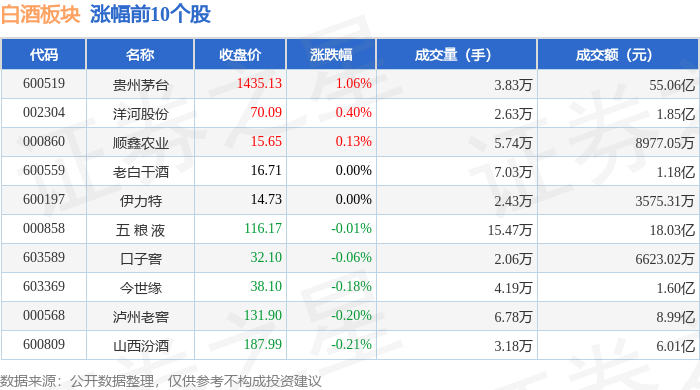
证券之星消息,11月6日白酒板块较上一交易日上涨0.54%,贵州茅台领涨。当日上证指数报收于4007.76,上涨0.97%。深证成指报收于 13452.42,上涨1.73%。白酒板块个股涨跌见下表: | 代码 | 名称 | 收盘价 | 涨跌幅 | 成交量(手) | 成交额(元) | | | --- | --- | --- | --- | --- | --- | --- | | 600519 | 贵州茅台 | 1435.13 | 1.06% | 3.83万 | | 55.06亿 | | 002304 | 洋河股份 | 70.09 | 0.40% | 2.63万 | | 1.85亿 | | 000860 | 顺鑫农业 | 15.65 | 0.13% | 5.74万 | | 8977.05万 | | 600559 | 老白干酒 | 16.71 | 0.00% | 7.03万 | | 1.18亿 | | 600197 | 伊力特 | 14.73 | 0.00% | 2.43万 | | 3575.31万 | | 000858 | 五粮液 | 116.17 | -0.01% | 15.47万 | | 18.03亿 | | ...


探寻上市公司ESG实践新路径 北上协主题调研活动圆满落幕
Zheng Quan Ri Bao Zhi Sheng· 2025-11-06 05:36
Core Viewpoint - The recent activities organized by the Beijing Listed Companies Association focus on "ESG and Sustainable Development," emphasizing the importance of integrating ESG principles into corporate governance and strategy for high-quality development in the capital market [1][2]. Group 1: ESG Practices of Companies - Shunxin Agriculture has integrated sustainable development into its daily operations, establishing a committee to manage ESG-related affairs and ensuring transparency through regular ESG disclosures [3][4]. - China Nuclear Power has transformed from a pure nuclear power company to a comprehensive energy enterprise, emphasizing safety management and technological innovation in its ESG practices [6][7]. - China Power Construction has actively engaged in sustainable development and social responsibility, focusing on water, energy, urban development, and digitalization while enhancing its ESG governance structure [8][9]. Group 2: ESG Reporting and Compliance - The Beijing Listed Companies Association highlights the necessity for companies to adopt robust internal data collection and management systems to comply with ESG disclosure requirements [11][12]. - Companies are encouraged to establish a comprehensive ESG evaluation system to quantitatively assess their ESG performance, thereby enhancing transparency and public trust [12]. Group 3: Future Initiatives and Collaboration - The association plans to continue organizing training and experience-sharing activities to promote the integration of ESG into corporate governance among listed companies [12][13]. - A new platform for mergers and acquisitions is being developed to facilitate industry integration and technological innovation, supporting the development of the Beijing-Tianjin-Hebei region [13].


食品饮料2025年三季报总结:白酒主动释放压力,速冻迎来行业拐点,软饮、零食量贩高景气维持
China Post Securities· 2025-11-06 05:06
Industry Investment Rating - The investment rating for the food and beverage industry is "Outperform" [1] Core Insights - The report highlights that the liquor sector is actively releasing pressure on financial statements, with the industry gradually bottoming out. The frozen food sector is witnessing a turning point, while the soft drink and snack sectors maintain high levels of prosperity [3][4][30] Summary by Sections 1. Liquor - The liquor sector's total revenue for the first three quarters of 2025 was CNY 319.23 billion, a year-on-year decrease of 5.76%, with net profit down 6.85% to CNY 122.67 billion. In Q3 alone, revenue fell 18.38% to CNY 78.48 billion, and net profit dropped 22.00% to CNY 28.09 billion [14][28] - High-end liquor brands like Moutai showed stable growth, while others like Wuliangye and Luzhou Laojiao faced significant declines. Moutai's revenue grew by 9.28% year-on-year, while Wuliangye's fell by 10.26% [17][19] - The second-tier liquor brands, such as Fenjiu, showed resilience with a revenue increase of 5.00%, while others like Shui Jing Fang and Shede experienced declines [26][22] 2. Soft Drinks - The soft drink sector saw significant growth, with companies like Dongpeng Beverage reporting a 34.13% increase in revenue year-on-year. The energy drink segment, particularly, showed robust growth [30][31] - The introduction of new flavors and products, such as Dongpeng's summer limited edition, contributed to the sustained high growth rates in this sector [30] 3. Dairy Products - The dairy sector, led by Yili, maintained stable performance despite high base effects, with significant growth in milk powder and cold drink products. New Dairy's low-temperature products continued to show double-digit growth [4][31] 4. Frozen Foods - The frozen food industry is experiencing a turning point, with companies noting that the price war has peaked. The focus is shifting towards rational competition and value [7][30] 5. Snacks - The snack sector is undergoing strategic adjustments, with member stores and instant retail becoming key growth channels. The overall consumption environment remains weak, but the snack sector is adapting with targeted strategies [7][30]



年轻人不买账,中年人喝不起!茅台跌破1600,终于承认只是瓶酒?
Sou Hu Cai Jing· 2025-11-06 00:41
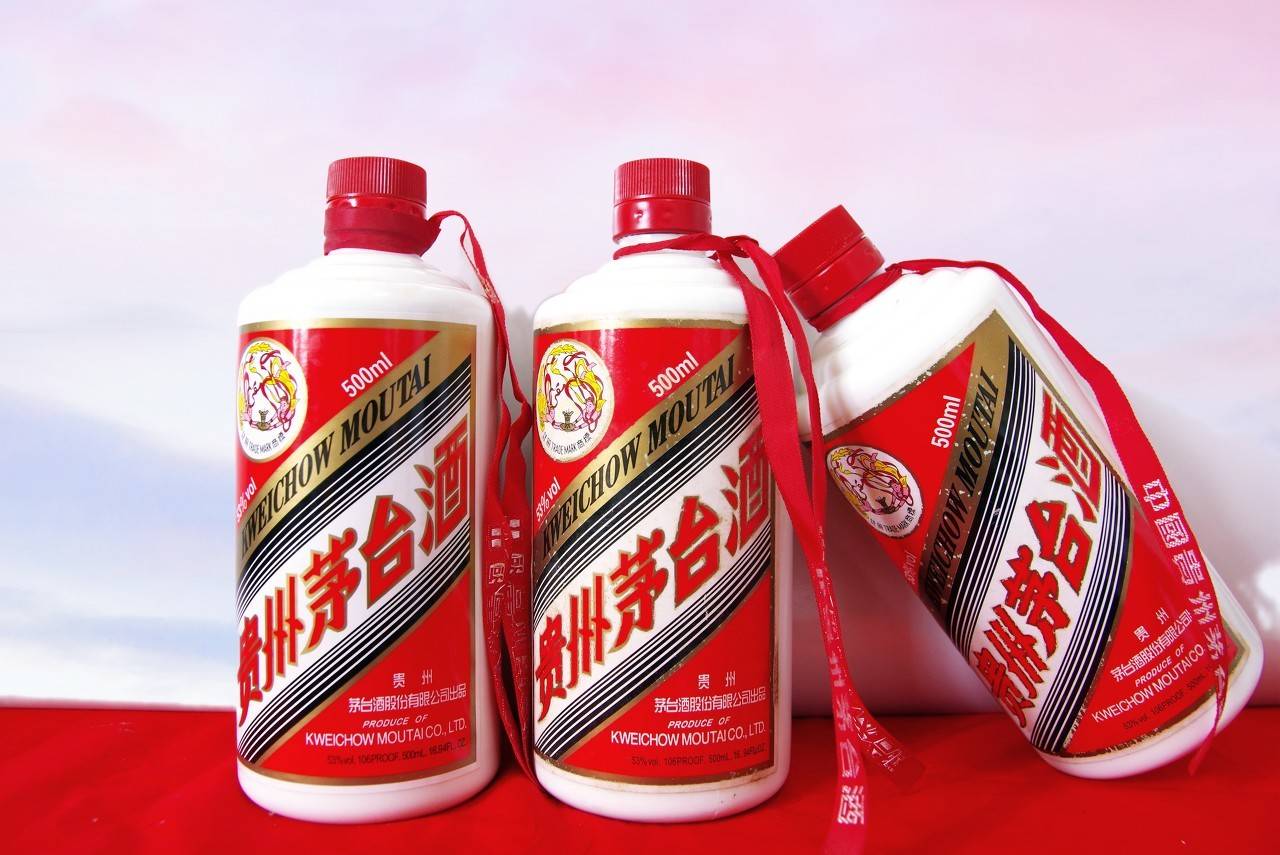
Core Viewpoint - The price of Moutai has significantly dropped, reflecting a shift in consumer behavior and market dynamics, moving from a status symbol to a regular product [3][10][18]. Group 1: Price Trends - The wholesale price of 53-degree Moutai has fallen below 1600 yuan, marking a historical low, compared to its peak of around 3000 yuan in late 2021, indicating a nearly 50% decline in four years [3][13]. - In early 2024, the price was still high, but by April, it dropped from 2600 yuan to 2100 yuan, signaling a change in market sentiment [10][12]. - By November 2023, the price had further decreased to 1600 yuan, with reports of significant losses for distributors who had purchased at higher prices [12][14]. Group 2: Market Dynamics - Moutai's decline is attributed to overproduction, changing consumer preferences, and the impact of e-commerce on pricing [16][21]. - The production capacity of Moutai reached 57,200 tons in 2023, with expectations to increase to 67,200 tons by 2025, leading to an oversupply situation [18][20]. - The shift in consumer behavior, particularly among younger generations favoring lower-alcohol beverages and a more casual drinking culture, has diminished Moutai's status as a social currency [17][24]. Group 3: Consumer Behavior - Younger consumers prioritize experience and atmosphere over traditional status symbols, leading to a decline in Moutai's appeal as a luxury item [17][22]. - The traditional consumption scenarios for Moutai, such as business banquets, have been negatively impacted by new regulations and changing corporate spending habits [21][25]. - Efforts by Moutai to adapt to younger consumers, such as introducing smaller packaging and promotional events, have not yet yielded significant results [24][25]. Group 4: Industry Implications - The entire liquor industry is facing challenges, with high inventory levels and declining demand affecting various segments [21][25]. - Moutai's price drop is part of a broader trend in the industry, where companies must adapt to changing consumer preferences and market conditions to survive [25]. - The focus is shifting back to the essence of drinking rather than speculation and investment, which may stabilize the market in the long run [25].
预计逆势涨超10%!消费风向变了,光瓶酒成了“香饽饽”?
Nan Fang Du Shi Bao· 2025-11-05 10:29
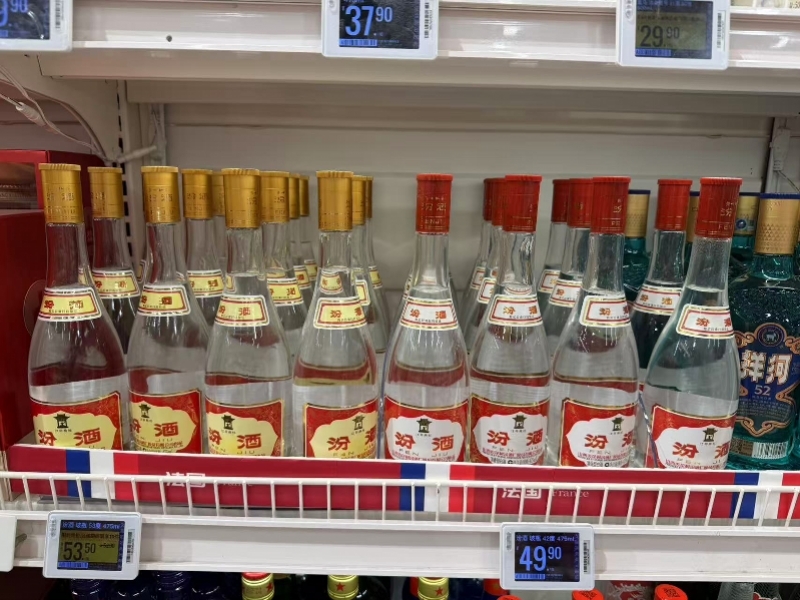
Core Viewpoint - The overall performance of the liquor industry, particularly the baijiu sector, is declining, with only a few companies like Guizhou Moutai and Shanxi Fenjiu showing slight growth, while the majority face significant revenue drops [1][2]. Industry Overview - In the third quarter of 2025, 20 listed baijiu companies reported their earnings, with only Guizhou Moutai and Shanxi Fenjiu achieving minor increases, while 18 others experienced varying degrees of decline [1]. - The baijiu industry is undergoing a deep adjustment period due to changing consumer environments and high channel inventories [1]. Market Trends - Despite the overall downturn, the light bottle liquor segment is experiencing robust growth, with products like Shanxi Fenjiu's Guo Fen showing over 10% sales growth in the first three quarters [1][5]. - The market size of light bottle liquor has expanded from 35.2 billion yuan in 2013 to over 150 billion yuan in 2024, with projections indicating it will surpass 200 billion yuan in 2025 [1][5]. Company Performance - Shanxi Fenjiu reported a revenue of 32.924 billion yuan in the first three quarters of 2025, marking a 5% year-on-year increase, with a net profit of 11.405 billion yuan, a slight increase of 0.48% [2]. - The growth in Shanxi Fenjiu's performance is attributed to its light bottle products, particularly Guo Fen, which has shown significant sales increases [2][5]. Competitive Landscape - The rapid growth of the light bottle liquor market has prompted many liquor companies to increase their investments in this segment, with notable entries from Yanghe and other brands [6][8]. - Analysts indicate a shift in consumer preferences from luxury packaging to quality and cost-effectiveness, driving the growth of light bottle liquor [8]. Market Challenges - Despite the overall growth in the light bottle liquor market, there is increasing differentiation among brands, with traditional brands like Niulanshan facing severe challenges [10][12]. - Niulanshan's revenue dropped by 19.79% to 5.869 billion yuan in the first three quarters, with a net profit decline of 79.85% [10][12]. - The competitive landscape is intensifying, with many companies facing challenges due to changing consumer habits and market dynamics [13][16].

当贵州茅台也失去增长
Sou Hu Cai Jing· 2025-11-04 11:48
Core Insights - The Chinese liquor industry is facing a significant downturn, with major brands like Kweichow Moutai and Shanxi Fenjiu losing growth momentum, indicating a broader crisis in the sector [5][6][10] - The inventory crisis has been exacerbated by a shift in consumer demand and market dynamics, leading to a situation where even top brands are struggling to maintain sales [4][7][8] Industry Overview - The liquor industry began a recovery phase in 2016, characterized by a trend towards high-end products, which led to increased sales but also created underlying risks due to unsustainable consumption levels [1][2] - The 2023 Chengdu Sugar and Wine Fair highlighted the industry's inventory crisis, with insiders suggesting that current stock levels could take three years to deplete without production [1][5] Company Performance - Kweichow Moutai reported a slight revenue increase of 0.56% to 39.064 billion yuan in Q3 2025, but its growth has stagnated, reflecting broader industry challenges [5] - Shanxi Fenjiu's Q3 revenue grew by 4.05% to 8.960 billion yuan, but its net profit declined by 1.38% [5] - Gujing Gongjiu experienced a dramatic revenue drop of 51.65% to 2.545 billion yuan in Q3 2025, with net profit falling by 74.56% [5] - Jiangsu-based brand Jinshiyuan saw its revenue decline by 10.66% to 8.881 billion yuan, with net profit down 17.39% [6] - Laobaigan Liquor, which had previously shown growth, reported a 18.53% revenue decline to 3.330 billion yuan, with net profit down 28.04% [7] Market Dynamics - The traditional sales model in the liquor industry has extended the supply chain's impact, leading to uncertainty in how quickly products reach consumers [4] - The market is currently experiencing a convergence of inventory cycles, industry driving forces, and shifts in consumer preferences, creating a complex environment for brands [7][8] Strategic Recommendations - Companies need to abandon outdated operational models and focus on consumer-driven demand rather than relying on inventory pressure [9] - Embracing new market directions, such as the growth of low-cost liquor segments, is essential for survival in the current climate [11][12] - Historical context suggests that while the current downturn is severe, recovery is possible if companies adapt and innovate in response to market needs [12][15]

从茅台换帅到全行业转型,2025酒业变局解析
Sou Hu Cai Jing· 2025-11-04 06:15
Core Viewpoint - The recent leadership change at Kweichow Moutai, with Chen Hua replacing Zhang Deqin as chairman, has sparked discussions about the future strategic direction of the company and the broader implications for the liquor industry during a period of significant adjustment [1][3]. Group 1: Leadership Changes in the Industry - Kweichow Moutai's leadership change is part of a broader trend in the liquor industry, where high-level personnel changes have accelerated, with over 50 companies reporting leadership shifts in 2025 alone [5][6]. - Other notable changes include the management transition at Zhenjiu Li Du, where former CEO Yan Tao became vice chairman, and the appointment of Tang Xiangyang as the new CEO [3][4]. - The leadership reshuffles are not limited to major players; regional brands are also experiencing urgent changes, such as the resignation of Yang Weiguo from Yanghe and the appointment of Gu Yu as chairman [3][4]. Group 2: Industry Challenges and Responses - The liquor industry is facing significant challenges, transitioning from a "golden era" of growth to a period characterized by declining volumes and profits, with Kweichow Moutai's revenue growth slowing to 7.28% and net profit growth to 5.25% in Q2 2025 [6][8]. - Other companies, such as Yanghe, reported a 35.32% decline in revenue and a 45.34% drop in net profit, highlighting the widespread pressure across the sector [8]. - Companies are increasingly focusing on transformation strategies, with Kweichow Moutai emphasizing a shift from selling liquor to selling lifestyle, while Yanghe pursues a dual strategy of high-end and national expansion [8][10]. Group 3: Market Dynamics and Inventory Issues - The liquor industry is grappling with high inventory levels, with 58.1% of distributors reporting increased stock compared to the previous year, leading to a challenging sales environment [10]. - The phenomenon of price inversion, where retail prices fall below factory prices, is exacerbating the difficulties for distributors, resulting in a "vicious cycle" of price cuts and unsold inventory [10]. - As distributors face cash flow issues and some withdraw from networks, companies are compelled to adjust their management teams to meet sales targets [10]. Group 4: Strategic Innovations and Consumer Adaptation - The industry is shifting from reactive measures to proactive strategies, focusing on governance innovation and adapting to changing consumer demands [11][13]. - Companies are exploring new product offerings and marketing strategies to cater to younger consumers, such as Kweichow Moutai's introduction of blueberry sparkling wine and Wuliangye's lower-alcohol products [13][15]. - The transformation reflects a broader trend towards personalized and diverse drinking experiences, moving away from traditional consumption patterns [15].
白酒2025年三季报总结:25Q3基本面加速探底,板块进入战略配置期
Shenwan Hongyuan Securities· 2025-11-04 03:46
Investment Rating - The report maintains a "Positive" investment rating for the liquor industry, particularly for high-quality companies, indicating a strategic allocation period has begun [2][7]. Core Insights - The liquor industry is experiencing a significant decline in performance, with major companies like Wuliangye reporting substantial drops in revenue and net profit. The public fund holdings in the food and beverage sector have also decreased to levels not seen since Q1 2017 [2][7]. - Despite the current challenges, the report suggests that long-term investors can start pricing high-quality companies as the market is expected to reach a predictable bottom in the near future [2][7]. - Key recommendations include focusing on premium liquor brands such as Luzhou Laojiao, Shanxi Fenjiu, Guizhou Moutai, and Wuliangye, while also keeping an eye on brands like Yingjia Gongjiu and Jinhuijiu [2][7]. Summary by Sections 1. Fundamental Analysis - The liquor industry reported a total revenue of CNY 310.28 billion for the first three quarters of 2025, a year-on-year decrease of 5.48%, with net profit falling by 6.63% to CNY 122.69 billion. The revenue decline is more pronounced in lower-tier brands compared to national brands [3][16]. - In Q3 2025, the industry generated CNY 76.31 billion in revenue, down 18.4% year-on-year, with net profit dropping 22.0% to CNY 28.21 billion. National brands outperformed lower-tier brands in both revenue and profit growth [3][19]. - The net profit margin for the liquor industry in Q3 2025 was 38.0%, a decline of 1.7 percentage points year-on-year, primarily due to decreased gross margins and increased tax rates [3][20]. 2. Valuation Analysis - As of October 31, 2025, the absolute PE level for the liquor sector stands at 18.7x, below the historical average of 27.6x since 2011. The relative PE ratio compared to the Shanghai Composite Index is 1.14x, also below the historical average of 2.01x [4][10]. - The report indicates that the current valuations of leading companies reflect market expectations of mid-term demand pressure. If demand improves, the industry could return to a phase of simultaneous valuation and performance recovery [4][10]. 3. Company Performance and Profitability Forecast - The report highlights that the profitability of the liquor industry is under pressure, with significant declines in net profit margins across various brands. The national brands have seen a smaller decline compared to lower-tier brands [3][22]. - The report provides a detailed forecast of operational goals and profitability estimates for key liquor companies, emphasizing the need for strategic adjustments in response to market conditions [4][10].


顺鑫农业三季度再现亏损 “光瓶酒之王”牛栏山为何卖不动了!
Xin Lang Cai Jing· 2025-11-04 01:05
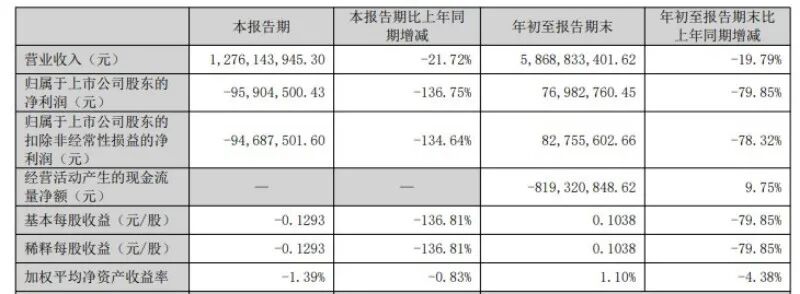
Core Insights - Shunxin Agriculture, the parent company of Niulanshan Erguotou, reported a significant decline in revenue and profit for the first three quarters of 2025, with revenue of 5.869 billion yuan, down 19.79% year-on-year, and a net profit of 76.98 million yuan, down 79.85% [1][4][6] - The company recorded a net loss of 95.90 million yuan in Q3 2025, marking a return to quarterly losses after Q2 2025 [1][4][6] - The company's market capitalization has plummeted nearly 80% from its peak of 55 billion yuan, now standing at 11.6 billion yuan as of October 31, 2025 [1][4] Business Overview - Shunxin Agriculture was established in 1998 and has three main business segments: liquor, pork, and real estate [2] - The liquor segment accounts for approximately 80% of the company's revenue and net profit, while the real estate segment has been a drag on performance due to ongoing industry downturns [2][4] - The company successfully divested its real estate business by the end of 2023, focusing on liquor and pork as its core operations [2] Financial Performance - For the first three quarters of 2025, Shunxin Agriculture's revenue was 5.869 billion yuan, with a year-on-year decrease of 19.79% [3][4] - The net profit attributable to shareholders was 76.98 million yuan, down 79.85% compared to the previous year [3][4] - The company experienced a significant decline in cash flow from operating activities, with a net cash flow of -819.32 million yuan [3] Industry Challenges - The liquor industry is undergoing a deep adjustment period, with declining production and sales volumes [4] - The pork segment is also facing challenges, with domestic pork prices remaining low and a slight revenue decline of 0.49% year-on-year [4][5] - The company's liquor revenue for the first half of 2025 was 3.606 billion yuan, down 23.25% year-on-year, with a gross margin of 42.39% [5] Brand and Market Dynamics - Niulanshan Erguotou, once a leading brand, has seen its sales decline significantly since 2020, with a 26.03% drop in sales volume in 2023 [9][10] - The introduction of new regulations has impacted the brand, forcing a name change for its flagship product, which has further affected sales [9][11] - The company has attempted to launch new products like the "Golden Label" Erguotou to revitalize sales, but these efforts have not yielded the expected results [11][13][14]
谁杀死了白酒?90%企业营收倒退,已到最危险的时刻?
Sou Hu Cai Jing· 2025-11-03 23:44
Core Viewpoint - The Chinese liquor industry is facing a severe downturn, characterized by plummeting sales, rising inventory, and a significant shift in consumer behavior, leading to widespread closures of traditional liquor stores and a crisis among liquor companies [1][3][5]. Industry Overview - The number of liquor stores in China is projected to decrease by 17% to 22% in 2025, with some regions experiencing closure rates exceeding 30% [3]. - The average inventory turnover days for the liquor industry reached 900 days in the first half of 2025, a 10% increase from the previous year, indicating a severe liquidity issue for distributors [3]. - Price inversion is prevalent across all price segments, with 32% of high-end liquor priced below cost, leading to minimal profit margins for retailers [3]. Sales and Revenue Trends - In June 2025, sales dropped by 70% due to new alcohol restrictions, with traditional stores struggling to maintain revenue during peak seasons [5]. - Over 90% of liquor companies reported revenue declines in the third quarter of 2025, with notable drops in companies like Shede and Yingjia, which saw revenue decreases of 17% and 18.09% respectively [5][7]. - The overall revenue of 20 listed liquor companies in A-shares fell by 0.86% in the first half of 2025, marking a significant shift in the industry [5]. Consumer Behavior Changes - The proportion of drinkers in China has decreased from 38% in 2016 to 29% in 2024, with a notable decline in the core consumer group of men aged 30-60 [8]. - Younger consumers are increasingly turning to alternatives like beer and cocktails, with white liquor's market share among young people dropping to 31.8% [8][10]. - Traditional consumption scenarios, such as government and business events, have drastically reduced, leading to a shift towards more casual drinking occasions [8][10]. Market Dynamics - The liquor industry is experiencing a crisis of overcapacity, with production declining from a peak of 13.58 million kiloliters in 2016 to 4.145 million kiloliters in 2024 [7]. - The stock market for liquor has also suffered, with the China Securities White Liquor Index halving over four years, and significant drops in stock prices for major companies like Yanghe and Jiu Gui [7]. Strategic Responses - The Ministry of Industry and Information Technology's reclassification of liquor as a historical classic industry aims to provide policy support, but the industry faces challenges from high inventory and changing consumer preferences [10][11]. - There is a debate within the industry about whether to adapt to younger consumers by introducing lower-alcohol products or to maintain traditional practices and cultural heritage [11].
