
PIMCO

Search documents
Trump Signals Impatience With Russia | Balance of Power: Late Edition 7/14/2025
Bloomberg Television· 2025-07-15 00:00
International Relations & Geopolitics - President Trump is teaming up with NATO allies to increase pressure on Vladimir Putin, threatening severe tariffs if a deal isn't reached in 50 days [1] - The U S Senate is considering legislation to impose more economic restrictions on Russia and countries indirectly financing its war efforts [2] - Trump threatens the EU with 30% tariffs but remains open to talks as European trade ministers strategize [3] - NATO will coordinate the distribution of weaponry indirectly received from the U S to Ukraine [5] - The U S is negotiating new trade deals with India and China amidst potential secondary sanctions on countries buying oil from Russia [6][7] - Senator Shaheen states that Vladimir Putin will not negotiate seriously unless he feels more pressure from the Trump administration [16] - Senator Shaheen highlights the importance of implementing and policing sanctions to prevent countries like India and China from buying oil from Russia [18] - Senator Shaheen notes China has moved in where the United States has shut down foreign assistance programs [24] - The U S plans to send a top-tier weapons package to Ukraine, with NATO buying the weapons [54] - The German Defense Minister is in Washington seeking additional Patriot batteries for Ukraine as soon as possible [59] - Evelyn Farkas emphasizes the importance of both military and economic pressure on Putin, noting sanctions are crucial [62][63] - Rear Admiral Mark Montgomery notes Ukraine is fighting Russia, North Korea, Iran, and China, with Russia hiring artillery from North Korea [64][65] - Evelyn Farkas states that stopping Putin in Ukraine is the best way to prevent a war with Russia [79] Trade & Tariffs - The market is starting to look through President Trump's comments on tariffs, anticipating that the follow-through will be less severe than initially stated [33][34] - PIMCO suggests the equity market is sanguine about tariffs, while the fixed income market is pricing in slower growth partly due to tariffs [39][40] - The effective average tariff rate on U S imports has risen from 3% at the start of the year to around 14%, potentially exceeding 20% [40][41] - PIMCO anticipates the economy will slow and inflation could pick up due to tariffs [42] - PIMCO notes tariffs are a tax that will ultimately be paid by exporters, corporate importers, and/or consumers [44][45] - The U S is imposing a 17% tariff on tomatoes from Mexico [43] Monetary Policy & Federal Reserve - PIMCO expects President Trump to pressure Fed Chair Powell for lower rates but does not anticipate Powell's firing [47][48] - PIMCO believes Trump will have opportunities to reshape the Fed in the near future [48][49] Cryptocurrency - Bitcoin is touching another record high as the House kicks off Crypto Week [4] - PIMCO welcomes regulatory clarity for digital assets but does not expect the Clarity Act to pass quickly in the Senate [51][52] US Domestic Policy - The Supreme Court allows the Trump administration to resume its purge of the Department of Education [80][82] - The House is facing a deadline to pass a $94 billion package in cuts to funding for PBS, NPR, and USAID [88]


Fed interest rate cuts more likely at end of 2025, says PIMCO's Jerome Schneider
CNBC Television· 2025-07-11 19:36
Fed's Stance and Market Interpretation - The market views future tariff uncertainty and negative aspects differently than Fed officials and economists [2] - The market's perspective may have influenced some Fed members' views on the economy's stability and future outlook [2] - Fed officials are primarily focused on economic data, particularly the resilience of the job sector and inflation rates exceeding the Fed's target [3] - The Fed intends to maintain optionality, suggesting potential rate cuts later in the year or in 2026, contingent on data indicating a softening job cycle [4] Inflation and Tariffs - Inflation hasn't significantly changed in the past year and remains below the 2% target [6] - PIMCO anticipates CPI core inflation potentially rising to 35% by the end of the year [8] - Tariff implications are a factor influencing inflation, but the removal of deflationary impacts from earlier in the year also contributes to upward momentum [8] Investment Strategy - Investors should focus on attractive real yields in the front end of the yield curve, despite inflationary concerns [10] - The key question for investors is the outlook for the longer end of the yield curve [10]
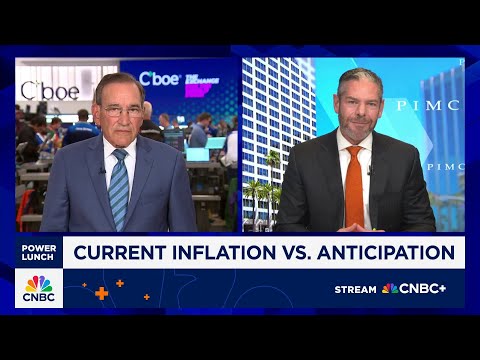
How America's Debt Spiral Could Spark The Next Crisis
CNBC· 2025-07-07 10:01
U.S. Fiscal Situation & Debt Concerns - The U.S federal budget is on an unsustainable path, potentially leading to rapid financial instability if spending issues are not addressed [1] - America's borrowing levels are currently the same size as the entire economy and are expected to skyrocket [2] - There is a greater than 50% chance of experiencing a financial trauma related to the deficit or debt levels within three years if the issues are not addressed [11] - The U.S is expected to spend nearly $1 trillion on interest payments this year due to soaring debt and higher rates [24] - The Congressional Budget Office (CBO) expects net interest costs in 2025 to surpass spending on Medicare, Medicaid, and national defense [24] - The cost to service the U.S debt is expected to be 18% of total tax revenue this year, compared to less than 10% in 2022 [25] Potential Consequences & Risks - Unsustainable fiscal policy could lead to a collapse in fixed income and bond markets within 20 years [8][9] - The U.S may resort to printing money to cover its debt, potentially leading to inflation [10] - Rising borrowing costs could negatively affect the health and growth of the U.S economy [23][24] - Unchecked debt levels risk leaving a weaker economy to future generations [30] International Implications - International holdings of U.S treasuries were near a record $9 trillion in April [40] - China, while one of the largest foreign holders of U.S treasuries, has been steadily reducing its holdings [39][40] - Japan holds more than $1 trillion worth of U.S debt, the most of any foreign country [42]
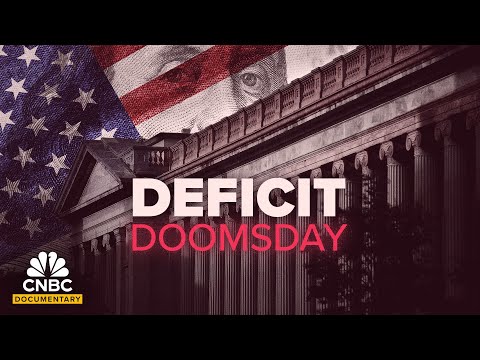
Capital reallocation out of U.S. helping emerging markets, says PIMCO's Pramol Dhawan
CNBC Television· 2025-06-25 21:20
Market Outperformance & Capital Reallocation - Emerging markets and non-dollar European equities/fixed income are expected to continue outperforming in the second half of the year [2] - Capital is being reallocated away from the US towards regions with larger fiscal stimulus, driving growth in European and emerging market economies [2] - This capital reallocation is pushing emerging market equities to record elevated levels [3] - Diversification away from the US into the rest of the world presents a target-rich environment for investment [6] - Low ownership in non-US markets creates great opportunities for investors allocating capital [7] Monetary Policy & Disinflation - A weaker US dollar is creating a disinflationary backdrop for the rest of the world [4][5] - Emerging market central banks are cutting rates more aggressively, with the percentage of countries cutting rates jumping from 28% to over 60% in one month [4][5] - The industry anticipates a multiyear, virtuous cycle where central bankers can lower rates and focus on growth [4] Trade & Geopolitics - Trade negotiations and the tariff backdrop are central to emerging markets investment performance [8][9] - The US administration's decisions regarding trade will send an important message to the rest of the world [9] - The US has effectively weaponized its current account and capital account, discouraging inward investment [10]
海外资管机构月报:5月美国股票型基金涨幅中位数超5%,其中大盘成长型基金反弹近9%-20250623
Guoxin Securities· 2025-06-23 01:39
The provided content does not contain any quantitative models or factors, nor does it include any related construction processes, formulas, evaluations, or backtesting results. The documents primarily focus on fund performance, asset flows, and market observations without delving into quantitative finance methodologies.


Unlikely that anything of substance to come out of G7 meetings, says PIMCO's Libby Cantrill
CNBC Television· 2025-06-16 18:15
Our next guest isn't expecting any trade deals to come from the G7, but says the any quote positive mood mood music will allow the markets to keep ignoring what Megan just called the elephant in the room. The fact that we're less than a month away from the July tariff deadline. Libby Cantrell is head of public policy at PIMCO.Libby, it's probably a little early to to gauge the music, right. Welcome. Hi, how are you.Yes. Yeah, too early as as of now. Um, but as I we wrote in our note to to clients this morni ...
全线大跌!利空来袭,猛烈抛售700亿!
券商中国· 2025-06-14 02:27
Core Viewpoint - The article highlights the escalating geopolitical uncertainties, particularly in the Middle East, which have triggered significant volatility in global financial markets, leading to a risk-averse behavior among investors [1][2][3]. Market Reactions - European stock markets experienced a widespread decline, with major indices in France, Germany, Spain, and Italy all dropping over 1% [6]. - The US stock market also faced substantial losses, with the Dow Jones falling by 1.79%, the Nasdaq by 1.3%, and the S&P 500 by 1.13% [7]. - A notable surge in the VIX index, which rose by 15.65% to 20.84, indicates increased market fear, with a weekly increase of 24.27% [7]. Fund Flows - Recent data from Bank of America shows that US stock funds experienced the largest outflow in nearly three months, with redemptions reaching approximately $9.8 billion (over 70 billion RMB), marking an 11-week high [5]. - European funds, which had previously outperformed US stocks, also saw a net outflow of $600 million, the first in nine weeks [5]. Investor Sentiment - Analysts suggest that current market behavior aligns with a "risk-averse" mode, indicating that this may be just the beginning of a broader market trend [3][9]. - Investors are closely monitoring developments in the Middle East, the US economic outlook, and the Federal Reserve's monetary policy trajectory [8]. Economic Outlook - Former US Treasury Secretary Janet Yellen predicts that Trump's tariff policies will lead to an increase in inflation, estimating this year's inflation rate to be at least 3% [4][18]. - Yellen also warns that these tariffs could reduce average household income by approximately $1,000, depending on the progress of the tariff plans [19]. Federal Reserve Policy - Yellen anticipates that the Federal Reserve will maintain its current stance and not make significant changes to monetary policy in the near term, as they are likely to wait for clearer inflation trends [20][21]. - Analysts from Allianz have adjusted their expectations for a potential rate cut by the Federal Reserve from October to December, citing that inflation is expected to peak in the fourth quarter [20].


宋雪涛:美债新世界
雪涛宏观笔记· 2025-06-11 03:47
Core Viewpoint - The status of US Treasury bonds as a "pricing anchor" is declining, challenging the effectiveness of traditional investment strategies, leading to a global rebalancing towards non-US and alternative assets [1][18]. Group 1: Concerns Over US Treasury Bonds - The long-term issues with US Treasury bonds stem from concerns about both demand and supply, influenced by changes in dollar credit and expectations of potential bond issuance due to fiscal deficits [3][4]. - The contribution of tariff revenues to US fiscal income is minimal, with tariffs projected to account for only 1.6% of total fiscal revenue in 2024, while net interest expenses have risen significantly [6][9]. - The perception of US Treasury bonds as a safe haven is eroding due to geopolitical tensions and the use of dollar and Treasury bonds as negotiation tools in trade discussions [9][10]. Group 2: Impact of Domestic Policies - The "Big Beautiful Bill" passed by the House raises concerns about increased fiscal deficits, potentially adding $3 trillion over ten years, which could exacerbate the mismatch between supply and demand for Treasury bonds [13][18]. - The Trump administration's spending cuts have fallen short of targets, with only $175 billion cut against a goal of $2 trillion, indicating a lack of commitment to fiscal discipline [15][18]. Group 3: Erosion of Dollar Credibility - The current US administration's departure from traditional values and geopolitical alliances undermines the foundational credibility of the dollar, which relies on trust in US technological and military superiority [16][17]. - Recent challenges to US technological and military dominance could significantly impact the dollar's strength and the sustainability of its fiscal and current account deficits [17][18]. Group 4: Shifts in Asset Allocation - The decline in the status of US Treasury bonds as a pricing anchor has led to a reevaluation of traditional asset allocation strategies, with a notable shift from the typical 60/40 stock-bond portfolio to alternatives like gold and cryptocurrencies [20][24]. - Global funds are increasingly diversifying into non-US assets, with central banks raising their gold reserves significantly, indicating a trend towards alternative asset classes [24][26]. - The performance of alternative assets has outpaced traditional stock-bond combinations, with gold and Bitcoin showing substantial gains in 2025 [26][24].
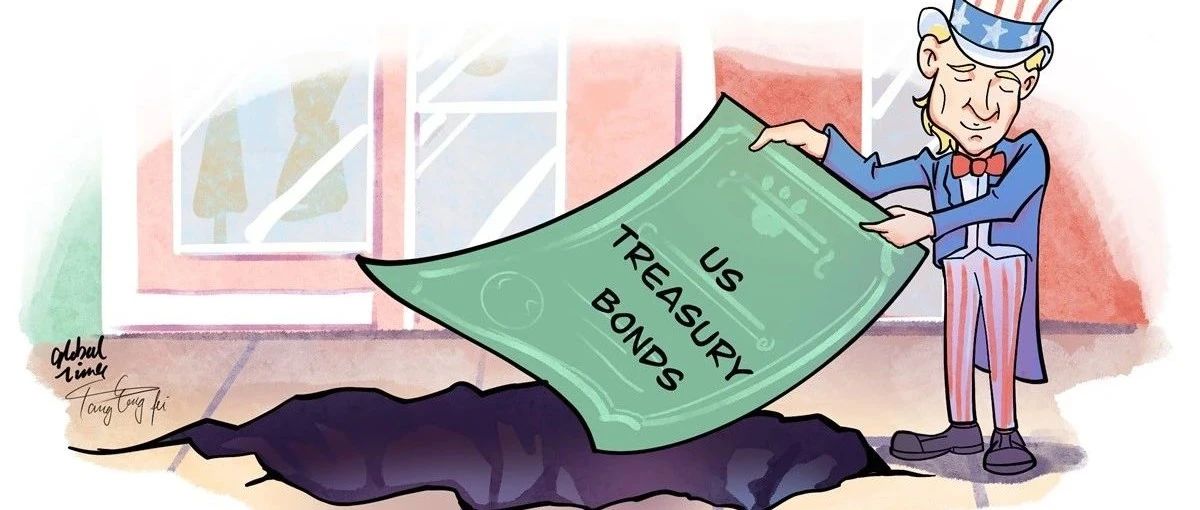
美国220亿美元30年期国债标售成焦点 收益率触及20年高点投资者抵制加剧
Sou Hu Cai Jing· 2025-06-09 01:29
Group 1 - The U.S. Treasury will auction $22 billion in 30-year bonds this Thursday, which has become a focal point for Wall Street due to increasing global investor resistance to long-term government debt [1] - The 30-year U.S. Treasury bond has become the least favored bond type, with its yield reaching a nearly 20-year high of 5.15% last month and hovering around 4.98% at the start of the week [3] - Demand for long-term bonds has been persistently weak, with rising yields prompting investors to seek higher risk premiums for government loans, leading to increased financing pressure as U.S. borrowing continues to rise [4] Group 2 - Concerns over the fiscal situation have intensified, with predictions that recent tax and spending legislation could increase the U.S. budget deficit by trillions in the coming years, and Moody's has downgraded the U.S. sovereign credit rating from Aaa to Aa1 [5] - The total U.S. federal debt has surpassed $36 trillion, accounting for 124% of GDP, with interest payments projected to exceed $1 trillion for the fiscal year 2024 [5] - Due to severe sell-offs, there are speculations that the U.S. Treasury may reduce or suspend the issuance of 30-year bonds, as the current trading situation for long-term U.S. Treasuries no longer aligns with the traditional view of them as "risk-free assets" [5]

美债收益率陷入拉锯战 通胀与财政风险成焦点
智通财经网· 2025-06-05 22:33
Group 1 - The 10-year U.S. Treasury yield remains below 4.5%, indicating economic uncertainty and multiple factors affecting market direction [1] - Global investors are reassessing debt and deficit issues across countries, not just in the U.S., with expectations of rising global bond yields [1][2] - The decline in the international appeal of U.S. Treasuries is evident as foreign investors, particularly from Japan, shift their focus back to domestic markets due to rising Japanese bond yields [2] Group 2 - Japan's government debt-to-GDP ratio is the highest among developed countries at 235%, while the U.S. stands at 122% [3] - Concerns are rising regarding European sovereign debt as fiscal pressures increase, with Germany's 10-year bond yield expected to rise from 2.5% to 3% [3] - The U.S. fiscal policy and tariff uncertainties complicate predictions for the 10-year Treasury yield, which is projected to end the year at 4.25% [3] Group 3 - A proposed tax bill in the U.S. could increase the fiscal deficit by $2.4 trillion over the next decade, with the current fiscal deficit at 6.4% of GDP [4] - The likelihood of a severe market reaction similar to the U.K.'s past situation is considered low due to high current yields helping to stabilize the market [4] Group 4 - A sharp rise in U.S. Treasury yields could negatively impact the stock market, leading to wider credit spreads and tighter financial conditions, ultimately suppressing economic growth [5] - Concerns about U.S. debt management are highlighted, with warnings that failure to control debt could lead to significant market disruptions [5]