抖音

Search documents
美团出手,到店市场激战下沉,7万亿服务零售产业线上化提速
Hua Xia Shi Bao· 2025-06-28 11:25
Core Insights - The service retail industry is valued at 7 trillion yuan, with an online penetration rate of only 9%, expected to rise to 25% by 2030 [2] - The competition in the service retail market focuses on user experience, operational efficiency, technological innovation, ecological collaboration, and policy compliance [2] - The "Must-Eat List" by Dazhong Dianping has seen significant success, with new merchants experiencing a 50% increase in user traffic and overall transaction volume [3] Industry Trends - The offline service retail market is characterized by a fragmented competitive landscape, with many players vying for dominance, particularly in lower-tier cities [5][6] - The onlineization of service retail is challenging due to the inherent characteristics of the industry, but it presents a significant growth opportunity [5][6] - Over the past year, the number of chain brands expanding into lower-tier cities has surged by 66% [6] Company Developments - Meituan has integrated its various business units into a "Core Local Business" segment, enhancing its operational efficiency and resource optimization [4] - The company has launched AI digital employees to assist merchants in improving operational efficiency across various scenarios [5] - Meituan has accumulated 470 million service retail users and processed over 5 billion orders since its establishment of the in-store comprehensive business unit in 2015 [6] Competitive Landscape - Meituan holds a dominant position in the market due to its synergistic effects from delivery and travel services, creating a scale barrier [7] - The service retail market features a mix of traditional retail giants, e-commerce platforms, and niche players, all facing challenges in offline transformation and service closure capabilities [7]


平台应慎用定价干预权
Jing Ji Guan Cha Bao· 2025-06-28 06:32
Core Viewpoint - The article discusses the controversy surrounding Ctrip's unilateral price adjustments for hotel rooms without merchant consent, highlighting the broader issue of pricing power in the digital economy [2][4]. Group 1: Pricing Power and Market Dynamics - Ctrip utilizes an internal program called "Price Adjustment Assistant" to automatically lower hotel prices if they are found to be higher than competitors, which merchants argue disrupts their business operations [2]. - The issue of pricing power raises questions about whether it belongs to the merchants, platforms, or the market itself, with merchants asserting that they should control pricing as the providers of products and services [2][3]. - The relationship between platforms and merchants is complex, as platforms act as market organizers and control access to consumers, which can indirectly affect merchants' pricing capabilities [2][3]. Group 2: Platform Pricing Strategies - Platforms exhibit diverse pricing control strategies, including direct pricing for self-operated businesses, reference pricing that merchants feel pressured to follow, and minimum price requirements that can create unfair competition [3]. - In the case of Ctrip, the price adjustments made to avoid customer loss fall between reference pricing and minimum pricing, where merchants can refuse but often feel compelled to comply to maintain visibility [3]. Group 3: Impact on Quality and Market Competition - Merchants facing excessive price pressure may resort to cost-cutting measures, leading to a decline in product quality, which poses risks to consumers and distorts the market [4]. - Over-intervention by platforms in pricing can stifle innovation and competition, potentially leading to algorithmic collusion and implicit monopolies [4]. Group 4: Recommendations for Fair Practices - It is essential to delineate between reasonable price interventions and overreach by platforms, emphasizing the need for transparency in pricing mechanisms and compliance review processes [5]. - The ongoing struggle between platforms and merchants raises critical questions about fairness in the digital economy, necessitating careful consideration of pricing authority and boundaries [5].


中国演出协会报告:MCN数量10年增180倍
Bei Ke Cai Jing· 2025-06-27 14:12
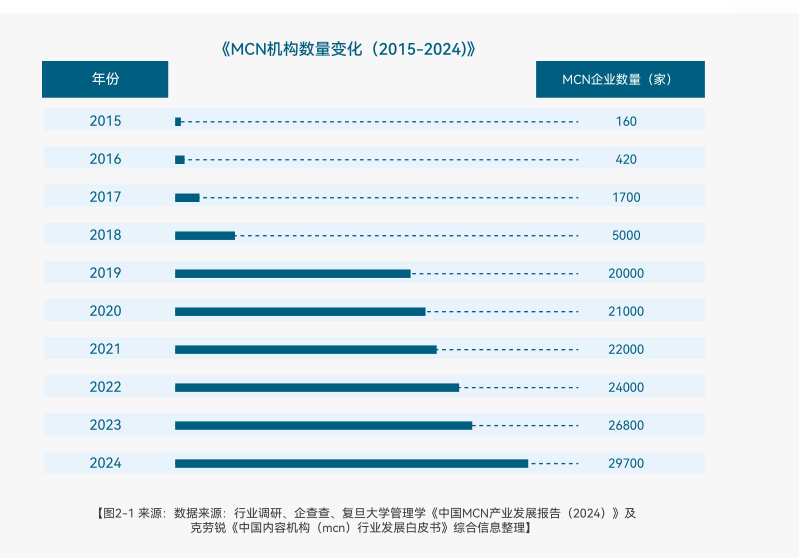
Group 1 - The number of MCN (Multi-Channel Network) agencies in China reached 29,000 by May 2025, with the industry market size reaching 63.6 billion yuan, expected to exceed 70 billion yuan by 2025 [1][3] - The MCN industry has experienced rapid growth over the past decade, increasing from 160 agencies in 2015 to 29,000 in 2024, representing a growth of over 180 times [1][3] - Regulatory measures have been implemented to ensure the industry progresses in a structured manner, including the introduction of the "Network Performance Agency Management Measures" by the Ministry of Culture and Tourism in August 2021 [3] Group 2 - The MCN industry faces challenges such as intensified competition, shrinking profit margins, and difficulties in talent management, but there is a consensus among stakeholders to build a "win-win ecosystem" [4] - The industry is transitioning from a "traffic-first" approach to a focus on "content improvement," contributing new momentum to the construction of a digital China [5] - High-quality development of the industry relies on collaboration among platforms, agencies, and creators, emphasizing the need for long-term communication and standardized operations [6]
高德没有新故事
Xin Lang Cai Jing· 2025-06-27 07:03
Core Viewpoint - Alibaba is restructuring its business by integrating Ele.me, Fliggy, and Taobao Group into the China e-commerce business group, while separating Cainiao, Gaode, and Huijun Entertainment into other categories, indicating a significant shift in its local services strategy [1][2] Group 1: Organizational Changes - The integration of Ele.me and Fliggy into the e-commerce group is part of a broader trend among leading platforms to consolidate resources for unified management in the competitive local services market [2] - The previous structure under Yu Yongfu, which included Gaode, Ele.me, and Fliggy, has been dismantled, with each now having separate leadership roles [2][3] - The shift reflects a strategic move away from the previous model of combining local services under one umbrella, as seen in competitors like Douyin and Meituan [2][3] Group 2: Gaode's Position and Strategy - Gaode has struggled to transition from a navigation tool to a comprehensive local services platform, despite initial ambitions following its acquisition by Alibaba in 2014 [3][4] - The company has maintained a focus on navigation and user experience, opting out of the O2O market, which limited its ability to compete with platforms like Meituan [3][4] - Gaode's recent attempts to integrate local services have not yielded significant results, and it has returned to focusing on its core business of transportation services [5][6] Group 3: Financial Performance and Future Outlook - Gaode achieved profitability for the first time in the third quarter of Alibaba's 2025 fiscal year, primarily driven by advertising revenue, which accounted for over 60% of its total income [9] - However, Gaode's advertising revenue growth has slowed, indicating potential challenges in sustaining its business model as it moves away from local services [9][10] - The company is expected to continue focusing on its core transportation services, with its growth strategy centered around commission and advertising, rather than expanding into broader local service offerings [10]

为什么京东淘宝争完外卖,又争酒旅
3 6 Ke· 2025-06-27 02:58
Core Insights - The competition in the travel and hospitality industry is intensifying as major e-commerce platforms like JD.com and Alibaba's Taobao are entering the market, leading to potential shifts in industry dynamics [1][2][10] - The industry is currently undergoing structural adjustments in both supply and demand, influenced by demographic changes and real estate policies [1][11] Group 1: Industry Dynamics - The travel and hospitality market has traditionally been stable, with Ctrip holding a dominant market share of 56% in the previous year, followed by Meituan and other players [1][10] - The supply side is experiencing an oversupply, particularly in high-star hotels, leading to increased vacancy rates and declining prices [10][11] - Demand is shifting towards younger and older demographics, who are seeking more diverse experiences beyond just accommodation [1][11] Group 2: Competitive Strategies - JD.com aims to leverage its supply chain to reduce costs for hotels, offering a three-year zero-commission policy and direct partnerships with hotel brands [3][4] - Taobao's strategy focuses on creating a comprehensive consumer experience by integrating its travel service, Fliggy, with its broader ecosystem, enhancing consumer choice and membership benefits [4][9] - Ctrip is adapting by targeting younger and older consumers with tailored services and expanding its international business, which has seen revenue share increase from 10% to 14% year-on-year [19][20] Group 3: Market Opportunities - The entry of e-commerce giants into the travel sector is seen as an opportunity for innovation in service consumption, with platforms needing to enhance their member operations and service capabilities [2][12] - Fliggy has a leading position in the outbound travel market, capturing 44.3% of the share, which presents a competitive edge for Taobao [9] - The overall online travel market in China is projected to exceed 1.5 trillion yuan by 2025, indicating significant growth potential [13]

短视频直播平台带动 新兴职业爆发式增长
Shang Hai Zheng Quan Bao· 2025-06-26 18:47
Group 1 - The core viewpoint of the articles highlights the significant growth and impact of the short video and live streaming industry in China, particularly through platforms like Douyin, which is driving employment opportunities and economic activity [1][2]. - As of May 2025, the total number of active live streaming accounts is projected to reach approximately 193 million, with a year-on-year growth of about 7.2% [1]. - Douyin is expected to directly create over 49.21 million job opportunities and indirectly support an additional 15.34 million jobs, totaling over 64.55 million employment opportunities in 2024 [1]. Group 2 - The rapid increase in traffic on Douyin's e-commerce platform, with 8 billion daily views of short videos and 3.8 billion daily visits to live streaming rooms, has led to a 46% year-on-year growth in GMV (Gross Merchandise Volume) [1]. - The average ratio of content creators to backend support staff is 1:1.5, indicating that content creation roles can generate numerous direct employment opportunities across various fields such as content operation, live streaming assistance, and data analysis [2]. - The digital economy, represented by short video platforms, is enhancing labor participation rates and breaking down barriers for special groups in the labor market, which is seen as a positive development [2]. Group 3 - The rise of new technology positions driven by AI and big data is contributing to the continuous increase in job opportunities within the industry [3].
掌阅科技CEO孙凯:用AI做短剧能节省90%时间,为什么我们不敢全用?
Mei Ri Jing Ji Xin Wen· 2025-06-26 14:24
Core Insights - The competition in the short video sector is intensifying, with major stars and IPs joining the fray, particularly during the summer season and the Shanghai International Film Festival [1] - AI technology is increasingly being integrated into short film production, with companies exploring new collaborative models between humans and AI [1][4] - The short drama market is experiencing rapid growth, with significant revenue potential and a shift towards free content consumption [6][7] Group 1: AI Integration in Short Dramas - AI has been utilized in short drama production, with companies like Kuaishou and Zhangyue Technology investing in AI-generated content, although the results have faced mixed reviews [4][5] - The CEO of Zhangyue Technology, Sun Kai, indicated that AI's role in the production of the short drama "Zhe Tian" accounted for less than 30% of the costs, emphasizing efficiency over cost [4][5] - AI can achieve a production quality of 60-70% in just 10% of the time compared to traditional methods, aligning with the efficiency demands of the short drama market [4] Group 2: Market Growth and Trends - The micro short drama market in China reached a scale of 505 billion yuan in 2024, surpassing box office revenues, with projections of 634.3 billion yuan in 2025 and 856.5 billion yuan by 2027, reflecting a compound annual growth rate of 19.2% [6] - The user base for short dramas is expanding, with 5.76 million users in 2024, representing 52.4% of the total internet population [6] - The market is shifting towards premium content, with a focus on quality storytelling and character development, driven by changing user demands [7]


“寻找原汁原味老字号”活动启动,抖音生活服务持续助力老字号焕新
Cai Fu Zai Xian· 2025-06-26 08:51
Group 1 - The core event is the launch of the "Finding Authentic Old Brands" series, aimed at promoting innovation and cultural heritage of traditional brands through digital means [1][2] - Douyin Life Services will collaborate with the Beijing Old Brand Association from June to November 2025, focusing on "new products, new scenarios, new groups, new momentum, and new stories" with 15 special projects [1] - The initiative includes support for new merchants, operational training, and full-chain training for old brands to enhance their market presence and consumer engagement [1] Group 2 - In June 2024, Douyin Life Services introduced the "Heartfelt Old Brand Renewal Plan," committing significant resources to support traditional brands in product upgrades and sales growth [2] - The "Heartfelt Old Brand" IP will continue to evolve in 2024, providing deeper support in areas such as merchant onboarding, operational assistance, and brand communication [2] - The goal is for traditional brands to effectively share their stories, increase product sales, and ensure cultural longevity through the Douyin platform [2]

国网山西电力全力护航算力集群高质量发展
Xin Hua Cai Jing· 2025-06-26 05:21
Group 1 - The new technological revolution is driving the demand for computing power, leading to challenges in electricity supply security, as highlighted in the "China Comprehensive Computing Power Index Report (2024)" [1] - Shanxi Province ranks among the top eight in the national comprehensive computing power index, with Datong City being in the top three for urban computing power sub-index [1][2] - Datong City is responsible for over 80% of Shanxi's data center construction and has been included in the "Beijing-Tianjin-Hebei Computing Power Corridor" [2] Group 2 - The electricity consumption of the internet data service industry in Datong has increased significantly, from 0.09% to 96.78% of the province's total, establishing it as a major hub for big data development [2] - The State Grid Datong Power Supply Company has actively supported the energy needs of data centers, optimizing the power grid structure and ensuring reliable electricity supply [2][3] Group 3 - By the end of 2024, Datong City will have four operational data bases and two under construction, with data center electricity consumption exceeding that of the coal industry [3][4] - Datong is rich in wind and solar resources, with a total installed capacity of wind and solar energy reaching 9.3992 million kilowatts, accounting for 53.57% of the total installed capacity [3] Group 4 - The PUE (Power Usage Effectiveness) of Datong's data centers is generally below 1.2, meeting the EU's requirements for green data centers, positioning Datong as a global cost-effective area for green computing power [3] - The State Grid Datong Power Supply Company is exploring direct green electricity connection models, which could reduce energy costs for computing centers by 8% [3] Group 5 - The China Mobile Shanxi Taiyuan Data Center has a high power capacity of 139,060 kVA and a monthly maximum electricity consumption exceeding 10 million kWh, making it the largest data center in Shanxi [5][6] - The Baidu Cloud Computing Center in Yangquan is the largest and most advanced in Asia, with a total power capacity of 233,900 kVA and an annual electricity consumption of 450 million kWh [6] Group 6 - The construction of the first full-stack intelligent computing power hub in North China, the Changzhi Intelligent Computing Center, is supported by the State Grid Changzhi Power Supply Company, which is actively involved in project planning and electricity supply [7] - The collaboration between electricity and computing power is essential for the high-quality development of the industry, with plans for coordinated development of computing power layout and power grid planning [7]

一胎生99子、离婚99次,霸总爱上45岁保洁……癫剧背后的短剧公司
3 6 Ke· 2025-06-26 00:03
Group 1 - Tencent Video recently released a list of high-quality short dramas featuring strong casts, including works like "Parrot" and "Zhuque Hall" [1] - The short drama market is experiencing a trend where the boundaries between short and long dramas are becoming increasingly blurred, with some short dramas adopting extreme and absurd themes [3][5] - The popularity of short dramas is driven by their potential for profitability and impactful content that captures user attention, leading to a collective pursuit of quality in the market [5][10] Group 2 - Major companies in the short drama sector are shifting from sensational content to more refined storytelling, with examples like "Tinghuadao" achieving over 1 billion views with a focus on female narratives [10] - Companies like "Majiang" and "Xianwen" are also producing high-quality short dramas that resonate with audiences, moving away from traditional tropes [12][13] - The competition in the short drama space has intensified, with major platforms like Douyin and Kuaishou launching their own short drama initiatives, emphasizing a move towards quality content [16][18][20] Group 3 - Traditional media companies are entering the short drama market, with examples like Ningmeng Media and Perfect World focusing on specific demographics and themes [22][24] - Companies are leveraging existing long drama IPs to create short dramas, indicating a trend towards brand extension in the industry [27] - Despite the rapid changes in the short drama landscape, companies are optimistic about capturing audience attention during fragmented viewing times, although they face challenges in maintaining viewer engagement [29]